How to Switch Elevator Maintenance Companies: A Complete FAQ Guide
Switching elevator maintenance companies is a straightforward process when building owners and property managers understand the contractual, regulatory, and logistical steps involved. This guide covers every aspect of the transition — from reviewing your existing agreement and evaluating new vendors to ensuring continuous compliance with ASME A17.1 Safety Code for Elevators and Escalators and applicable state regulations in Maryland, Washington DC, Pennsylvania, and Virginia.
How Do You Switch Elevator Maintenance Companies?
You switch elevator maintenance companies by formally terminating your current service contract, selecting a qualified replacement contractor, and transferring all equipment documentation before your new service agreement takes effect.
The process begins with a careful reading of your existing maintenance agreement. Most elevator service contracts contain automatic renewal clauses and require written notice — commonly between 30 and 90 days — before the contract anniversary date. Missing this window can lock a building owner into another full contract term. Once proper notice is given, the transition involves gathering bids from certified contractors, conducting a pre-takeover inspection of the elevator equipment, and ensuring all inspection certificates and maintenance logs are transferred to the incoming provider.
Property managers in Baltimore, Washington DC, Philadelphia, and Richmond should be aware that local Authority Having Jurisdiction (AHJ) requirements may mandate that any change in service provider be documented with the relevant municipal elevator inspection office. Confirming this administrative step prevents compliance gaps during the changeover period.
What Are the Most Common Reasons to Switch Elevator Maintenance Companies?
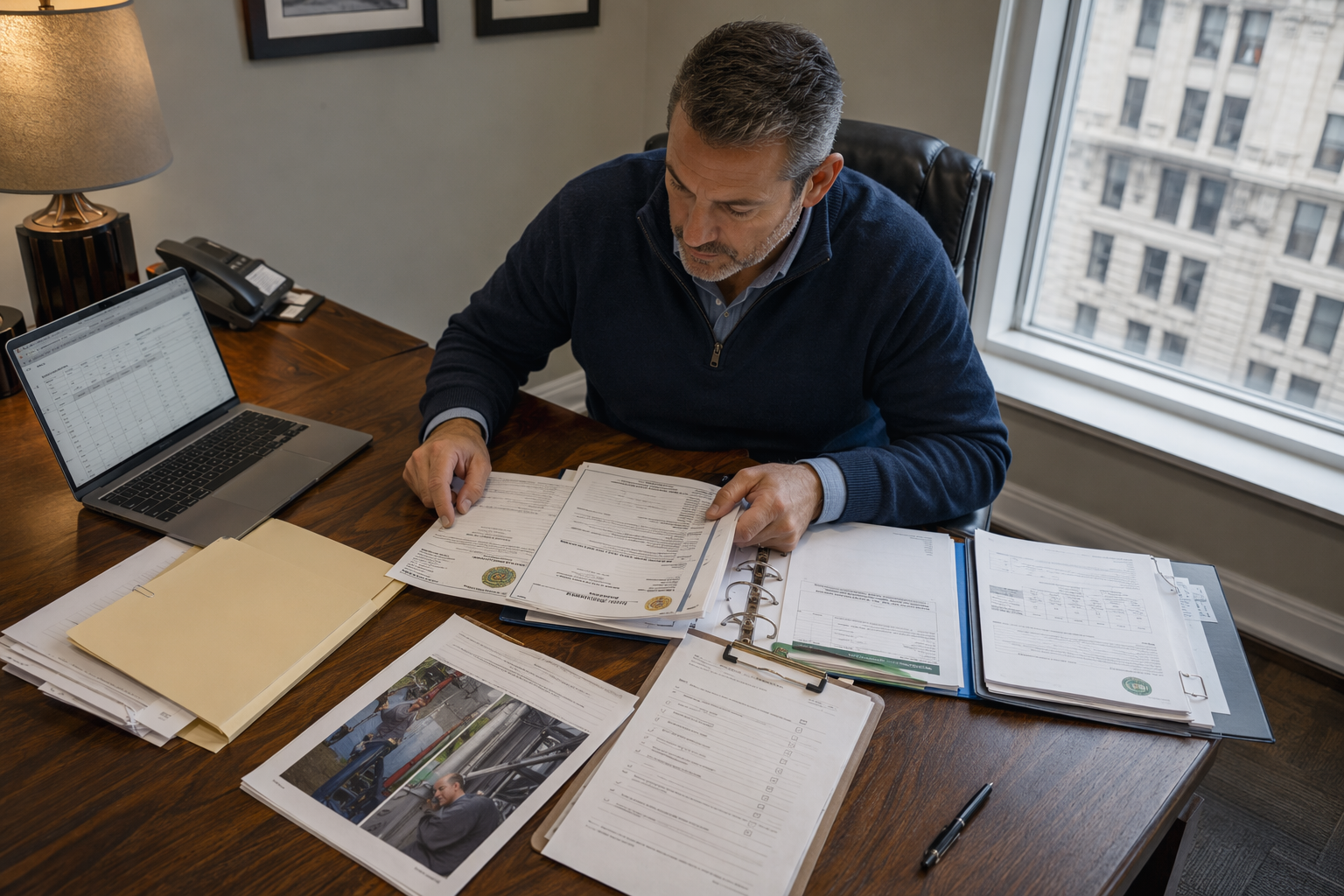
The most common reasons to switch are persistent equipment downtime, poor communication, missed inspections, contract price escalations, and failure to meet local compliance requirements.
Elevator reliability directly affects tenant satisfaction, ADA accessibility obligations under the Americans with Disabilities Act, and in high-rise buildings, life safety. When a maintenance provider repeatedly fails to respond to service calls in a timely manner, allows inspection lapses, or cannot demonstrate compliance with ASME A17.1, the operational and legal risk to the building owner escalates significantly.
Additional drivers include corporate mergers that change the character of a previously reliable local provider, aging field technicians who are not updated on newer drive technology, and contractual “evergreen” clauses that make pricing non-negotiable year over year. In competitive markets like Washington DC and Philadelphia, building owners have significant leverage to demand better service terms and should exercise that leverage when performance falls short.
How Much Notice Is Required to Cancel an Elevator Maintenance Contract?
Most elevator maintenance contracts require between 30 and 90 days of written notice prior to the contract renewal date, though the specific period is defined in each individual agreement.
Before serving notice, locate the “Term and Termination” section of the contract. Pay close attention to:
- Notice period: The number of calendar days required before the renewal date.
- Delivery method: Many contracts require certified mail or a specific email address for notice to be legally valid.
- Renewal window: Some contracts auto-renew if notice is not received within a narrow window (e.g., between 90 and 60 days before expiration).
- Early termination fees: Contracts terminated mid-term may carry penalties, often calculated as a percentage of the remaining contract value.
Property managers should calendar the notice deadline immediately after signing any new elevator maintenance agreement. Missing the termination window by even one day is frequently upheld as a valid renewal under commercial contract law.
What Should You Look for in a New Elevator Maintenance Company?
A qualified replacement elevator maintenance company should hold all required state and local licenses, employ technicians trained to current ASME A17.1 standards, maintain adequate parts inventory, and demonstrate a transparent maintenance record-keeping system.
When evaluating candidates, request documentation on the following:
- State contractor licensing in the jurisdiction where the elevator operates (Maryland, DC, Pennsylvania, or Virginia each maintain separate licensing requirements).
- Adherence to ASME A17.1 Safety Code for Elevators and Escalators, which governs maintenance intervals, testing protocols, and safety device requirements.
- Compliance with OSHA standards applicable to elevator service work, including confined space and lockout/tagout procedures.
- Demonstrated familiarity with the specific equipment brands and drive types installed in the building.
- A clear process for providing owners with copies of maintenance logs, test certificates, and inspection reports.
Quality Elevator Company serves building owners in Baltimore, Washington DC, Philadelphia, and Richmond with full compliance documentation provided after every maintenance visit — giving property managers the audit trail needed to satisfy both local AHJ requirements and insurance carriers.
How Do You Compare Elevator Maintenance Contracts Side by Side?
Compare elevator maintenance contracts by evaluating the scope of services covered, exclusions, parts and labor terms, inspection scheduling, compliance guarantees, and total cost of ownership over the contract term.
| Contract Feature | Full-Service (Comprehensive) | Oil & Grease Only | Parts & Labor |
|---|---|---|---|
| Routine lubrication & adjustment | Included | Included | Included |
| Parts replacement | Included | Not included | Included (capped or uncapped) |
| Major component repair (motor, controller) | Included | Not included | Varies by contract |
| Annual safety tests (ASME A17.1) | Included | Often excluded | Often included |
| ADA compliance adjustments | Included | Not included | Varies |
| Emergency service calls | Included | Billed separately | Often included |
| Documentation & reporting | Full audit trail | Minimal | Varies |
| Suitable for | High-rise, heavy traffic buildings | Low-usage, tight budgets | Mid-size commercial buildings |
Building owners should calculate total cost of ownership, not just the monthly service fee. An oil-and-grease contract with frequent out-of-scope repair invoices can exceed the cost of a comprehensive agreement within a single year of unexpected component failures.
What Happens to Your Elevator Inspection Records When You Switch Companies?
All inspection certificates, maintenance logs, and test records belong to the building owner, not the maintenance contractor, and must be transferred at the end of the service relationship.
This is a critical and frequently overlooked point. Outgoing contractors sometimes delay or resist transferring complete documentation. Best practice is to demand a full records package — including every annual and five-year test certificate, maintenance visit logs, deficiency notices, and any open violation correspondence with the local AHJ — as a formal deliverable upon contract termination.
The incoming contractor will require this documentation to understand the current condition of the equipment, identify any open safety items, and establish a baseline for compliance under ASME A17.1. Without complete records, a new provider may need to conduct additional testing to re-establish compliance status, which adds time and cost to the transition.
What Is a Pre-Takeover Inspection and Why Is It Important?
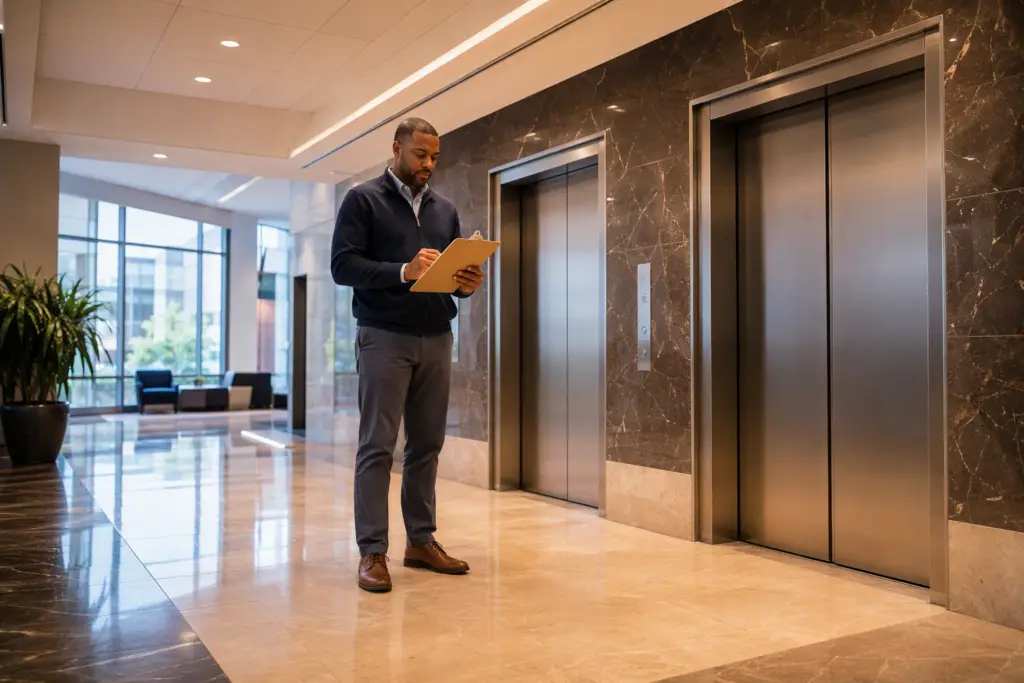
A pre-takeover inspection is a comprehensive technical assessment of elevator equipment conducted by the incoming contractor before assuming maintenance responsibility, establishing the true condition of the equipment and protecting both parties from inherited liability.
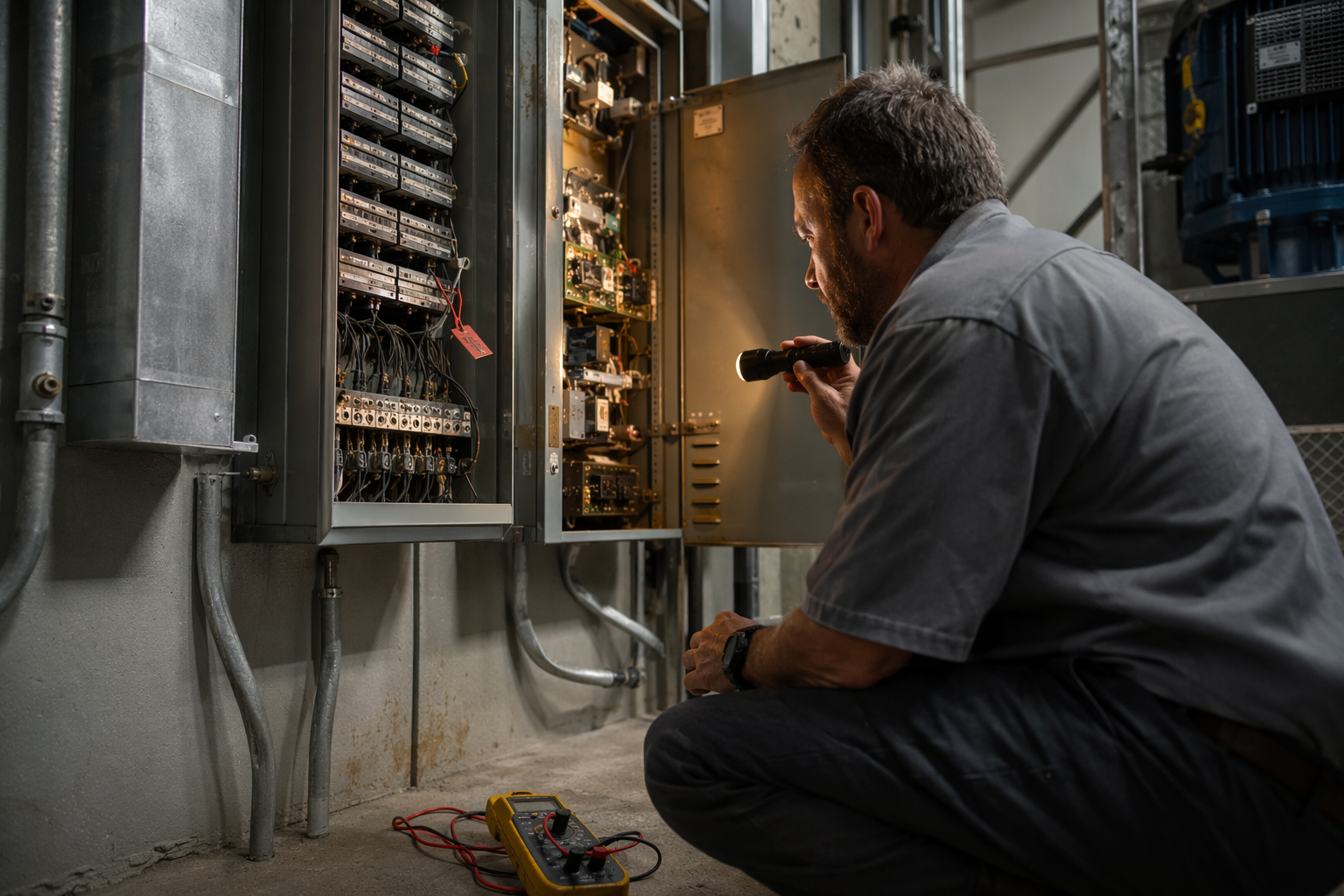
During a pre-takeover inspection, the incoming technician evaluates the condition of safety devices, ropes or belts, controller components, drive systems, door operators, buffers, governor mechanisms, and the machine room. Any deficiencies discovered are documented before the new contract becomes active, ensuring the incoming company is not held responsible for pre-existing problems.
For building owners, the pre-takeover inspection also provides independent confirmation of the current safety status of the elevator, which can be shared with property insurers and used as leverage if the outgoing contractor has left open deficiencies unresolved. Quality Elevator Company conducts a thorough pre-takeover inspection as a standard part of onboarding new clients across its service territory.
What Are the Steps to Switch Elevator Maintenance Companies?
Switching elevator maintenance companies requires a defined sequence of steps to avoid compliance gaps, legal disputes, and equipment downtime.
- Review your current contract — Identify the termination notice period, delivery requirements, auto-renewal window, and any early termination penalties.
- Calendar your notice deadline — Mark the last valid date to submit written notice in your property management calendar with adequate lead time.
- Solicit bids from qualified contractors — Request proposals from at least three licensed elevator maintenance companies that serve your jurisdiction.
- Evaluate proposals — Compare scope of services, parts coverage, compliance documentation, and total contract cost using a side-by-side matrix.
- Select your new provider — Execute the new maintenance agreement with an effective date aligned to your current contract’s expiration.
- Serve written notice to your current provider — Submit termination notice via the method specified in the contract (certified mail, email, etc.) before the deadline.
- Schedule a pre-takeover inspection — Have your new contractor inspect all elevator equipment and document current conditions.
- Demand transfer of all records — Formally request the complete maintenance and inspection record package from the outgoing contractor in writing.
- Notify the local AHJ if required — Confirm with the relevant municipal or state elevator inspection authority whether a contractor change must be reported.
- Confirm active service coverage on day one — Verify that your new provider is fully mobilized and that no gap in maintenance coverage exists between the old and new contracts.
How Long Does It Take to Switch Elevator Maintenance Companies?
The transition from one elevator maintenance company to another typically requires a minimum of 30 to 90 days from the decision to switch through to the first service visit by the new provider, depending on contract notice periods and inspection scheduling.
For buildings with complex elevator systems — such as hydraulic, MRL (machine room-less), or high-rise traction systems — additional lead time may be needed to ensure the incoming contractor has sourced any specialty parts or familiarized itself with proprietary control systems. Buildings with multiple elevators across multiple floors should allow additional scheduling time for the pre-takeover inspection.
Starting the evaluation and bidding process well before the termination window opens maximizes options and prevents a rushed decision. Property managers who begin evaluating replacement vendors three to six months before their contract renewal date consistently achieve better outcomes than those who wait until a service failure forces an emergency switch.
Are There Compliance or Regulatory Implications When Switching Elevator Contractors?
Yes — building owners must ensure continuous compliance with state and local elevator inspection laws throughout the contractor transition, as a lapse in certified maintenance can expose them to violations, fines, and potential equipment shutdown orders.
Each jurisdiction in Quality Elevator Company’s service area maintains distinct regulatory frameworks:
- Maryland: Elevator safety is regulated under the Maryland Department of Labor. Equipment must be maintained by licensed contractors and pass annual inspections.
- Washington DC: The Department of Consumer and Regulatory Affairs (DCRA) oversees elevator safety and requires permits and inspections by licensed entities.
- Pennsylvania: The Pennsylvania Department of Labor & Industry enforces elevator safety under the Uniform Construction Code. Licensed contractors and periodic inspections are mandatory.
- Virginia: The Virginia Department of Labor and Industry regulates elevator safety. Annual inspections by qualified inspectors are required.
Across all four jurisdictions, compliance with ASME A17.1 Safety Code for Elevators and Escalators forms the technical basis for maintenance and inspection requirements. Building owners should also verify that ADA-mandated accessibility features — including proper leveling, door timing, and cab dimensions — are maintained without interruption throughout the transition, as required under the Americans with Disabilities Act.
Can You Switch Elevator Maintenance Companies Mid-Contract?
Yes, you can switch mid-contract, but doing so typically triggers early termination penalties and may require negotiation with the outgoing contractor to avoid legal disputes.
Mid-contract terminations are sometimes warranted by documented safety failures, chronic non-performance, or a material breach by the contractor. In these cases, building owners should gather written documentation of every failure — missed maintenance visits, unfixed deficiencies, unanswered emergency calls, and any open violations with the AHJ — before serving termination notice. This documentation supports a “cause” termination argument, which may reduce or eliminate early termination fees.
For situations that do not rise to the level of material breach, building owners may negotiate a mutual early release with the outgoing contractor, sometimes in exchange for agreeing not to dispute outstanding invoices. Engaging a commercial real estate attorney to review the contract language before serving notice is advisable when significant financial penalties are at stake.
What Questions Should You Ask a Prospective Elevator Maintenance Company?
Before signing with a new elevator maintenance provider, building owners should ask about licensing, equipment familiarity, maintenance frequency, record-keeping practices, safety testing protocols, and how the company handles open violations.
Recommended questions to ask during the evaluation process include:
- Is your company licensed to perform elevator maintenance in this specific jurisdiction?
- Are your technicians trained on the specific equipment brands and control systems installed in this building?
- What is the maintenance visit frequency included in the base contract?
- How are maintenance records documented, and will the building owner receive copies after each visit?
- How do you handle open violations or deficiency notices from the AHJ?
- What is your process for scheduling and completing ASME A17.1-required periodic tests, including five-year hydraulic tests and governor and safety tests?
- How are emergency service calls dispatched and prioritized?
- What is your policy on proprietary parts and whether non-OEM components can be used in repairs?
- Can you provide references from comparable properties in this market?
How Does Proprietary Elevator Equipment Affect Your Ability to Switch Contractors?
Proprietary elevator equipment — systems that require manufacturer-specific software, diagnostic tools, or parts — can limit the pool of qualified replacement contractors and may necessitate additional transition steps.
Some elevator manufacturers install control systems that are programmed to restrict maintenance access to their own service networks or authorized third parties. This practice, sometimes called “elevator entrapment” in the industry, can complicate or delay a contractor switch. Before signing any new elevator installation contract, building owners should negotiate for open-source or non-proprietary control systems to preserve future competitive bidding options.
For buildings already equipped with proprietary systems, the prospective replacement contractor should be asked directly whether they possess the diagnostic software and any required manufacturer authorizations to service that specific equipment. A provider that cannot access proprietary diagnostics may be limited in their ability to perform preventive maintenance or troubleshoot faults effectively.
What Role Does ASME A17.1 Play When Changing Elevator Service Providers?
ASME A17.1 establishes the mandatory technical standards for elevator maintenance, testing, and inspection that every qualified service provider must follow, regardless of which company holds the maintenance contract.
The ASME A17.1 Safety Code for Elevators and Escalators specifies maintenance intervals, lubrication schedules, safety device test frequencies, and record-keeping requirements. When switching contractors, owners should confirm that the incoming provider’s maintenance program is explicitly structured around A17.1 requirements, including:
- Scheduled maintenance visits at code-defined intervals.
- Annual inspection and testing by a qualified elevator inspector.
- Five-year hydraulic pressure tests (for hydraulic elevators).
- Governor and safety device tests at required intervals.
- Documented maintenance logs retained in accordance with code requirements.
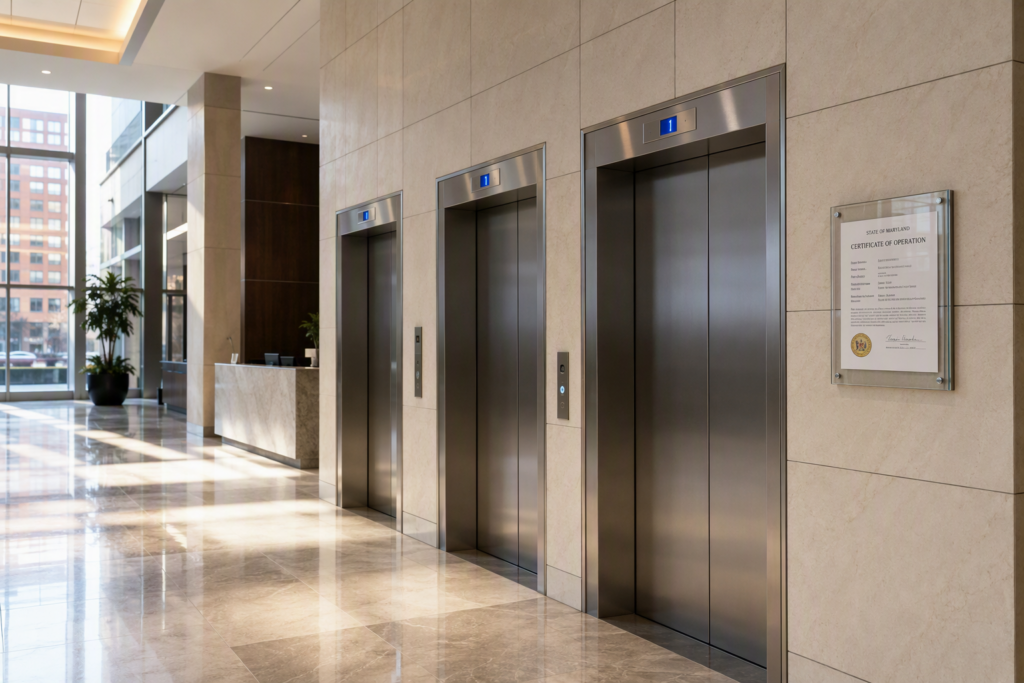
Any gap in these activities — even one caused by a contractor transition — can result in an expired certificate of operation and potential shutdown by the AHJ. The incoming contractor should be prepared to confirm the current status of all code-required tests and schedule any overdue tests as part of the onboarding process.
How Should Building Owners Evaluate Elevator Maintenance Pricing?
Elevator maintenance pricing should be evaluated on total cost of ownership — not just monthly fees — factoring in what is included, what is excluded, potential repair costs, and the long-term impact of deferred maintenance on equipment lifespan.
A low monthly fee for an oil-and-grease contract may look attractive compared to a comprehensive agreement, but excluded repairs, emergency service charges, and the cost of accelerated component wear from minimal maintenance can quickly erode that apparent saving. When requesting proposals, ask each contractor to provide a complete list of included and excluded services, and to quantify what common repairs (e.g., door operator replacement, controller board repairs) would cost on a time-and-materials basis under their contract structure.
Building owners managing multiple elevators — common in larger commercial and residential properties in Washington DC and Philadelphia — should also evaluate whether volume pricing, consolidated invoicing, or multi-unit contracts are available from prospective providers.
What Happens to Open Violations When You Switch Elevator Maintenance Companies?
Open elevator violations issued by the local AHJ remain the responsibility of the building owner and do not disappear when a contractor changes — the new provider must address them as a priority upon taking over maintenance.
Before finalizing the transition, building owners should obtain a complete list of any open deficiency notices or violation orders from the AHJ and share them with the incoming contractor. The new maintenance agreement should explicitly address how and when these outstanding items will be remediated. Failure to resolve open violations in a timely manner can result in fines, re-inspection fees, or in serious cases, an order to cease elevator operation until corrections are made.
The pre-takeover inspection conducted by the incoming contractor should be cross-referenced against any AHJ violation letters to ensure that all cited deficiencies are identified and prioritized in the initial work plan.
How Does Switching Elevator Maintenance Companies Affect ADA Compliance?
Switching elevator maintenance companies does not reduce ADA obligations — building owners remain continuously responsible for ensuring their elevators meet all accessibility requirements under the Americans with Disabilities Act throughout and after the transition.
Under the Americans with Disabilities Act, elevators in buildings subject to ADA requirements must provide accessible service at all times. This includes proper floor leveling, door dwell times, Braille and raised character controls, adequate cab dimensions, and functional emergency communication systems. A contractor transition that results in deferred maintenance, miscalibrated door operators, or inoperable accessibility features creates potential ADA liability for the building owner.
The incoming maintenance provider should include a specific ADA compliance check as part of the pre-takeover inspection and first maintenance visit, confirming that all accessibility features are functioning correctly from day one of the new contract.
What Are the Signs That You Have Chosen a Reliable Elevator Maintenance Company?
Reliable elevator maintenance companies demonstrate their quality through transparent documentation, consistent visit schedules, proactive communication about upcoming tests and deficiencies, and a clean compliance record with the local AHJ.
Positive indicators include:
- Maintenance visit logs delivered to the building owner after each visit without prompting.
- Proactive scheduling of ASME A17.1-required periodic tests before they fall due.
- Clear written communication about any deficiencies discovered during maintenance visits and recommended corrective actions.
- No open violations or outstanding AHJ notices attributable to contractor neglect.
- Technicians who demonstrate familiarity with the specific equipment in the building.
- Billing transparency — invoices that clearly match the agreed contract scope.
Quality Elevator Company builds its service delivery model around these benchmarks, providing building owners in Baltimore, Washington DC, Philadelphia, and Richmond with the documentation and communication standards that top-tier property management requires.
How Do You Handle an Emergency During the Contractor Transition Period?
During the transition period between contractors, building owners should have a confirmed emergency contact protocol in place with either the outgoing provider (while still under contract) or the incoming provider, with no gap in emergency coverage.
The overlap period — between signing the new contract and the formal end of the old one — requires clear communication about who is responsible for emergency response. Best practice is to establish a written agreement that specifies exactly which company is responsible for emergency calls on each calendar day during the handover period. Building owners should also post updated emergency contact information in the elevator machine room and at each elevator cab during this period to ensure building staff know who to call.
Property managers should test the emergency communication system in each elevator cab as part of the pre-takeover inspection, confirming that the auto-dialer or emergency telephone is functional and connected to an active monitoring line under the new provider’s contract.
Why Should Baltimore, Washington DC, Philadelphia, and Richmond Building Owners Consider Quality Elevator Company?
Quality Elevator Company is a certified elevator service provider with established operations in all four major Mid-Atlantic markets, offering building owners a locally knowledgeable, compliance-focused alternative to large national elevator contractors.
Building owners in these markets benefit from working with a provider that understands the specific AHJ requirements, local inspection office procedures, and regulatory nuances of each jurisdiction. Quality Elevator Company’s geographic footprint across Baltimore, Washington DC, Philadelphia, and Richmond means that multi-property portfolios can be managed under a single contract structure with consistent service standards across all locations.
The company’s approach to contractor transitions — including pre-takeover inspections, complete records transfer support, and proactive AHJ compliance coordination — is designed to eliminate the compliance gaps and administrative friction that commonly derail elevator maintenance contractor changes. For building owners who have been dissatisfied with their current provider’s performance, Quality Elevator Company offers the operational depth and compliance expertise to make the switch seamlessly.
Ready to Make the Switch? Contact Quality Elevator Company Today
Switching elevator maintenance companies does not have to be complicated. With the right preparation — a clear understanding of your current contract, a thorough pre-takeover inspection, and a new provider who prioritizes compliance documentation — the transition can be completed without a single day of coverage gap or a single missed compliance deadline.
Quality Elevator Company provides free elevator assessments for building owners in Baltimore MD, Washington DC, Philadelphia PA, and Richmond VA who are considering a contractor change. A certified assessment gives you an independent view of your elevator’s current condition, any open compliance items, and what a maintenance program aligned with ASME A17.1 Safety Code for Elevators and Escalators and local AHJ requirements should include.
Contact Quality Elevator Company for a free elevator assessment: 301-307-5363
Need elevator service you can rely on? Quality Elevator Company is ready to help.