Elevator Safety Code Compliance in Baltimore, MD | Quality Elevator Company
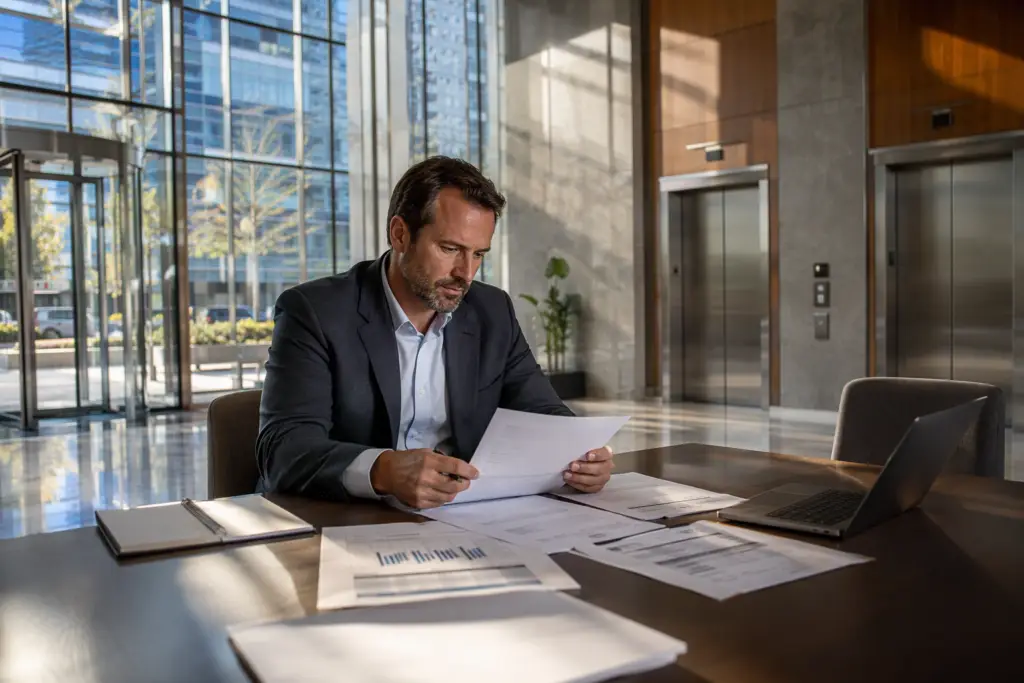
Elevator safety code compliance is one of the most consequential responsibilities a Baltimore property owner or facility manager carries. A non-compliant elevator is not only a liability risk — it can result in permit revocation, fines, and, most critically, passenger harm. Understanding which codes apply, what inspections are required, and how to maintain continuous compliance is essential for any building operating a vertical transportation system in Maryland.
Quality Elevator Company serves commercial, residential, and institutional properties throughout Baltimore and the surrounding region, delivering the maintenance, modernization, and code-compliance expertise that Maryland’s regulatory environment demands.
—
What Are the Core Elevator Safety Codes That Apply in Baltimore, MD?
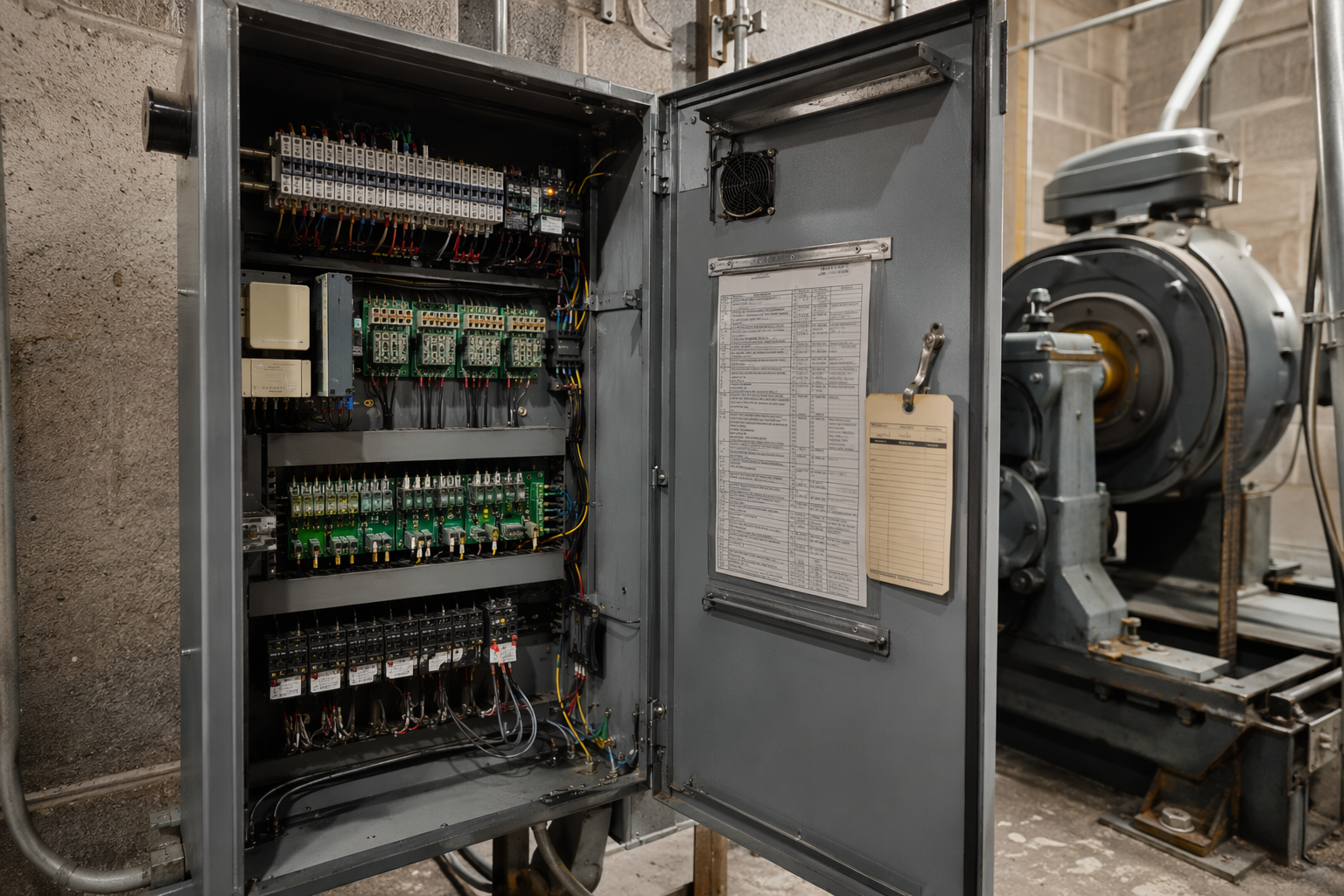
Elevator safety in Maryland is governed by a layered framework of state and national standards. At the federal level, the Americans with Disabilities Act (ADA) establishes accessibility requirements for elevator dimensions, controls, and communication systems in public-use buildings. Workplace elevators are also subject to general safety standards maintained by OSHA.
At the national technical level, the foundational document is the ASME A17.1 Safety Code for Elevators and Escalators. This code, updated on a regular cycle and widely referenced in state regulations across the country, covers design, construction, installation, operation, inspection, testing, maintenance, alteration, and repair of elevators and related equipment.
Maryland administers elevator safety through the Maryland Department of Labor, Elevator Safety Unit. State law requires elevators operating in Maryland to be registered, inspected, and tested in accordance with the adopted edition of ASME A17.1. In 2026, building owners should verify which edition of ASME A17.1 Maryland has currently adopted, as the state periodically updates its reference standard. Quality Elevator Company’s team stays current with the adopted edition so clients do not have to navigate this complexity alone.
—
What Types of Elevator Inspections Are Required in Maryland?
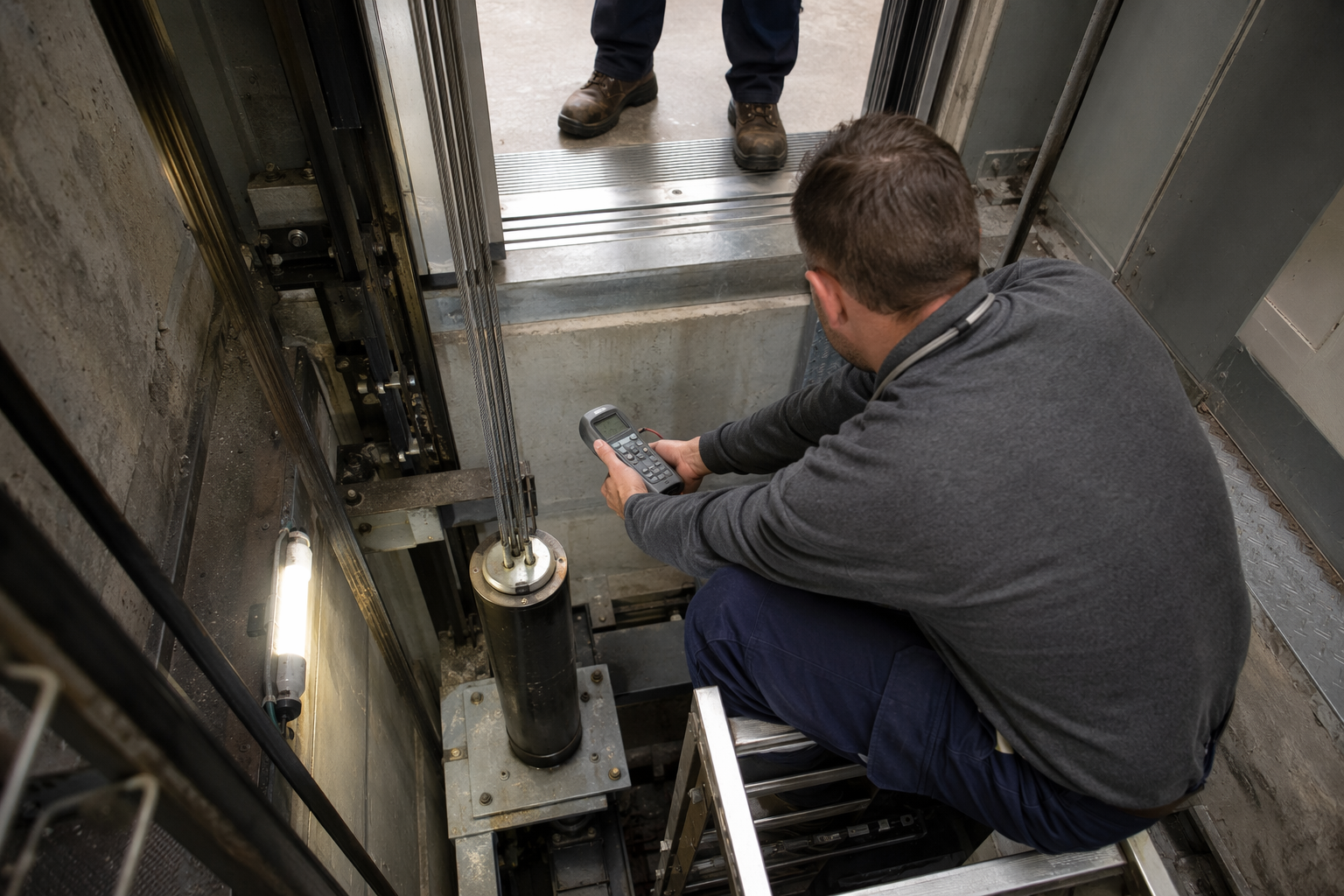
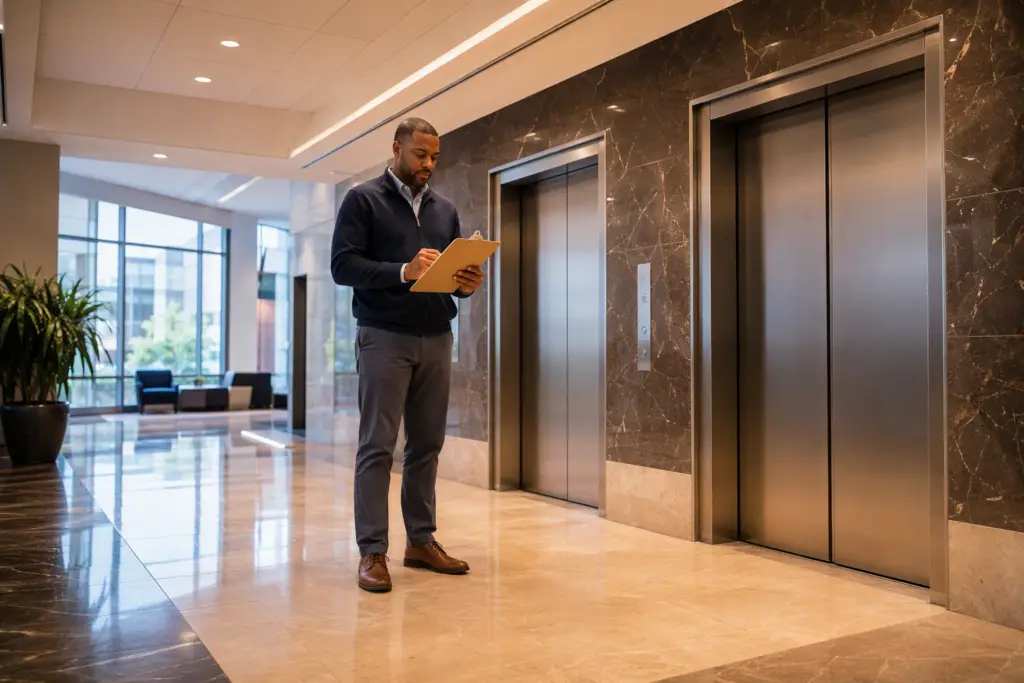
Maryland requires both periodic inspections and periodic tests for elevators operating within the state. These are distinct obligations:
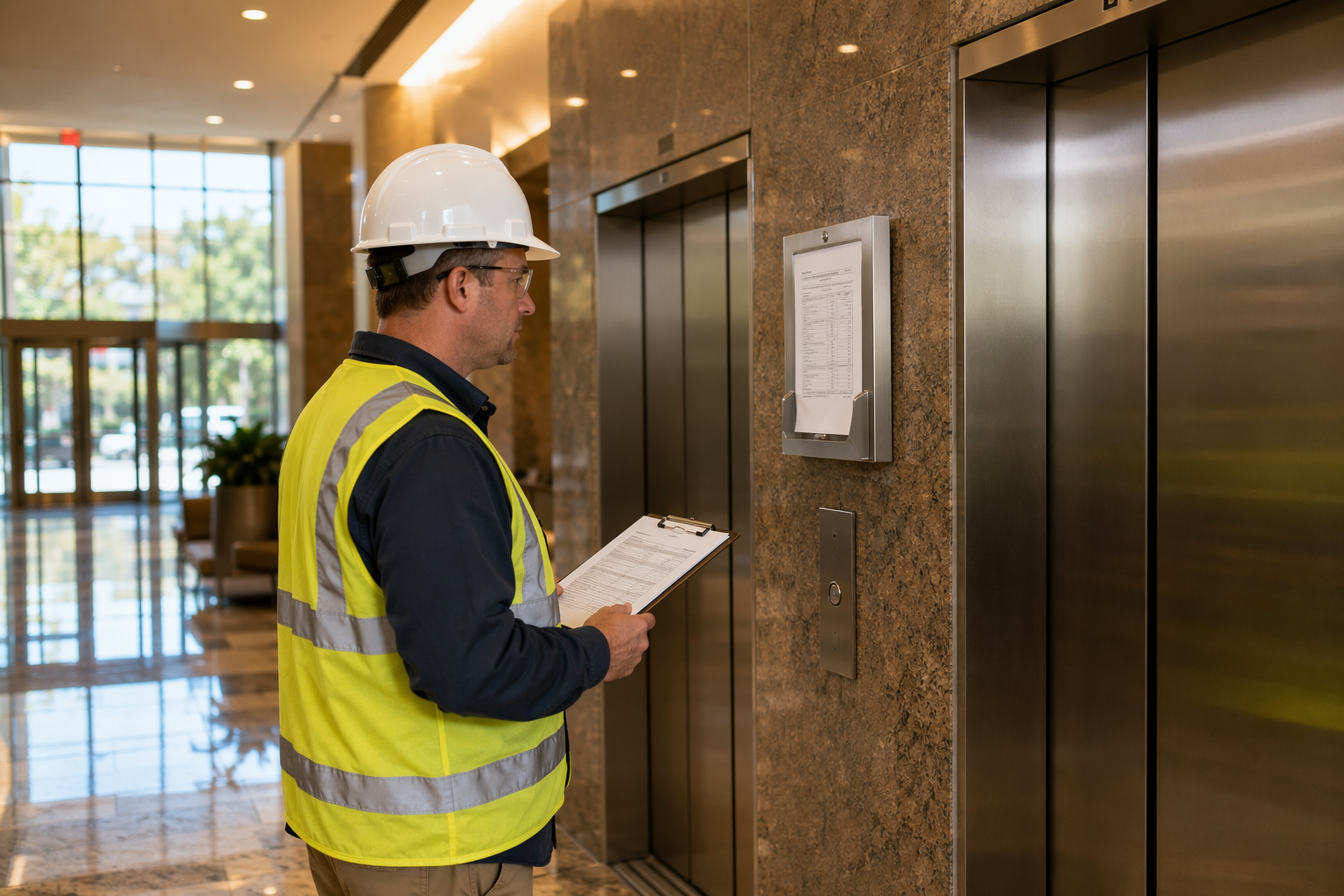
- Periodic Inspection: A licensed elevator inspector evaluates the elevator’s condition, safety devices, and operating systems against the adopted code. The frequency is determined by elevator type and use category as defined under Maryland elevator regulations and referenced ASME standards.
- Category 1 Test: A no-load safety test performed on the elevator’s safeties and governor. This is typically required annually for traction elevators.
- Category 5 Test: A full-load, full-speed safety test — one of the most comprehensive tests required — performed at intervals specified by ASME A17.1 for the applicable elevator type.
- Hydraulic Test: Hydraulic elevators require periodic pressure and relief valve testing in accordance with applicable ASME standards.
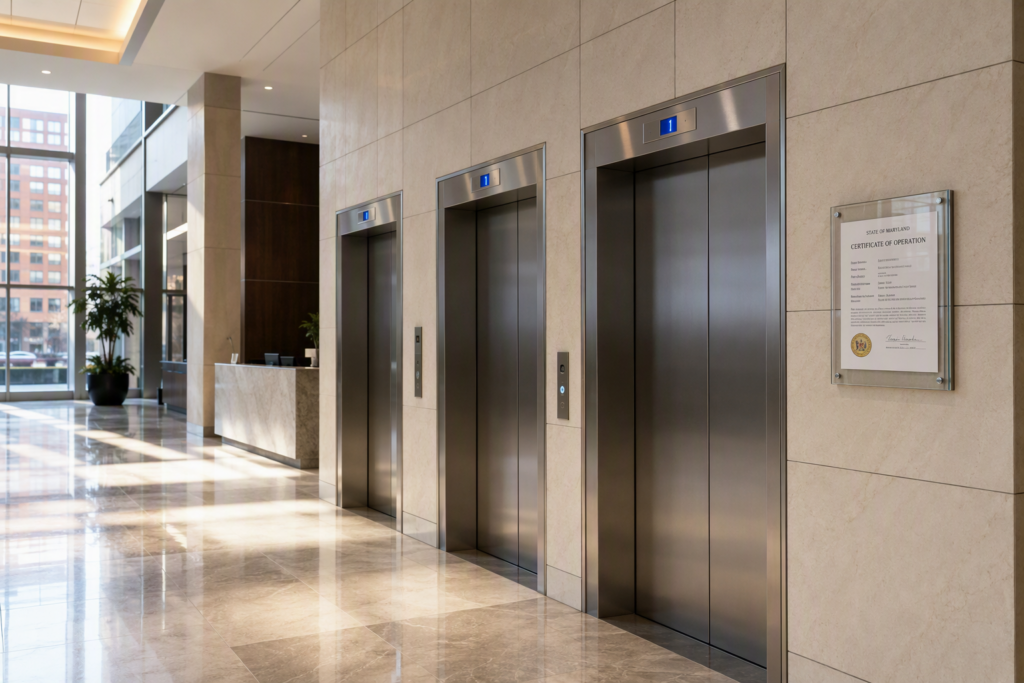
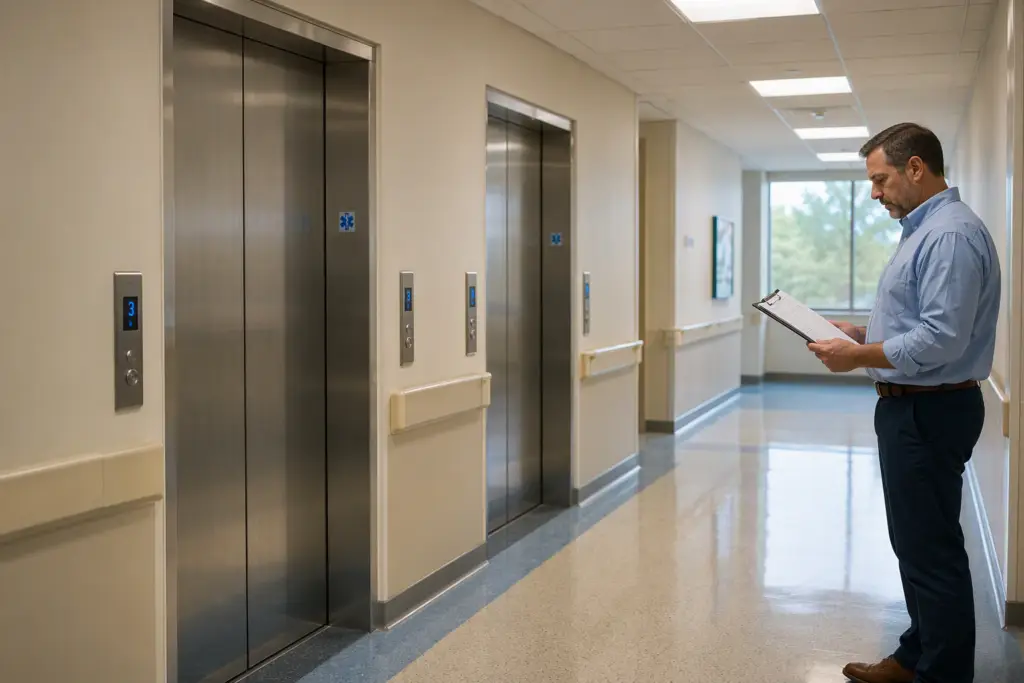
Quality Elevator Company coordinates inspection scheduling, prepares equipment for required tests, and works alongside licensed inspectors to ensure Baltimore properties receive a current operating certificate.
—
What Happens If an Elevator Fails a Code Inspection in Baltimore?
A failed inspection can result in the Maryland Department of Labor issuing a notice requiring the building owner to take corrective action within a specified period. In cases where a safety hazard is identified, the elevator may be ordered out of service immediately — meaning passengers cannot legally use it until deficiencies are corrected and re-inspection is completed.
The consequences extend beyond regulatory action. A building operating an elevator after a shutdown order faces significant legal and insurance exposure. Prompt corrective action is not just a compliance matter; it is a risk management imperative.
Quality Elevator Company provides prioritized repair services for Baltimore properties facing inspection deficiencies, focusing on restoring code-compliant operation as efficiently as the scope of work permits.
—
What Is the Difference Between Maintenance Compliance and Inspection Compliance?
These two obligations are related but distinct. Inspection compliance means an elevator passes its required periodic inspection and holds a current operating certificate issued by the state. Maintenance compliance refers to ongoing adherence to the maintenance requirements prescribed by ASME A17.1 and, importantly, the manufacturer’s maintenance procedures for the specific equipment installed.
ASME A17.1 requires that a maintenance control program be in place for each elevator — a documented record of what maintenance tasks are performed, at what intervals, and by whom. Gaps in this maintenance log can become inspection deficiencies in their own right. Quality Elevator Company establishes and maintains these records for Baltimore clients, creating a defensible compliance trail.
—
How Does ADA Compliance Intersect With Elevator Safety Code Compliance?
The ADA establishes specific requirements for elevators in buildings covered by the Act — including public accommodations and commercial facilities. Key ADA elevator requirements address:
- Minimum cab dimensions
- Door timing and reopening devices
- Floor designation controls and Braille markings
- Two-way emergency communication systems audible and visible to passengers who are deaf or hard of hearing
- Leveling accuracy at landings
An elevator can pass its ASME-based safety inspection while still having ADA deficiencies — or vice versa. Baltimore property owners serving the public must treat both frameworks as simultaneously binding. Quality Elevator Company evaluates elevators against both sets of requirements and can recommend modifications that address compliance gaps across both standards.
—
What Should a Baltimore Property Owner Do When Elevator Code Requirements Change?
Code editions evolve, and when Maryland adopts an updated edition of ASME A17.1 or revises its own elevator regulations, existing installations may face new or expanded requirements. The process for addressing these changes typically follows this sequence:
- Identify the effective date of the new or revised requirement as published by the Maryland Department of Labor.
- Audit existing equipment against the updated requirement to identify specific deficiencies.
- Obtain a compliance timeline from the regulatory authority, as some new requirements include phase-in periods for existing installations.
- Develop a scope of work with a qualified elevator contractor covering all modifications, part replacements, or documentation updates needed.
- Schedule and complete the work prior to the enforcement deadline, coordinating with the building’s operational schedule to minimize disruption.
- Document completion and retain records as part of the maintenance control program.
Quality Elevator Company monitors regulatory developments affecting Baltimore properties and advises clients proactively when changes are approaching that may require action.
—
How Does Elevator Modernization Affect Code Compliance?
When an older elevator undergoes modernization — replacement of the controller, drive, cab, or other major components — the altered portions of the equipment are typically required to meet the code edition in effect at the time of the alteration. This means a modernization project can trigger compliance upgrades beyond the components being replaced, particularly for safety systems and accessibility features.
This is not a reason to avoid modernization. Aging elevators that remain in original condition often carry greater compliance risk over time as codes advance and maintenance of obsolete parts becomes increasingly difficult. A well-planned modernization improves safety, reliability, and compliance posture simultaneously. Quality Elevator Company provides modernization assessments that account for the full code compliance impact before any work begins.
—
Does Quality Elevator Company Provide Emergency Support for Compliance-Related Issues?
Compliance emergencies — such as an elevator placed out of service following an inspection or a sudden safety-device failure — require prompt attention. Quality Elevator Company makes emergency service available to Baltimore-area clients, with contact available around the clock for situations that cannot wait for scheduled service visits. The priority in these situations is restoring safe, compliant operation while maintaining thorough documentation of all corrective actions taken.
—
What Markets and Property Types Does Quality Elevator Company Serve in Baltimore?
Quality Elevator Company serves a broad cross-section of the Baltimore market, including:
- Commercial office buildings and mixed-use developments
- Healthcare facilities, hospitals, and medical office buildings
- Multifamily residential buildings and apartment communities
- Retail centers and hospitality properties
- Educational institutions and government facilities
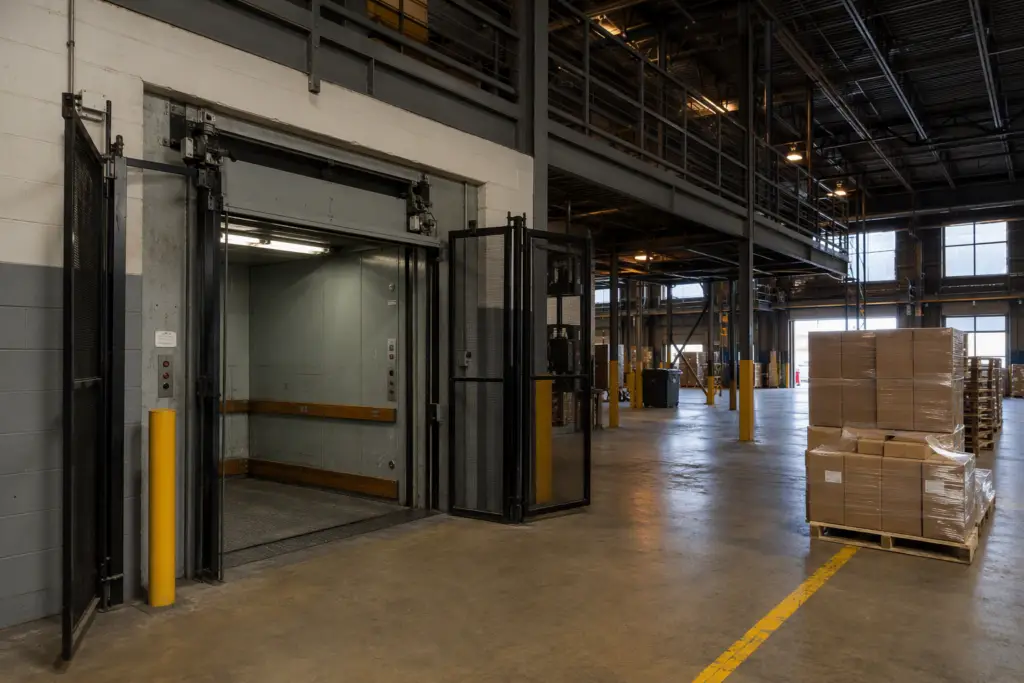
- Industrial and warehouse facilities with freight elevators
Each property type carries its own operational demands and, in some cases, additional regulatory considerations — healthcare facilities, for example, face elevator-related requirements from accreditation bodies in addition to state code. Quality Elevator Company’s familiarity with Baltimore’s diverse building stock informs its approach to compliance planning across all these environments.
—
Take the Next Step Toward Full Elevator Code Compliance in Baltimore
Elevator safety code compliance is not a one-time event — it is an ongoing program of maintenance, documentation, testing, and periodic renewal. Baltimore property owners who treat compliance as a continuous process rather than a reactive obligation protect their tenants, their occupancy permits, and their legal standing.
Quality Elevator Company is ready to assess your current compliance status, identify gaps, and develop a practical plan to achieve and maintain full compliance with Maryland elevator safety requirements.
Schedule a Free Consultation with Quality Elevator Company today: 301-307-5363
Need elevator service you can rely on? Quality Elevator Company is ready to help.