ADA Compliance Requirements for Residential Elevators: A Healthcare Industry Guide
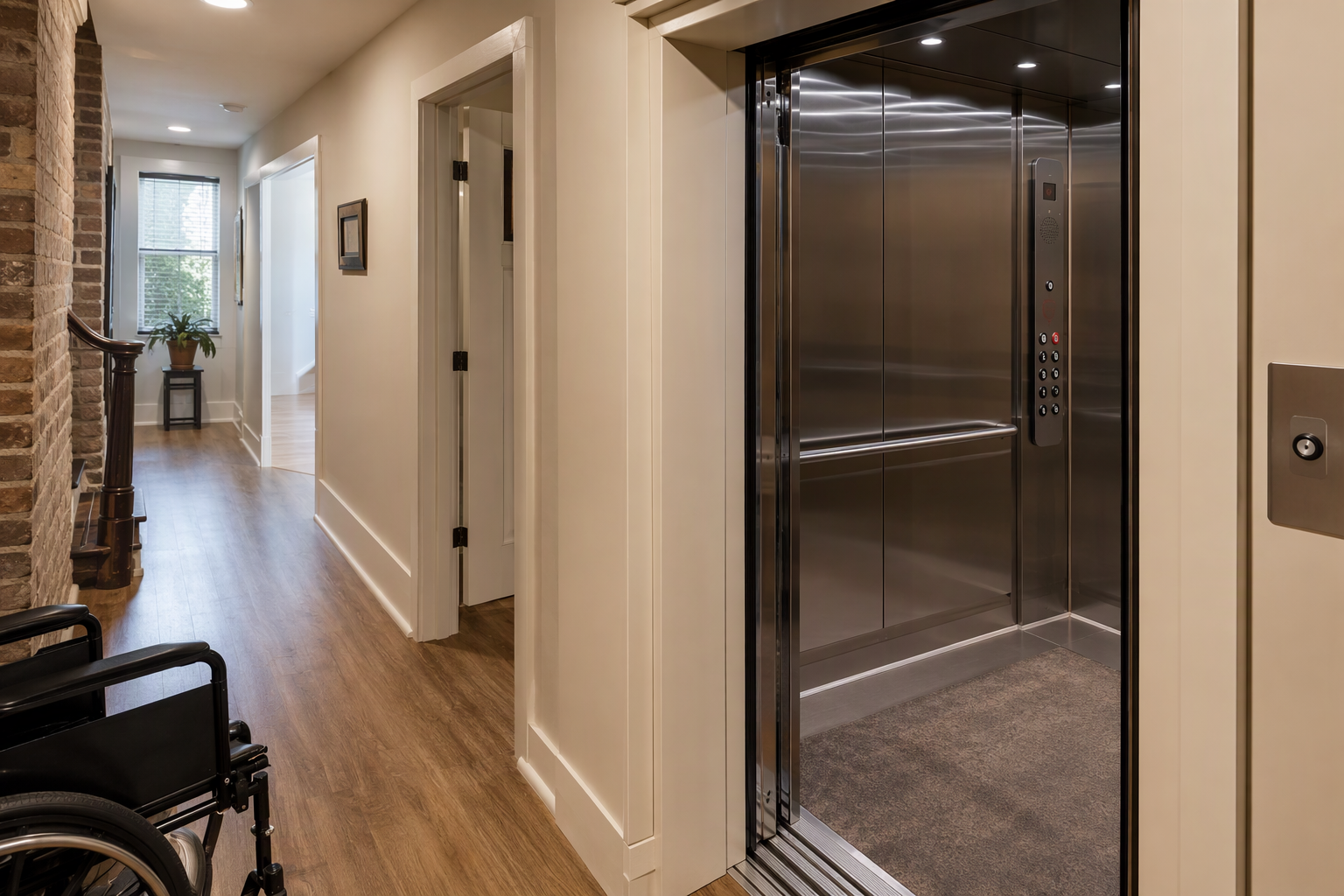
When a residential structure serves a healthcare function — whether as a small assisted living home, a rehabilitation facility, or a medical office in a converted townhouse — the question of ADA compliance for elevators becomes both legally significant and operationally urgent. The answer is not always straightforward, because the line between “residential” and “commercial” use determines which federal accessibility standards apply, and those standards interact with state-level elevator safety codes that differ across the Mid-Atlantic region. This guide explains the compliance landscape clearly so that healthcare facility operators, property owners, and administrators can make informed decisions.
What Does ADA Compliance Actually Require for Elevators in Healthcare Settings?
The Americans with Disabilities Act (ADA) requires that elevators in places of public accommodation and commercial facilities be accessible to individuals with disabilities. When a residential structure is used as a healthcare facility — such as a group home providing medical services, a small assisted living facility, or any building where the public receives healthcare — that building typically crosses from purely private residential use into the category of a place of public accommodation or a commercial facility under Title II or Title III of the ADA.
In practice, ADA accessibility requirements for elevators in these settings include:
- Minimum car dimensions sufficient to accommodate a wheelchair and an attendant
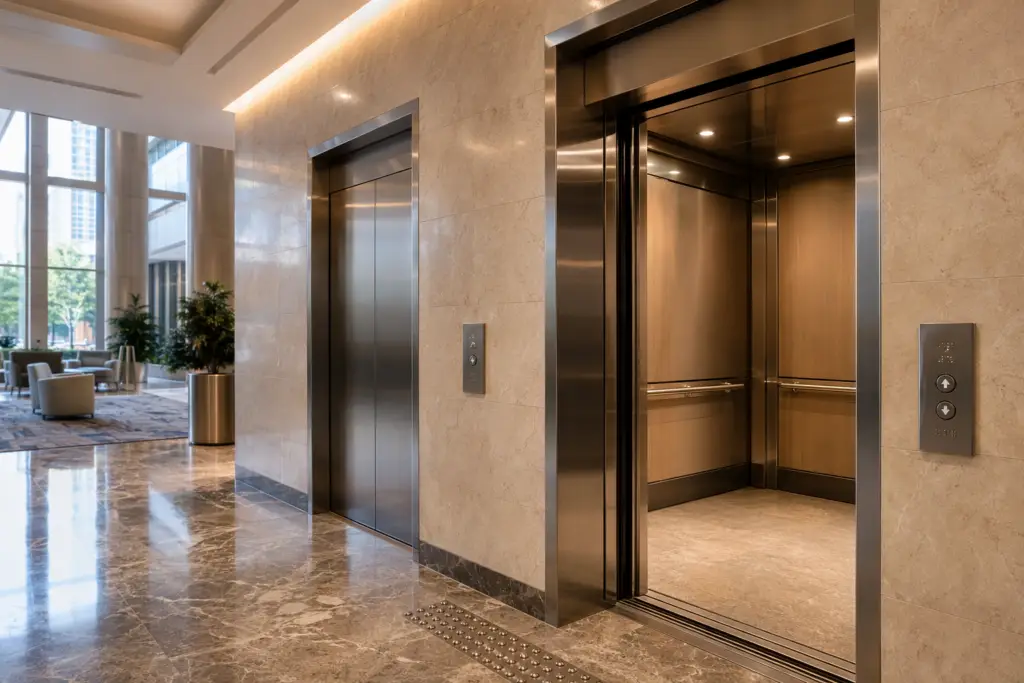
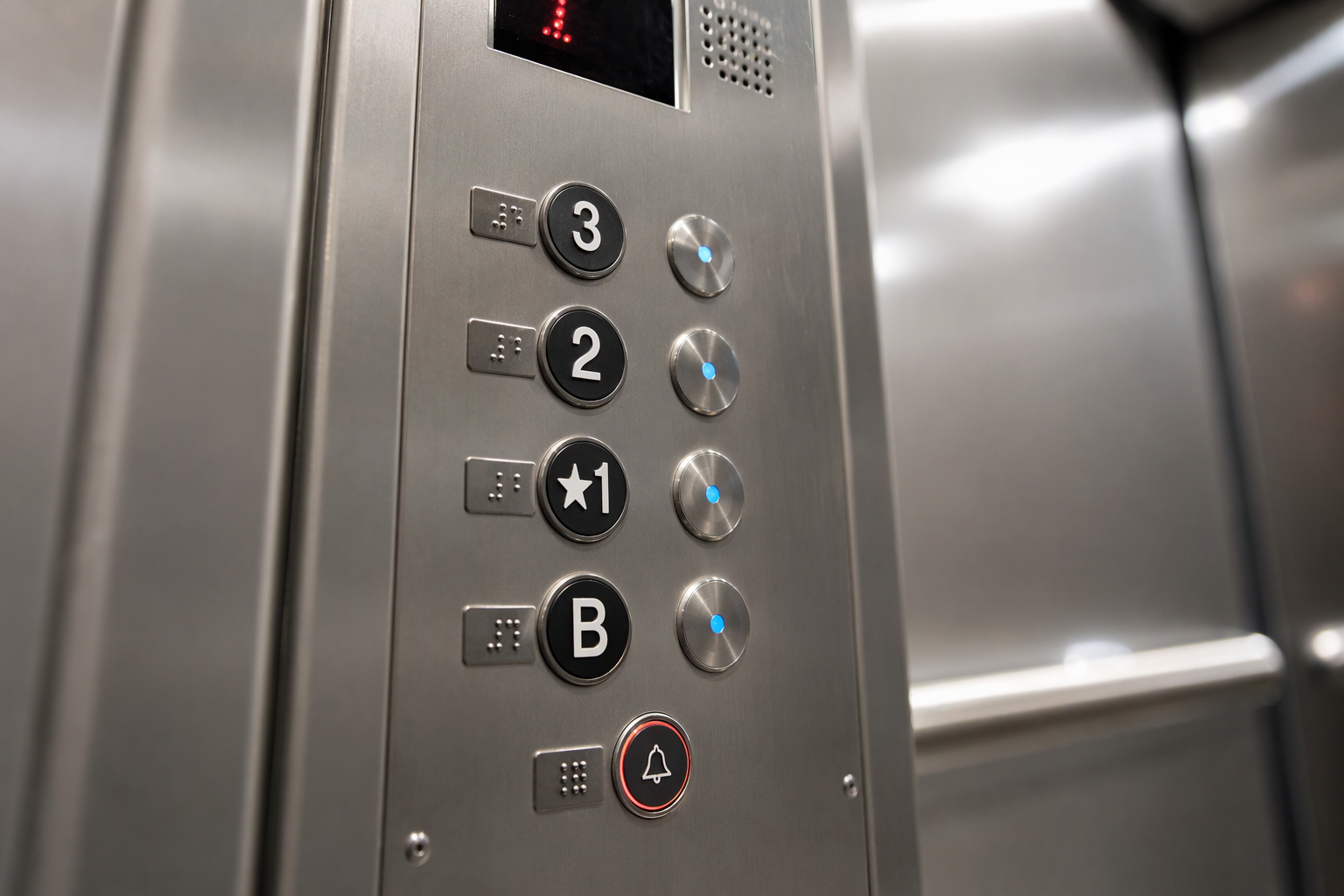
- Accessible controls at reachable heights, with Braille and raised character markings
- Two-way emergency communication systems within the cab
- Automatic reopening door devices to prevent the door from closing on a person
- Level landings at each floor served
- Visual and audible signals at landings and inside the car
Purely private single-family residences occupied only by the owner and family members are generally exempt from ADA requirements. However, any residential elevator that serves a healthcare purpose open to employees, clients, patients, or the public loses that exemption and must meet applicable accessibility standards. Healthcare facility operators should not assume that a “residential” elevator label grants ADA immunity.
How Do ASME A17.1 Standards Apply to Residential Elevators in Healthcare Buildings?
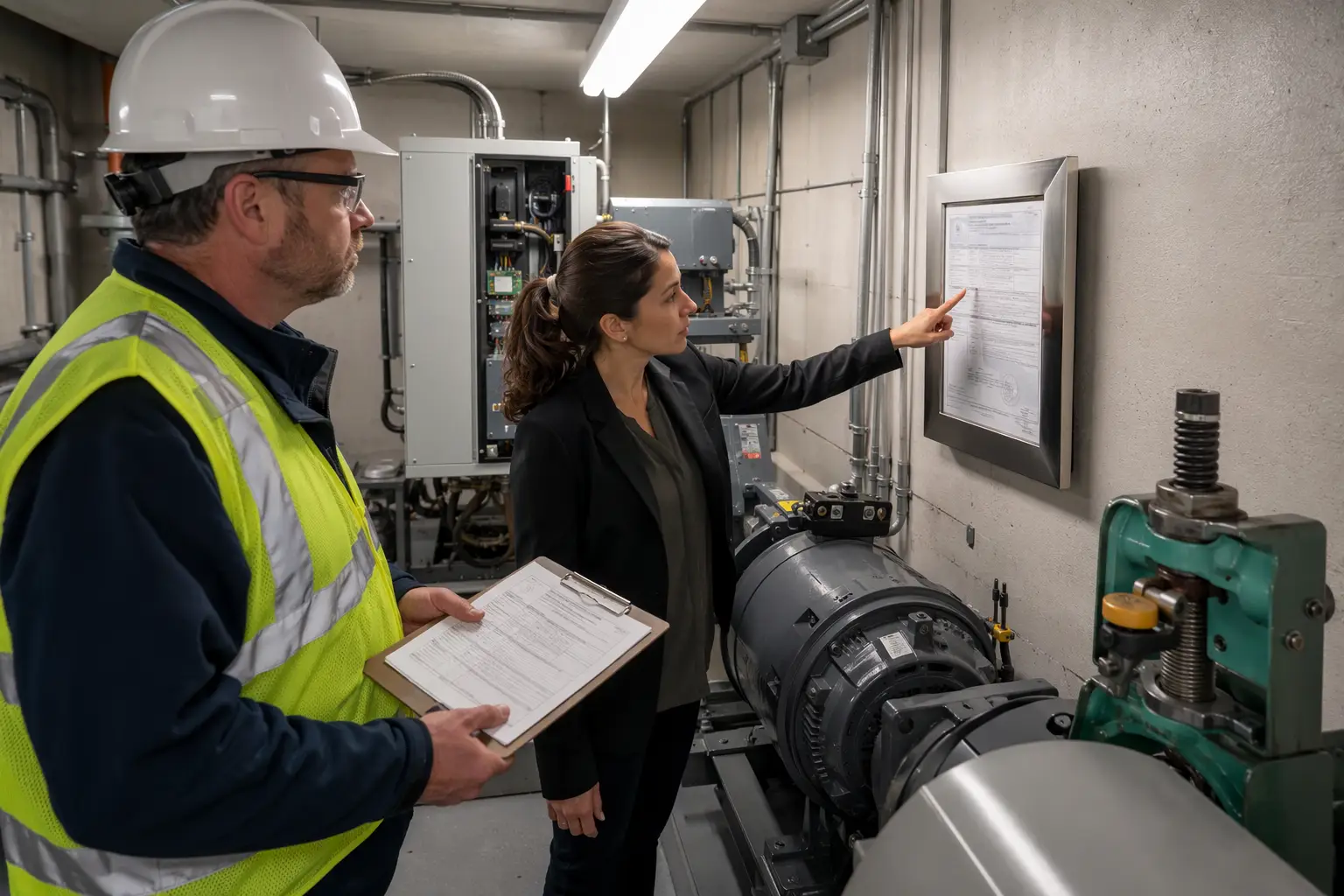
The ASME A17.1 Safety Code for Elevators and Escalators is the foundational technical standard for elevator construction, installation, inspection, and maintenance across the United States. Each state in Quality Elevator Company’s service area has adopted a specific edition of this code, and the edition that governs any given elevator depends on when that elevator’s installation permit was issued.
ASME A17.1 establishes the mechanical and safety specifications that underpin ADA compliance — including door dimensions, cab size, leveling accuracy, and control placement. An elevator that does not meet ASME A17.1 requirements cannot reliably meet ADA accessibility standards either, because the two frameworks are complementary. Healthcare facility operators should understand that state elevator safety compliance and ADA compliance are separate obligations that must both be satisfied.
What Are the State-Specific Elevator Inspection Requirements in the DC, Maryland, Virginia, and Pennsylvania Markets?
Each jurisdiction where Quality Elevator Company operates has distinct inspection intervals, certificate requirements, and governing agencies. Healthcare facility operators should know the rules in their specific market:
District of Columbia: The DC Department of Buildings (DOB) oversees elevator inspection and certification. All elevators in DC must be inspected and certified for operation. DC requires a Category 1 inspection every 12 months and a Category 5 inspection every 60 months, each conducted by an ASME QEI-certified inspector through a DOB-approved third-party agency. A certificate of inspection is valid for two years. The current certificate must be conspicuously displayed in the elevator car. DC has adopted ASME A17.1-2013/CSA B44-13 as referenced by the 2017 DC Building Code, effective May 29, 2020. DOB plans to adopt codes based on the 2024 model codes by the end of 2027.
Maryland: The Maryland Department of Labor, Division of Labor and Industry, Elevator and Escalator Safety governs elevator safety statewide. Maryland requires annual periodic inspections by a qualified elevator inspector and a comprehensive five-year inspection for elevators suspended by wire ropes or similar means. The certificate must be posted conspicuously in or on the elevator. Maryland adopted ASME A17.1-2022/CSA B44:22 effective June 17, 2026. Importantly, Maryland’s elevator inspection and certificate law generally does not apply to units in privately owned single-family homes — but once a property takes on a healthcare use, that exemption does not apply.
Pennsylvania: The Pennsylvania Department of Labor and Industry (L&I), Bureau of Occupational and Industrial Safety, Elevator Section oversees elevators statewide, including in Philadelphia. Electric and hydraulic elevators must have periodic inspections at intervals of no more than six months. Pennsylvania’s updated elevator regulation takes effect December 20, 2026, at which point ASME A17.1-2016 (with Pennsylvania modifications) will apply to new permit applications. Pennsylvania’s UCC elevator rules do not apply to lifting devices used only by the occupants of a single dwelling unit — again, healthcare use changes the analysis.
Virginia: Local building departments enforce the Virginia Uniform Statewide Building Code (13VAC5-63). All elevators in Virginia require an annual periodic inspection, and localities may require six-month inspections. Virginia adopted ASME A17.1/CSA B44-2019, effective January 18, 2024, through the 2021 USBC. In Richmond, the City of Richmond Department of Planning and Development Review, Bureau of Permits and Inspections, runs the elevator program including final acceptance inspections and annual inspections with tests. Virginia law exempts elevators in single-family homes, two-family homes, and townhouses from local inspection — but healthcare use in those buildings changes the obligation.
Does a Residential Elevator Need to Be Upgraded to Meet ADA Standards When a Healthcare Use Begins?
Yes, in most cases. When a property transitions from purely private residential use to a healthcare use — even partially — the elevator that serves the healthcare area typically must be evaluated against ADA accessibility standards. The obligation to remove barriers in existing facilities applies under the ADA, subject to a standard of feasibility and undue burden. This means healthcare facility operators may need to retrofit car dimensions, update controls, add audible and visual signals, or reconfigure door systems.
The practical starting point is an assessment that documents existing elevator specifications against ADA requirements and applicable ASME A17.1 provisions. Quality Elevator Company recommends that any organization converting a residential property to healthcare use schedule an elevator assessment before the facility opens, not after a complaint or inspection citation is received.
What Is the Difference Between a Residential Elevator and a Commercial Elevator for ADA Purposes?
The distinction matters significantly. A residential elevator — typically installed under ASME A17.1 provisions for private residence elevators — is designed for personal home use and may have smaller cab dimensions, lower weight capacities, and simpler control systems than a commercial elevator. These specifications may not satisfy ADA accessibility requirements for a facility where patients, clients, or employees with disabilities must use the elevator.
When a healthcare use begins, regulators and inspectors may require that the existing residential elevator be upgraded or replaced with a unit that meets commercial accessibility standards. The applicable ASME edition in force at the time of any alteration will govern the scope of required upgrades. Operators should consult with a licensed elevator contractor early in the planning process to understand what modifications are required before the first patient or client uses the building.
What Permits Are Required to Modify or Replace a Residential Elevator for Healthcare Compliance?
In all four jurisdictions where Quality Elevator Company operates, any construction, alteration, or repair of an elevator requires a permit from the governing authority before work begins:
- Contact the applicable regulatory authority — DOB in DC, Maryland Department of Labor in Maryland, Pennsylvania L&I in Pennsylvania, or the local building department in Virginia — to determine permit requirements for the planned modification.
- Engage a licensed elevator contractor to prepare and submit the permit application, including all required drawings and specifications.
- Wait for permit approval before beginning any alteration or replacement work.
- Have all work performed by licensed elevator mechanics (required in Maryland and Virginia; check current requirements in your jurisdiction).
- Schedule the acceptance inspection with the governing authority after work is complete, before returning the elevator to service.
- Obtain and post the updated certificate of inspection in the elevator car or at the required location.
- Retain all maintenance, repair, test, and inspection records at an accessible central location in the building.
In Maryland, elevator units must be registered with the Commissioner at least 60 days before planned completion. Skipping this step can delay a facility’s opening or certificate of occupancy.
How Do Healthcare-Specific Considerations Affect Elevator Compliance Beyond ADA?
Healthcare facilities have operational demands that go beyond the minimum ADA and state elevator safety requirements. Elevators in these settings may need to accommodate:
- Oversized wheelchairs, motorized scooters, and medical transport chairs
- Hospital beds or stretchers, particularly in facilities that serve residents with limited mobility
- Medical equipment carts and supply transport
- Infection control surface requirements that affect cab material selection
- Reliability standards that reflect the critical nature of vertical access for patients who cannot use stairs
Maryland’s building code requires that any new building constructed after July 1, 1985, with at least one planned elevator must have a passenger elevator that can carry a six-foot-eight-inch rescue litter horizontally — a requirement directly relevant to healthcare settings where emergency patient transport may occur.
Quality Elevator Company works with healthcare facility operators to identify these functional requirements alongside minimum code compliance, so that the resulting elevator system serves patients, staff, and emergency responders effectively.
What Maintenance Obligations Apply to Elevators in Healthcare Facilities?
Ongoing maintenance is a legal and safety obligation, not an optional service. In all four jurisdictions, elevators must be maintained in safe operating condition in accordance with applicable ASME A17.1 provisions and state rules. In Maryland, maintenance, repair, test, and inspection records must be kept at a readily accessible central location in the building. In DC, alterations and repairs of existing elevators follow the Existing Building Code and Property Maintenance Code.
For healthcare facilities, elevator downtime is not merely an inconvenience — it may prevent patients with mobility limitations from accessing essential services or exiting the building safely. A preventive maintenance program that anticipates inspection intervals and addresses wear before failure is essential in this environment. Quality Elevator Company provides maintenance services designed around the inspection schedules and code requirements applicable in each market it serves.
What Are the Consequences of ADA Non-Compliance for a Healthcare Elevator?
Non-compliance with ADA elevator requirements in a healthcare facility can result in:
- Formal complaints filed with the U.S. Department of Justice or through private litigation under the ADA
- Findings of discrimination against individuals with disabilities, with potential monetary damages
- Orders to remediate non-compliant conditions, potentially requiring facility closure during corrective work
- Loss of federal funding or eligibility for Medicare and Medicaid reimbursement in regulated healthcare settings
- Reputational damage that affects patient census and community trust
Proactive compliance assessment is substantially less costly than reactive remediation after a complaint. Healthcare facility operators should treat elevator accessibility as a standing compliance obligation, not a one-time checklist item.
Questions Your Inspector Will Ask
When a state elevator inspector or a code official visits a healthcare facility with a residential elevator, the following questions are typical. Facility operators and property owners should be prepared with documentation and clear answers:
- When was the elevator installed, and under what permit? The applicable ASME edition depends on the permit date.
- Has the elevator been altered or modernized since original installation? Alterations may trigger compliance with the current code edition in force at the time of the alteration.
- Is the current certificate of inspection posted in the cab or at the approved location? Missing or expired certificates are citation items in all four jurisdictions.
- Who holds the current maintenance contract, and are maintenance records on-site? Maryland requires records at a readily accessible central location; inspectors may request to review them.
- Has the elevator passed all required periodic tests, including Category 1 and Category 5 tests where applicable? DC requires Category 5 every 60 months; inspectors will check test records.
- Are the emergency communication systems functional? Two-way communication is required; inspectors will test this during the visit.
- Do the cab dimensions, door widths, and control heights meet accessibility requirements? Inspectors may measure and compare against applicable standards.
- What is the elevator’s rated capacity, and is it adequate for the healthcare use? A residential elevator rated for personal home use may be undersized for the facility’s operational needs.
- Has the elevator registered with the state authority as required? Maryland requires registration at least 60 days before the elevator is placed in service.
- Are all elevator mechanics and contractors working on this unit properly licensed or certified in this jurisdiction? Virginia requires certified mechanics; Maryland requires licensed mechanics and contractors.
How Can a Healthcare Facility Begin the ADA Compliance Process for a Residential Elevator?
The compliance process for a healthcare facility with a residential elevator follows a clear sequence:
- Conduct a physical assessment of the existing elevator, documenting cab dimensions, door widths, control heights, leveling accuracy, and communication systems against ADA accessibility guidelines and applicable ASME A17.1 provisions.
- Confirm the elevator’s permit history and the ASME edition under which it was originally installed and any subsequent alterations.
- Identify gaps between the existing installation and current ADA and state code requirements.
- Consult with a licensed elevator contractor to develop a remediation plan, including permit applications for any required modifications.
- Submit permit applications to the governing authority before beginning any work.
- Complete modifications using licensed or certified elevator mechanics.
- Pass the required acceptance inspection and obtain an updated certificate of inspection.
- Establish a preventive maintenance program aligned with the jurisdiction’s required inspection intervals.
- Retain all records on-site and schedule recurring inspections as required by the applicable state authority.
Quality Elevator Company supports healthcare facility operators through each stage of this process, from initial assessment through ongoing maintenance and inspection coordination across Washington DC, Maryland, Pennsylvania, and Virginia.
Contact Quality Elevator Company for a free elevator assessment at 301-779-9116.
Need elevator service you can rely on? Quality Elevator Company is ready to help.