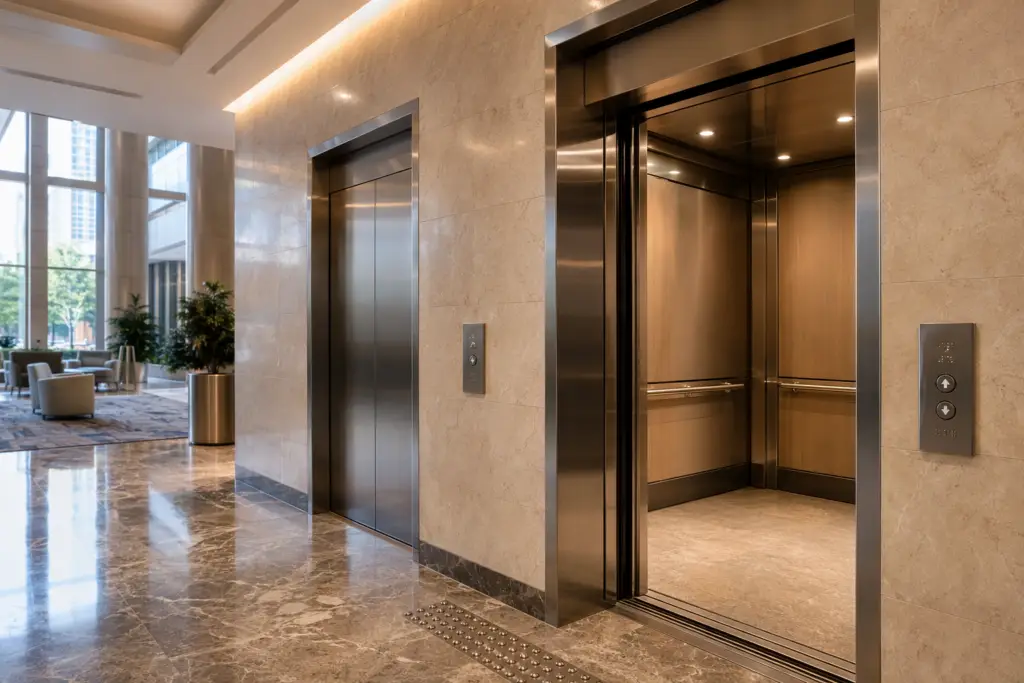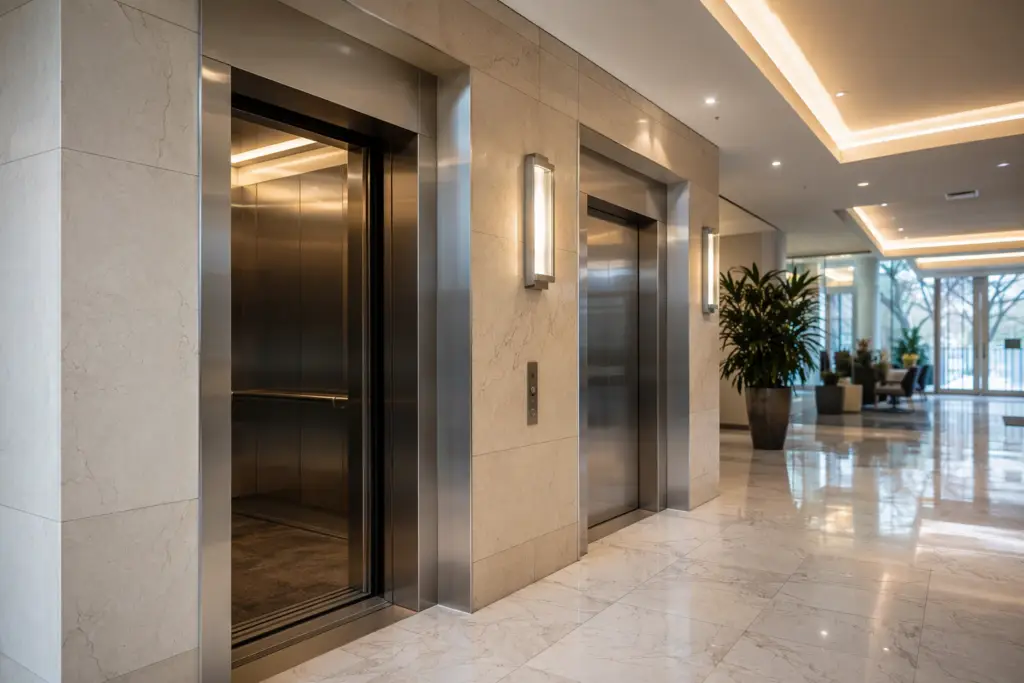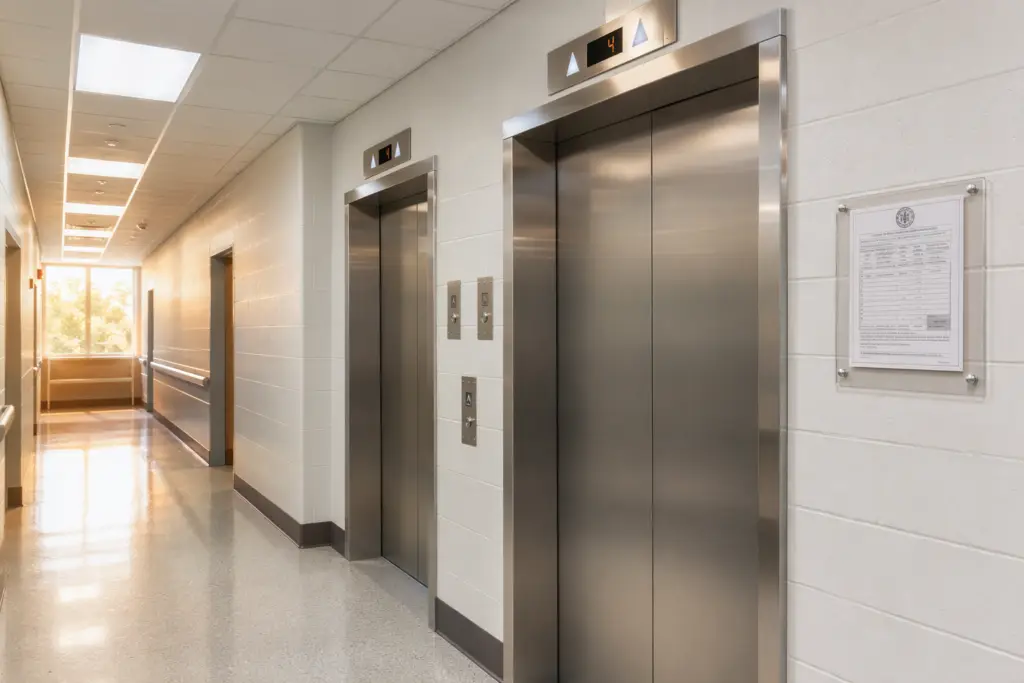
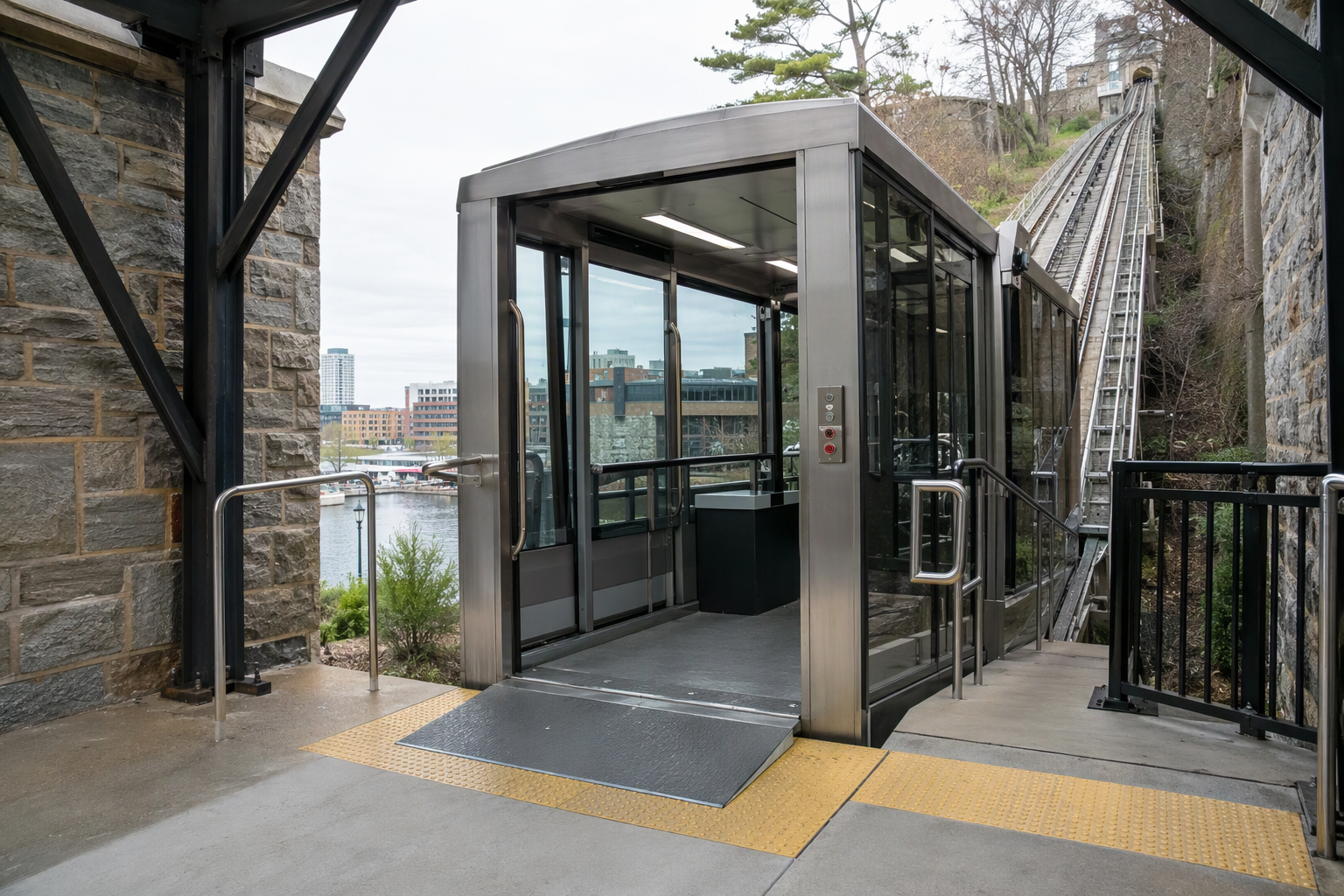
Funicular railways and inclined elevators bridge elevation changes in transit stations, riverfront facilities, historic districts, and public campuses. When these systems operate in public transportation settings, they fall under overlapping federal accessibility mandates and mechanical safety codes. Understanding exactly which standards apply — and how they interact — is essential for owners, transit authorities, and facility managers in Baltimore, Washington DC, Philadelphia, and Richmond.
What Are the ADA Requirements for Funicular Railways and Inclined Elevators in Public Transportation?
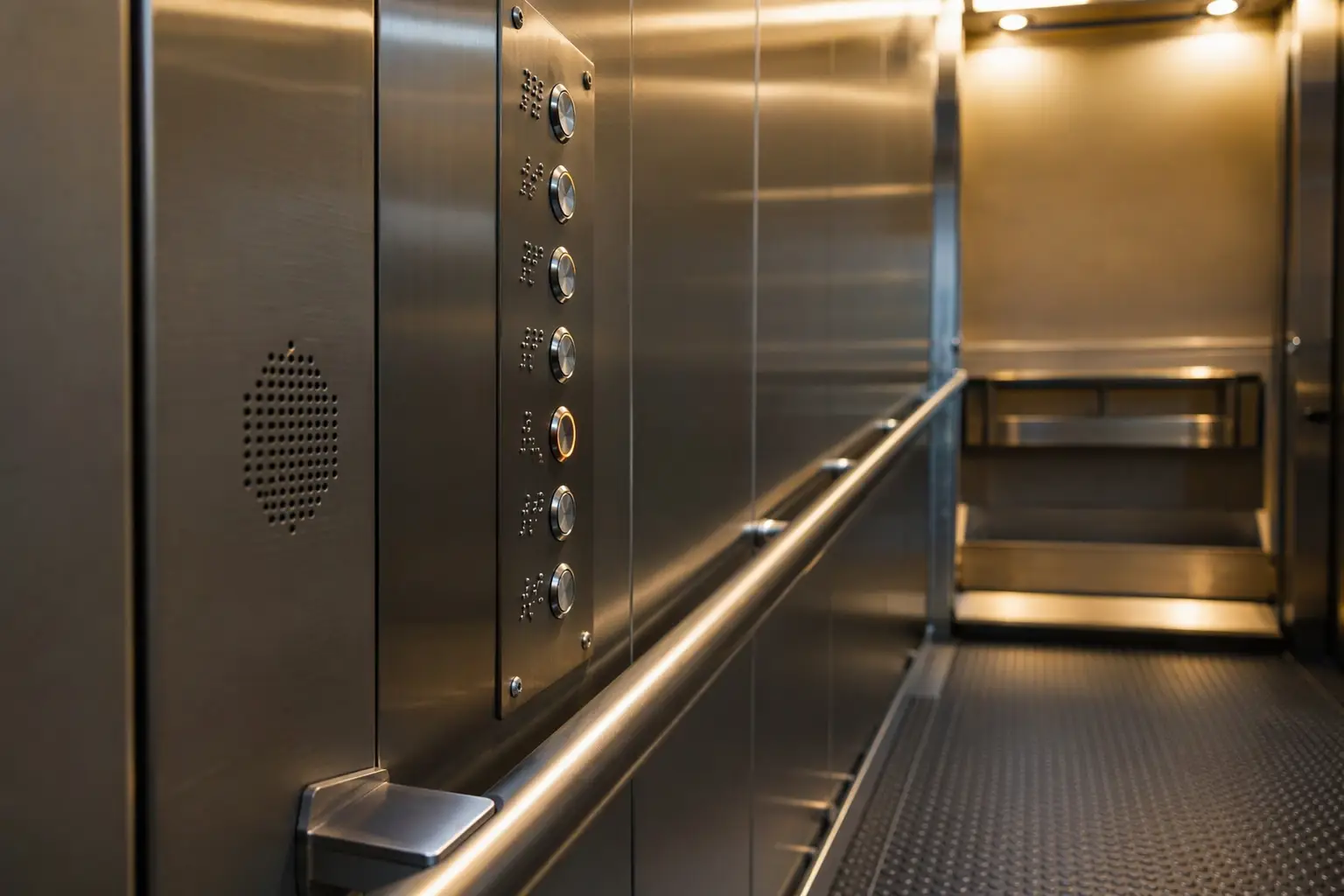
The Americans with Disabilities Act requires that funicular railways and inclined elevators serving the public provide accessible entry, maneuverable car interiors, operable controls, and two-way communication for passengers with disabilities.
Under ADA Title II (covering state and local government entities, including transit authorities) and Title III (covering places of public accommodation), any elevator or rail-based conveyance that provides vertical or inclined access to a facility must be accessible to people with physical disabilities. The ADA Standards for Accessible Design, which incorporate the technical specifications developed in coordination with the U.S. Access Board, establish minimum requirements for elevator car dimensions, door clear width, floor surfaces, handrails, controls height and reach range, and emergency communication.
For inclined elevators and funicular cars, the accessible route obligation means the conveyance must be part of an uninterrupted accessible path connecting accessible parking, transit platforms, and building entrances. Where a funicular is the only means of traversing a grade change that cannot reasonably be ramped, it functions as the accessible route itself, making full ADA compliance non-negotiable.
Transit authorities operating in Washington DC, Baltimore, Philadelphia, and Richmond must also comply with FTA (Federal Transit Administration) guidance when federal transit funds are involved, which layers additional program accessibility requirements onto the ADA baseline.
How Does ASME A17.1 Apply to Inclined Elevators and Funicular Systems?
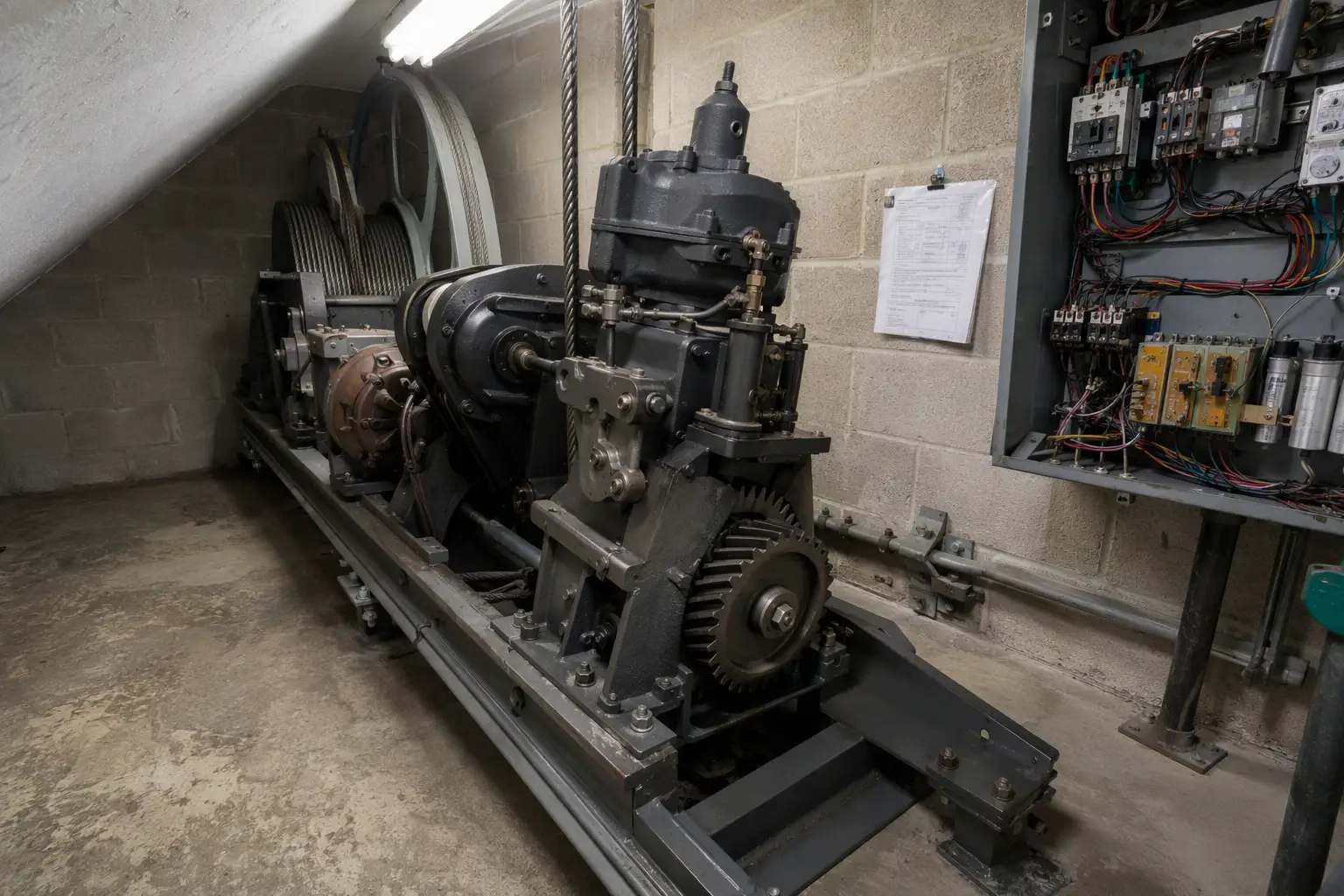
The ASME A17.1 Safety Code for Elevators and Escalators governs inclined elevators through Part 5, which covers special application elevators including inclined designs, establishing requirements for safeties, brakes, guide systems, and car enclosures on non-vertical installations.
ASME A17.1 Part 5 addresses the unique mechanical demands of inclined travel: gravity acts at an angle rather than straight down, so safety devices, buffer systems, and suspension components must be engineered and rated accordingly. Requirements cover the angle of inclination, type of drive (rack and pinion, wire rope traction, or chain), speed governors, and emergency stopping systems. For funicular systems where counterbalancing cars are connected by a continuous cable over a sheave at the summit, the code addresses load equalization, terminal limit switches, and the interaction between the ascending and descending cars.
Each jurisdiction served by Quality Elevator Company adopts a specific edition of ASME A17.1. The District of Columbia currently enforces the 2013 edition under 12-A DCMR Chapter 30; Maryland adopted the 2022 edition effective June 17, 2026, under COMAR 09.12.81; Pennsylvania enforces the 2000 edition with A17.1a-2002 addenda until December 20, 2026, under 34 Pa. Code Chapter 405; and Virginia adopted the 2019 edition effective January 18, 2024, under 13VAC5-63.
What Is the Difference Between a Funicular Railway and an Inclined Elevator?
A funicular railway is a cable-driven rail system where two counterbalanced cars travel opposing tracks on a slope simultaneously, while an inclined elevator is a single car traveling on a fixed inclined guideway using its own independent drive and safety system.
From a regulatory standpoint, the distinction matters because funicular railways with multiple cars on shared infrastructure may be classified differently from single inclined elevator cars. ASME A17.1 Part 5 addresses inclined elevators as a category of special application elevator. True funicular railways — where one ascending car counterbalances a descending car on a shared cable — may also fall under ASME B77 standards for passenger ropeways and aerial tramways depending on how the authority having jurisdiction (AHJ) classifies the installation. Facility owners should seek a formal classification ruling from their AHJ before design begins, as the wrong code classification can require costly redesign.
Which Jurisdictions Regulate Inclined Elevators in the Mid-Atlantic Region?
Regulatory authority over inclined elevators in the Quality Elevator Company service area is divided between state and local bodies depending on the jurisdiction.
In Maryland, the Maryland Department of Labor, Division of Labor and Industry, Elevator and Escalator Safety (Safety Inspection Unit) regulates all elevator units, and mechanics must be licensed by the Maryland Elevator Safety Review Board. In the District of Columbia, the DC Department of Buildings (DOB) issues elevator certificates through DOB-approved third-party inspection agencies, and the DC Board of Industrial Trades licenses elevator contractors and mechanics. In Pennsylvania, the Pennsylvania Department of Labor and Industry, Bureau of Occupational and Industrial Safety, Elevator Section holds statewide jurisdiction — including Philadelphia — and third-party inspection agencies must be certified by the Department. In Virginia, the local building department enforces the Virginia Uniform Statewide Building Code; in Richmond, that is the City of Richmond Department of Planning and Development Review, Bureau of Permits and Inspections.
What ADA Car Dimensions Must an Inclined Elevator Meet for Accessibility?
ADA-accessible elevator cars must provide sufficient floor area and door clear width to accommodate a wheelchair user and a companion, with controls reachable from a seated position.
The ADA Standards for Accessible Design specify minimum car dimensions and clear floor space. For standard elevator cars, the inside dimensions and door clear width must accommodate a 60-inch turning radius or allow a wheelchair user to maneuver without turning. On inclined elevators, the floor may be leveled hydraulically or mechanically to remain nominally horizontal during travel, which is essential for wheelchair stability and for meeting ADA reach-range requirements for controls. Where the car floor cannot be fully leveled, the AHJ and accessibility consultant must evaluate whether an alternative means of access satisfies the equivalent facilitation provision of the ADA.
Handrails on inclined elevator cars must be graspable and continuous through the travel zone. Floor surfaces must be stable, firm, and slip-resistant — a heightened concern on inclined installations where the approach angle can create traction challenges for wheel-mounted mobility devices.
What Two-Way Communication Systems Are Required on ADA-Compliant Inclined Elevators?
ADA requires that elevator cars provide a two-way communication system enabling passengers to summon assistance, with visual and audible signals confirmed by the responding party within a defined timeframe.
The communication system must connect to a staffed location during building operating hours. For transit applications — such as a funicular serving a transit station — the communication link typically connects to the station control room or a transit operations center. The system must include both audio and visual (text or indicator light) confirmation that the call has been received, accommodating passengers who are deaf or hard of hearing. Buttons must be identified by raised characters and Braille.
It is important to note that two-way video or text messaging is not a universal code requirement in every jurisdiction. The District of Columbia’s building code references ASME A17.1-2013, and two-way video is not established as a DC-specific requirement; similarly, Pennsylvania’s adopted editions do not list video as a mandatory feature. Facility owners should verify specific communication requirements with their AHJ.
What Inspection and Testing Schedule Applies to an Inclined Elevator in Washington DC?
In Washington DC, an inclined elevator or other conveyance must receive a Category 1 inspection every 12 months and a Category 5 inspection every 60 months, each conducted by an ASME QEI-certified inspector from a DOB-approved third-party inspection agency.
Under 12-A DCMR Chapter 30 and the 2017 DC Building Code referencing ASME A17.1-2013, owners submit inspection reports for the past two years to DOB through the Citizen Access Portal. A DC certificate of inspection is valid for two years, during which periodic inspections and tests must continue on schedule. A copy of the current certificate must be conspicuously displayed in the elevator car. Any alteration or modernization of the inclined elevator requires a DOB permit; during the permit period, the existing certificate may be temporarily suspended.
What Inspection Schedule Applies to an Inclined Elevator in Maryland?
Maryland requires an annual periodic inspection of every elevator unit by a third-party qualified elevator inspector, plus a comprehensive five-year inspection for elevators suspended by wire ropes, belts, chains, or similar means — a category that covers many inclined elevator configurations.
Under the Maryland Department of Labor framework and the Annotated Code of Maryland, Public Safety Article, Title 12, Subtitle 8, every elevator unit must be registered with the Commissioner at least 60 days before planned completion and re-registered annually. Tests must be performed by a licensed elevator mechanic, and when a third-party inspector witnesses a test, that inspector must be physically present for the entire test. Maryland adopted ASME A17.1-2022/CSA B44:22 effective June 17, 2026, so inclined elevators installed or contracted after that date must comply with the 2022 edition.
What Inspection Schedule Applies to an Inclined Elevator in Pennsylvania?
Pennsylvania requires periodic inspections at intervals of no more than six months for electric and hydraulic elevators, with a certificate of operation valid for 24 months on the six-month inspection cycle.
Under 34 Pa. Code Chapter 405, the Pennsylvania Department of Labor and Industry currently enforces ASME A17.1-2000 with A17.1a-2002 addenda for permits issued before December 20, 2026, when ASME A17.1-2016 (with Pennsylvania modifications) takes effect for new permit applications. Starting December 20, 2026, Category 1 tests must be performed annually as a stand-alone requirement, witnessed by a construction code official. The Department conducts an acceptance inspection before any new, repaired, altered, or modified inclined elevator enters service. Owners must report accidents causing fatalities or requiring professional medical care to the Department.
What Inspection Schedule Applies to an Inclined Elevator in Virginia?
Virginia requires an annual periodic inspection of all elevators and escalators enforced by the local building department, with the possibility of a six-month periodic inspection if the locality requires it.
Under 13VAC5-63 and the 2021 Virginia Uniform Statewide Building Code (effective January 18, 2024), periodic tests must follow ASME A17.1 Appendix N intervals and be witnessed by the local code official or an approved agency. In Richmond, the City of Richmond Department of Planning and Development Review, Bureau of Permits and Inspections administers final acceptance inspections and annual elevator inspections. No person may work as an elevator mechanic in Virginia without state certification from the Virginia Board for Contractors (DPOR), and contractors performing elevator work must hold the Elevator/Escalator Contracting (EEC) specialty license.
What Are the ADA Requirements for Inclined Elevator Platform Landings?
ADA requires that landing areas at both the upper and lower stations of an inclined elevator provide level, unobstructed floor space sufficient for a wheelchair to approach, enter, and exit the car without backing into hazards.
Level floor space at landings must connect without abrupt level changes to the accessible route serving the facility. Edge protection and guardrails at open sides of inclined guideways must not impede accessible approach. Call buttons, intercoms, and signage at landings must comply with ADA reach range requirements (no higher than 48 inches for a forward approach and no lower than 15 inches above the floor) and must include raised characters and Braille where required. Tactile warning surfaces must be provided at the edges of open boarding areas consistent with the ADA Standards for Accessible Design.
What Safety Devices Are Specifically Required for Inclined Elevators Under ASME A17.1?
ASME A17.1 Part 5 requires inclined elevators to have speed governors, safeties that arrest the car if the governor actuates, anti-rollback devices, and terminal limit switches calibrated for the angle and travel of the specific installation.
Because gravity acts along the incline, overspeed on the descent is the primary hazard. The governor must be set to a speed appropriate for the angle of inclination and actuate before the car reaches a dangerous velocity. Safeties — typically wedge, roller, or flexible-guide-clamp types — must grip the guide rails with sufficient force to stop the car within the rated deceleration distance. Anti-rollback or pawl-and-ratchet devices prevent the car from rolling backward in the event of drive failure. Terminal buffers must be rated for the kinetic energy of the car at the governed speed, accounting for the inclined vector of motion rather than purely vertical impact.
How Do Historic Preservation Requirements Interact With ADA Compliance for Funicular Systems?
When a funicular railway or inclined elevator is located in or adjacent to a historic structure, the ADA allows for equivalent facilitation — alternative accessible solutions — where full compliance would threaten the historic character of the facility, but only after a formal evaluation process.
Section 4.1.7 of the ADA Standards for Accessible Design (and the corresponding provisions of the 2010 ADA Standards) provides that qualified historic buildings and facilities may use alternative design where compliance with standard requirements would threaten or destroy the historic significance. This does not eliminate the obligation to provide access; it allows an alternative path or feature that achieves equivalent access. Transit agencies and facility owners in Baltimore’s historic waterfront areas, Washington DC’s historic transit infrastructure, Philadelphia’s historic districts, and Richmond’s historic riverfront properties should engage both a Certified Historic Preservation professional and an ADA accessibility consultant before finalizing any inclined elevator design.
What Is the Process for Installing a New ADA-Compliant Inclined Elevator in a Public Facility?
- Engage a licensed elevator contractor and an ADA accessibility consultant during the preliminary design phase to confirm the proposed system classification (inclined elevator under ASME A17.1 Part 5 or funicular under ASME B77) with the AHJ.
- Submit permit applications to the governing regulatory body — DOB in DC, the Maryland Department of Labor in Maryland, Pennsylvania Department of Labor and Industry in Pennsylvania, or the local building department in Virginia — with full construction drawings and equipment specifications.
- Complete the ADA accessibility review to confirm car dimensions, landing clearances, control heights, communication systems, and accessible route connections meet the ADA Standards for Accessible Design.
- Obtain plan approval and the construction permit before any fabrication or site work begins.
- Install the system using licensed or certified mechanics as required in the specific jurisdiction.
- Arrange for the mandatory acceptance inspection by the AHJ or approved third-party inspector before placing the system in service.
- Obtain the certificate of operation or certificate of inspection, post it conspicuously as required by the jurisdiction, and register the unit where registration is required (Maryland requires registration at least 60 days before planned completion).
- Establish a written maintenance and inspection schedule aligned with the jurisdiction’s periodic inspection intervals and ASME A17.1 Appendix N test intervals.
Quality Elevator Company supports facility owners through permit coordination, code-compliant installation, and mandatory acceptance inspections across Baltimore, Washington DC, Philadelphia, and Richmond.
How Do ADA and ASME Requirements Compare Across the Mid-Atlantic Jurisdictions for Inclined Elevators?
| Requirement | District of Columbia | Maryland | Pennsylvania | Virginia (Richmond) |
|---|---|---|---|---|
| Governing Regulator | DC Dept. of Buildings (DOB) | MD Dept. of Labor, Division of Labor and Industry | PA Dept. of Labor and Industry, Elevator Section | Local building dept. (Richmond: Bureau of Permits and Inspections) |
| ASME A17.1 Edition (2026) | 2013 edition | 2022 edition (eff. June 17, 2026) | 2000 + A17.1a-2002 addenda (2016 edition for permits from Dec. 20, 2026) | 2019 edition (eff. Jan. 18, 2024) |
| Periodic Inspection Interval | Category 1 every 12 months | Annual (+ comprehensive 5-year for rope/belt/chain systems) | No more than every 6 months | Annual (locality may require 6-month) |
| 5-Year / Category 5 Test | Every 60 months | Comprehensive 5-year for applicable systems | Category 1 annually from Dec. 20, 2026; prior tests per A17.1-2000 | Per ASME A17.1 Appendix N intervals |
| Mechanic Licensing | DC Board of Industrial Trades license required | MD Elevator Safety Review Board license required | No statewide mechanic license identified | DPOR certification required; 3 yrs experience + exam |
| Contractor Licensing | DC elevator contracting license required | MD Elevator Safety Review Board license required; $1M liability insurance minimum | No statewide contractor license identified | DPOR Elevator/Escalator Contracting (EEC) specialty license required |
| Certificate Posting | Conspicuously in car or building operator’s office | Conspicuously in or on the elevator unit | In car or attached to controller in machine room | In car, on escalator, in building operator’s office, or approved conspicuous location |
| ADA Obligation | Federal ADA applies to all public facilities | Federal ADA applies to all public facilities | Federal ADA applies to all public facilities | Federal ADA applies to all public facilities |
What Maintenance Obligations Apply to ADA-Compliant Inclined Elevators Between Inspections?
ADA requires that accessible features, including inclined elevators and funicular systems, be maintained in operable working condition, with prompt repair of out-of-order equipment and interim alternative access provided where feasible.
Beyond the ADA operational continuity obligation, ASME A17.1 establishes ongoing maintenance requirements. Maintenance records must be kept accessible at the building; in Maryland, records must be kept at a readily accessible central location in the building where the elevator is located. Lubrication schedules, guide rail alignment checks, brake adjustment intervals, and wire rope or chain inspections for inclined systems must follow the manufacturer’s maintenance manual and the ASME A17.1 requirements for the applicable edition. Deferred maintenance on inclined elevators carries heightened risk because worn safety devices on a sloped installation may fail to arrest an overspeed car before it reaches terminal speed.
Quality Elevator Company provides ongoing maintenance programs for inclined and specialty elevator equipment, helping facility managers in Baltimore, DC, Philadelphia, and Richmond maintain both mechanical compliance and ADA operational continuity.
What Happens When an Inclined Elevator Fails ADA Operational Requirements in a Transit Setting?
When an accessible inclined elevator is out of service, the transit authority or facility owner has an ADA obligation to provide prompt repair and, where feasible, alternative accessible transportation or access while repairs are completed.
The U.S. Department of Transportation and DOJ guidance on ADA Title II makes clear that “elevators out of service” is not an acceptable long-term answer for public transit accessibility. Transit agencies must have a documented plan for notifying the public of elevator outages, posting alternative accessible route information, and tracking repair timelines. Repeated or prolonged outages without corrective action can expose transit agencies to ADA enforcement complaints filed with the Federal Transit Administration or private litigation. Facility managers should maintain a written elevator outage notification and response protocol as part of their overall ADA transition plan.
How Are Inclined Elevator Permits Handled for Transit Facilities in Pennsylvania?
In Pennsylvania, any construction, alteration, replacement, or repair of an inclined elevator in a transit facility requires a permit application to the Pennsylvania Department of Labor and Industry, Bureau of Occupational and Industrial Safety, Elevator Section, regardless of whether the facility is publicly or privately owned.
Under 34 Pa. Code Chapter 405, no elevator may enter service after repair, alteration, or new installation until the Department conducts an acceptance inspection and approves the equipment. This applies to Philadelphia transit facilities as well — the Pennsylvania Department of Labor and Industry has statewide jurisdiction; Philadelphia’s own Department of Licenses and Inspections does not regulate elevator inspections or certifications. The permit application must be submitted before work begins, and owners may appeal code official decisions to the Elevator Safety Board within 30 days.
What Should a Facility Owner Do If Their Inclined Elevator Is Cited for an ADA Violation?
- Obtain a copy of the written complaint or citation and identify the specific ADA provision(s) cited.
- Engage a qualified ADA accessibility consultant to conduct a site survey and confirm whether a violation exists and what the compliant remedy is.
- Engage a licensed elevator contractor — such as Quality Elevator Company — to assess whether the noncompliance is a mechanical, dimensional, or operational issue and what modifications are required.
- Contact the AHJ in the relevant jurisdiction (DOB in DC, Maryland Department of Labor, Pennsylvania Department of Labor and Industry, or the local building department in Virginia) to determine whether a permit for the corrective alteration is required.
- File the alteration permit application promptly to demonstrate good-faith corrective action.
- Document all corrective steps, timelines, and communications with the enforcement agency, as this record supports a defense of good-faith compliance efforts.
- After the alteration is complete and the acceptance inspection is passed, obtain the updated certificate and post it as required by the jurisdiction.
How Do Funicular and Inclined Elevator Systems Support Broader ADA Transition Plans for Public Agencies?
Funicular railways and inclined elevators are often the cornerstone element of an ADA transition plan for facilities with significant grade changes, because they provide the only technically feasible accessible route where ramps or standard vertical elevators cannot span the terrain.
ADA Title II requires public entities to develop and implement transition plans identifying barriers to accessibility and scheduling their removal. Where a grade change exceeds the ADA’s maximum ramp slope or length, an inclined elevator or funicular is frequently the designated solution. Transit authorities, universities, waterfront authorities, and municipal governments managing hilly terrain in Baltimore, Washington DC, Philadelphia, and Richmond should ensure that any inclined elevator identified in their transition plan meets current ASME A17.1 requirements for the applicable jurisdiction and is maintained to ADA operational standards continuously after installation. Quality Elevator Company assists public agencies in scoping inclined elevator projects that satisfy both the mechanical code requirements and the ADA transition plan obligations across all four jurisdictions.
Contact Quality Elevator Company for a free elevator assessment at 301-779-9116.
Need elevator service you can rely on? Quality Elevator Company is ready to help.