Commercial Elevator Installation: A Complete Comparison and Decision Guide
Commercial elevator installation is one of the most consequential capital decisions a building owner or facility manager will make. The choice of equipment type, contractor, and regulatory pathway affects construction timelines, long-term operating costs, tenant satisfaction, and legal compliance for the life of the building. This guide breaks down every major variable so decision-makers can evaluate their options clearly and confidently.
What Types of Commercial Elevators Are Available for Installation?
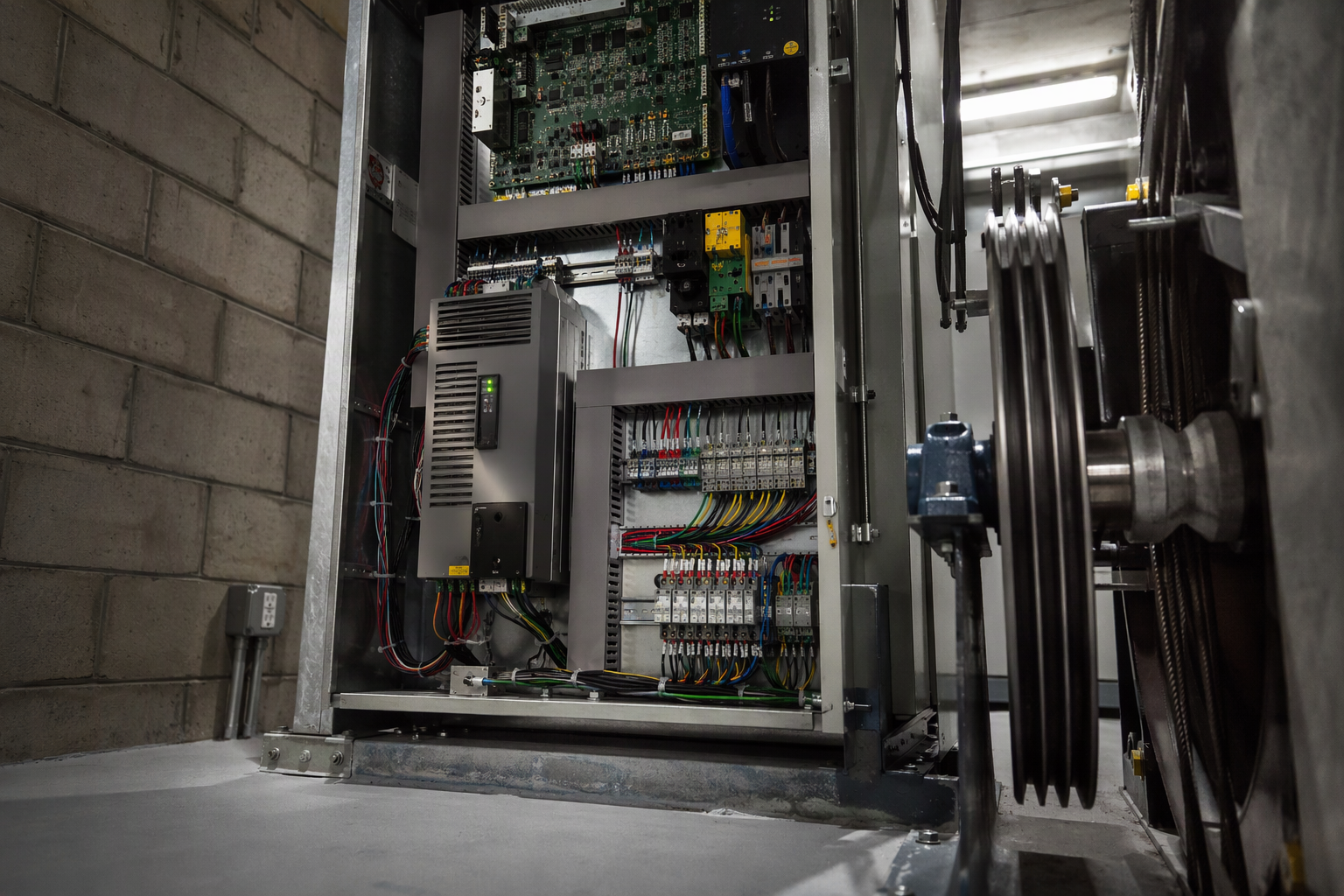
Commercial buildings in the mid-Atlantic region primarily choose among four elevator types. Each has distinct mechanical characteristics, cost implications, and best-use scenarios.
| Elevator Type | Best For | Typical Travel Height | Machine Room Required? | Key Advantage | Key Limitation |
|---|---|---|---|---|---|
| Traction (Geared) | Mid-rise commercial, office buildings | Up to approximately 20 stories | Traditional: yes; MRL: no | Smooth ride, energy-efficient options available | Requires overhead pit and machine space |
| Traction (Gearless / MRL) | High-rise and premium commercial | High-rise with no defined ceiling | No (machine-room-less) | Saves significant square footage, high speed capable | Higher upfront equipment cost |
| Hydraulic | Low-rise commercial, 2–5 stops | Generally up to 5–6 floors | Yes (pump room) | Lower initial installation cost; simpler mechanics | Slower travel speed; environmental concerns with oil |
| Pneumatic / Vacuum | Low-traffic boutique or specialty commercial | Low-rise | No | Minimal construction disruption | Limited capacity; not suitable for heavy commercial use |
For most multi-story commercial buildings in DC, Maryland, Pennsylvania, and Virginia, traction elevators — particularly machine-room-less (MRL) models — represent the current standard of practice due to their efficiency and reduced mechanical space requirements. Hydraulic units remain a practical solution for smaller commercial properties with limited floors and budget constraints.
How Do Commercial Elevator Costs Compare Across Installation Types?
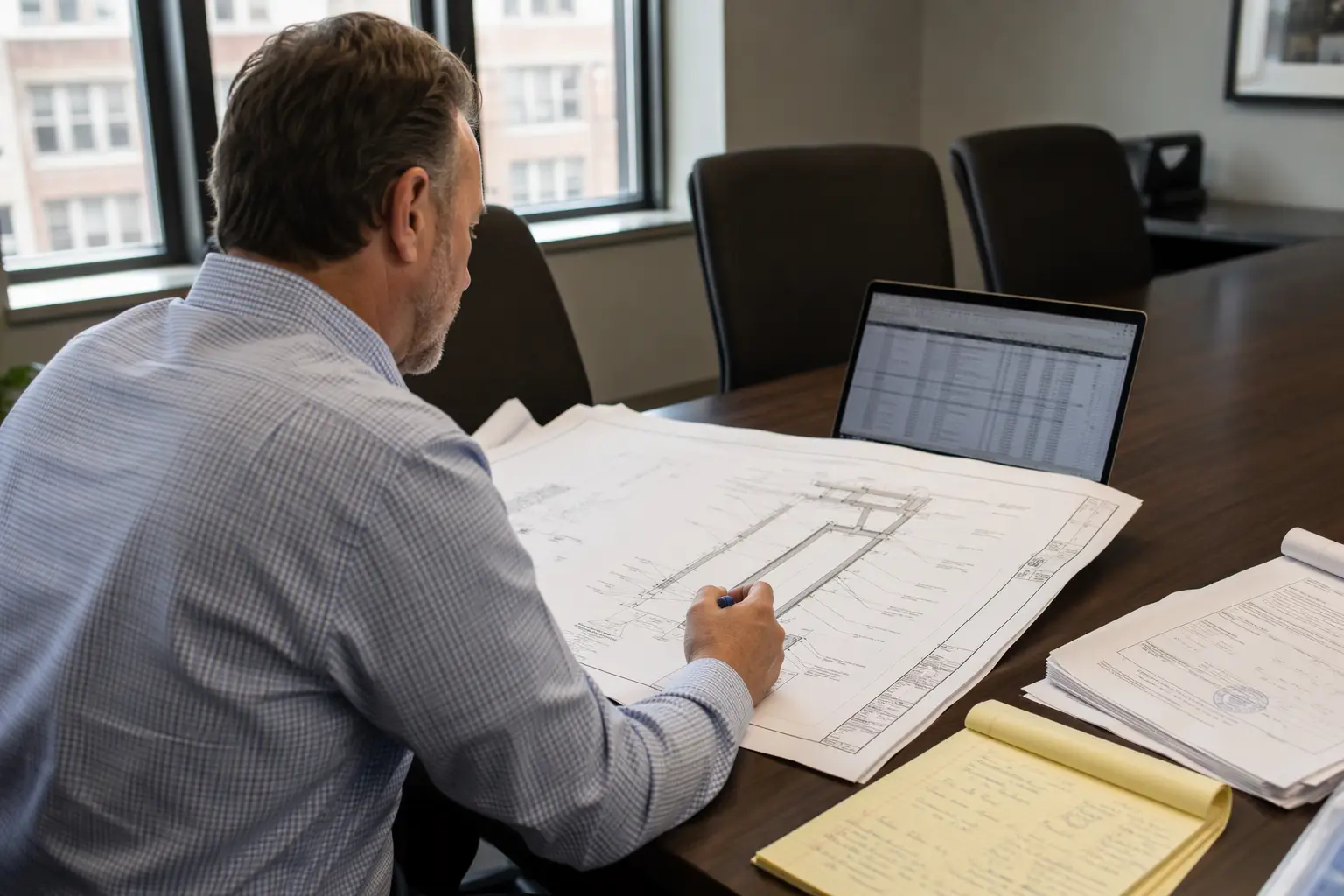
Installation cost depends on a combination of equipment selection, building structural conditions, local labor rates, permit fees, and the complexity of compliance documentation. Because prices vary widely by project, the figures below are general qualitative ranges drawn from industry understanding — any specific budget should be confirmed through a formal site assessment and contractor proposal.
| Cost Factor | Hydraulic | Geared Traction | Gearless / MRL Traction |
|---|---|---|---|
| Equipment cost tier | Lower | Moderate | Higher |
| Civil/structural work | Pit excavation; pump room | Overhead machine room or penthouse | Minimal — no dedicated machine room |
| Energy consumption | Higher (pump motor runs continuously during travel) | Moderate | Lower (regenerative drive options available) |
| Long-term maintenance cost tier | Moderate (hydraulic fluid changes, pump maintenance) | Moderate to higher | Moderate (fewer moving parts) |
| Typical useful lifespan before major modernization | Moderate | Long | Long |
| Permit and inspection fees | Vary by jurisdiction; DC, MD, PA, and VA each have distinct fee schedules — confirm with the applicable regulator | ||
Building owners should also budget for ADA compliance features required under the Americans with Disabilities Act, including accessible cab dimensions, Braille and raised character controls, and door timing requirements. These are not optional add-ons — they are federal legal requirements for new commercial installations open to the public.
What Are the Key ADA Requirements for New Commercial Elevator Installations?
The ADA Standards for Accessible Design establish minimum requirements for elevators in new commercial construction and alterations. For commercial buildings, elevators are generally required when the facility has more than one story and is open to the public or used for commercial purposes, unless a specific exemption applies.
Core ADA requirements for commercial elevator installations include:
- Minimum inside car dimensions to accommodate wheelchair users and their companions
- Accessible call buttons with raised symbols at a specified mounting height
- Braille and raised character floor designations on hoistway jambs
- Door reopening devices that remain activated for a minimum period
- Floor level indicators and audible signals at each landing
- Two-way emergency communications system inside the cab
- Leveling accuracy within a specified tolerance to eliminate tripping hazards at landings
ADA compliance must be built into the original installation design. Retrofitting for ADA compliance after installation is significantly more costly and disruptive than designing for compliance from the outset.
What Permits and Regulatory Approvals Are Required for Commercial Elevator Installation?
The regulatory pathway depends entirely on where the building is located. Quality Elevator Company serves the District of Columbia, Maryland, Pennsylvania, and Virginia, each of which has a distinct permitting and inspection framework.
District of Columbia
In DC, elevator installation is governed by the DC Department of Buildings (DOB). The applicable safety code is the ASME A17.1-2013/CSA B44-13 as referenced by the 2017 DC Building Code with District amendments, which took effect May 29, 2020. DOB permit applications must include copies of both the master electrician license and the elevator contracting license. The DC Board of Industrial Trades (within DLCP) licenses elevator contractors and mechanics. After installation, all elevators must be inspected and certified by a DOB-approved third-party inspection agency using an ASME QEI-certified inspector. A certificate of inspection is valid for two years, and at least one passenger elevator must remain operational whenever a building is occupied.
Maryland
Maryland elevator installations fall under the Maryland Department of Labor, Division of Labor and Industry, Elevator and Escalator Safety. As of June 17, 2026, the applicable code is the ASME A17.1-2022/CSA B44:22 with Maryland amendments — though the edition that governs any specific installation depends on when the installation contract was signed. Owners must register each elevator unit with the Commissioner at least 60 days before planned completion. The State conducts a final acceptance inspection before any new elevator is placed in service. Elevator contractors must be licensed by the Maryland Elevator Safety Review Board and carry at least $1,000,000 in general liability insurance and at least $500,000 in property damage insurance.
Pennsylvania
Pennsylvania elevator installations are regulated by the Pennsylvania Department of Labor and Industry (L&I), Bureau of Occupational and Industrial Safety, Elevator Section. For permit applications submitted before December 20, 2026, the applicable standard is ASME A17.1-2000 with the A17.1a-2002 addenda. For permit applications made on or after December 20, 2026, ASME A17.1-2016 with Pennsylvania modifications applies. L&I conducts a mandatory acceptance inspection before any new elevator is placed in service. No elevator may operate in Pennsylvania without a certificate of operation issued by L&I.
Virginia
In Virginia, elevator installation is governed locally — each city or county building department enforces the Virginia Uniform Statewide Building Code (13VAC5-63), which incorporates the ASME A17.1/CSA B44-2019 edition, effective January 18, 2024. Elevator contractors must hold a Virginia Board for Contractors license with the Elevator/Escalator Contracting (EEC) specialty. No one may perform elevator mechanic work in Virginia without state certification unless under the direct and immediate supervision of a certified mechanic. For installations within the City of Richmond, the Bureau of Permits and Inspections within the Department of Planning and Development Review handles acceptance inspections and certificates.
What Is the Typical Timeline for a Commercial Elevator Installation?
Installation timelines are influenced by building type, equipment lead times, permit processing speeds at the applicable authority having jurisdiction (AHJ), and site conditions. The following represents a general phase-by-phase overview.
- Site assessment and needs analysis: Determine traffic patterns, required capacity, travel distance, structural constraints, and ADA requirements. Typically takes days to weeks depending on building complexity.
- Equipment selection and design: Finalize elevator type, cab specifications, door configurations, and control systems. Coordinate with the architect or structural engineer.
- Permit application: Submit drawings, specifications, and contractor credentials to the applicable regulatory authority (DOB in DC; Maryland Department of Labor in MD; L&I in PA; local building department in VA). Processing times vary by jurisdiction and workload.
- Equipment procurement: Lead times for elevator equipment from major manufacturers can range from several weeks to several months depending on model specifications and supply chain conditions.
- Civil and structural preparation: Hoistway construction, pit excavation (hydraulic), and machine room preparation (if applicable) are completed by the general contractor prior to or concurrent with equipment arrival.
- Equipment installation: Licensed elevator mechanics install the mechanical and electrical systems. Duration depends on the number of floors, system complexity, and crew size.
- Acceptance inspection: The applicable regulatory authority conducts a mandatory acceptance inspection. In Maryland, this is performed by the State. In Pennsylvania, L&I conducts the acceptance inspection. In Virginia, the local building department witnesses required tests. In DC, a DOB-approved third-party agency performs the inspection.
- Certificate issuance and commissioning: Upon passing the acceptance inspection, the certificate of operation or certificate of inspection is issued, and the elevator may be placed in service.
Each phase must be completed in sequence, and delays at any stage — including permit processing or equipment delivery — extend the overall timeline. Quality Elevator Company recommends beginning the regulatory engagement process as early as possible, ideally concurrent with architectural design.
How Do Traction and Hydraulic Elevators Compare for Commercial Use?
| Comparison Factor | Traction (MRL) | Hydraulic |
|---|---|---|
| Ideal building height | Mid- to high-rise | Low-rise (2–5 floors) |
| Travel speed | Higher — suitable for high-traffic buildings | Lower — suitable for lower-frequency use |
| Machine room requirement | None (MRL design) | Pump room required |
| Environmental considerations | No hydraulic fluid risk | Hydraulic fluid requires monitoring for leaks; some jurisdictions require biodegradable fluid |
| Energy efficiency | Higher (regenerative drives available) | Lower (pump motor active during travel) |
| Ride quality | Smoother at higher speeds | Acceptable at low speeds |
| Initial construction complexity | Requires overhead clearance and structural support at top of hoistway | Requires pit depth and underground cylinder (conventional) or above-ground holeless design |
| Modernization flexibility | High — controls, drives, and fixtures update independently | Moderate — hydraulic components have defined replacement cycles |
What ASME Safety Standards Apply to New Commercial Elevator Installations?
The ASME A17.1/CSA B44 Safety Code for Elevators and Escalators is the foundational technical standard governing the design, installation, operation, inspection, testing, and maintenance of elevators across all four jurisdictions Quality Elevator Company serves. The specific edition that applies to a given installation depends on the jurisdiction and, in some cases, the date the installation contract is signed or the permit application is submitted.
As of 2026, the applicable editions by jurisdiction are:
- District of Columbia: ASME A17.1-2013/CSA B44-13 (referenced by the 2017 DC Building Code; DC plans to move to codes based on 2024 model codes by end of 2027)
- Maryland: ASME A17.1-2022/CSA B44:22, effective June 17, 2026, with Maryland amendments (the edition that governs depends on the contract signing date)
- Pennsylvania: ASME A17.1-2000 with A17.1a-2002 addenda for permits before December 20, 2026; ASME A17.1-2016 with Pennsylvania modifications for permits on or after December 20, 2026
- Virginia: ASME A17.1/CSA B44-2019, incorporated by the 2021 USBC effective January 18, 2024
Compliance with the applicable ASME edition is not discretionary — the acceptance inspection in each jurisdiction verifies conformance before a certificate is issued and the elevator is placed in service. OSHA also establishes requirements for worker safety during installation and maintenance that contractors must observe independently of state elevator codes.
What Are the Ongoing Inspection Requirements After Installation?
Installation is only the beginning of a building owner’s regulatory obligations. Ongoing periodic inspections and tests are legally required in all four jurisdictions.
| Jurisdiction | Periodic Inspection Frequency | Comprehensive / 5-Year Test | Who Conducts Inspection | Certificate Validity |
|---|---|---|---|---|
| District of Columbia | Category 1 inspection every 12 months | Category 5 inspection every 60 months | DOB-approved third-party agency; ASME QEI-certified inspector | 2 years |
| Maryland | Annual periodic inspection | Comprehensive 5-year inspection | Third-party qualified elevator inspector (owner must hire); State conducts acceptance inspection | Annual re-registration required |
| Pennsylvania | Every 6 months (electric, hydraulic, escalators) | Periodic tests per ASME A17.1 Appendix N (witnessed by code official from December 20, 2026) | UCC-certified elevator inspector or certified third-party agency | 24 months (6-month cycle); 48 months (12-month cycle) |
| Virginia | Annual (locality may require semi-annual) | Intervals per ASME A17.1 Appendix N; witnessed by local code official | Local building department or approved agency | Displayed in car or at operator’s office |
Building owners are responsible for maintaining all maintenance, repair, test, and inspection records. In Maryland, records must be kept at a readily accessible central location in the building. In Pennsylvania, the certificate of operation or a copy must be posted in the elevator car or in the machine room. In DC, the current certificate must be conspicuously displayed in the car. In Virginia, the certificate must be displayed in the elevator, attached to an escalator, kept in the building operator’s office, or posted in an approved conspicuous location.
How Should Building Owners Compare Elevator Contractors for a Commercial Installation?
Not all elevator contractors are equal in terms of licensure, technical capability, or regulatory knowledge. The following criteria are the most important when evaluating contractors for a commercial installation in DC, Maryland, Pennsylvania, or Virginia.
| Evaluation Criterion | What to Verify |
|---|---|
| Jurisdictional licensure | DC: elevator contracting license from the Board of Industrial Trades; MD: license from the Maryland Elevator Safety Review Board with required insurance minimums; VA: Virginia Board for Contractors EEC specialty license; PA: verify compliance status with L&I |
| Mechanic certification | All mechanics must be licensed or certified in the applicable jurisdiction before performing installation work |
| Familiarity with applicable ASME edition | The contractor must demonstrate knowledge of the edition governing the specific permit application date and jurisdiction |
| ADA compliance expertise | Confirm the contractor’s design incorporates all required ADA Standards for Accessible Design elements from the outset |
| Acceptance inspection track record | Ask about the contractor’s history of passing acceptance inspections on the first attempt |
| Post-installation service capability | Confirm the contractor can provide ongoing maintenance, periodic testing, and emergency service after installation is complete |
| Independence from a single manufacturer | An independent service provider can maintain and service equipment from multiple manufacturers, giving the building owner flexibility |
Quality Elevator Company is an independent elevator service provider serving the District of Columbia, Maryland, Pennsylvania, and Virginia. Because Quality Elevator Company is not tied to a single manufacturer, the team can provide objective guidance on equipment selection and ongoing service regardless of the brand installed — an important consideration for building owners planning long-term asset management.
What Are the Most Common Mistakes in Commercial Elevator Installation?
- Underestimating hoistway dimensions: Equipment specified without accurate hoistway measurements leads to costly field modifications or complete redesigns.
- Delaying permit applications: In jurisdictions with longer processing queues, late permit submissions delay equipment delivery and push back the entire project timeline.
- Overlooking ADA requirements in early design: ADA compliance must be integrated at the design stage, not added as an afterthought after the structural work is complete.
- Choosing a contractor without the correct jurisdictional license: An unlicensed contractor cannot legally perform the installation and the regulator will not issue a certificate of operation.
- Failing to register the elevator unit in Maryland: Maryland requires registration at least 60 days before planned completion — missing this window delays the acceptance inspection and certificate issuance.
- Not planning for the transition period in Pennsylvania: With Pennsylvania’s regulatory update effective December 20, 2026, the applicable ASME edition depends on the permit application date — contractors and owners must confirm which standards govern their specific project.
- Neglecting ongoing inspection obligations: Building owners sometimes treat installation as the end of the regulatory process. In reality, every jurisdiction requires ongoing periodic inspections as a condition of continued lawful operation.
When Is Elevator Modernization a Better Option Than New Installation?
Not every situation calls for a full new installation. In an existing commercial building, modernization — updating controls, drives, cab interiors, door operators, and safety systems — may deliver significant performance, efficiency, and compliance improvements at a lower cost and with less structural disruption than a full replacement.
Modernization is typically the right choice when:
- The existing hoistway and cab structure are in sound condition
- The primary performance problems stem from outdated controls, slow door operation, or inefficient drive systems
- The building owner wants to bring older equipment into closer alignment with current ADA or ASME requirements without a full replacement
- Budget constraints favor a phased investment approach
New installation is typically the right choice when:
- The building is under new construction
- The existing shaft, pit, or structural elements are structurally deficient or incompatible with modern equipment
- The building is undergoing a major renovation that changes occupancy load or traffic patterns substantially
- A second elevator is being added to an existing building to increase capacity
Quality Elevator Company can assess existing equipment and building conditions to provide an objective recommendation on whether installation or modernization represents the better long-term value for a specific property.
What Should Building Owners Expect After a Commercial Elevator Is Placed in Service?
Once the acceptance inspection is passed and the certificate is issued, the building owner assumes ongoing legal responsibility for the elevator’s safe operation and maintenance. Key ongoing obligations include:
- Ensuring a maintenance contract is in place with a licensed elevator contractor before the elevator is placed in service.
- Scheduling and completing all required periodic inspections at the intervals mandated by the applicable jurisdiction.
- Ensuring the current certificate of inspection or operation is properly displayed as required by DC DOB, Maryland Department of Labor, Pennsylvania L&I, or the Virginia local building department.
- Maintaining all maintenance, repair, test, and inspection records in the required accessible location in the building.
- In Maryland, completing annual re-registration with the Commissioner at the time of the periodic annual inspection.
- Reporting any elevator accident involving a fatality or requiring professional medical care to the applicable regulator (required in Pennsylvania; check the requirements of the specific jurisdiction for each property).
- Planning proactively for future modernization as the equipment ages and technology or regulatory standards evolve.
Contact Quality Elevator Company for a free elevator assessment at 301-779-9116.
Need elevator service you can rely on? Quality Elevator Company is ready to help.