Elevator Modernization Services for Healthcare Facilities
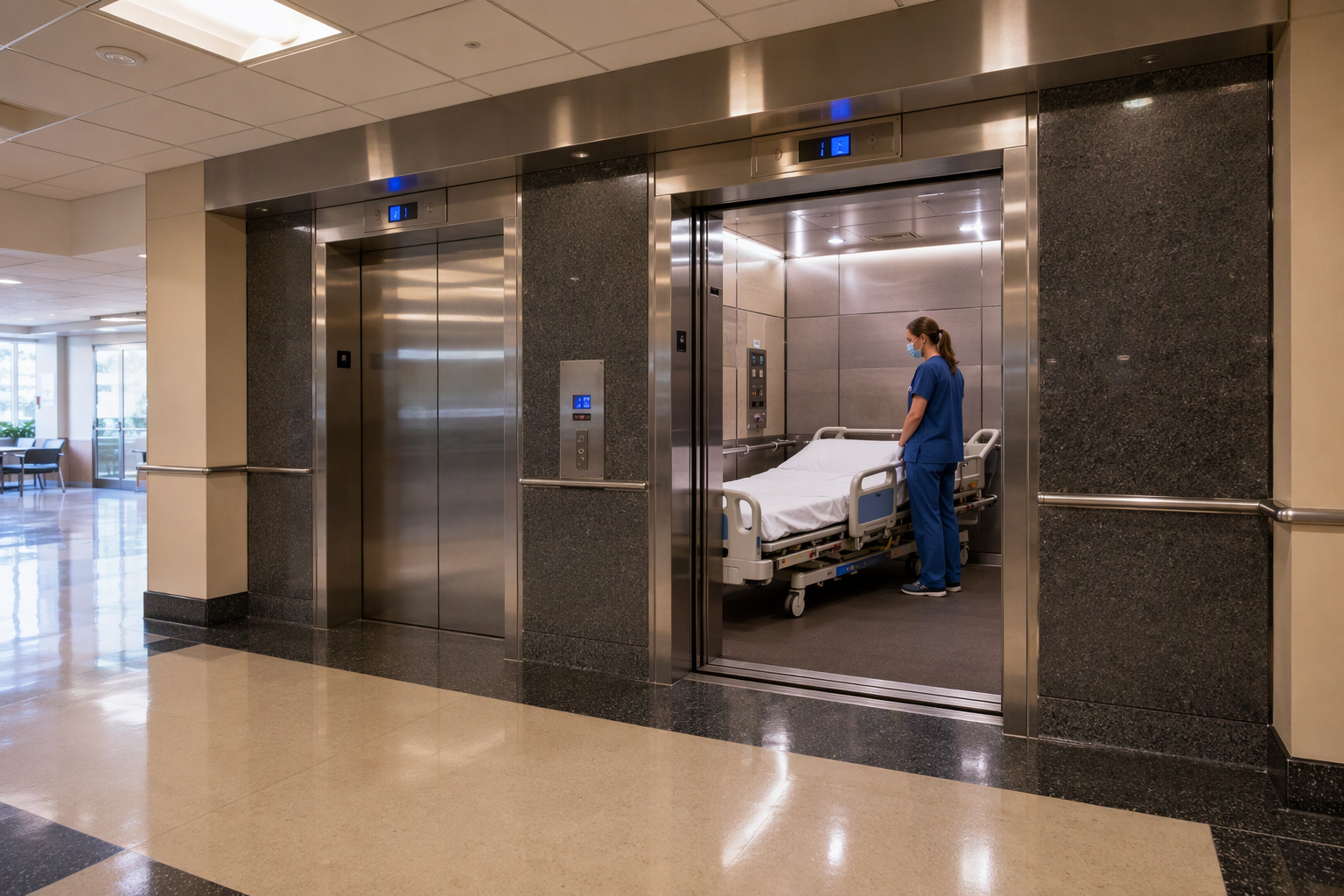
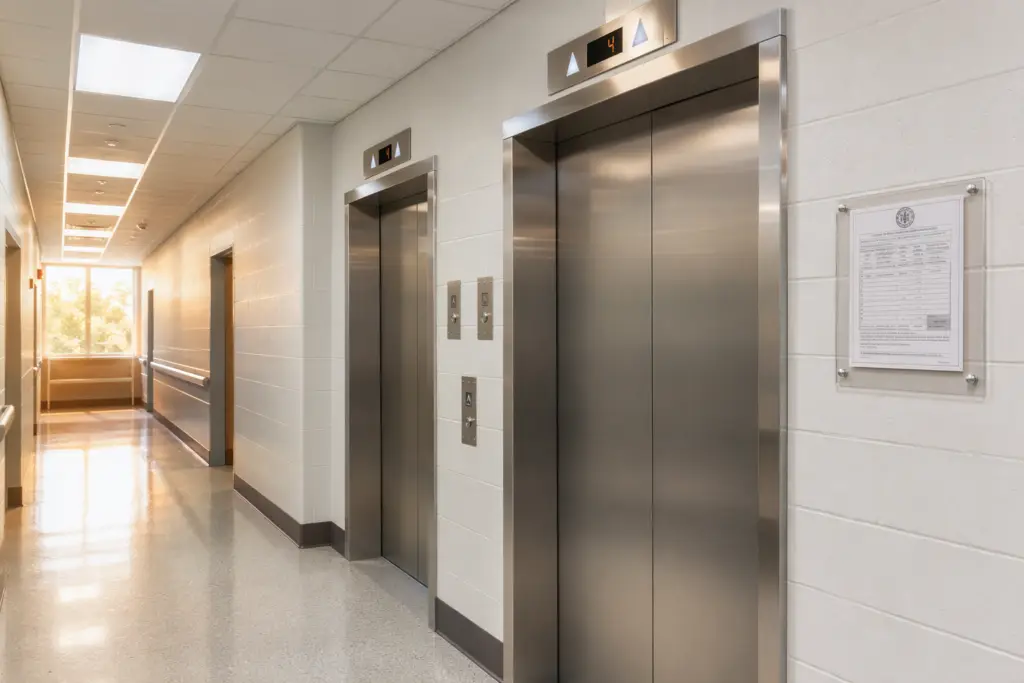
Healthcare elevators carry patients on stretchers, medical staff transporting critical equipment, and visitors who depend on reliable, accessible vertical transportation. When an elevator in a hospital or clinical setting fails, the consequences extend beyond inconvenience — patient care timelines, infection control protocols, and regulatory compliance are all at stake. Modernization is the structured process of replacing outdated components, controls, and cab interiors with current-generation systems that meet ASME A17.1 Safety Code for Elevators and Escalators requirements and ADA Standards for Accessible Design.
What Does Healthcare Elevator Modernization Include?
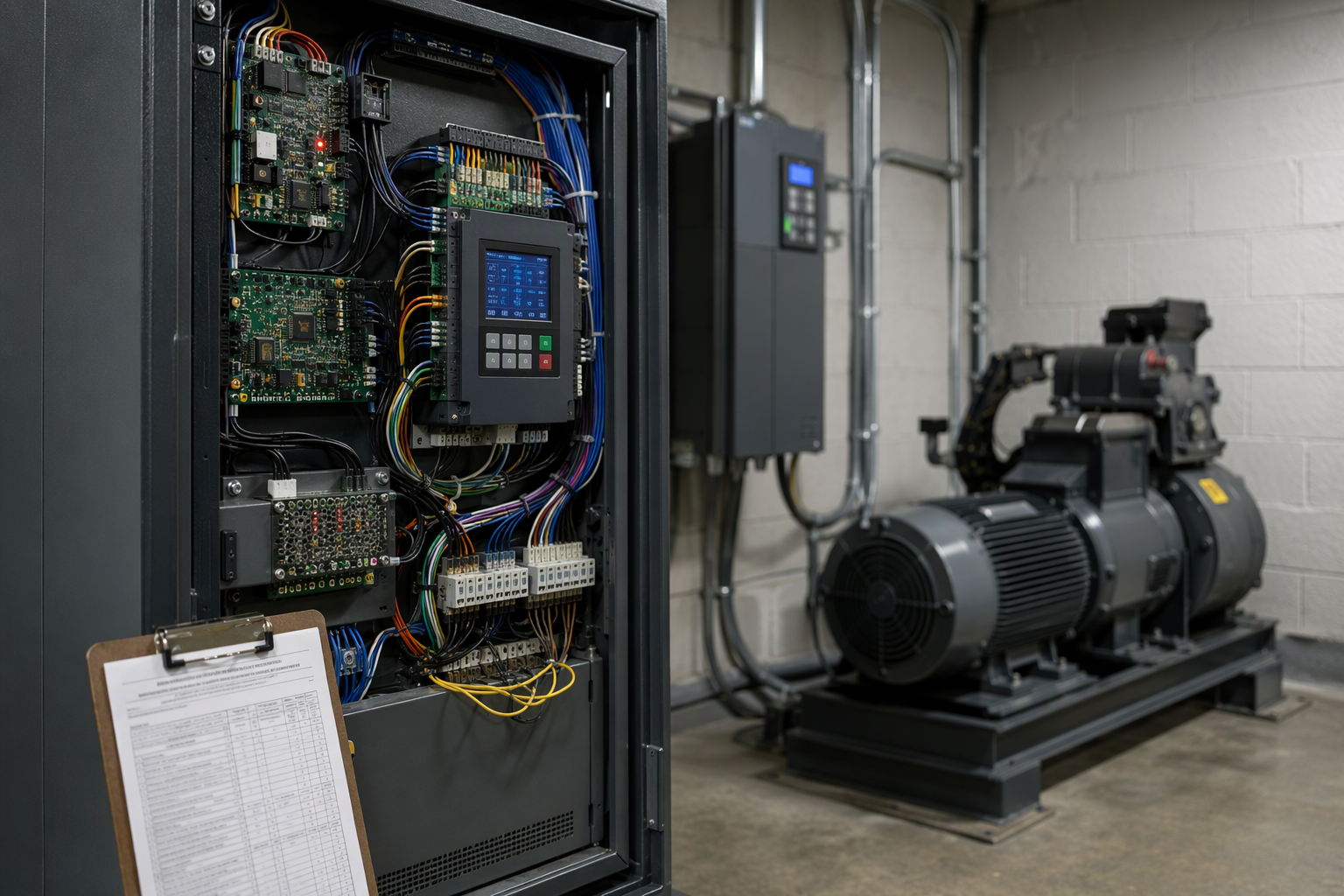
A full modernization scope for a healthcare elevator typically addresses multiple interconnected systems. Aging relay-logic controllers are replaced with microprocessor-based controls that deliver precise floor leveling — essential when moving patients in beds or on gurneys. Drive systems are upgraded from older DC motor configurations to modern variable-voltage, variable-frequency (VVVF) drive technology, which improves ride quality, reduces energy consumption, and minimizes leveling error at the sill.
Additional scope items common in healthcare settings include:
- Door operator and sensor replacement to meet ADA-compliant reopening device requirements and reduce door-related incidents
- Load weighing systems that prevent overloading during peak patient transport periods
- Emergency communication systems compliant with ADA two-way communication requirements at elevator landings
- Cab interiors upgraded with antimicrobial surface materials, hands-free call buttons, and hard-wearing flooring appropriate for wheeled medical equipment
- Machine room upgrades, including ventilation improvements and updated wiring
- Firefighters’ emergency operation upgrades to meet current code requirements under ASME A17.1
- Accessibility enhancements including compliant cab dimensions, handrails, visual and audible floor indicators, and Braille/raised character button panels
Quality Elevator Company evaluates each system individually during a preliminary assessment, so healthcare facility managers receive a prioritized scope rather than a one-size-fits-all proposal.
Why Do Healthcare Facilities Modernize Elevators More Urgently Than Other Buildings?
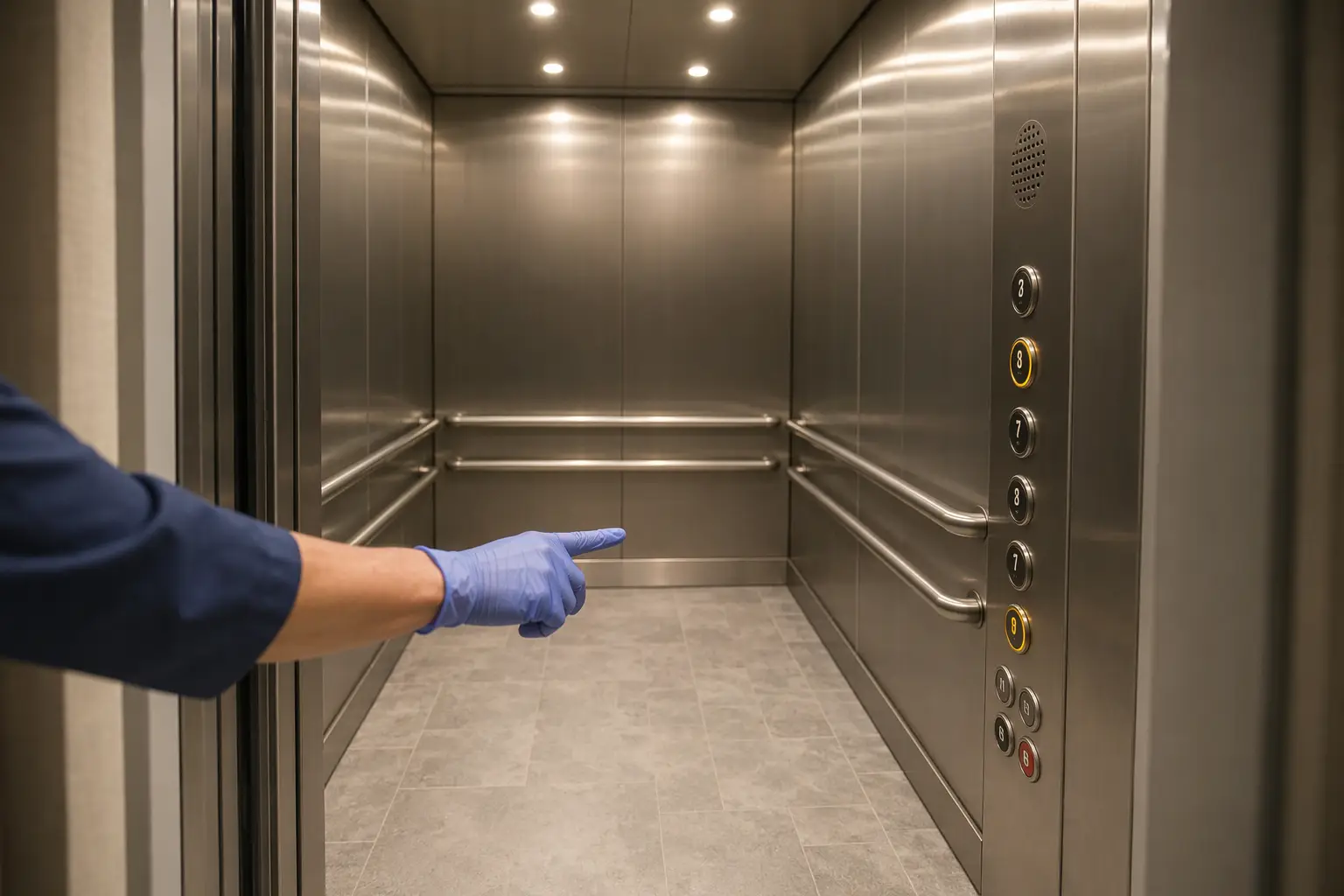
Hospitals and healthcare campuses operate continuously, meaning elevator downtime directly affects patient outcomes and staff efficiency. Beyond operational reliability, healthcare facilities face inspection scrutiny from multiple authorities: state elevator regulators, local building departments, and healthcare-specific accreditation bodies. Outdated equipment that cannot reliably level within acceptable tolerances at the sill creates fall hazards for patients transferring from beds or wheelchairs — a liability that facility risk managers take seriously.
Infection control is an additional factor unique to healthcare. Modern cab interiors with sealed surfaces, antimicrobial hardware, and easily cleaned wall panels support the hygiene standards that acute-care environments require.
What ASME A17.1 Requirements Apply to Healthcare Elevator Modernization?
The ASME A17.1/CSA B44 Safety Code for Elevators and Escalators governs the design, installation, and alteration of elevators throughout Quality Elevator Company’s service territory. When an elevator undergoes modernization, the altered components must comply with the edition of ASME A17.1 adopted in the jurisdiction where the work is performed. Each market Quality Elevator Company serves has adopted a specific edition:
- Maryland: ASME A17.1-2022/CSA B44:22 (with Maryland changes), effective June 17, 2026, enforced by the Maryland Department of Labor, Division of Labor and Industry, Elevator and Escalator Safety.
- Washington DC: ASME A17.1-2013/CSA B44-13 as referenced by the 2017 DC Building Code, enforced by the DC Department of Buildings (DOB) through DOB-approved third-party inspection agencies.
- Philadelphia, PA: ASME A17.1-2000 with A17.1a-2002 addenda currently applies; ASME A17.1-2016 with Pennsylvania modifications applies to permit applications made on or after December 20, 2026, enforced by the Pennsylvania Department of Labor and Industry, Bureau of Occupational and Industrial Safety.
- Richmond, VA: ASME A17.1/CSA B44-2019, incorporated by the 2021 Virginia Uniform Statewide Building Code effective January 18, 2024, enforced locally by the local building department under the Virginia Uniform Statewide Building Code; in the City of Richmond, the Bureau of Permits and Inspections conducts final acceptance inspections of modernized elevators.
Modernization permits trigger an acceptance inspection in each jurisdiction before the elevator returns to service. Healthcare facility managers should factor this inspection timeline into their patient care logistics planning.
How Does ADA Compliance Factor Into Healthcare Elevator Modernization?
The ADA Standards for Accessible Design establish minimum requirements for elevator cab dimensions, door widths, call button placement, floor designation signage, audible and visual signals, and two-way emergency communication. Healthcare facilities, as places of public accommodation and as employers, must meet ADA requirements. Modernization is frequently the most cost-effective point at which to bring older cabs into full compliance, because controls, doors, and cab interiors are already being replaced.
For healthcare settings specifically, ADA-compliant cab dimensions accommodate standard hospital stretchers and wheelchairs. Hands-free or low-force controls reduce cross-contamination risk. Quality Elevator Company incorporates ADA compliance review into every modernization assessment so facility teams do not face a separate remediation project after the work is complete.
What Are the Steps in a Healthcare Elevator Modernization Project?
- Facility assessment: A licensed elevator contractor performs an on-site survey of existing equipment, control systems, machine room conditions, and cab interiors, identifying code gaps and equipment life-cycle status.
- Scope development: A written modernization scope is produced, distinguishing full modernization from targeted component replacement based on equipment age, failure history, and compliance requirements.
- Permit application: The elevator contractor files for modernization permits with the appropriate authority having jurisdiction (AHJ) — DOB in DC, Maryland Department of Labor in Maryland, Pennsylvania Department of Labor and Industry in Philadelphia, and the local building department in Richmond.
- Phasing and downtime planning: Healthcare facilities require a sequenced shutdown plan. Quality Elevator Company works with facility operations teams to schedule work during low-census periods and maintain minimum elevator availability for patient transport.
- Modernization work: Licensed elevator mechanics perform the replacement work. In Maryland, all mechanics must hold a license issued by the Maryland Elevator Safety Review Board. In Virginia, mechanics must hold state certification under the Virginia Board for Contractors.
- Witnessing and testing: Required periodic and acceptance tests are conducted by licensed mechanics and witnessed by a qualified inspector or code official as required by each jurisdiction’s rules.
- Acceptance inspection: The AHJ conducts or approves a final acceptance inspection before the elevator returns to service. No modernized elevator may be placed back in service without passing this inspection.
- Certificate issuance and posting: The operating certificate is issued and posted in the cab or made available as required by the applicable jurisdiction’s rules.
How Long Does Healthcare Elevator Modernization Take?
Project duration depends on the scope of work, the number of elevators being modernized, equipment lead times, and permit processing timelines at the AHJ. A single-elevator partial modernization (controls and door operator only) generally requires less time than a full cab and mechanical overhaul. Healthcare facilities with multiple elevator banks can sequence work to maintain operational coverage throughout the project. Permit and inspection scheduling with state and local regulators also affects the overall timeline, and facilities should account for acceptance inspection wait times when planning patient care logistics.
What Are the Inspection Requirements for Healthcare Elevators in Maryland, DC, Philadelphia, and Richmond?
Each jurisdiction imposes mandatory inspection intervals that apply regardless of whether a modernization has occurred:
- Maryland: Annual periodic inspection by a third-party qualified elevator inspector; a comprehensive five-year inspection for elevators suspended by wire ropes or similar means. The certificate must be posted conspicuously in or on the elevator. Re-registration with the Commissioner of Labor and Industry is required annually.
- Washington DC: Category 1 inspection every 12 months and a Category 5 inspection every 60 months, each by an ASME QEI-certified inspector using a DOB-approved third-party agency. The DC certificate of inspection is valid for two years. At least one elevator must remain in operation whenever the building is occupied.
- Philadelphia, PA: Electric and hydraulic elevators require periodic inspections at intervals of no more than six months. A certificate of operation valid for 24 months (six-month cycle) must be posted in the elevator car or machine room controller.
- Richmond, VA: Annual periodic inspection enforced by the City of Richmond Bureau of Permits and Inspections; a locality may require a six-month periodic inspection. The current certificate must be displayed in the elevator or made available in the building operator’s office.
What Should Healthcare Facility Managers Know About Permits and Certificates During Modernization?
In Washington DC, an elevator’s certificate of inspection may be temporarily suspended while it is under permit for alteration or modernization, and DOB requires a copy of the master electrician license and elevator contracting license with the permit application. In Maryland, the State conducts a final acceptance inspection after modification before the elevator is placed back in service. In Pennsylvania, an elevator may not return to service after a major repair, replacement, or alteration until the Department of Labor and Industry inspects and passes it. In Virginia, the local building department conducts acceptance inspections of modernized elevators; in Richmond, the Bureau of Permits and Inspections handles this directly.
Healthcare facilities should document all permit applications, inspection reports, and certificates and maintain records at a readily accessible central location in the building, as Maryland rules specifically require.
Questions Your Inspector Will Ask
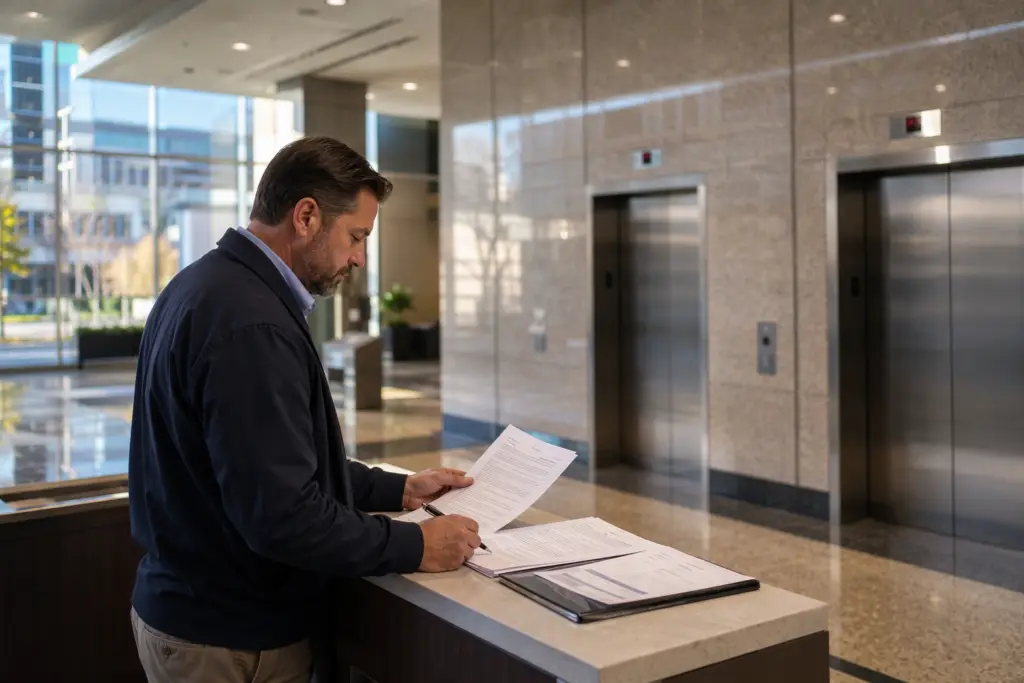
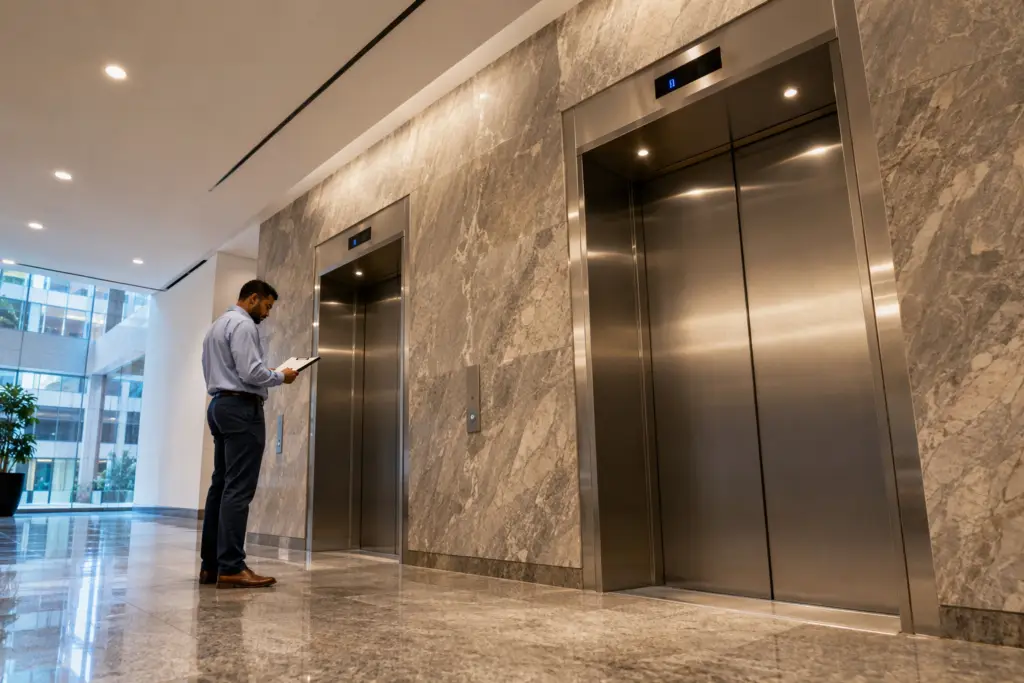
When a code official or third-party qualified inspector arrives at a healthcare facility following modernization, the following are among the questions and documentation requests facility managers should be prepared to address:
- Is the current certificate of inspection posted in the cab or otherwise available as required by this jurisdiction?
- Can you provide the modernization permit number and the date the AHJ issued it?
- Are maintenance, repair, test, and inspection records stored at a readily accessible central location in the building?
- Have the required Category 1 and, where applicable, Category 5 tests been performed within the required intervals, and were they witnessed by a qualified inspector?
- Is the emergency two-way communication system functional and compliant with ADA requirements?
- Have all altered components been brought into compliance with the edition of ASME A17.1 adopted in this jurisdiction?
- For Maryland facilities: Has the elevator been re-registered with the Commissioner of Labor and Industry for the current year?
- For DC facilities: Has the third-party inspection report been submitted to DOB through the Citizen Access Portal?
- Are firefighters’ emergency operation features present and functional?
- Can you confirm that the licensed elevator contractor and licensed mechanics who performed the modernization work hold current credentials in this jurisdiction?
How Does Quality Elevator Company Manage Modernization in Occupied Healthcare Facilities?
Patient care cannot pause for an elevator project. Quality Elevator Company structures modernization schedules around hospital operational realities — sequencing shutdowns to preserve minimum elevator availability, coordinating with facility engineers on infection control barriers in machine rooms and hoistways, and planning work during periods of reduced patient census where possible. Every modernization engagement begins with a detailed operational impact assessment so clinical leadership and facility management can plan transportation alternatives before work begins.
What Is the Difference Between Elevator Modernization and Routine Maintenance for Healthcare Elevators?
Routine maintenance preserves the operational condition of existing equipment through lubrication, adjustment, parts replacement, and safety testing. Modernization replaces the fundamental systems — controls, drives, door operators, cab enclosures — with current-generation equipment. For healthcare elevators that are beyond their serviceable life, maintenance alone cannot reliably deliver the floor-leveling accuracy, door reliability, or compliance status that clinical environments require. Modernization resets the equipment lifecycle and addresses accumulated code gaps that maintenance cannot resolve. Quality Elevator Company helps facility teams distinguish between situations where maintenance investment is still appropriate and where modernization delivers a better long-term outcome.
How Should a Healthcare Facility Evaluate an Elevator Modernization Contractor?
When selecting an elevator modernization contractor for a healthcare facility, facility managers should verify that the contractor holds the required license in the applicable jurisdiction — a Maryland elevator contractor license issued by the Maryland Elevator Safety Review Board, a DC elevator contracting license issued by the DC Board of Industrial Trades, or a Virginia contractor license with the Elevator/Escalator Contracting specialty issued by the Virginia Board for Contractors. Facility managers should also confirm that the contractor’s mechanics hold the required individual credentials and that the contractor carries the insurance levels required by the state. References from other healthcare clients, familiarity with occupied-facility phasing, and demonstrated knowledge of current ASME A17.1 requirements in the specific jurisdiction are all meaningful evaluation criteria.
Contact Quality Elevator Company for a free elevator assessment at 301-779-9116.
Need elevator service you can rely on? Quality Elevator Company is ready to help.