Elevator Service in Baltimore, MD | Quality Elevator Company
Baltimore property owners and facility managers frequently ask whether aging elevators must be torn out entirely or whether selective modernisation is a viable path. In most cases, modernisation is not only possible but the preferred strategy — preserving the structural shaft and mechanical infrastructure while systematically replacing worn or outdated components. Quality Elevator Company provides elevator modernisation services throughout Baltimore, MD, helping buildings meet current safety standards, improve reliability, and satisfy the requirements of the Maryland Department of Labor, Division of Labor and Industry, Elevator and Escalator Safety.
What Does Elevator Modernisation Actually Include?
Modernisation replaces specific subsystems rather than the entire installation. The scope varies by the age and condition of the equipment, but a modernisation project can address any combination of the following:
- Control systems: Replacing relay-logic or early solid-state controllers with modern microprocessor-based controls improves dispatching efficiency and diagnostic capability.
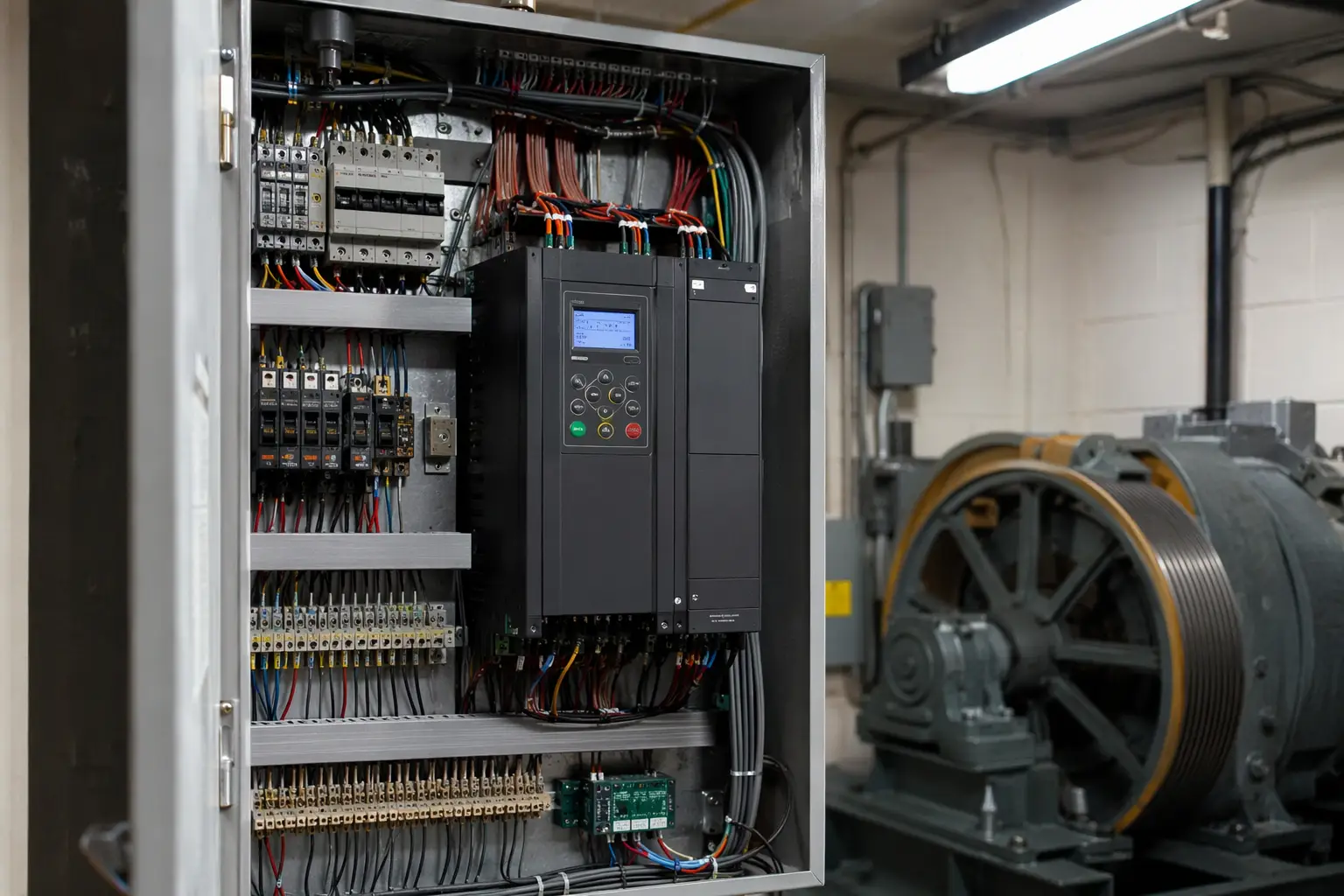
- Drive systems: Upgrading from older DC motor drives to variable-voltage, variable-frequency (VVVF) drives reduces energy consumption and smooths ride quality.
- Door operators and equipment: Replacing worn door operators, tracks, gibs, and safety edges reduces the leading cause of elevator-related incidents — door malfunctions.
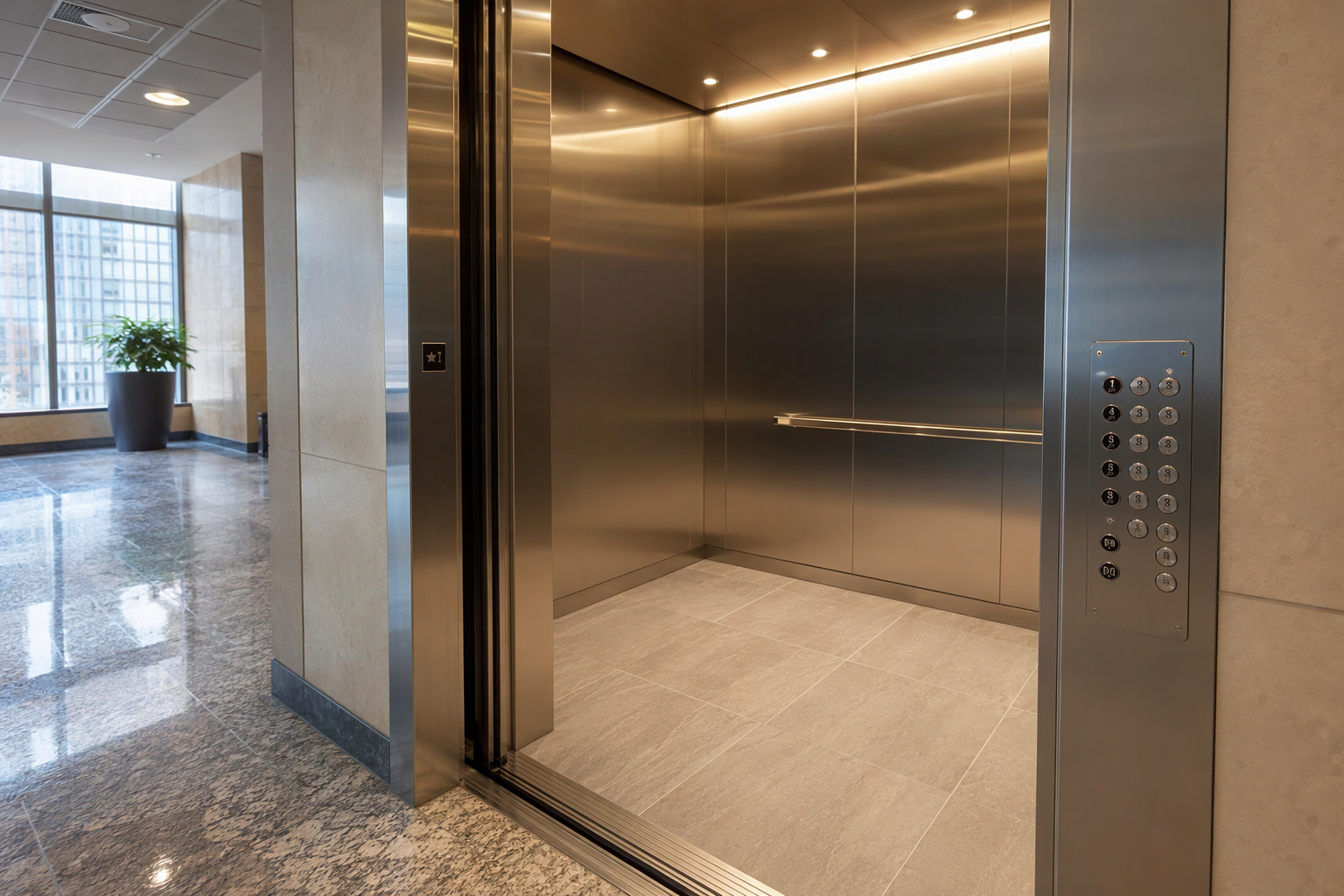
- Cab interior: Flooring, wall panels, lighting, and fixtures can be refreshed to meet ADA requirements for signage, floor indicators, and control button placement.
- Safety devices: Governors, safeties, buffers, and car operating panels can be updated to meet current code requirements without replacing the hoistway structure.
- Emergency communications: Modernising the in-car emergency telephone or communication system to meet current code and ADA accessibility standards.
- Machine room equipment: Upgrading or replacing the machine, motor, brake, and sheave assembly where the existing hoistway structure is retained.
A qualified elevator contractor evaluates the existing installation to determine which components can be retained and which must be replaced, balancing cost, longevity, and compliance requirements.
Does Maryland Require Permits and Inspections for Elevator Modernisation?
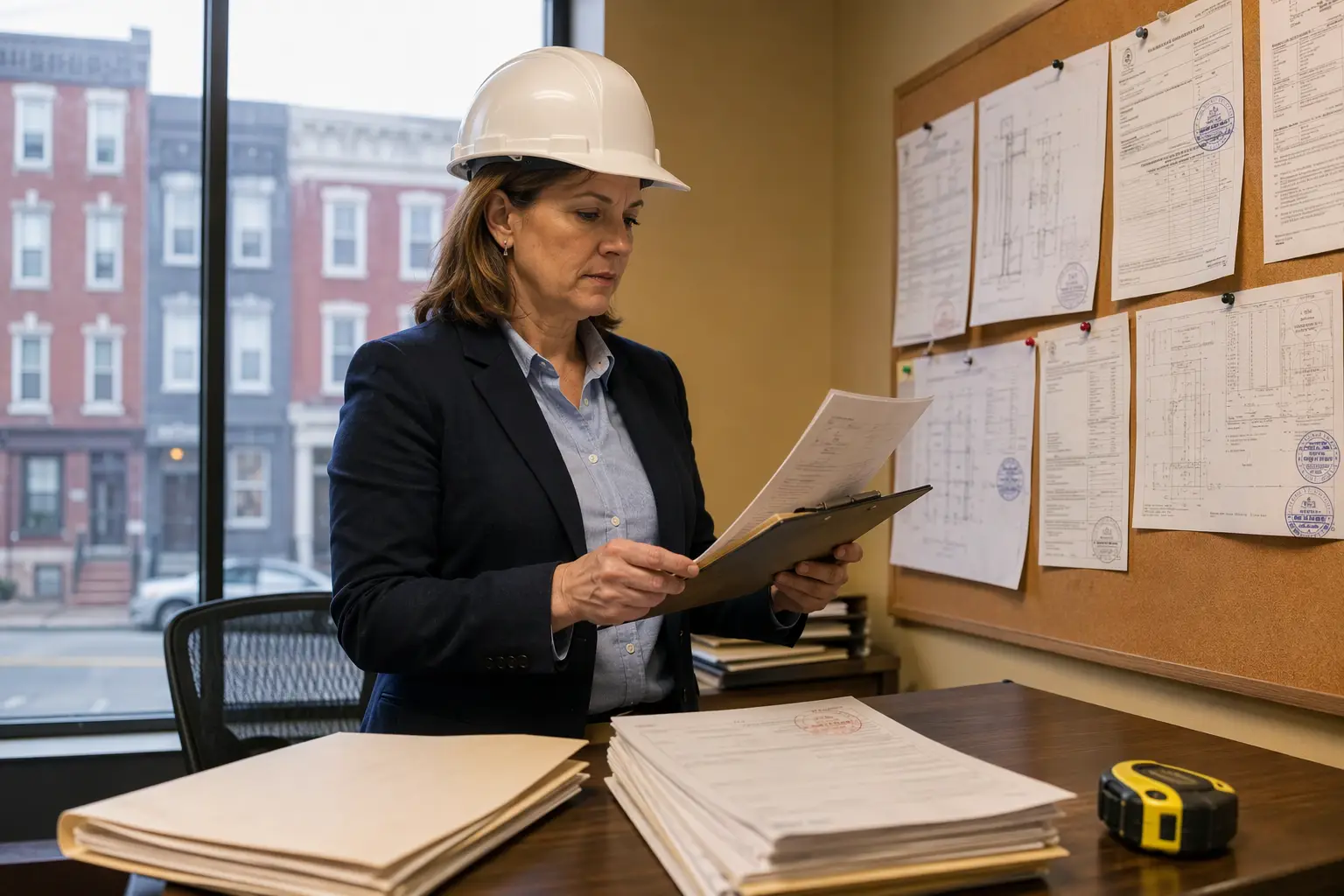
Yes. Under the Maryland Department of Labor, Division of Labor and Industry, any alteration or modification to an elevator unit triggers regulatory obligations. Maryland’s elevator safety program operates under the Annotated Code of Maryland, Public Safety Article, Title 12, Subtitle 8, and COMAR 09.12.81.
Key Maryland requirements that apply to modernisation work include:
- All work must be performed by a business licensed by the Maryland Elevator Safety Review Board as an elevator contractor, and all hands-on work must be carried out by a licensed elevator mechanic.
- The State conducts a final acceptance inspection after an elevator unit is modified or altered and before it is returned to service.
- Tests required for the acceptance inspection must be performed by a licensed elevator mechanic, and when a third-party qualified elevator inspector witnesses a test, that inspector must be physically present for the entire test.
- An elevator may not operate in Maryland unless the Commissioner of Labor and Industry has issued a valid certificate, which must be posted conspicuously in or on the elevator unit.
- Owners must re-register their elevator units annually, and each unit must receive a periodic annual inspection by a State inspector or a third-party qualified elevator inspector.
- Elevators suspended by wire ropes, belts, chains, or similar means must receive a comprehensive five-year inspection in addition to annual inspections.
- Maintenance, repair, test, and inspection records must be kept at a readily accessible central location in the building.
As of June 17, 2026, Maryland has adopted the ASME A17.1/CSA B44-2022 Safety Code for Elevators and Escalators with Maryland changes. The edition that applies to any given installation depends on when the installation contract was signed — a factor Quality Elevator Company evaluates at the outset of every modernisation project.
Can Modernisation Bring an Old Elevator Into Code Compliance?
In most cases, yes. Maryland’s elevator safety framework does not automatically require a full replacement when an elevator is out of compliance with current standards. The applicable code edition is tied to the date the original installation contract was signed, meaning that requirements in effect when an elevator was first certified generally remain in effect for that elevator. However, when an owner chooses to modernise, the altered components must meet current safety requirements, and the project creates an opportunity to address accumulated deficiencies across the entire unit.
Modernisation can resolve common compliance gaps including outdated door protection, undersized car operating panels, non-compliant emergency communication systems, and worn safety devices — without touching the hoistway structure that remains in serviceable condition. Quality Elevator Company assesses each Baltimore installation against current ASME A17.1 requirements and Maryland-specific rules to define a modernisation scope that achieves compliance efficiently.
How Does the Elevator Modernisation Process Work Step by Step?
- Condition assessment: A licensed elevator contractor inspects the existing installation — controls, drive, mechanical components, cab, doors, and safety devices — and documents the condition of each subsystem.
- Scope definition: Based on the assessment, a modernisation scope is developed identifying which components will be replaced, which will be retained, and what code requirements apply to the altered equipment.
- Permit application: The elevator contractor submits the required permit documentation to the Maryland Department of Labor, Division of Labor and Industry before work begins.
- Scheduling and planning: The building owner and contractor agree on a phased or single-outage schedule that minimises disruption to building occupants, particularly in occupied residential or commercial properties.
- Equipment procurement: Replacement components — controls, drive, door operators, fixtures, and safety devices — are sourced and staged for installation.
- Modernisation work: Licensed elevator mechanics perform the installation and removal work in accordance with the approved permit and applicable ASME A17.1 requirements.
- State acceptance inspection: Before the elevator returns to service, the Maryland Department of Labor conducts a final acceptance inspection. Required tests are performed by a licensed elevator mechanic and witnessed by a qualified inspector who is physically present for the entire test.
- Certificate issuance and return to service: Once the Commissioner of Labor and Industry issues a certificate, the certificate is posted in the elevator and the unit is returned to service. Records are filed at the building’s central location.
What Are the ADA Considerations for Elevator Modernisation in Baltimore?
The Americans with Disabilities Act establishes accessibility requirements that apply to elevators in public accommodations and commercial facilities. Modernisation projects present an opportunity — and in many cases an obligation — to address ADA compliance gaps. Areas commonly addressed during modernisation include control button height and size, raised character and Braille signage, audible floor indicators, levelling accuracy so the car floor aligns with the landing floor, and door timing and re-opening device performance. Quality Elevator Company incorporates ADA requirements into modernisation scope development to help Baltimore building owners avoid post-completion compliance issues.
How Long Does an Elevator Modernisation Take in Baltimore?
Project duration varies depending on the scope of work, the type of equipment, and the availability of replacement components. A controls-only upgrade on a straightforward traction elevator may require less time than a comprehensive modernisation involving the drive, doors, cab, and safety devices. For occupied buildings, work is typically scheduled during off-peak hours or in coordinated outage windows. Quality Elevator Company works with Baltimore building managers to structure project timelines that reflect the building’s occupancy demands. State acceptance inspection scheduling through the Maryland Department of Labor is factored into the overall timeline.
When Is Full Replacement Necessary Instead of Modernisation?
Modernisation is not appropriate for every situation. Full replacement may be the better option when:
- The hoistway structure itself is compromised or does not meet current dimensional requirements.
- The existing equipment platform is so outdated that compatible replacement components are no longer manufactured or available.
- The cumulative cost of addressing all deficiencies through modernisation approaches or exceeds the cost of new equipment.
- The building is undergoing a major renovation that changes the vertical transportation demand beyond what the existing shaft layout can support.
- The elevator has experienced significant structural or mechanical failure that makes component-level repair uneconomical.
Quality Elevator Company provides condition assessments that give Baltimore property owners a clear picture of both paths — modernisation and replacement — so decisions are based on the actual state of the equipment and long-term building needs rather than assumptions.
Why Do Baltimore Building Owners Choose Quality Elevator Company for Modernisation?
Quality Elevator Company serves commercial office buildings, residential high-rises, healthcare facilities, government buildings, and mixed-use properties throughout Baltimore and the broader Maryland market. The company’s work is performed by Maryland Elevator Safety Review Board-licensed contractors and mechanics, satisfying the state’s licensing requirements for businesses engaged in altering, maintaining, and servicing elevator units.
Quality Elevator Company’s familiarity with the Maryland Department of Labor’s inspection and permitting process — including the requirements for licensed mechanic involvement in testing and the state’s final acceptance inspection protocol — helps modernisation projects move through the regulatory process efficiently. Emergency elevator service is also available to Baltimore customers when unexpected equipment failures occur between planned maintenance visits.
The company operates across Maryland, the District of Columbia, Virginia, and Pennsylvania, giving its Baltimore-based team exposure to multiple regulatory frameworks and a broad range of equipment types and building configurations.
Schedule a free consultation with Quality Elevator Company at 301-779-9116.
Need elevator service you can rely on? Quality Elevator Company is ready to help.