Building Elevator: Complete Guide to Installation, Compliance, and Maintenance
Building elevators serve every property type from mid-rise office towers and residential apartment buildings to hospitals, hotels, and mixed-use developments. Whether a property owner is planning a new installation, managing an aging system, or resolving a compliance notice, understanding the technical, regulatory, and maintenance dimensions of a building elevator is essential. This guide covers the full spectrum of questions that building owners, facility managers, and property managers in Baltimore, Washington DC, Philadelphia, and Richmond need to answer.
What Is a Building Elevator and How Does It Work?
A building elevator is a guided vertical transport system that moves a car or platform between floor levels inside or alongside a structure using either an electric traction drive, a hydraulic power unit, or, in limited applications, a pneumatic or machine-room-less (MRL) drive system.
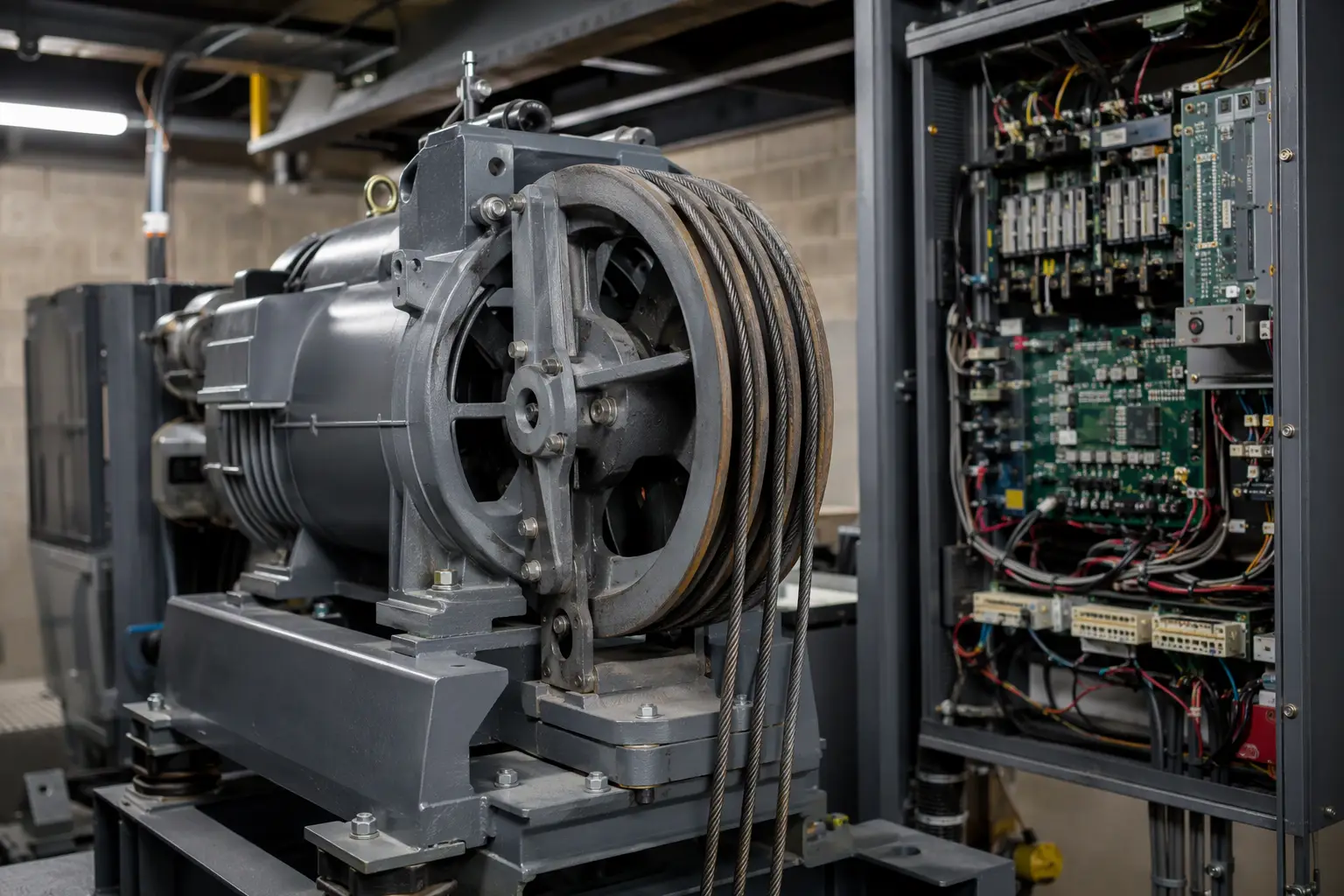
Electric traction elevators use a sheave and wire ropes connected to a counterweight, driven by an AC or DC motor. The counterweight offsets the weight of the car, reducing the energy required to lift a load. Hydraulic elevators use a pump-driven cylinder beneath the car to push it upward; the car descends by releasing hydraulic fluid back to the reservoir. Machine-room-less traction elevators mount the drive machinery in the hoistway itself, eliminating the need for a dedicated machine room above the shaft. Each system type has distinct requirements under ASME A17.1 for safety devices, buffers, guide rails, interlocks, and emergency operation.
The core safety architecture of any building elevator includes a governor-activated safeties system to arrest an overspeeding car, an oil buffer or spring buffer at the pit to absorb impact, door interlocks to prevent movement with an open hoistway door, and an emergency lighting and communication device inside the car.
What Types of Elevators Are Commonly Installed in Commercial Buildings?
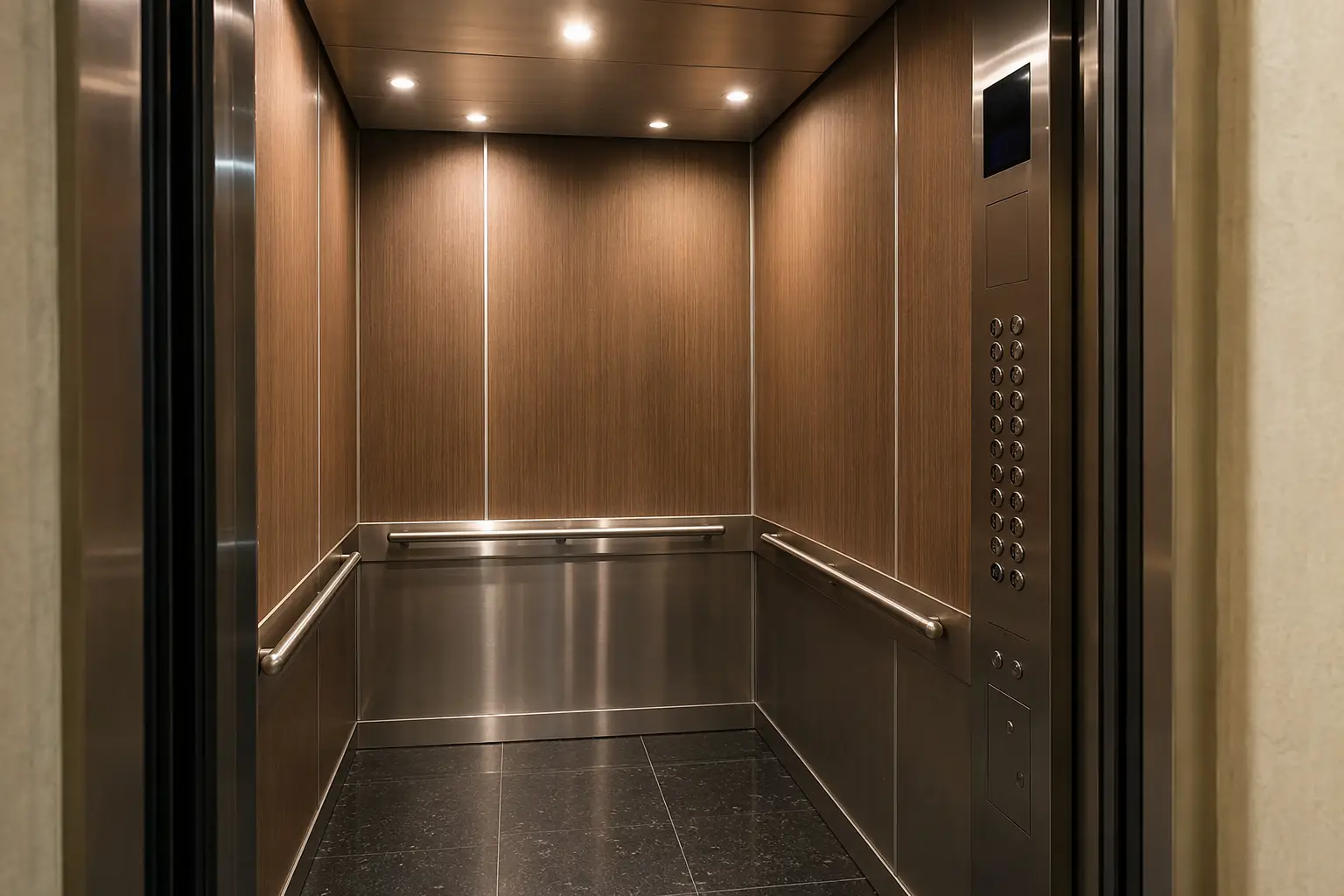
Commercial buildings in the mid-Atlantic region typically use one of four main elevator types: geared traction, gearless traction, hydraulic, or machine-room-less traction, each suited to different building heights, traffic demands, and shaft configurations.
Geared traction elevators are common in mid-rise buildings up to roughly 20 stories and offer a balance of speed and cost. Gearless traction systems are preferred for high-rise and high-traffic applications because they deliver higher speeds and greater energy efficiency over the long term. Hydraulic elevators are well suited to low-rise buildings of two to five stories; they require a machine room at the bottom and a pit-mounted cylinder but do not need an overhead machine room. Machine-room-less traction systems are increasingly popular in new mid-rise construction because they recover usable floor space by locating the drive in the hoistway or a small control cabinet.
Specialized types include freight elevators, dumbwaiters, platform lifts, and limited-use/limited-application (LULA) elevators. LULA elevators are covered under ASME A17.1 and are frequently used in historic buildings to achieve ADA accessibility where a full commercial elevator is not structurally feasible.
What Federal Codes Govern Building Elevator Installation and Maintenance?
At the federal level, building elevators are primarily governed by the ASME A17.1 Safety Code for Elevators and Escalators for new installations, ASME A17.3 for existing elevators, and the Americans with Disabilities Act for accessibility requirements.
ASME A17.1 establishes construction, electrical, mechanical, and safety device requirements for elevators and escalators in the United States and Canada. It is organized into parts covering general requirements, electric elevators, hydraulic elevators, special application elevators, testing, and maintenance. ASME A17.3 sets the retroactive safety requirements that existing elevators must meet on a phased schedule, covering items such as firefighters’ emergency operation, door reopening devices, and pit lighting.
The ADA requires that elevators serving buildings with public accommodations or commercial facilities meet specific requirements for cab dimensions, door width, hall and car controls, floor designation signage, and two-way communication. Buildings with four or more stories are generally required to have an accessible route between floors via elevator. OSHA standards apply to elevator construction and maintenance workers, covering fall protection, lockout/tagout procedures, and confined space entry for pit and hoistway work.
How Do Building Elevator Requirements Differ Across DC, Maryland, Pennsylvania, and Virginia?
Each jurisdiction in Quality Elevator Company’s service area has adopted its own edition of ASME A17.1, enforces through a different regulatory agency, and sets distinct inspection intervals, certificate validity periods, and licensing requirements.
| Jurisdiction | Regulating Agency | Adopted ASME A17.1 Edition | Periodic Inspection Interval | Certificate Validity | 5-Year Test Required |
|---|---|---|---|---|---|
| District of Columbia | DC Department of Buildings (DOB) | ASME A17.1-2013/CSA B44-13 | Every 12 months (Category 1) | 2 years | Yes — Category 5 every 60 months |
| Maryland | MD Dept. of Labor, Division of Labor and Industry | ASME A17.1-2022/CSA B44:22 (effective June 17, 2026) | Annual periodic inspection | Annual re-registration | Yes — comprehensive 5-year inspection for rope/belt/chain-suspended elevators |
| Pennsylvania | PA Dept. of Labor and Industry (L&I) | ASME A17.1-2000/A17.1a-2002 (A17.1-2016 for permits from Dec. 20, 2026) | Every 6 months (electric, hydraulic, escalators) | 24 months (6-mo. cycle) / 48 months (12-mo. cycle) | Yes — per ASME A17.1 Appendix N (from Dec. 20, 2026) |
| Virginia | Local building department (USBC) | ASME A17.1/CSA B44-2019 (via 2021 USBC, effective Jan. 18, 2024) | Annual (locality may require semi-annual) | Annual (per local AHJ) | Yes — per ASME A17.1 Appendix N intervals |
Understanding these differences is critical for multi-property owners operating across the region. Quality Elevator Company manages compliance calendars across all four jurisdictions, tracking inspection deadlines and certificate renewals so building operators are never out of service or in violation.
How Often Does a Building Elevator Need to Be Inspected?
Inspection frequency depends entirely on jurisdiction: DC and Maryland require annual periodic inspections, Virginia requires at minimum an annual inspection, and Pennsylvania requires electric and hydraulic elevators to be inspected every six months.
In the District of Columbia, the DC Department of Buildings requires a Category 1 inspection every 12 months and a Category 5 inspection every 60 months, each conducted by an ASME QEI-certified inspector from a DOB-approved third-party agency. A DC certificate of inspection is valid for two years, with periodic inspections continuing throughout that period.
In Maryland, the Maryland Department of Labor, Division of Labor and Industry requires an annual periodic inspection by a third-party qualified elevator inspector. Owners must re-register elevator units every year at the time of the periodic inspection. Rope-, belt-, and chain-suspended elevators also require a comprehensive five-year inspection. Tests must be performed by a licensed elevator mechanic, with a third-party inspector physically present for the entire test.
In Pennsylvania, the Pennsylvania Department of Labor and Industry requires periodic inspections at intervals of no more than six months for electric elevators, hydraulic elevators, and escalators. Beginning December 20, 2026, Category 1 tests must be performed every year as a stand-alone requirement, and periodic tests follow ASME A17.1-2016 Table N-1 intervals witnessed by a construction code official.
In Virginia, local building departments enforce the Virginia Uniform Statewide Building Code, which requires annual periodic inspections under the 2021 USBC (incorporating ASME A17.1/CSA B44-2019). A locality may require semi-annual periodic inspections. In the City of Richmond, the Bureau of Permits and Inspections conducts final acceptance inspections and annual elevator inspections with test.
What Permits Are Required Before Installing a Building Elevator?
A permit from the applicable authority having jurisdiction (AHJ) is required before any new elevator installation, alteration, or major repair may begin in all four jurisdictions served by Quality Elevator Company.
In DC, a permit application to the Department of Buildings must include a copy of the master electrician license and the elevator contracting license. No work may begin without an approved permit.
In Maryland, elevator units must be registered with the Commissioner of Labor and Industry at least 60 days before planned completion and before placement in service. The State conducts a final acceptance inspection after installation, modification, or alteration before the unit is placed in service.
In Pennsylvania, construction, alteration, replacement, or repair of an elevator requires a permit application to the Department of Labor and Industry. After a major repair, replacement, or alteration, the elevator may not return to service until the Department inspects and passes it.
In Virginia, the local building department is the AHJ for permit issuance and acceptance inspection. Only licensed elevator/escalator contracting (EEC) specialty contractors may perform the installation work.
What Licenses Are Required to Work on a Building Elevator?
Elevator work requires jurisdiction-specific licensing for both mechanics and contracting businesses, and operating an elevator without complying with these requirements exposes building owners to significant liability.
In the District of Columbia, the DC Board of Industrial Trades (within the Department of Licensing and Consumer Protection) licenses elevator contractors, elevator mechanics, and elevator inspectors. Inspector applicants must meet the ASME QEI-1 standard or an equivalent. DOB elevator permits require proof of a master electrician license and an elevator contracting license.
In Maryland, no person may work as an elevator mechanic without a license from the Maryland Elevator Safety Review Board, and no business may engage in installing, altering, maintaining, repairing, or servicing elevators without a Board-issued elevator contractor license. Contractors must carry at least $1,000,000 in general liability insurance and at least $500,000 in property damage insurance.
In Virginia, no person may work as an elevator mechanic without state certification from the Virginia Board for Contractors (DPOR), which requires at least three years of industry experience and passage of a Board-approved examination. Certified mechanics must complete at least eight hours of continuing education per renewal cycle. Installing, repairing, or removing elevators in Virginia requires a contractor license with the EEC specialty.
In Pennsylvania, third-party agencies that inspect elevators under the Uniform Construction Code must be certified by the Department of Labor and Industry. Any UCC-certified elevator inspector may conduct a periodic inspection.
What ADA Requirements Apply to a Building Elevator?
Under the Americans with Disabilities Act, elevators in buildings with public accommodations or commercial facilities must meet specific dimensional, operational, and signage standards to ensure accessibility for people with disabilities.
ADA Standards for Accessible Design require elevator cars to meet minimum inside clear floor dimensions, door clear width requirements, and specific placement and height for hall call buttons and car operating panels. Floor designation signings with raised characters and Braille must be mounted on both jambs of the hoistway entrance. A two-way communication system inside the car must connect to a location that is staffed during the building’s hours of operation.
Buildings with four or more stories and public or commercial use are generally required to have an accessible route between floors via elevator. Historic buildings may qualify for alternative compliance paths if full elevator installation would threaten or destroy the historic significance of the structure, but consultation with the AHJ is required. Property managers should document all ADA elevator features as part of their accessibility plan and revisit compliance when modernizing existing equipment.
What Is the Process for Installing a New Building Elevator?
Installing a new building elevator involves a structured sequence of design, permitting, construction, inspection, and certification steps that must be completed in order before the elevator may be placed in service.
- Conduct a feasibility and needs assessment. Determine the required capacity, speed, travel distance, number of stops, and type of elevator system based on building occupancy, traffic patterns, and structural constraints.
- Engage a licensed elevator contractor. Select a contractor licensed in the applicable jurisdiction (EEC specialty in Virginia; licensed elevator contractor in Maryland; DOB-licensed contractor in DC; certified third-party agency in Pennsylvania).
- Develop permit drawings and specifications. Prepare construction documents showing hoistway dimensions, pit depth, overhead clearance, machine room (if applicable), electrical service, and compliance with the jurisdiction’s adopted edition of ASME A17.1.
- Submit permit application. File with the AHJ — the DC DOB, Maryland Commissioner of Labor and Industry, Pennsylvania L&I, or the local building department in Virginia — and obtain approval before any installation work begins.
- Complete hoistway and pit construction. The general contractor builds the hoistway, pit, and machine room (or machine space) to the dimensions in the approved drawings before elevator equipment is delivered.
- Install elevator equipment. Licensed elevator mechanics install guide rails, buffers, safeties, drive machinery, control system, door operators, cab finishes, and all required safety devices.
- Perform required tests. The installing contractor performs all tests required by the applicable ASME A17.1 edition and the jurisdiction’s rules, with a licensed or certified mechanic performing the tests.
- Schedule acceptance inspection. The AHJ or its approved third-party inspector performs a final acceptance inspection. In Maryland, the State conducts this inspection; in Virginia, the local building department does; in DC, a DOB-approved third-party inspector does; in Pennsylvania, L&I inspects.
- Obtain certificate of operation or inspection. Once the elevator passes inspection, the AHJ issues the required certificate. Post it conspicuously in the elevator car or as otherwise required by the jurisdiction.
- Register the unit and schedule ongoing inspections. In Maryland, register with the Commissioner at least 60 days before planned completion. In all jurisdictions, establish a recurring inspection and maintenance schedule from day one.
How Long Does a Building Elevator Installation Take?
A new building elevator installation typically takes several months from permit approval to certificate of operation, with the timeline varying by elevator type, building readiness, and the AHJ’s inspection queue.
Hydraulic elevator installations in low-rise buildings with prepared hoistways can move relatively quickly once a permit is approved, because the system components are largely pre-engineered and factory-tested. Traction elevator installations — particularly gearless systems in high-rise buildings — involve more complex rail alignment, overhead beam work, and machine installation that extends the timeline. Machine-room-less systems require careful coordination between the elevator contractor and the structural/electrical teams because the drive machinery is integrated into the hoistway.
The permitting phase can add weeks or months depending on the jurisdiction’s review backlog and the completeness of the submitted drawings. Building owners should factor in time for the AHJ’s acceptance inspection as well, since scheduling depends on inspector availability. Working with an experienced regional contractor like Quality Elevator Company, which is familiar with the specific permit submission processes of the DC DOB, Maryland L&I, Pennsylvania L&I, and Virginia local building departments, can reduce avoidable delays.
What Does Building Elevator Modernization Involve?
Elevator modernization is the process of replacing or upgrading major components — controls, drive, doors, cab, or safety devices — to improve performance, energy efficiency, reliability, and code compliance without replacing the entire elevator system.
A full modernization typically replaces the control system and motor controller, the drive machine or hydraulic power unit, door operators and interlocks, hall and car fixtures, and cab interior finishes. Partial modernizations may target a single system, such as upgrading relay logic controls to a solid-state microprocessor controller, or replacing an older hydraulic unit with an oil-cooling system to reduce heat buildup.
Modernization triggers a permit requirement in all four jurisdictions. In DC, an elevator’s certificate of inspection may be temporarily suspended while the unit is under permit for alteration or modernization. In Maryland, alterations require a State acceptance inspection before the elevator returns to service. In Virginia, alterations must comply with the 2021 USBC and ASME A17.1/CSA B44-2019. In Pennsylvania, no altered elevator may return to service until L&I inspects and passes it. ASME A17.3 also sets specific retroactive requirements that modernization projects must address. Quality Elevator Company regularly assists property managers in scoping modernization projects to meet both performance goals and current code requirements across all four jurisdictions.
What Routine Maintenance Does a Building Elevator Require?
Routine elevator maintenance encompasses scheduled lubrication, adjustment, testing, and inspection of all mechanical, electrical, hydraulic, and safety components to prevent failures and maintain code compliance.
Under ASME A17.1, the maintenance responsibility falls on the elevator owner, who must ensure the elevator is maintained in accordance with the safety code. ASME A17.1 Section 8.6 sets out maintenance, repair, and replacement requirements, including the requirement to keep maintenance records. In Maryland, records must be kept at a readily accessible central location in the building where the elevator is located. Regular maintenance tasks include lubricating guide rails and rollers, inspecting and adjusting door clutches and rollers, testing safeties and governor systems, checking hydraulic fluid levels and seals, testing emergency lighting and communication devices, and verifying that all safety switches function correctly.
Preventive maintenance contracts with a qualified elevator contractor provide a systematic approach, typically covering monthly, quarterly, and annual service visits aligned with the testing intervals required by the jurisdiction. Deferred maintenance is the most common cause of unexpected breakdowns, entrapments, and regulatory violations. Property managers should retain maintenance records for all service visits to satisfy inspection requirements and to document compliance history if a complaint or accident occurs.
What Should a Building Manager Do If an Elevator Traps a Passenger?
A passenger entrapment in a building elevator requires an immediate, structured response to ensure occupant safety, notify the appropriate parties, and prevent injury during rescue.
- Establish communication. Use the in-car two-way communication device to speak with the trapped occupant, confirm their condition, and instruct them to remain calm and to stay away from the doors.
- Do not attempt an untrained rescue. Building staff should never attempt to open hoistway doors or manually move the car without proper training and tools; this creates serious fall-into-the-hoistway risks.
- Contact the elevator service contractor. Call the maintenance contractor’s emergency line immediately. Qualified elevator mechanics have the training, tools, and authority to safely release the car to a landing.
- Call emergency services if warranted. If the occupant reports a medical emergency, is unresponsive, or the entrapment is prolonged, contact emergency services (911) immediately.
- Post an out-of-service notice. Once the occupant is safely released, the elevator should be taken out of service until the cause of the entrapment is identified and corrected.
- Document the incident. Record the date, time, duration, cause, and actions taken. In Pennsylvania, owners must submit an accident report to L&I when an elevator incident causes a fatality or requires professional medical care.
- Schedule inspection before return to service. Have the elevator inspected and, if required, obtain AHJ approval before returning the unit to service.
How Are Building Elevator Certificates of Inspection Obtained and Displayed?
Obtaining and correctly displaying a certificate of inspection is a legal requirement in all four jurisdictions, and the specific process for obtaining and posting the certificate differs by state and locality.
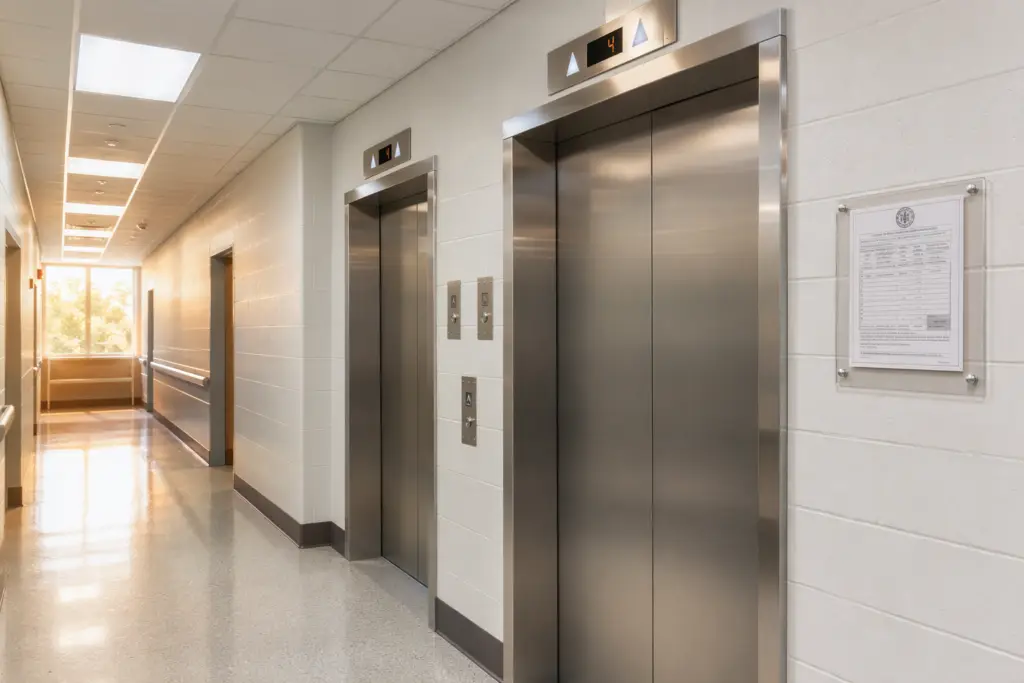
In the District of Columbia, building owners submit third-party inspection reports for the past two years to the DC Department of Buildings through the Citizen Access Portal to obtain a certificate. The certificate must be conspicuously displayed in the elevator car or attached to the conveyance, unless the building operator maintains an office in the same building, in which case the certificate may be kept available there for public inspection.
In Maryland, the Maryland Department of Labor, Division of Labor and Industry issues the certificate, and it must be posted conspicuously in or on the elevator unit. No elevator unit may be operated in Maryland without a valid certificate.
In Pennsylvania, the Department of Labor and Industry issues a certificate of operation. For equipment with a machine room, the certificate or a copy must be posted in the elevator car or attached to the controller in the machine room.
In Virginia, the current certificate of inspection must be displayed in the elevator, attached to the escalator, kept available in the building operator’s office, or posted in another approved conspicuous location, as determined by the local building department.
What Happens If a Building Elevator Fails Inspection?
A building elevator that fails inspection must be taken out of service immediately, and in most jurisdictions it may not return to service until identified deficiencies are corrected and re-inspected by the AHJ or its approved inspector.
Inspection violations range in severity. Minor deficiencies — such as a burned-out cab light or a missing inspection certificate copy — may allow continued operation with a correction order and a specified timeframe for remediation. Critical deficiencies involving safety devices, such as a malfunctioning door interlock, a failed governor, or a defective buffer, typically require immediate shutdown.
In Pennsylvania, after a major repair or alteration the elevator may not return to service until L&I inspects and passes it. In Maryland, the State conducts acceptance inspections after modifications; operating without a certificate is a violation of the Public Safety Article. In DC, an elevator may be placed in temporarily dormant status under a DOB permit, but a permit is required to take it out of service. In Virginia, the local building department issues the correction order and must witness or approve re-inspection before service resumes. Property managers who receive a failed inspection report should contact their elevator contractor promptly; delays increase both safety risk and regulatory exposure.
How Does ASME A17.3 Apply to Existing Building Elevators?
ASME A17.3, Safety Code for Existing Elevators and Escalators, establishes minimum retroactive safety requirements that existing elevators must meet on a defined compliance schedule, even if they were originally installed under an older edition of ASME A17.1.
ASME A17.3 covers items such as firefighters’ emergency operation (Phase I and Phase II), door reopening devices, pit lighting and stop switches, car lighting and ventilation, and car emergency signaling. These requirements apply to elevators that predate the edition of A17.1 that first included them, creating a phased upgrade obligation tied to periodic inspection cycles.
Jurisdictions in Quality Elevator Company’s service area have adopted A17.3 to varying extents through their respective codes. Building owners of older properties should have an elevator professional conduct an A17.3 compliance review to identify any outstanding retroactive requirements. Failure to address A17.3 items can result in failed inspections, citations, or orders to cease operation.
What Should Building Owners Know About Elevator Energy Efficiency?
Building elevator systems are significant consumers of building energy, and modernization choices, standby operation settings, and LED cab lighting can meaningfully reduce overall energy consumption without sacrificing performance.
Gearless permanent magnet (PM) traction drives, now standard in most new elevator installations, use less energy than older geared AC motor systems because the PM motor eliminates the losses associated with a gear reduction unit. Regenerative drives capture energy during descent and return it to the building’s electrical grid. Hydraulic elevators with variable-speed pump drives consume less energy during the start and stop cycle compared to single-speed pump systems.
Standby mode settings — which power down cab lighting, ventilation fans, and control displays during idle periods — reduce parasitic losses between trips. LED cab lighting draws a fraction of the power of fluorescent fixtures and has a longer service life, reducing both energy cost and maintenance visits. Building owners planning a modernization should evaluate the energy performance of replacement drive systems as part of the total cost of ownership analysis.
How Do Building Elevators Affect Property Value and Tenant Satisfaction?
A reliable, well-maintained, and aesthetically updated building elevator directly influences tenant retention, lease rates, and the marketability of commercial and residential properties.
For multi-story office buildings, tenant satisfaction surveys consistently identify elevator wait time and reliability as key building performance factors. Outdated or unreliable elevators in a competitive market can contribute to tenant attrition and downward pressure on achievable rents. For residential properties — particularly mid-rise and high-rise apartment buildings — an elevator outage or entrapment event generates immediate complaints, negative reviews, and potential fair housing concerns if accessibility is compromised for residents who depend on the elevator.
Modernization projects that upgrade cab interiors with new finishes, lighting, and digital floor indicators improve the first impression for prospective tenants. Investments in predictive maintenance programs, which use real-time monitoring of drive parameters and door performance to identify failure precursors before a breakdown occurs, reduce unplanned outages and the associated disruption. Owners of multi-building portfolios in Baltimore, Washington DC, Philadelphia, and Richmond benefit from working with a single regional service provider who maintains consistent maintenance standards and documentation practices across all assets.
What Should a Building Owner Look for When Selecting an Elevator Service Company?
Selecting an elevator service company requires evaluating licensure in the applicable jurisdiction, technical capability across elevator types, familiarity with local AHJ requirements, and the quality of documentation and compliance management practices.
Verification of jurisdiction-specific licensure is the first and most critical check. In Maryland, the contractor and all working mechanics must be licensed by the Maryland Elevator Safety Review Board. In DC, the contractor must hold a license issued through the DC Board of Industrial Trades. In Virginia, the contractor must hold an EEC specialty contractor license from DPOR, and mechanics must be state-certified. Property owners should request copies of current licenses before awarding any service or modernization contract.
Technical capability across multiple elevator makes and models matters for portfolio managers with diverse equipment. A contractor who services only one manufacturer’s equipment will not be able to maintain a building with a mixed fleet. Familiarity with local AHJ procedures — including permit submission, inspection scheduling through the Citizen Access Portal in DC, and coordination with local building departments in Virginia — reduces delays and errors during the compliance cycle. Quality Elevator Company serves building owners across Baltimore, Washington DC, Philadelphia, and Richmond with the jurisdiction-specific knowledge required to keep elevator operations legal, safe, and efficient.
What Records Must Building Owners Keep for Their Elevators?
Building elevator owners must maintain maintenance, inspection, test, and certification records as required by their jurisdiction, and these records are routinely requested during inspections, accident investigations, and property transactions.
In Maryland, maintenance, repair, test, and inspection records must be kept at a readily accessible central location in the building where the elevator is located. This requirement ensures that an inspector arriving for a periodic inspection can review the service history without the owner needing to retrieve records from an offsite location.
Under ASME A17.1, maintenance records must document all lubrication, adjustments, repairs, replacements, and tests performed on the equipment, including the date, the nature of the work, and the identity of the mechanic who performed it. In Virginia, third-party elevator inspection reports must include the name and certification number of the elevator mechanic who performed the witnessed tests.
Permit records, approved drawings, and acceptance inspection reports should be retained for the life of the installation, as they establish the code edition under which the elevator was originally certified — information that is essential when evaluating what retroactive requirements apply under ASME A17.3 or when planning a modernization. In Pennsylvania, owners must submit an accident report to L&I whenever an elevator incident results in a fatality or requires professional medical care, and retaining a copy of that report is prudent practice.
How Can Building Owners Prepare for a Scheduled Elevator Inspection?
Thorough preparation for a scheduled elevator inspection reduces the likelihood of violations, avoids re-inspection delays, and demonstrates to the AHJ that the building is managed with attention to code compliance.
- Review the previous inspection report. Confirm that all deficiencies noted in the last inspection have been corrected and documented by the elevator contractor.
- Confirm the elevator contractor is scheduled
Need elevator service you can rely on? Quality Elevator Company is ready to help.