Elevator Maintenance Companies: What Building Owners Need to Know in 2026

Elevator maintenance companies are licensed contractors that perform the preventive care, periodic testing, regulatory inspections, and corrective repairs required by federal safety codes and state authorities in Maryland, Washington DC, Pennsylvania, and Virginia. Without a qualified maintenance provider, building owners risk equipment failures, certificate lapses, regulatory fines, and potential liability. The sections below answer the most common questions property managers and building owners ask when evaluating elevator service providers in 2026.
What do elevator maintenance companies actually do?
Elevator maintenance companies provide a structured combination of preventive servicing, mandatory code inspections, load and safety testing, modernization work, and emergency repairs that keep elevators legally certified and mechanically sound.
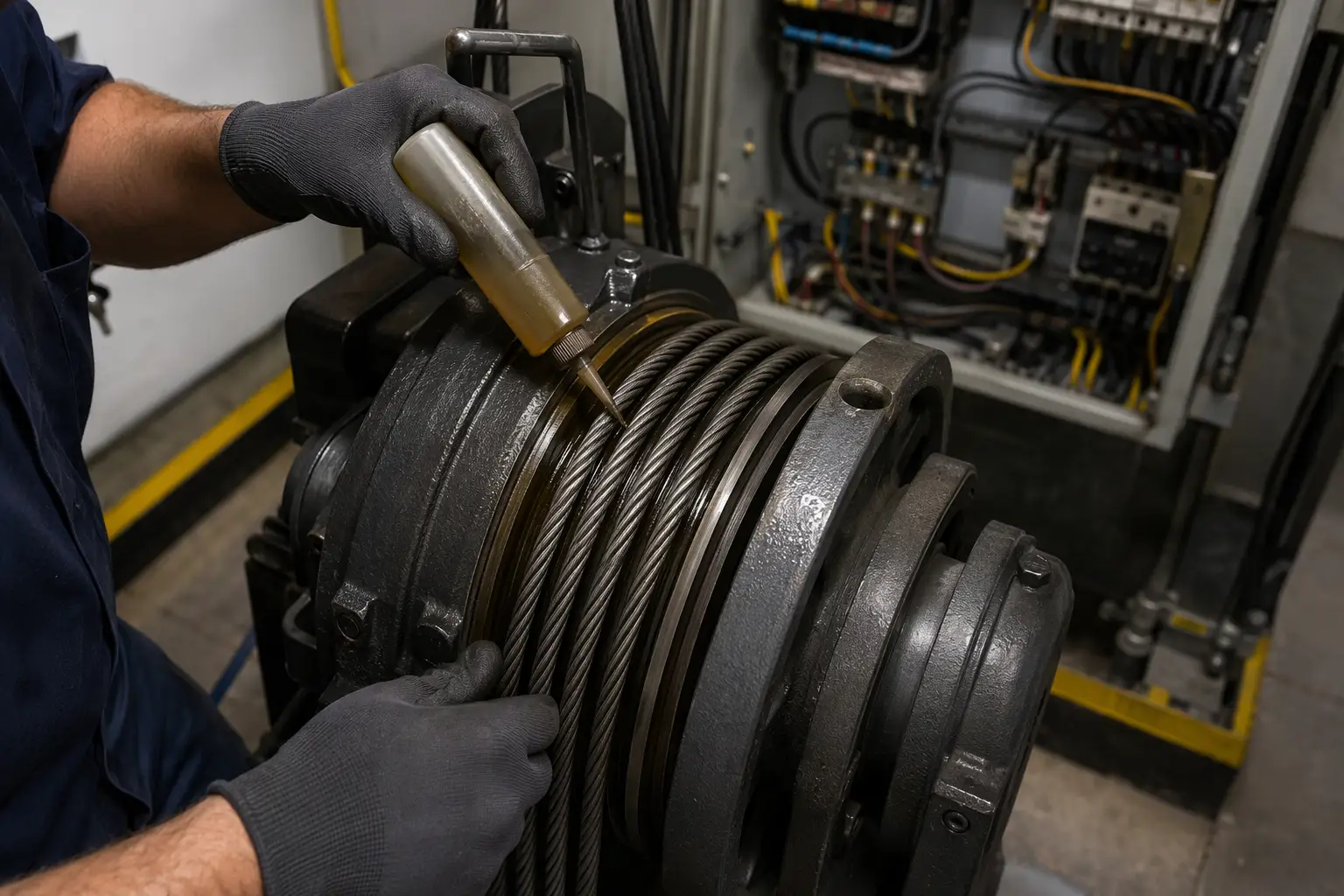
Preventive maintenance visits typically include lubrication of guide rails and sheaves, inspection of wire ropes and safeties, testing of door operators and interlocks, verification of emergency lighting and communication systems, and examination of hydraulic fluid levels and cylinder integrity. Beyond routine visits, maintenance contractors coordinate or perform the periodic Category 1 and Category 5 tests required under ASME A17.1 Safety Code for Elevators and Escalators, which govern both new installations and existing equipment across the service territory.
Reputable firms also track each unit’s certificate of inspection status, flag upcoming renewal deadlines, and submit required documentation to the appropriate authority having jurisdiction (AHJ) in each state. Quality Elevator Company performs this compliance coordination for clients in Baltimore, Washington DC, Philadelphia, and Richmond so that owners are not caught off-guard by an expiring certificate.
How often are elevators required to be inspected by law?
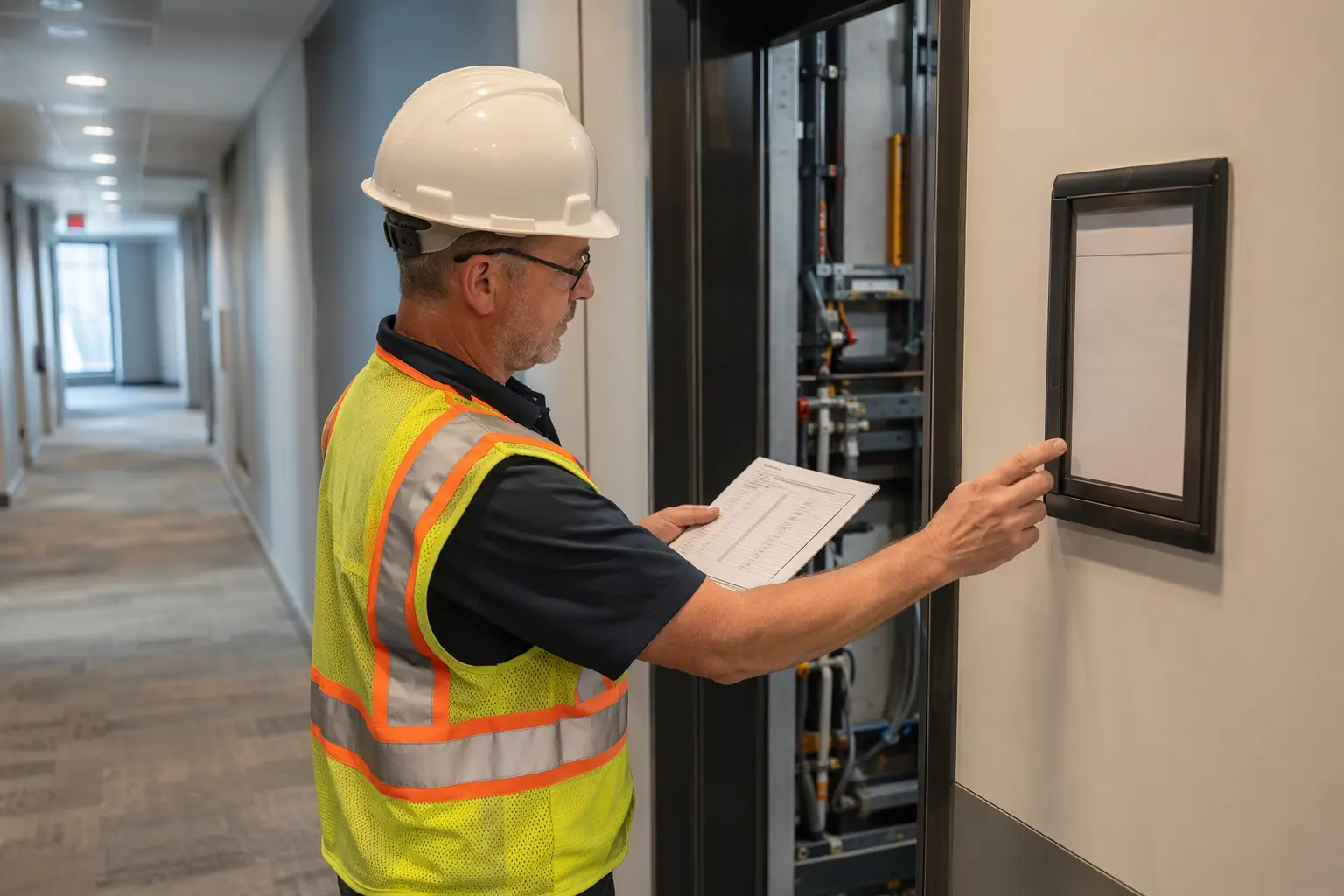
Inspection frequency is set by the authority having jurisdiction in each state and ranges from every six months to annually for routine periodic inspections, with comprehensive five-year tests required as well.
The table below summarizes verified inspection requirements across Quality Elevator Company’s service territory.
| Jurisdiction | Regulator | Periodic Inspection Interval | Comprehensive Test Interval | Adopted Code Edition |
|---|---|---|---|---|
| District of Columbia | DC Department of Buildings (DOB) | Every 12 months (Category 1) | Every 60 months (Category 5) | ASME A17.1-2013/CSA B44-13 |
| Maryland | MD Department of Labor, Division of Labor and Industry | Annual periodic inspection | Five-year comprehensive inspection (wire rope and rack-and-pinion units) | ASME A17.1-2022/CSA B44:22 (eff. June 17, 2026) |
| Pennsylvania | PA Department of Labor and Industry, Elevator Section | Every 6 months (electric, hydraulic, escalators) | Category tests per ASME A17.1 Appendix N (annual Cat 1 required from Dec 20, 2026) | ASME A17.1-2000 w/2002 addenda (ASME A17.1-2016 for permits from Dec 20, 2026) |
| Virginia | Local building department (USBC) | Annual (locality may require 6-month) | Intervals per ASME A17.1 Appendix N, witnessed by code official | ASME A17.1/CSA B44-2019 (eff. January 18, 2024) |
What licenses and certifications should an elevator maintenance company hold?
A qualified elevator maintenance company must hold the contractor license required by each state where it works, and its mechanics must meet individual certification requirements before touching any equipment.
In Maryland, any business that installs, alters, maintains, repairs, or services elevator units must be licensed as an elevator contractor by the Maryland Elevator Safety Review Board, and every mechanic working on elevator units must hold an individual elevator mechanic license from the same board, under the Annotated Code of Maryland, Public Safety Article, Title 12, Subtitle 8. Contractors must also carry at least $1,000,000 in general liability insurance and at least $500,000 in property damage insurance.
In Virginia, the contractor must hold an Elevator/Escalator Contracting (EEC) specialty license through the Virginia Board for Contractors (DPOR), and each mechanic must hold state certification requiring at least three years of industry experience and a passing examination score. Certified mechanics in Virginia must also complete at least eight hours of Board-approved continuing education per renewal cycle.
In the District of Columbia, elevator contractors and mechanics are licensed by the DC Board of Industrial Trades, and inspectors must meet the ASME QEI-1 standard or equivalent. DC elevator permits require a copy of both the master electrician license and the elevator contracting license.
Pennsylvania’s regulatory framework does not establish a statewide elevator mechanic or contractor license at this time; instead, the Pennsylvania Department of Labor and Industry certifies third-party inspection agencies under the Uniform Construction Code. Building owners should verify contractor qualifications directly with the PA Department of Labor and Industry, Elevator Section.
What is the difference between preventive maintenance and a code-required inspection?
Preventive maintenance is a service performed by the elevator contractor to keep equipment running reliably, while a code-required inspection is a formal evaluation conducted or witnessed by a qualified independent inspector to verify legal compliance and renew the certificate of operation.
Preventive maintenance visits—scheduled monthly, quarterly, or semi-annually depending on equipment type and use—cover lubrication, adjustment, parts replacement, and safety checks. These visits are performed by the building’s maintenance contractor and are not substitutes for inspections.
Code inspections, by contrast, must be conducted by an ASME QEI-certified inspector in DC, a state inspector or qualified third-party elevator inspector in Maryland, a UCC-certified inspector or certified agency in Pennsylvania, or a local code official or approved agency in Virginia. The results feed into the certificate renewal process. In Maryland, tests performed for a required inspection must be carried out by a licensed elevator mechanic, and when a third-party inspector is required to witness a test, that inspector must be physically present for the entire test. Building owners should ensure their maintenance company employs or coordinates with inspectors who meet each jurisdiction’s specific credentials.
What happens if an elevator fails its inspection or its certificate lapses?
An elevator with an expired or failed certificate of inspection cannot legally operate, and continuing to run it exposes the building owner to enforcement action, fines, and significant liability.
In Maryland, an elevator unit may not be operated unless the Commissioner of Labor and Industry has issued a valid certificate for it. In Pennsylvania, an elevator may not operate without a current certificate of operation issued by the Pennsylvania Department of Labor and Industry. In the District of Columbia, all elevators and escalators must be inspected and certified, and the certificate must be conspicuously displayed in the car. In Virginia, the current certificate of inspection must be displayed in the elevator or made available in the building operator’s office.
When an elevator fails inspection, the maintenance company must correct the cited deficiencies before a reinspection can be scheduled and a new certificate issued. Quality Elevator Company prioritizes remediation work to minimize downtime and restore certification status as quickly as the inspection process in each jurisdiction allows.
What should building owners do immediately after an elevator incident or accident?
Following a confirmed elevator accident or entrapment, the building owner and maintenance contractor must take immediate steps to protect occupants, preserve evidence, and meet mandatory reporting obligations.
- Ensure occupant safety by contacting emergency services if anyone is injured or entrapped and cannot be released through normal emergency procedures.
- Take the affected elevator out of service immediately and post visible out-of-service signage at all landings.
- Notify the elevator maintenance company so a qualified mechanic can respond, assess the cause, and prevent recurrence before the unit is returned to service.
- In Pennsylvania, submit an accident report to the Pennsylvania Department of Labor and Industry when the incident causes a fatality or requires professional medical care.
- In all jurisdictions, do not return the elevator to service after a serious incident until the authority having jurisdiction has inspected and cleared it, as required by the applicable state regulations.
- Preserve maintenance logs, inspection records, and any physical evidence related to the incident for review by investigators and insurance representatives.
- Consult legal counsel regarding liability exposure and document every corrective action taken.
How does ADA compliance relate to elevator maintenance?
The Americans with Disabilities Act (ADA) requires that passenger elevators in covered facilities remain accessible and operational, so maintenance failures that take an elevator out of service can directly create an ADA compliance issue for the building.
Under the ADA, facilities required to have accessible vertical access must maintain that access in working order. When an elevator serving an accessible route is out of service, the building owner is generally obligated to provide an alternative accessible route where feasible, or restore the elevator promptly. The ADA’s maintenance-of-accessible-features requirement means that chronic downtime, unreliable door operation, failing cab leveling, or non-functioning emergency communication systems are not simply mechanical nuisances—they are potential civil rights compliance failures.
Maintenance programs should address door open and close timing, cab floor leveling accuracy, emergency two-way communication (required by the ADA for cab telephones), and Braille and raised character signage integrity. The District of Columbia’s building code, for example, references ASME A17.1-2013, which contains requirements for accessible features that must be maintained alongside ADA obligations.
How are maintenance records required to be kept?
Every jurisdiction in Quality Elevator Company’s service territory requires that inspection, maintenance, test, and repair records be kept on-site and available for review by inspectors and authorities.
Maryland’s regulations are explicit: maintenance, repair, test, and inspection records must be kept at a readily accessible central location in the building where the elevator is located. This means a building owner cannot rely solely on the maintenance company’s internal files—a physical or accessible on-site record set is required.
In Pennsylvania, the certificate of operation or a copy must be posted in the elevator car or attached to the controller in the machine room (for equipment with a machine room). In Virginia, third-party inspection reports must include the name and certification number of the elevator mechanic who performed the witnessed tests, creating a traceable paper trail. In the District of Columbia, inspection reports for the past two years must be submitted to the Department of Buildings through the Citizen Access Portal to obtain a certificate of inspection.
A disciplined maintenance company will maintain organized, jurisdiction-specific documentation for each unit, assist with annual re-registration (required in Maryland at the time of the periodic inspection), and flag when records need to be archived or submitted to the AHJ.
What is a Category 1 and Category 5 test, and who performs them?
Category 1 and Category 5 tests are formal safety tests defined by the ASME A17.1 Safety Code for Elevators and Escalators that verify the operational integrity of safety devices at defined intervals.
A Category 1 test is a no-load safety test performed annually (in DC and from December 20, 2026, as a stand-alone requirement in Pennsylvania) that verifies safeties, governors, and other devices function correctly without applying a full rated load. A Category 5 test is a full-load safety test performed every five years (60 months in DC) that applies rated load to confirm the same devices perform under real operating conditions. Category 5 tests are more demanding and time-consuming, requiring the elevator to be removed from normal service during the test period.
Under DC’s rules, both categories must be performed by an ASME QEI-certified inspector using DOB-approved third-party inspection agencies. In Maryland, tests must be performed by a licensed elevator mechanic and witnessed by a qualified elevator inspector who is physically present throughout. In Virginia, periodic tests per ASME A17.1 Appendix N must be witnessed by the local code official or an approved agency. These requirements make it essential that the building’s maintenance contractor and the inspection entity coordinate closely on scheduling and documentation.
What should building owners look for when comparing elevator maintenance companies?
When evaluating elevator maintenance companies, building owners should focus on verified licensure, inspection coordination capability, parts availability, documentation practices, and demonstrated familiarity with the specific AHJ in their city or county.
Key evaluation criteria include:
- State licensure: Confirm the contractor holds the appropriate elevator contractor license in every state where they will work—Maryland Elevator Safety Review Board license, DC Board of Industrial Trades elevator contractor license, Virginia Board for Contractors (DPOR) EEC specialty license.
- Mechanic credentials: Verify that the mechanics assigned to the building hold individual state certifications where required (Maryland licensed mechanic; Virginia certified mechanic with current continuing education).
- Inspector relationships: Understand whether the company employs or routinely coordinates with ASME QEI-certified inspectors, as required in DC and Maryland.
- Equipment expertise: Confirm the company services the specific drive type (traction, hydraulic, MRL) and brand installed in the building.
- Documentation systems: Ask how maintenance logs, inspection reports, and certificate renewal reminders are tracked and delivered to the building owner.
- Jurisdiction-specific knowledge: A maintenance company unfamiliar with the difference between, for example, the DC DOB Citizen Access Portal process and Virginia’s local AHJ model can inadvertently cause certificate lapses.
Quality Elevator Company serves building owners across Baltimore, Washington DC, Philadelphia, and Richmond and is structured to manage compliance across all four jurisdictions concurrently for portfolio owners.
What elevator code editions are currently in effect across the service territory?
The adopted edition of the ASME A17.1 Safety Code differs by jurisdiction, and understanding which edition governs a specific elevator affects both maintenance requirements and modernization decisions in 2026.
The District of Columbia’s 2017 DC Building Code references ASME A17.1-2013/CSA B44-13, with District amendments, effective May 29, 2020. The DC Department of Buildings plans to adopt new construction codes based on the 2024 model codes by the end of 2027. Maryland adopted ASME A17.1-2022/CSA B44:22 effective June 17, 2026, with Maryland-specific changes; importantly, the edition that applies to a given elevator depends on when the installation contract was signed, and requirements in effect when an elevator was first certified remain in effect for that unit. Virginia’s 2021 Uniform Statewide Building Code, effective January 18, 2024, incorporates ASME A17.1/CSA B44-2019. Pennsylvania currently enforces ASME A17.1-2000 with the A17.1a-2002 addenda for existing permits, and ASME A17.1-2016 (with Pennsylvania modifications) will apply to permit applications made on or after December 20, 2026, when Pennsylvania’s updated elevator regulation takes effect.
What are the certificate of inspection requirements in each jurisdiction?
Every jurisdiction requires a valid certificate of inspection before an elevator may operate, but the renewal process, posting requirements, and certificate validity period vary by state.
In the District of Columbia, a certificate of inspection is valid for two years. To obtain it, the owner submits third-party inspection reports for the past two years to the DC Department of Buildings through the Citizen Access Portal. The certificate must be conspicuously displayed in the elevator car unless the building operator’s office is in the same building, in which case the certificate may be kept available there for public inspection. An elevator’s certificate may be temporarily suspended while it is under permit for alteration or modernization.
In Maryland, an elevator unit may not be operated without a certificate, which must be posted conspicuously in or on the elevator. Owners must re-register their elevator units with the Commissioner every year, at the time of the periodic annual inspection, and each new unit must be registered at least 60 days before its planned completion.
In Pennsylvania, a certificate of operation is valid for 24 months for equipment on a 6-month inspection cycle and 48 months for equipment on a 12-month cycle. The certificate or a copy must be posted in the elevator car or attached to the controller in the machine room.
In Virginia, the current certificate of inspection must be displayed in the elevator, attached to the escalator, kept in the building operator’s office, or posted in an approved conspicuous location.
Does an elevator need a permit to be taken out of service or modernized?
Yes—taking an elevator out of service, placing it in temporarily dormant status, or performing alterations requires a permit from the authority having jurisdiction in most cases.
In the District of Columbia, a DOB permit is required to take an elevator out of service under ASME A17.1 Section 8.11.1.4 or to place it in temporarily dormant status. DC elevator permits require a copy of both the master electrician license and the elevator contracting license. Alterations and repairs of existing DC elevators follow the Existing Building Code, and maintenance also follows the Property Maintenance Code.
In Pennsylvania, construction, alteration, replacement, or repair of an elevator requires a permit application to the Pennsylvania Department of Labor and Industry. After a major repair, replacement, or alteration, an elevator may not return to service until the Department inspects and passes it. Building owners may appeal a code official’s decision or request a variance or extension of time by petitioning the Elevator Safety Board within 30 days of the decision.
In Maryland, the State conducts a final acceptance inspection after an elevator unit is installed, modified, or altered and before it is placed in service. Virginia’s local building department handles acceptance inspections for new or modernized elevators; in Richmond, the City of Richmond Department of Planning and Development Review, Bureau of Permits and Inspections, runs the elevator program including final acceptance inspections.
What does a building owner pay for elevator maintenance, and what affects the cost?
Elevator maintenance costs vary based on equipment type, age, number of units, inspection frequency required by the jurisdiction, and the scope of services covered in the maintenance agreement.
Rather than publish figures that may not apply to a specific building’s situation, it is more useful for building owners to understand the primary cost drivers. Electric traction elevators typically require more complex maintenance than hydraulic units due to rope, sheave, and machine room equipment. Older equipment may require more frequent parts replacement and may need modernization to remain compliant as code editions are updated—for example, buildings in Maryland are now under ASME A17.1-2022, which may impose new requirements relative to units originally certified under earlier editions. Pennsylvania’s December 2026 code transition to ASME A17.1-2016 for new permit applications is another factor that could affect compliance scope and cost for owners undertaking repairs or alterations.
Pennsylvania’s six-month periodic inspection requirement for electric and hydraulic elevators means owners in Philadelphia face twice the inspection frequency of annual-inspection jurisdictions, which affects both direct inspection fees and the cost of coordinating with inspectors. Buildings with multiple units, elevator-intensive occupancy (hospitals, hotels, high-rises), or units approaching Category 5 test cycles should factor those events into multi-year maintenance budgeting.
What is the role of the local authority having jurisdiction (AHJ) versus the maintenance company?
The authority having jurisdiction sets and enforces the legal requirements, issues certificates, and approves inspectors, while the maintenance company is responsible for keeping the equipment in condition to meet those requirements continuously.
AHJ structures differ meaningfully across Quality Elevator Company’s service territory. In the District of Columbia, the DC Department of Buildings is the AHJ, using DOB-approved third-party inspection agencies that inspect on DOB’s behalf. In Maryland, the Maryland Department of Labor, Division of Labor and Industry, Elevator and Escalator Safety unit is the AHJ at the state level, with the Maryland Elevator Safety Review Board licensing contractors and mechanics. In Pennsylvania, the Bureau of Occupational and Industrial Safety, Elevator Section within the Pennsylvania Department of Labor and Industry has statewide jurisdiction—including Philadelphia, where the city’s own Department of Licenses and Inspections does not regulate elevators. In Virginia, the local building department in each city or county is the AHJ; in Richmond, that is the Bureau of Permits and Inspections.
Maintenance companies that serve multi-site portfolios across state lines must navigate four different AHJ structures, four certificate timelines, and multiple code editions simultaneously. This complexity is a core reason building owners benefit from a single maintenance provider experienced in the entire region.
How does elevator maintenance affect building insurance and liability?
Documented, consistent elevator maintenance directly affects a building’s risk profile, with lapsed certificates, missed inspections, and poor maintenance records creating demonstrable liability exposure.
Insurance underwriters routinely review elevator inspection certificates, maintenance logs, and repair histories when pricing commercial property and general liability coverage. A building that cannot produce a current certificate of inspection, that has open violation notices from the AHJ, or that has experienced repeated service failures presents an elevated risk profile. Conversely, buildings with up-to-date certificates, documented preventive maintenance visits, and clean inspection histories demonstrate active risk management.
Under OSHA standards, employers are responsible for ensuring that equipment used by employees is maintained in safe operating condition. For buildings where elevators are used by workers, this adds a federal compliance dimension to the state inspection requirements. Maryland’s requirement that contractor liability insurance meet minimum thresholds ($1,000,000 general liability, $500,000 property damage) is one indicator of the financial exposure the industry recognizes as inherent in elevator work.
What should building owners know about elevator modernization versus ongoing maintenance?
Modernization replaces major components or systems to extend equipment life and bring an elevator into closer alignment with current code requirements, while ongoing maintenance preserves the existing installation—and knowing when to modernize versus maintain is a critical building ownership decision.
Indicators that modernization should be evaluated include: rising maintenance frequency and cost on aging equipment, unavailable replacement parts for obsolete controllers or drives, persistent leveling or door operation failures, and upcoming Category 5 test cycles on hydraulic units where cylinder replacement may be required. Code updates can also create a practical modernization trigger—for instance, Maryland’s adoption of ASME A17.1-2022 effective June 17, 2026, while not retroactively requiring rebuilds of existing equipment, establishes a new baseline that influences modernization design decisions.
In all four jurisdictions, any alteration or modernization requires a permit, a final acceptance inspection by the AHJ, and a new certificate before the unit returns to service. Quality Elevator Company assists building owners in evaluating whether repair, partial modernization, or full replacement represents the most cost-effective and compliance-sound path for their equipment.
Are there special requirements for elevators in buildings with only one elevator?
Yes—single-elevator buildings face unique operational and regulatory considerations, particularly regarding the obligation to keep the elevator available during building occupancy and the absence of a redundant accessible route.
The District of Columbia specifically addresses this scenario: in DC buildings with passenger elevators, at least one elevator must be kept in operation whenever the building is occupied, except in buildings with only one elevator. This carve-out acknowledges practical limitations, but it does not eliminate the ADA obligation to maintain accessible features. When a single elevator in a covered facility is out of service for an extended period, building owners should consult legal counsel about alternative accommodation obligations under the ADA.
Preventive maintenance scheduling for single-elevator buildings should minimize downtime by batching tasks into planned outage windows, maintaining a parts inventory for high-failure components, and ensuring that Category 1 and Category 5 test windows are carefully coordinated with tenants or occupants in advance.
What exemptions apply to elevator inspection and licensing requirements?
Several narrow exemptions exist within each jurisdiction, but they are limited in scope and building owners should not assume an exemption applies without verifying it with the AHJ.
Maryland’s elevator inspection and certificate law generally does not apply to units in privately owned single-family homes or in buildings under federal control. Pennsylvania’s UCC elevator rules do not apply to lifting devices used only by the occupants of a single dwelling unit. Virginia’s local AHJ inspection requirements do not apply to elevators in single-family homes, two-family homes, and townhouses. Elevators in Maryland that were installed before July 1, 1955, may be used without being rebuilt to the current Safety Code, but each elevator must still have standard hoistway entrance protection and must continue to meet inspection requirements.
Federal buildings operate under their own inspection frameworks rather than state AHJ programs. Building owners of mixed-use, multi-tenant, or commercial properties should not rely on residential exemptions. When in doubt, contacting the applicable AHJ directly or engaging a maintenance company familiar with that jurisdiction’s rules is the safest approach.
How can building owners in Baltimore, Washington DC, Philadelphia, and Richmond find a qualified elevator maintenance company?
Building owners should start by verifying that any candidate maintenance company holds the required contractor licenses in the relevant state, can demonstrate familiarity with the local AHJ’s specific processes, and employs mechanics who meet individual state certification requirements.
In Maryland, the Maryland Elevator Safety Review Board’s license database allows owners to verify contractor and mechanic license status. In DC, the Board of Industrial Trades license records confirm elevator contractor and mechanic licensing. In Virginia, the Virginia Board for Contractors (DPOR) maintains contractor license records including the EEC specialty designation. For Pennsylvania, the Pennsylvania Department of Labor and Industry Elevator Section can confirm whether a third-party inspection agency is certified under the UCC.
Beyond licensure, building owners should ask prospective contractors to explain how they handle certificate renewal in each jurisdiction, what their process is for submitting third-party inspection reports in DC, how they coordinate with Maryland State inspectors for annual inspections, and how they engage with Richmond’s Bureau of Permits and Inspections for acceptance inspections. Quality Elevator Company operates across all four jurisdictions and maintains current familiarity with each AHJ’s administrative requirements.
Contact Quality Elevator Company for a free elevator assessment at 301-779-9116.
Need elevator service you can rely on? Quality Elevator Company is ready to help.