Is an elevator lighting violation from a state inspection covered under a maintenance contract?
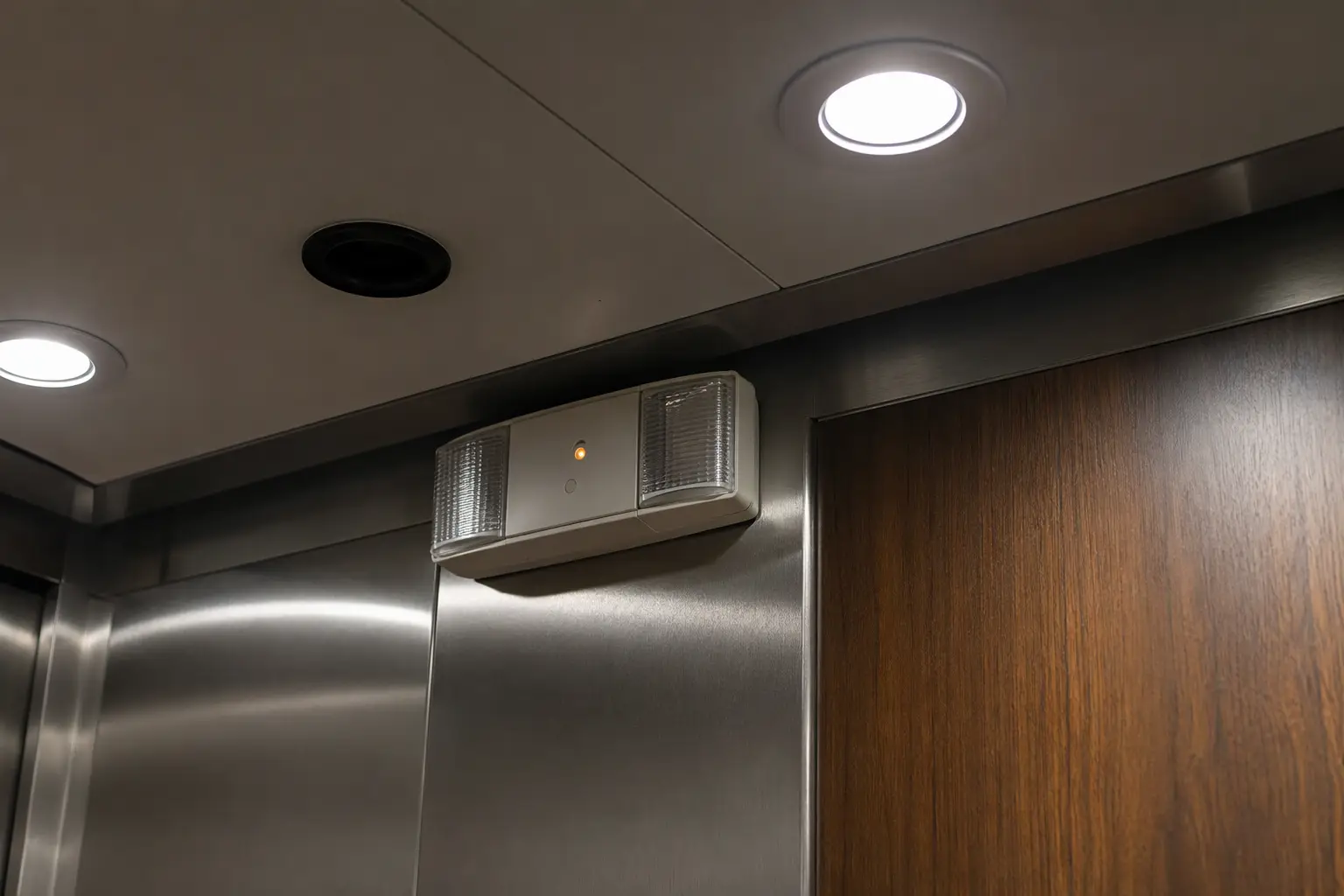
It depends on the type of maintenance contract in place. Full-maintenance agreements generally include cab lighting, inspection lamps, and indicator lights as covered components, while oil-and-grease or preventive-maintenance-only contracts typically exclude parts and labor for those repairs, leaving the building owner responsible for a separate invoice.
When a state inspector identifies a lighting deficiency — whether a burned-out cab light, a failed emergency lighting unit, or a nonfunctioning inspection lamp — the elevator is flagged with a violation that must be corrected before a valid certificate of operation or inspection certificate can be issued or renewed. At that point, the building owner must act quickly. Whether the corrective work flows through the existing service agreement or generates a new billable work order is a question answered entirely by the contract, not by the inspector or the regulatory agency.
Understanding the distinction between contract tiers, what state agencies in the District of Columbia, Maryland, Pennsylvania, and Virginia require for lighting compliance, and how ASME A17.1 Safety Code for Elevators and Escalators defines those requirements gives building owners the information they need to avoid surprise invoices and inspection failures.
What types of elevator maintenance contracts exist, and what does each typically cover?
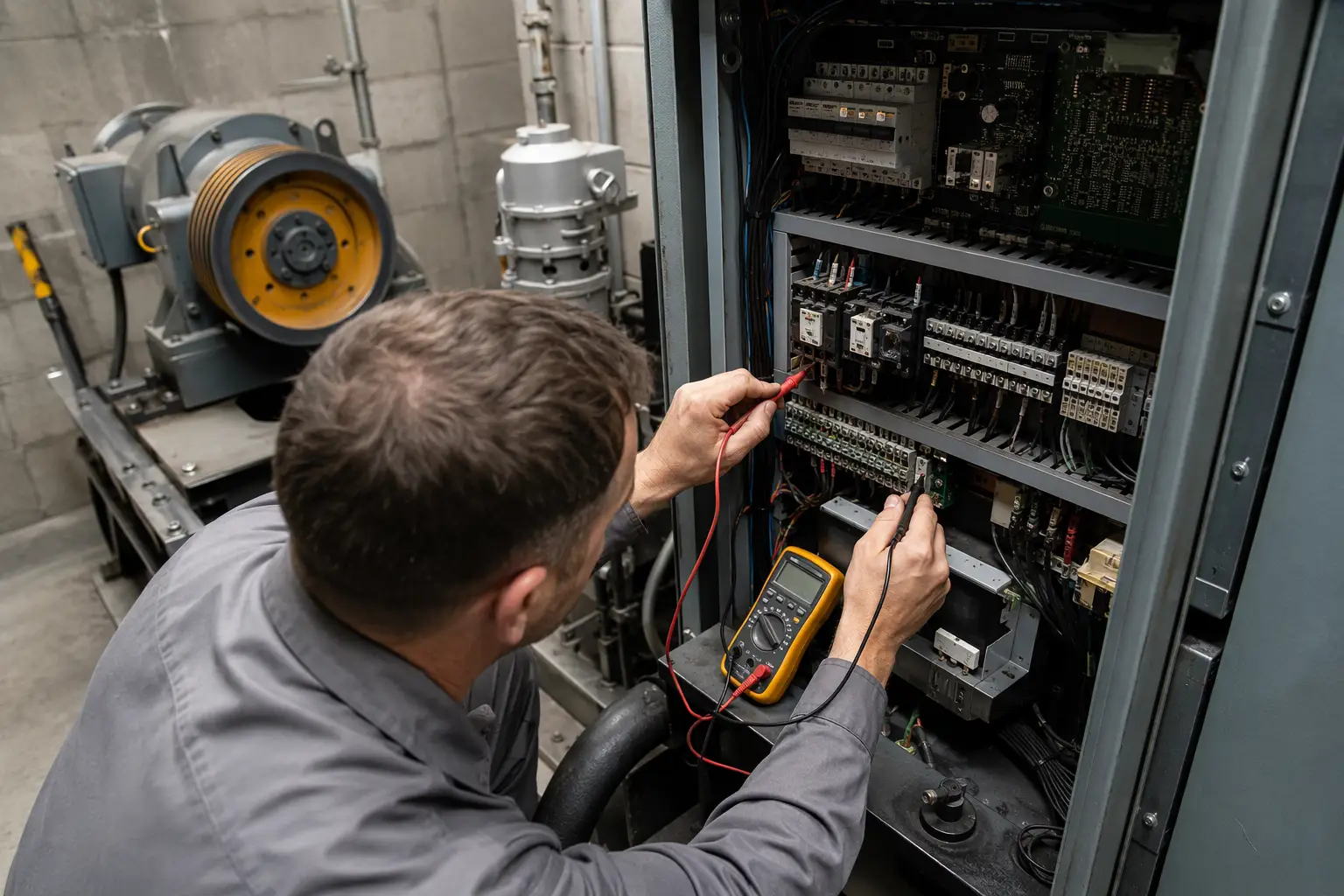
Elevator maintenance contracts fall into three broad tiers — oil-and-grease, parts-and-labor, and full-maintenance — and the tier determines whether a lighting repair generates an additional charge.
An oil-and-grease (also called preventive-maintenance-only) contract is the most limited. The contractor visits on a scheduled basis to lubricate, adjust, and inspect components but does not supply parts or perform corrective repairs as part of the monthly fee. Under this arrangement, virtually every violation finding — including a lighting deficiency — is billed separately at a time-and-materials rate.
A parts-and-labor contract typically covers mechanical and electrical components that wear through normal use. Lighting components such as fluorescent or LED cab fixtures, indicator lamps, and position lights are frequently listed as covered items, though the contract may contain exclusions for components damaged by misuse, vandalism, or water intrusion.
A full-maintenance contract is the most comprehensive tier. It generally covers all components required for the elevator to operate in compliance with the applicable safety code, which often includes cab lighting, emergency lighting batteries and fixtures, hall lanterns, and indicator displays. Even under a full-maintenance agreement, exclusions for cosmetic elements, tenant-supplied fixtures, or decorative lighting upgrades are common, so the contract must be read carefully.
What does ASME A17.1 require for elevator lighting?
The ASME A17.1 Safety Code for Elevators and Escalators mandates specific minimum illumination levels and emergency lighting provisions that directly affect what an inspector flags as a violation.
ASME A17.1 requires that the elevator car interior be illuminated at all times the car is accessible to the public. It also requires a battery-powered emergency lighting unit capable of illuminating the car for a defined minimum duration in the event of normal power failure. The emergency lighting requirement is intended to ensure that passengers stranded during a power outage can safely remain in the car until rescue personnel arrive. An inspection lamp must also be present in the car for use by mechanics performing maintenance work.
When an inspector — whether a state inspector or a third-party qualified elevator inspector acting under state authority — finds that any of these elements is missing, inoperative, or below the minimum illumination standard, a violation is recorded. The elevator may be ordered out of service until the deficiency is corrected, or the owner may be given a defined correction period depending on the jurisdiction.
How does each state in Quality Elevator Company’s service area handle lighting violations found during inspection?
Each jurisdiction has its own regulatory framework, but all four enforce ASME A17.1 lighting requirements and require correction before a valid certificate is issued or maintained.
District of Columbia: The DC Department of Buildings (DOB) oversees elevator certificates. DC has adopted ASME A17.1-2013/CSA B44-13 as referenced by the 2017 DC Building Code, effective May 29, 2020. Owners use DOB-approved third-party inspection agencies staffed by ASME QEI-certified inspectors. When a lighting violation is documented, it must be resolved and reported before DOB issues or renews the certificate of inspection, which is valid for two years. A copy of the certificate must be conspicuously displayed in the elevator car.
Maryland: The Maryland Department of Labor, Division of Labor and Industry, Elevator and Escalator Safety administers the state elevator program under Public Safety Article, Title 12, Subtitle 8 of the Annotated Code of Maryland and COMAR 09.12.81. Maryland adopted ASME A17.1-2022/CSA B44:22, effective June 17, 2026, with the applicable edition determined by when the installation contract was signed. Annual periodic inspections are required and must be performed by a third-party qualified elevator inspector. Maintenance, repair, test, and inspection records must be kept at a readily accessible central location in the building. A lighting violation found during the annual inspection must be corrected by a licensed elevator mechanic before the certificate is renewed.
Pennsylvania: The Pennsylvania Department of Labor and Industry (L&I), Bureau of Occupational and Industrial Safety, Elevator Section enforces statewide elevator requirements under 34 Pa. Code Chapter 405. Electric and hydraulic elevators must have periodic inspections at intervals no greater than six months. Pennsylvania currently enforces ASME A17.1-2000 with the A17.1a-2002 addenda for permits issued before December 20, 2026, after which ASME A17.1-2016 applies to new permit applications. Lighting violations documented during a periodic inspection must be corrected before the Department issues or renews the certificate of operation.
Virginia: Under the Virginia Uniform Statewide Building Code (13VAC5-63), local building departments conduct annual elevator inspections, with the City of Richmond’s Bureau of Permits and Inspections managing the Richmond elevator program. Virginia adopted ASME A17.1/CSA B44-2019 through the 2021 USBC, effective January 18, 2024. All periodic tests must be witnessed by the local code official. The current certificate of inspection must be displayed in the elevator or kept available in the building operator’s office. A lighting violation triggers a correction requirement enforced by the local authority having jurisdiction (AHJ).
What specific lighting components are most frequently cited in elevator inspection violations?
Inspection violations related to lighting tend to cluster around a consistent set of components, most of which are part of normal elevator maintenance.
The most commonly cited items include: failed or missing emergency lighting units (battery backup fixtures required by ASME A17.1); burned-out or missing inspection lamps; insufficient cab illumination due to burned-out fixtures or degraded LED panels; nonfunctioning hall lanterns or position indicators; and failed emergency alarm buttons that are illuminated as part of the communication system. Emergency lighting battery failures are particularly common because batteries have a finite service life and are frequently overlooked during routine maintenance visits unless the contract specifically calls for periodic battery testing.
Does the ADA impose any elevator lighting requirements?
Yes. The Americans with Disabilities Act (ADA) establishes accessibility standards for elevators that include lighting-related provisions, particularly for control panels, floor indicators, and car position indicators. ADA Standards for Accessible Design require that elevator car controls be located in illuminated environments where individuals with visual impairments can distinguish buttons, and that floor indicators provide both visual and audible signals. While ADA lighting standards and ASME A17.1 safety lighting standards are distinct requirements enforced by different authorities, a building owner facing both a state inspection lighting violation and an ADA concern may need to address both during the same corrective work order.
What should a building owner do immediately after receiving a lighting violation from a state inspection?
- Obtain the full written inspection report from the third-party inspector or state agency and identify exactly which lighting components are cited as deficient.
- Review the existing elevator maintenance contract to determine whether the cited components fall within the covered scope — specifically checking for any exclusion language related to cab lighting, emergency lighting, or indicator fixtures.
- Contact the elevator service contractor in writing to notify them of the violation and request a written response confirming whether the repair is covered under the contract or will be billed separately.
- If the repair is a contract-covered item, request a scheduled corrective visit with a written completion timeline.
- If the repair is billed separately, obtain a written quote and confirm that the technician performing the work is a licensed elevator mechanic under the applicable state requirements (a licensed elevator mechanic in Maryland, a certified elevator mechanic in Virginia, or a mechanic qualified under the applicable standard in DC and Pennsylvania).
- After the repair is completed, obtain written documentation of the corrective work, including the technician’s name and, where required, their license or certification number.
- File the corrective documentation with the appropriate state agency or submit it to the third-party inspection agency as required by the jurisdiction to clear the violation and restore or renew the certificate of inspection.
- Update the building’s maintenance and inspection records to reflect both the violation and the corrective action, keeping those records at the building as required by state law.
How can a building owner tell if a lighting repair is explicitly covered or excluded in their contract?
Coverage disputes almost always trace back to ambiguous or unread contract language. Building owners should look for three specific elements in their maintenance agreement.
First, look for a covered components list or schedule. Well-drafted full-maintenance contracts attach a schedule identifying every system and component the contractor is responsible for maintaining and repairing. If cab lighting fixtures, emergency lighting batteries, hall lanterns, and indicator lamps appear on that schedule, they are covered. If the schedule is silent on lighting, the default interpretation depends on whether the contract uses inclusive or exclusive language.
Second, look for an exclusions clause. Most contracts expressly exclude components damaged by vandalism, flooding, or misuse. Some also exclude cosmetic or decorative lighting that is not required by the safety code. If the failed component is a code-required emergency lighting fixture, arguing that it falls within a cosmetic exclusion is generally not supportable, but owners should seek written clarification from the contractor.
Third, look for a regulatory compliance clause. Some full-maintenance contracts include a provision stating that the contractor will maintain the elevator in compliance with applicable codes and regulations. If such a clause exists, a lighting deficiency that constitutes a code violation is arguably covered regardless of whether lighting is specifically listed — though contractors may dispute this interpretation.
Quality Elevator Company recommends that building owners in Baltimore, Washington DC, Philadelphia, and Richmond review their maintenance contracts annually and request a written summary of covered and excluded components before the annual inspection cycle begins, eliminating ambiguity before a violation occurs.
What is the cost difference between a contract-covered repair and a separately billed lighting repair?
When a repair is covered under a maintenance contract, the building owner pays nothing beyond the monthly or annual contract fee for that corrective work. When the same repair is billed separately on a time-and-materials basis, the owner absorbs the full cost of parts and labor at the contractor’s standard or prevailing rate. The practical difference in total cost can be meaningful, particularly for emergency lighting unit replacements, which involve both the fixture and a battery system, or for multi-lamp cab refits on older equipment.
The table below summarizes how repair billing typically works across common elevator maintenance contract types for lighting-related inspection violations.
| Contract Type | Routine Lighting Maintenance | Emergency Lighting Unit Replacement | Cab Fixture Replacement | Hall Lantern / Indicator Repair | Inspection Lamp Replacement |
|---|---|---|---|---|---|
| Oil-and-Grease / PM Only | Not covered — billed separately | Not covered — billed separately | Not covered — billed separately | Not covered — billed separately | Not covered — billed separately |
| Parts-and-Labor | Typically covered | Often covered (verify battery exclusions) | Typically covered | Typically covered | Typically covered |
| Full-Maintenance | Covered | Covered (including battery) | Covered | Covered | Covered |
| Modernization-Only | Not covered — billed separately | Not covered — billed separately | Not covered — billed separately | Not covered — billed separately | Not covered — billed separately |
Note: Coverage determinations are contract-specific. The above reflects typical industry practice, not a guarantee of any particular contract’s terms. Always verify coverage in writing with the service contractor before assuming a repair is included.
Can a lighting violation result in an elevator being taken out of service?
Yes, in all four jurisdictions served by Quality Elevator Company, the authority having jurisdiction has the power to order an elevator out of service when a safety violation is not corrected within the required timeframe. A failed emergency lighting unit is a safety deficiency, not merely a cosmetic one, because it directly affects the ability of passengers to remain safe during a power outage.
In the District of Columbia, taking an elevator out of service under ASME A17.1 Section 8.11.1.4 or placing it in temporarily dormant status requires a DOB permit. In Maryland, an elevator may not be operated without a valid certificate, and an uncorrected violation can result in that certificate being withheld or revoked. In Pennsylvania, an elevator with an outstanding violation may not return to service until L&I inspects and passes it following the corrective repair. In Virginia, local building departments enforce the correction requirement, and the local code official has authority to order the unit out of service.
How quickly must a lighting violation be corrected after an inspection in these jurisdictions?
Correction timelines are set by the state agency or local AHJ and vary based on the severity of the violation and the jurisdiction. A violation that presents an immediate safety hazard — such as a completely nonfunctional emergency lighting system — may require immediate correction or immediate removal of the elevator from service. A less severe deficiency, such as a single burned-out cab lamp that does not eliminate all interior lighting, may allow a correction period of days or weeks as determined by the inspector.
Building owners should not assume a grace period exists. The specific correction deadline is documented on the inspection report or violation notice. Missing that deadline can result in the elevator being removed from service and may require a re-inspection before it can return to operation, adding time and cost beyond the original repair.
What records must building owners keep after correcting a lighting violation?
Documentation requirements vary by jurisdiction, but the general principle across all four states is that maintenance, repair, and inspection records must be retained at the building and made available to inspectors on request.
In Maryland, COMAR 09.12.81 requires that maintenance, repair, test, and inspection records be kept at a readily accessible central location in the building. The corrective work order for a lighting repair, the technician’s license number, and the date of completion should all be retained as part of that record set. In the District of Columbia, alterations and repairs of existing elevators follow the Existing Building Code and Property Maintenance Code, and documentation supports the submission of third-party inspection reports to the DOB through the Citizen Access Portal. In Pennsylvania, documentation of the corrective repair supports the Department’s acceptance inspection process when that is required. In Virginia, third-party inspection reports must include the name and certification number of the elevator mechanic who performed witnessed tests, and that documentation flows to the local building department.
Does upgrading from fluorescent to LED lighting in an elevator require a permit or inspection?
In most jurisdictions, replacing a failed or obsolete fluorescent fixture with an equivalent LED fixture as a like-for-like repair does not require a new permit. However, if the lighting upgrade is part of a broader modernization — for example, replacing the cab interior, adding new fixture types, or modifying the electrical supply to the fixtures — it may constitute an alteration that triggers permit and acceptance inspection requirements.
In Pennsylvania, construction, alteration, replacement, or repair of an elevator requires a permit application to L&I, and the Department conducts an acceptance inspection before a repaired, altered, or modified elevator is returned to service. In the District of Columbia, a DOB permit is required for alterations and certain repairs under the 2017 DC Building Code, which requires a copy of the master electrician license and the elevator contracting license. Building owners undertaking a lighting upgrade should consult with their elevator service contractor to determine whether the scope of work triggers permitting requirements in their jurisdiction.
What role does the AHJ play when a lighting violation is disputed between the building owner and the service contractor?
The authority having jurisdiction — whether the DC DOB, the Maryland Department of Labor, Pennsylvania L&I, or the local building department in Virginia — is the final authority on whether a violation exists and whether it has been corrected. The AHJ does not resolve contract disputes between building owners and elevator contractors. If the contractor and the owner disagree about whether a lighting repair is contract-covered, that is a commercial dispute resolved through the contract’s dispute resolution provisions or, if necessary, through legal channels.
The AHJ’s concern is code compliance: is the elevator safe and does it meet the requirements of the adopted edition of ASME A17.1? The AHJ will not issue or renew a certificate of inspection until the violation is corrected, regardless of who pays for the repair. The building owner, as the responsible party for the elevator’s operation, bears the ultimate obligation to ensure compliance.
Can a building owner use their own electrician to fix an elevator lighting violation instead of the elevator contractor?
In most cases, no. Elevator systems — including their lighting circuits — are classified as elevator equipment and are subject to the elevator safety codes, not general electrical codes. Work on elevator equipment must be performed by qualified elevator mechanics licensed or certified under the applicable state requirements.
In Maryland, a person must be licensed by the Maryland Elevator Safety Review Board as an elevator mechanic before working on elevator units. In Virginia, no one may work as an elevator mechanic without state certification, unless working under the direct and immediate supervision of a certified mechanic. In the District of Columbia, elevator work is regulated by the DC Board of Industrial Trades, which licenses elevator mechanics. In Pennsylvania, the corrective repair must be performed by a qualified individual meeting the requirements applicable under the state’s elevator program.
Using an unlicensed general electrician to perform elevator lighting repairs could result in the repair being rejected during the follow-up inspection, the certificate being withheld, and potential liability for the building owner.
What questions should building owners ask their elevator contractor before signing a maintenance contract?
Asking the right questions before signing a maintenance agreement significantly reduces the likelihood of a surprise invoice after an inspection finding. Building owners should ask the following:
- Does this contract cover all lighting components required by ASME A17.1, including emergency lighting units and batteries?
- What exclusions apply to lighting or electrical components?
- If a state inspection finds a lighting violation, will the corrective repair be performed under this contract at no additional charge?
- What is the response time for correcting a violation that could result in the elevator being taken out of service?
- Are the technicians performing work licensed as elevator mechanics under the applicable state requirements?
- Will the contractor handle documentation and notification to the state agency after the corrective repair is completed?
- Does the contract include periodic battery testing for emergency lighting units?
How often should emergency lighting batteries in elevators be tested to prevent inspection violations?
The ASME A17.1 Safety Code for Elevators and Escalators includes provisions governing periodic testing of emergency lighting systems. Emergency lighting batteries have a finite service life and can fail silently — the fixture may appear functional under normal power but fail to illuminate when the main power is interrupted, which is exactly when it is needed. Regular testing under a defined protocol is the only reliable way to confirm that the system will function during a power outage.
Building owners with full-maintenance contracts should confirm in writing that their contract includes periodic emergency lighting battery tests. Those on oil-and-grease or parts-and-labor contracts should ensure that battery testing is either added to the preventive maintenance schedule or performed independently on a defined interval. Discovering a failed battery during a state inspection, rather than during routine maintenance, is an avoidable situation that generates both a violation and an unbudgeted repair cost.
What is the difference between a maintenance violation and an installation defect when it comes to lighting?
A maintenance violation arises when a component that was once compliant has degraded, failed, or been damaged during the operational life of the elevator — a burned-out emergency lighting fixture or a depleted battery are typical examples. An installation defect is a condition that existed from the time the equipment was installed or last modernized, such as a fixture that was never wired to meet the ASME A17.1 illumination standard or an emergency lighting unit that was never installed despite being required.
This distinction matters for contract coverage. A full-maintenance contract covers the ongoing maintenance and repair of components that were in place when the contract was signed. If a lighting deficiency is found to be an installation defect — meaning the required component was never present or was installed incorrectly — the contractor may argue that correcting it falls outside the maintenance scope and constitutes new work, billable separately. Resolving that dispute requires examining the original installation permit, the acceptance inspection records, and any prior inspection reports that should have identified the deficiency.
How does Quality Elevator Company handle lighting violations found during elevator inspections?
Quality Elevator Company serves building owners in Baltimore, Washington DC, Philadelphia, and Richmond, providing elevator maintenance and repair services aligned with the specific regulatory requirements of each jurisdiction. When a state inspection identifies a lighting violation for a client on a full-maintenance agreement, the corrective work is addressed within the scope of that contract, and the technician completing the repair is qualified under the applicable state requirements.
For building owners whose current contract does not cover the cited lighting component, Quality Elevator Company can provide a written assessment of the deficiency, a corrective work proposal, and guidance on whether upgrading the maintenance contract tier would prevent similar out-of-pocket costs in the future. The company also assists with documentation and coordinates with the relevant inspection agency to ensure the correction is properly recorded and the certificate process moves forward without delay.
What steps can building owners take now to reduce the risk of a lighting violation at the next inspection?
- Request a copy of the most recent inspection report and identify any items noted as deficient or approaching end of life, including lighting components.
- Ask the elevator service contractor to perform a lighting audit as part of the next scheduled maintenance visit, testing both normal cab lighting and emergency lighting battery backup function.
- Confirm in writing whether the current maintenance contract covers emergency lighting unit replacement, including battery replacement.
- Schedule a contract review with the service contractor to close any coverage gaps before the next inspection cycle, particularly for emergency lighting batteries, which have a defined service life.
- Verify that all corrective work and maintenance visits are documented and that records are stored at the building in compliance with the applicable state requirements.
- Ensure that the current certificate of inspection is properly displayed in the elevator car or in the building operator’s office as required by the jurisdiction, confirming that the elevator is operating under a valid, current certificate.
- Contact Quality Elevator Company to review the maintenance agreement and inspection history and identify any components likely to generate a violation finding before the next scheduled inspection.
Contact Quality Elevator Company for a free elevator assessment at 301-779-9116.
Need elevator service you can rely on? Quality Elevator Company is ready to help.