ASME A17.1 Elevator Code Explained: What Building Owners and Facility Managers Need to Know
ASME A17.1 sets the minimum safety requirements that every elevator operating in a compliant U.S. or Canadian jurisdiction must meet. First published in 1921 and regularly updated by the American Society of Mechanical Engineers (ASME), the code covers everything from the structural integrity of elevator shafts to the frequency of mandatory inspections and tests. For building owners, property managers, and facilities professionals, understanding this code is not optional — it is a legal, financial, and life-safety obligation.
What Is ASME A17.1 and Why Does It Exist?
The ASME A17.1 Safety Code for Elevators and Escalators exists because vertical transportation equipment presents unique and serious risks: mechanical failure, free-fall hazards, entrapment, and door-related injuries. Without a unified national standard, safety levels varied dangerously from jurisdiction to jurisdiction.
ASME — a nonprofit standards organization — convenes engineers, regulators, manufacturers, and safety experts to produce and update A17.1 on a regular revision cycle. The code is adopted by reference into the laws and regulations of most U.S. states, the District of Columbia, and Canadian provinces, meaning that local elevator codes are typically built on or derived directly from A17.1.
The code applies to a broad range of equipment, including:
- Electric traction elevators (including gearless and geared)
- Hydraulic elevators
- Escalators and moving walks
- Dumbwaiters and material lifts
- Inclined elevators and platform lifts
- Automated parking systems
What Does ASME A17.1 Actually Require?

The code is organized into parts covering the full lifecycle of elevator equipment. Key requirement areas include:
Design and Construction Standards
A17.1 specifies minimum requirements for hoistway construction, machine room ventilation, pit dimensions, overhead clearances, and load ratings. Every component — from guide rails to safeties to buffers — must meet defined performance criteria before installation begins.
Safety Devices
The code mandates specific safety devices on every elevator, including governor-and-safety systems that stop a car if it exceeds rated speed, buffers at the base of the hoistway to absorb impact, and door reopening devices to prevent passenger entrapment. These are not optional upgrades; they are minimum requirements.
Electrical Requirements
Wiring, controller specifications, and emergency lighting must comply with defined standards. Firefighters’ emergency operation (FEEO) — which allows fire departments to control elevators during emergencies — is a mandatory feature governed by the code.
Accessibility Integration
While ADA (Americans with Disabilities Act) requirements govern accessibility dimensions and features such as call button placement, Braille markings, and audible floor indicators, A17.1 provides the underlying mechanical and structural framework within which accessible elevators must operate. The two standards work in tandem.
Inspection and Testing Intervals
A17.1 defines required inspection and test categories. Periodic inspections — typically annual — must be conducted by a qualified inspector. In addition to routine inspections, the code requires periodic tests at defined intervals, including five-year full-load safety tests for hydraulic and traction elevators. Specific intervals are set by the adopted edition of the code in each jurisdiction.
Maintenance Requirements
The code requires that elevators be maintained by a qualified elevator mechanic and that maintenance records be kept and available for inspection. The scope and frequency of maintenance tasks are defined to ensure ongoing safe operation between formal inspections.
How Is ASME A17.1 Adopted and Enforced?
ASME publishes A17.1, but the code becomes enforceable law only when a state, city, or local jurisdiction officially adopts it — typically by reference in elevator safety statutes or administrative regulations. Most jurisdictions adopt A17.1 with local amendments, which means there can be important differences between, say, New York’s elevator code and Florida’s, even though both are grounded in A17.1.
Enforcement is typically handled by a state labor department, building department, or a dedicated elevator safety bureau. Inspectors — either government employees or authorized third-party inspection agencies — conduct the mandatory periodic inspections and issue operating certificates. Operating an elevator without a valid certificate of inspection is a violation that can result in fines, mandatory shutdown, and significant liability exposure.
OSHA (Occupational Safety and Health Administration) also references elevator safety requirements in its workplace regulations, particularly for construction elevators and material hoists. In general industry settings, OSHA references ASME standards as the applicable safety benchmarks for vertical transportation equipment.
What Are the Current and Recent Editions of ASME A17.1?
ASME A17.1 is revised on a defined cycle. As of 2026, the most recent published editions include the 2022 and 2019 editions, which introduced updates across multiple code sections. Because adoption by jurisdictions lags publication, building owners may be subject to requirements from an edition that is one or two cycles behind the current published version — or to a locally amended version. Verifying which edition is adopted in a specific jurisdiction is an essential first step in any compliance analysis.
The code is jointly published with CSA B44 — Canada’s elevator safety standard — reflecting the integrated safety framework shared across North America. References to “ASME A17.1/CSA B44” in technical documents indicate this harmonized publication.
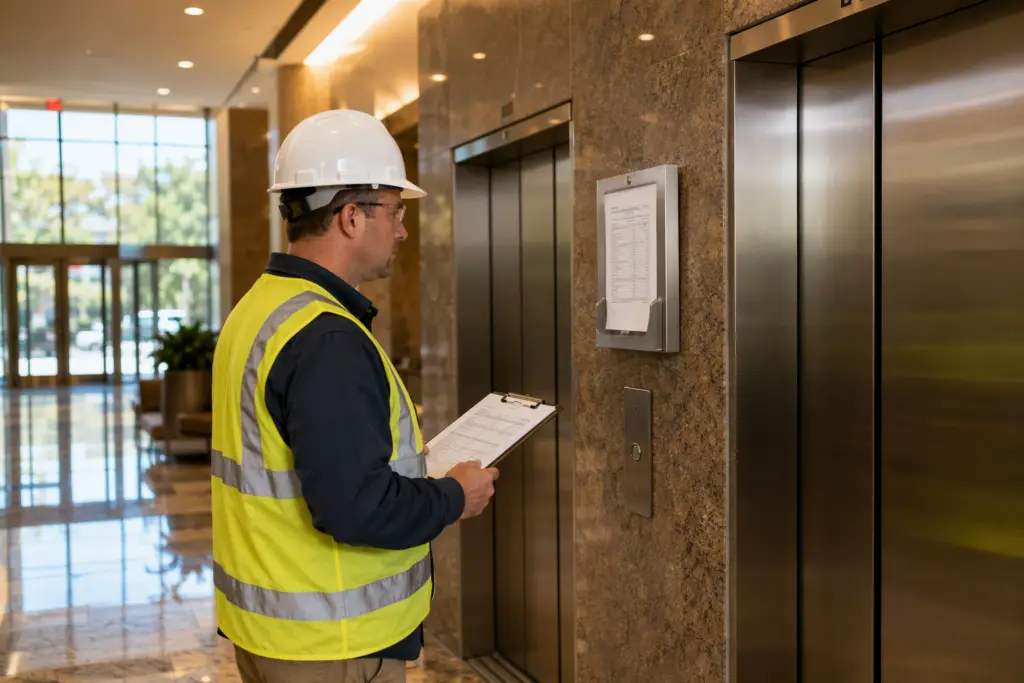
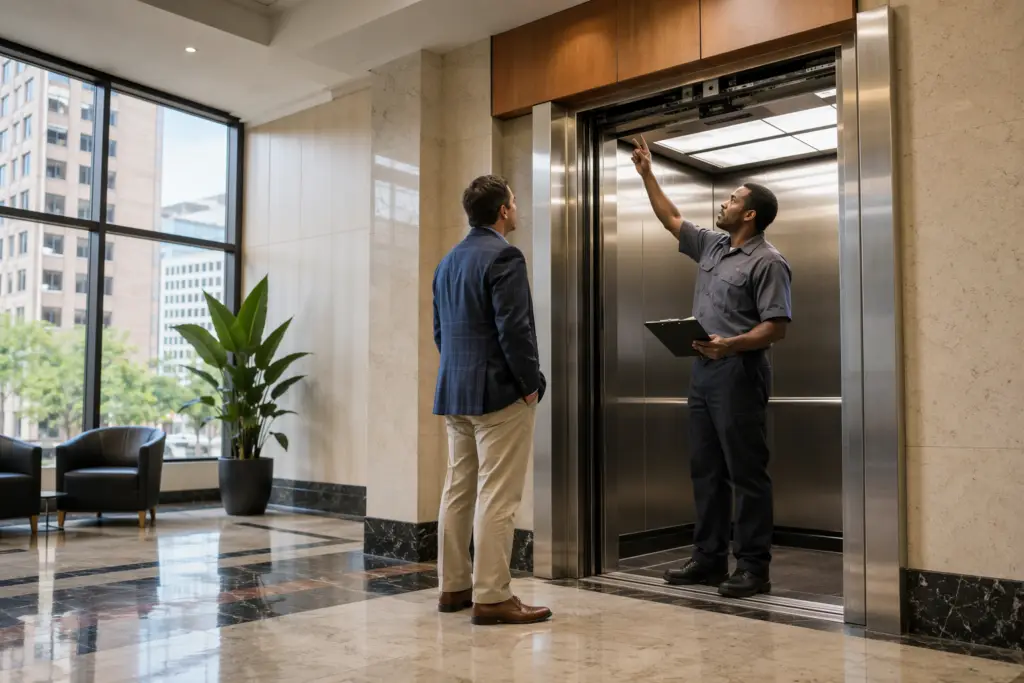
What Happens During an ASME A17.1 Elevator Inspection?
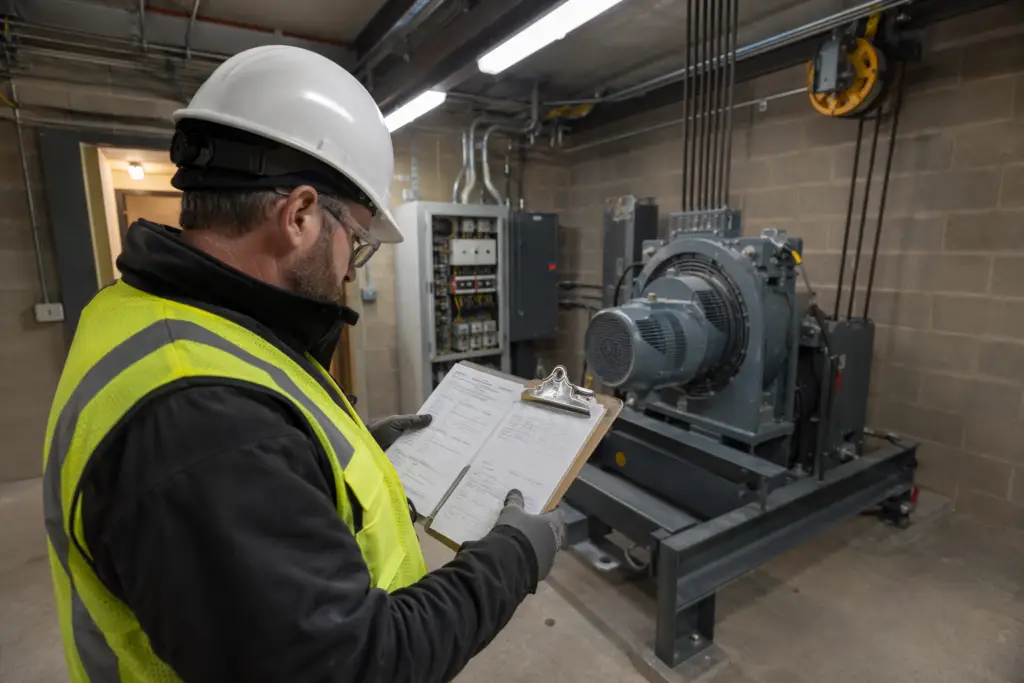
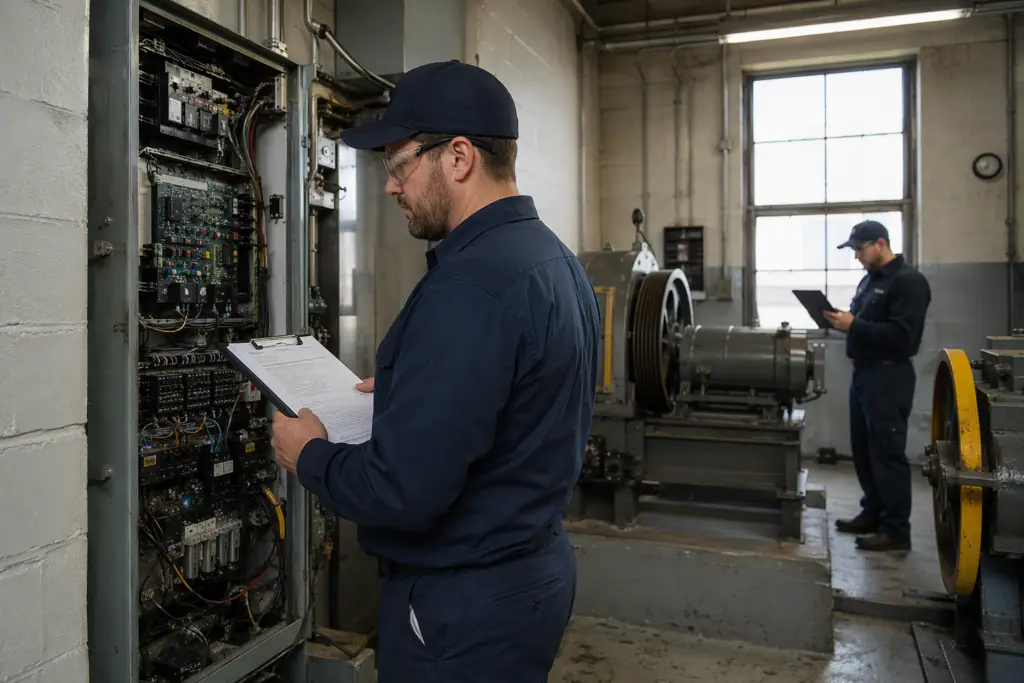
- Pre-Inspection Documentation Review: The inspector reviews maintenance logs, the previous inspection certificate, test records, and any alteration permits. Missing or incomplete records are themselves a compliance issue.
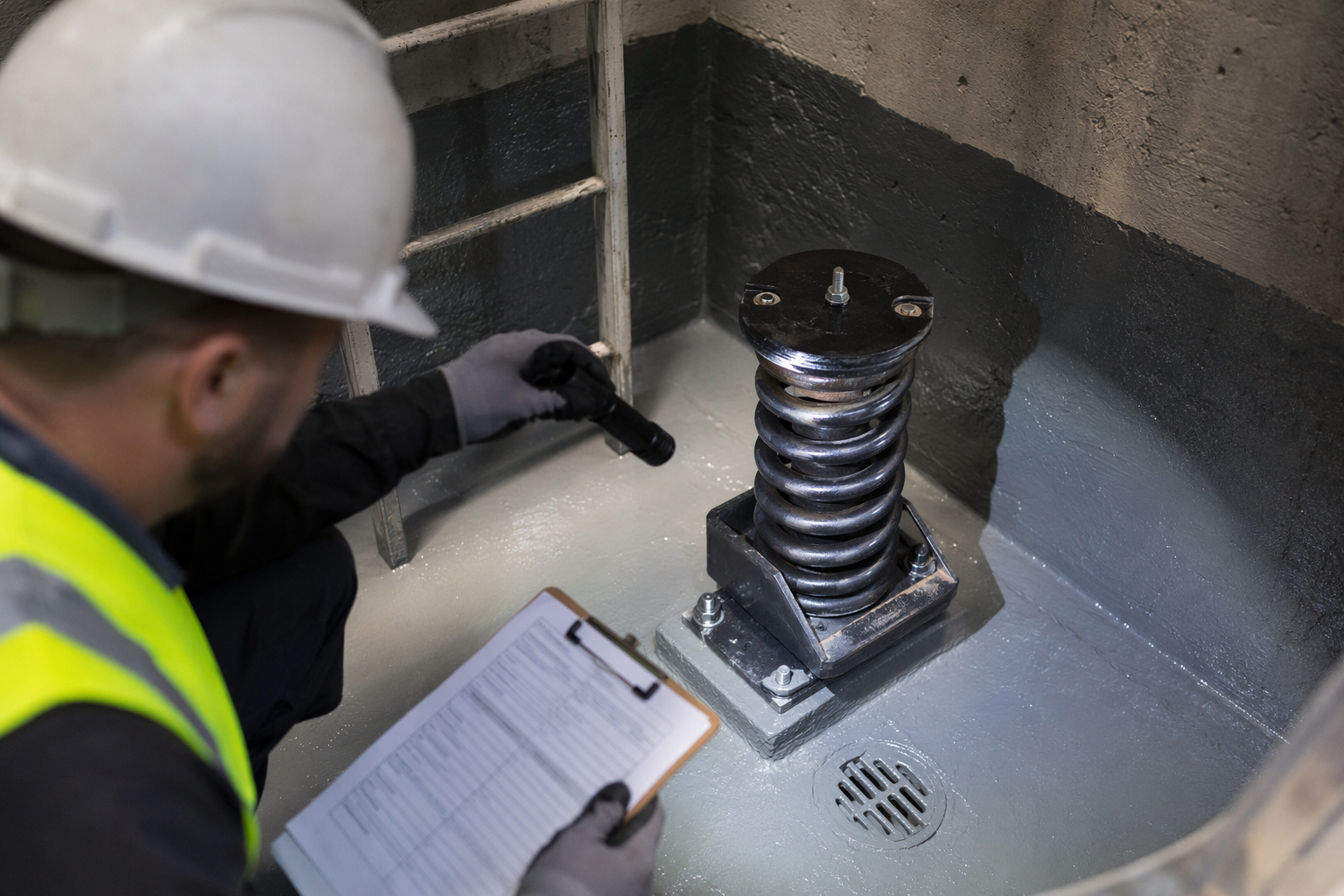
- Hoistway and Pit Inspection: The inspector examines the hoistway structure, pit conditions, lighting, stop switch, ladder access, and sump pump (where required) for compliance with code dimensions and condition standards.
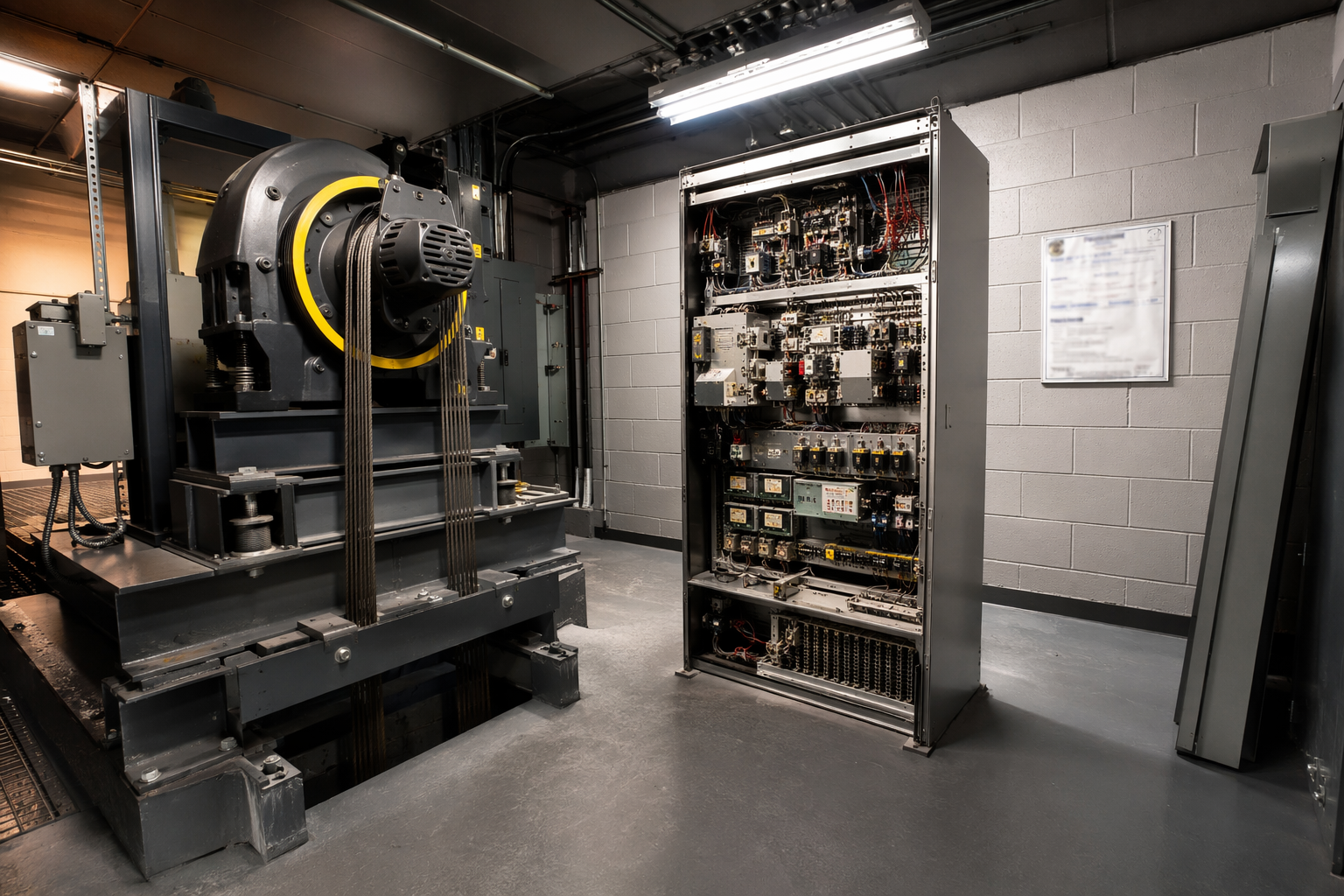
- Machine Room or Machine Space Inspection: Temperature, lighting, housekeeping, access control, fire suppression equipment, and the condition of the controller, drive, and machine are assessed.
- Car and Door System Inspection: Door operation, safety edges or light curtains, car lighting, emergency lighting, ventilation, capacity posting, and certificate display are verified.
- Safety Device Verification: The inspector confirms that safety devices — including overspeed governors, safeties, buffers, and interlocks — are present, properly installed, and within their test intervals.
- Operational Testing: The elevator is run through its operating sequences, including emergency stop, door open and close operations, and leveling accuracy.
- Periodic Test Witnessing (When Due): When a five-year or other periodic test is due, the inspector witnesses the test performed by a qualified elevator mechanic and records results.
- Inspection Report and Certificate Issuance: The inspector documents findings. If the elevator passes, an operating certificate is issued. If deficiencies are found, a violation notice is issued with a required correction timeline.
Frequently Asked Questions About ASME A17.1
What does ASME A17.1 stand for?
ASME stands for the American Society of Mechanical Engineers, the standards body that authors and publishes the code. A17.1 is the code designation for the Safety Code for Elevators and Escalators. It is the primary safety standard governing elevators across the United States and Canada.
Is ASME A17.1 compliance legally required?
In nearly all U.S. jurisdictions, yes. States and municipalities adopt A17.1 by reference into their elevator safety laws, making it legally enforceable. Operating an elevator without a valid, current inspection certificate — which requires A17.1 compliance — is a legal violation in most jurisdictions and can expose building owners to significant liability.
How often must elevators be inspected under ASME A17.1?
A17.1 requires periodic inspections, with most jurisdictions mandating at least annual routine inspections. In addition, the code requires periodic tests at longer intervals — most notably full-load safety and governor tests, which are typically required every five years. The precise intervals depend on the edition adopted by the jurisdiction and any local amendments.
What is the difference between an inspection and a test under ASME A17.1?
An inspection is a visual and operational examination of the elevator’s components and systems against code requirements. A test is a specific, witnessed functional demonstration — such as a full-load safety test or a governor test — proving that a safety device performs as designed. Both are required by the code, and both must be documented.
Who is qualified to perform ASME A17.1 inspections?
A17.1 inspections must be performed by a qualified elevator inspector — typically a state-licensed or certified inspector employed by the jurisdiction, an authorized third-party inspection company, or in some cases a certified inspection agency. Maintenance technicians perform the actual tests; inspectors witness and certify the results. Requirements vary by jurisdiction.
What does ASME A17.1 require for elevator maintenance?
The code requires that maintenance be performed by a qualified elevator mechanic at intervals sufficient to keep the equipment in a safe operating condition, and that maintenance records be kept and available for review during inspections. The code does not prescribe a single universal maintenance schedule but defines the scope of work that must be covered. Many jurisdictions and maintenance contracts reference the code’s maintenance provisions directly.
How does ASME A17.1 relate to ADA elevator requirements?
The ADA governs accessibility features — call button heights, Braille, audible signals, door timing, and cab dimensions for new construction and alterations subject to ADA. A17.1 governs the mechanical, electrical, and structural safety of the elevator itself. Both standards apply to most commercial elevators; compliance with one does not substitute for compliance with the other.
What are the consequences of failing an ASME A17.1 inspection?
Consequences range from written violation notices with a correction deadline to immediate shutdown orders for serious or imminent hazards. Repeated or unresolved violations can result in escalating fines, mandatory elevator closure, and legal liability if an injury occurs on a noncompliant elevator. Some jurisdictions publicize inspection results, creating reputational risk for property owners as well.
Does ASME A17.1 apply to existing elevators or only new installations?
A17.1 applies to both new installations and existing elevators in operation. Existing elevators are generally held to the code edition in effect when they were installed, but alterations must comply with the current adopted edition. Additionally, some code provisions — particularly those related to firefighters’ emergency operation and certain safety upgrades — have been applied retroactively by many jurisdictions through local retrofit requirements.
How much does ASME A17.1 compliance typically cost?
Compliance costs vary widely based on elevator type, age, condition, the edition of the code adopted locally, and whether any violations require correction. Routine annual inspections and five-year tests represent recurring costs, while bringing an older elevator into compliance with updated safety requirements or accessibility standards may involve significant capital expenditure. A professional elevator assessment is the most reliable way to identify the actual compliance gap and associated costs for a specific installation.
What is the difference between ASME A17.1 and ASME A17.3?
ASME A17.1 establishes requirements for new elevator installations and serves as the primary safety code. ASME A17.3 is the Safety Code for Existing Elevators and Escalators, which addresses retrofit and upgrade requirements for equipment already in service. When a jurisdiction adopts both, A17.3 defines what older elevators must be brought up to, while A17.1 governs new work.
ASME A17.1 and Workplace Safety: The OSHA Connection
OSHA references elevator safety standards in workplace regulations applicable to construction and general industry. In construction, specific OSHA standards govern personnel hoists and material elevators on job sites. In general industry workplaces, OSHA’s General Duty Clause requires employers to provide a hazard-free environment, and compliance with ASME A17.1 is widely recognized as a benchmark for meeting that duty with respect to elevator equipment. Building owners and employers who ignore A17.1 requirements face exposure under both state elevator laws and federal OSHA standards.
Industry Trends for 2025–2026: What Is Shaping Elevator Code Compliance?
Several meaningful trends are influencing how building owners and elevator service providers approach ASME A17.1 compliance in 2025 and 2026.
Increased Regulatory Scrutiny: Enforcement agencies in multiple states are increasing inspection frequency and tightening violation correction timelines, driven in part by high-profile elevator incidents that drew public attention to gaps in oversight. Building owners are experiencing less tolerance for deferred compliance.
Remote Monitoring and Predictive Maintenance: Modern elevator systems increasingly incorporate remote monitoring technology that tracks operational parameters in real time. While A17.1 does not yet mandate this technology, adopting it supports consistent compliance by enabling earlier detection of conditions that could lead to inspection failures or equipment downtime.
Aging Elevator Stock: A significant portion of the U.S. elevator fleet is aging, and the gap between what was code-compliant at installation and what current or recently adopted editions require continues to widen. This is driving increased demand for modernization assessments and phased upgrade planning.
Sustainability and Energy Efficiency: While not the primary focus of A17.1, energy efficiency considerations are increasingly factored into modernization decisions. Regenerative drives, LED lighting, and standby mode features are becoming standard in modernization projects, often bundled with necessary code compliance upgrades.
Workforce and Supply Chain Factors: Qualified elevator mechanics and inspection personnel remain in high demand. Lead times for parts and major components have been extended in recent years, making proactive maintenance and early violation correction more important than ever. Deferred maintenance is increasingly likely to result in longer downtime when component failure eventually occurs.
How Quality Elevator Company Supports ASME A17.1 Compliance
Quality Elevator Company approaches elevator safety and compliance as a data-driven discipline. Rather than relying on generalized checklists, the team grounds every assessment in the specific edition of ASME A17.1 — or its local amendment — adopted in the jurisdiction where the equipment operates.
For building owners navigating the complexity of annual inspections, five-year tests, violation responses, and modernization planning, having a knowledgeable elevator service partner who understands both the technical requirements of the code and the local enforcement environment makes a material difference in outcomes. Quality Elevator Company’s approach centers on clear documentation, accurate compliance gap identification, and prioritized corrective action — so building owners can make informed decisions rather than reactive ones.
Whether the challenge is preparing for a routine annual inspection, responding to a violation notice, planning a modernization to meet current code requirements, or understanding what the newly adopted edition of A17.1 means for a specific building, Quality Elevator Company provides structured, code-grounded guidance.
ASME A17.1 Quick Reference: Key Code Areas at a Glance
| Code Area | What It Covers | Who It Affects |
|---|---|---|
| Part 1 — Administration | Scope, jurisdiction, definitions, permits, certificates | Building owners, AHJs, contractors |
| Part 2 — Hoistways & Pits | Structural enclosures, clearances, lighting, access | Architects, contractors, building owners |
| Part 2 — Cars, Counterweights | Car construction, capacity, enclosures | Manufacturers, installers, inspectors |
| Part 2 — Driving Machines | Machine room/space requirements, equipment standards | Manufacturers, maintenance providers |
| Part 2 — Safety Devices | Governors, safeties, buffers, interlocks | All elevator installations |
| Part 2 — Electrical | Wiring, controllers, emergency lighting, FEEO | All elevator installations |
| Part 8 — Inspections & Tests | Required test types, intervals, documentation | Building owners, inspectors, mechanics |
| Part 8 — Maintenance | Scope of maintenance, qualifications, recordkeeping | Maintenance contractors, building owners |
Source: ASME A17.1 Safety Code for Elevators and Escalators — table reflects code structure qualitatively; consult the current adopted edition for jurisdiction-specific requirements.
Steps to Take If Your Elevator Fails an ASME A17.1 Inspection
- Obtain the Written Violation Notice: Secure the official inspection report and violation notice from the inspector or jurisdiction. This document specifies which code sections were violated and the required correction deadline.
- Do Not Ignore the Deadline: Violation correction deadlines are legally enforceable. Missing them can result in escalating penalties and, in serious cases, mandatory shutdown orders.
- Contact a Qualified Elevator Service Provider Immediately: Engage a licensed elevator company to review the violations, assess the scope of required corrective work, and provide a written plan for achieving compliance.
- Prioritize Imminent-Hazard Items: If the inspection identified any items flagged as imminent hazards, those must be addressed before the elevator can continue in operation. Do not defer these repairs.
- Document All Corrective Work: Maintain written records of every repair performed, including dates, descriptions of work, and the qualifications of the mechanics who performed it.
- Request a Re-Inspection: Once corrective work is complete, contact the jurisdiction or inspection agency to schedule a follow-up inspection to verify compliance and restore the operating certificate.
- Review Maintenance Practices: A violation notice is a signal to assess whether existing maintenance practices are adequate. Consider whether the current maintenance scope and frequency meet the code’s requirements.
Get Expert ASME A17.1 Compliance Guidance
Understanding the code is the first step — but applying it correctly to your specific elevator installation, in your specific jurisdiction, with your specific equipment age and condition, requires qualified expertise. Quality Elevator Company provides data-driven elevator assessments grounded in the current adopted edition of ASME A17.1 and local requirements.
Contact Quality Elevator Company for a free elevator assessment: 301-307-5363