Elevator Maintenance Contract Pricing: Data, Benchmarks & Buying Guide (2026)
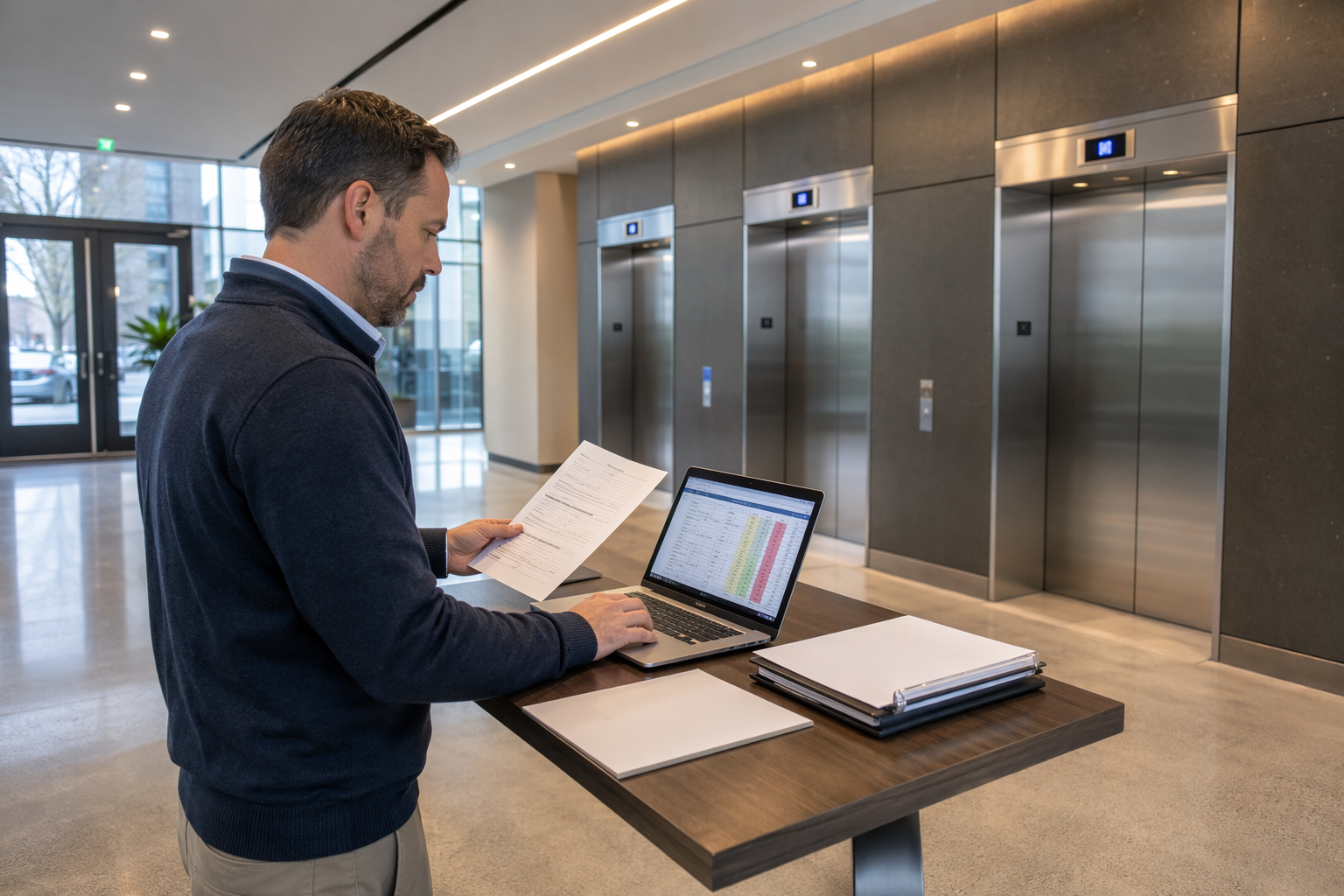
Understanding elevator maintenance contract pricing is essential for facility managers, building owners, and property managers who want to control costs, meet compliance obligations, and avoid costly emergency repairs. This page breaks down the key pricing structures, contract tiers, compliance requirements, and market trends so decision-makers can evaluate vendor proposals with confidence.
What Are the Main Types of Elevator Maintenance Contracts?
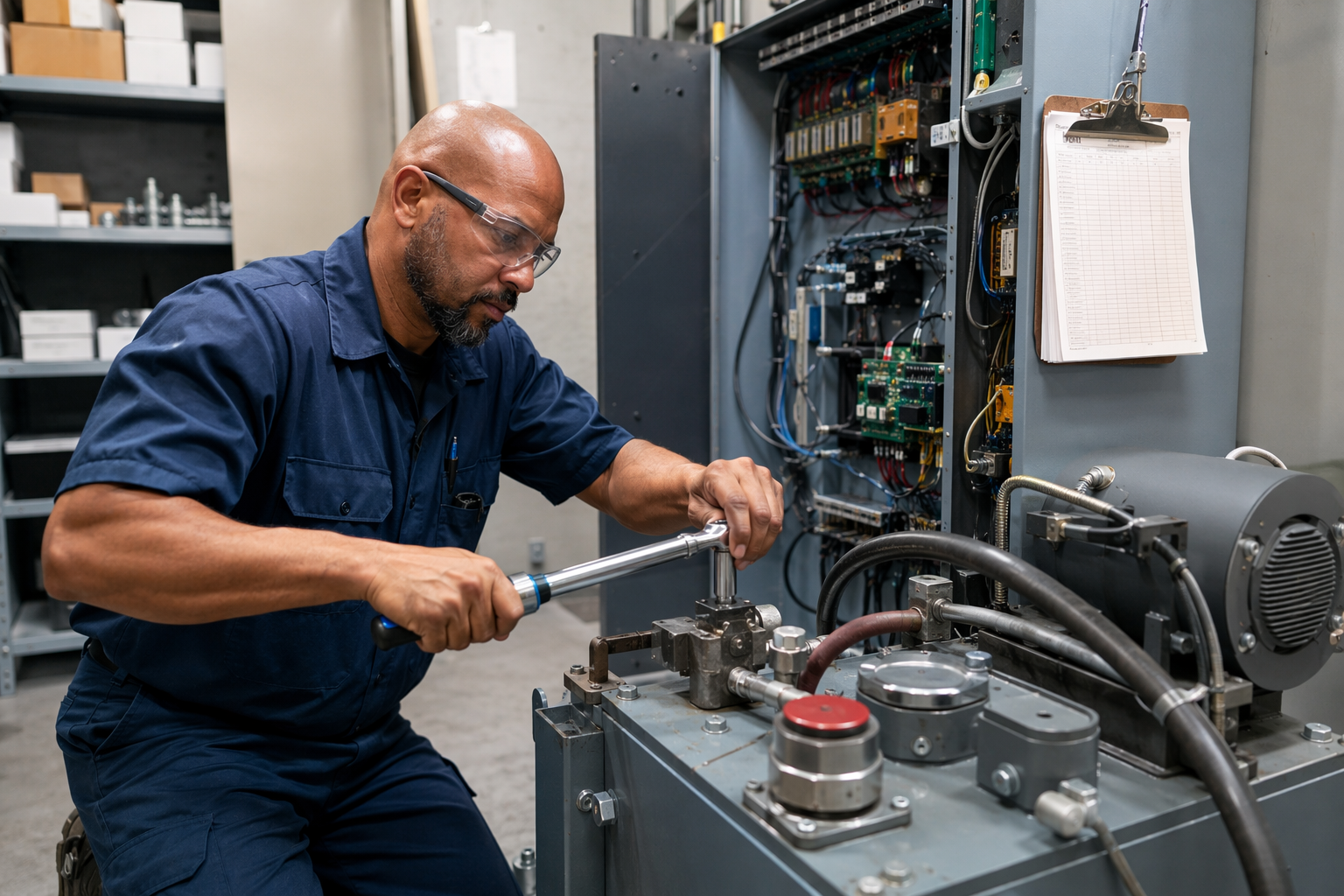
Elevator maintenance agreements generally fall into three tiers, each representing a different balance of cost, coverage, and risk transfer:
- Oil-and-Grease (Basic) Contracts: Cover only routine lubrication, cleaning, and minor adjustments. Parts, repairs, and callbacks are billed separately. These carry the lowest base price but expose building owners to unpredictable repair invoices.
- Parts-and-Labor (Mid-Tier) Contracts: Include routine maintenance plus coverage for specified parts and labor on covered repairs. Exclusions vary significantly by vendor and must be reviewed carefully.
- Full-Service (Comprehensive) Contracts: Bundle all routine maintenance, parts, labor, callbacks, and often modernization credits into a single recurring fee. These carry the highest monthly cost but deliver the greatest cost predictability and typically the highest uptime guarantees.
Contract tier selection should be driven by building usage intensity, elevator age, budget flexibility, and the owner’s tolerance for repair cost volatility. High-traffic commercial buildings and hospitals frequently justify full-service agreements because unplanned downtime carries significant operational and liability consequences.
What Factors Drive Elevator Maintenance Contract Pricing?

No single published price schedule covers all markets, because elevator maintenance pricing is influenced by a combination of technical, geographic, and contractual variables:
- Number of Elevators: Multi-unit agreements almost always carry per-unit discounts compared to single-elevator contracts.
- Elevator Type and Technology: Hydraulic, traction, MRL (machine-room-less), and destination-dispatch systems each carry different maintenance labor demands and parts costs.
- Equipment Age and Condition: Older equipment manufactured before current electronic controls became standard often requires more labor time and harder-to-source parts, which vendors price into contracts accordingly.
- Building Use Intensity: A residential elevator making a few dozen trips daily is priced differently from a hospital elevator making thousands of trips.
- Geographic Labor Market: Union labor markets, prevailing wage jurisdictions, and regional cost-of-living differences create meaningful price variation across metropolitan areas.
- Contract Term Length: Longer terms (three to five years) typically yield lower annual costs in exchange for reduced vendor flexibility; short terms or month-to-month arrangements are priced at a premium.
- Exclusions and Carve-Outs: The breadth of exclusions in a contract is as important as the headline price — a lower-priced contract with extensive exclusions may cost more over its life than a higher-priced comprehensive agreement.
- Response Time Commitments: Contracts that require faster callback response or 24/7 emergency coverage are priced to reflect the staffing and logistics those commitments require.
What Compliance Requirements Affect Elevator Maintenance Costs?
Compliance with applicable safety codes is non-negotiable and directly shapes what a maintenance contract must include. Failure to maintain elevators in accordance with adopted codes exposes building owners to fines, liability, and forced shutdowns.
The foundational standard governing elevator safety in the United States is the ASME A17.1 Safety Code for Elevators and Escalators, which establishes minimum inspection intervals, testing requirements, and maintenance procedures. Most U.S. jurisdictions adopt ASME A17.1 by reference into their local building or mechanical codes, making compliance a legal obligation rather than a best practice.
Key compliance cost drivers include:
- Annual and Periodic Inspections: ASME A17.1 requires periodic inspections and tests at defined intervals. The cost of these inspections — whether performed by a third-party inspector or by the maintenance contractor on behalf of the authority having jurisdiction — must be accounted for in the maintenance budget.
- Category Testing: ASME A17.1 categorizes tests (Category 1, 3, and 5) by frequency and complexity. Category 5 full-load safety tests, for example, require significant labor and coordination. Contracts should specify which categories are included.
- ADA Compliance: The Americans with Disabilities Act (ADA) imposes accessibility standards on elevator controls, door timing, and cab dimensions. Maintenance contracts should address the ongoing operational adjustments needed to keep elevators in ADA compliance.
- OSHA Requirements: OSHA regulations govern the safety of elevator mechanics performing maintenance work, including lockout/tagout procedures and working-in-hoistway protocols. Contractors who are not compliant with OSHA standards expose building owners to co-liability risk.
When evaluating proposals, building owners should confirm that the contract explicitly addresses compliance with the edition of ASME A17.1 adopted in their jurisdiction, as states and municipalities update their adopted editions on varying schedules.
How Should Building Owners Evaluate Vendor Proposals?
Comparing elevator maintenance contracts on price alone is a common and costly mistake. A structured evaluation process protects against low-bid bait-and-switch tactics and contract terms that shift risk back to the building owner.
- Request a line-item scope of work from every bidding vendor so that inclusions and exclusions are explicit rather than implied by contract tier names.
- Identify all exclusions and estimate the probability and cost of excluded repairs based on equipment age and condition reports.
- Verify that required ASME A17.1 testing categories are covered within the contract price, or that their cost is separately quoted rather than billed as surprises.
- Confirm the vendor’s licensing and insurance in your jurisdiction, including general liability and workers’ compensation coverage adequate for elevator work.
- Review callback and response provisions to understand what service levels are contractually guaranteed versus aspirational.
- Examine the escalation clause — most multi-year contracts include annual price escalation tied to labor cost indices or CPI; the formula and cap matter significantly over a five-year term.
- Assess parts sourcing transparency — contracts should clarify whether OEM parts or equivalent aftermarket components will be used, which affects both performance and future warranty considerations.
- Request references from buildings with comparable elevator counts, types, and usage profiles to the property being contracted.
What Is Typically Excluded from Elevator Maintenance Contracts?
Understanding exclusions is as important as understanding inclusions. Common exclusions that generate unexpected costs include:
- Modernization or major component replacement (e.g., motor, controller, cab finishes)
- Damage caused by misuse, vandalism, or flooding
- Work required by code upgrades adopted after contract execution
- Hoistway or structural building repairs
- Firefighter service testing beyond Category 1 requirements
- Repairs necessitated by third-party modifications to the elevator system
Vendors differ significantly in how broadly they define exclusions. A thorough legal review of the contract language — not just the summary sheet — is advisable before execution, particularly for large portfolios or high-traffic installations.
What Is the Difference Between Time-and-Materials and Contract Pricing?
Building owners who decline a maintenance contract and instead pay for service on a time-and-materials (T&M) basis trade predictability for flexibility. T&M arrangements mean every service visit is billed at the technician’s hourly rate (which typically carries a premium for unscheduled calls) plus parts at retail or marked-up pricing.
For older elevators already past their economic maintenance life — where a comprehensive contract may be declined by vendors or priced prohibitively — T&M may be the only available option. In these cases, building owners should factor elevator replacement or modernization costs into their capital planning rather than attempting to sustain aging equipment indefinitely through reactive repair spending.
For most operational elevators in commercial or residential service, a maintenance contract will produce lower total cost of ownership over a multi-year period compared to T&M, primarily because it incentivizes the contractor to prevent failures rather than respond to them.
How Do Elevator Age and Modernization Affect Contract Pricing?
Equipment age is one of the most consequential pricing variables in elevator maintenance contracting. Vendors conducting pre-contract inspections will assess the condition of key components — controllers, motors, door operators, safety devices, and wiring — before binding their pricing. Buildings with aging equipment can expect one of three outcomes:
- Elevated base pricing that reflects the higher expected maintenance labor and parts consumption
- Explicit exclusions for identified at-risk components, with those components billed on a T&M basis when they fail
- A modernization-linked offer where the vendor couples a favorable maintenance contract with a proposal to upgrade specified components
Building owners considering modernization should understand that upgraded components — particularly new controllers and door systems — typically reduce ongoing maintenance costs and may open access to more competitive contract pricing afterward.
What Are the Industry Trends Shaping Elevator Maintenance Contracts in 2025–2026?
Several forces are reshaping how elevator maintenance contracts are structured and priced in the current market environment:
- Remote Monitoring and Predictive Maintenance: IoT-enabled elevator monitoring systems are increasingly embedded in maintenance contracts, particularly at the premium tier. These systems collect operational data continuously and allow technicians to address developing faults before they cause entrapments or unplanned shutdowns. Vendors offering these capabilities are differentiating their contracts on uptime performance rather than price alone.
- Labor Market Pressures: Elevator mechanic wages continue to reflect the specialized training and licensing requirements of the trade. This is a consistent upward cost pressure across the industry that affects both contract renewal pricing and T&M rates.
- Parts Supply Chain Dynamics: The availability and cost of components for legacy elevator systems has become more complex as OEM manufacturers discontinue parts for older platforms. Vendors with strong parts sourcing networks command a premium in the market.
- Code Update Cycles: Jurisdictions continue to adopt newer editions of ASME A17.1 and companion standards. Each adoption cycle can trigger retrofit requirements — particularly for safety devices, door restrictors, and firefighter emergency operation — that affect maintenance scope and contract cost.
- Portfolio Consolidation: Large property management companies and REITs are consolidating elevator service contracts across portfolios to achieve volume pricing and standardized service levels, a trend that is reshaping competitive dynamics between national and regional elevator service providers.
- Performance-Based Contracting: A growing segment of sophisticated building owners is negotiating contracts with uptime guarantees and financial penalties for excessive downtime, shifting more operational risk to the contractor and creating stronger incentives for proactive maintenance.
How Does Location Affect Elevator Maintenance Contract Pricing?
Geographic market is a material pricing variable. Metropolitan areas with strong union labor agreements, dense regulatory oversight, and high overall cost of living typically yield higher maintenance contract prices than smaller markets. Prevailing wage laws on publicly funded buildings add another layer of cost in applicable jurisdictions.
Local regulatory density also matters: cities with active elevator inspection departments, mandatory permits for every service event, and frequent code enforcement activity create compliance overhead that competent vendors incorporate into their pricing.
Building owners operating multi-site portfolios across different markets should anticipate meaningful per-unit price variation and benchmark proposals against local market norms rather than national averages.
What Steps Should a Facility Manager Take When a Maintenance Contract Expires?
- Conduct a condition assessment of all elevators at least six months before contract expiration to identify deferred maintenance or component degradation that will affect future contract pricing.
- Document current contract performance — callback frequency, average repair costs, downtime incidents, and compliance record — to use as a baseline for vendor comparison.
- Issue a formal Request for Proposal (RFP) to at least three qualified vendors with a standardized scope of work so proposals can be compared on equal terms.
- Allow adequate time for vendor site visits — reputable vendors will not price a maintenance contract without physically inspecting the equipment.
- Negotiate key terms before accepting any proposal, including escalation caps, exclusion language, and performance metrics.
- Confirm compliance documentation will be provided by the incoming contractor — including test reports required under the adopted edition of ASME A17.1.
- Plan for a transition inspection if switching vendors to establish a documented baseline condition and avoid disputes over pre-existing issues.
What Does a Full-Service Elevator Maintenance Contract Typically Include?
While contract scope varies by vendor and negotiation, a well-structured full-service agreement generally covers: all scheduled preventive maintenance visits at code-required and manufacturer-recommended intervals; lubrication, cleaning, and adjustment of all accessible components; labor for repairs on covered systems; parts replacement for covered components using qualified materials; callback response for entrapments and operational failures; annual and periodic testing required under applicable code; and documentation of all service visits and test results for the building’s compliance file.
Premium full-service agreements may also include remote monitoring access, quarterly performance reporting, and priority scheduling for non-emergency service requests.
How Can Building Owners Reduce Elevator Maintenance Contract Costs Without Sacrificing Compliance?
Cost reduction in elevator maintenance contracting does not require cutting safety corners. Several legitimate strategies can improve value without compromising compliance:
- Bundle multiple elevators under a single contract to capture volume pricing.
- Opt for longer contract terms if cash flow allows, as multi-year agreements typically carry lower annual rates.
- Invest in modernization of high-maintenance equipment before contract renewal to lower the risk profile vendors price.
- Negotiate escalation caps to limit annual price increases over multi-year terms.
- Use competitive bidding at every renewal rather than accepting automatic renewal terms from the incumbent vendor.
- Maintain accessible machine rooms and hoistways — maintenance conditions affect technician efficiency and can be cited as a basis for pricing adjustments.
Why Is Choosing a Data-Driven Elevator Service Provider Important?
The quality of maintenance documentation, compliance record-keeping, and performance reporting varies significantly across the elevator service industry. Building owners relying on paper logs and reactive service models face greater exposure to compliance gaps, deferred maintenance accumulation, and difficulty benchmarking vendor performance.
Quality Elevator Company approaches maintenance contracting as a data-driven service provider, helping building owners and facility managers understand what their contracts cover, how their equipment is performing, and what compliance obligations apply in their jurisdiction. Transparent documentation and code-aligned service practices are the foundation of every agreement Quality Elevator Company structures.
What Questions Should a Building Owner Ask Before Signing an Elevator Maintenance Contract?
- Which edition of ASME A17.1 applies in this jurisdiction, and is compliance with it explicitly included in this contract?
- What is the complete list of excluded components and failure types?
- How are parts sourced and priced when billed outside the contract?
- What documentation will be provided after each service visit and test?
- How are annual price escalations calculated and capped?
- What happens if the vendor cannot meet response time commitments?
- Is remote monitoring included, and if so, who has access to the data?
- What is the process for disputing an invoice for work claimed to be outside contract scope?
Sourced Reference Data
| Standard / Authority | Relevance to Maintenance Contracts | Source |
|---|---|---|
| ASME A17.1 Safety Code for Elevators and Escalators | Establishes minimum inspection intervals, test categories (1, 3, 5), and maintenance procedures adopted by most U.S. jurisdictions | ASME Codes & Standards |
| Americans with Disabilities Act (ADA) | Governs elevator accessibility requirements including control reach ranges, door timing, and cab dimensions that must be maintained operationally | ADA.gov |
| OSHA Standards | Governs safety of elevator mechanics during maintenance work, including lockout/tagout, hoistway entry, and PPE requirements | OSHA.gov |
Summary: Key Takeaways on Elevator Maintenance Contract Pricing
- Contract tier (basic, mid-tier, full-service) is the primary structural pricing variable — choose based on equipment age, usage intensity, and budget flexibility.
- Exclusion language is as important as the headline price — a thorough line-item comparison is essential.
- Compliance with ASME A17.1, ADA, and OSHA requirements must be explicitly addressed in any contract.
- Geographic market, equipment age, and number of units are the three most consequential pricing drivers outside of contract tier.
- Competitive bidding at every renewal — not automatic rollover — is the most reliable cost control strategy.
- Predictive maintenance technology and performance-based contracts are the most significant structural trends in 2025–2026.
Get an Accurate Assessment for Your Building
Elevator maintenance contract pricing depends on equipment condition, usage, and local compliance requirements that cannot be accurately evaluated without a site visit. Quality Elevator Company provides building owners and facility managers with transparent, code-aligned maintenance proposals based on actual equipment assessments — not generic rate sheets.
Contact Quality Elevator Company for a free elevator assessment: 301-307-5363
Need elevator service you can rely on? Quality Elevator Company is ready to help.