Elevator modernization typically involves costs across four major categories: control system upgrades, cab interior renovation, mechanical component replacement, and code compliance work — with total project scope varying widely based on elevator age, type, number of stops, and the specific upgrades required.
Elevator Modernization Cost Breakdown: Complete FAQ Guide for Building Owners
Elevator modernization is one of the most significant capital investments a building owner or property manager will make. Understanding exactly where costs originate — and how to prioritize upgrades — is essential for accurate budgeting, regulatory compliance, and long-term asset value. This guide answers the most common questions about elevator modernization cost breakdowns, drawing on current code requirements and industry best practices relevant to properties in Baltimore, Washington DC, Philadelphia, and Richmond.
What is an elevator modernization cost breakdown?
An elevator modernization cost breakdown divides the total project investment into its component categories: controls and drive systems, cab interiors, mechanical and hoistway equipment, code compliance upgrades, and project management — giving building owners a clear picture of where every dollar goes.
Unlike a simple repair, modernization addresses multiple systems simultaneously, often triggered by aging equipment, rising maintenance costs, code violations, or a desire to improve passenger experience and energy efficiency. The cost breakdown is not a single fixed number but a structured analysis of each subsystem that needs attention. A thorough assessment by a qualified elevator service company is always the starting point for an accurate project budget.
The four primary cost buckets in any modernization project are: (1) electrical controls and motor drive, (2) cab renovation and door systems, (3) mechanical hoistway components, and (4) regulatory compliance and permitting. Each category carries its own variables, and the relative weight of each depends heavily on the age and condition of the existing equipment.
What factors have the greatest impact on total modernization cost?
The single greatest cost drivers in elevator modernization are the age of the existing equipment, the number of floors served, and the extent of code-mandated upgrades required to bring the unit into compliance.
An elevator installed decades ago may require wholesale replacement of its relay-logic control panel, DC motor, and selector system, while a unit from the early 2000s might only need a drive upgrade and cab refresh. The number of stops (floors served) directly affects the cost of new selector systems, wiring runs, and door operator replacements at each landing. Older traction elevators often require new hoist ropes, sheaves, and guide rail work that hydraulic units do not.
Building type also plays a role. Commercial office buildings, residential apartment complexes, hospitals, and government facilities each carry different code obligations and passenger expectation standards. In jurisdictions like Washington DC and Philadelphia, local amendments to national codes add compliance layers that affect scope and cost.
What does a controls and drive system upgrade typically include?
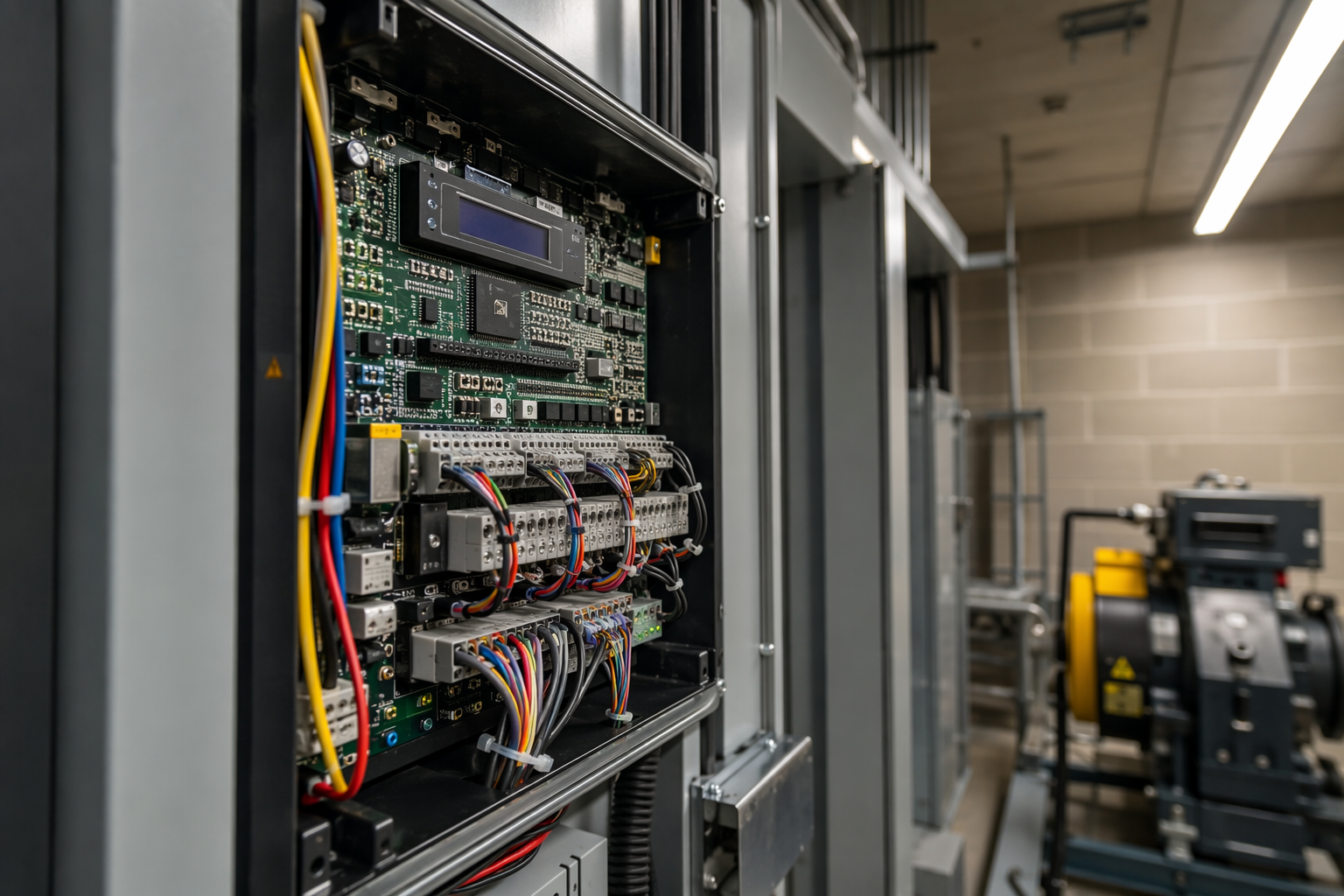
A controls and drive system upgrade replaces the elevator’s central “brain” — the control panel, relay logic or microprocessor board, and the motor drive — which governs speed, leveling, door timing, and dispatch efficiency.
Legacy relay-based control systems are expensive to maintain because replacement relays and wiring harnesses are increasingly scarce. Modern solid-state microprocessor controls offer improved reliability, diagnostic capabilities, and compatibility with remote monitoring systems. The drive component — which may be a DC generator-motor set or an older SCR drive — is frequently replaced with a variable voltage variable frequency (VVVF) drive, which reduces energy consumption and improves ride quality.
This portion of modernization often represents a significant share of the overall project budget because it involves extensive wiring, testing, and commissioning. For traction elevators, a new machine controller, motor drive, and associated wiring harness are standard line items. For hydraulic units, the power unit, valve package, and controller are equivalent replacements.
How much does cab renovation add to elevator modernization costs?
Cab renovation costs depend on the level of finish selected — from functional commercial-grade materials to premium architectural finishes — and on the condition of the cab structure, flooring, lighting, and door panels.
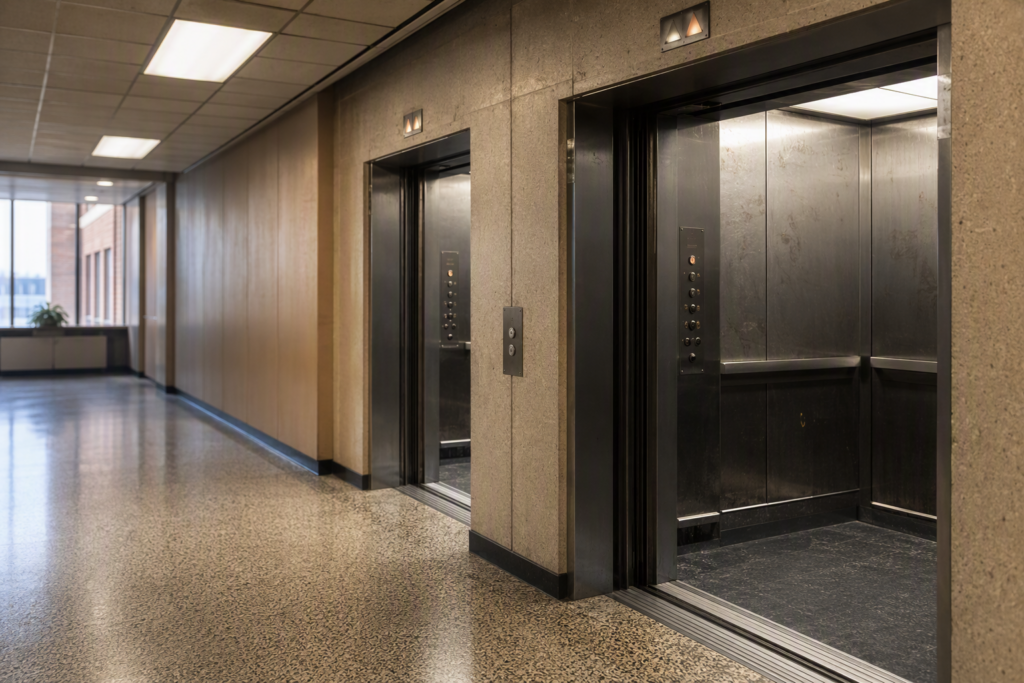
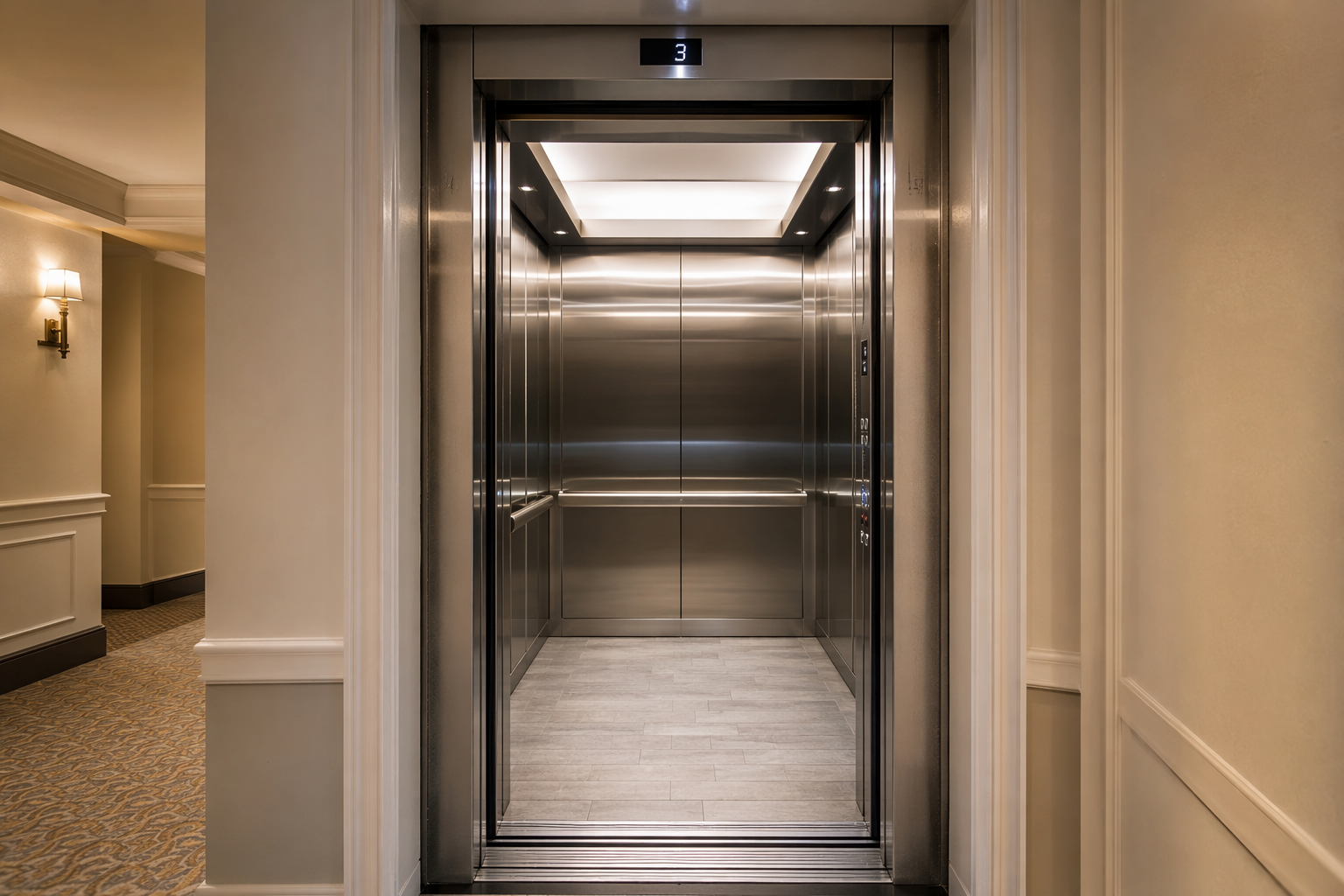
A basic cab renovation typically includes new wall panels, a suspended ceiling with LED lighting, updated flooring, a new handrail, and a refreshed or fully replaced operating panel with updated buttons and digital displays. A premium renovation may incorporate stainless steel or decorative laminate panels, glass elements, custom flooring, and touchscreen interfaces. Door operators and door panels at each landing are often replaced as part of cab modernization, since worn door systems are a leading cause of entrapments and callbacks.
Building owners should consider that cab renovation is not purely cosmetic — updated lighting, flooring, and emergency communication systems are often code-required, and a modern, well-maintained cab directly influences tenant satisfaction and building marketability.
What mechanical and hoistway components are commonly replaced during modernization?
Commonly replaced mechanical components include hoist ropes, traveling cables, buffers, guide rail lubrication systems, safeties, and — for traction elevators — the machine, sheave, and brake assembly.
Hoist ropes have a defined inspection and replacement cycle under the ASME A17.1 Safety Code for Elevators and Escalators, and aging ropes discovered during a modernization assessment are virtually always replaced as part of the project rather than deferred. Traveling cables — which carry power and signal wiring between the car and the machine room — degrade over time and are a frequent source of electrical faults. Replacing them during modernization, when the hoistway is already disrupted, is far more cost-effective than scheduling a separate repair outage.
For older hydraulic elevators, the hydraulic cylinder itself may require evaluation. Single-bottom cylinders installed before modern environmental standards carry the risk of underground oil leakage, and some jurisdictions require testing or liner installation as a compliance condition.
What code compliance upgrades are required during elevator modernization?
Code compliance upgrades required during modernization commonly include two-way emergency communication systems, firefighters’ emergency operation (FEO), door reopening devices, pit lighting, stop switches, and seismic upgrades where applicable — all governed by the ASME A17.1 Safety Code for Elevators and Escalators and applicable state editions.
When a modernization permit is pulled, the authority having jurisdiction (AHJ) in each state — Maryland, Virginia, Pennsylvania, and the District of Columbia — reviews the scope of work and typically requires that all known code deficiencies be corrected as a condition of approval. This means that a controls-only modernization can still trigger requirements for updated pit ladders, emergency lighting, and communication systems if those items are found to be out of compliance during the permit review.
ADA compliance is a parallel obligation under the Americans with Disabilities Act. Elevator modernization projects frequently require updated hall call button heights, Braille designations, audible signals, and cab dimensions that meet current ADA Standards for Accessible Design. These items add to the scope but also protect building owners from accessibility-related liability.
Workplace safety requirements from OSHA also apply to the construction phase of modernization — contractors must follow fall protection, lockout/tagout, and confined space protocols in the machine room and hoistway.
How does the number of floors or stops affect modernization cost?
Each additional floor served by an elevator adds incremental cost because it requires a landing door operator, door panels, call button hardware, wiring connections, and selector system programming at that level.
A two-stop elevator in a small commercial building requires far less materials and labor than a fifteen-stop elevator in a mid-rise office tower. The difference is not simply linear — taller buildings often require more sophisticated dispatch algorithms, additional safety devices, and longer traveling cable assemblies. For buildings with multiple elevators, a modernization project may also address group controller upgrades that coordinate dispatching across all cabs, which adds a system-level cost not present in single-elevator properties.
What is a modernization cost comparison by elevator type?
Modernization scope and relative cost differ meaningfully between hydraulic and traction elevator types, with traction elevators generally carrying greater mechanical complexity and higher overall investment for equivalent scope.
| Elevator Type | Typical Modernization Scope | Key Cost Drivers | Code Considerations |
|---|---|---|---|
| Hydraulic (low-rise, 2–5 stops) | Power unit, valve, controller, cab, doors | Cylinder condition, oil containment, underground tank | Single-bottom cylinder testing; oil containment per state rules |
| Geared Traction (mid-rise) | Machine, drive, ropes, controller, cab, doors | Machine room equipment age; rope replacement; selector | ASME A17.1 rope inspection; FEO; seismic where applicable |
| Gearless Traction (high-rise) | Drive system, controller, dispatch, ropes, cab | Machine replacement; group controller; dispatch software | ASME A17.1; seismic; energy code compliance |
| MRL (Machine Room-Less) | Controller, drive, cab, door operators | Proprietary component sourcing; limited competition | Newer equipment; fewer legacy compliance gaps |
| Residential (LULA / Private) | Controller, drive, cab, safety devices | Lower throughput requirements; smaller cab | ASME A17.1 Section 5; ADA if applicable |
How does a phased modernization approach affect overall costs?
A phased modernization spreads project costs across multiple budget cycles by tackling the highest-priority systems first — typically controls and safety compliance — then addressing cab renovation and secondary mechanical work in subsequent phases.
Phasing can be a practical strategy for building owners with constrained capital budgets or properties where elevator downtime must be strictly limited. However, phasing has trade-offs: mobilization costs are incurred multiple times, and work performed in phase one may need to be partially redone if it is not compatible with phase two equipment. A qualified elevator company can model the total cost of a phased approach versus a single comprehensive project to help building owners make an informed decision.
Quality Elevator Company works with property owners in Baltimore, Washington DC, Philadelphia, and Richmond to develop phased modernization plans that align with budget realities while maintaining compliance and passenger safety throughout the process.
What are the permit and inspection costs associated with elevator modernization?
Permit and inspection fees are determined by each state’s elevator safety division or the relevant authority having jurisdiction, and these costs — while modest relative to equipment costs — must be factored into the total project budget.
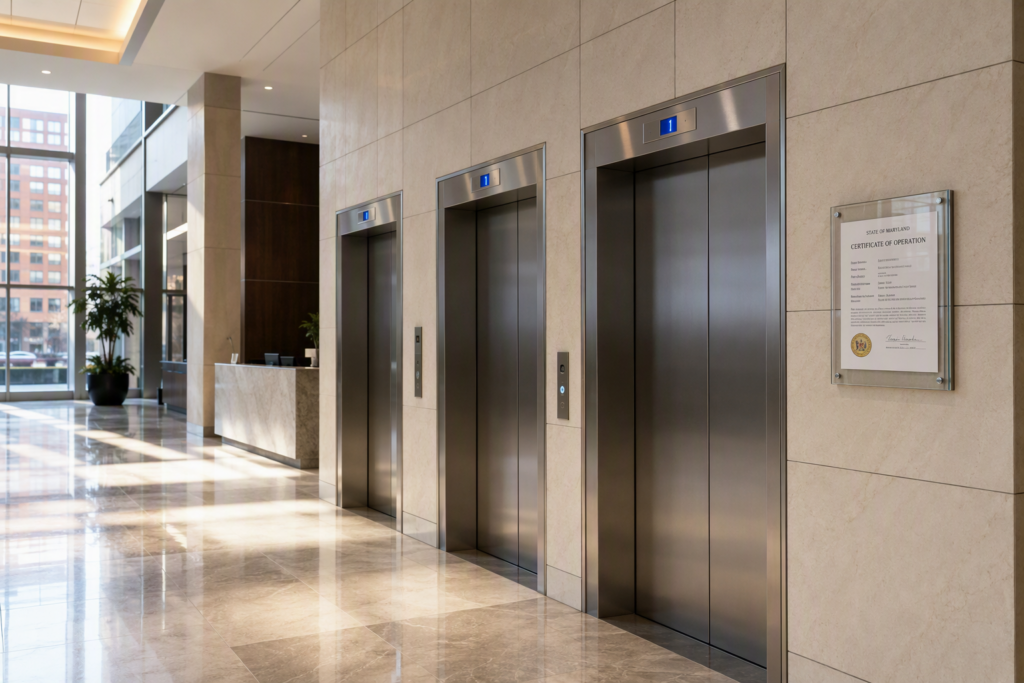
In Maryland, the Division of Labor and Industry oversees elevator safety and permitting. In Virginia, the Department of Labor and Industry administers elevator inspections. Pennsylvania’s Department of Labor and Industry handles elevator permitting statewide, while Washington DC operates under its own Department of Buildings. Each jurisdiction requires a permit before work begins, an inspection upon completion, and — in most cases — a certificate of operation before the elevator is returned to service. Third-party inspection fees may also apply depending on the jurisdiction and the inspection model in use.
Owners should request that their elevator service provider clearly itemize permit and inspection fees in the modernization proposal, as these are real project costs that are sometimes omitted from initial estimates.
How long does an elevator modernization project typically take?
Modernization timeline depends on project scope, equipment lead times, permit processing speed, and the building’s operational requirements — a controls-and-cab modernization on a single elevator may take several weeks, while a full mechanical overhaul on a multi-elevator system can extend to several months.
Equipment lead times are one of the most variable factors. Control panels and drive systems from major manufacturers are often built to order, and supply chain conditions in any given year can significantly extend delivery windows. Building owners should plan for this early in the project and work with their elevator company to secure equipment orders promptly after contract execution.
Permit processing time also varies by jurisdiction. In dense urban markets like Washington DC and Philadelphia, permit queues can add meaningful time to the project schedule. Experienced elevator contractors maintain working relationships with local AHJs and can often anticipate and mitigate permitting delays.
What is the step-by-step process for planning an elevator modernization project?
A structured planning process ensures that modernization projects stay on scope, on budget, and in compliance with all applicable codes.
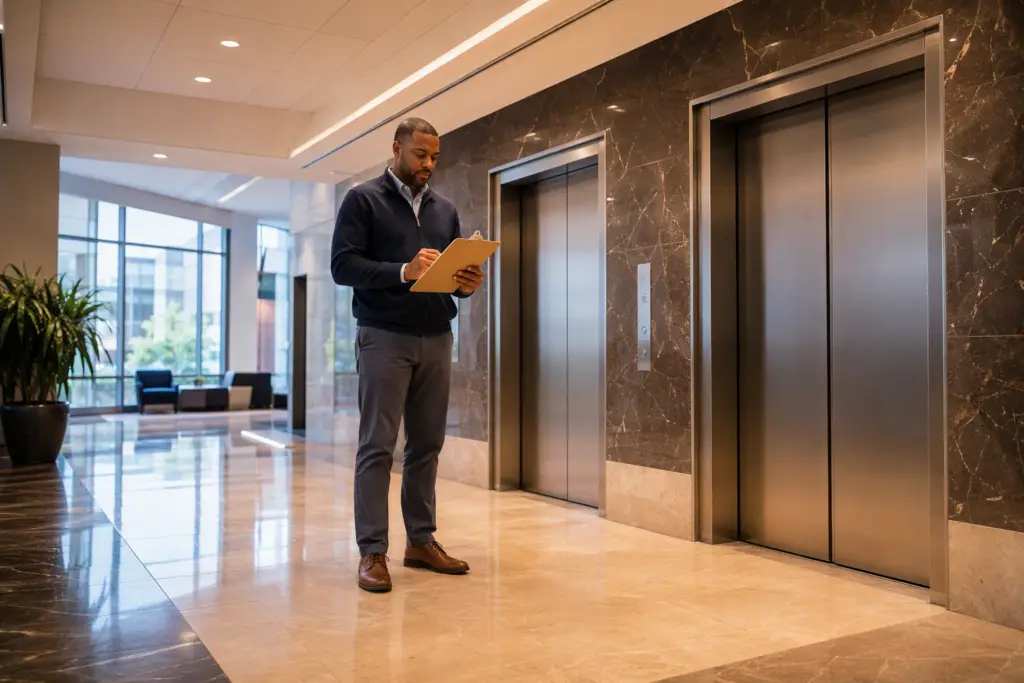
- Commission a comprehensive elevator assessment. A qualified elevator technician inspects all major systems — controls, mechanical, cab, doors, and hoistway — and documents the condition of each component against current code requirements.
- Identify code compliance obligations. Review findings against the current edition of the ASME A17.1 Safety Code for Elevators and Escalators and applicable state amendments to determine mandatory versus elective upgrades.
- Define project scope and priorities. Work with the elevator company to separate required code work from optional improvements, then prioritize based on safety impact, budget, and operational needs.
- Solicit and compare proposals. Obtain written proposals from qualified contractors that itemize costs by system category — controls, mechanical, cab, doors, compliance, and permitting.
- Review equipment specifications. Confirm that proposed equipment meets current code, is sourced from reputable manufacturers, and carries a meaningful warranty period.
- Plan for downtime. Coordinate with tenants, building management, and the elevator company to schedule outage windows that minimize disruption, especially in occupied residential or healthcare buildings.
- Execute permit applications. The elevator contractor typically manages permit submissions; confirm this responsibility is clear in the contract.
- Monitor installation and testing. Maintain active communication with the contractor throughout installation and attend the final acceptance inspection with the AHJ.
- Establish a post-modernization maintenance contract. Newly modernized elevators still require regular maintenance; establish a service agreement that covers the new equipment.
How does elevator modernization affect energy consumption and operating costs?
Modern VVVF drive systems, LED lighting, and regenerative drive technology can meaningfully reduce an elevator’s energy consumption compared to legacy DC motor-generator sets and fluorescent or incandescent lighting — translating to lower utility costs over the life of the modernized equipment.
Older motor-generator sets run continuously, consuming power even when the elevator is idle. VVVF drives, by contrast, modulate power delivery based on actual load and speed demand. Regenerative drive systems go further by capturing braking energy and returning it to the building’s electrical grid. While energy savings should not be the sole justification for a modernization project, they represent a genuine long-term operating cost benefit that can be factored into a return-on-investment analysis.
Reduced maintenance costs are an equally important operating benefit. Legacy relay-based control systems require frequent adjustment and component replacement, while modern microprocessor controls are more reliable and support remote diagnostic monitoring — allowing service providers to identify developing faults before they cause outages.
What should building owners look for when comparing elevator modernization proposals?
A well-structured modernization proposal should itemize costs by system, specify equipment manufacturers and model numbers, clearly identify what code compliance work is included, and define warranty terms for both parts and labor.
Vague or lump-sum proposals make it impossible to compare bids fairly or to understand what is — and is not — included. Owners should request line-item breakdowns for controls, mechanical work, cab renovation, door systems, wiring, permits, and project management. Equipment specifications matter: proposals that reference proprietary components from a single manufacturer can create long-term dependency, while open-architecture control systems offer more competitive future maintenance options.
References from comparable projects in the same building type and jurisdiction are a meaningful indicator of contractor capability. Quality Elevator Company provides detailed, itemized proposals to property owners across its service markets and encourages owners to use those proposals as a benchmark when evaluating competitive bids.
Are there financing or incentive programs available to offset elevator modernization costs?
Some utility companies, state energy offices, and commercial lending institutions offer financing or rebate programs that can offset a portion of elevator modernization costs — particularly when energy-efficient drive systems are part of the scope.
Building owners in Maryland, Virginia, Pennsylvania, and the District of Columbia should consult with their local utility provider about demand-side management programs that may include elevator drive upgrades. Historic tax credit programs applicable to qualifying buildings in these markets can sometimes be structured to include elevator modernization as part of a broader rehabilitation project. Commercial Property Assessed Clean Energy (C-PACE) financing, available in several of these jurisdictions, allows building owners to finance energy-efficiency improvements — potentially including elevator upgrades — through a property tax assessment structure.
These programs change frequently, and building owners should verify current availability directly with program administrators rather than relying on prior-year information.
How does elevator modernization affect property value and tenant retention?
A modernized elevator system is a material factor in building valuation, lease negotiations, and tenant retention — particularly in competitive commercial real estate markets where building quality and reliability are differentiators.
Elevator reliability is consistently cited in tenant satisfaction surveys as a significant factor in lease renewal decisions for mid- and high-rise commercial properties. An aging elevator system with recurring outages, slow operation, and dated cab finishes signals deferred maintenance to prospective tenants and their brokers. Conversely, a recently modernized elevator — with a current inspection certificate, updated cab, and modern controls — signals active property stewardship and reduces the deduction that appraisers and buyers apply for aging building systems.
For residential multifamily properties in Baltimore, Washington DC, Philadelphia, and Richmond, elevator reliability is particularly critical for residents with mobility limitations, and ADA compliance is both a legal obligation and a meaningful amenity.
What warranty coverage should be expected for a modernized elevator system?
A modernized elevator system should carry separate warranty coverage for installed equipment and for labor — with equipment warranties provided by the component manufacturer and a labor warranty provided by the installing contractor.
Equipment manufacturers typically warrant control panels, drives, and door operators for a defined period from the date of installation, subject to conditions related to proper maintenance. Contractors should provide a labor warranty covering workmanship defects for a minimum period after final inspection acceptance. Owners should read warranty terms carefully to understand what voids coverage — specifically whether the warranty requires that all maintenance be performed by the installing contractor or a certified servicer.
Post-modernization maintenance agreements are strongly recommended and are often a condition of warranty validity. Owners should negotiate maintenance contract terms — including response expectations and callback provisions — at the same time as the modernization contract.
How do local jurisdictional requirements in Baltimore, Washington DC, Philadelphia, and Richmond affect modernization scope and cost?
Each jurisdiction served by Quality Elevator Company maintains its own elevator safety code adoption schedule, permit fee structure, inspection regime, and local amendments — meaning that identical equipment in different cities can carry different compliance obligations and project costs.
Maryland has adopted a state elevator safety law administered by the Division of Labor and Industry, with periodic updates to the edition of ASME A17.1 it enforces. Washington DC operates under the Department of Buildings with its own local code amendments and permit processing procedures. Pennsylvania’s elevator safety program is administered statewide by the Department of Labor and Industry, with Philadelphia maintaining additional local requirements. Virginia administers elevator safety through the Department of Labor and Industry, with the Virginia Uniform Statewide Building Code incorporating ASME standards by reference.
Building owners with properties in multiple jurisdictions should work with an elevator company that has active licensure and permit relationships in all relevant markets — avoiding the risk of a contractor unfamiliar with local requirements missing a jurisdiction-specific compliance item that triggers a failed inspection or project delay.
When is full elevator replacement more cost-effective than modernization?
Full elevator replacement becomes more cost-effective than modernization when the existing hoistway or structural conditions require substantial modification, when the machine room footprint is incompatible with modern equipment, or when the cumulative cost of required component replacements approaches or exceeds the installed cost of a new system.
This threshold is not defined by a single rule but by a comprehensive cost comparison that accounts for the expected useful life of a modernized system versus a new installation, the ongoing maintenance cost trajectory of each option, and the code compliance obligations triggered by each approach. A qualified elevator assessment from Quality Elevator Company includes an honest evaluation of whether modernization or replacement delivers better long-term value for a specific building and elevator configuration.
How often should a modernized elevator be inspected and maintained after the project is complete?
After modernization, an elevator must continue to meet the periodic inspection and maintenance requirements of the applicable state elevator safety law and the ASME A17.1 Safety Code for Elevators and Escalators — typically requiring annual or more frequent inspections depending on the jurisdiction and elevator type.
Modernization does not reset a building owner’s maintenance obligations — it renews the equipment and restores reliability, but ongoing maintenance remains essential to preserve that investment and maintain the certificate of operation. ASME A17.1 contains detailed requirements for periodic tests, including governor and safety tests, hydraulic pressure tests, and door system performance checks, each with defined intervals that the building owner and maintenance contractor are jointly responsible for meeting.
A comprehensive maintenance agreement with a qualified elevator company is the most effective way to ensure that post-modernization inspection and testing obligations are met, that developing issues are identified before they become outages, and that the modernized system continues to perform at the level the investment was intended to achieve.
How can building owners get started with an elevator modernization assessment?
The first step is scheduling a comprehensive, no-obligation assessment with a qualified elevator service company that can evaluate the current condition of all major systems, identify code compliance gaps, and develop an itemized modernization scope and cost estimate.
An assessment should cover the control system, drive, mechanical components, cab and door systems, hoistway, and pit — and should result in a written report that documents findings, identifies mandatory versus optional improvements, and provides a prioritized recommendation. Quality Elevator Company conducts elevator assessments for building owners and property managers throughout Baltimore, Washington DC, Philadelphia, and Richmond, providing the technical foundation for informed modernization decisions.
Owners who delay assessments often face a reactive situation where a major component failure forces emergency repair or accelerated modernization under unfavorable scheduling and cost conditions. Proactive planning, informed by a current assessment, consistently delivers better outcomes — for both project cost and building operations.
Ready to Understand Your Elevator Modernization Costs?
Contact Quality Elevator Company for a free elevator assessment. Their team serves building owners and property managers throughout Baltimore MD, Washington DC, Philadelphia PA, and Richmond VA — providing detailed, itemized modernization evaluations and expert guidance on compliance, equipment selection, and project planning.
Call today: 301-307-5363
Need elevator service you can rely on? Quality Elevator Company is ready to help.