How to Budget for Elevator Maintenance and Capital Repairs in a Commercial Building
Elevator systems are among the most capital-intensive building assets a commercial property owner manages. Unlike HVAC or roofing, elevators operate under mandatory federal safety standards and state-level inspection regimes that create legally enforceable cost obligations — not optional maintenance preferences. This guide walks facility managers and asset managers through the full budgeting framework: what drives maintenance costs, how to build a capital reserve, how compliance timelines affect cash flow, and what questions to ask a service provider before signing a contract.
What Are the Two Core Budget Categories for Elevator Costs?
Every commercial elevator budget should be structured around two distinct and separate line items:
- Preventive Maintenance (Operating Expense): This covers the routine, scheduled service visits defined in a maintenance contract — lubrication, safety device testing, adjustment of controls, and minor part replacement. These costs recur annually and are typically expensed in the year incurred.
- Capital Repair and Replacement Reserve (Capital Expense): This covers major component overhauls or replacements — modernization of the controller, replacement of the hoist machine, cab interior renovation, or hydraulic cylinder replacement. These expenditures are capitalized on the balance sheet and depreciated over their useful life.
Conflating these two categories is a common budgeting error. A well-funded maintenance contract will not prevent a 30-year-old controller from reaching end of life. Conversely, a freshly modernized elevator still requires ongoing preventive maintenance to remain code-compliant and safe.
What Code Requirements Drive Mandatory Inspection Costs?
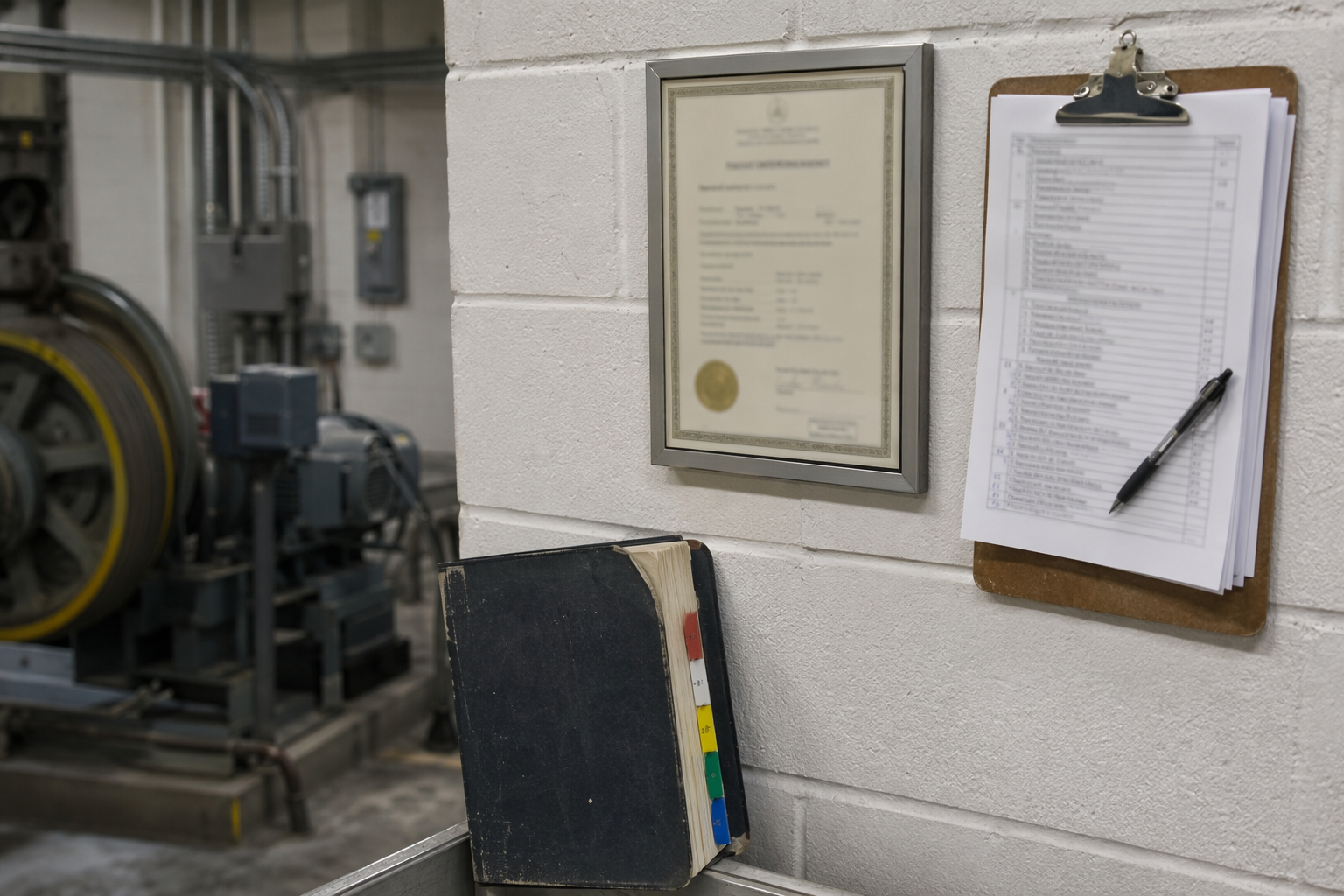
In DC, Maryland, Pennsylvania, and Virginia, elevator inspections are not discretionary. The ASME A17.1 Safety Code for Elevators and Escalators establishes the technical requirements for new elevator installations, while ASME A17.3 Safety Code for Existing Elevators and Escalators governs the ongoing safety requirements for equipment already in service. Each jurisdiction in Quality Elevator Company’s service area — the District of Columbia, Maryland, Pennsylvania, and Virginia — adopts these standards and enforces them through its own authority having jurisdiction (AHJ), which issues operating permits upon satisfactory inspection.
Budget implications of mandatory inspections include:
- Annual or periodic inspection fees paid to the AHJ or a third-party certified inspector
- Required testing of safety devices, buffers, governors, and safeties on a code-mandated cycle
- Deficiency correction costs: if an inspection reveals a non-compliant condition, the AHJ may order the elevator out of service until repairs are completed — creating unplanned capital spend
- Witness fees or re-inspection fees when tests must be observed by the AHJ
Building owners should treat inspection fees and any required deficiency corrections as hard budget commitments, not contingencies. Failure to maintain a valid operating certificate can result in elevator shutdown and potential ADA compliance liability under the Americans with Disabilities Act, which requires accessible routes to be maintained in operable condition in covered buildings.
What Factors Most Influence Annual Maintenance Contract Costs?
Maintenance contract pricing varies significantly based on conditions specific to the building and its equipment. The primary cost drivers include:
- Number of elevators and type: Hydraulic elevators, traction elevators, and machine-room-less (MRL) traction elevators each have different maintenance profiles and labor demands.
- Age and condition of equipment: Older equipment requires more intensive maintenance, harder-to-source parts, and more frequent adjustments.
- Duty cycle: A high-rise office building elevator running at peak capacity for 10 hours a day will wear components faster than a low-rise residential elevator.
- Contract scope: Full-coverage contracts include parts and labor for most repairs; oil-and-grease contracts cover only labor for routine visits with parts billed separately. The difference in annual cost between these structures can be substantial, and the right choice depends on equipment age and risk tolerance.
- Location within the service area: Labor market conditions in the DC metro area, for example, differ from those in rural Pennsylvania or Virginia, affecting technician rates.
Quality Elevator Company assists commercial building owners in DC, Maryland, Pennsylvania, and Virginia in evaluating contract scope options and matching maintenance commitments to actual equipment conditions — rather than defaulting to a one-size-fits-all contract structure.
How Should a Capital Reserve Be Calculated for Elevator Systems?
A capital reserve study — sometimes called a reserve fund analysis — is the standard method for calculating how much a building should set aside annually to fund future major elevator expenditures. The analysis typically works through the following steps:
- Inventory all elevator equipment components: Document each major component (controller, hoist machine, door operators, cab, hydraulic power unit, etc.) along with its current age and estimated total useful life.
- Estimate remaining useful life for each component: A controller installed 20 years ago on a system with a 25-year expected life has approximately five years of remaining useful life.
- Obtain replacement cost estimates: Work with a qualified elevator contractor to develop current cost estimates for each major replacement scenario. These should reflect current material and labor costs in your specific jurisdiction.
- Apply an inflation or escalation factor: Capital costs for elevator components are subject to both general inflation and supply chain variability in the metals and electronics sectors. A conservative escalation assumption protects against underfunding.
- Calculate the annual contribution: Divide the inflation-adjusted replacement cost by the remaining years before replacement to determine the annual reserve deposit needed.
- Review and update annually: A reserve study is not a one-time document. Equipment condition changes, replacement costs shift, and new code requirements can accelerate timelines.
Buildings with deferred maintenance face compressed reserve timelines — components that should have 10 years of remaining life may realistically need replacement in 3–5 years because of accumulated wear.
What Are the Most Common Major Capital Replacements and What Drives Their Timing?
The capital expenditures most frequently encountered in commercial elevator budgets in DC, Maryland, Pennsylvania, and Virginia include:
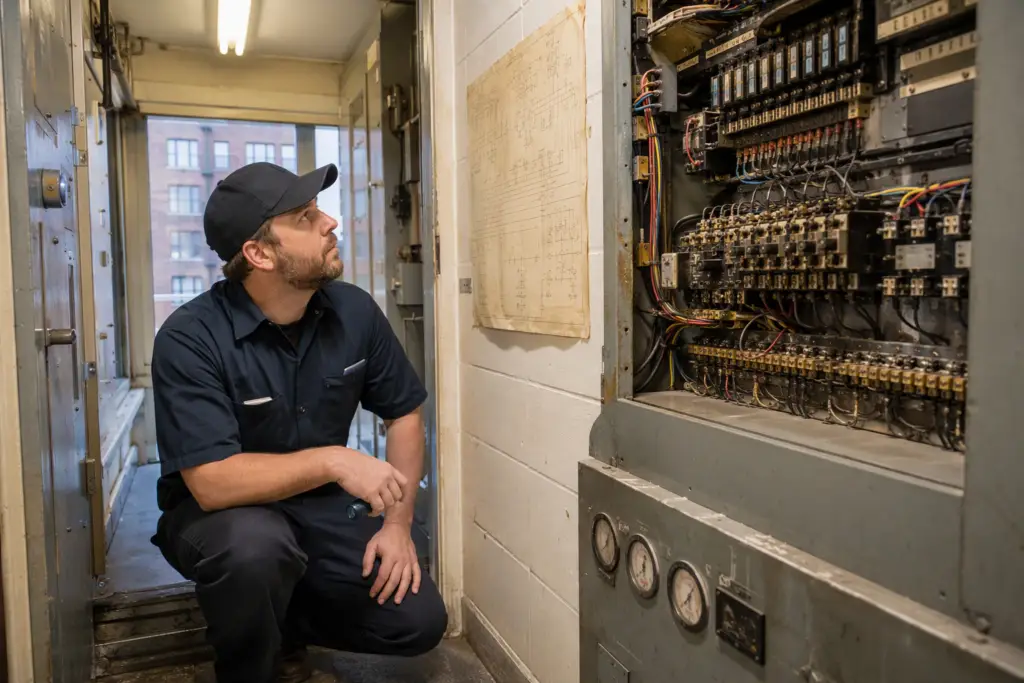
- Controller modernization: Older relay-logic controllers are increasingly difficult to maintain because replacement parts are no longer manufactured. When a controller failure occurs on an obsolete system, the repair may be impossible without full replacement. Proactive modernization avoids emergency timelines and unplanned cost.
- Hoist rope and sheave replacement: Hoist ropes wear over time and are subject to mandatory retirement criteria. The ASME A17.1 Safety Code for Elevators and Escalators establishes criteria for rope retirement based on broken wire counts and other conditions.
- Door operator and door equipment: Door system failures are among the leading causes of elevator outages and passenger incidents. Door equipment deteriorates faster in high-traffic buildings.
- Hydraulic cylinder and fluid systems: For hydraulic elevators, cylinder corrosion is a significant capital risk. Cylinders in direct-contact with soil may corrode from the outside. Environmental regulations also affect hydraulic fluid management and disposal costs.
- Cab interior renovation: While cosmetic in nature, cab renovation is often required to maintain tenant satisfaction in Class A and Class B commercial properties, and ADA compliance may trigger cab modifications when a major modernization is undertaken.
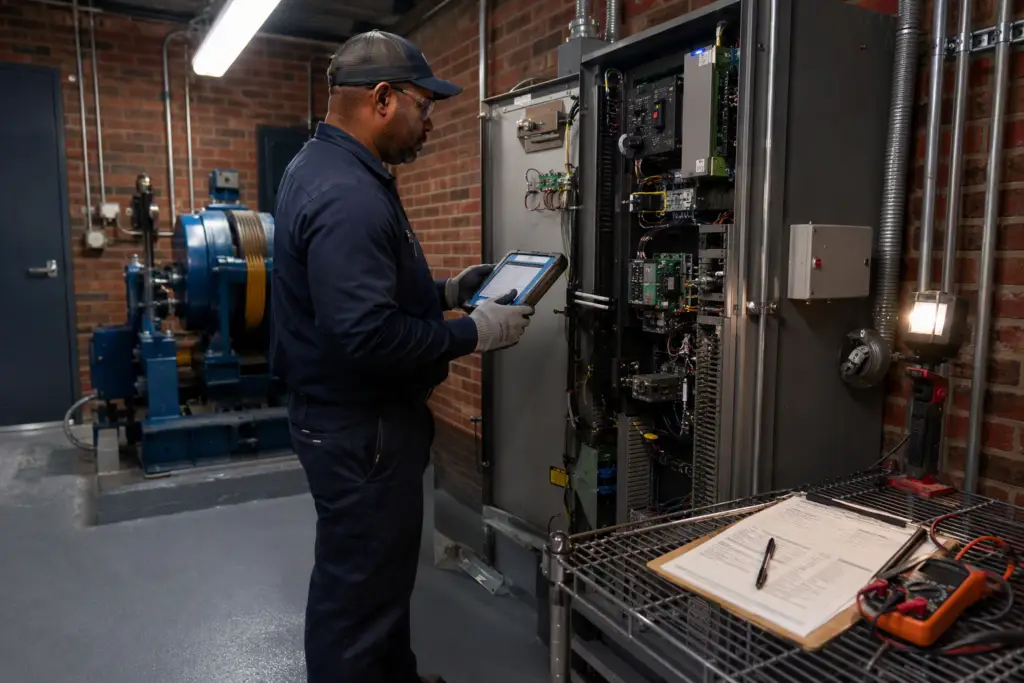
- Machine room and mechanical room upgrades: OSHA requirements under OSHA general industry standards govern safe access, lighting, and housekeeping in machine rooms. Deficiencies identified during inspections may require capital investment.
How Does ADA Compliance Affect the Capital Budget?
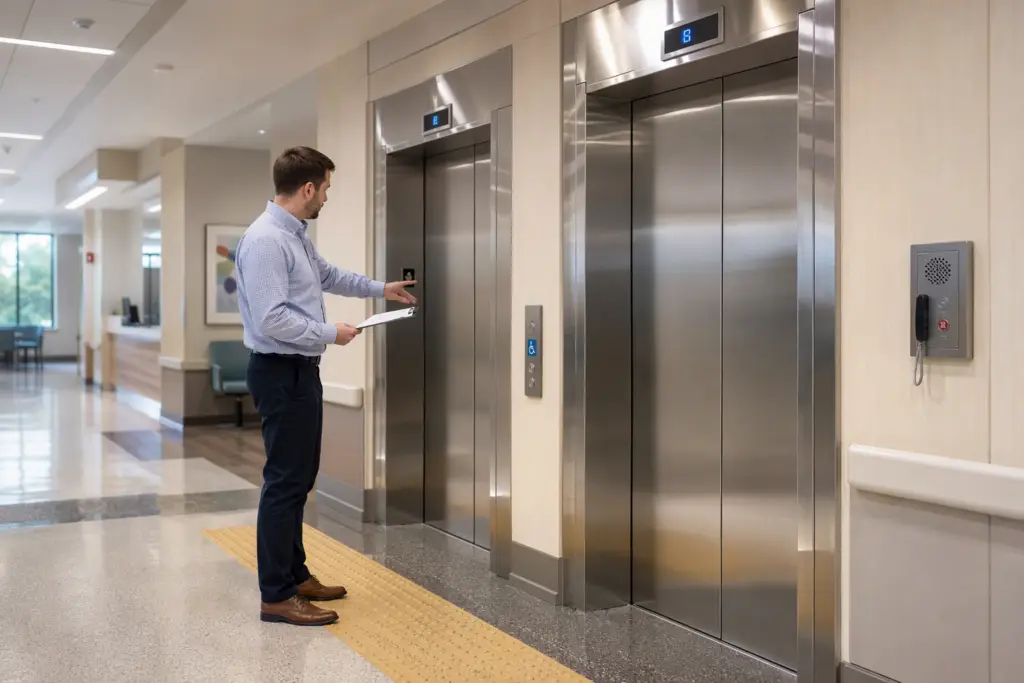
The Americans with Disabilities Act creates an ongoing obligation for commercial buildings to maintain accessible routes — including elevators — in operable condition. The ADA Standards for Accessible Design specify requirements for cab dimensions, door clear width, control height and reach range, floor identification, and audible signals, among others.
Capital budget implications of ADA include:
- When a major modernization is planned, the project often triggers a review of ADA compliance for the entire elevator system, which can expand the scope and cost of the project beyond the original mechanical replacement.
- Elevator outages caused by equipment failure may create temporary ADA non-compliance if no accessible alternative route exists — which increases urgency (and cost premium) for emergency repairs.
- Barrier removal obligations under the ADA may require proactive investment in elevator accessibility improvements even in the absence of a modernization project.
Budget planners should consult ADA compliance requirements when scoping any major capital elevator project in DC, Maryland, Pennsylvania, or Virginia.
What Should Be Included in an Elevator Maintenance Contract Before Signing?
Contract scope has a direct impact on both the annual maintenance budget and the risk of unexpected capital calls. Before executing an elevator maintenance contract, building owners should verify the following terms:
- Define what is included versus excluded: Confirm in writing which parts categories are covered (e.g., door equipment, rope, oil) and which are explicitly excluded.
- Require itemized callback documentation: Contracts should obligate the contractor to document every callback visit, including the cause and remedy, so building ownership can track patterns that predict capital failure.
- Specify inspection preparation and coordination: The contract should define who prepares the equipment for the AHJ inspection and who is responsible for deficiency correction costs.
- Address parts availability for legacy equipment: If the elevator is older, ask the contractor specifically about parts sourcing and what happens if a critical part is no longer available.
- Include termination provisions: Understand notice periods, transfer conditions if the building is sold, and penalties for early termination.
- Clarify code-required testing responsibilities: Periodic safety tests required by ASME A17.1 and ASME A17.3 may or may not be included in a standard maintenance contract — confirm explicitly.
What Trends Are Shaping Elevator Maintenance Costs in 2025 and 2026?
Several qualitative trends are influencing elevator maintenance and capital budgets in the DC, Maryland, Pennsylvania, and Virginia market heading into the 2025–2026 fiscal planning cycle:
- Component supply chain conditions: The elevator industry, like other mechanical trades, has experienced extended lead times for certain components — particularly electronic controllers and microprocessor-based systems. Buildings planning capital modernizations should build extended procurement timelines into project schedules to avoid carrying costs from elevator downtime.
- Increasing code adoption speed: Jurisdictions in Quality Elevator Company’s service area continue to adopt updated editions of ASME codes. Each new edition may introduce retroactive requirements for existing equipment under ASME A17.3, which can create unplanned compliance expenditures for buildings that have not conducted a recent code gap analysis.
- Remote monitoring and predictive maintenance technology: Elevator controllers with remote diagnostic capability allow service providers to identify developing failures before they result in outages. Buildings investing in this technology may see a shift in their maintenance spend profile — lower emergency repair frequency, more planned component replacements.
- Labor market dynamics: Skilled elevator technician labor remains in strong demand across the DC metropolitan area and in major Pennsylvania and Virginia markets. Maintenance contract pricing reflects technician availability and wage rates in each local market.
- Sustainability and energy efficiency: Building owners pursuing LEED certification or energy benchmarking compliance in DC, Maryland, or Virginia may factor elevator energy consumption into capital modernization decisions, as modern drives and lighting systems measurably reduce energy use.
How Should Building Owners Prioritize Elevator Spending When Budget Is Constrained?
When capital is limited, prioritization should follow a risk-based framework:
- Safety and code compliance first: Any deficiency cited by the AHJ or identified through inspection that affects passenger safety or triggers an operating certificate risk must be addressed regardless of budget constraints. An out-of-service elevator in a building with no accessible alternative route creates both safety and legal exposure under the ADA.
- Reliability of life-safety-adjacent systems: Door equipment, emergency lighting, emergency communication systems, and firefighters’ service mode (required under ASME A17.1) should be maintained in full operational status.
- Components with no available replacement parts: Obsolete components that cannot be repaired when they fail should be prioritized for proactive replacement — a planned replacement on a planned schedule is always less expensive than an emergency replacement.
- High-duty-cycle systems: In multi-elevator buildings, prioritize maintenance investment in the elevators with the highest usage — these are the systems most likely to fail and most likely to cause tenant or occupant disruption.
- Cosmetic and comfort improvements: Cab renovations, lighting upgrades, and other non-safety improvements should be deferred before safety or reliability investments.
What Data Should Building Owners Gather Before a Fiscal Year Budget Meeting?
Entering a budget cycle with documented evidence strengthens capital appropriation requests and reduces the risk of underfunding. Before the fiscal year budget meeting, facility managers should compile:
- Current elevator operating certificates and inspection reports from the AHJ, including any open deficiency orders
- The existing maintenance contract, including scope inclusions and exclusions, expiration date, and renewal terms
- A log of all service calls and callbacks from the prior 12–24 months, with a summary of recurring issues by elevator
- Age documentation for all major components, cross-referenced against industry-standard useful life benchmarks
- Any outstanding recommendations from the elevator contractor regarding upcoming repairs or modernization
- An assessment of ADA compliance for each elevator cab and call station
- The most recent reserve study or capital needs assessment, if available
Quality Elevator Company works with commercial building owners across DC, Maryland, Pennsylvania, and Virginia to develop documented equipment assessments that support exactly this kind of data-driven budget preparation.
How Can a Building Owner Compare Elevator Service Proposals Objectively?
When soliciting proposals from elevator service contractors, a side-by-side comparison requires a standardized scope document. Key evaluation criteria include:
- Contract type and parts coverage: Full-coverage, comprehensive, or oil-and-grease — each represents a different risk allocation between owner and contractor.
- Inspection and testing responsibilities: Who prepares for and witnesses required periodic tests under ASME codes?
- Documentation practices: Does the contractor provide written service records after every visit?
- Technician qualification: Are technicians qualified under applicable state licensing requirements in DC, Maryland, Pennsylvania, or Virginia?
- References from comparable properties: Can the contractor provide references from similar commercial buildings in the same jurisdiction?
- Code update process: How does the contractor communicate when a code change creates a new compliance obligation for existing equipment?
What Is the Role of OSHA in Elevator Maintenance Budgeting?
While elevator safety is primarily governed by ASME codes and state AHJ enforcement, OSHA general industry standards affect elevator maintenance operations in two ways that have budget implications:
- Machine room conditions: OSHA standards govern safe access, illumination, electrical safety, and housekeeping in elevator machine rooms. Building owners are responsible for maintaining machine room conditions that allow service technicians to work safely. Deficiencies may require capital investment in lighting, fall protection, or electrical panel upgrades.
- Pit safety: Elevator pits must meet OSHA-applicable safety conditions for technicians performing maintenance. Water intrusion, inadequate lighting, or missing stop switches may create OSHA exposure and require remediation spending.
How Does Quality Elevator Company Support Commercial Elevator Budgeting?
Quality Elevator Company serves commercial building owners, property managers, and asset managers across the District of Columbia, Maryland, Pennsylvania, and Virginia with elevator maintenance, repair, and modernization services. The company takes a data-driven approach — providing documented equipment condition assessments, maintenance history tracking, and code compliance reviews that give building owners the information they need to build defensible, accurate elevator budgets.
Rather than applying generic cost assumptions, Quality Elevator Company evaluates the specific equipment, duty cycle, and compliance status of each building’s elevator systems and provides recommendations grounded in the actual condition of the equipment — not industry averages. This approach helps building owners avoid both underfunding (which leads to emergency capital calls) and overfunding (which diverts capital from other building priorities).
Sourced Data Reference Table
| Standard / Authority | Relevance to Elevator Budgeting | Source |
|---|---|---|
| ASME A17.1 Safety Code for Elevators and Escalators | Governs new installation requirements, safety device testing intervals, hoist rope retirement criteria, and firefighters’ service requirements | ASME Codes & Standards |
| ASME A17.3 Safety Code for Existing Elevators and Escalators | Governs retroactive safety requirements for existing equipment; drives unplanned compliance capital spend when new editions are adopted by AHJs in DC, MD, PA, VA | ASME Codes & Standards |
| Americans with Disabilities Act (ADA) Standards for Accessible Design | Requires accessible route maintenance; triggers accessibility compliance review during major modernizations | ADA.gov |
| OSHA General Industry Standards | Governs machine room and pit safety conditions; building owners responsible for conditions that allow safe technician access | OSHA.gov |
Key Takeaways for Fiscal Year Elevator Budgeting
- Separate operating maintenance costs from capital reserve contributions — they serve different financial purposes and are managed differently on the balance sheet.
- Treat inspection fees and deficiency corrections as hard budget commitments, not contingencies.
- Build a capital reserve using a component-by-component useful life analysis, updated annually.
- Evaluate maintenance contract scope carefully — the cheapest contract may carry the most unbudgeted capital risk.
- Stay current with ASME A17.1 and A17.3 adoption status in your jurisdiction; new editions can create retroactive compliance obligations.
- ADA compliance review should be integrated into every major modernization project scope.
- Document equipment age, service history, and inspection reports before every annual budget cycle.
Get a Data-Driven Elevator Budget Assessment
Building owners and facility managers in the District of Columbia, Maryland, Pennsylvania, and Virginia rely on Quality Elevator Company for accurate, code-grounded elevator assessments that support defensible fiscal year budgets. Whether the building has one elevator or twenty, a documented condition assessment is the foundation of a sound capital plan.
Contact Quality Elevator Company for a free elevator assessment: 301-779-9116
Need elevator service you can rely on? Quality Elevator Company is ready to help.