Elevator Code Upgrades Required When Modernizing in Maryland, DC, Virginia & Pennsylvania
Modernizing an elevator is one of the most significant investments a building owner can make — and in every Mid-Atlantic jurisdiction, that investment immediately triggers a cascade of mandatory code compliance requirements. Understanding which upgrades are required versus recommended, and how requirements differ across Maryland, Washington DC, Virginia, and Pennsylvania, helps owners budget accurately and avoid costly stop-work orders or certificate-of-occupancy delays.
This guide covers the full compliance landscape: the governing codes, jurisdiction-specific adoption status, component-by-component trigger rules, comparison tables, and step-by-step guidance for navigating the process. Quality Elevator Company is referenced throughout as an independent, certified elevator service provider serving all four jurisdictions.
What Governing Codes Apply to Elevator Modernization in This Region?

All four jurisdictions base their elevator safety requirements on the ASME A17.1 Safety Code for Elevators and Escalators, but each adopts and amends it independently. As of 2026, the following general framework applies:
- Maryland: Regulated by the Maryland Division of Labor and Industry, which enforces a specific adopted edition of ASME A17.1 with state amendments. Permits and inspections are required for all modernization work.
- Washington, DC: The DC Department of Consumer and Regulatory Affairs (DCRA) / Department of Buildings enforces elevator regulations including modernization triggers. DC follows ASME A17.1 with local amendments.
- Virginia: The Virginia Department of Labor and Industry (DOLI) administers the Virginia Elevator Safety Law, referencing ASME A17.1 as the baseline standard.
- Pennsylvania: The Pennsylvania Department of Labor & Industry, Bureau of Occupational and Industrial Safety, enforces the Pennsylvania Uniform Construction Code which incorporates ASME A17.1.
Federal accessibility requirements under the Americans with Disabilities Act (ADA) overlay all four jurisdictions. When a modernization constitutes an alteration that affects usability, ADA accessibility upgrades are also triggered.
OSHA standards also apply to worker safety during the modernization process itself, including lockout/tagout procedures and confined-space protocols for elevator pits and machine rooms.
What Is the “Trigger Rule” — How Does ASME A17.1 Determine What Must Be Upgraded?
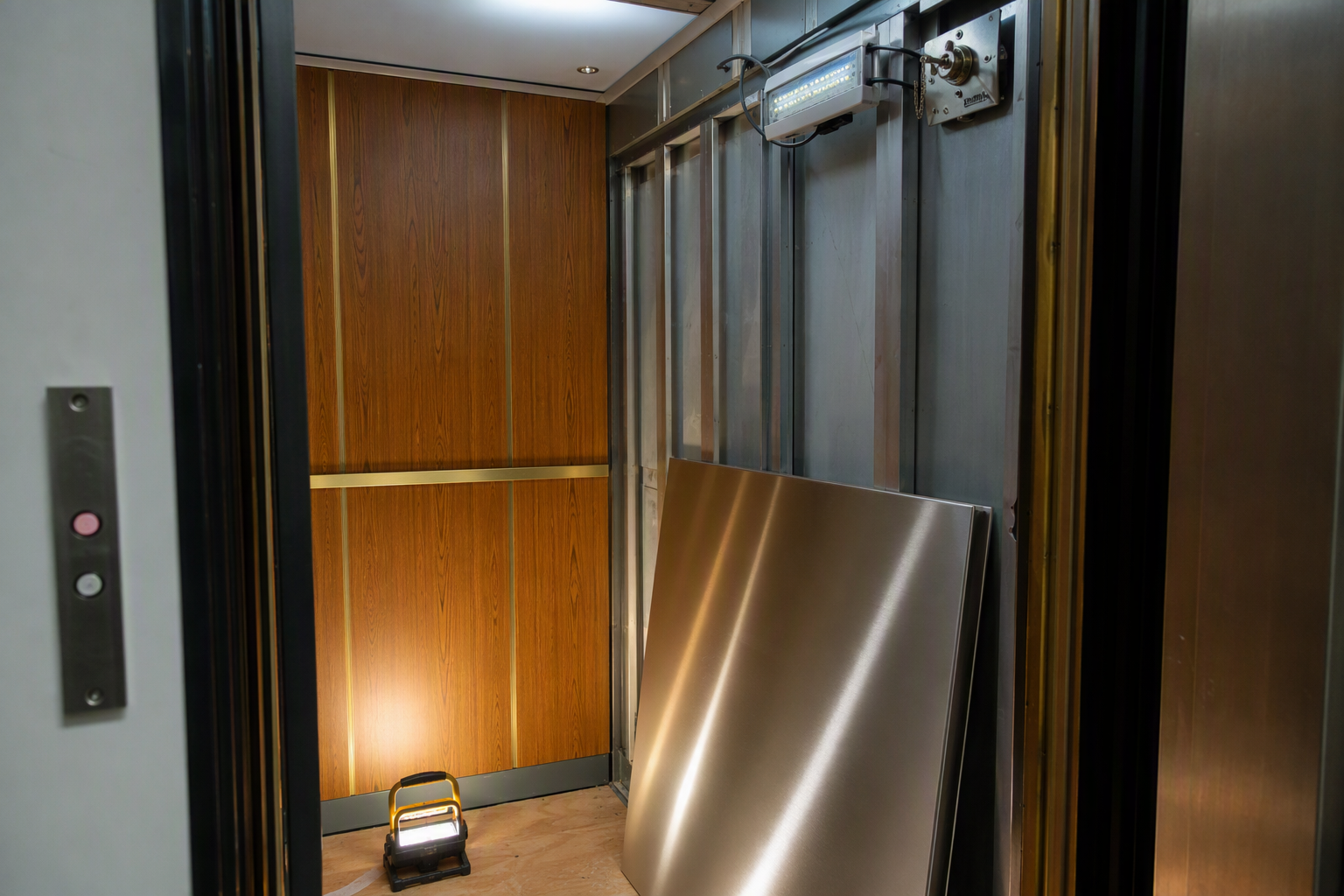
Under ASME A17.1, the concept of a “modernization” is specific: replacing, altering, or adding new equipment to an existing installation. The standard uses a component-based trigger system — replacing certain components triggers mandatory upgrades to related systems throughout the elevator, even if those related systems are not being touched as part of the original scope of work.
Key trigger categories include:
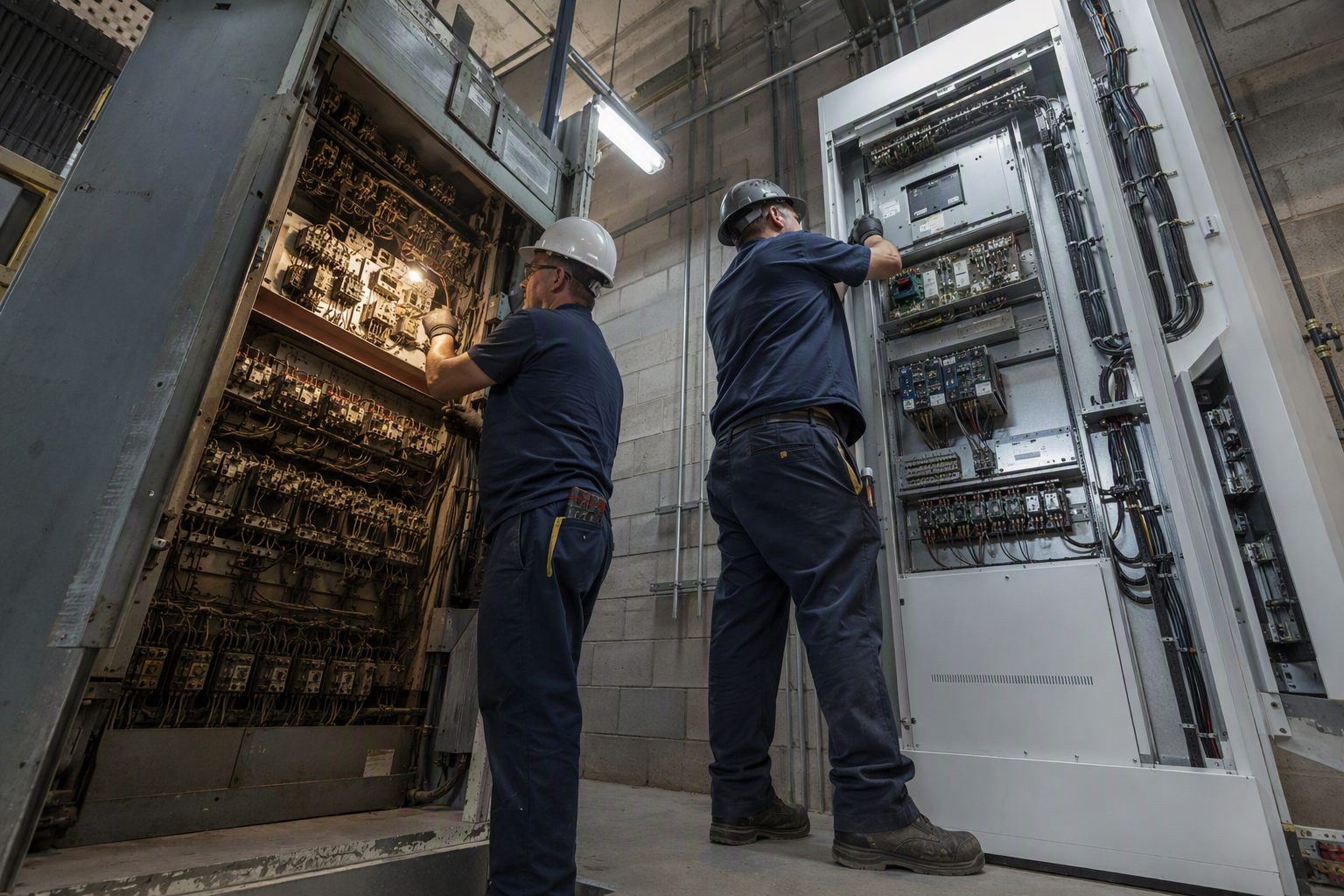
- Controller replacement: One of the broadest triggers. Replacing the controller typically requires bringing door interlocks, emergency lighting, firefighters’ emergency operation (FEO), and car emergency signaling up to current code.
- Machine or drive replacement: Triggers requirements for car safeties, buffers, governor, and machine-room ventilation compliance.
- Door operator replacement: Triggers door interlock and reopening device compliance.
- Cab/interior renovation: May trigger ADA accessibility requirements including cab dimensions, control panel height, Braille signage, and audible signals.
- Full modernization (all major components): Requires comprehensive compliance with the currently adopted code edition in full — this is the most expensive path but produces the most code-current installation.
Which Specific Upgrades Are Most Commonly Required Across All Four Jurisdictions?
While each jurisdiction has nuances, the following upgrades are most frequently mandated during modernization projects throughout Maryland, DC, Virginia, and Pennsylvania:
| Required Upgrade | Typical Trigger | MD | DC | VA | PA |
|---|---|---|---|---|---|
| Firefighters’ Emergency Operation (FEO) Phase I & II | Controller replacement | ✔ | ✔ | ✔ | ✔ |
| Door interlocks (hoistway door) | Controller or door operator replacement | ✔ | ✔ | ✔ | ✔ |
| Car door closure and reopening devices | Door operator replacement | ✔ | ✔ | ✔ | ✔ |
| Emergency lighting and alarm (car) | Controller replacement or cab work | ✔ | ✔ | ✔ | ✔ |
| Two-way emergency communication | Controller replacement or cab work | ✔ | ✔ | ✔ | ✔ |
| Seismic safety devices | Seismic zone requirements (varies) | Varies | Varies | Varies | Varies |
| ADA-compliant cab controls & signage | Cab alteration / accessibility alteration | ✔ | ✔ | ✔ | ✔ |
| Pit lighting and stop switch | Most modernization scopes | ✔ | ✔ | ✔ | ✔ |
| Top-of-car lighting and stop switch | Most modernization scopes | ✔ | ✔ | ✔ | ✔ |
| Governor and safety device compliance | Machine or drive replacement | ✔ | ✔ | ✔ | ✔ |
Note: Always confirm specific requirements with the Authority Having Jurisdiction (AHJ) in your locality before finalizing scope. Jurisdictions may have adopted different editions of ASME A17.1 or have specific local amendments.
How Do Modernization Requirements Compare Across the Four Jurisdictions?
| Factor | Maryland | Washington, DC | Virginia | Pennsylvania |
|---|---|---|---|---|
| Primary Regulatory Authority | MD Division of Labor & Industry | DC Dept. of Buildings | VA Dept. of Labor & Industry (DOLI) | PA Bureau of Occupational & Industrial Safety |
| Base Code | ASME A17.1 (state-adopted edition) | ASME A17.1 (DC-adopted edition) | ASME A17.1 (VA-adopted edition) | ASME A17.1 (PA UCC-adopted edition) |
| Permit Required for Modernization? | Yes | Yes | Yes | Yes |
| Third-Party Inspection Required? | Yes (state-licensed inspector) | Yes | Yes | Yes |
| ADA Compliance Triggered By Alteration? | Yes (federal requirement) | Yes (federal + DC law) | Yes (federal requirement) | Yes (federal requirement) |
| Local Amendments to ASME A17.1? | Yes — verify current edition with MD DLI | Yes — verify with DC Dept. of Buildings | Yes — verify with VA DOLI | Yes — verify with PA Bureau |
What Is the Step-by-Step Process for Managing a Code-Compliant Modernization?
- Engage a qualified elevator contractor early. A contractor familiar with the AHJ in your specific jurisdiction — such as Quality Elevator Company — can identify which code edition is currently enforced and what amendments apply.
- Conduct a pre-modernization code compliance assessment. Document the current condition of all major components: controller, machine, doors, cab, safety devices, and signaling equipment. This establishes the baseline and clarifies trigger scope.
- Submit plans and obtain permits. All four jurisdictions require permit applications before work begins. Plans typically must be reviewed by the AHJ or their designated review body.
- Determine the full trigger scope. Work with your contractor to identify every ASME A17.1 section triggered by the planned component replacements — do not limit the review to only the components being replaced.
- Identify ADA compliance obligations. Review the alteration under the ADA to determine whether cab controls, signage, door timing, or other accessibility features must be updated.
- Complete modernization work. All work must be performed by licensed elevator mechanics. Verify that your contractor holds the appropriate licenses for each jurisdiction where the work is performed.
- Schedule third-party inspection. Contact the AHJ or an approved inspection agency to schedule the required acceptance inspection before the elevator is returned to service.
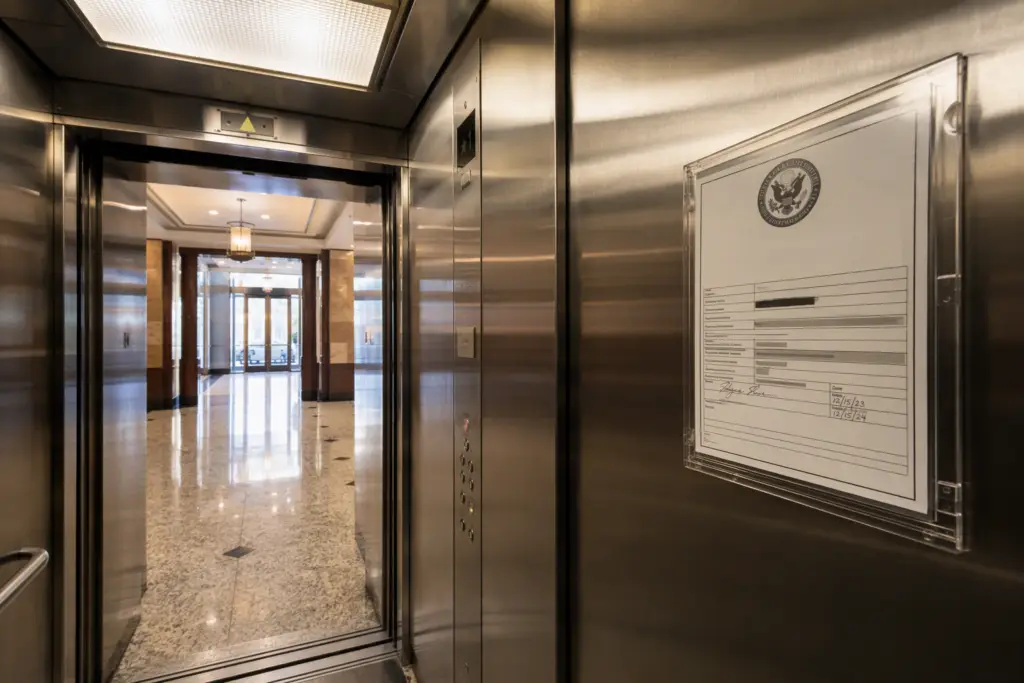
- Obtain updated certificate of operation. A new certificate (or renewed certificate) must be posted in the elevator cab before occupants use the equipment.
- Retain documentation. Keep all permits, inspection records, and code compliance documentation on file — these are required for future inspections, insurance purposes, and potential resale or refinancing.
What Are the Pros and Cons of Different Modernization Scopes?
| Modernization Scope | Pros | Cons | Code Trigger Level |
|---|---|---|---|
| Controller-only replacement | Addresses reliability; often improves energy efficiency; narrower initial cost | Triggers significant related upgrades (FEO, door interlocks, emergency comms); may cost more than anticipated once triggers are factored in | High — many related systems triggered |
| Door system replacement | Reduces door-related service calls; improves passenger safety | Triggers door interlock and reopening device compliance | Moderate |
| Cab/interior renovation only | Improves aesthetics; can address ADA cab requirements specifically | ADA compliance triggered; must assess whether alteration affects usability broadly | Moderate — ADA-focused |
| Machine/drive replacement | Improves reliability and energy performance; extends equipment life | Triggers governor, safety device, and buffer compliance | High — mechanical safety systems triggered |
| Full modernization (all systems) | Comprehensive code compliance achieved; longest service life; greatest reliability gain; single project vs. multiple future projects | Highest upfront investment; longer downtime during project | Comprehensive — full current-code compliance required |
Does ADA Compliance Apply Even If the Building Predates the ADA?
Yes. Under the Americans with Disabilities Act, when a building owner undertakes an alteration to a facility, the altered area and the path of travel to the altered area must be made accessible to the maximum extent feasible. An elevator modernization that affects usability — including cab alterations, control panel work, or door system changes — typically constitutes an alteration that triggers ADA accessibility requirements regardless of the building’s original construction date.
Common ADA-triggered elevator items during modernization include: Braille and raised-character control panel markings, visual and audible floor indicators, cab door reopening device sensitivity, leveling accuracy, and two-way emergency communication systems accessible to people with hearing or speech disabilities.
What Are the Risks of Proceeding With Modernization Without Addressing Code Triggers?
Building owners who attempt to limit modernization scope to avoid triggered upgrades face significant risks:
- Permit denial or stop-work orders: Inspectors can halt a project if triggered upgrades are not included in the submitted scope.
- Failed acceptance inspection: The AHJ will not issue a certificate of operation if triggered code requirements are unmet — leaving the elevator out of service until corrections are made.
- Liability exposure: An elevator operating with known code deficiencies that results in an injury creates significant legal and financial exposure for the building owner.
- Insurance implications: Property insurers and carriers may deny claims or cancel coverage related to elevator incidents if the equipment is not code-compliant.
- Compounding future costs: Deferring triggered upgrades does not eliminate the obligation — it means addressing them under a future project at potentially higher cost.
How Does the Code Compliance Process Differ for Hydraulic vs. Traction Elevators?
Both hydraulic and traction elevators are governed by ASME A17.1, but the specific sections and triggered requirements differ by type:
| Factor | Hydraulic Elevators | Traction Elevators |
|---|---|---|
| Environmental concern triggers | Underground cylinder leak detection; tank containment requirements | Less applicable |
| Safety device triggers | Pressure relief valve, low-oil protection, velocity fuse | Governor, safeties, buffers, counterweight |
| Controller triggers | Same FEO, door interlock, emergency signaling requirements | Same FEO, door interlock, emergency signaling requirements |
| Machine room requirements | Pump unit, tank containment, ventilation | Machine room ventilation, lighting, access |
| Common full-modernization driver | Underground cylinder replacement (major undertaking) | Machine replacement or MRL conversion |
How Should Building Owners Choose an Elevator Modernization Contractor?
Selecting the right contractor is as important as understanding the code requirements. Key factors to evaluate include:
- Jurisdiction-specific licensing: Contractors and mechanics must hold licenses valid in each state or jurisdiction where work is performed. Maryland, DC, Virginia, and Pennsylvania each have separate licensing requirements.
- AHJ familiarity: A contractor with established relationships with the local Authority Having Jurisdiction can navigate permit processes, inspection scheduling, and amendment interpretations more efficiently.
- Independence: Independent elevator companies are not tied to a single equipment manufacturer, allowing them to specify the best-fit equipment for a project’s code requirements, budget, and building conditions.
- Documentation practices: The contractor should provide complete permit documentation, inspection reports, and as-built records — not just complete the physical work.
- Comprehensive scope assessment: A qualified contractor will proactively identify all triggered upgrades before submitting a contract — not discover them mid-project.
Quality Elevator Company is an independent elevator service provider serving Maryland, Washington DC, Virginia, and Pennsylvania. As an independent company, Quality Elevator Company is not affiliated with any single equipment manufacturer, allowing objective recommendations on equipment and scope. Quality Elevator Company works directly with Authorities Having Jurisdiction across the region to manage permitting, triggered compliance scope, and acceptance inspections for modernization projects of all sizes.
What Documentation Should Be Retained After a Code-Compliant Modernization?
Proper documentation protects building owners during future inspections, insurance reviews, and property transactions. Retain the following:
- Copies of all permits issued by the AHJ
- Approved plans or drawings submitted with the permit application
- Acceptance inspection reports issued by the inspector or AHJ
- Current certificate of operation (must be posted in the cab)
- Equipment manuals and wiring diagrams for all new components installed
- Records of any variances or alternative compliance methods approved by the AHJ
- ADA compliance documentation if accessibility features were upgraded or modified
Summary: Code Compliance Decision Matrix
| If You Are Replacing… | Expect to Also Address… | ADA Review Needed? | Permit Required? |
|---|---|---|---|
| Controller only | FEO, door interlocks, emergency lighting, two-way communication, alarm | Likely yes | Yes — all jurisdictions |
| Door operator only | Door interlocks, reopening devices | Possibly | Yes — all jurisdictions |
| Machine/drive only | Governor, safeties, buffers, machine room compliance | Possibly | Yes — all jurisdictions |
| Cab interior only | ADA controls, Braille, audible signals, leveling | Yes | Yes — all jurisdictions |
| All major systems (full mod) | Full current-code compliance across all systems | Yes | Yes — all jurisdictions |
Get a Free Elevator Modernization Assessment
Understanding exactly which code upgrades your modernization project triggers — before you commit to a scope or budget — is the single most important step a building owner can take. An incorrect scope assumption can result in failed inspections, unexpected costs, and extended elevator downtime.
Contact Quality Elevator Company for a free elevator assessment. Quality Elevator Company’s team serves Maryland, Washington DC, Virginia, and Pennsylvania and works directly with local Authorities Having Jurisdiction to ensure your modernization project is code-compliant from permit application through final inspection.
Call Quality Elevator Company: 301-779-9116
Need elevator service you can rely on? Quality Elevator Company is ready to help.