Elevator Maintenance and Compliance Requirements for Healthcare Facilities
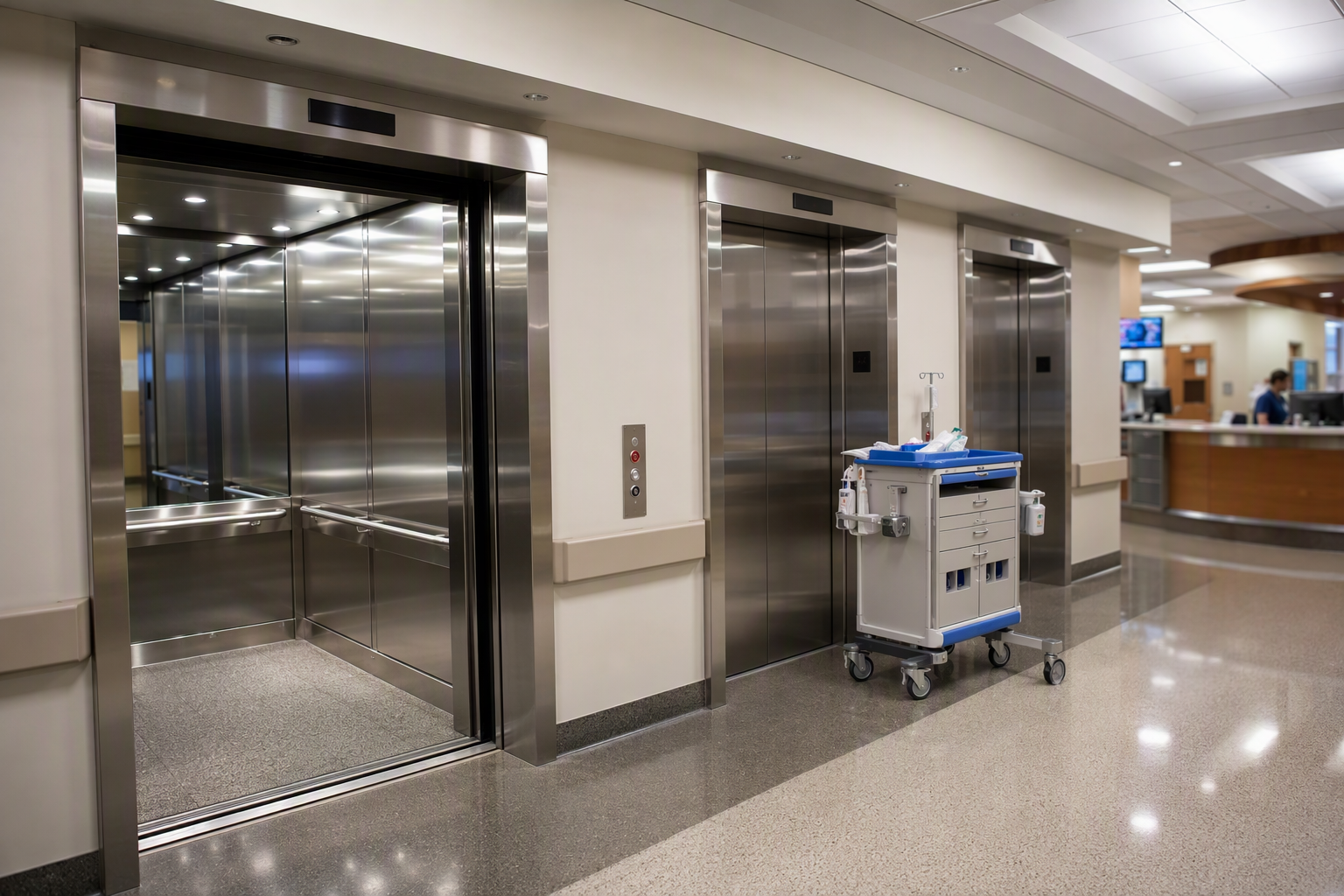
Elevators in hospitals, outpatient clinics, long-term care facilities, and medical office buildings operate under a uniquely demanding set of requirements. Unlike a standard commercial building, a healthcare elevator may transport patients on stretchers, heavy medical equipment, food service carts, and staff around the clock — every day of the year. A single compliance gap or mechanical failure can disrupt patient care, trigger regulatory citations, and expose the facility to significant liability.
Quality Elevator Company serves healthcare facilities across Baltimore, MD, Washington, DC, Philadelphia, PA, and Richmond, VA, providing the maintenance, inspection, and compliance documentation these environments demand. This guide covers the full scope of what healthcare facility managers and compliance officers need to know in 2026.
What Federal Codes Govern Elevator Safety in Healthcare Facilities?
The foundational federal standards that apply to healthcare elevators include:
- ASME A17.1 Safety Code for Elevators and Escalators: The primary technical standard governing design, installation, operation, testing, and inspection of elevators across all building types in the United States. Most states adopt ASME A17.1 by reference into their own elevator safety laws.
- Americans with Disabilities Act (ADA): Requires that elevators serving multiple floors in healthcare facilities be accessible to people with disabilities. This includes cab dimensions, door timing, floor call buttons, tactile markings, and audible signals.
- OSHA General Industry Standards: While OSHA does not publish a dedicated elevator standard, its General Duty Clause requires employers — including hospital operators — to maintain equipment free from recognized hazards. Elevator-related incidents fall under this umbrella.
Beyond federal law, healthcare facilities must also satisfy The Joint Commission (TJC) Environment of Care (EC) standards, Centers for Medicare & Medicaid Services (CMS) Conditions of Participation, NFPA 101 Life Safety Code provisions related to vertical transportation, and the state elevator safety statutes enforced in Maryland, Washington DC, Pennsylvania, and Virginia.
How Often Must Healthcare Elevators Be Inspected?
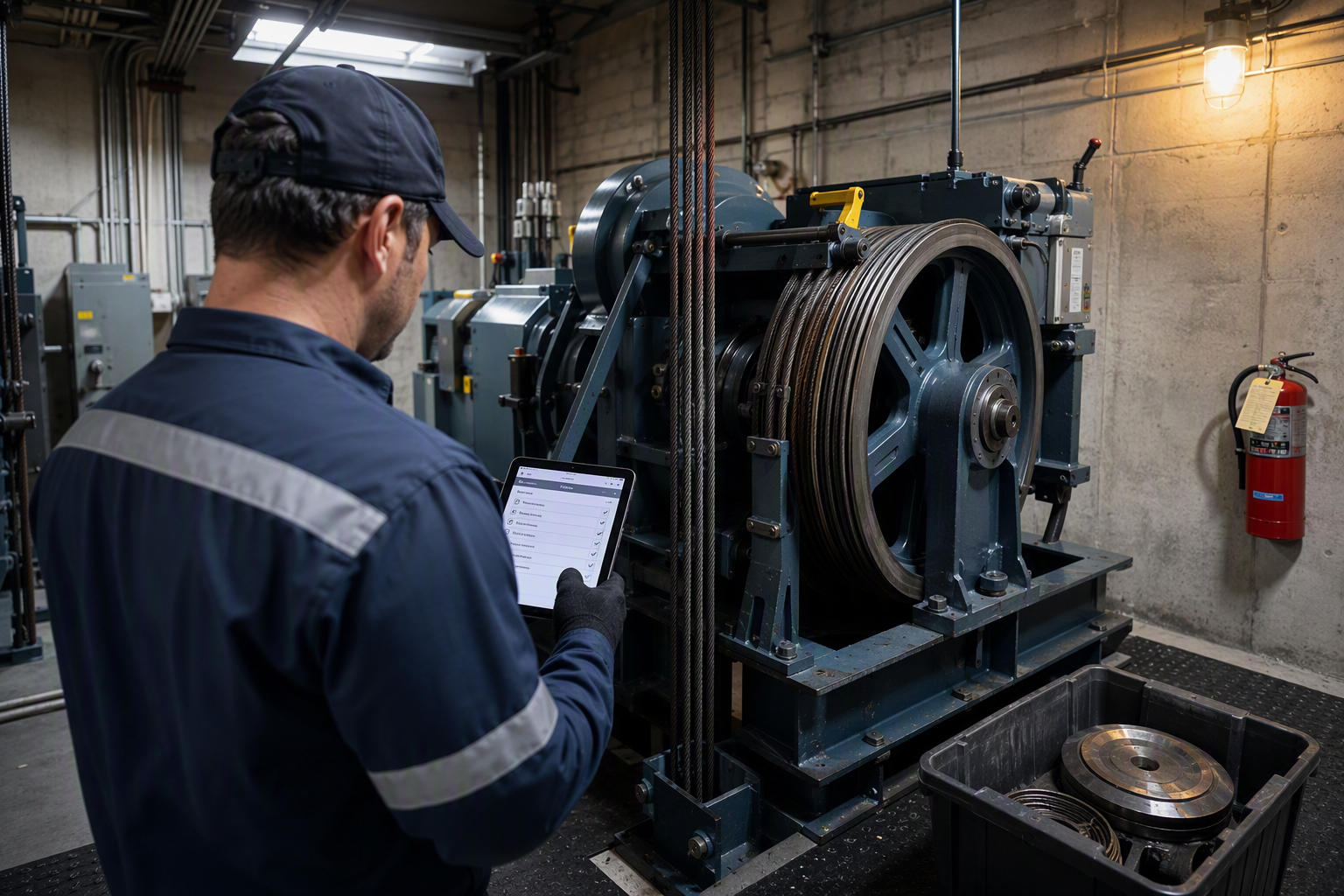
Under ASME A17.1, elevators must undergo periodic inspections and tests at intervals defined by the code and enforced by the authority having jurisdiction (AHJ) in each state. For most jurisdictions, this means a routine periodic inspection annually and a full load test at intervals specified by the code edition adopted locally.
Healthcare facilities often face more frequent internal audits on top of statutory inspections. The Joint Commission surveyors review maintenance logs, inspection certificates, and corrective action records during accreditation surveys. Gaps in documentation — even when the equipment itself is functional — can result in citations under Environment of Care standard EC.02.05.01, which requires organizations to manage utility systems risk including vertical transportation.
Quality Elevator Company helps healthcare clients maintain inspection-ready documentation at all times, ensuring that certificate renewals, test records, and corrective maintenance logs are organized and current before any scheduled or unannounced survey.
What ADA Requirements Apply Specifically to Hospital and Clinic Elevators?
The ADA Standards for Accessible Design specify minimum requirements for elevators in facilities covered by Title II (state and local government) and Title III (public accommodations and commercial facilities). Key requirements include:
- Minimum interior cab dimensions sufficient for wheelchair users and mobility aids
- Door reopening devices that respond to obstructions without contact
- Call buttons with raised markings and positioned at accessible heights
- Visual and audible floor designation signals
- Braille and raised character floor designations on jambs
- Adequate door hold-open times to accommodate patients using mobility devices or transporting equipment
Healthcare environments introduce additional practical considerations beyond baseline ADA compliance. Stretcher-accessible elevators, for example, require larger cab dimensions than standard ADA minimums. Facilities serving bariatric patients may need reinforced cabs and higher capacity units. These are not always federal mandates but are frequently required by state hospital licensing agencies and accreditation bodies.
What State-Level Elevator Regulations Apply in Maryland, Washington DC, Pennsylvania, and Virginia?
Each jurisdiction in the Quality Elevator Company service area administers its own elevator safety program, typically through a state labor or building safety department:
- Maryland: The Division of Labor and Industry regulates elevator safety and adopts ASME A17.1 by reference. Healthcare facilities must hold a current elevator operating permit issued after passing state inspection.
- Washington, DC: The DC Department of Buildings enforces elevator safety requirements. Permits must be posted in each elevator cab, and inspections are required on a defined periodic basis.
- Pennsylvania: The Bureau of Occupational and Industrial Safety within the Department of Labor & Industry oversees elevator inspections and licensing for elevator mechanics.
- Virginia: The Virginia Department of Labor and Industry administers the Amusement Device and Boiler and Pressure Vessel Safety program, which includes elevator regulation under the Virginia Elevator Safety Law.
Healthcare facility managers should confirm the current adopted code edition and inspection cycle with their specific AHJ, as adoption timelines vary by jurisdiction and code editions are updated periodically.
What Types of Elevators Are Used in Healthcare Settings and Do Requirements Differ?
Healthcare facilities typically operate several elevator types, each with distinct regulatory considerations:
- Passenger elevators: Standard vertical transportation for staff, visitors, and ambulatory patients. Subject to full ASME A17.1 requirements.
- Stretcher or hospital-service elevators: Larger cabs designed to accommodate gurneys. Must meet extended dimension requirements and are often designated for specific patient transport uses by facility policy.
- Service and freight elevators: Used for supply chain, dietary, and housekeeping transport. Classified under ASME A17.1 as freight elevators with specific load and operation requirements.
- Dumbwaiters and material lifts: Used for medication, lab specimens, and food service. Governed by ASME A17.1 provisions specific to limited-use and material-handling equipment.
Each elevator type must maintain its own inspection certificate, maintenance log, and compliance documentation.
What Preventive Maintenance Protocols Are Required for Healthcare Elevators?
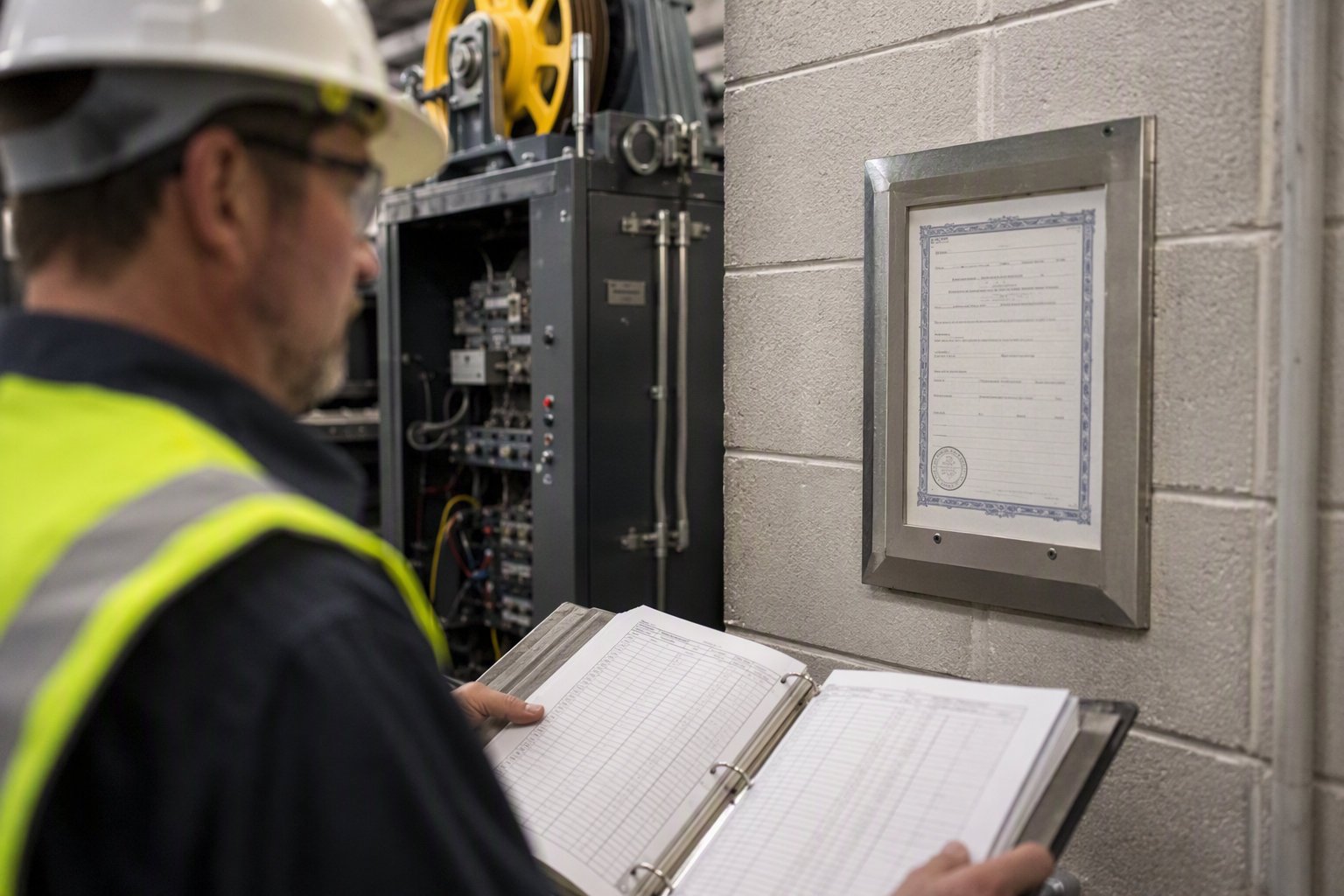
The ASME A17.1 Safety Code requires that a maintenance control program (MCP) be in place for every elevator. The MCP must document all maintenance tasks, the intervals at which they are performed, and the qualifications of personnel performing the work. In healthcare settings, the MCP is a core document reviewed during TJC surveys and state licensing inspections.
A comprehensive preventive maintenance program for healthcare elevators typically includes:
- Regular lubrication of guide rails, sheaves, and mechanical components per manufacturer specifications
- Inspection and adjustment of door operators, safety edges, and reopening devices
- Testing of safeties, governors, and emergency stopping systems
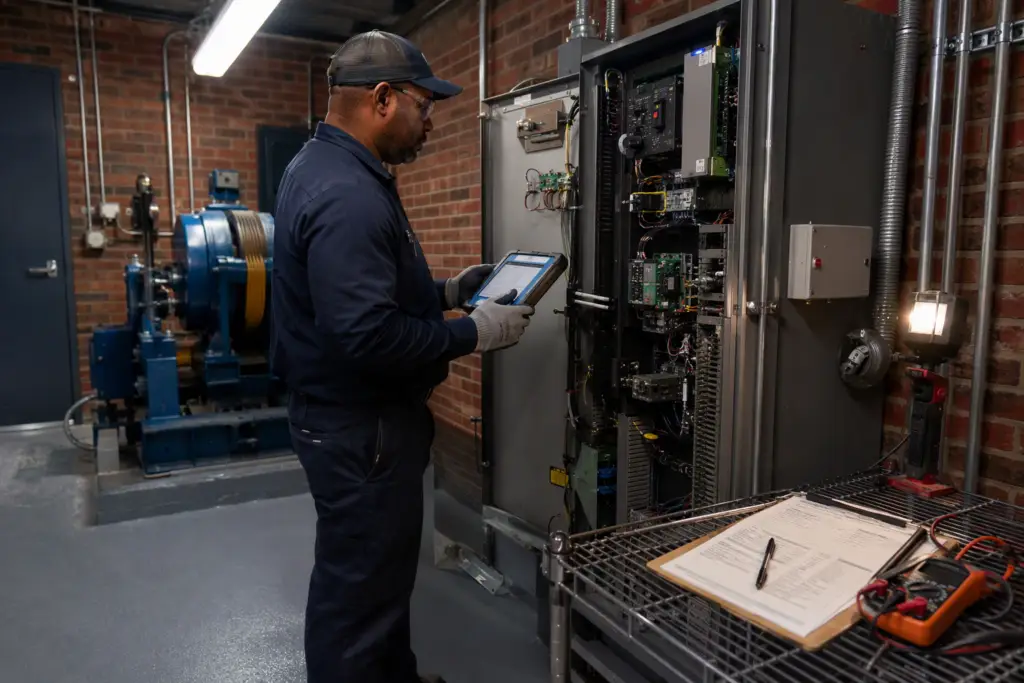
- Inspection of machine room environmental conditions, including temperature and cleanliness
- Testing of emergency lighting and communication systems within the cab
- Review and calibration of leveling accuracy to reduce trip hazards at landings — critical for patient transport
- Inspection of hydraulic fluid levels and seal integrity for hydraulic units
- Documentation of all findings and corrective actions in the maintenance log
Quality Elevator Company develops and maintains compliant maintenance control programs for healthcare clients, ensuring documentation meets both ASME A17.1 requirements and TJC Environment of Care documentation standards.
What Happens If a Healthcare Elevator Fails Inspection or Goes Out of Service?
When an elevator fails a state inspection or is taken out of service due to a safety deficiency, healthcare facilities face compounding challenges beyond the regulatory citation itself. Patient transport, equipment delivery, and staff workflow are immediately affected, particularly in multi-story facilities with limited elevator capacity.
If a facility receives a failed inspection notice, the following steps should be taken:
- Notify the facility safety officer and building management immediately upon receiving the citation or out-of-service order.
- Contact a licensed elevator service company to assess the deficiency and provide a written corrective action plan.
- Implement interim patient transport contingency protocols to minimize disruption to care delivery.
- Complete all required repairs using qualified, licensed elevator mechanics.
- Request a follow-up inspection from the AHJ to restore the elevator to service and obtain a corrected certificate.
- Update the maintenance control program and logs to reflect corrective work performed.
- Report the incident and resolution to relevant internal stakeholders, including risk management and compliance teams.
How Do Healthcare Elevator Requirements Differ from Those in Other Building Types?
While the baseline ASME A17.1 and ADA requirements apply across commercial building types, healthcare facilities face several elevated expectations:
- Accreditation body oversight: Buildings such as retail centers or offices are not subject to TJC or CMS surveys. Hospitals and accredited outpatient facilities are, making elevator documentation a direct accreditation risk.
- Continuous operation demands: Healthcare elevators must remain operational around the clock. Planned maintenance must often be scheduled during low-census periods with minimal disruption to patient care operations.
- Infection control considerations: Maintenance work in healthcare environments must comply with facility infection control policies. Technicians may be required to follow specific protocols regarding personal protective equipment, work zone containment, and cleanup procedures.
- Life safety integration: Healthcare elevators must be properly integrated into fire recall and emergency systems under NFPA 101 and ASME A17.1 requirements. Phase I and Phase II firefighter emergency operation must be tested and documented.
Questions Your Inspector Will Ask
During a state elevator inspection or a TJC Environment of Care survey, facility managers and elevator service providers should be prepared to answer the following:
- Is the current elevator operating permit posted in each cab?
- Where is the maintenance control program, and does it include all units on the premises?
- When was the last periodic inspection completed, and what were the findings?
- Are all corrective actions from the previous inspection fully closed and documented?
- When were the safeties and governor last tested, and what are the results?
- Is there documentation of emergency lighting and two-way communication testing?
- Have all mechanics performing work on this equipment held the required state licensure?
- Is the machine room secured, clean, and within required temperature ranges?
- Has firefighter emergency operation (Phase I and Phase II) been tested within the required interval?
- Are there any outstanding violations or orders from the authority having jurisdiction?
How Should Healthcare Facilities Evaluate an Elevator Service Provider?
Selecting an elevator maintenance partner for a healthcare facility involves considerations beyond price. Facilities should evaluate:
- Licensing and certification: Confirm that all mechanics are licensed in the relevant state jurisdiction and that the company holds required contractor licenses.
- Healthcare-specific experience: Ask whether the provider has experience working within infection control protocols, after-hours maintenance scheduling, and TJC documentation requirements.
- Maintenance control program capability: Confirm that the provider will develop and maintain an ASME A17.1-compliant MCP specific to your equipment inventory.
- Geographic coverage: For health systems operating across multiple markets, a provider with consistent presence across jurisdictions simplifies compliance management.
- Transparency in documentation: Request sample maintenance logs and inspection reports to evaluate documentation quality before entering a service agreement.
Quality Elevator Company serves healthcare clients across Baltimore, Washington DC, Philadelphia, and Richmond, offering the multi-jurisdiction coverage that regional health systems require.
What Should Healthcare Facilities Know About Elevator Modernization and Code Compliance?
Older elevators in healthcare facilities may no longer meet current ASME A17.1 or ADA requirements due to code updates adopted since the equipment was installed. Modernization projects — which may include controller upgrades, door operator replacement, cab refurbishment, or full drive system replacement — can trigger code compliance obligations for the upgraded components under the applicable state’s retroactive or alteration requirements.
Healthcare facility managers planning capital improvements involving elevators should consult with a qualified elevator service company and their AHJ before work begins to understand which code provisions will apply to the altered equipment. Quality Elevator Company assists healthcare clients in navigating modernization planning to achieve both operational improvements and sustained code compliance.
Contact Quality Elevator Company for a Free Elevator Assessment
Healthcare facilities in Baltimore, MD, Washington, DC, Philadelphia, PA, and Richmond, VA can rely on Quality Elevator Company for compliant elevator maintenance, inspection documentation, and modernization planning tailored to the demands of patient care environments. Whether a facility is preparing for a TJC survey, addressing a state inspection finding, or planning a long-term capital improvement program, Quality Elevator Company provides the technical expertise and compliance support healthcare operations require.
Contact Quality Elevator Company for a free elevator assessment: 301-779-9116
Need elevator service you can rely on? Quality Elevator Company is ready to help.