Elevator Maintenance & Inspection Requirements for Senior Living and Assisted Living Facilities
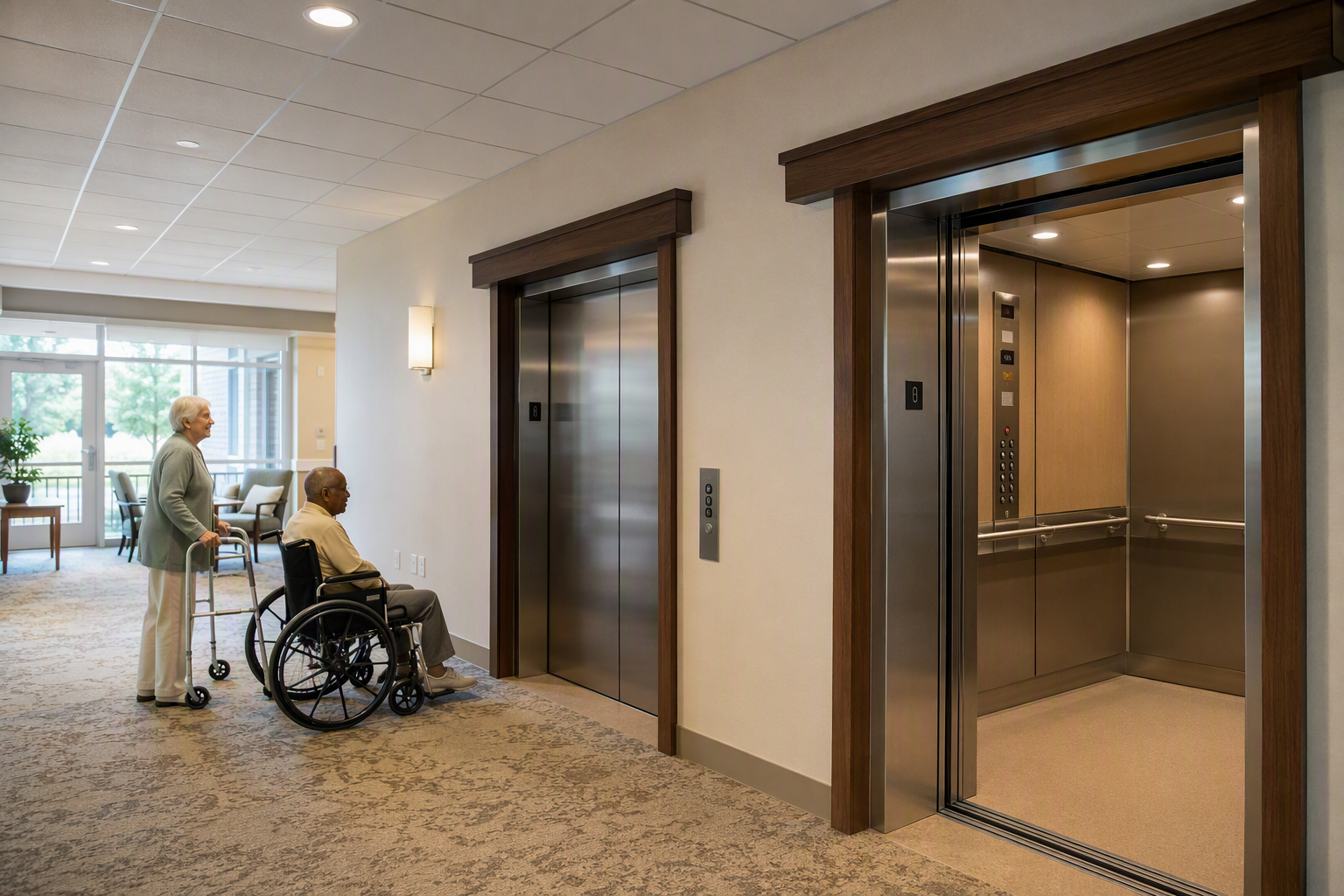
For senior living and assisted living facilities in Baltimore, Washington DC, Philadelphia, and Richmond, elevator reliability is not a convenience — it is a life-safety and regulatory necessity. Residents with limited mobility depend on elevators for daily movement between floors, dining areas, therapy rooms, and emergency egress. Understanding the full scope of maintenance and inspection requirements helps facility administrators stay compliant, protect residents, and avoid costly shutdowns.
—
What Federal and Industry Codes Govern Elevator Safety in Senior Living Facilities?
The foundational standard for elevator safety in the United States is the ASME A17.1 Safety Code for Elevators and Escalators. This code, updated periodically and referenced in its current edition through 2026, establishes minimum requirements for the design, construction, installation, operation, inspection, testing, and maintenance of elevators in all building types — including residential care facilities.
Beyond ASME A17.1, senior living facilities must also comply with:
- Americans with Disabilities Act (ADA) accessibility requirements — governing cab dimensions, door timing, controls, and floor call systems to ensure equitable access for residents using wheelchairs, walkers, or other mobility aids.
- State elevator safety statutes — Maryland, Virginia, Pennsylvania, and the District of Columbia each administer their own elevator inspection programs, licensing requirements for elevator contractors, and inspection certificate renewal schedules. These state programs adopt and sometimes exceed the ASME A17.1 baseline.
- Centers for Medicare & Medicaid Services (CMS) Conditions of Participation — facilities that accept Medicare or Medicaid reimbursement must maintain a safe physical environment. Elevator failures that create safety hazards can trigger CMS survey deficiencies.
- Life Safety Code (NFPA 101) — referenced by CMS surveyors, this code addresses elevator use during fire emergencies and requirements for firefighters’ service operation.
- OSHA general industry standards — apply to elevator maintenance workers and facility staff who operate or conduct routine checks on elevator equipment.
Quality Elevator Company works with facility managers across Maryland, DC, Pennsylvania, and Virginia to align maintenance programs with all applicable federal and state requirements.
—
How Often Must Elevators Be Inspected in Assisted Living Facilities?
Inspection frequency is governed by the adopted edition of ASME A17.1 as incorporated into each state’s elevator safety program. Generally, the requirements include:
- Periodic inspections — a full inspection by a state-licensed elevator inspector, typically required annually, though some jurisdictions require semi-annual inspections for high-use or high-occupancy buildings such as assisted living facilities.
- Periodic tests — ASME A17.1 mandates specific test intervals for safety components including safety devices, buffers, and pressure systems. Some tests are required every one to five years depending on the test type and state adoption cycle.
- Category 1 and Category 5 tests — under ASME A17.1, hydraulic and traction elevators are subject to Category 1 no-load safety tests (typically annual) and Category 5 full-load, full-speed safety tests on a five-year cycle, though state schedules vary.
Facility administrators should contact their state elevator safety authority — or engage a certified elevator company such as Quality Elevator Company — to confirm the exact schedule applicable to their jurisdiction and building classification.
—
What Routine Maintenance Is Required Beyond Periodic Inspections?
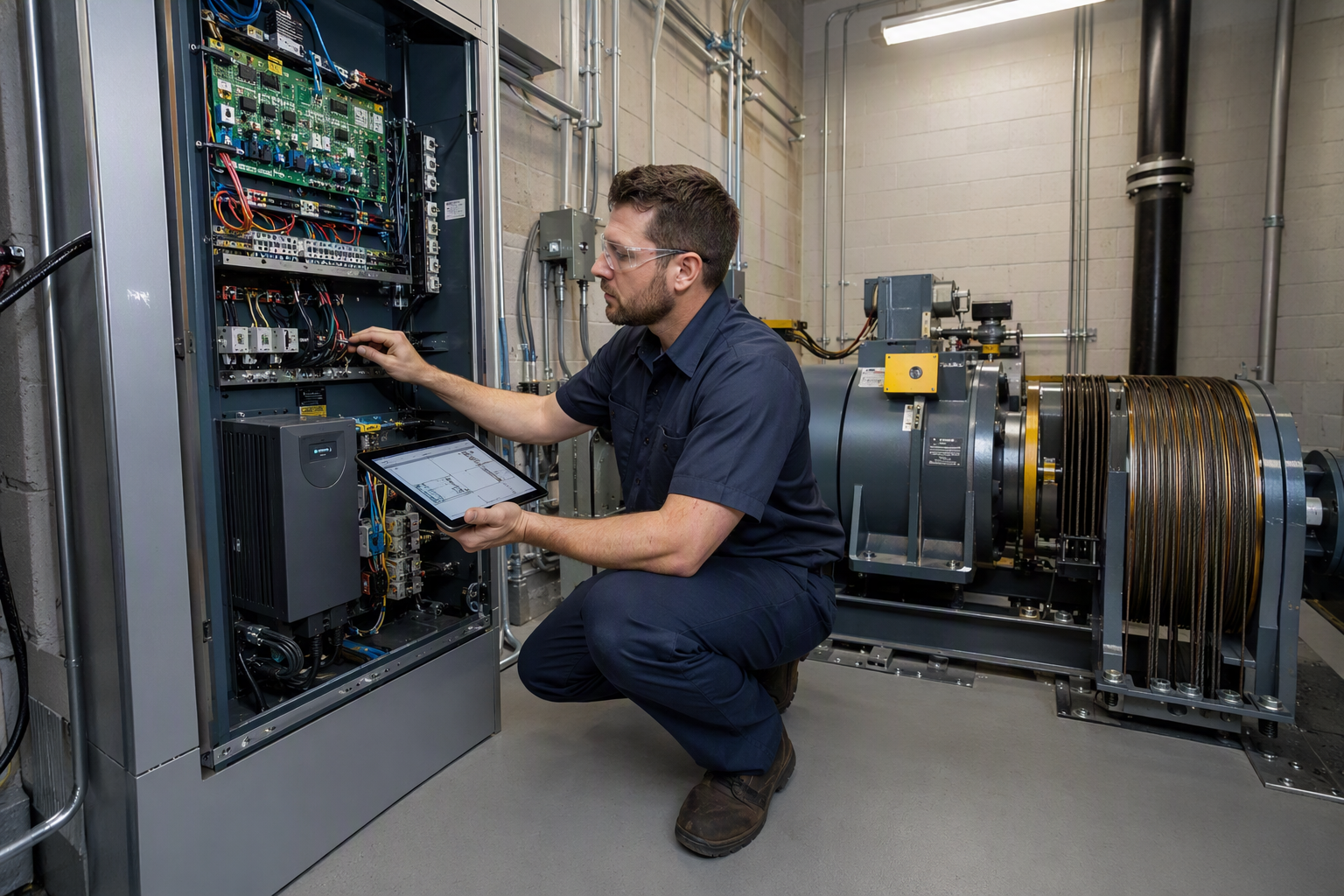
Inspections are a compliance checkpoint, not a substitute for ongoing maintenance. ASME A17.1 requires that a written maintenance control program be established and followed for every elevator in service. For senior living facilities, a comprehensive maintenance program typically includes:
- Lubrication of mechanical components on scheduled intervals
- Inspection and adjustment of door operators, door contacts, and safety edges
- Testing of leveling accuracy — critical for residents transferring from wheelchairs
- Verification of emergency lighting, phone communication, and alarm systems in the cab
- Review and documentation of all maintenance activities in a log kept at or near the elevator equipment room
- Inspection of sump pits, hydraulic fluid levels, and leak detection systems for hydraulic elevators
Incomplete or undocumented maintenance is one of the most common deficiencies cited during CMS surveys and state inspections.
—
What ADA Requirements Apply Specifically to Elevators in Senior Living?
The Americans with Disabilities Act imposes specific technical requirements for elevators in facilities serving people with disabilities — a category that encompasses virtually all assisted living and senior care residents. Key ADA elevator requirements include:
- Cab size — minimum interior dimensions to accommodate wheelchairs and attendants
- Door timing — doors must remain open long enough for a person using a mobility aid to enter and exit safely; re-opening devices triggered by obstruction are required
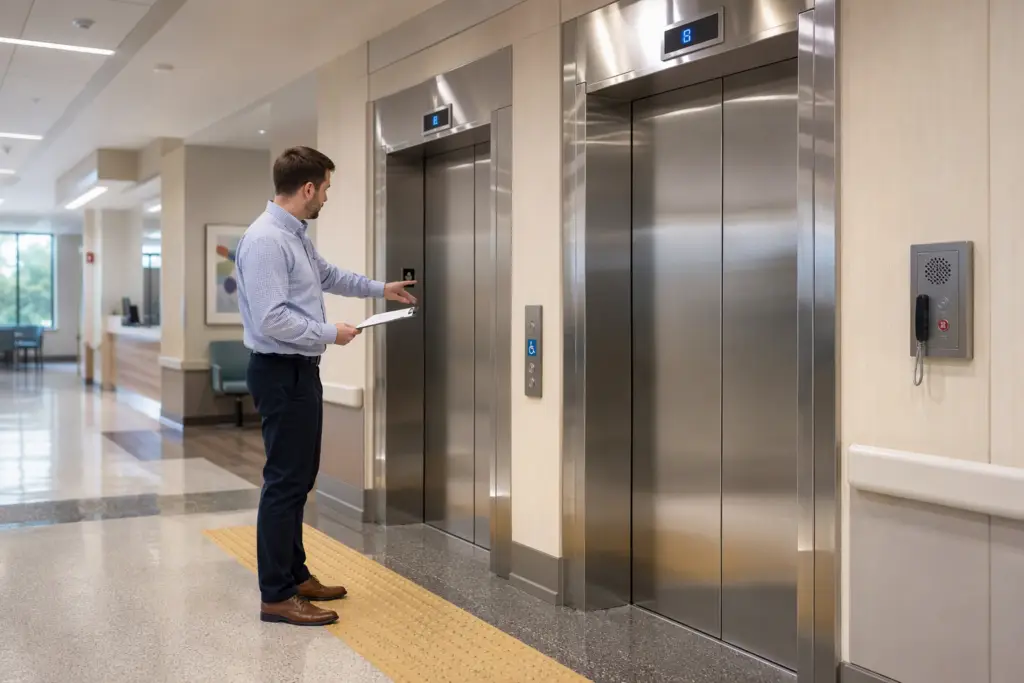
- Controls and signage — raised characters and Braille on all control buttons, visual and audible floor indicators, and button placement within reach range for seated users
- Leveling — the elevator must level within a tolerance that does not create a tripping or wheelchair-tipping hazard at the threshold
- Emergency communication — a two-way communication system that does not require voice capability, accommodating residents with hearing or speech impairments
ADA compliance failures can expose facilities to federal complaints and civil litigation in addition to creating genuine harm for residents.
—
What Happens If an Elevator Fails Inspection or Is Taken Out of Service?
When a state inspector finds violations or when an elevator experiences a safety-related failure, the consequences for a senior living facility are immediate and serious:
- Posted out-of-service notice — state inspectors have authority to post an elevator out of service and prohibit use until violations are corrected and a follow-up inspection is passed.
- Resident impact assessment — facility management must immediately evaluate how affected residents will access essential services, meals, medical care, and emergency egress.
- Emergency repair prioritization — engage a licensed elevator service company to diagnose and repair the violation items. Document all repairs with parts, labor, and completion dates.
- Re-inspection scheduling — contact the state elevator authority to schedule a reinspection. Some jurisdictions allow a licensed inspector to conduct the follow-up; others require a state employee.
- CMS and licensing notification review — consult legal or compliance counsel to determine whether the outage triggers notification obligations to CMS, the state health department, or residents and families.
- Root cause documentation — prepare a written corrective action summary for the facility’s compliance file and, if required, for submission to regulatory bodies.
—
Are There Special Requirements for Emergency Elevators and Firefighters’ Service?
Yes. Under ASME A17.1 and referenced life safety codes, elevators in buildings of a specified height or occupancy classification must be equipped with Phase I Emergency Recall and Phase II Emergency In-Car Operation — commonly known as firefighters’ service. In assisted living facilities, these features are tested as part of the periodic inspection cycle. Facility staff must understand how firefighters’ service functions so they do not inadvertently leave an elevator in an emergency mode that renders it unavailable to residents.
—
How Do State Requirements Differ Across Maryland, DC, Virginia, and Pennsylvania?
Each jurisdiction served by Quality Elevator Company administers its own elevator safety program:
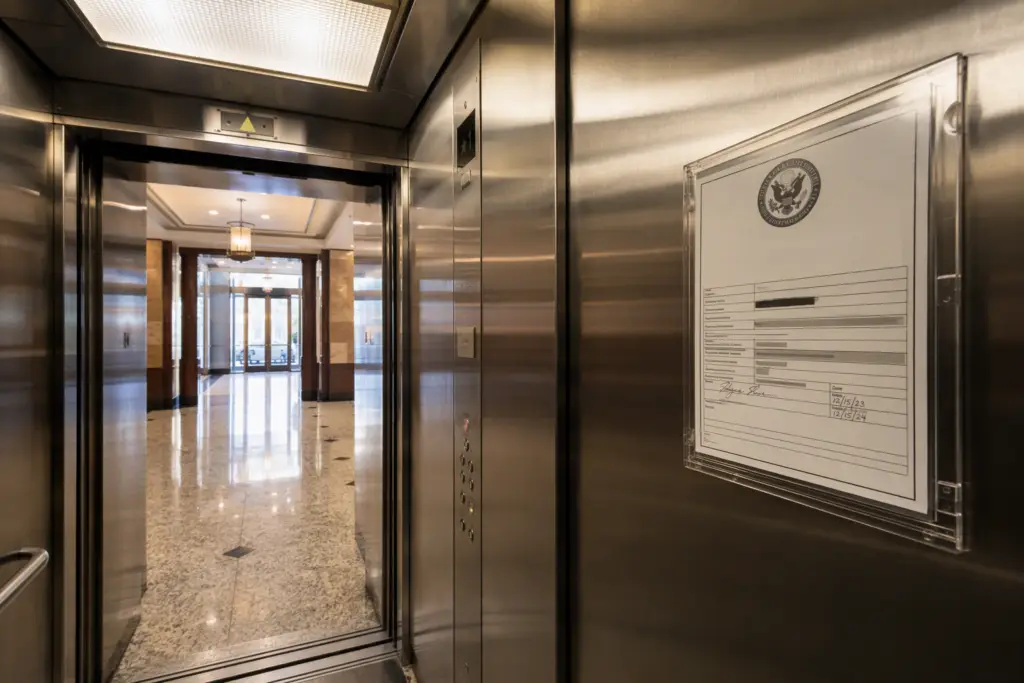
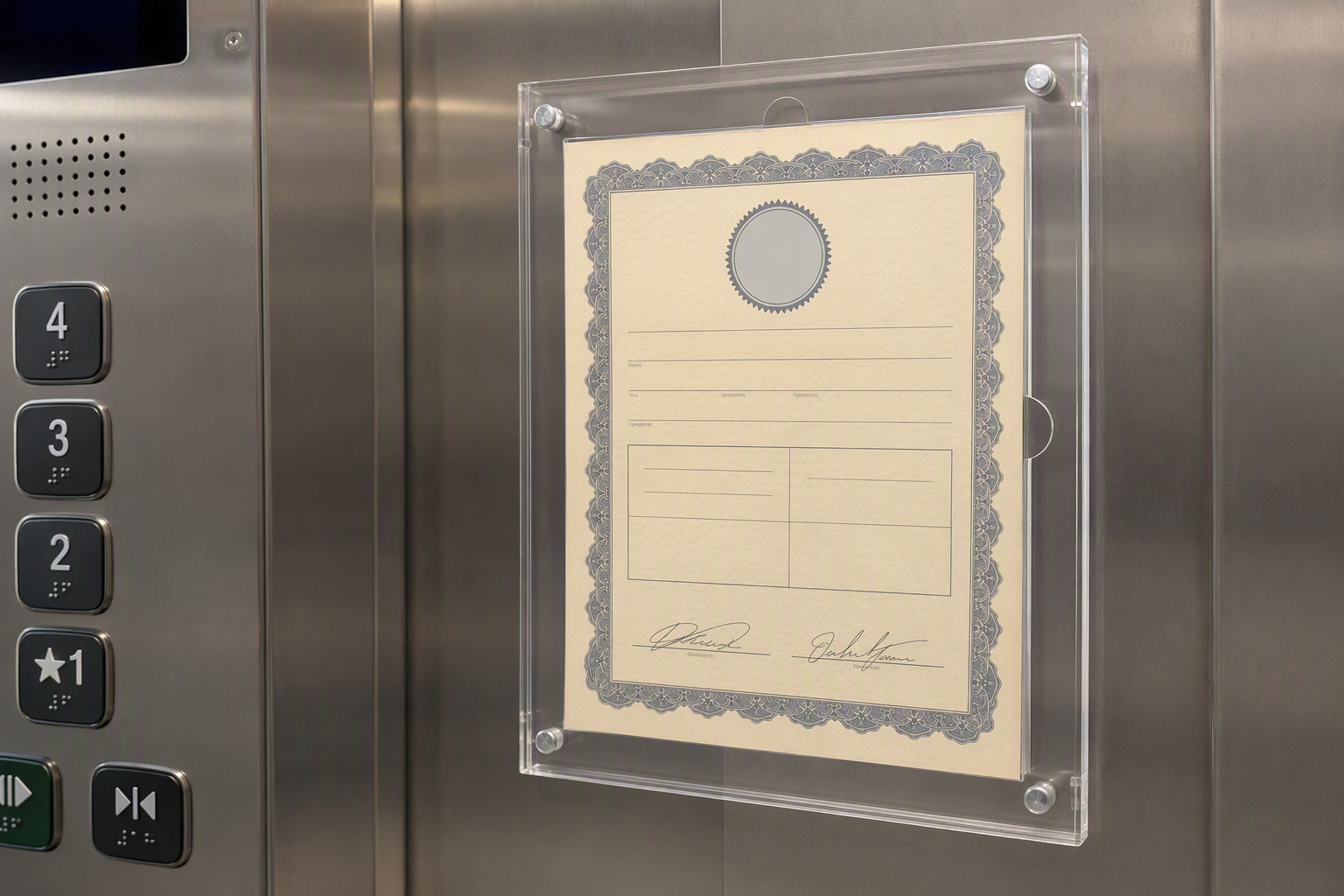
- Maryland — the Division of Labor and Industry administers elevator inspections. Certificates of operation must be current and posted in the elevator cab.
- Washington, DC — the DC Department of Consumer and Regulatory Affairs oversees elevator permits and inspections. DC has historically adopted recent editions of ASME A17.1.
- Pennsylvania — the Department of Labor and Industry’s Bureau of Occupational and Industrial Safety regulates elevators. Pennsylvania has specific owner-compliance obligations distinct from contractor obligations.
- Virginia — the Department of Labor and Industry’s Division of Building Safety regulates elevator safety. Virginia requires licensed contractors and licensed inspectors for all periodic and acceptance inspections.
Facility operators with properties across multiple states benefit from working with a single service provider — such as Quality Elevator Company — familiar with the regulatory environment in each jurisdiction.
—
What Should a Facility Look for When Selecting an Elevator Maintenance Vendor?
Selecting the right maintenance partner is a compliance and risk management decision. Administrators should evaluate:
- State licensure in every jurisdiction where the facility operates
- Familiarity with ASME A17.1 maintenance control program documentation requirements
- Experience servicing the specific elevator makes and models installed in the building
- Ability to provide written maintenance logs and inspection-ready documentation
- Knowledge of ADA and CMS compliance expectations specific to senior care environments
- Clear contract terms for planned maintenance visits and unplanned service calls
—
What Is the Consequence of Deferred Maintenance in a Senior Living Setting?
Deferred maintenance in any building is costly. In senior living facilities, the stakes are amplified. Door malfunctions, leveling errors, and communication system failures create direct fall and entrapment risks for a population with elevated vulnerability. Beyond resident safety, deferred maintenance increases the likelihood of a failed inspection, an unplanned outage, and the regulatory and reputational consequences that follow. Proactive, documented maintenance is consistently less expensive than emergency repairs and corrective compliance actions.
—
Questions Your Inspector Will Ask
When a state-licensed inspector arrives at a senior living facility, the following questions and documentation requests are common. Facility administrators and maintenance teams should be prepared to answer all of them:
- Is the current certificate of operation posted in the elevator cab? Expired or missing certificates are an immediate violation in every jurisdiction.
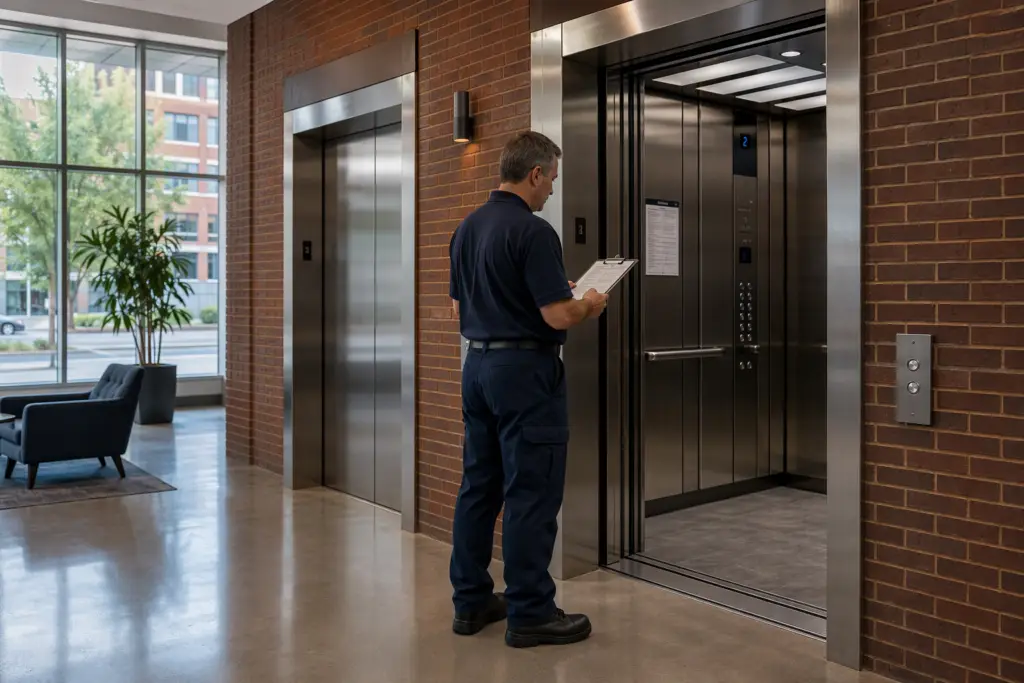
- Where is the maintenance log, and is it current? ASME A17.1 requires a maintenance log to be kept at or near the equipment room. Inspectors will review entries for completeness and frequency.
- Has the written maintenance control program been followed? The inspector may compare the log against the program to verify that all required tasks have been completed.
- When was the last Category 1 or Category 5 test performed, and is there documentation? Test certificates must be available for review.
- Are all safety devices — including governor, safeties, and buffers — within their test interval?
- Does the emergency phone work, and does it connect to a monitored location? The inspector will typically test the cab communication system.
- Is firefighters’ service (Phase I and Phase II) operational? The key switch and recall function will be tested.
- Are door reopening devices functional? The inspector will test the door edges and may probe for closing force compliance.
- Is the elevator leveling within tolerance? Particularly important for ADA compliance and resident safety at the landing threshold.
- Are there any known deficiencies or items under repair? Facilities should disclose known issues and show documentation of corrective action in progress.
—
How Can Quality Elevator Company Help Senior Living Facilities Stay Compliant?
Quality Elevator Company provides certified elevator maintenance, inspection support, and repair services to senior living and assisted living facilities across Baltimore, Washington DC, Philadelphia, and Richmond. The company’s service teams are licensed in each jurisdiction and trained on the current edition of ASME A17.1, ADA accessibility standards, and the state-specific requirements that govern each market.
Quality Elevator Company helps facilities establish and maintain written maintenance control programs, prepares documentation packages for state inspections, and assists administrators in understanding and responding to inspection findings. For multi-site senior care operators, coordinated maintenance scheduling across jurisdictions reduces administrative burden and ensures no certificate lapses go unnoticed.
—
Schedule Your Free Elevator Assessment Today
Elevator compliance in senior living is too important to leave to chance. Whether a facility is preparing for a state inspection, responding to a recent deficiency, or evaluating the condition of aging equipment, Quality Elevator Company offers a no-obligation assessment to help administrators understand where they stand and what steps are needed.
Contact Quality Elevator Company for a free elevator assessment: 301-779-9116
Need elevator service you can rely on? Quality Elevator Company is ready to help.