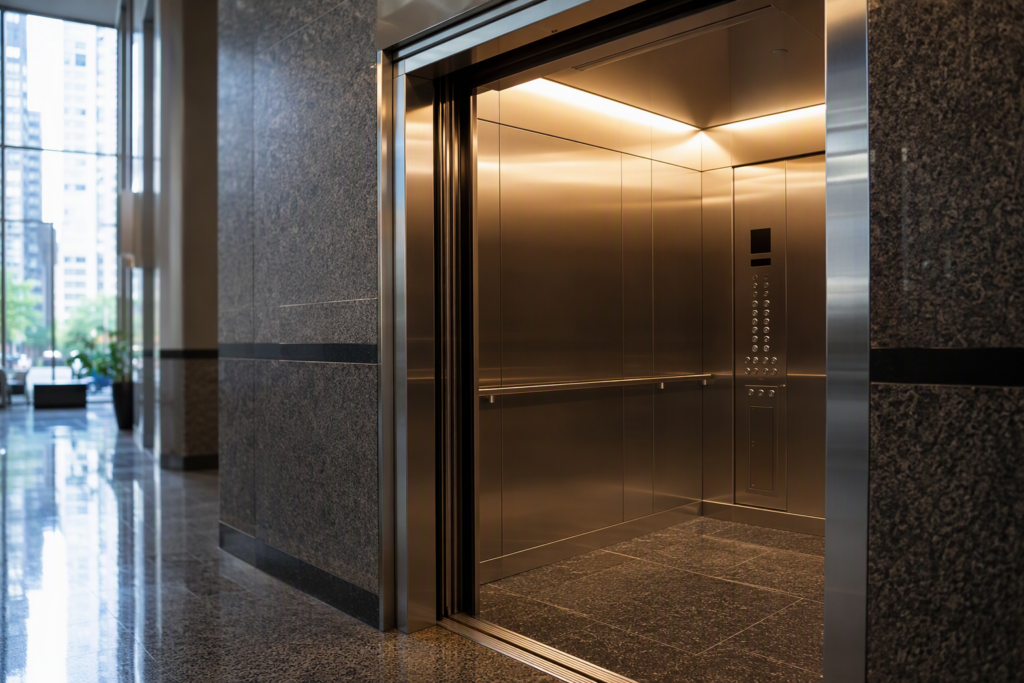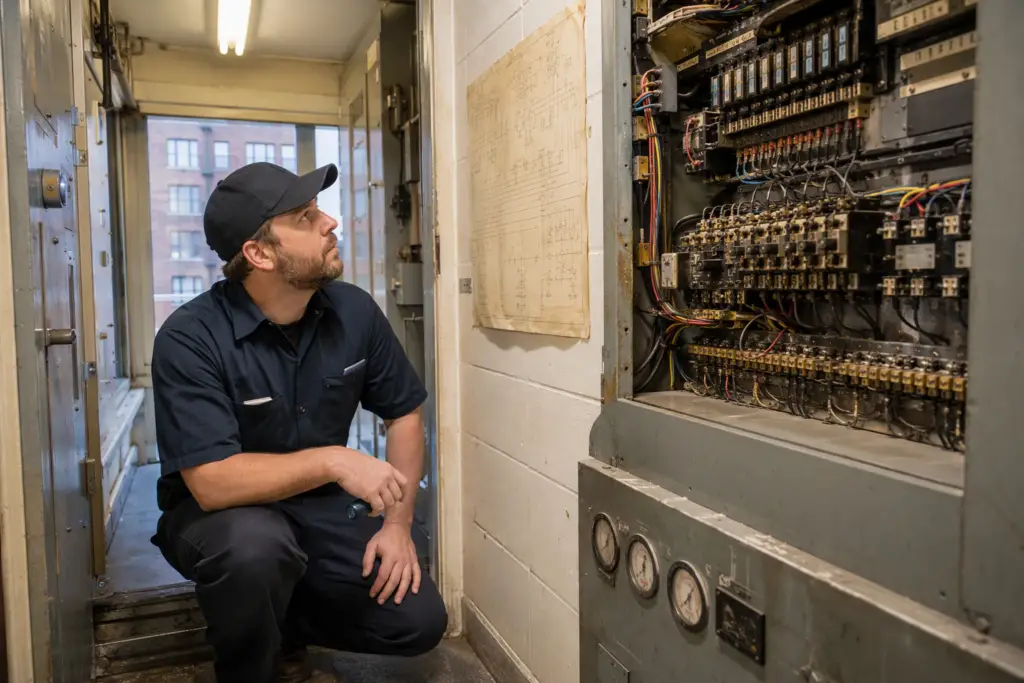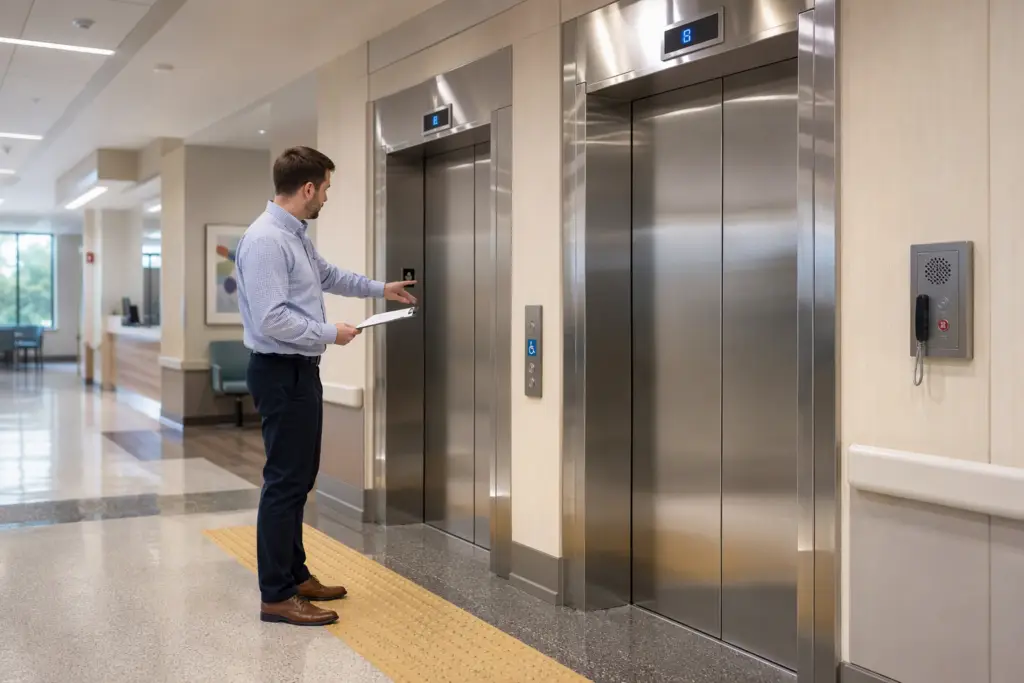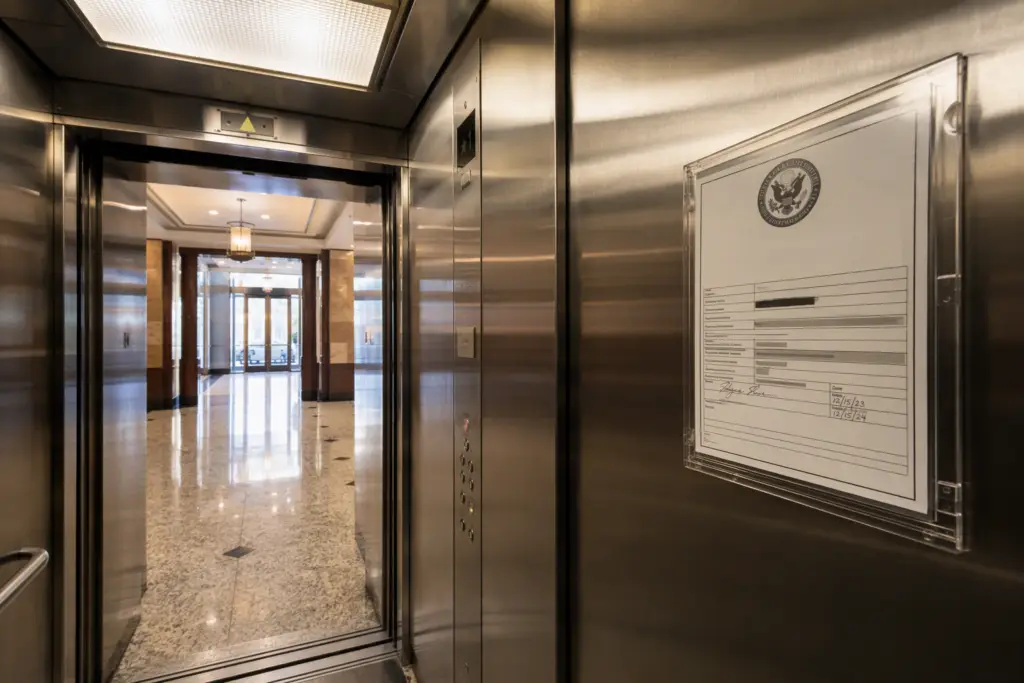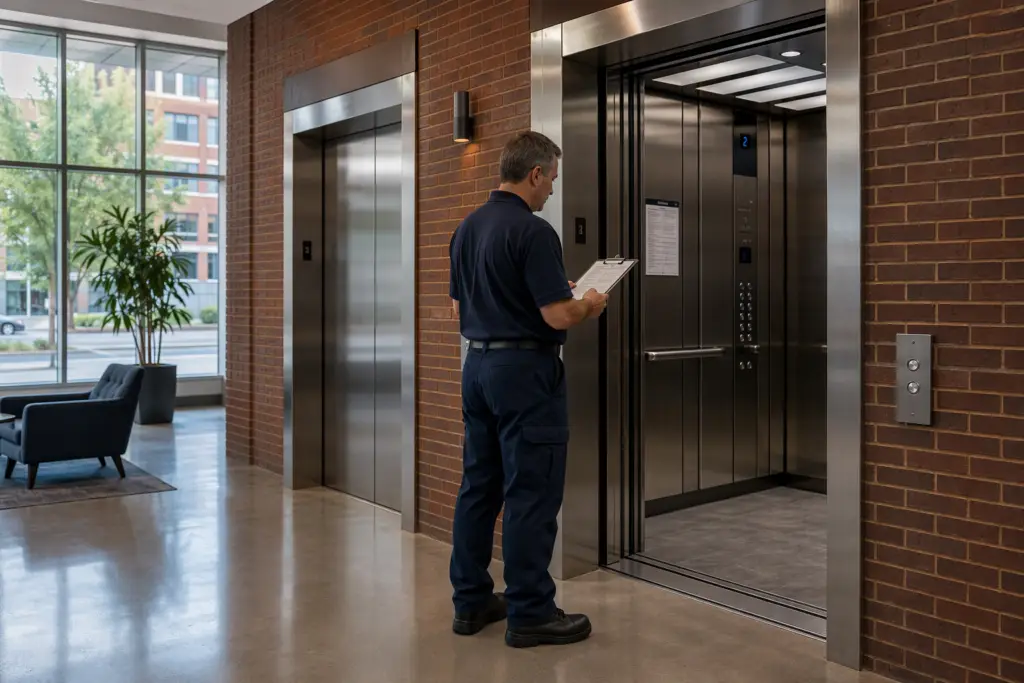
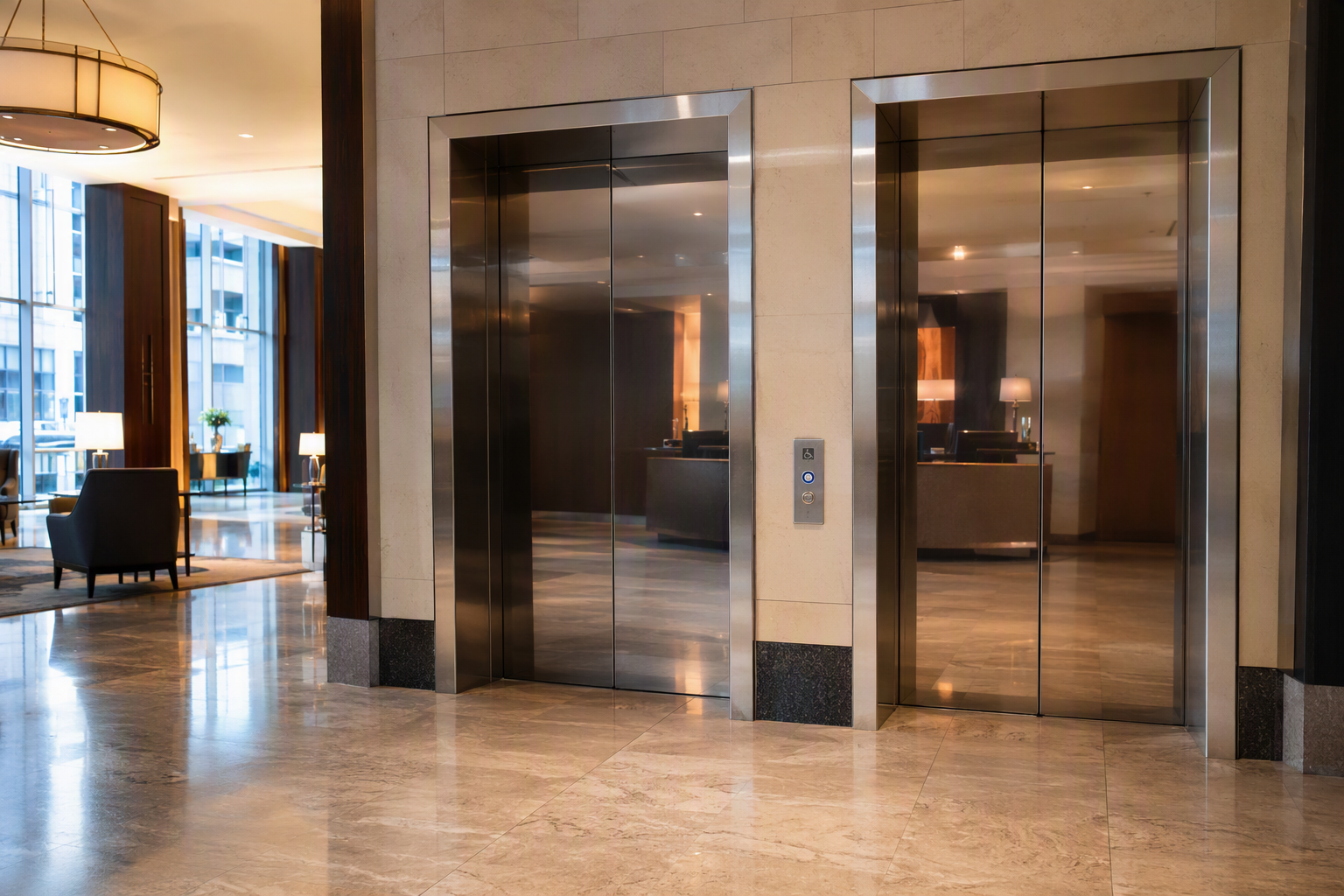
Hotels and hospitality buildings depend on elevators more intensely than almost any other building type. Guest-facing equipment runs continuously, handles high traffic volumes, and must meet both safety codes and accessibility requirements — all while remaining invisible to guests. For hotel operators across Maryland, Washington DC, Virginia, and Pennsylvania, understanding the full compliance landscape is essential to protecting guests, avoiding shutdowns, and managing liability.
Quality Elevator Company is a certified, independent elevator service provider serving hospitality properties across this four-jurisdiction region, offering maintenance programs, code compliance assessments, and modernization consulting tailored to hotel operations.
What Are the Core Federal Requirements That Apply to Hotel Elevators?
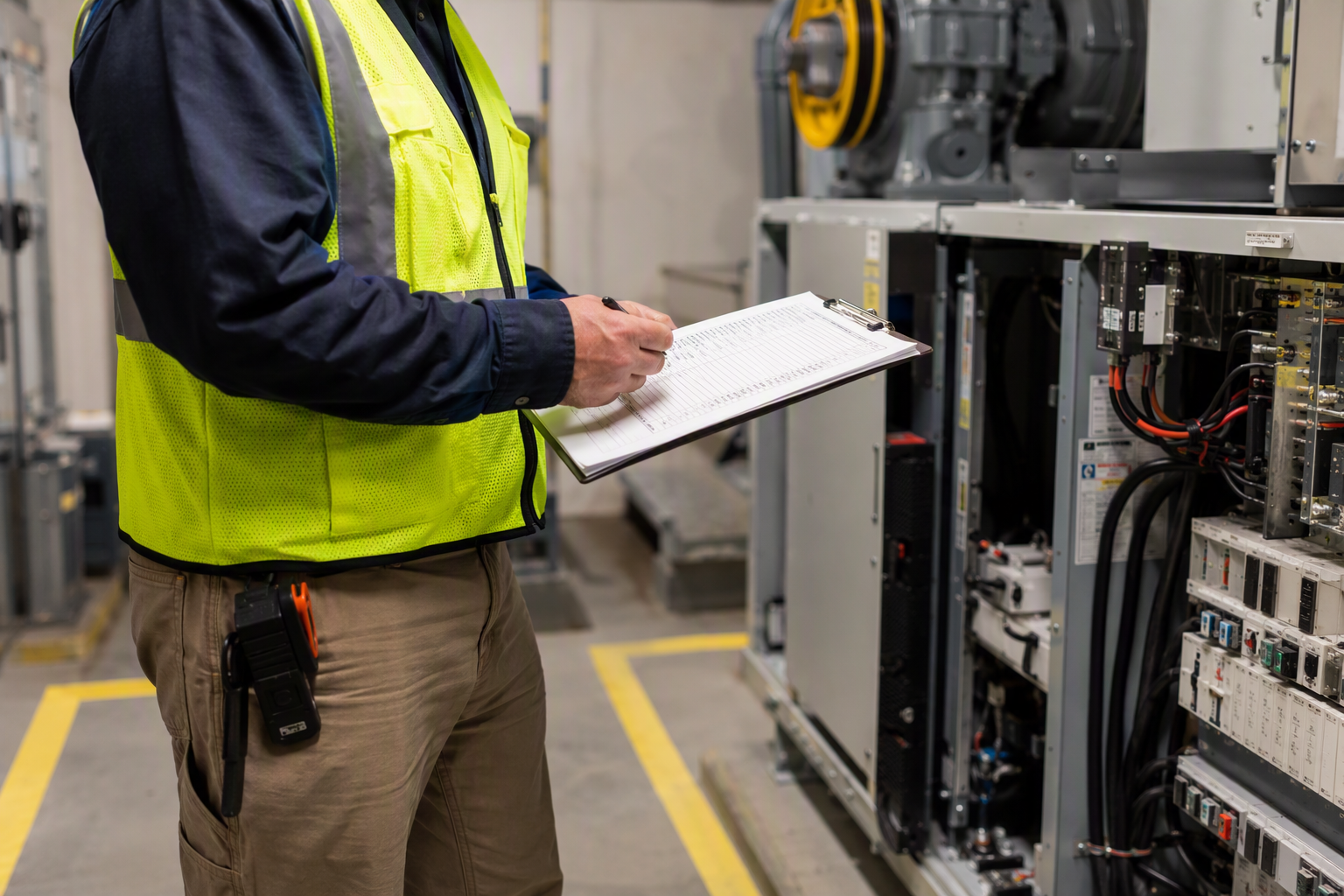
Regardless of state, all hotel elevators must meet two layers of federal standards that override or supplement local codes.
ASME A17.1 Safety Code for Elevators and Escalators
The ASME A17.1 Safety Code for Elevators and Escalators is the foundational technical standard adopted — in various editions — by all four jurisdictions covered in this guide. It governs equipment design, safety devices, inspection procedures, and testing intervals. Each state or district adopts a specific edition of ASME A17.1 by reference into its own building or labor code, which is why compliance requirements differ slightly across Maryland, DC, Virginia, and Pennsylvania.
ADA Accessibility Requirements
The Americans with Disabilities Act (ADA) requires that elevators serving multiple floors in public accommodations — including hotels — meet accessibility standards. This includes door width and timing requirements, accessible car controls, audible and visual floor indicators, and Braille signage. Hotels undergoing renovation must evaluate whether alterations trigger ADA upgrade obligations.
OSHA Workplace Safety Standards
OSHA standards apply to elevator maintenance workers and can affect how service contractors operate inside hotel properties. Hotel facilities managers should confirm that any elevator service provider follows applicable OSHA lockout/tagout and confined space protocols.
How Do Inspection Requirements Differ Across Maryland, DC, Virginia, and Pennsylvania?
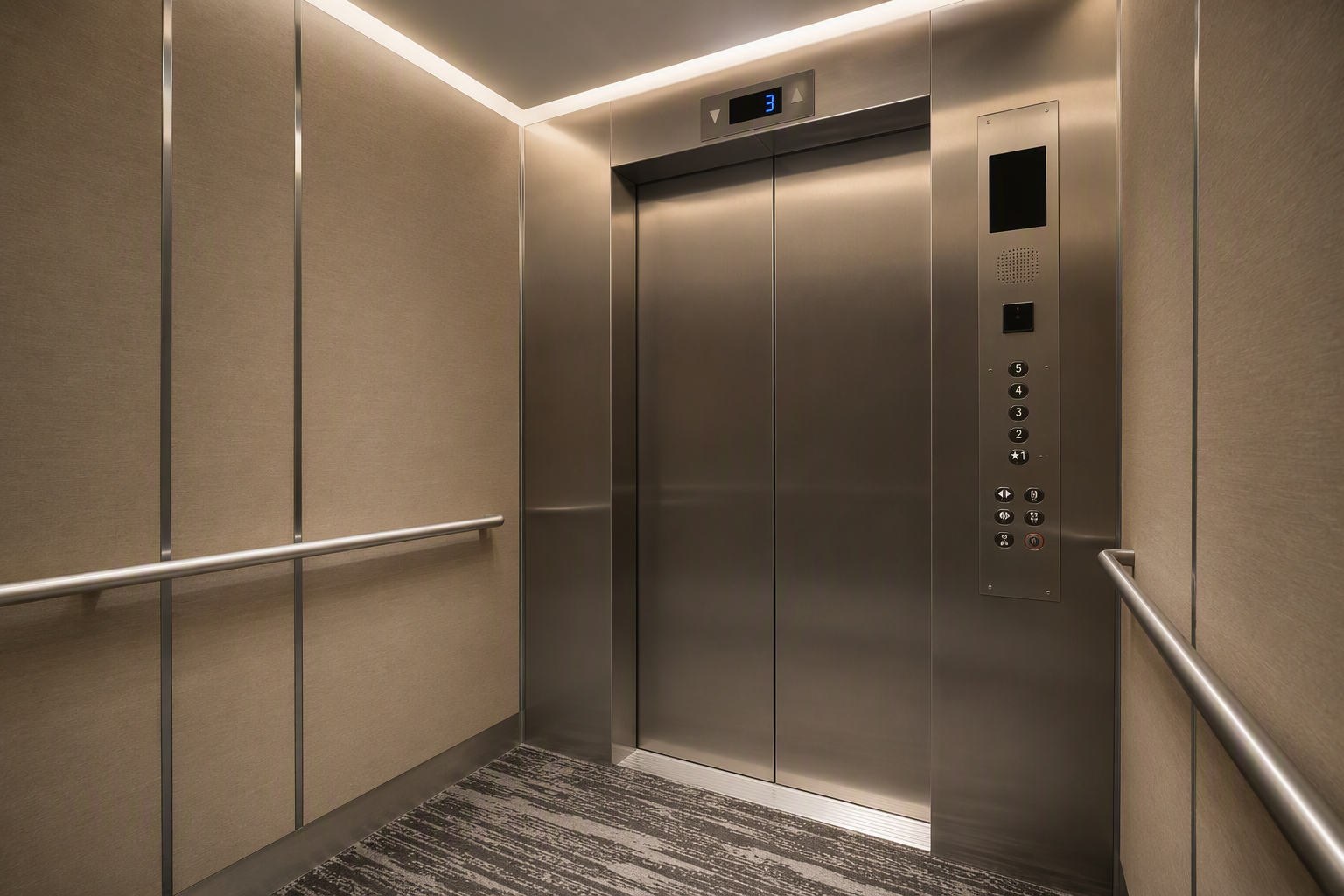
Each jurisdiction enforces elevator inspections through a distinct regulatory body and adopts its own edition of the ASME A17.1 code. The comparison below reflects the general framework — hotel operators should confirm current requirements directly with the relevant state or local authority.
| Jurisdiction | Primary Regulatory Authority | Code Basis | Inspection Frequency (General) | Permit / Certificate Required? |
|---|---|---|---|---|
| Maryland | Maryland Department of Labor — Division of Labor and Industry | ASME A17.1 (adopted edition) | Annual inspection required; periodic tests per code cycle | Yes — operating permit required |
| Washington, DC | DC Department of Consumer and Regulatory Affairs (DCRA) / DLCP | ASME A17.1 (adopted edition) | Annual inspection required | Yes — certificate of inspection required |
| Virginia | Virginia Department of Labor and Industry (DOLI) | ASME A17.1 (adopted edition) | Annual inspection; periodic tests at defined intervals | Yes — operating permit required |
| Pennsylvania | Pennsylvania Department of Labor and Industry — Bureau of Occupational and Industrial Safety | ASME A17.1 (adopted edition) | Annual inspection; some jurisdictions use third-party qualified inspectors | Yes — certificate of operation required |
Note: Individual counties and municipalities within these states may impose additional requirements. Hotel operators should verify current code editions and local amendments with the appropriate authority having jurisdiction (AHJ).
What Types of Tests and Inspections Do Hotel Elevators Require?
Beyond annual inspections, the ASME A17.1 Safety Code for Elevators and Escalators mandates several categories of periodic tests, each with its own cycle. Hotels with multiple elevators must track each unit’s test history independently.
| Test / Inspection Type | Purpose | Typical Interval (per ASME A17.1) | Who Performs? |
|---|---|---|---|
| Routine Annual Inspection | General safety and code compliance verification | Annually | Licensed or certified inspector (state authority or approved third party) |
| Periodic Safety Test | Full load, governor, and safety device testing | Every 5 years (hydraulic: varies by type) | Certified elevator mechanic + inspector |
| Category 1 Test | Safeties and buffers — without load | Annually | Certified elevator mechanic + inspector |
| Category 5 Test | Full-load, full-speed safety test (traction elevators) | Every 5 years | Certified elevator mechanic + inspector |
| Hydraulic Pressure Test | Pressure integrity of hydraulic cylinders | Varies — per applicable ASME edition | Certified elevator mechanic + inspector |
| Emergency Operation Test | Firefighter service, Phase I & Phase II operation | Annually (part of standard inspection) | Inspector in coordination with service technician |
| Accessibility Check (ADA) | Door timing, controls, signage, audible indicators | Best practice: annually or after any modification | Qualified elevator contractor or accessibility consultant |
What Should Hotels Do Immediately After an Elevator Fails Inspection?
- Take the elevator out of service immediately. Operating an elevator after a failed inspection can expose the hotel to significant legal and regulatory liability. Post an “Out of Service” notice and restrict access.
- Notify the authority having jurisdiction (AHJ). Contact the relevant state or local elevator regulatory office to report the failed inspection and confirm required next steps for that jurisdiction.
- Contact a licensed elevator service contractor. Engage a qualified provider — such as Quality Elevator Company — to assess the deficiency identified in the inspection report and provide a corrective action plan.
- Obtain a written repair scope and timeline. Document what work is required, who will perform it, and the projected completion date for regulatory and insurance records.
- Complete all required repairs. Ensure repairs are performed by a licensed elevator mechanic using code-compliant parts and methods.
- Schedule a re-inspection. Coordinate with the AHJ or approved third-party inspector to schedule a follow-up inspection to obtain clearance for return to service.
- Update maintenance and compliance records. File all inspection reports, repair documentation, and new certificates with the property’s maintenance records system.
- Communicate with guests and staff. Provide clear signage and, for extended outages, communicate with guests about alternative access — particularly important for ADA compliance.
How Do Maintenance Programs Compare for Hotel Elevators?
Hotels typically choose between three maintenance models. The right choice depends on the number of elevators, equipment age, and the hotel’s risk tolerance.
| Maintenance Model | Description | Best For | Pros | Cons |
|---|---|---|---|---|
| Full Maintenance / Comprehensive Contract | All parts, labor, and callbacks included; contractor manages all repairs and inspections | High-traffic hotels with older equipment or multiple units | Predictable costs; contractor owns compliance risk; fastest response for breakdowns | Higher monthly cost; less transparency on actual parts/labor usage |
| Examination / Lubrication Contract | Scheduled visits for inspection and lubrication only; repairs billed separately | Newer equipment under manufacturer warranty; smaller properties | Lower baseline cost; hotel pays only for actual repairs needed | Unpredictable repair costs; hotel bears more compliance coordination burden |
| In-House with Independent Service Provider | Hotel employs or contracts elevator staff; independent company provides oversight and specialized work | Large hotel portfolios or resorts with dedicated facilities teams | Maximum control; cost-effective at scale; vendor neutrality | Requires skilled in-house staff; compliance tracking complexity increases |
Quality Elevator Company offers independent maintenance programs across all three models, with no manufacturer affiliation — allowing hotel operators to compare options and select coverage that aligns with their equipment and budget without being locked into OEM contracts.
What ADA Accessibility Requirements Apply Specifically to Hotel Elevators?
Under the ADA and the ADA Standards for Accessible Design, elevators in hotels serving public accommodations must meet specific requirements that go beyond basic safety codes. Key requirements include:
- Door clear width: Elevator doors must provide a minimum clear opening width to accommodate wheelchair users, as specified in the ADA Standards.
- Door timing: Doors must remain open long enough for people with disabilities to enter and exit — with reopening devices required.
- Car controls: Floor buttons must be within reach ranges defined by the ADA, with raised characters and Braille.
- Visual and audible signals: Cars must provide floor indicators that are both audible (announcing floor) and visible.
- Two-way emergency communication: Emergency intercoms must be usable by people with hearing or speech disabilities.
- Renovation trigger: When hotels undertake renovations affecting paths of travel, ADA compliance upgrades to elevators in those areas may be legally required.
What Are the Consequences of Non-Compliance for Hotel Operators?
Failing to maintain code-compliant elevators carries consequences that extend well beyond regulatory fines. Hotel operators should understand the full risk spectrum:
- Operating permit revocation: Regulatory authorities can order elevators taken out of service, disrupting hotel operations and guest experience.
- ADA complaints and litigation: Accessibility failures can result in ADA complaints filed with the Department of Justice or private civil actions.
- Liability for guest injury: An elevator-related guest injury on equipment with a lapsed inspection creates significant tort exposure.
- Insurance implications: Some property insurers require proof of current inspection certificates; lapses can affect coverage or claims.
- Brand and reputation damage: Elevator outages and guest incidents are frequently reported in online hotel reviews, directly affecting bookings.
How Often Should Hotel Elevators Be Maintained Beyond Required Inspections?
Regulatory inspections establish the minimum floor for safety — not the optimal maintenance standard for high-traffic hospitality equipment. Industry best practice for hotel elevators generally calls for:
- Monthly maintenance visits for high-traffic properties, including lubrication, adjustment, and safety device checks.
- Quarterly detailed assessments covering rope and hydraulic fluid condition, door operator performance, and control system diagnostics.
- Annual comprehensive review aligned with the regulatory inspection to identify emerging issues before they become code violations or service interruptions.
- Modernization evaluation for equipment beyond a certain age threshold, as aging components may no longer meet current ASME A17.1 standards and replacement parts availability declines.
The appropriate interval depends on the number of floors served, daily starts (trips), equipment age, and the specific ASME code edition in force in each jurisdiction. Quality Elevator Company works with hotel facilities teams to develop maintenance schedules calibrated to actual equipment usage — not one-size-fits-all contract language.
When Should a Hotel Consider Elevator Modernization Instead of Ongoing Maintenance?
Older elevator systems reach a crossover point where continued maintenance costs exceed the value delivered, and where aging equipment may no longer meet current code or ADA requirements. Key signals that modernization deserves evaluation include:
- Recurring service interruptions affecting guest experience
- Difficulty sourcing replacement parts for obsolete control systems or drive equipment
- Code violations or deficiencies identified in inspection reports that require capital investment to resolve
- ADA non-compliance that cannot be remediated through minor modifications
- Energy consumption that modernization could meaningfully reduce
- Upcoming major periodic tests (Category 5) where test costs approach modernization economics
| Factor | Continue Maintenance | Modernize |
|---|---|---|
| Equipment Age | Relatively recent; parts available | Aging; parts scarce or discontinued |
| Inspection Record | Clean or minor deficiencies | Repeated violations or major deficiencies |
| Guest Impact | Minimal downtime | Frequent outages affecting guest satisfaction |
| ADA Status | Compliant or easily remediated | Non-compliant; structural limitations |
| Code Status | Meets current adopted edition | Grandfathered but requires upgrades on alteration |
| Timeline to Decision | Defer; monitor | Plan and budget within 12–24 months |
Why Should Hotels Choose an Independent Elevator Service Provider?
Many hotel operators default to manufacturer-affiliated service companies after new elevator installation. However, independent certified providers offer meaningful advantages for hospitality properties:
- Manufacturer neutrality: Independent contractors can service multiple brands and recommend solutions based on merit, not manufacturer relationships.
- Competitive pricing: Without OEM overhead structures, independent providers can offer more competitive maintenance contract terms.
- Local regulatory knowledge: Providers operating across Maryland, DC, Virginia, and Pennsylvania develop deep familiarity with each jurisdiction’s specific AHJ requirements, inspection processes, and enforcement practices.
- Objective modernization guidance: An independent provider has no incentive to recommend a specific manufacturer’s new equipment — guidance is based on the hotel’s actual needs.
Quality Elevator Company is a certified independent elevator service provider operating across the Maryland, Washington DC, Virginia, and Pennsylvania region. The company serves hospitality properties ranging from boutique hotels to large full-service properties, providing maintenance programs, compliance assessments, and modernization consulting without manufacturer affiliation.
What Records Should Hotels Maintain for Elevator Compliance?
Regulatory authorities in all four jurisdictions require that certain records be available on-site or on demand. Best-practice hotel facilities management includes maintaining:
- Current operating permit or certificate of inspection (posted or available per jurisdiction requirements)
- Complete inspection history with dates, inspector credentials, and findings for each elevator unit
- Records of all periodic tests (Category 1, Category 5, hydraulic tests) with test reports
- Maintenance logs documenting each service visit, work performed, and parts replaced
- Records of any repairs or modifications, including permits obtained
- ADA compliance documentation, including any variance or modification history
- Emergency callback and incident logs
- Current maintenance contract documentation
How Should Hotels Evaluate and Select an Elevator Maintenance Contractor?
Selecting the right service partner is a risk management decision as much as a procurement one. Hotel operators evaluating elevator contractors should assess:
- Licensing and certification: Verify that the contractor and its mechanics hold applicable state licenses for each jurisdiction where the hotel operates.
- Insurance: Confirm appropriate general liability and workers’ compensation coverage — request certificates of insurance naming the hotel as an additional insured.
- Code familiarity: The contractor should demonstrate current knowledge of the specific ASME A17.1 edition adopted in each jurisdiction and any local amendments.
- Contract transparency: Review maintenance contracts carefully for exclusions, parts markup provisions, and callback response commitments.
- Inspection coordination experience: The contractor should be familiar with coordinating third-party inspections and obtaining permits in the relevant jurisdiction.
- References from similar properties: Request references from other hotel or hospitality clients in the same region.
Get a Free Elevator Compliance Assessment for Your Hotel
Hotel and hospitality elevator compliance across Maryland, Washington DC, Virginia, and Pennsylvania requires navigating overlapping federal standards, state-specific code adoptions, and ADA obligations — all while keeping elevators running reliably for guests around the clock.
Quality Elevator Company provides independent, certified elevator maintenance, compliance assessments, and modernization consulting for hospitality properties throughout the region. As an independent service provider, Quality Elevator Company offers objective guidance without manufacturer bias — helping hotel operators make informed decisions about maintenance programs, inspection readiness, and capital planning.
Contact Quality Elevator Company for a free elevator assessment: 301-779-9116
Need elevator service you can rely on? Quality Elevator Company is ready to help.