Independent Elevator Service vs OEM: Comparison & Decision Guide
Quick Answer: Independent elevator service providers typically offer more flexible contracts, competitive pricing, and vendor-neutral parts sourcing, while OEM (Original Equipment Manufacturer) service locks you into proprietary systems and often higher costs — the right choice depends on your equipment age, budget, contract flexibility needs, and whether your building requires multi-brand support.

Choosing between an independent elevator service company and an OEM service contract is one of the most consequential maintenance decisions a building owner or facilities manager will make. Both paths carry distinct advantages and trade-offs across cost structure, parts access, compliance coverage, and long-term flexibility. This guide breaks down every key dimension so you can make a fully informed decision.
What Is the Core Difference Between Independent Elevator Service and OEM Service?
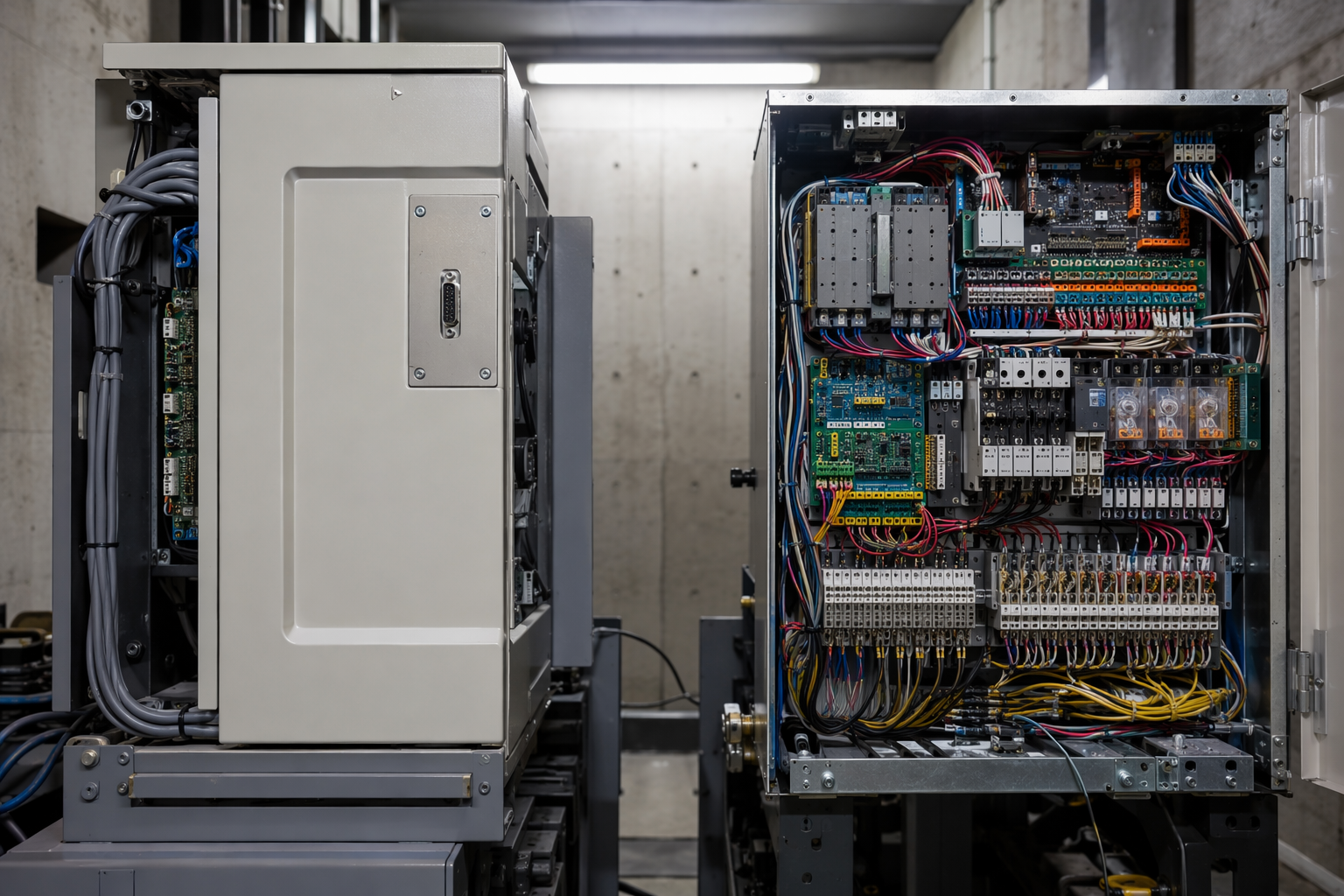
An OEM (Original Equipment Manufacturer) service contract means the company that built your elevator — Otis, KONE, Schindler, ThyssenKrupp, Mitsubishi, or another brand — also maintains it. Their technicians are factory-trained on that specific product line and have direct access to proprietary diagnostic software, firmware updates, and branded replacement parts.
An independent elevator service company is a third-party maintenance provider that services elevators across multiple manufacturers and brands. Independent providers are not tied to any single OEM, which allows them to source parts from multiple suppliers, offer customized service agreements, and often compete more aggressively on price and responsiveness.
Both types of providers must comply with the same safety standards. In the United States, elevator maintenance and inspection requirements are governed by the ASME A17.1 Safety Code for Elevators and Escalators, which applies equally to OEM and independent contractors. Accessibility obligations under the Americans with Disabilities Act (ADA) also apply regardless of who performs the work.
How Do Costs Compare Between Independent Service and OEM Contracts?
| Cost Factor | Independent Service | OEM Service |
|---|---|---|
| Monthly Maintenance Contract | Generally competitive; negotiable based on scope | Often higher; tied to proprietary labor and parts markups |
| Parts Pricing | Can source from multiple suppliers; more price competition | Proprietary parts sourced exclusively from OEM; limited price competition |
| Emergency Callback Fees | Varies by contract; often negotiable | Varies; may include premium rates for after-hours calls |
| Contract Escalation Clauses | Typically more flexible; shorter lock-in periods available | Often include annual escalation clauses; longer initial terms |
| Modernization & Upgrades | Can spec and source best-value components across brands | Upgrades often tied to proprietary systems; limited cross-brand options |
| Multi-Unit Building Discounts | Commonly available; bundled service across brands | Discounts typically apply only to same-brand units |
Cost is rarely the only factor, but it is consistently a top driver in service provider decisions. Because independent companies are not bound to a single parts catalog, they can often pass savings along to building owners. However, for newer elevators still within their OEM warranty period, using an independent service provider may affect warranty terms — a critical detail to verify before switching providers.
What Are the Pros and Cons of Each Option?
| Pros | Cons |
|---|---|
| Vendor-neutral parts sourcing across multiple suppliers | May lack access to proprietary OEM diagnostic software for newer units |
| More flexible contract terms and shorter commitment periods | Technician training breadth varies by company quality |
| Competitive pricing due to open-market parts access | May not have factory-level firmware update access for proprietary controllers |
| Capable of servicing multiple elevator brands in one building | Using an independent provider on a new unit may affect OEM warranty |
| Local presence often translates to faster, more personalized service | Quality varies widely — vetting the provider is essential |
| Typically more transparent contract language | Smaller independent companies may have more limited parts inventory on hand |
| Pros | Cons |
|---|---|
| Factory-trained technicians on that specific equipment | Contracts often include long lock-in periods with steep exit penalties |
| Direct access to proprietary diagnostic tools and firmware | Higher overall cost due to proprietary parts and labor monopoly on that brand |
| Maintains OEM warranty on newer equipment | Less incentive to negotiate — building owner has limited leverage |
| Consistent parts quality from original manufacturer | May not service other brands in the same facility |
| Established brand accountability and documented service history | National service structure can mean less local responsiveness |
| Access to manufacturer-issued technical service bulletins | Annual contract escalation clauses can significantly increase costs over time |
How Does Compliance Work for Independent vs OEM Elevator Service?
A common misconception is that only OEM service providers can ensure code compliance. This is not accurate. Both independent and OEM service companies must adhere to the same regulatory framework.
The ASME A17.1 Safety Code for Elevators and Escalators sets the baseline for design, installation, maintenance, inspection, testing, and emergency operations in the United States. State and local jurisdictions adopt versions of this code and establish their own inspection and permit requirements. Compliance is the responsibility of the service contractor — OEM or independent — and is verified through third-party inspections, not by the brand of service provider.
Additionally, elevator cab accessibility features must meet ADA standards, and any work performed by technicians in a maintenance environment may be subject to OSHA workplace safety standards. These requirements apply uniformly across service provider types.
When evaluating any independent elevator service company, building owners should confirm that the provider’s technicians hold the required state and local licenses, and that the company has documented processes for managing inspection records and violation corrections.
What Should You Do When Evaluating a Switch From OEM to Independent Service?
- Review your current OEM contract — Identify termination clauses, penalty provisions, and notice periods before making any decisions.
- Check your equipment warranty status — If your elevator is still under the OEM’s original installation warranty, confirm whether independent servicing voids any coverage.
- Request a full equipment audit — Ask the independent provider to assess your current elevator’s condition, parts availability, and modernization needs before signing any new agreement.
- Verify licensure and insurance — Confirm that the independent company holds all required state and local elevator contractor licenses and carries adequate liability and workers’ compensation insurance.
- Compare contract terms side-by-side — Review scope of work, included versus excluded repairs, emergency callback provisions, and escalation clauses in both contracts.
- Request references from similar building types — Ask for references from buildings with comparable elevator brands, usage levels, and complexity.
- Confirm parts sourcing capability — Ensure the independent provider can source parts for your specific equipment make and model, including any proprietary components.
- Establish a transition service record — Request a full service history handoff from your OEM provider and confirm the independent company will maintain complete documentation going forward.
Which Building Types Benefit Most From Independent Elevator Service?
Independent elevator service is particularly well-suited to several building profiles:
- Mixed-brand buildings — Properties with elevators from multiple manufacturers benefit significantly from a single independent provider who can service all units under one contract.
- Mid-size commercial and residential buildings — Owners who want more negotiating leverage on pricing and contract terms often find independent providers more responsive to their needs than large OEM service divisions.
- Older equipment past warranty — Once an elevator is out of its original OEM warranty period, the primary rationale for staying with the OEM service division diminishes considerably.
- Budget-conscious property management portfolios — Portfolio managers overseeing multiple properties can often structure more favorable multi-property agreements with independent companies.
- Buildings seeking modernization — Independent providers can recommend and source modernization components from across the market, rather than being limited to a single manufacturer’s upgrade path.
When Does an OEM Service Contract Make the Most Sense?
OEM service remains the stronger choice in specific circumstances:
- Brand-new equipment within the warranty period — Maintaining OEM service during the warranty window protects coverage and ensures the manufacturer is responsible for defects.
- Highly proprietary controller systems — Some newer elevator models use software-locked controllers where only the OEM has diagnostic access. In these cases, independent service capability may be limited until the technology matures or reverse-engineering options develop.
- Large installations with single-brand uniformity — A high-rise with 20 identical elevators from one manufacturer may receive strong service consistency and volume pricing from that OEM’s commercial service division.
- Buildings without qualified independent alternatives nearby — In some geographic markets, qualified independent providers with the right expertise may be limited. In those cases, OEM service may be the only practical option.
How Do Service Response and Local Coverage Compare?
Response capability is not inherently tied to whether a provider is an OEM or independent company — it depends on the provider’s geographic coverage model and staffing structure. Large OEM service divisions operate regional service centers that cover broad territories, while independent companies often operate with a more concentrated local focus.
For building owners, local presence matters particularly for emergency entrapment situations. Elevator entrapments require rapid response to ensure passenger safety. Under the ASME A17.1 Safety Code for Elevators and Escalators, there are requirements related to two-way communication systems and emergency operations — service providers of any type must be able to respond to these situations in compliance with applicable local authority requirements.
When comparing providers, ask specifically about their coverage area, how callbacks are dispatched, and whether the technicians who perform regular maintenance are also the ones who respond to emergency calls.
What Questions Should You Ask Any Elevator Service Provider Before Signing a Contract?
- What elevator brands and models does your team regularly service?
- How are emergency callbacks handled, and what are the contract terms for after-hours service?
- What is included in the preventive maintenance scope, and what falls under additional charges?
- How do you document service visits, inspections, and violation corrections?
- How are parts sourced, and what is the typical lead time for non-stock components?
- What are the contract termination terms and notice requirements?
- Does the contract include provisions for regulatory inspection coordination?
- Can you provide references from buildings with comparable elevator types to mine?
How Do Contract Structures Differ Between Independent and OEM Providers?
| Contract Element | Independent Service | OEM Service |
|---|---|---|
| Typical Contract Length | Often 1–3 year terms with renewal options | Commonly 3–5 year initial terms |
| Annual Price Escalation | Often negotiable or capped | Frequently includes automatic annual escalation tied to labor indices |
| Early Termination Penalties | Varies; often more negotiable | Can be significant; often includes remaining contract balance provisions |
| Scope of Included Work | Customizable to building needs | Standardized tiers; customization more limited |
| Parts Coverage | Depends on contract tier; often negotiable | Tiered coverage; proprietary parts may carry higher included costs |
| Inspection Coordination | Typically included in full-service agreements | Typically included; may vary by market |
Is Independent Elevator Service Suitable for High-Rise or High-Traffic Buildings?
Yes, with important qualifications. Independent elevator service companies can and do maintain elevators in high-rise commercial buildings, hospitals, hotels, and other high-traffic facilities. The key factors are the technical capability of the specific independent provider, their parts inventory depth, their technician specialization in high-rise systems (hydraulic vs. traction vs. machine-room-less), and their ability to meet the service frequency demands of high-usage equipment.
High-rise buildings often involve more complex traction elevator systems, and building owners should verify that any independent provider they consider has documented experience with those system types, including familiarity with applicable requirements under the ASME A17.1 Safety Code for Elevators and Escalators and the local jurisdiction’s adopted code edition.
Why Do Many Building Owners Choose Quality Elevator Company for Independent Elevator Service?
Quality Elevator Company is a certified independent elevator service provider that works with building owners across a wide range of property types. As an independent provider, Quality Elevator Company is not tied to any single manufacturer, which means clients benefit from vendor-neutral parts sourcing, flexible contract structures, and service that is designed around the building’s needs rather than around a manufacturer’s sales model.
Quality Elevator Company operates with a full understanding of the compliance landscape, including the requirements set forth in the ASME A17.1 Safety Code for Elevators and Escalators, ADA accessibility standards, and applicable OSHA workplace safety regulations. Every service agreement is structured to support ongoing code compliance, thorough documentation, and transparent communication with building ownership and management.
For building owners who are evaluating their current OEM contract, considering a switch to independent service, or managing a portfolio with multiple elevator brands, Quality Elevator Company offers a free elevator assessment to help identify the right service approach for each property.
Summary: Decision Framework at a Glance
| Your Situation | Recommended Direction |
|---|---|
| New elevator still under OEM warranty | OEM service to protect warranty coverage |
| Equipment out of warranty; budget flexibility is a priority | Independent service for competitive pricing and flexibility |
| Building has multiple elevator brands | Independent service for consolidated coverage |
| Highly proprietary software-locked controller on a new unit | OEM service until independent diagnostic access is established |
| Seeking shorter contract terms and more negotiating leverage | Independent service |
| High-volume single-brand installation with uniform equipment | Evaluate both; OEM volume pricing may be competitive |
| Planning modernization or upgrades across multiple units | Independent service for cross-brand sourcing flexibility |
Ready to Evaluate Your Elevator Service Options?
Contact Quality Elevator Company for a free elevator assessment. An independent evaluation of your equipment, contract, and compliance status can help you make the best decision for your building — with no obligation.
📞 Call us today: 301-779-9116
Quality Elevator Company — Certified independent elevator service you can count on.
Need elevator service you can rely on? Quality Elevator Company is ready to help.