Elevator Service in Baltimore, MD | Quality Elevator Company
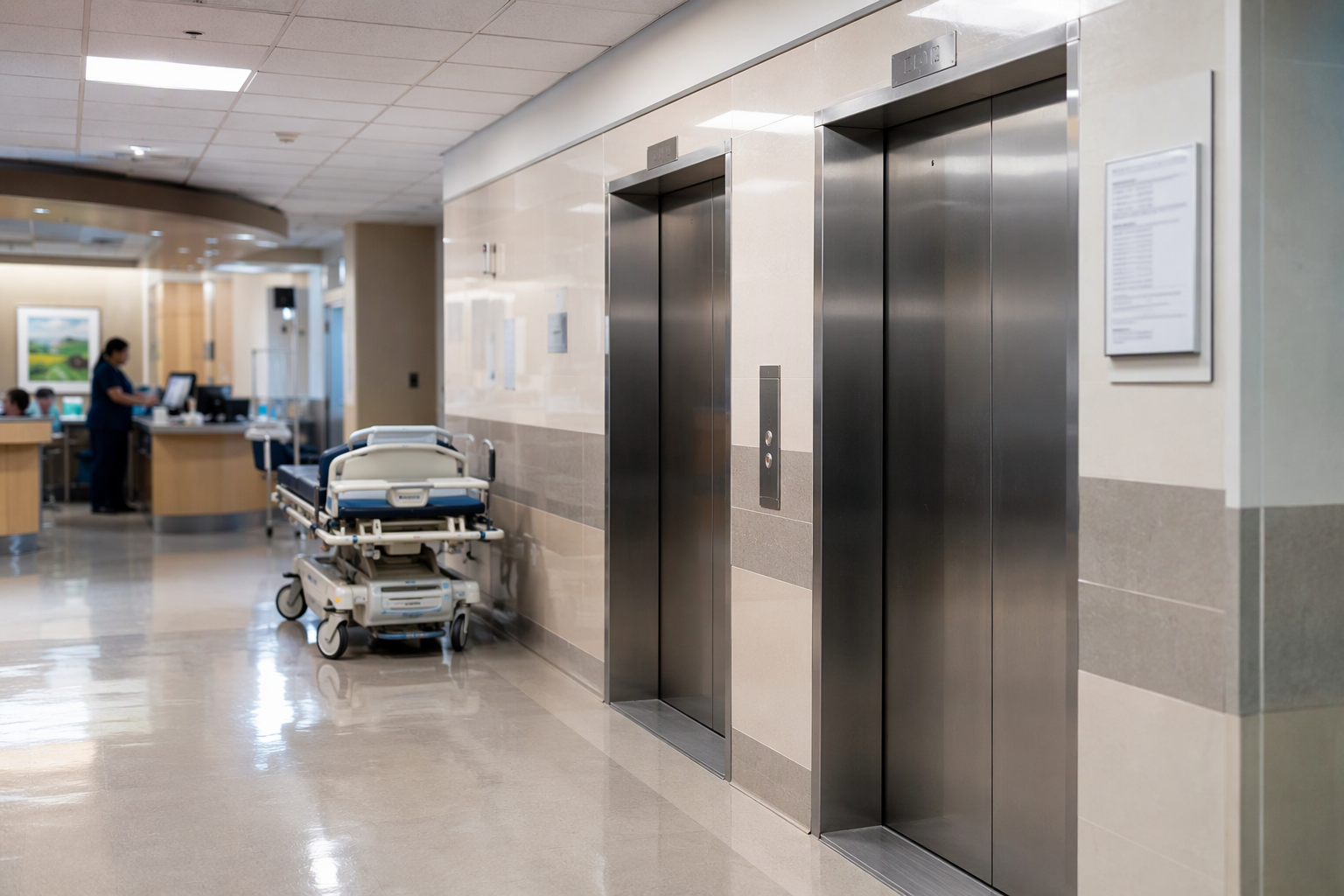
Hospitals and healthcare facilities in Baltimore, MD face some of the most demanding elevator compliance obligations of any building type. Patients in gurneys, staff transporting equipment, and visitors moving between floors all depend on reliable, code-compliant vertical transportation every hour of every day. Quality Elevator Company provides licensed elevator maintenance, inspection support, and repair services designed to help Baltimore-area healthcare facilities meet Maryland’s regulatory requirements and keep elevators in continuous, safe operation.
What are the elevator inspection requirements for a hospital or healthcare facility in Maryland?
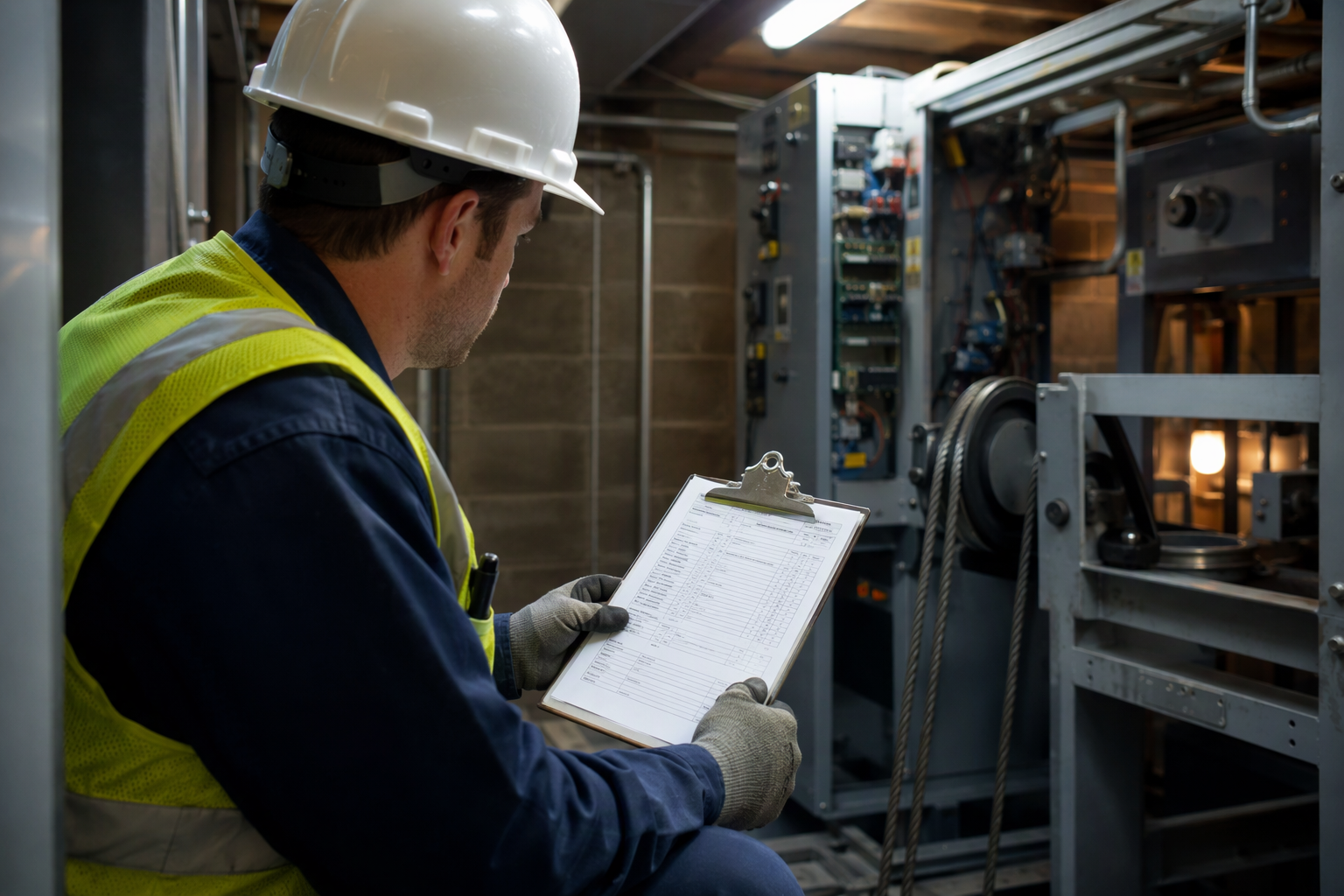
Under the Maryland Department of Labor, Division of Labor and Industry, Elevator and Escalator Safety program, every elevator unit in Maryland—including those in hospitals and healthcare facilities—must receive a periodic annual inspection by a State inspector or a third-party qualified elevator inspector. The owner is responsible for hiring that third-party inspector to conduct the periodic inspections required by the Safety Code.
In addition to the annual periodic inspection, owners must ensure that elevators suspended by wire ropes, belts, chains, or similar means, and rack-and-pinion elevators, receive a comprehensive five-year inspection. All tests performed for a required inspection must be carried out by a licensed elevator mechanic, and when a third-party qualified elevator inspector is required to witness a test, that inspector must be physically present for the entire test.
These requirements stem from the Annotated Code of Maryland, Public Safety Article, Title 12, Subtitle 8 (§§ 12-801 to 12-842), and are implemented through COMAR 09.12.81 (Elevator, Escalator, and Chairlift Safety). Maryland adopted the ASME A17.1/CSA B44, 2022 edition with Maryland changes, effective June 17, 2026, with the applicable edition determined by when the installation contract was signed.
What certificate is required to operate a hospital elevator in Maryland?
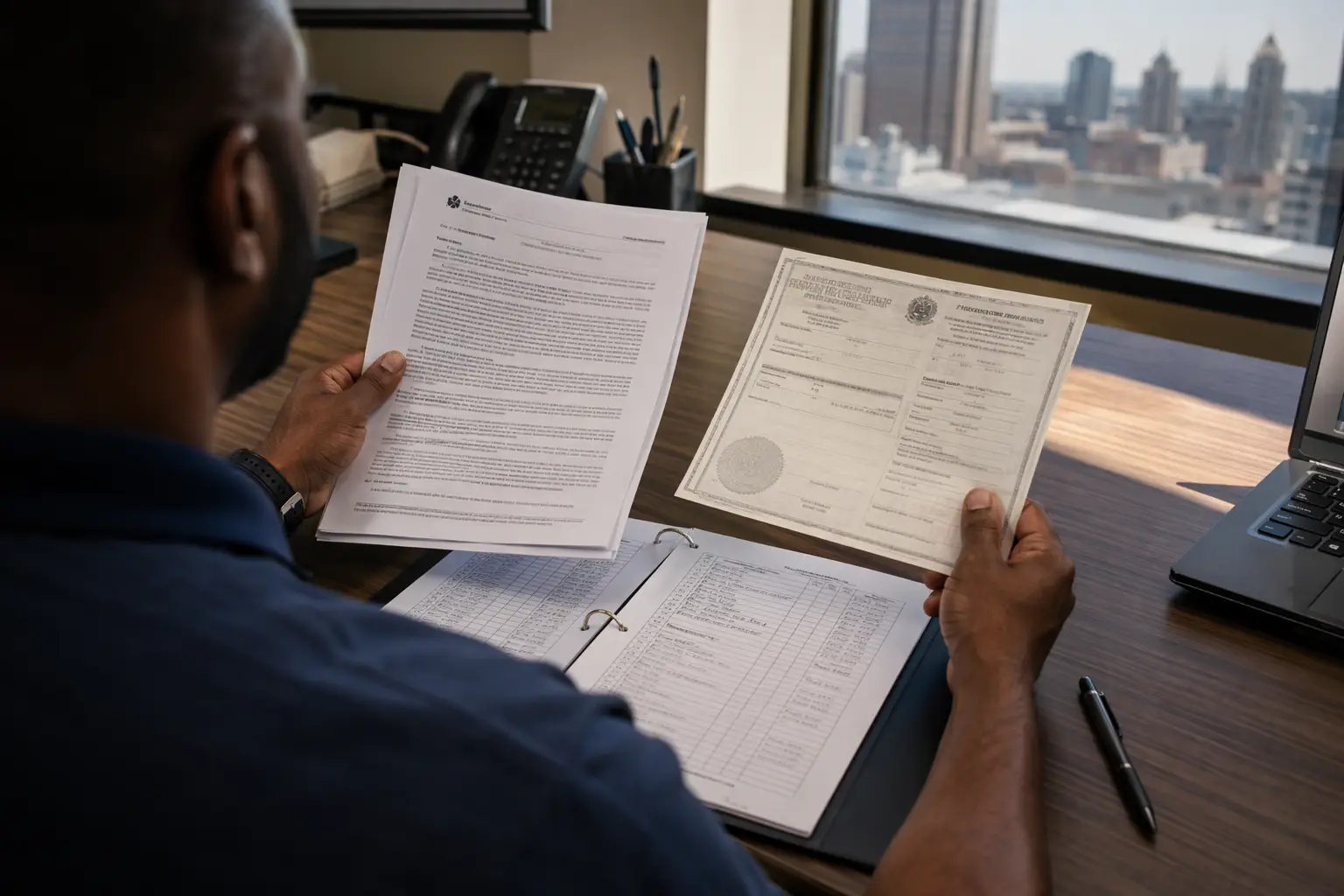
An elevator unit in Maryland may not be operated unless the Commissioner of Labor and Industry has issued a certificate for it. This applies to every elevator in a hospital or healthcare facility without exception. The certificate must be posted conspicuously in or on the elevator unit so that patients, staff, and inspectors can confirm it at any time.
Owners must register each elevator unit with the Commissioner at least 60 days before its planned completion and before it is placed in service. Annual re-registration is required at the time of the periodic annual inspection. The State conducts a final acceptance inspection after an elevator unit is installed, modified, or altered, and before it is placed in service—ensuring no new or modernized healthcare elevator enters operation without State review.
Who is licensed to maintain and repair hospital elevators in Maryland?
Maryland law requires that any person working on elevator units hold a license from the Maryland Elevator Safety Review Board, which operates within the Maryland Department of Labor. A business engaging in the installation, alteration, maintenance, repair, or servicing of elevator units must be licensed as an elevator contractor by the Board. Elevator contractors must carry at least $1,000,000 in general liability insurance and at least $500,000 in property damage insurance.
Quality Elevator Company operates as a licensed elevator contractor serving Baltimore and the surrounding Maryland region, meeting the Board’s licensing and insurance requirements. For healthcare facility managers, working with a Board-licensed contractor is not optional—it is a legal requirement under Maryland law.
Where must elevator maintenance and inspection records be kept in a Maryland healthcare facility?
Maryland regulations require that maintenance, repair, test, and inspection records be kept at a readily accessible central location in the building where the elevator is located. For a hospital or healthcare facility, this typically means a designated facilities management office or engineering room on-site. During any State or third-party inspection, these records must be available for review.
Keeping organized, up-to-date records is a practical compliance priority. Quality Elevator Company supports healthcare clients in maintaining complete documentation packages that satisfy the Maryland Department of Labor’s requirements and facilitate smooth annual re-registration.
What happens after a new or modernized elevator is installed in a Maryland hospital?
When a hospital installs a new elevator or completes a modernization project, the elevator may not be placed in service until the State conducts and passes a final acceptance inspection. The process follows this sequence:
- Register the elevator unit with the Commissioner of Labor and Industry at least 60 days before the planned completion date.
- Ensure all installation or alteration work is performed by a licensed elevator mechanic under a licensed elevator contractor.
- Coordinate the State’s final acceptance inspection before the elevator is opened to building occupants.
- Confirm that a valid certificate of inspection has been issued and is posted conspicuously in or on the elevator unit.
- Establish an annual re-registration and periodic inspection schedule from the date of first certification.
- Retain all installation, test, and inspection records at an accessible central location in the building.
How do ADA and federal requirements apply to hospital elevators?
Beyond Maryland’s state requirements, hospitals must also comply with federal accessibility standards under the Americans with Disabilities Act (ADA). Elevators in healthcare facilities are a critical accessibility path for patients with mobility limitations, wheelchair users, and individuals using medical transport equipment. ADA standards address elevator dimensions, door timing, controls, and signage, and these requirements apply independently of Maryland’s inspection and certification rules.
OSHA regulations also apply to elevator work environments, governing the safety of mechanics performing maintenance and repair tasks in hoistways and machine rooms. Healthcare facility managers should ensure that any elevator contractor working on-site follows applicable OSHA standards for elevator work.
What elevator features are especially important for hospital and healthcare settings?
Healthcare facilities have operational demands that go beyond standard commercial buildings. Key elevator considerations for hospitals include:
- Litter capacity: Maryland law requires that each new building constructed after July 1, 1985, with at least one planned elevator must have a passenger elevator capable of carrying a 6-foot-8-inch rescue litter horizontally. This provision is directly relevant to hospital construction and renovation projects.
- Continuous availability: Patient transport, emergency response, and routine clinical operations depend on elevators remaining in service. Preventive maintenance programs reduce unplanned outages in environments where elevator downtime has immediate patient-care consequences.
- Load and traffic demands: Hospital elevators carry heavier loads—beds, medical equipment, supply carts—and experience higher daily trip counts than typical commercial elevators. Maintenance intervals and component inspections should reflect this elevated demand.
- Infection control coordination: Maintenance visits in clinical environments require coordination with infection control protocols, particularly in areas serving immunocompromised patients.
How should a Baltimore hospital respond if an elevator goes out of service?
When an elevator becomes unavailable in a healthcare facility, an organized response protects patient safety and helps meet regulatory and operational obligations. Recommended steps include:
- Immediately notify the facilities management or engineering team and document the time and nature of the malfunction.
- Post clear out-of-service signage at all landings to redirect staff and patients to operable elevators.
- Activate any internal patient-transport contingency protocols to ensure clinical operations continue without interruption.
- Contact a licensed elevator contractor—such as Quality Elevator Company—to assess and address the issue.
- Do not return the elevator to service until it has been inspected and cleared by qualified personnel; if the issue involves a condition requiring State review, coordinate with the Maryland Department of Labor before resuming operation.
- Update maintenance and repair records with the incident details, findings, and corrective actions taken.
Why does working with a locally experienced elevator company matter for Baltimore healthcare facilities?
Maryland’s elevator regulatory framework—administered by the Maryland Department of Labor, Division of Labor and Industry, with licensing through the Maryland Elevator Safety Review Board—requires contractors who understand both the technical requirements of ASME codes and the specific administrative processes for annual re-registration, third-party inspection coordination, and State acceptance inspections.
Quality Elevator Company focuses its work in Maryland, the District of Columbia, Virginia, and Pennsylvania, providing healthcare clients in Baltimore with technicians who are familiar with local regulatory expectations, the demands of healthcare environments, and the documentation practices that keep facilities in continuous compliance. For hospital administrators and facility managers, that regional focus translates into faster coordination, fewer compliance gaps, and elevator programs built around Maryland’s actual requirements rather than generic national templates.
Schedule a free consultation with Quality Elevator Company at (410) 285-0505.
Need elevator service you can rely on? Quality Elevator Company is ready to help.