Elevator Deficiency: What Building Owners Must Know in DC, Maryland, Pennsylvania, and Virginia
Elevator deficiencies are among the most consequential compliance issues a building owner or property manager can face. A single uncorrected deficiency can result in an elevator being taken out of service, a certificate of inspection being withheld or suspended, regulatory enforcement action, and — most critically — a preventable injury. This authority page explains what elevator deficiencies are, how they are classified and reported, what the correction process looks like across the District of Columbia, Maryland, Pennsylvania, and Virginia, and what building owners should do when deficiencies are found.
What Is an Elevator Deficiency?
An elevator deficiency is a documented failure of an elevator, escalator, or other conveyance to meet the requirements of the safety code edition adopted by the jurisdiction in which the equipment operates. Deficiencies are identified during periodic inspections, category tests, accident investigations, or complaint-driven inspections. They are recorded on inspection reports and transmitted to the building owner and the relevant authority having jurisdiction (AHJ).
Deficiencies range in severity. Some represent immediate hazards — such as a failed car door interlock or a broken governor — that require the elevator to be taken out of service on the spot. Others are advisory items or minor non-conformances that allow continued operation under a corrective-action timeline. The AHJ determines how deficiencies are classified and what deadlines apply.
The applicable safety code differs by jurisdiction and, in some cases, by the date a permit was issued:
- District of Columbia: DC Department of Buildings (DOB) enforces the 2017 DC Building Code, which references ASME A17.1-2013/CSA B44-13 with District amendments, effective May 29, 2020.
- Maryland: The Maryland Department of Labor, Division of Labor and Industry, Elevator and Escalator Safety enforces COMAR 09.12.81, which adopted ASME A17.1-2022/CSA B44:22 with Maryland changes, effective June 17, 2026. The edition that applies to a specific unit depends on when its installation contract was signed.
- Pennsylvania: The Pennsylvania Department of Labor and Industry (L&I), Elevator Section currently enforces ASME A17.1-2000 with A17.1a-2002 addenda for existing equipment. For permit applications made on or after December 20, 2026, ASME A17.1-2016 with Pennsylvania modifications applies.
- Virginia: Local building departments enforce the Virginia Uniform Statewide Building Code (13VAC5-63), which incorporates ASME A17.1/CSA B44-2019 under the 2021 USBC, effective January 18, 2024.
What Are the Most Common Types of Elevator Deficiencies?
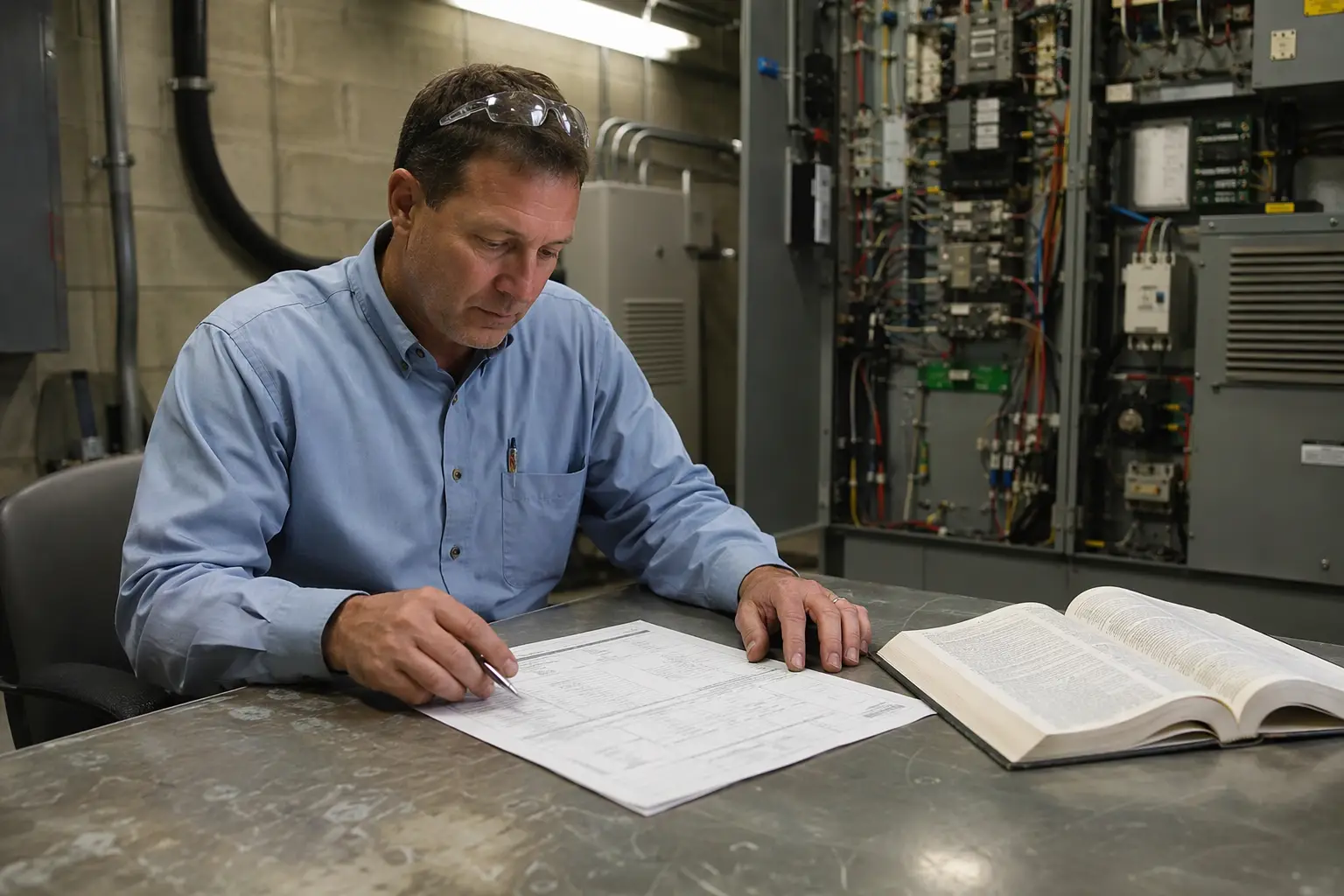
While the specific language used to describe deficiencies varies by inspector and jurisdiction, the underlying mechanical and safety categories that most commonly produce deficiencies include the following:
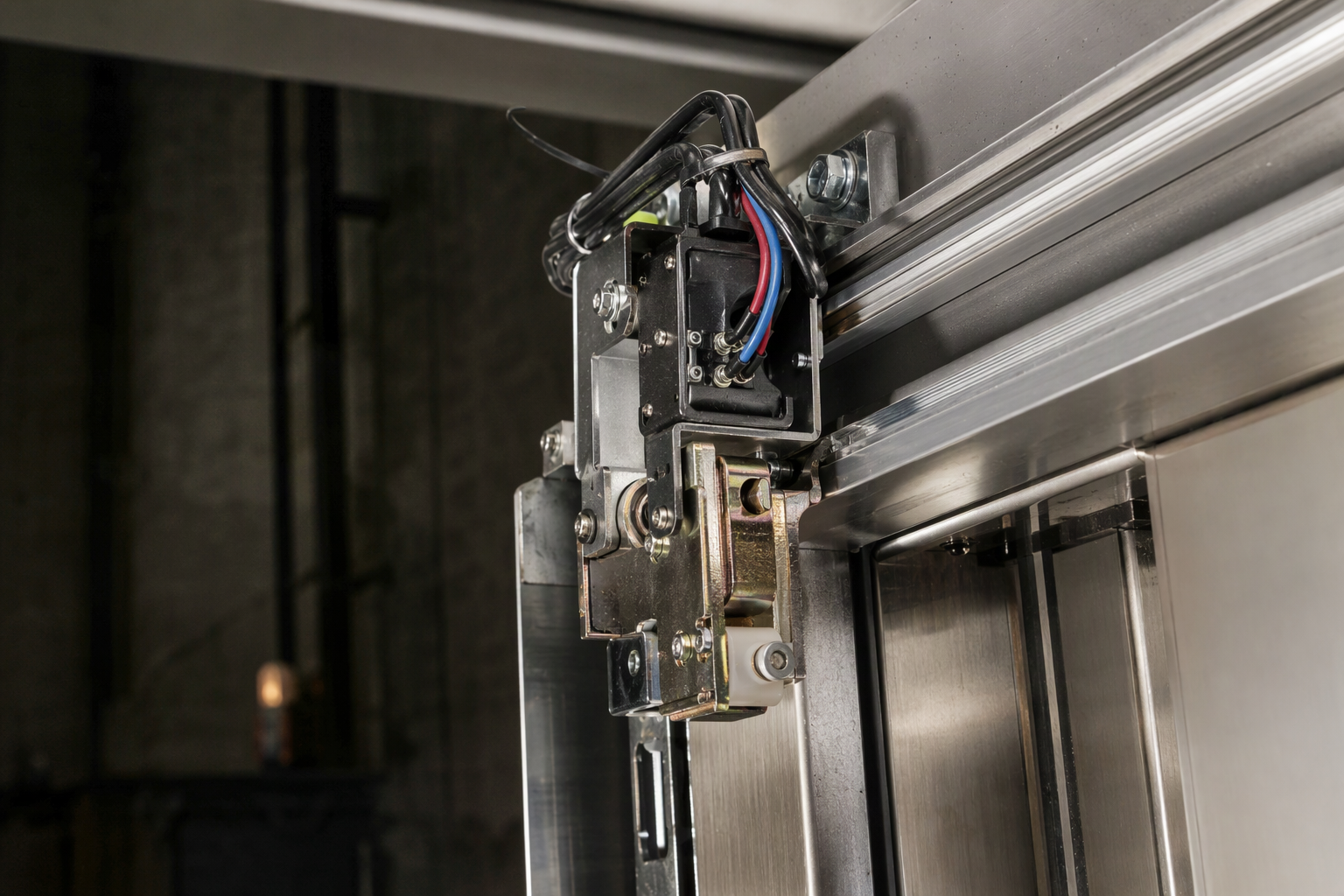
- Door and gate interlock failures: Faulty or worn door interlocks, gate switches, or retiring cams are among the most frequently cited items. When an interlock fails, the elevator can move with the hoistway door open — a direct safety hazard.
- Governor and safeties: The overspeed governor and car safety devices must function correctly. A governor that fails a drop test or a safety that does not engage properly is a critical deficiency requiring immediate correction.
- Buffers: Oil buffers must maintain proper fluid levels and must compress and return to full extension within prescribed limits. Deficiencies in buffer performance or condition are common in older hydraulic and traction systems.
- Emergency lighting and communication: Failure of the in-car emergency lighting or the two-way means of communication is a code-required deficiency in jurisdictions that mandate those features.
- Pit conditions: Water intrusion, inadequate lighting, missing stop switches, insufficient pit depth, or the absence of a pit ladder are common pit-related deficiencies.
- Rope and chain condition: Broken wires exceeding allowable limits, corrosion, or improper equalizing of suspension means are deficiency items that affect traction elevators and those suspended by chains or belts. Maryland’s regulations specifically require a comprehensive five-year inspection for elevators suspended by wire ropes, belts, chains, or similar means.
- Machine room conditions: Improper temperature, inadequate lighting, storage of non-elevator materials, missing or damaged fire-rated barriers, or restricted access are frequently cited machine room deficiencies.
- ADA compliance gaps: While ADA requirements are enforced separately from ASME A17.1, inspectors and building owners must be aware that accessible feature failures — such as inoperative Braille, missing audible signals, or non-compliant cab dimensions — may be identified during inspections as advisory items or cross-referenced to ADA standards.
- Overspeed valve and pressure testing on hydraulic units: Hydraulic elevators require periodic testing of pressure-relief valves and, in many jurisdictions, rupture or velocity-fuse valve testing. Failure of these components constitutes a deficiency that affects safe descent control.
- Signage and certificate posting: Each jurisdiction requires the current certificate of inspection to be conspicuously displayed. A missing or expired certificate can itself constitute a deficiency and may prevent the issuance of a renewal certificate.
How Are Elevator Deficiencies Classified by Severity?
Regulatory agencies and inspection organizations typically sort deficiencies into categories that determine whether the elevator may continue operating and within what timeframe corrections must be made. While terminology varies by AHJ, the practical tiers work as follows:
- Immediately dangerous (shutdown required): Deficiencies that pose an imminent risk of injury or death require the elevator to be tagged out of service immediately. The AHJ or the inspector may affix a notice prohibiting use until the deficiency is corrected and a re-inspection clears the unit.
- Serious (short corrective-action window): Deficiencies that do not rise to an imminent hazard but represent meaningful non-compliance with the safety code typically carry a defined correction deadline — often 30 to 90 days depending on the AHJ and the nature of the item.
- Advisory or minor (longer window or noted for next inspection cycle): Items that are out of compliance with current code but do not present an immediate hazard may be carried forward with documentation, particularly where existing equipment pre-dates a code update. The Maryland and Pennsylvania regulations both reflect this principle by preserving the requirements in effect when an elevator was first certified, while still requiring ongoing maintenance and inspection.
What Happens to an Elevator’s Certificate When a Deficiency Is Found?
The consequences for a certificate of inspection depend on the jurisdiction and the severity of the deficiency:
- In the District of Columbia, the DC DOB issues certificates of inspection that are valid for two years. Periodic inspections and tests continue during that period. If a third-party inspection reveals deficiencies, DOB may decline to issue or renew a certificate until corrective reports are submitted through the Citizen Access Portal. A certificate may also be temporarily suspended while the elevator is under a permit for alteration or modernization.
- In Maryland, an elevator unit may not be operated unless the Commissioner of Labor and Industry has issued a certificate for it. Deficiencies that prevent certification mean the unit cannot legally operate. Owners must re-register their elevator units annually at the time of the periodic inspection, so outstanding deficiencies carry forward directly into the annual renewal cycle.
- In Pennsylvania, an elevator may not be operated without a certificate of operation from the Department of Labor and Industry. After a major repair, replacement, or alteration, the elevator may not return to service until the Department inspects and passes it. Outstanding deficiencies identified during periodic inspections affect the issuance of the renewal certificate.
- In Virginia, local building departments enforce annual inspection requirements. The current certificate must be displayed in the elevator car or in an approved conspicuous location. Deficiencies that prevent issuance of a certificate effectively prohibit operation under the Virginia Uniform Statewide Building Code.
What Should a Building Owner Do Immediately After Receiving a Deficiency Report?
- Read the report carefully and identify the severity classification of each deficiency item. Distinguish between items that require immediate shutdown and those with a defined correction window.
- If any item requires immediate shutdown, take the elevator out of service immediately, post the required notice, and do not permit passenger use until the deficiency is corrected and the unit is cleared by the AHJ or its approved inspector.
- Contact a licensed or certified elevator contractor in your jurisdiction to review the deficiency report. In Maryland, the contractor must be licensed by the Maryland Elevator Safety Review Board. In Virginia, the contractor must hold an Elevator/Escalator Contracting (EEC) specialty license through the Virginia Board for Contractors.
- Obtain any required permits before beginning repair or alteration work. In DC, a DOB permit is required for many repairs and for taking an elevator out of service. In Pennsylvania, construction, alteration, replacement, or repair requires a permit application to the Department of Labor and Industry.
- Schedule and complete the corrective work using licensed or certified mechanics. In Maryland, only a person licensed as an elevator mechanic by the Maryland Elevator Safety Review Board may work on elevator units. In Virginia, no one may work as an elevator mechanic without state certification unless under the direct and immediate supervision of a certified mechanic.
- Arrange for a re-inspection or acceptance inspection as required by your jurisdiction. In Pennsylvania, after a major repair or alteration, the Department of Labor and Industry must inspect and pass the unit before it returns to service.
- Submit corrective documentation to the AHJ. In DC, inspection reports for the past two years must be submitted to DOB through the Citizen Access Portal for certificate issuance. In Maryland, maintenance, repair, test, and inspection records must be kept at a readily accessible central location in the building.
- Confirm that the certificate of inspection is posted in the elevator car or in the approved alternative location as required by your jurisdiction before returning the unit to service.
How Do Inspection Schedules Affect the Likelihood of Deficiency Discovery?
More frequent inspections mean deficiencies are found — and can be corrected — sooner. The inspection intervals across the four jurisdictions Quality Elevator Company serves are as follows:
| Jurisdiction | Periodic Inspection Interval | Comprehensive / Category 5 Test | Regulator |
|---|---|---|---|
| District of Columbia | Every 12 months (Category 1 also every 12 months) | Every 60 months (Category 5) | DC Department of Buildings (DOB) |
| Maryland | Annual periodic inspection | Comprehensive five-year inspection for rope-suspended and rack-and-pinion elevators | Maryland Department of Labor, Division of Labor and Industry |
| Pennsylvania | Every 6 months (electric, hydraulic, escalators) | Category 1 annually as stand-alone (from December 20, 2026) | Pennsylvania Department of Labor and Industry, Elevator Section |
| Virginia | Annual (locality may require every 6 months) | Per ASME A17.1 Appendix N intervals, witnessed by code official | Local building department |
Sources: DC DOB; Maryland Department of Labor; Pennsylvania L&I; 13VAC5-63.
Pennsylvania’s six-month periodic inspection cycle for electric and hydraulic elevators means deficiencies are discovered more frequently than in jurisdictions with annual cycles. This more aggressive schedule also shortens the time between a developing mechanical problem and its formal identification. Building owners should treat the inspection interval as a minimum — not a substitute for ongoing maintenance that catches deficiency precursors before they become cited items.
What Does It Typically Cost to Correct an Elevator Deficiency?
Correction costs vary widely depending on the type and severity of the deficiency, the age and configuration of the equipment, parts availability, and local labor rates. Because no authoritative published benchmark for deficiency correction costs in this region exists that can be cited here, it is more accurate to describe the cost drivers qualitatively:
- Labor: Deficiency repairs must be performed by certified or licensed mechanics, whose rates reflect specialized trade skill. In Maryland, only licensed elevator mechanics may perform the work. In Virginia, the technician must hold state certification or work under its direct and immediate supervision.
- Parts: Proprietary components for older equipment may require long lead times or custom fabrication, significantly increasing total project cost. Modernization of end-of-life components may cost more than targeted repair but reduces future deficiency recurrence.
- Permit fees: DC, Pennsylvania, and other jurisdictions charge permit fees for repair and alteration work. These are non-negotiable regulatory costs.
- Re-inspection fees: Some AHJs charge fees for the acceptance inspection or re-inspection following corrective work.
- Downtime cost: For buildings where elevator availability is contractually required or where accessibility obligations under the ADA apply, the cost of a unit being out of service can exceed the repair cost itself.
Quality Elevator Company approaches deficiency resolution as a data-driven process — reviewing inspection reports to prioritize safety-critical items, identifying parts sources early, and coordinating permit applications to minimize total downtime for building owners in DC, Maryland, Pennsylvania, and Virginia.
How Do Elevator Deficiencies Relate to ADA Compliance?
The Americans with Disabilities Act imposes independent obligations on building owners that run parallel to — and sometimes overlap with — ASME safety code requirements. An elevator that is out of service because of an uncorrected deficiency may also constitute a failure to maintain accessible features required under the ADA. Courts and the Department of Justice have consistently interpreted the ADA’s maintenance-of-accessible-features obligation to mean that elevators in covered facilities must be kept operational and in good repair. A pattern of repeated deficiencies, extended outages, or deferred maintenance on accessible elevators can expose building owners to ADA enforcement risk in addition to state regulatory action. Building owners should treat deficiency correction not only as a safety code matter but also as an accessibility compliance obligation.
What Are the Industry Trends Shaping Elevator Deficiency Rates in 2025–2026?
Several converging trends are shaping how elevator deficiencies are identified, reported, and corrected across the mid-Atlantic region:
- Code adoption updates: Maryland’s adoption of ASME A17.1-2022, effective June 17, 2026, introduces updated requirements that may reclassify previously acceptable conditions as deficiencies for elevators whose contracts were signed after the effective date. Pennsylvania’s transition to ASME A17.1-2016 for new permit applications from December 20, 2026, will similarly introduce revised inspection and testing intervals, including standalone Category 1 annual tests. Building owners with older equipment should anticipate that code transitions can expand the deficiency universe for their units.
- Remote monitoring and predictive maintenance: The elevator industry is increasingly deploying IoT-enabled condition monitoring systems that identify developing mechanical issues — such as door motor wear, rope stretch, or hydraulic pressure drift — before they become cited deficiencies. While these systems do not replace formal inspection, they can shorten the gap between problem onset and corrective action, reducing the number of deficiencies found during periodic inspections.
- Aging equipment stock: A substantial portion of elevator inventory in older urban buildings across DC, Maryland, Pennsylvania, and Virginia predates current code editions by decades. Aging hydraulic systems, obsolete relay-logic controls, and deteriorating pit conditions are among the most common deficiency sources in this equipment cohort. Owners of older buildings should expect deficiency rates to remain elevated without proactive modernization programs.
- Inspector workforce and QEI certification: DC requires inspections by ASME QEI-certified inspectors. Demand for qualified inspectors relative to available certified personnel affects inspection scheduling timelines, which in turn affects how quickly deficiencies are formally identified and cleared. Building owners should plan inspection schedules well in advance of certificate expiration dates.
- Regulatory enforcement intensity: Regulatory agencies in the region have demonstrated continued commitment to enforcement, with certificate suspension and mandatory shutdown powers being exercised for non-compliant units. The trend toward third-party inspection in DC — where owners must use DOB-approved third-party agencies — has increased the volume and consistency of deficiency documentation reaching the regulatory record.
What Is the Difference Between an Elevator Deficiency and an Elevator Violation?
The terms are often used interchangeably in the industry, but there is a meaningful distinction. A deficiency is a condition identified by an inspector as not meeting the applicable safety code — it is primarily a technical finding. A violation is a formal regulatory action taken by the AHJ, typically when a deficiency is not corrected within the required timeframe or when an elevator is operated without a valid certificate. Violations can carry civil penalties, mandatory shutdown orders, and in serious cases, referral for further enforcement. The practical implication for building owners is that an uncorrected deficiency escalates into a violation, with progressively more serious legal and financial consequences.
How Does Quality Elevator Company Help Building Owners Manage Elevator Deficiencies?
Quality Elevator Company provides building owners and property managers in the District of Columbia, Maryland, Pennsylvania, and Virginia with structured, data-driven support throughout the deficiency identification and correction cycle. The process begins with a thorough review of existing inspection reports to categorize deficiencies by severity and regulatory deadline. Quality Elevator Company coordinates with licensed or certified mechanics to develop a prioritized corrective-action plan, manages the permit application process with the relevant AHJ, and ensures that required re-inspections and documentation are submitted to close out deficiency items. For building owners facing certificate expiration or imminent enforcement, Quality Elevator Company’s familiarity with the regulatory requirements of each jurisdiction — DC DOB, Maryland Department of Labor, Pennsylvania L&I, and Virginia local building departments — supports efficient navigation of the corrective process.
What Records Must Building Owners Retain Related to Elevator Deficiencies?
Record-keeping requirements are jurisdiction-specific, but across DC, Maryland, Pennsylvania, and Virginia, building owners should maintain the following categories of documentation:
- All periodic inspection reports, including deficiency lists and inspector certifications
- Category test reports and witnessing records
- Corrective-action documentation: work orders, mechanic certifications, parts records
- Permit applications and approvals for repair and alteration work
- Acceptance inspection reports following corrective work
- Current and historical certificates of inspection
- Accident reports submitted to the relevant agency (required in Pennsylvania when an accident causes a fatality or requires professional medical care)
In Maryland, maintenance, repair, test, and inspection records must be kept at a readily accessible central location in the building where the elevator is located. In DC, inspection reports for the past two years must be available for submission to DOB through the Citizen Access Portal. Building owners should treat the minimum regulatory retention period as a floor, not a ceiling, given that deficiency history may be relevant to future enforcement proceedings or civil liability.
Can a Building Owner Appeal a Deficiency Finding or Request More Time to Correct It?
Yes, though the mechanism and standard vary by jurisdiction. In Pennsylvania, owners may appeal a code official’s decision or request a variance or extension of time by petitioning the Elevator Safety Board within 30 days of the decision. In DC, the administrative and appeals process runs through DOB’s established permit and enforcement framework. In Maryland, the regulatory process under the Public Safety Article and COMAR 09.12.81 provides administrative recourse. In Virginia, the local building department is the primary point of contact, and local appeal procedures apply. Building owners should consult a qualified elevator contractor or regulatory counsel before pursuing an appeal, particularly where the disputed item involves a safety-critical deficiency.
Frequently Asked Questions About Elevator Deficiencies
What is the legal definition of an elevator deficiency?
There is no single statutory definition that applies across all jurisdictions. In practice, an elevator deficiency is any condition documented by a qualified or certified inspector as failing to conform to the applicable edition of ASME A17.1/CSA B44 as adopted in the jurisdiction, or to any additional requirements imposed by the AHJ. The jurisdiction’s adopted code edition — which differs between DC, Maryland, Pennsylvania, and Virginia — determines what the standard of conformance is.
How quickly must an elevator deficiency be corrected?
The required correction timeline depends on the severity of the deficiency and the AHJ’s classification. Immediately dangerous conditions typically require the elevator to be taken out of service on the same day the deficiency is identified. Less severe deficiencies are assigned correction windows that the AHJ sets, which typically range from 30 to 90 days. Building owners should not assume that a longer correction window means a deficiency is unimportant — uncorrected items accumulate in the regulatory record and can escalate to formal violation status.
Who is responsible for correcting elevator deficiencies — the building owner or the elevator company?
The building owner bears the legal obligation for elevator compliance in all four jurisdictions. Contracts with elevator maintenance companies may assign day-to-day corrective responsibility to the contractor, but the regulatory obligation and liability remain with the owner. Owners should review their maintenance contracts carefully to understand which deficiency types are covered under routine maintenance agreements and which require separate repair authorizations and costs.
Can an elevator with a deficiency continue to operate?
It depends on the severity classification. An elevator with an immediately dangerous deficiency must be taken out of service. An elevator with a less severe deficiency may continue to operate under a corrective-action timeframe set by the AHJ, provided its certificate of inspection remains valid. In all four jurisdictions, operating an elevator without a valid certificate — regardless of the reason — is a regulatory violation.
What is the difference between a Category 1 and Category 5 elevator test, and how do they relate to deficiencies?
Under ASME A17.1, Category 1 tests are annual tests of safety devices, including the governor, safeties, and buffers, performed without load and at rated speed. Category 5 tests are comprehensive five-year tests that include full-load, full-speed safety tests. Both test categories can reveal deficiencies not apparent in routine periodic inspections. DC requires Category 1 tests every 12 months and Category 5 tests every 60 months. Maryland requires a comprehensive five-year inspection for rope-suspended elevators. Pennsylvania is transitioning to standalone annual Category 1 tests effective December 20, 2026.
What happens if an elevator in DC operates without a certificate due to an unresolved deficiency?
Operating an elevator in the District of Columbia without a valid certificate of inspection from the DC Department of Buildings is unlawful under D.C. Official Code § 6-1409 and the provisions of 12-A DCMR Chapter 30. DOB may issue a stop-use order and pursue enforcement action. Additionally, in DC buildings with passenger elevators, at least one elevator must be kept in operation whenever the building is occupied (except in single-elevator buildings), which creates a competing obligation that underscores the urgency of resolving deficiencies promptly.
Are elevator deficiencies publicly disclosed?
In DC, inspection reports are submitted to DOB through the Citizen Access Portal, and DOB’s records are subject to public records law. Maryland, Pennsylvania, and Virginia regulatory agencies similarly maintain inspection and enforcement records that may be accessible through public records requests. Building owners should be aware that deficiency histories are not entirely private and may be reviewed by prospective tenants, buyers, lenders, or insurers conducting due diligence.
Does OSHA have jurisdiction over elevator deficiencies in the workplace?
OSHA has authority over workplace safety, which includes elevator safety in workplaces covered by the Occupational Safety and Health Act. OSHA’s general duty clause requires employers to provide a workplace free from recognized hazards, and elevator deficiencies in covered workplaces can be the basis for OSHA citations independent of state elevator code enforcement. Building owners and employers should understand that OSHA jurisdiction and state elevator regulatory jurisdiction can overlap, particularly in commercial and industrial settings.
What is a “major repair” in the context of elevator deficiencies, and why does it matter?
A major repair — as defined under the applicable ASME code and by the AHJ — is a repair that affects the safety of an elevator in a material way, such as replacement of a governor, safety, control system, or hydraulic jack. Major repairs require permits and an acceptance inspection by the AHJ before the elevator returns to service. This is particularly significant in Pennsylvania, where the Department of Labor and Industry must inspect and pass the unit after a major repair before it may be used. Misclassifying a major repair as routine maintenance to avoid the permit process is a regulatory violation.
How should building owners prepare for the upcoming Pennsylvania code transition in December 2026?
Building owners with elevators in Pennsylvania whose permit applications will be made on or after December 20, 2026, should anticipate that ASME A17.1-2016 with Pennsylvania modifications will apply. This edition introduces updated inspection and testing requirements, including standalone annual Category 1 tests. Building owners should audit their current equipment against the new code requirements well before the effective date, identify any conditions that would constitute deficiencies under the new standard but not the old, and plan corrective work accordingly. Permit applications submitted before December 20, 2026, remain under ASME A17.1-2000. Quality Elevator Company can assist Pennsylvania building owners in understanding how the transition affects their specific units.
Contact Quality Elevator Company for a free elevator assessment at 301-779-9116.
Need elevator service you can rely on? Quality Elevator Company is ready to help.