Yes — an elevator modernization in progress can directly affect other elevators in the same building during generator tests, because shared electrical infrastructure, common controller rooms, and load sequencing protocols may interact across multiple units, requiring careful coordination between the modernization contractor, the building’s emergency power system, and the authority having jurisdiction before any generator test is conducted.
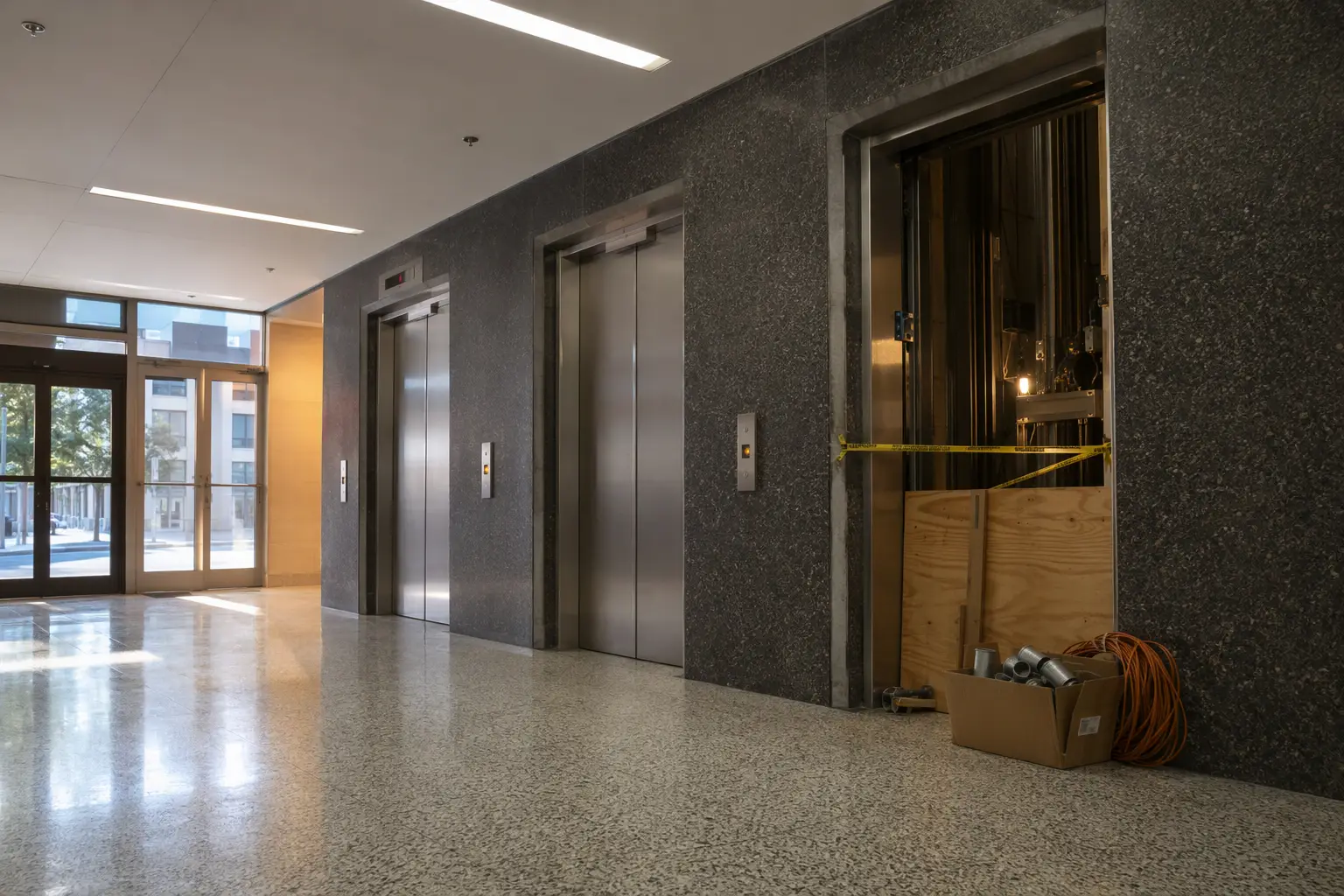
Yes. When one elevator in a multi-unit building is mid-modernization, its partially upgraded controls, open electrical circuits, and temporary wiring can interact unpredictably with the building’s emergency generator system when that system is tested. The result can range from nuisance faults on adjacent elevators to genuine safety shutdowns that keep operational cars out of service. Understanding exactly how and why this happens — and what building owners, property managers, and elevator contractors must do about it — is essential for maintaining compliance with the ASME A17.1 Safety Code for Elevators and Escalators and protecting occupants in Baltimore, Washington DC, Philadelphia, and Richmond.
How does a building’s emergency generator system interact with elevator equipment?
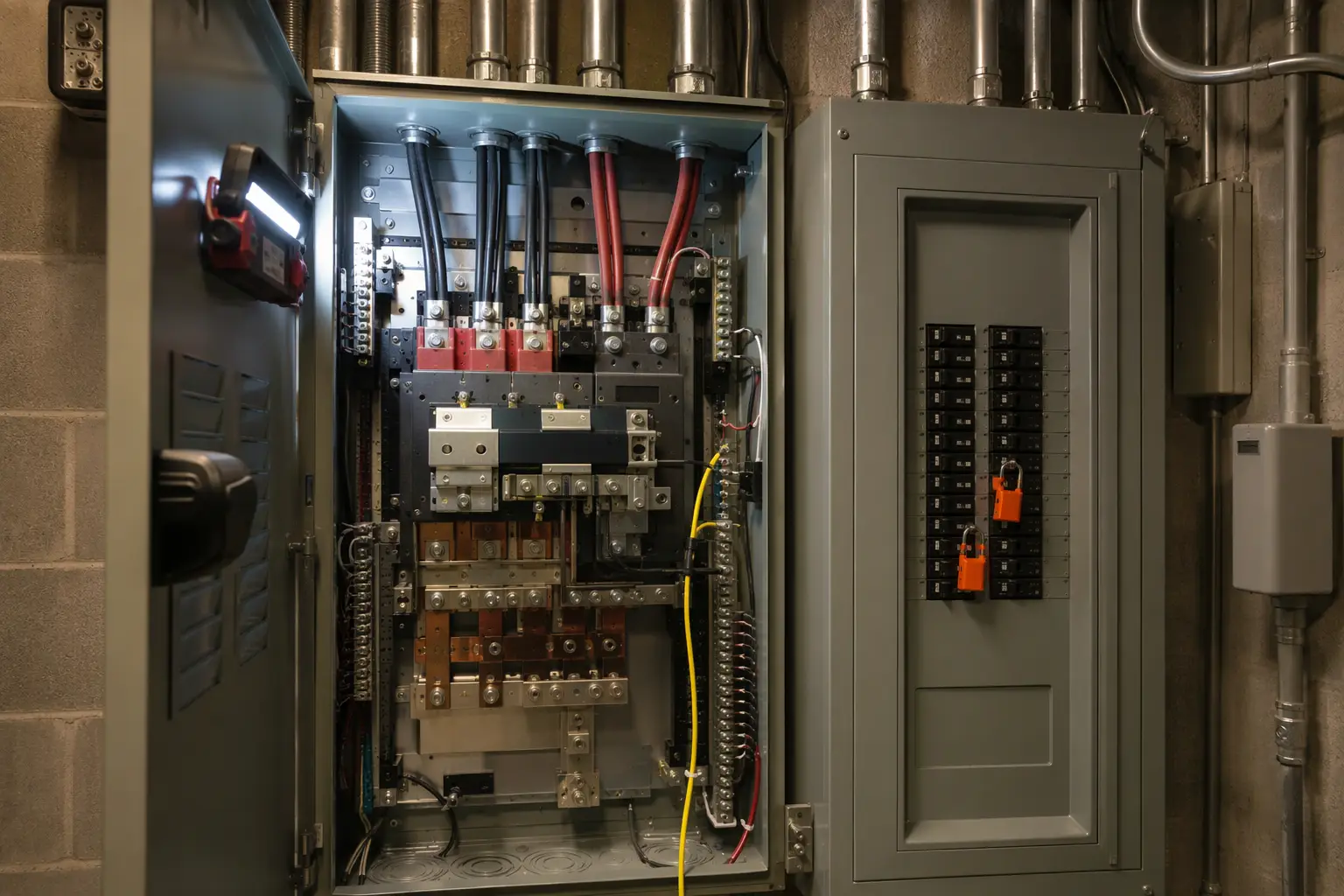
A building’s emergency generator provides backup power to life-safety systems, including at least one designated elevator, through an automatic transfer switch that shifts the load from utility power to generator power within seconds of a utility outage.
Modern elevator systems draw significant current at startup — particularly the inrush current during motor acceleration. When a generator test simulates a utility outage, the automatic transfer switch reconnects elevator circuits to generator output. The generator must handle the combined starting loads of every elevator that is wired to the emergency panel. In a building with multiple elevators, the starting sequence is carefully engineered so that only one or two cars start simultaneously, preventing generator overload.
When one elevator is under modernization, its circuit may be partially decommissioned, temporarily rerouted, or connected to new controller hardware that has not yet been fully programmed. Any of these conditions can create an unexpected load, an unbalanced phase, or a ground fault that propagates through the shared electrical panel to cars that are fully operational. The result is that a generator test intended to verify life-safety readiness may instead trip breakers, trigger emergency stop relays, or force adjacent elevators into fault mode.
What does ASME A17.1 require regarding elevator operation during power transfer events?
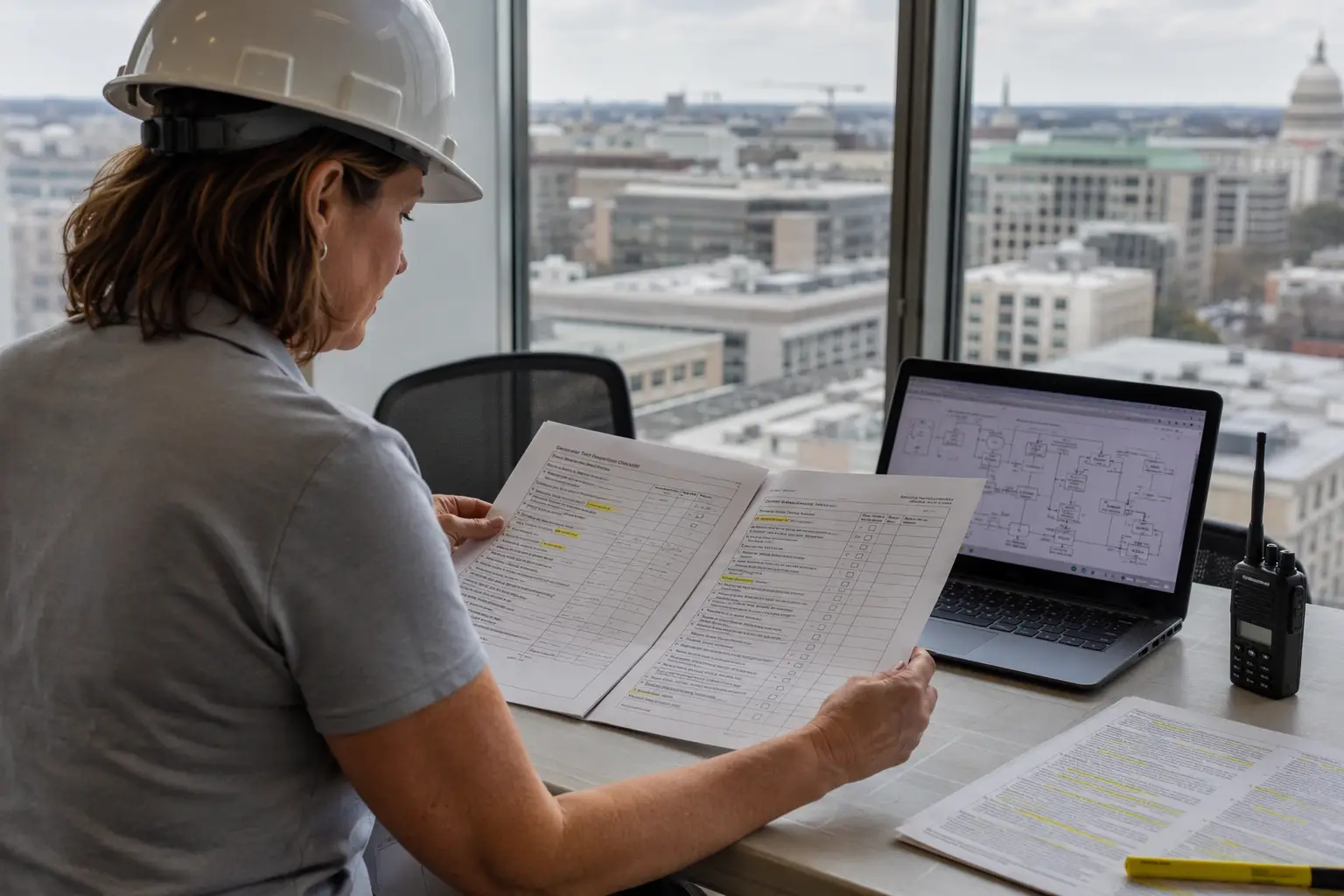
The ASME A17.1 Safety Code for Elevators and Escalators requires that elevator control systems include protection against the effects of power interruptions, power reversals, and abnormal voltages, ensuring the car stops safely and cannot restart until proper conditions are restored.
Specifically, ASME A17.1 addresses automatic transfer to emergency or standby power, requiring that when a building is equipped with a standby power system designed to operate elevators, the system must be capable of operating at least one elevator and must sequence the starting of elevator motors to prevent generator overload. During a modernization, the partially installed control system on the car being upgraded may not yet include the full complement of protective relays, phase monitors, and sequencing logic required by the code. This creates a situation where the modernized car’s incomplete circuitry may not respond correctly to generator transfer events, potentially sending fault signals through shared wiring that affects the operational cars.
ASME A17.1 also requires that alterations — including modernizations — not reduce the level of safety below that required by the code for new installations to the extent practicable. This provision reinforces the obligation on modernization contractors to maintain the integrity of the shared electrical infrastructure throughout the project, not just upon completion.
Which specific components of a modernization project create the greatest electrical interference risk?
The components most likely to create interference with other elevators during generator tests are the main line disconnect, the motor drive unit, the controller cabinet wiring, and any temporary jumpers installed to maintain car operation during phased modernization.
Variable-frequency drives (VFDs), which are standard equipment in modern elevator modernizations, are particularly sensitive during power transfer events. A VFD requires a stable, balanced three-phase power supply. When a generator comes online, the output voltage and frequency may fluctuate briefly during the transition — a condition known as a “ride-through” event. A fully commissioned VFD is programmed to handle this. A VFD that is mid-installation, or one that has been installed but not yet fully parameterized, may trip and send an alarm signal to the building’s fire alarm or BAS (building automation system), which in turn may trigger a system-wide elevator recall on all cars, including those that were operating normally.
Similarly, temporary wiring used to maintain partial service on the car under modernization may not include the same surge and phase-loss protection as permanent wiring. If the generator test produces a voltage spike, that spike may travel from the temporary circuit into adjacent controller panels through shared ground paths or common neutral conductors.
How do shared machine rooms and common hoistways increase the risk?
Shared machine rooms house the controllers, disconnect switches, and in many cases the common wiring raceway for multiple elevator units; any electrical disturbance introduced into that shared environment during a generator test affects every unit in the room simultaneously.
Many mid-rise and high-rise buildings in Baltimore, Washington DC, Philadelphia, and Richmond were constructed with a single machine room serving a bank of two, three, or four elevators. In this configuration, the power feeds, the communication cables between car operating panels and controllers, and sometimes the phase monitoring relays are physically proximate. A ground fault or an unbalanced phase created by incomplete wiring on the car being modernized does not stay isolated to that car’s controller. It can affect the signal ground shared by adjacent controllers, causing those controllers to log spurious faults, initiate automatic shutdowns, or disable the door operators — rendering operational cars temporarily out of service even though there is nothing mechanically wrong with them.
Common hoistways, while less directly involved in electrical interference, can complicate the physical isolation needed during a generator test. If fireproofing, conduit runs, or temporary equipment associated with the modernization project physically impedes access to the adjacent car’s controller or disconnect, the test crew may not be able to respond quickly if a fault does occur.
What steps should be taken before conducting a generator test when an elevator modernization is in progress?
A structured pre-test protocol is essential to protect both the operational elevators and the modernization work in progress. The following steps represent the industry-standard approach that knowledgeable elevator service companies and building engineers follow before authorizing any generator test during an active modernization.
- Notify all parties in writing — including the modernization contractor, the building’s electrical contractor, the property manager, and any third-party inspection agency — that a generator test is planned and provide the scheduled date and time at least five business days in advance.
- Conduct a pre-test walkthrough of the machine room with the modernization contractor to identify all temporary wiring, open circuits, unenergized terminals, and any equipment that is powered but not yet fully commissioned.
- Isolate the elevator under modernization from the building’s emergency power panel by opening and locking the main line disconnect on that car and affixing lockout/tagout devices in accordance with OSHA lockout/tagout requirements (29 CFR 1910.147) before the generator test begins.
- Verify that the automatic transfer switch load schedule reflects the current configuration — meaning that the car under modernization is not programmed as a generator-priority elevator during the test period.
- Confirm with the building’s licensed electrician that the neutral and ground conductors shared between the modernized car’s temporary circuit and adjacent controller panels have been verified clean and free of faults with a ground insulation test.
- Station a qualified elevator technician at the machine room for the duration of the generator test to monitor operational cars and respond immediately if any fault indication appears.
- After the generator test is complete and utility power is restored, perform a full functional check of all operational elevators before returning them to normal public service.
- Document the entire procedure and retain records in the building’s maintenance file to demonstrate compliance with the applicable authority having jurisdiction (AHJ) requirements in DC, Maryland, Pennsylvania, or Virginia.
What are the specific regulatory obligations in DC, Maryland, Pennsylvania, and Virginia when an elevator is under modernization?
Each jurisdiction served by Quality Elevator Company has distinct regulatory requirements that govern elevators under alteration or modernization, all of which interact directly with how generator tests must be managed.
In the District of Columbia, alterations and repairs of existing elevators are governed by the Existing Building Code, and the DC Department of Buildings (DOB) issues elevator permits for modernization work under DC DOB Elevator and Conveyance Inspections, referencing D.C. Official Code § 6-1409 and 12-A DCMR Chapter 30. An elevator’s certificate of inspection may be temporarily suspended while the unit is under a permit for alteration or modernization. In DC buildings with passenger elevators, at least one elevator must remain in operation whenever the building is occupied, except in single-elevator buildings — a requirement that takes on added significance when a generator test has the potential to disable operational cars due to interference from a modernization project. The DC adopted code is ASME A17.1-2013/CSA B44-13 as referenced by the 2017 DC Building Code.
In Maryland, the Maryland Department of Labor, Division of Labor and Industry, Elevator and Escalator Safety regulates elevator safety under the Annotated Code of Maryland, Public Safety Article, Title 12, Subtitle 8, and COMAR 09.12.81. Maryland adopted ASME A17.1-2022/CSA B44:22 effective June 17, 2026 for new installations. The State conducts a final acceptance inspection after an elevator unit is modified or altered and before it is returned to service. Tests performed for a required inspection must be performed by a licensed elevator mechanic, and when a third-party qualified elevator inspector is required to witness a test, that inspector must be physically present for the entire test — a requirement that extends to any periodic or acceptance test of adjacent elevators that may be affected by a generator test during a modernization.
In Pennsylvania, the Pennsylvania Department of Labor and Industry, Bureau of Occupational and Industrial Safety, Elevator Section administers elevator regulation under 34 Pa. Code Chapter 405. Pennsylvania currently operates under ASME A17.1-2000 with A17.1a-2002 addenda for permits issued before December 20, 2026, when ASME A17.1-2016 (with Pennsylvania modifications) takes effect for new permit applications. After a major repair, replacement, or alteration, an elevator may not return to service until the Department inspects and passes it. Electric elevators must have periodic inspections at intervals of no more than six months. Building owners planning generator tests during a Pennsylvania modernization project should coordinate with the Department to ensure that the altered elevator’s isolation does not delay the inspection schedule for adjacent units.
In Virginia, elevator inspections are conducted by the local building department under the Virginia Uniform Statewide Building Code (13VAC5-63), which adopted ASME A17.1/CSA B44-2019 effective January 18, 2024. Periodic tests must be witnessed by the code official. In Richmond, the City of Richmond Department of Planning and Development Review, Bureau of Permits and Inspections, runs the local elevator program, including final acceptance inspections of modernized elevators and annual inspections with tests. Virginia requires that elevator mechanic certification be held by anyone performing work on elevator units, and no elevator may return to service following alteration without a local acceptance inspection.
Can a generator test legally proceed while one elevator in the bank is out of service for modernization?
Yes, a generator test can legally proceed while one elevator is out of service for modernization, provided the modernized car is properly isolated from the emergency power system and the remaining operational elevators satisfy the occupancy and life-safety requirements of the applicable jurisdiction.
The key legal and practical conditions are: the out-of-service elevator’s disconnect must be locked open during the test; the automatic transfer switch programming must exclude the modernized car’s load; and in DC, at minimum one operational passenger elevator must remain available throughout the occupied building period. Property managers should consult with the modernization contractor and their elevator service provider to obtain written confirmation that these conditions are met before authorizing the test.
How does fire service recall interact with a generator test when a modernization is underway?
Fire service recall, required under ASME A17.1, instructs all Phase I Emergency Recall-equipped elevators to return to the designated lobby floor and open their doors when a building fire alarm activates — a behavior that is also triggered automatically when emergency generator transfer mimics a Phase I signal in some older fire alarm systems.
If the building’s fire alarm control panel interprets a generator test transfer event as a fire condition, every elevator in the building that is wired to the fire alarm — including the car under modernization — may receive a Phase I recall command. For the operational cars, this is a manageable event. For the car under modernization, whose fire service wiring may be partially disconnected or rerouted, the recall signal may produce unpredictable controller behavior. This is another reason why pre-test isolation of the modernized car’s fire service and emergency power circuits is essential, and why Quality Elevator Company recommends that any generator test during a modernization be treated as a full life-safety coordination exercise involving the elevator contractor, the fire alarm contractor, and the building engineer simultaneously.
What is the role of the automatic transfer switch in managing elevator loads during a generator test?
The automatic transfer switch (ATS) is the critical electrical component that determines which elevator circuits receive generator power during a test or actual outage, and its programming must be audited and potentially updated before any generator test is conducted during a modernization.
ATS programming defines the load sequencing order — which elevators start first on generator power, how long the time delay is between successive starts, and which circuits are considered non-essential and therefore excluded. When an elevator is added to a building through modernization, or when an existing elevator’s load characteristics change because of a new VFD or new motor, the ATS programming may no longer reflect actual load conditions. An elevator that was previously drawing a known amount of starting current may now draw considerably more or less, changing the generator’s ability to handle the total sequenced load. Building owners should request that a licensed electrical engineer verify ATS programming against actual elevator load data before conducting a generator test during or after a modernization.
What documentation should building owners retain following a generator test conducted during a modernization period?
Comprehensive documentation protects building owners against regulatory liability and provides the evidence base needed if adjacent elevator faults during the test become the subject of an inspection inquiry by the AHJ.
At a minimum, the building should retain: the written notification to all parties and their acknowledgment; the pre-test walkthrough report identifying all temporary wiring and open circuits; the lockout/tagout log for the modernized car’s disconnect; the ATS programming verification from the electrical engineer; the generator test log showing transfer times, voltage readings, and any fault events; the post-test functional check results for all operational elevators; and any communications with the AHJ regarding the test. In Maryland, maintenance, repair, test, and inspection records must be kept at a readily accessible central location in the building where the elevator is located, per the requirements of the Maryland Department of Labor. Similar record-keeping expectations exist under DC, Pennsylvania, and Virginia regulatory frameworks.
How long does an elevator modernization typically take, and how does project duration affect generator test scheduling?
Elevator modernization projects vary significantly in scope and duration depending on the age of the equipment, the technology being installed, and the building’s operational requirements, but phased modernizations in occupied buildings commonly extend over multiple weeks to several months.
The longer the modernization period, the greater the number of generator tests — typically conducted monthly or quarterly as part of a building’s emergency preparedness program — that may occur while the elevator is out of service. Building owners should establish a formal protocol at the outset of the modernization project, rather than developing one reactively when a generator test is imminent. Quality Elevator Company recommends including generator test coordination requirements in the modernization contract specifications so that responsibilities are clearly assigned before work begins.
What is the comparison between a phased modernization and a full replacement in terms of generator test risk?
The table below compares the generator test interference risk profile of a phased modernization versus a full cab and mechanical replacement approach, to help building owners make informed decisions about project structure.
| Factor | Phased Modernization | Full Replacement (Car Out of Service) |
|---|---|---|
| Generator test electrical isolation required | Yes — partial circuits remain live during transition phases | Yes — but all circuits can be fully de-energized |
| Risk of interference with adjacent elevator controllers | Higher — temporary wiring and open terminals present throughout project | Lower — full disconnect eliminates the source of interference |
| Automatic transfer switch reprogramming needed | Often — load characteristics change mid-project | Usually at commissioning only |
| Fire service recall coordination complexity | High — partial fire service wiring may send undefined signals | Moderate — car is fully isolated from fire alarm circuit |
| Number of generator tests likely affected per project | Multiple (project may span several months) | Fewer (car is simply excluded from test) |
| Regulatory acceptance inspection trigger | At each major milestone and final completion | At final commissioning only |
| Recommended pre-test protocol formality | Written protocol required before every generator test during project | Standard protocol sufficient once car is confirmed isolated |
How should building engineers coordinate with elevator modernization contractors regarding generator tests?
Building engineers serve as the central coordination point between the elevator modernization contractor, the electrical contractor responsible for the generator and ATS, and the property management team, and their role is most effective when defined in writing at the project kickoff stage.
The building engineer should obtain from the modernization contractor a phased electrical schedule identifying when each circuit will be live, partially connected, or fully isolated throughout the project. This schedule should be shared with the electrical contractor so that ATS programming can be adjusted at each project phase. The building engineer should also establish a formal notification protocol requiring the modernization contractor to give advance notice — ideally no fewer than five business days — before any circuit configuration change that could affect the generator test parameters. Quality Elevator Company works directly with building engineers during modernization planning to provide this phased electrical schedule as part of its project coordination process.
What OSHA requirements apply to lockout/tagout during elevator generator tests in the presence of a modernization?
OSHA’s lockout/tagout standard, found at OSHA 29 CFR 1910.147, requires that any equipment capable of unexpected energization be locked out before servicing or maintenance work, and that only the authorized employee who applied the lock may remove it.
During a generator test, the elevator under modernization represents a source of unexpected energization risk in both directions — the generator test could energize the modernized car’s partially installed circuits, and the modernized car’s open terminals could create ground faults that energize adjacent equipment. Proper lockout/tagout practice requires that the modernized car’s main line disconnect be locked out before the generator test begins, with a lock applied by an authorized employee and a tag indicating the purpose of the lockout. If multiple contractors are working in the machine room — both the elevator modernization crew and the generator test crew — a group lockout procedure using a multiple-lock hasp must be used so that no single party can inadvertently restore power before all personnel are clear.
How do ADA requirements interact with elevator availability during a generator test near a modernization project?
The Americans with Disabilities Act (ADA) requires that buildings with four or more stories provide elevator access to all floors, and that accessible routes remain available to people with disabilities; taking multiple elevators offline simultaneously during a generator test could create an ADA compliance issue if no accessible vertical transportation remains operational.
In a building where one elevator is already out of service for modernization, the remaining operational elevators carry the full accessible transportation load for the building. If a generator test causes one or more of those operational cars to fault and go offline, even temporarily, the building may be in violation of its ADA accessible route obligations for the duration of the fault. Building owners should assess the accessible transportation impact before authorizing any generator test during a modernization and should have a contingency plan — such as station personnel to assist disabled occupants — in the event that an operational elevator trips during the test.
What are the warning signs that a generator test has caused a fault on an adjacent elevator during a modernization?
Recognizing fault indicators quickly during a generator test is essential to minimizing downtime on operational cars and preventing a temporary electrical event from becoming a more serious mechanical or safety issue.
Common warning signs include: the operational elevator’s door operator stopping mid-cycle or failing to close; the car stopping between floors and not responding to hall or car calls; the controller display showing a phase loss, ground fault, or undervoltage alarm; the emergency lighting activating inside the car cab even though the generator is running; or the fire service recall activating on operational cars without a confirmed fire alarm event. Any of these indicators should immediately prompt the technician stationed in the machine room to open the operational car’s disconnect, document the fault code, and notify the modernization contractor and building engineer before attempting to restore service.
How can building owners minimize disruption to tenants during generator tests scheduled around a modernization?
Minimizing tenant disruption requires advance communication, strategic scheduling, and a clear recovery plan that is shared with all building staff before the test begins.
Generator tests should be scheduled during low-occupancy periods — typically early morning on weekdays or weekend mornings — to reduce the impact of any temporary elevator disruption. Tenants should receive written notice at least 48 hours in advance explaining that a generator test will be conducted, that elevator service may be briefly interrupted, and that building staff will be on hand to assist. The elevator modernization contractor should be required to pause any work that could introduce new electrical changes to the system during the 24-hour window before and after the generator test. After the test, operational elevators should be fully functionally tested before tenant occupancy resumes for the day. Quality Elevator Company assists building owners in developing tenant communication templates and test scheduling plans as part of a comprehensive elevator management approach.
What should a post-test inspection of elevators cover following a generator test during a modernization period?
A post-test inspection ensures that any electrical disturbance introduced during the generator test has not degraded the safety or functional status of operational elevators before they are returned to normal service.
The post-test inspection should include: a review of each operational controller’s fault log to identify any alarms that were generated during the test; a manual check of all door operators to confirm they open and close fully and without hesitation; a test of the emergency lighting and communication systems in each operational car; a check of the leveling accuracy at each floor to confirm that any voltage fluctuation during the test did not shift the VFD’s stopping parameters; and a visual inspection of the machine room for any evidence of arcing, overheating, or tripped breakers. All findings should be recorded and retained in the building’s maintenance file. If any fault is found during the post-test inspection, the affected car should remain out of service until a licensed elevator mechanic has diagnosed and cleared the fault in accordance with the requirements of the applicable AHJ.
When should building owners engage a professional elevator service company for generator test coordination during a modernization?
Building owners should engage a professional elevator service company at the planning stage of the modernization project — before the first generator test is scheduled during the construction period — not reactively after a problem has occurred.
Early engagement allows the service company to review the modernization contractor’s phased electrical schedule, identify specific generator test risks at each project phase, and develop a written protocol that satisfies the regulatory requirements of DC, Maryland, Pennsylvania, or Virginia. Quality Elevator Company provides this planning support to building owners and property managers across Baltimore, Washington DC, Philadelphia, and Richmond, working alongside modernization contractors and building engineers to ensure that generator tests do not create unintended disruptions to operational elevators or regulatory compliance gaps that could delay an acceptance inspection or jeopardize an elevator certificate.
What are the consequences of failing to coordinate a generator test properly during an elevator modernization?
Failing to coordinate a generator test properly during an elevator modernization can result in operational elevator shutdowns, regulatory citations, delayed acceptance inspections, ADA accessibility violations, and potential liability if an occupant is injured or stranded as a result of an elevator that failed during a preventable electrical disturbance.
From a regulatory standpoint, a fault on an operational elevator caused by interference from a modernization project may be treated by the AHJ as evidence of inadequate maintenance or improper alteration procedures, triggering a mandatory inspection of all elevators in the building. In Maryland, tests performed for a required inspection must be performed by a licensed elevator mechanic and witnessed by a qualified elevator inspector who is physically present — meaning that any test required as a result of a generator-related fault adds time and cost to the building’s compliance calendar. In Pennsylvania, an elevator may not return to service after a major fault event until the Department of Labor and Industry inspects and passes it. In DC, an elevator’s certificate may be suspended if it is taken out of service under conditions that were not previously permitted by DOB. These consequences compound quickly and underscore the value of treating generator test coordination as a formal engineering discipline rather than an informal building operations task.
Contact Quality Elevator Company for a free elevator assessment at 301-779-9116.
Need elevator service you can rely on? Quality Elevator Company is ready to help.