
Choosing the wrong elevator maintenance company can result in compliance violations, unexpected downtime, liability exposure, and costly emergency repairs. This guide walks building owners and property managers in the District of Columbia, Maryland, Pennsylvania, and Virginia through the essential questions to ask before committing to a service agreement — along with comparison tools, red flags to avoid, and a framework for evaluating any prospective vendor.
What Credentials and Licenses Should an Elevator Maintenance Company Hold in My State?
Licensing requirements vary by jurisdiction, and hiring an unlicensed or improperly insured contractor creates direct legal and financial risk for the building owner. Here is what applies in each market Quality Elevator Company serves:
| Jurisdiction | Contractor Licensing Authority | Mechanic Certification | Inspector Certification | Insurance Minimums (Contractors) |
|---|---|---|---|---|
| District of Columbia | DC Board of Industrial Trades (elevator contractor license required for permits); permits issued by DC Department of Buildings (DOB) | DC Board of Industrial Trades licenses elevator mechanics | ASME QEI-certified inspector required for periodic and Category 1/5 inspections | Not specified in DOB rules — verify with DOB |
| Maryland | Maryland Elevator Safety Review Board (elevator contractor license required) | Maryland Elevator Safety Review Board (elevator mechanic license required) | Third-party qualified elevator inspector must be physically present for required tests | At least $1,000,000 general liability; at least $500,000 property damage |
| Pennsylvania | Pennsylvania Department of Labor and Industry (L&I) certifies third-party inspection agencies; no statewide mechanic or contractor license has been confirmed — verify current requirements with L&I | See L&I guidance — verify before contracting | UCC-certified elevator inspector; third-party agencies must be certified by L&I | Verify with L&I |
| Virginia | Virginia Board for Contractors (DPOR) — Elevator/Escalator Contracting (EEC) specialty license required; inspections by local building departments | State certification by Virginia Board for Contractors (DPOR); at least three years of industry experience and examination required | Local code official or approved agency; inspector must witness tests | Verify with DPOR and local building department |
What to ask a prospective vendor: Request a copy of their current contractor license, proof that technicians are certified mechanics in the applicable jurisdiction, and a certificate of insurance naming your building as an additional insured. Never accept verbal assurances — documentation protects you.
What Does the Maintenance Contract Actually Cover — and What Does It Exclude?
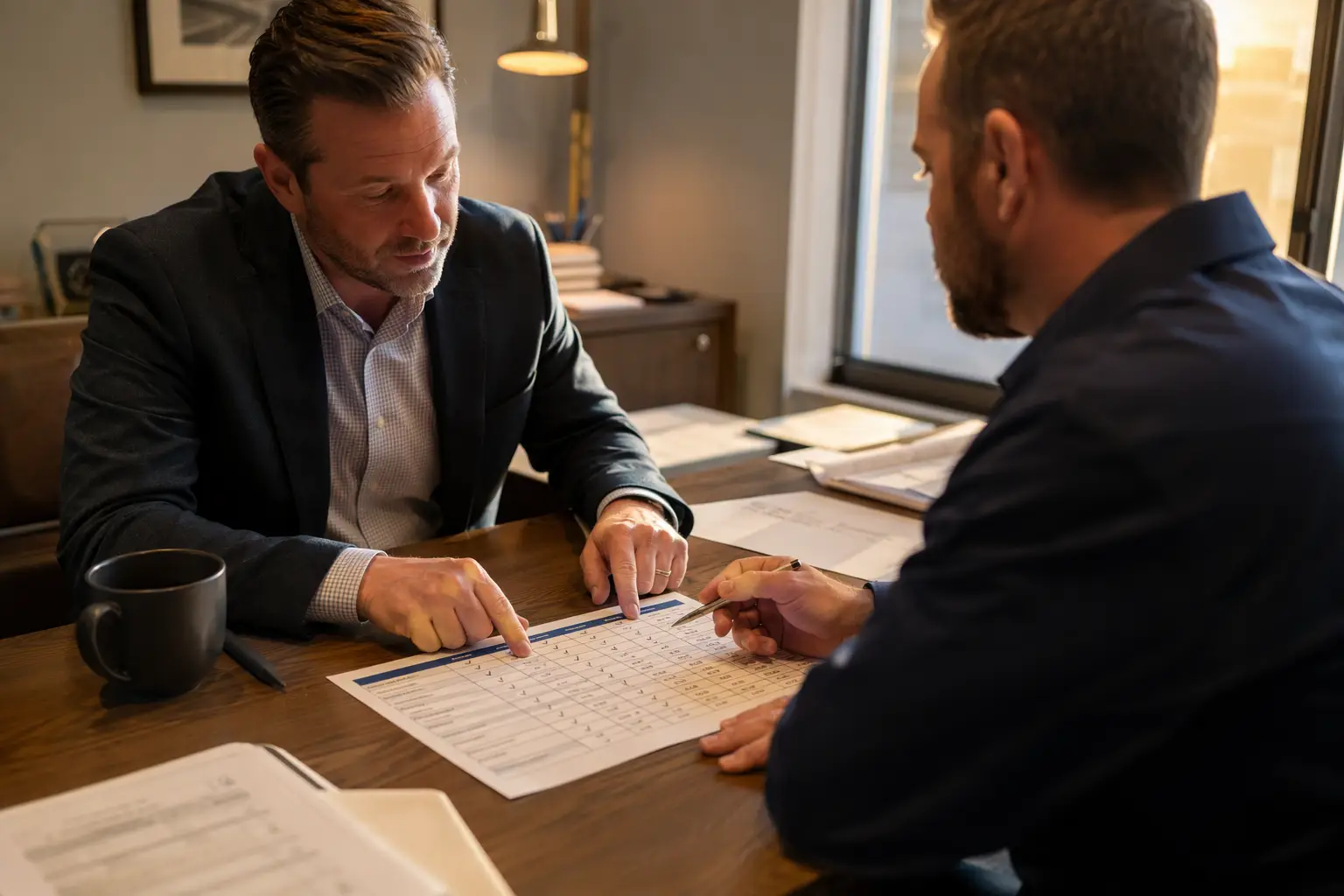
Elevator maintenance contracts vary widely. The most common structures are compared below.
| Contract Type | Typical Coverage | Common Exclusions | Best Suited For | Key Risk |
|---|---|---|---|---|
| Full-Service (Comprehensive) | Scheduled maintenance, all parts, labor, emergency callbacks, some modernization components | Vandalism, misuse damage, structural modifications, cab interior cosmetics | Owners who want predictable costs and minimal operational involvement | Premium pricing may exceed actual repair costs for well-maintained equipment |
| Lubrication and Adjustment (Oil & Grease) | Scheduled visits for lubrication, cleaning, minor adjustments only | All parts and most labor; callbacks may carry additional charges | Low-rise or low-usage buildings with newer, reliable equipment | Repair costs are entirely variable and can be significant |
| Parts and Labor | Scheduled maintenance plus parts and labor for covered repairs | Major components (motors, controllers, ropes) often excluded or capped | Mid-rise buildings with moderate traffic | Ambiguous exclusion language can leave owners exposed to large invoices |
| Inspection-Only | Third-party periodic inspections to meet regulatory requirements | All maintenance, parts, and repairs | Buildings with separate in-house maintenance or multiple vendors | No dedicated maintenance relationship; accountability gaps possible |
Key questions to ask:
- Does the contract include emergency callback service, and is there a limit on the number of callbacks per year?
- Which specific parts are covered, and which require a separate purchase order?
- Are there automatic price escalation clauses, and if so, by what mechanism and how often?
- What is the contract term, and what are the termination and renewal provisions?
- Who is responsible for procuring and scheduling required third-party inspections?
How Do Inspection Requirements Differ Across DC, Maryland, Pennsylvania, and Virginia?
Building owners must understand the inspection schedule their jurisdiction mandates before evaluating whether a maintenance contract supports compliance.
| Jurisdiction | Periodic Inspection Frequency | 5-Year / Comprehensive Test | Certificate Validity | Who Issues the Certificate |
|---|---|---|---|---|
| District of Columbia | Category 1 inspection every 12 months; ASME QEI-certified inspector required | Category 5 inspection every 60 months | Certificate of inspection valid for two years; periodic inspections continue during that period | DC Department of Buildings (DOB) — owner submits third-party inspection reports via the Citizen Access Portal |
| Maryland | Annual periodic inspection by a third-party qualified elevator inspector; re-registration required annually | Comprehensive five-year inspection for wire-rope, belt, chain, and rack-and-pinion elevators | Issued by Commissioner of Labor and Industry; must be posted conspicuously | Maryland Department of Labor, Division of Labor and Industry |
| Pennsylvania | Electric elevators, hydraulic elevators, and escalators: at intervals of no more than 6 months | Starting December 20, 2026: Category 1 tests annually as a stand-alone requirement; periodic tests follow ASME A17.1-2016 Table N-1 | 24 months for equipment on a 6-month inspection cycle; 48 months for equipment on a 12-month cycle | Pennsylvania Department of Labor and Industry (L&I) |
| Virginia | Annual periodic inspection required; locality may require six-month inspections; tests witnessed by local code official | Periodic tests at intervals per ASME A17.1 Appendix N, witnessed by code official | Certificate displayed in elevator, escalator, or building operator’s office | Local building department; in Richmond, the Bureau of Permits and Inspections handles annual inspections and certificates |
Ask every prospective maintenance company how they coordinate with the applicable inspection agency, who schedules required tests, and whether their mechanics are qualified to perform witnessed tests under the relevant code edition.
Which ASME Code Edition Applies to My Elevator, and Why Does It Matter?
The edition of the ASME A17.1 Safety Code for Elevators and Escalators that governs a given elevator depends on when it was installed and in which jurisdiction it operates. A maintenance company must be familiar with the applicable edition — not just the most recent one — because maintenance and repair obligations follow the code in effect at the time of installation, with updates required only where the jurisdiction mandates retroactive compliance.
- District of Columbia: ASME A17.1-2013/CSA B44-13, as referenced by the 2017 DC Building Code (effective May 29, 2020). DC plans to adopt codes based on 2024 model codes by the end of 2027.
- Maryland: ASME A17.1-2022/CSA B44:22 (with Maryland changes), effective June 17, 2026. The applicable edition depends on when the installation contract was signed.
- Pennsylvania: ASME A17.1-2000 with A17.1a-2002 addenda currently applies. ASME A17.1-2016 (with Pennsylvania modifications) applies to permit applications made on or after December 20, 2026, when Pennsylvania’s updated regulation takes effect.
- Virginia: ASME A17.1/CSA B44-2019, incorporated by the 2021 Virginia Uniform Statewide Building Code, effective January 18, 2024.
Ask any prospective vendor to identify the specific code edition that governs your equipment and explain how their maintenance program addresses any retroactive requirements that may apply.
What Should I Look for in a Vendor’s Service History and References?
Past performance is one of the strongest predictors of future reliability. Before signing a contract, building owners should request verifiable references and ask specific questions designed to reveal how a vendor handles real-world service situations.
Reference and due-diligence questions to ask:
- Can you provide references from buildings comparable to mine in size, use type, and jurisdiction?
- Have you managed compliance for elevators governed by the same regulatory authority as my building?
- Have you had any complaints filed with the state licensing board or regulatory agency in the past three years? If so, what were the outcomes?
- Can you show me a sample maintenance log and inspection report for a property similar to mine?
- How do you document service visits, parts used, and test results, and can I access those records?
- Have any of your serviced elevators had their operating certificate suspended or revoked in the past three years?
In Maryland, maintenance, repair, test, and inspection records must be kept at a readily accessible central location in the building. A vendor’s recordkeeping practices should support this requirement, not create a burden for the owner.
How Does an Independent Elevator Service Company Compare to an OEM Maintenance Program?
| Factor | OEM / Manufacturer Service Program | Independent Service Company (e.g., Quality Elevator Company) |
|---|---|---|
| Equipment Familiarity | Deep proprietary knowledge of their own brand | Trained across multiple manufacturers and legacy systems |
| Parts Access | Direct access to OEM parts; may limit use of alternative parts | Access to OEM and approved third-party parts; may offer cost-effective alternatives |
| Contract Flexibility | Standardized contracts; limited customization | Contracts often tailored to building size, usage, and budget |
| Multi-Brand Buildings | May require separate contracts per elevator brand | Single point of contact for mixed-brand elevator portfolios |
| Regulatory Coordination | Varies by regional office; can be inconsistent | Local independent providers often have direct relationships with regional AHJs |
| Contract Portability | Contracts may be tied to proprietary monitoring systems | Typically easier to transition or negotiate at renewal |
| Accountability | Escalation paths may be slow in large organizations | Smaller firms often provide more direct access to decision-makers |
Quality Elevator Company is an independent elevator service provider serving building owners and property managers across the District of Columbia, Maryland, Pennsylvania, and Virginia. Its independence means it is not tied to a single manufacturer’s proprietary systems, allowing it to service a wide range of equipment types and work with owners to structure maintenance agreements that reflect actual building needs.
What Red Flags Should Disqualify a Vendor Immediately?
Some issues are disqualifying regardless of price or marketing claims. The following represent serious compliance and safety risks:
- Cannot produce a valid contractor license for the specific jurisdiction where the building is located.
- Mechanics lack required state certification — in Virginia, no one may work as an elevator mechanic without state certification unless under direct supervision of a certified mechanic; in Maryland, mechanics must hold a Board license.
- No certificate of insurance or insurance that does not meet Maryland’s minimums ($1,000,000 general liability; $500,000 property damage) where applicable — and in other states, verify independently.
- Unfamiliarity with the governing code edition for your jurisdiction — a vendor who cannot name the applicable ASME edition has not demonstrated compliance readiness.
- Vague or unwritten exclusions — any contract language that broadly excludes “all parts” or uses undefined terms like “normal wear” without specifics creates unquantifiable financial exposure.
- No reference to periodic inspection coordination — a maintenance vendor who does not address how required inspections will be managed leaves the owner responsible for navigating regulatory requirements alone.
- Pressure to sign immediately without time to review the contract or consult with other parties — legitimate vendors welcome due diligence.
- Claims that elevators do not need certificates or inspections — in every jurisdiction Quality Elevator Company serves, operation without a valid certificate of inspection or operation is prohibited by law.
What ADA Obligations Should My Elevator Maintenance Contract Address?
The Americans with Disabilities Act (ADA) requires that elevators in buildings covered by the ADA remain accessible and operational. While the ADA itself does not mandate a specific maintenance schedule, putting an elevator out of service for extended periods in a building where it is the primary means of vertical access for people with disabilities can create legal exposure.
When evaluating a maintenance agreement, ask:
- How does the contract address planned downtime, and what notice is required before an elevator is taken out of service?
- In a multi-elevator building, does the vendor coordinate schedules to ensure at least one accessible elevator remains in service during maintenance?
- Does the vendor have experience with ADA-related accessibility features such as audible signals, Braille and tactile call buttons, and cab dimensions?
In the District of Columbia, buildings with passenger elevators must keep at least one elevator in operation whenever the building is occupied (except single-elevator buildings). Taking an elevator out of service under DC rules requires a DOB permit pursuant to ASME A17.1 Section 8.11.1.4. A maintenance vendor operating in DC should understand this requirement and factor it into scheduling.
What Should the Contract Say About Emergency Situations and Safety Incidents?
Elevator entrapments, accidents, and equipment failures are foreseeable events, and the maintenance contract should address each clearly. Building owners should follow a defined process when a safety incident occurs:
- Ensure the safety of all passengers — contact emergency services if entrapment or injury has occurred.
- Take the affected elevator out of service and post the unit as out of service to prevent further use.
- Notify your maintenance contractor and request a documented inspection prior to returning the unit to service.
- In Pennsylvania, if an accident results in a fatality or requires professional medical care, the owner must submit an accident report to the Pennsylvania Department of Labor and Industry.
- In Pennsylvania, after a major repair, replacement, or alteration, an elevator may not return to service until L&I inspects and passes it.
- Document all communications with the vendor, inspector, and regulatory authority.
- Consult legal counsel if third-party injury or property damage is involved.
Ask every prospective vendor what their written protocol is for safety incidents, whether callbacks for entrapments are covered under the contract, and whether their technicians are trained in accordance with OSHA standards applicable to elevator work.
How Should I Evaluate Contract Length, Pricing Structure, and Renewal Terms?
| Contract Element | What to Watch For | What to Negotiate |
|---|---|---|
| Contract Length | Multi-year contracts (3–5 years) with automatic renewal clauses are common — and often favor the vendor | Request a shorter initial term (1–2 years) with renewal options, or include a performance-based exit clause |
| Price Escalation | Many contracts include annual increases tied to labor cost indices or CPI — without a cap, costs can grow unpredictably | Request a fixed escalation cap or a review provision before automatic increases take effect |
| Termination for Cause | Some contracts restrict the owner’s right to terminate even when service standards are not met | Ensure the contract allows termination with reasonable notice if the vendor fails to meet defined service obligations |
| Callback Limits | Full-service contracts sometimes cap emergency callbacks per year — exceeding the cap may trigger additional charges | Request unlimited callbacks, or a clearly defined additional charge rate if a cap applies |
| Inspection Coordination | Some contracts exclude inspection scheduling, leaving owners to coordinate independently with regulatory agencies | Confirm whether the vendor will schedule, coordinate, and document required periodic inspections |
| Proprietary Lock-In | Vendors who install proprietary monitoring hardware may make switching vendors difficult or expensive | Ask who owns the monitoring equipment and what happens to it if the contract ends |
What Questions Should I Ask About Modernization and Long-Term Capital Planning?
A maintenance relationship is not purely transactional — a qualified elevator service company should also help building owners plan for the long-term condition of their equipment. This is especially relevant as Pennsylvania prepares for its December 20, 2026 regulatory update, as DC plans to adopt codes based on 2024 model codes by the end of 2027, and as Maryland has adopted the 2022 edition of ASME A17.1 effective June 2026.
Questions to ask about long-term equipment planning:
- What is the current condition of my elevator’s major components (controller, motor, ropes, cab), and what is the projected remaining service life of each?
- Are any components approaching the point where replacement or modernization would be more cost-effective than continued repair?
- How will upcoming code changes in my jurisdiction affect my existing equipment, and what alterations may be required?
- Can the vendor provide a written capital needs assessment for the next five to ten years?
- If modernization is recommended, does the vendor have experience managing the permit process with the applicable regulatory authority — DC’s DOB, Maryland’s Division of Labor and Industry, Pennsylvania’s L&I, or the local building department in Virginia?
What Documentation Should I Expect from My Elevator Maintenance Company on an Ongoing Basis?
Regulatory compliance depends on accurate, accessible records. Building owners should demand the following from any maintenance vendor:
- Service visit reports for every scheduled maintenance visit, documenting what was inspected, lubricated, adjusted, or repaired, and by whom.
- Parts records identifying every component replaced, the reason for replacement, and the part specification.
- Inspection reports from every required periodic inspection, including the name and certification number of the inspector and mechanic who performed witnessed tests — required by Virginia’s inspection rules and best practice elsewhere.
- Callback records documenting every unscheduled service visit, the nature of the problem, and the corrective action taken.
- Certificate of inspection or operation — the vendor should confirm that the current certificate is posted as required: in the elevator car in DC, Maryland, and Pennsylvania; in the elevator or an approved location in Virginia.
- Test records for Category 1 and Category 5 tests in DC, five-year comprehensive tests in Maryland, and Category 1 and periodic tests in Pennsylvania (especially as requirements change December 20, 2026).
In Maryland, records must be kept at a readily accessible central location in the building. Any vendor who cannot produce organized service documentation is not in a position to support your compliance obligations.
Pros and Cons Summary: Hiring a Local Independent Elevator Service Company
| Pros | Cons to Consider |
|---|---|
| Flexibility to service multiple elevator brands and legacy systems | May not have manufacturer-level proprietary diagnostic tools for newer equipment |
| Contracts often tailored to building-specific needs and budgets | Smaller companies may have more limited parts inventory on hand |
| Direct relationship with technicians and local regulatory contacts | Owner should verify credentials and insurance independently — do not assume |
| Can serve as a single vendor for mixed-brand elevator portfolios | Multi-state portfolio owners may need to confirm coverage across all locations |
| Not locked into a manufacturer’s proprietary monitoring platform | Owner should confirm recordkeeping systems meet jurisdictional requirements |
Quality Elevator Company serves building owners across the District of Columbia, Maryland, Pennsylvania, and Virginia with maintenance programs designed around the specific regulatory requirements, code editions, and inspection schedules applicable in each jurisdiction. Building owners with questions about compliance gaps, contract terms, or the condition of their existing elevator equipment are encouraged to request an independent assessment before renewing or signing a new service agreement.
Contact Quality Elevator Company for a free elevator assessment at 301-779-9116.
Need elevator service you can rely on? Quality Elevator Company is ready to help.