Before signing any elevator maintenance contract, building owners should ask about the contractor’s licensing and insurance, inspection intervals and procedures, contract terms and exclusions, emergency response protocols, compliance with applicable codes, and how the company documents and reports service history.

Signing an elevator maintenance contract is one of the most consequential decisions a building owner or property manager makes. Elevators are life-safety equipment, and the service company responsible for their upkeep directly affects tenant safety, regulatory compliance, and long-term operating costs. The questions below cover every dimension of that decision — from licensing and insurance to contract language, inspection schedules, and local regulatory requirements across Maryland, Washington DC, Pennsylvania, and Virginia.
Is the elevator contractor properly licensed and insured in your state?
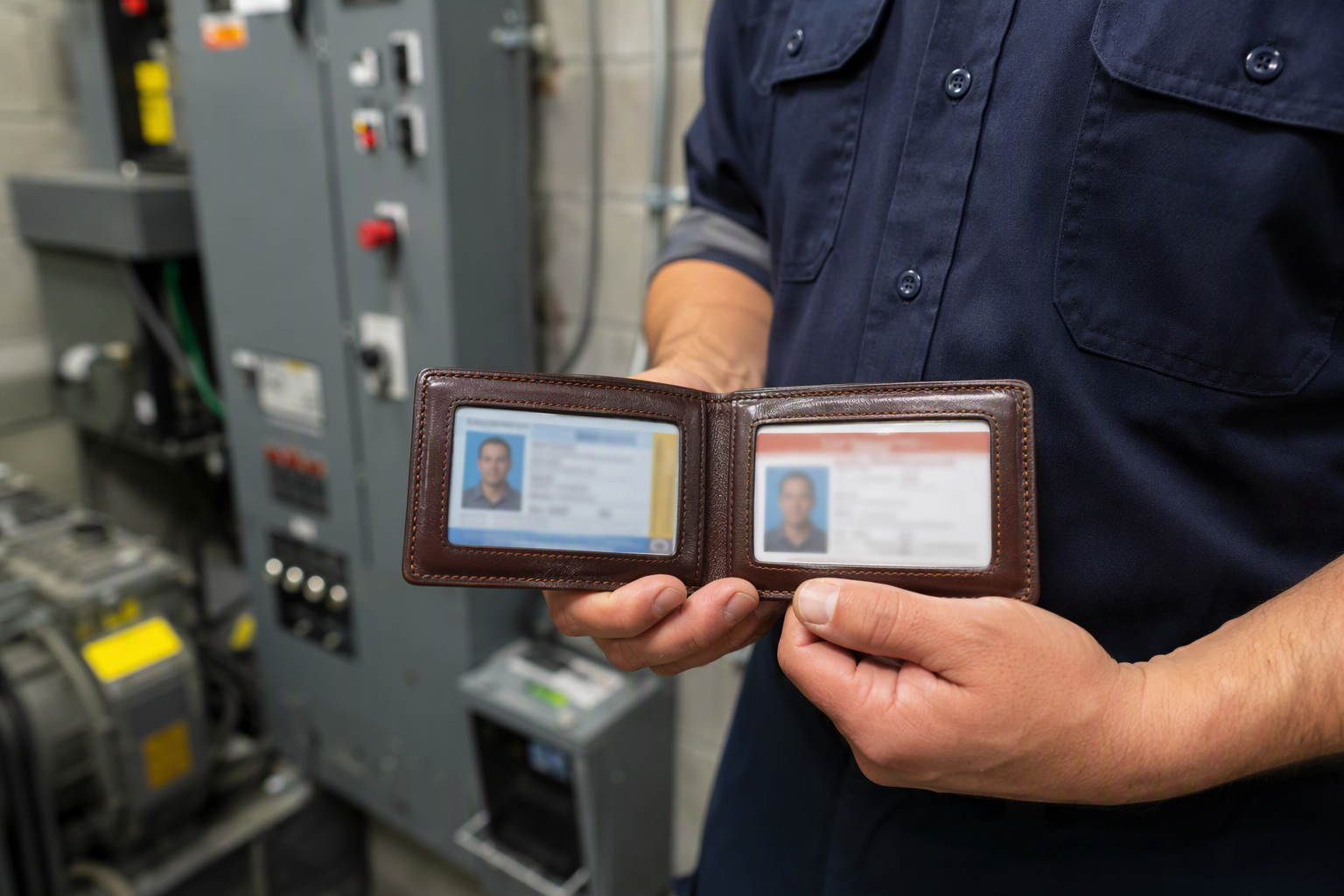
A qualified elevator contractor must hold the specific licenses and insurance coverage required by the jurisdiction where your building is located — not just a general contractor’s license.
Licensing requirements vary across the Mid-Atlantic region. In Maryland, the Maryland Department of Labor, Division of Labor and Industry requires that any business engaging in the installation, alteration, maintenance, repair, or servicing of elevators be licensed by the Maryland Elevator Safety Review Board as an elevator contractor. Maryland also mandates that elevator contractors carry at least $1,000,000 in general liability insurance and at least $500,000 in property damage insurance — these are statutory minimums, not industry suggestions.
In Virginia, installing, repairing, improving, or removing elevators or escalators requires a contractor license with the Elevator/Escalator Contracting (EEC) specialty, issued through the Virginia Board for Contractors under DPOR. Local building departments enforce compliance. Details on Virginia’s requirements appear in 13VAC5-63, the Virginia Uniform Statewide Building Code.
In Washington DC, elevator permits require an elevator contracting license, and the DC Board of Industrial Trades — under the DC Department of Licensing and Consumer Protection (DLCP) — licenses elevator contractors and mechanics. Elevator certificates are issued by the DC Department of Buildings (DOB). In Pennsylvania, elevator work is regulated statewide by the Pennsylvania Department of Labor and Industry, Bureau of Occupational and Industrial Safety, Elevator Section — including in Philadelphia, where some building owners mistakenly believe a local license suffices.
Quality Elevator Company operates within all applicable licensing frameworks across Maryland, Washington DC, Pennsylvania, and Virginia. Before signing any contract, ask the prospective vendor to produce current license documentation and certificates of insurance for your specific jurisdiction.
Are the company’s elevator mechanics individually certified?
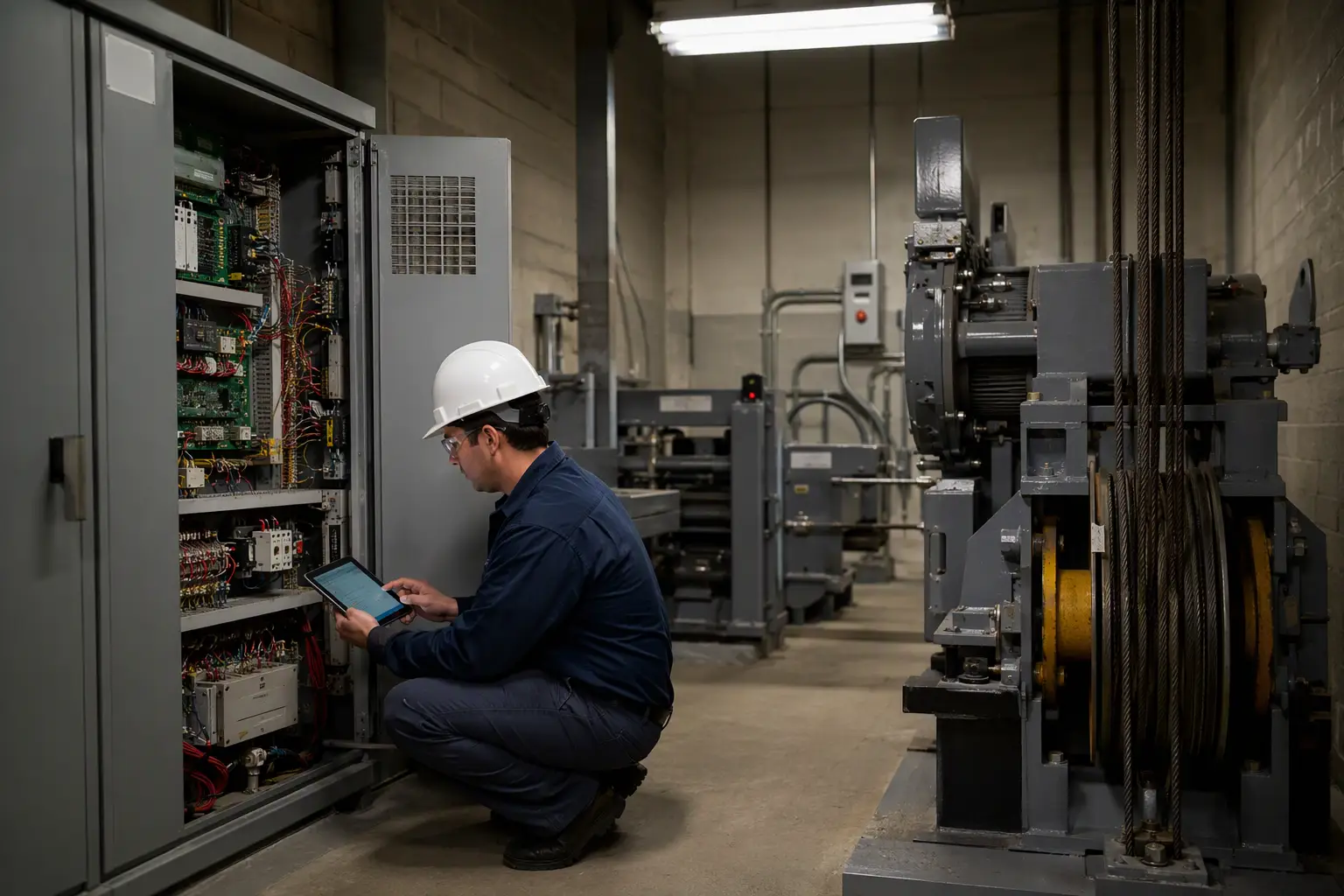
Mechanic-level certification is a separate and equally critical requirement from contractor licensing, and a reputable service company should be able to document it for every technician who will work on your equipment.
Virginia is explicit on this point: no one may work as an elevator mechanic without state certification, unless working under the direct and immediate supervision of a certified mechanic. Virginia certification requires at least three years of industry experience and passing an approved examination, plus at least eight hours of Board-approved continuing education per renewal cycle.
In Maryland, a person must be licensed as an elevator mechanic by the Maryland Elevator Safety Review Board before working on elevator units. In DC, applicants for an elevator inspector license must meet the ASME QEI-1 Standard for the Qualification of Elevator Inspectors or an equivalent standard, and DC’s periodic inspections must be performed by ASME QEI-certified inspectors. Ask for proof of individual mechanic credentials — not just the company’s contractor license.
What inspection intervals does the contract guarantee, and do they meet code?
Inspection frequency is not discretionary — it is set by state law and adopted safety codes, and your maintenance contract should explicitly address how it supports compliance with mandatory intervals.
The following table summarizes the mandatory periodic inspection intervals across Quality Elevator Company’s four service markets as of 2026:
| Jurisdiction | Governing Authority | Adopted Code Edition | Periodic Inspection Interval | Comprehensive / Category 5 Test |
|---|---|---|---|---|
| Washington DC | DC Department of Buildings (DOB) | ASME A17.1-2013/CSA B44-13 (2017 DC Building Code) | Category 1 every 12 months | Category 5 every 60 months |
| Maryland | MD Department of Labor, Division of Labor and Industry | ASME A17.1-2022/CSA B44:22 (effective June 17, 2026) | Annual periodic inspection | Five-year comprehensive inspection (wire rope/belt/chain elevators) |
| Pennsylvania | PA Department of Labor and Industry (L&I) | ASME A17.1-2000/A17.1a-2002 (ASME A17.1-2016 for new permits from Dec. 20, 2026) | Every 6 months (electric, hydraulic, escalators) | Category 1 annually (stand-alone, effective Dec. 20, 2026) |
| Virginia | Local building department (13VAC5-63 USBC) | ASME A17.1/CSA B44-2019 (2021 USBC, effective Jan. 18, 2024) | Annual (locality may require 6-month) | Per ASME A17.1 Appendix N intervals, witnessed by code official |
A contract that schedules service less frequently than the applicable mandatory interval is not just inadequate — it may leave the building owner exposed to certificate suspension and liability. Pennsylvania’s rules are particularly demanding: electric elevators, hydraulic elevators, and escalators must be inspected at intervals no greater than six months. Starting December 20, 2026, Pennsylvania will also require Category 1 tests annually as a stand-alone requirement under the updated Regulation #12-123.
Who conducts the required inspections — the maintenance company or an independent inspector?
In most jurisdictions, the entity that performs maintenance and the entity that conducts official inspections must be separate, and building owners need to understand which role their maintenance contractor plays.
In Maryland, the owner must hire a third-party qualified elevator inspector to conduct periodic inspections, and when that inspector is required to witness a test, the inspector must be physically present for the entire test — not just at the beginning or end. The maintenance contractor performs the required tests, but a separate licensed inspector witnesses them. In DC, owners must use a DOB-approved third-party elevator inspection agency, which inspects elevators on DOB’s behalf. In Virginia, the local code official — or an approved agency or certified elevator inspectors authorized by the locality — witnesses required periodic tests, and third-party inspection reports must include the certification number of the elevator mechanic who performed those tests. Clarify in any contract which party is responsible for coordinating, scheduling, and paying for the independent inspection component.
What does the maintenance contract actually cover — and what does it exclude?
Contract language varies enormously between “oil and grease” lubrication-only contracts and full-coverage agreements, and the exclusions section is where building owners most often get surprised.
Common exclusions include cab interior damage, hydraulic fluid replacement beyond a set volume, modernization components, vandalism repairs, and work required because of owner modifications. Ask the vendor to walk through the exclusions list line by line and get clarity on: (1) whether replacement parts are included or billed separately; (2) whether labor for emergency callbacks is covered at no additional charge during business hours and after hours; (3) whether the contract covers only the elevator itself or also related systems such as the machine room HVAC, pit lighting, and hoistway door components. A well-structured contract protects both parties and eliminates disputes when major repairs arise.
How does the company document maintenance and make records available?
Maintenance records are not optional documentation — in several jurisdictions, they are a regulatory requirement that must be kept accessible within the building.
Maryland’s regulations require that maintenance, repair, test, and inspection records be kept at a readily accessible central location in the building where the elevator is located. Ask prospective vendors whether they provide a maintenance log kept on-site, a digital portal where records can be retrieved, or both. In DC, owners submit third-party inspection reports for the past two years to DOB through the Citizen Access Portal to obtain a certificate of inspection — having complete, organized records is essential for that process. A service company that cannot produce organized historical documentation on demand is a compliance liability.
How are required certificates of inspection obtained and displayed?
Every jurisdiction in Quality Elevator Company’s service area requires that a valid certificate of inspection be obtained and displayed, and the process for each differs in meaningful ways.
In DC, a certificate of inspection is valid for two years. To obtain one, owners submit third-party inspection reports for the preceding two years to the DC Department of Buildings through the Citizen Access Portal. A copy of the current certificate must be conspicuously displayed in the elevator car unless the building operator has an office in the same building, in which case the certificate may be kept available there instead.
In Maryland, an elevator unit may not be operated without a certificate issued by the Commissioner of Labor and Industry, which must be posted conspicuously in or on the elevator. Owners must re-register elevator units annually at the time of the periodic inspection. Each new elevator must be registered with the Commissioner at least 60 days before its planned completion and before it is placed in service.
In Pennsylvania, a certificate of operation must be posted in the elevator car or attached to the controller in the machine room for equipment with a machine room. A certificate of operation is valid for 24 months for equipment on a six-month inspection cycle and 48 months for equipment on a twelve-month cycle. In Virginia, the current certificate must be displayed in the elevator, attached to the escalator, kept available in the building operator’s office, or posted in an approved conspicuous location. Ask the service company how it assists owners in obtaining, renewing, and properly displaying certificates.
What happens when an elevator fails between scheduled maintenance visits?
An elevator malfunction between scheduled visits — particularly one involving entrapment — requires a structured emergency response, and building owners should understand the contractor’s protocols before any incident occurs.
Ask specifically: Does the company provide after-hours emergency service? What is the process for reporting a malfunction? Who is the designated emergency contact? How does the company coordinate with local fire departments or building security during an entrapment? In DC, buildings with passenger elevators must keep at least one elevator in operation whenever the building is occupied, except in buildings with only one elevator — making emergency response capabilities especially important. In Pennsylvania, owners must submit an accident report to the Department of Labor and Industry when an elevator accident causes a fatality or requires professional medical care. Confirm that the maintenance contractor assists with this reporting obligation.
How does the company handle elevator permits for repairs, alterations, and modernizations?
Any repair, alteration, or modernization beyond routine maintenance typically requires a permit, and building owners should understand who is responsible for obtaining it.
In DC, a permit is required to take an elevator out of service under ASME A17.1 Section 8.11.1.4 or to place it in temporarily dormant status. DC elevator permits require a copy of the master electrician license and the elevator contracting license. Alterations and repairs of existing DC elevators follow the Existing Building Code. In Pennsylvania, construction, alteration, replacement, or repair requires a permit application to the Department of Labor and Industry, and after a major repair, replacement, or alteration, an elevator may not return to service until the Department inspects and passes it. Owners may appeal a code official’s decision or request a variance by petitioning the Elevator Safety Board within 30 days of the decision. A full-service elevator contractor should handle permit procurement as part of the scope of work.
Does the contractor understand ADA compliance requirements for elevators?
The Americans with Disabilities Act (ADA) imposes specific accessibility requirements for elevators in buildings subject to the law, and maintenance contractors should understand how their work intersects with those obligations.
ADA requirements for elevators include operational standards for door reopening devices, timing, cab dimensions, floor designation, and two-way emergency communication. A maintenance contract should address how routine service keeps ADA-required features — such as door sensors, leveling accuracy, and communication systems — in proper working order. Building owners should ask whether the contractor performs any ADA compliance checks as part of routine maintenance visits and whether deficiencies are documented and reported. This is particularly relevant for commercial buildings, multifamily housing subject to the Fair Housing Act, and government facilities across the DC, Maryland, Pennsylvania, and Virginia markets.
What is the contractor’s process for managing elevator modernization and code upgrades?
Elevators installed decades ago may not meet current safety code editions, and a maintenance contractor with modernization capability is better positioned to give owners a full picture of their equipment’s compliance status.
Maryland’s regulations provide that requirements in effect when an elevator was first certified remain in effect for that elevator — but owners must still maintain those elevators to applicable standards and comply with current periodic inspection requirements. Maryland also requires that elevators installed before July 1, 1955, still have standard hoistway entrance protection. Virginia’s 2021 Uniform Statewide Building Code, which took effect January 18, 2024, incorporates ASME A17.1/CSA B44-2019 for new and altered equipment, while the Virginia Existing Building Code references ASME A17.1/CSA B44-2016. Pennsylvania’s updated regulation — effective December 20, 2026 — transitions new permit applications to ASME A17.1-2016 with Pennsylvania modifications. Ask any prospective maintenance contractor to assess which code edition applies to your specific equipment and whether any required upgrades are approaching.
How does the company approach safety for elevator mechanics working in the building?
Elevator maintenance work involves confined spaces, electrical systems, and moving machinery — and the service company’s safety practices directly affect both their workers and building occupants.
OSHA standards apply to elevator mechanics performing maintenance and repair work, covering lockout/tagout procedures, pit entry, and machine room safety. Ask the service company how they secure equipment before maintenance, how they notify building management and occupants of planned shutdowns, and how they handle situations where safety issues are discovered mid-service. A company with structured safety procedures will also be better at identifying and documenting hazards before they become incidents.
What is the process for acceptance inspections after new installations or major repairs?
Before a repaired, altered, or newly installed elevator returns to service, most jurisdictions require a formal acceptance inspection — and the maintenance contractor’s role in coordinating that process matters.
- Ensure all construction or repair work is complete and the elevator is mechanically ready before scheduling the acceptance inspection.
- Notify the applicable authority: in Maryland, the State conducts the final acceptance inspection; in Pennsylvania, the Department of Labor and Industry conducts an acceptance inspection before new, repaired, or altered equipment is placed in service; in Virginia, the local building department handles acceptance inspections for new or modernized equipment.
- Have all required documentation prepared: permits, mechanic certifications, test results, and applicable code compliance records.
- Ensure a licensed elevator mechanic performs the required tests and that the appropriate inspector or code official witnesses them.
- After passing inspection, obtain and post the updated certificate of inspection in the required location before allowing the elevator to carry passengers.
What contract terms should building owners review most carefully before signing?
Certain contract provisions disproportionately affect building owners’ long-term rights, and scrutiny of these terms before signing is essential.
Pay close attention to: (1) Auto-renewal clauses — many elevator maintenance contracts renew automatically for one or more years unless cancelled within a narrow window. (2) Price escalation provisions — confirm whether annual rate increases are capped, indexed, or unlimited. (3) Cancellation and early-termination penalties — understand what it costs to exit the contract if service quality deteriorates. (4) Liquidated damages and liability caps — review how the contract limits the contractor’s liability for failures and whether those limits are reasonable relative to your exposure. (5) Ownership of maintenance records — confirm that all maintenance logs, inspection reports, and test data belong to the building owner, not the contractor, so they can be transferred to a new service company without dispute.
How does the service company communicate findings and recommend repairs?
A maintenance contractor’s communication practices determine whether building owners can make informed, timely decisions about their equipment — or whether they are perpetually reacting to failures.
Ask whether service technicians leave written reports after every visit, whether findings are categorized by urgency, and how the company communicates safety-critical issues that require immediate action. Find out whether recommended repairs are quoted in writing before work is authorized. A structured reporting process — with clear descriptions, photographs where relevant, and cost estimates — is a hallmark of a professional service organization. Quality Elevator Company provides documented service reporting across its Maryland, Washington DC, Pennsylvania, and Virginia operations, giving building owners a clear record of equipment condition over time.
How does the contractor stay current with code changes affecting your jurisdiction?
Elevator codes are updated on a rolling basis, and contractors who serve multiple jurisdictions must actively track changes across different regulatory frameworks.
The Mid-Atlantic region is currently in a period of code transition. Maryland adopted the ASME A17.1-2022/CSA B44:22 edition effective June 17, 2026. Pennsylvania’s updated regulation takes effect December 20, 2026, transitioning new permit applications to ASME A17.1-2016. DC’s Department of Buildings is planning to adopt new construction codes based on 2024 model codes by the end of 2027. Virginia’s 2021 USBC, incorporating ASME A17.1/CSA B44-2019, took effect January 18, 2024. A service company that cannot speak to these transitions — and their practical implications for your equipment — is not sufficiently current to serve as a trusted advisor. Ask directly how the company monitors code changes and communicates their impact to clients.
Does the service company have experience with the specific type of elevator equipment in your building?
Traction elevators, hydraulic elevators, escalators, and platform lifts each have distinct maintenance requirements, and not every service company has equal depth across all equipment types.
Maryland regulations specifically call out that elevators suspended by wire ropes, belts, chains, or similar means, and rack-and-pinion elevators, must receive a comprehensive five-year inspection — an obligation that requires familiarity with those specific drive systems. Ask the contractor to document service history with the specific manufacturer and model installed in your building, and ask whether they stock or can quickly source replacement parts for that equipment. Long lead times on proprietary parts can leave a building without elevator service for extended periods, which creates both regulatory compliance issues and tenant relations problems.
What is the process for handling an elevator that must be taken out of service?
Situations arise where an elevator must be removed from service for safety, permitting, or modernization reasons — and the process is regulated, not simply a business decision.
In DC, a DOB permit is required to take an elevator out of service under ASME A17.1 Section 8.11.1.4 or to place it in temporarily dormant status. DC also requires that in buildings with passenger elevators, at least one elevator must remain in operation whenever the building is occupied, except where there is only one elevator. A DC elevator’s certificate of inspection may be temporarily suspended while the elevator is under permit for alteration or modernization. In Pennsylvania, an elevator may not return to service after a major repair, replacement, or alteration until the Department of Labor and Industry inspects and passes it. Ask the contractor how they manage the regulatory side of an extended outage and how they communicate with the applicable authority having jurisdiction (AHJ) on the building owner’s behalf.
How does the company handle multi-building or portfolio maintenance contracts?
Property managers overseeing multiple buildings across different jurisdictions face compounding compliance complexity, and a service company’s ability to manage that efficiently is a material competitive differentiator.
Portfolio clients need a contractor capable of tracking different inspection intervals, certificate renewal dates, and code editions across DC, Maryland, Pennsylvania, and Virginia simultaneously. Ask whether the company provides a consolidated compliance calendar, whether a single account manager coordinates service across all properties, and how billing is structured for portfolio accounts. Quality Elevator Company serves commercial and multifamily building owners across Baltimore MD, Washington DC, Philadelphia PA, and Richmond VA, making regional portfolio management a core operational capability rather than an exception.
What questions should building owners ask about pricing structure and contract value?
Understanding what drives the price of an elevator maintenance contract — and what distinguishes a low bid from a low-value contract — allows building owners to make comparisons based on total cost rather than headline rate.
Ask prospective vendors to break down what is included in the base maintenance fee versus what triggers additional charges. Clarify whether callback labor — for malfunctions between scheduled visits — is included or billed at an hourly rate. Ask whether the quoted price reflects the full regulatory compliance burden for your jurisdiction, including the costs of coordinating third-party inspections where required. A lower monthly fee that excludes third-party inspection coordination, callback labor, and parts replacement may ultimately cost more than a higher all-inclusive rate. Quality Elevator Company structures its contracts with transparency across its four service markets so that building owners can evaluate total cost of ownership rather than comparing headline rates in isolation.
Contact Quality Elevator Company for a Free Elevator Assessment
Building owners and property managers in Baltimore MD, Washington DC, Philadelphia PA, and Richmond VA deserve a maintenance partner who understands the specific licensing, inspection, and code requirements of their jurisdiction — and who communicates clearly before any contract is signed. Quality Elevator Company provides comprehensive elevator maintenance, regulatory compliance support, and transparent contract terms across all four markets.
Contact Quality Elevator Company for a free elevator assessment: 301-307-5363
Need elevator service you can rely on? Quality Elevator Company is ready to help.