Elevator Entrapment and Emergency Guide for Building Managers: Frequently Asked Questions
Elevator emergencies are low-frequency but high-stakes events. Building managers in Baltimore, Washington DC, Philadelphia, and Richmond carry direct responsibility for passenger safety the moment an entrapment or malfunction occurs. The 20 questions below cover every stage of an emergency response — from the first call you make to the documentation you file afterward — along with compliance requirements under ASME A17.1 Safety Code for Elevators and Escalators and applicable regulations in Maryland, the District of Columbia, Pennsylvania, and Virginia.
1. What is the very first thing a building manager should do when an elevator entrapment is reported?
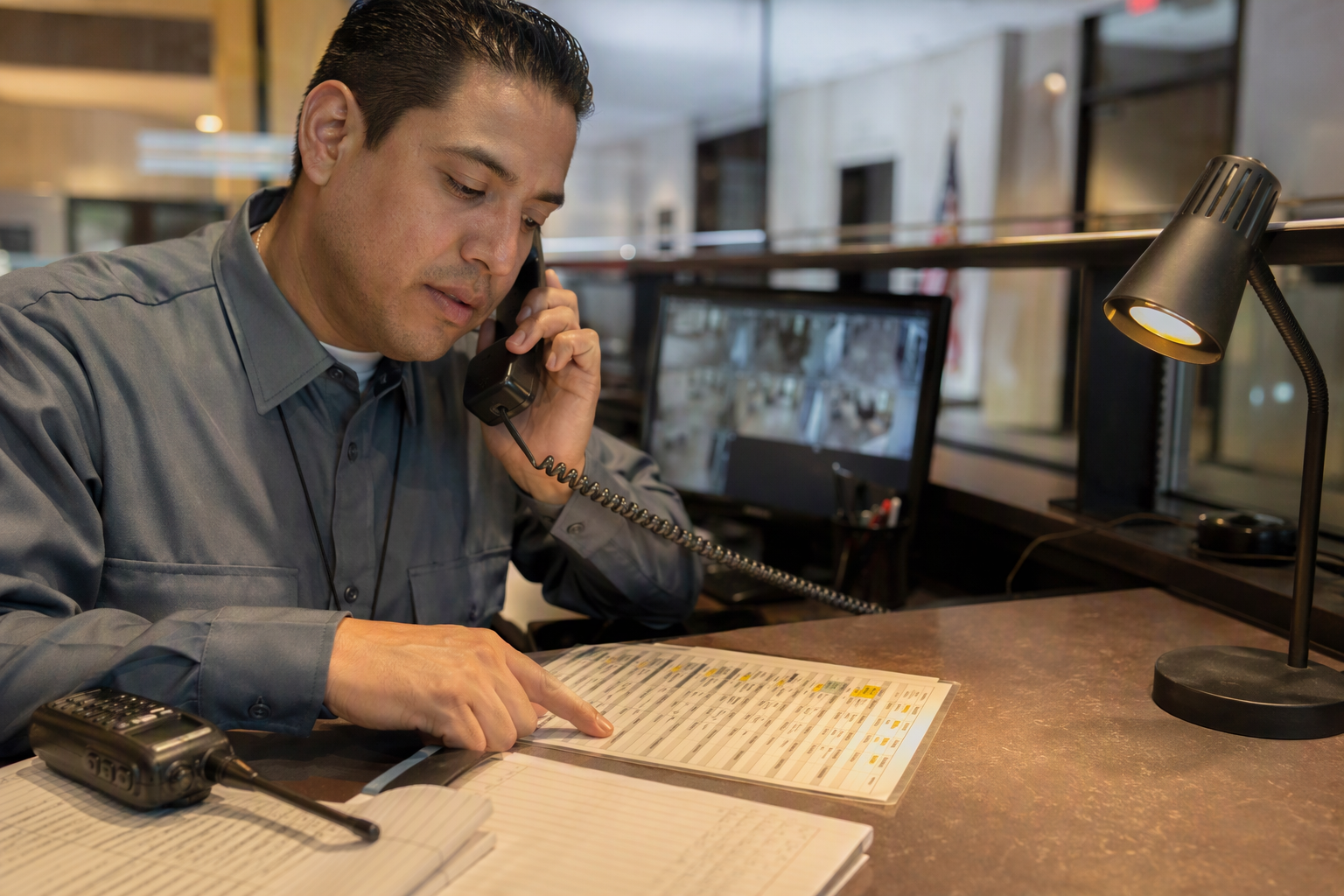
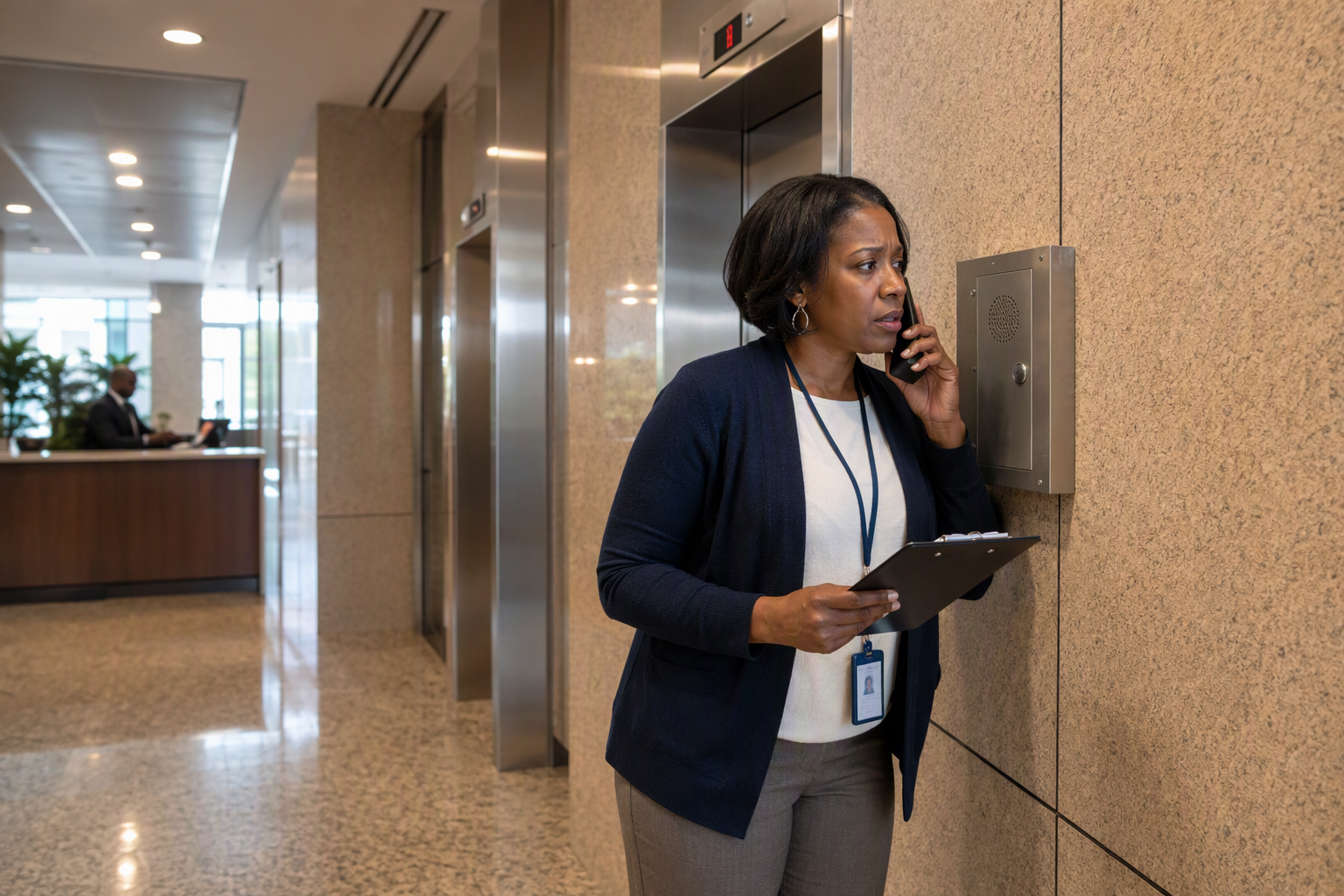
Immediately call your elevator service company’s 24-hour emergency line and, simultaneously, have a staff member communicate with trapped passengers through the cab’s two-way intercom to confirm their condition and provide reassurance.
Time matters, but composure matters more. The priority sequence is: establish contact with passengers, assess medical status, notify the elevator service provider, and call 911 if anyone reports a medical emergency, panic attack, or physical injury. Do not attempt to force open hoistway doors or move the car manually — doing so can cause the elevator to shift unexpectedly and create a far more dangerous situation.
Building managers should post the elevator service provider’s emergency number inside the machine room, at the building security desk, and in the property management software so no one wastes critical minutes searching for it.
2. What should building staff say to passengers who are trapped inside an elevator?
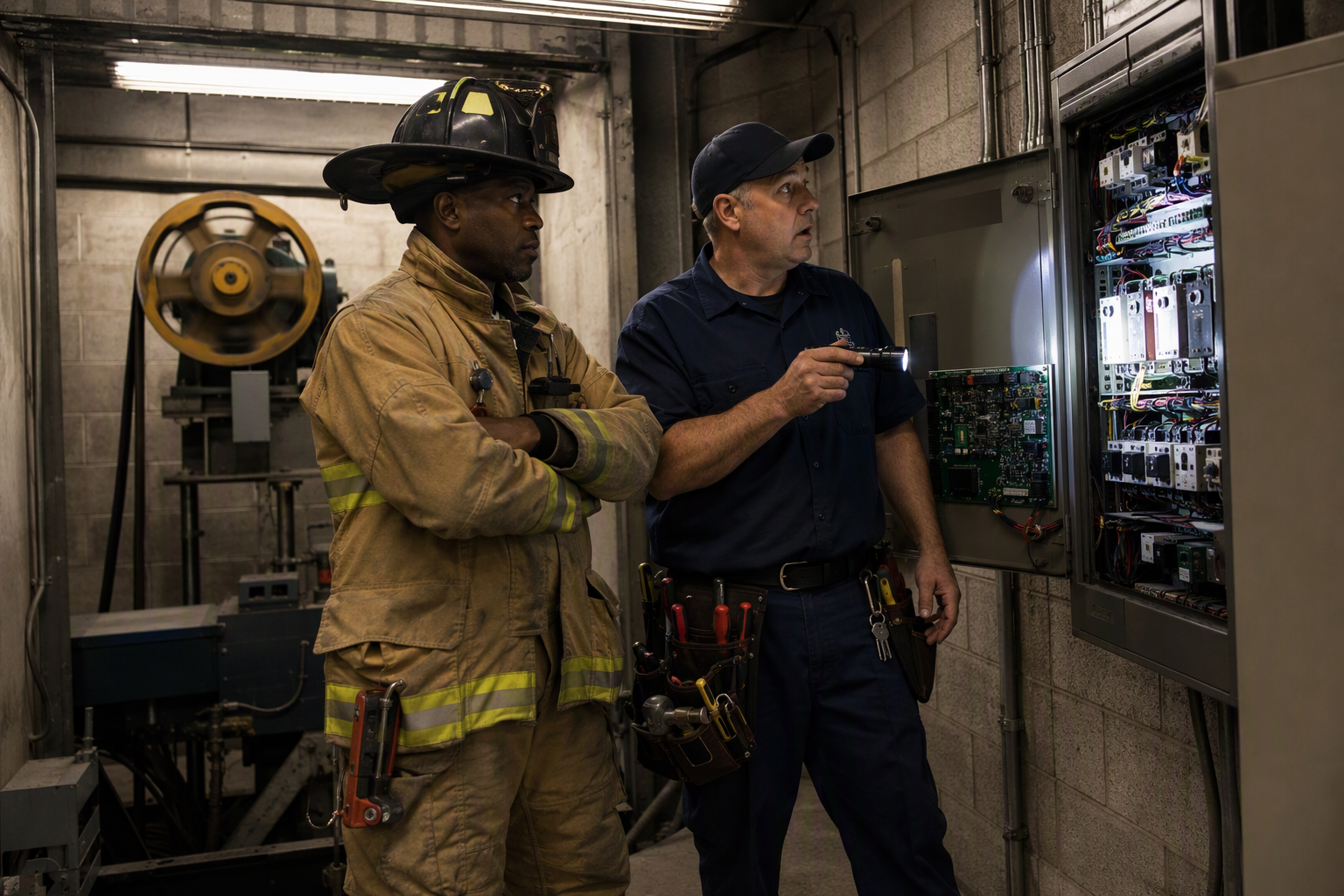
Staff should speak calmly through the intercom, confirm help is on the way, ask passengers to stay toward the center of the cab away from the doors, and check whether anyone has a medical condition requiring urgent attention.
Recommended scripted language: “This is building management. We know you are in the elevator and we have already contacted our elevator technicians. Help is on the way. Please stay calm, move away from the doors, and press the alarm button if your condition changes.” Avoid vague timeframes. If a passenger discloses a cardiac condition, severe anxiety, or another medical emergency, call 911 immediately and maintain verbal contact until first responders arrive.
Continuous communication reduces panic, prevents passengers from attempting their own escape, and provides information the arriving technician needs before opening the car.
3. When should a building manager call 911 versus the elevator service company?
Call 911 when any passenger reports a medical emergency, when a fire or smoke alarm has activated, when a passenger is attempting a self-rescue that could injure them, or when entrapment extends beyond a reasonable response window and a passenger’s condition is deteriorating.
For routine mechanical entrapments where passengers are stable and the elevator service provider has been notified and is en route, 911 is generally not required. However, building managers should always err on the side of caution. Fire departments in Maryland, DC, Virginia, and Pennsylvania are trained in elevator rescue and routinely respond alongside elevator technicians. In many jurisdictions, the fire marshal may require an incident report regardless of whether 911 was called.
Document the time of every call — service company, 911, and any internal notifications — in your incident log.
4. What are the legal obligations of a building manager during an elevator emergency under ASME A17.1?
Under ASME A17.1, building owners and their designated managers are responsible for ensuring that elevators are maintained in safe operating condition, that a means of two-way communication is operational at all times, and that emergency procedures are established before an emergency occurs.
ASME A17.1 requires that each elevator cab be equipped with a means of two-way communication that connects to a location staffed 24 hours a day or to an approved monitoring center. This is not optional equipment — it is a code requirement. Building managers who allow this system to fall into disrepair may face liability exposure in the event of an entrapment injury.
Maryland, DC, Virginia, and Pennsylvania all adopt ASME A17.1 as the basis of their elevator safety codes, enforced through each state’s respective labor or building safety agency. Compliance is verified during the mandatory periodic inspection cycle.
5. What step-by-step protocol should building managers follow during an active elevator entrapment?
Follow this sequential protocol to manage an entrapment safely and in compliance with code obligations.
- Activate the two-way intercom and make verbal contact with all trapped passengers. Confirm the number of people in the cab and ask about any medical conditions.
- Note the time of the initial report and log it in your incident record immediately.
- Call your elevator service provider’s emergency line and provide the building address, elevator number or location, number of trapped passengers, and any medical concerns.
- Call 911 if any passenger reports a medical emergency, if smoke or fire is present, or if the service provider’s estimated arrival is unacceptable given passenger condition.
- Post a staff member outside the affected elevator on every floor where the car may be stopped to prevent additional passengers from attempting to enter and to guide arriving technicians.
- Secure the machine room and ensure it is accessible for the arriving elevator technician. Clear the area of unauthorized personnel.
- Continue periodic check-ins with trapped passengers via intercom every two to three minutes until the technician arrives.
- Do not attempt manual lowering or door-opening unless you have been formally trained and authorized by the elevator service company in writing.
- Facilitate technician access immediately upon arrival — escort them to the machine room and provide the elevator’s maintenance logbook if requested.
- Complete a full incident report after the entrapment is resolved, documenting all actions taken, all parties contacted, and the root cause as determined by the technician.
6. Is it ever safe for building staff to open elevator doors manually during an entrapment?
No — manual door operations should only be performed by a licensed elevator mechanic or trained first responder, because an unsecured car can shift position unexpectedly, creating a fall-into-the-pit or shear hazard for passengers and staff.
Hoistway doors have a mechanical interlock system that is designed to prevent exactly this kind of unauthorized access. Bypassing that interlock without confirming the car’s precise location and securing the brake is one of the most common causes of serious entrapment-related injuries. Building managers who allow or direct untrained staff to open hoistway doors expose themselves and their organization to significant liability under OSHA general duty clause provisions, in addition to potential civil liability.
7. What communication equipment is required inside every elevator cab?
ASME A17.1 requires each elevator to have a two-way means of communication — typically a hands-free phone or intercom — that connects to a continuously staffed location or monitoring center, as well as an audible alarm device operable from inside the cab.
Building managers should test this communication system monthly as part of their preventive maintenance agreement. A system that works during inspection and fails during an actual entrapment is a code compliance failure with real human consequences. Systems that connect only to an unstaffed location — such as a voicemail box — do not meet the intent of the code requirement.
Monitoring centers that receive the emergency call must be capable of contacting help on behalf of the trapped passengers. Building managers should confirm this capability in writing with their monitoring vendor annually.
8. What are the inspection and maintenance requirements building managers must maintain to prevent entrapments?
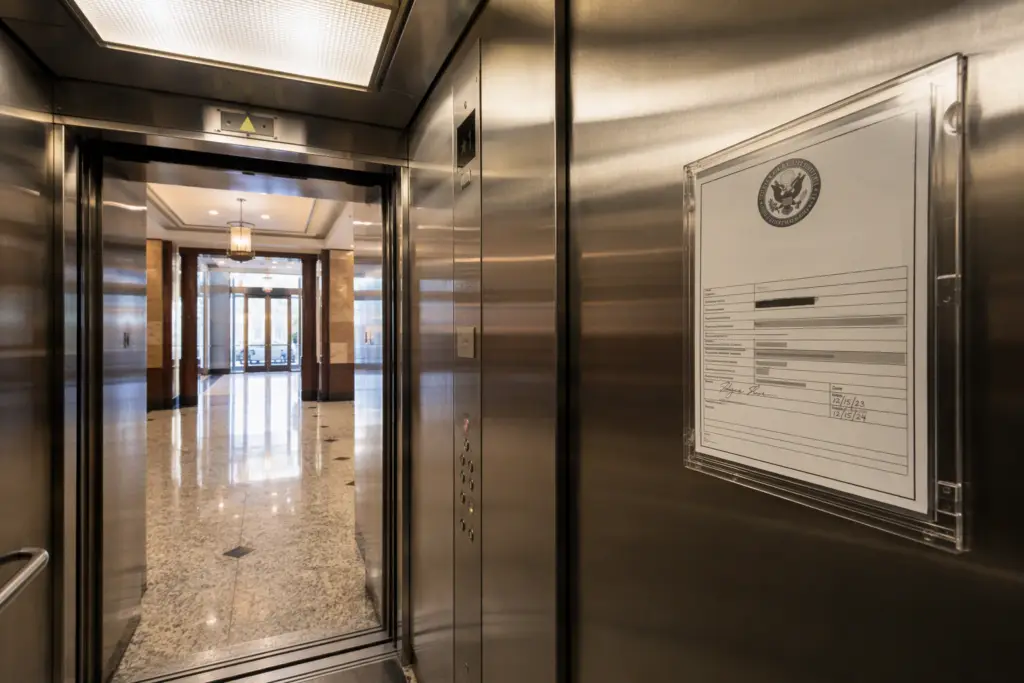
Building managers must ensure their elevators receive both periodic inspections by a state-authorized inspector and a documented preventive maintenance program performed by a licensed elevator contractor, as required by the elevator codes adopted in Maryland, DC, Virginia, and Pennsylvania.
| Jurisdiction | Governing Code Basis | Inspection Frequency (Typical) | Enforcing Agency | Permit/Certificate Required |
|---|---|---|---|---|
| Maryland | ASME A17.1 / A17.3 | Annual | MD Dept. of Labor, Licensing & Regulation | Yes — Certificate of Operation |
| Washington DC | ASME A17.1 / A17.3 | Annual | DC Dept. of Consumer & Regulatory Affairs (DCRA / DLCP) | Yes — Operating Permit |
| Pennsylvania | ASME A17.1 / A17.3 | Annual | PA Dept. of Labor & Industry, Bureau of Occupational & Industrial Safety | Yes — Certificate of Operation |
| Virginia | ASME A17.1 / A17.3 | Annual | VA Dept. of Labor & Industry | Yes — Operating Certificate |
Allowing an elevator to operate with an expired certificate of operation is a violation in all four jurisdictions and may result in mandatory shutdown orders, fines, and heightened liability exposure. Quality Elevator Company assists building managers in tracking certificate renewal dates and coordinating third-party inspections across all four service markets.
9. What documentation should a building manager maintain related to elevator emergencies?
Building managers should maintain a logbook containing all inspection certificates, maintenance records, entrapment incident reports, intercom test results, and any corrective work orders — accessible in the machine room and in property management records.
In the event of litigation, regulatory investigation, or an insurance claim following an entrapment, documentation is the building manager’s primary defense. Each incident report should include: date and time of entrapment, elevator identification number, number and identity of trapped passengers, condition of passengers, time of each notification call, name of responding technician, root cause finding, and corrective action taken.
Retain these records for a minimum period consistent with your jurisdiction’s statute of limitations for personal injury claims — consult your legal counsel for the specific period applicable to your property location in Maryland, DC, Pennsylvania, or Virginia.
10. What are the ADA requirements that affect elevator emergency response for building managers?
Under the Americans with Disabilities Act (ADA), elevators in public accommodations and commercial facilities must be accessible and operational, meaning a prolonged or unresolved outage that eliminates the only accessible route to upper floors may create an ADA compliance exposure beyond the immediate safety concern.
Building managers should have a written plan for providing equivalent facilitation to individuals with disabilities during an elevator outage. This might include temporary staff assistance, alternative accessible routes if they exist, or clear communication to visitors and tenants about the status and expected resolution time. The ADA does not excuse building managers from providing accessible access simply because equipment has failed — the obligation is to address the failure promptly and provide interim accommodation.
For multi-elevator buildings, consider the sequence in which elevators are taken offline for maintenance to ensure at least one accessible cab remains in service whenever possible.
11. What common mechanical causes lead to elevator entrapments, and how can they be prevented?
The most common mechanical causes of entrapment include door operator failures, leveling sensor malfunctions, drive motor or controller faults, and brake system anomalies — all of which are identifiable and addressable through a consistent preventive maintenance program.
Door system failures are among the most frequent causes of service interruptions. Worn door rollers, misaligned tracks, and degraded safety edges allow doors to fail to close fully, triggering the elevator’s safety circuit and stopping the car. Regular lubrication, adjustment, and replacement of door components on a scheduled basis dramatically reduces door-related entrapments.
Leveling issues — where the car stops above or below the floor sill — are both an entrapment risk and a trip-and-fall hazard. Poorly maintained encoders or worn machine components can cause this condition. Building managers should report any leveling complaints immediately rather than waiting for the next scheduled maintenance visit.
Quality Elevator Company provides documented preventive maintenance programs designed to identify and correct these failure modes before they result in service interruptions or entrapments.
12. What is the building manager’s role after the entrapment is resolved and passengers are released?
After passengers are released, the building manager should verify passenger welfare, complete a full incident report, obtain the technician’s written assessment of the cause, and ensure the elevator is either confirmed safe for return to service or taken out of service pending repair.
Do not simply return the elevator to service because the immediate problem appears resolved. Request a written finding from the technician before reopening the elevator to building occupants. If the root cause was a safety-critical component failure — such as a brake anomaly or governor issue — the elevator should remain out of service until the deficiency is corrected and the repair is documented.
Notify affected tenants of the incident and the corrective action taken. Transparency builds confidence and demonstrates that management takes elevator safety seriously.
13. How should building managers handle an elevator fire emergency differently from a standard entrapment?
When a fire alarm activates, building managers must ensure elevators with Phase I Emergency Recall are recalled to the designated level automatically or manually, and that no one attempts to use the elevator for evacuation — per ASME A17.1 fire service requirements.
Modern elevators in buildings served by Maryland, DC, Virginia, and Pennsylvania codes are equipped with Phase I Fire Service Operation, which returns the car to a designated recall floor when a connected smoke detector activates. Building managers should know the location of the Phase I key switch, understand how to operate it manually if automatic recall fails, and ensure the recall system is tested during annual inspections.
Elevators must never be used for occupant evacuation during a fire emergency unless the building has been specifically designed and permitted with occupant evacuation elevators (OEE) per the applicable building code. Standard elevators are for firefighter access only during a fire event. Building emergency action plans must reflect this clearly.
14. What should building managers do if the elevator’s intercom or alarm system is not functioning during an entrapment?
If the in-cab communication system is non-functional, immediately deploy staff to each floor of the building to attempt verbal communication through the hoistway door, contact 911 to request fire department response, and take the elevator out of service immediately after the rescue.
A non-functional intercom is itself a code violation under ASME A17.1 and should result in immediate removal from service until the communication system is repaired and tested. Building managers who are aware of a defective intercom and allow the elevator to continue operating assume significant liability if a subsequent entrapment occurs without communication capability.
After the event, ensure the communication system deficiency is corrected as a priority repair, not a deferred maintenance item.
15. How often should building managers conduct elevator emergency drills or training for building staff?
Building managers should conduct elevator emergency response training for all front-desk, security, and facilities staff at least annually, and any time there is significant staff turnover in roles responsible for passenger communication during an emergency.
Training should cover: how to use the intercom system, the correct protocol for contacting the elevator service provider and 911, what not to do (including door-opening attempts), how to complete an incident report, and the location of emergency contact numbers. Practical drills that simulate an entrapment scenario help staff respond calmly and correctly under pressure.
Documentation of training dates and attendees should be retained in the building’s safety records alongside elevator inspection certificates and maintenance logs.
16. What OSHA obligations apply to building managers and maintenance staff related to elevator emergencies?
Under OSHA‘s General Duty Clause (Section 5(a)(1)), building employers must provide a workplace free from recognized hazards, which includes having documented elevator emergency procedures and ensuring that no untrained employee is directed to perform elevator rescue work.
Building maintenance staff who are instructed to open hoistway doors, enter the pit, or access the machine room during an active emergency without proper training and lockout/tagout procedures may be subjected to serious injury, and the building owner may face OSHA citations. The clear standard is that any hands-on elevator rescue or mechanical intervention must be performed by a licensed elevator mechanic.
OSHA’s lockout/tagout standard (29 CFR 1910.147) also applies to elevator maintenance work — building managers should ensure their contracted elevator service company follows these procedures during all maintenance activities, including emergency responses.
17. How should building managers communicate with tenants and occupants following an elevator entrapment incident?
Building managers should provide a prompt written communication to affected tenants that acknowledges the incident, confirms the corrective action taken, states whether the elevator is back in service or remains offline, and outlines any steps being taken to prevent recurrence.
Transparency following an incident reduces tenant anxiety, demonstrates professional management, and can be important evidence of good-faith operations in the event of any future claim. The communication does not need to contain technical detail — it should be clear, factual, and solution-focused. Avoid speculative language about causes before the technician’s written finding is confirmed.
For buildings with significant populations of elderly residents or individuals with disabilities, communicate directly and personally rather than relying solely on a posted notice, given that elevator access may be critical to their mobility and safety.
18. What should building managers look for when selecting an elevator service company for emergency response?
Building managers should prioritize elevator service companies that are certified, employ licensed elevator mechanics in the applicable jurisdiction, provide documented maintenance records, and operate within the specific markets where the building is located — DC, Maryland, Pennsylvania, or Virginia.
Licensing requirements vary by jurisdiction. In Maryland, DC, Virginia, and Pennsylvania, elevator mechanics must hold state-recognized licenses or certifications to legally perform elevator work. Building managers should request proof of licensure, not simply assume any company that markets elevator services holds the required credentials.
Service contract terms should clearly define emergency response obligations, documentation requirements, and the scope of preventive maintenance included. A service agreement that lacks clear emergency provisions may leave the building manager without a reliable partner when an entrapment occurs.
Quality Elevator Company is a certified elevator service company serving building managers across Baltimore, Washington DC, Philadelphia, and Richmond, providing both full maintenance contracts and emergency response services in all four markets.
19. What are the consequences for building managers who fail to maintain compliant elevators in DC, Maryland, Pennsylvania, and Virginia?
Consequences range from operating certificate revocation and mandatory shutdown orders to civil liability for passenger injuries and, in cases of willful neglect, potential regulatory fines from state labor and building safety agencies.
Each of the four jurisdictions enforces elevator safety through annual inspection programs with authority to issue cease-operation orders for elevators that fail inspection or are found to have unresolved safety violations. An elevator operating without a valid certificate of operation is operating illegally, regardless of how functional it appears day-to-day.
Civil liability exposure from entrapment-related injuries is compounded when plaintiffs can demonstrate that the building manager was aware of maintenance deficiencies, ignored inspection findings, or failed to maintain required documentation. Proactive compliance is materially less expensive than reactive litigation.
20. How can building managers proactively reduce the risk of elevator entrapments before they occur?
Building managers can significantly reduce entrapment risk through a combination of a written preventive maintenance agreement with a licensed elevator contractor, timely correction of all inspection deficiencies, monthly communication system tests, and staff training — creating a layered safety system rather than relying on reactive response alone.
The most effective risk reduction strategy is a consistent, documented preventive maintenance program. Elevators that are regularly maintained have fewer unplanned service interruptions, fewer safety-related shutdowns, and longer operational lifespans. Deferred maintenance is the single most common root cause of avoidable entrapments.
Building managers should also conduct a periodic review of their emergency response plan — at minimum annually — to ensure contact numbers are current, staff roles are assigned, and communication equipment is functional. A plan that exists only on paper and has never been rehearsed is only marginally better than no plan.
Quality Elevator Company works with property managers across Baltimore, Washington DC, Philadelphia, and Richmond to develop and implement proactive maintenance programs and emergency response protocols tailored to each building’s elevator inventory and occupant profile. Building managers who want to move from a reactive posture to a compliance-first approach benefit from partnering with a service company that operates exclusively in these four markets and understands the specific regulatory environments of each jurisdiction.
Need elevator service you can rely on? Quality Elevator Company is ready to help.