Quick Answer: Managing multiple elevators across a large building or property portfolio requires a centralized tracking system for inspection schedules and certificates, a unified service contract with a qualified independent provider, and jurisdiction-specific compliance monitoring across the District of Columbia, Maryland, Pennsylvania, and Virginia to avoid costly violations, liability exposure, and service gaps.
Property managers and building owners overseeing multiple elevators face a complexity that single-unit operators rarely encounter: compliance deadlines multiply, service records fragment across different vendors, and a missed inspection at one property can trigger regulatory action across an entire portfolio. This guide breaks down the key decisions, comparison frameworks, and operational protocols that support effective multi-elevator management in 2026.
Why Is Multi-Elevator Management More Complex Than Managing a Single Unit?

A single elevator has one inspection cycle, one service log, and one point of contact. Multiply that across ten, twenty, or fifty units spread across Washington D.C., Maryland, Pennsylvania, and Virginia, and each variable multiplies accordingly. Each jurisdiction has its own Authority Having Jurisdiction (AHJ), its own inspection frequency requirements, and its own certificate display rules. Without a unified system, critical deadlines fall through the cracks.
The core complications include:
- Multiple AHJs: A portfolio spanning D.C., Maryland, Virginia, and Pennsylvania must satisfy four distinct regulatory bodies with differing inspection intervals and paperwork formats.
- Fragmented service history: When different vendors service different properties, maintenance records are siloed, making it difficult to identify recurring problems or negotiate leverage.
- Uneven equipment age: Older units may require more frequent modernization assessments while newer units focus on preventive maintenance — requiring different service tier agreements.
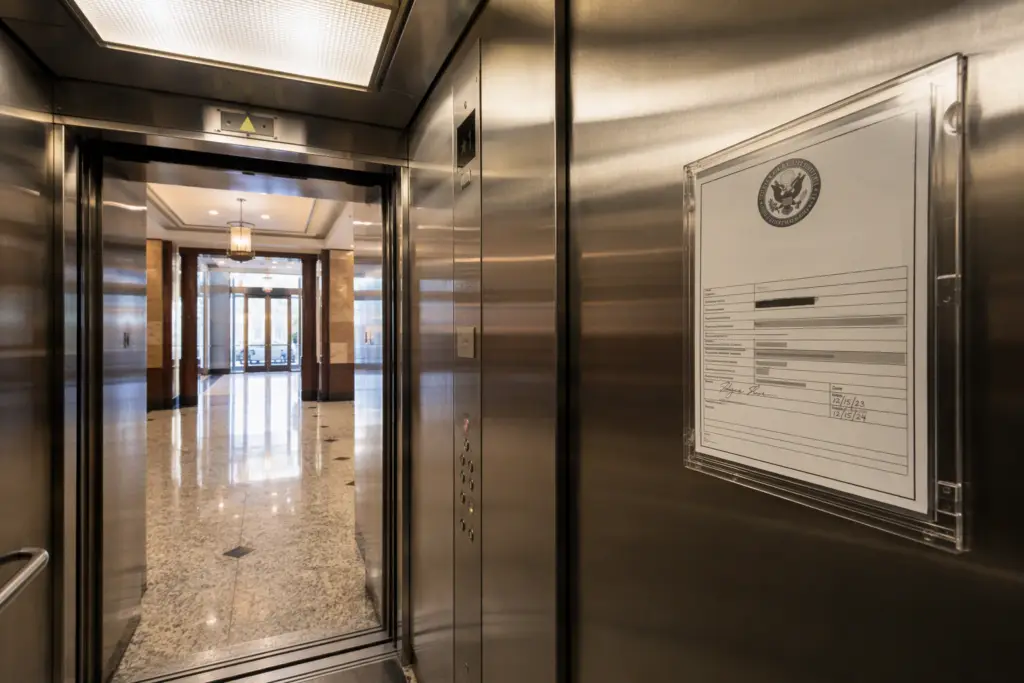
- Compliance certificate management: Each elevator must display a current, valid inspection certificate. Tracking expiration dates manually across dozens of units is error-prone.
What Are the Regulatory Requirements for Elevators in D.C., Maryland, Virginia, and Pennsylvania?
All four jurisdictions in Quality Elevator Company’s service area adopt standards derived from the ASME A17.1 Safety Code for Elevators and Escalators for new installations and the ASME A17.3 Safety Code for Existing Elevators and Escalators for existing equipment. These codes establish minimum safety requirements, inspection categories, and maintenance intervals that local AHJs then enforce and may supplement.
Additionally, any elevator serving the public or employees must comply with accessibility requirements under the Americans with Disabilities Act (ADA), which mandates that elevators in facilities covered by the ADA provide accessible routes and meet specific dimensional, control, and communication standards.
Workplace safety obligations for elevator maintenance personnel and the environments they work in fall under OSHA standards, which apply regardless of jurisdiction.
For multi-property portfolios, the practical implication is that a single service provider certified to work across all four jurisdictions dramatically simplifies compliance tracking compared to using a patchwork of local vendors.
What Is the Best Way to Centralize Elevator Compliance Tracking?
Centralizing compliance tracking is the single highest-impact operational change a multi-property owner or manager can make. The following steps describe a recommended compliance tracking protocol:
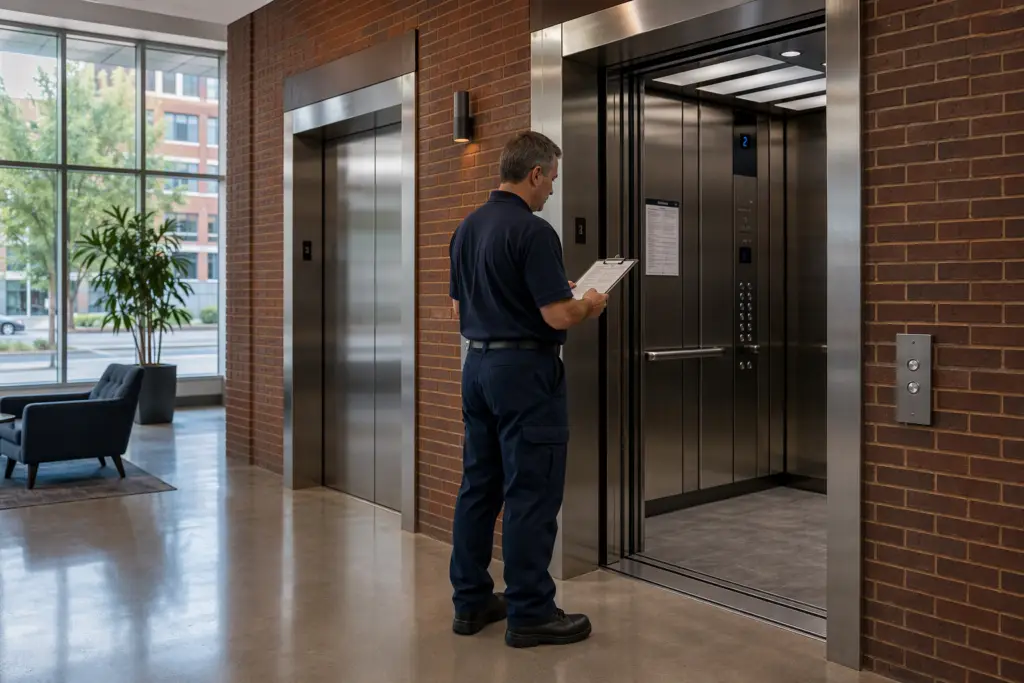
- Audit every elevator in the portfolio. Compile a master list including unit ID, property address, jurisdiction, equipment manufacturer, installation year, and current certificate expiration date.
- Create a compliance calendar. Map all upcoming inspection deadlines by AHJ, noting that different jurisdictions may require inspections at different intervals under ASME A17.1 and A17.3 guidelines.
- Assign a designated compliance owner. Whether an internal facilities manager or a third-party elevator management firm, one person or team must own the calendar and be accountable for renewals.
- Digitize service records. Migrate paper maintenance logs to a shared digital platform so service history is accessible across all properties and vendors.
- Set automated alerts. Configure reminders at ninety, sixty, and thirty days before each inspection or certificate expiration.
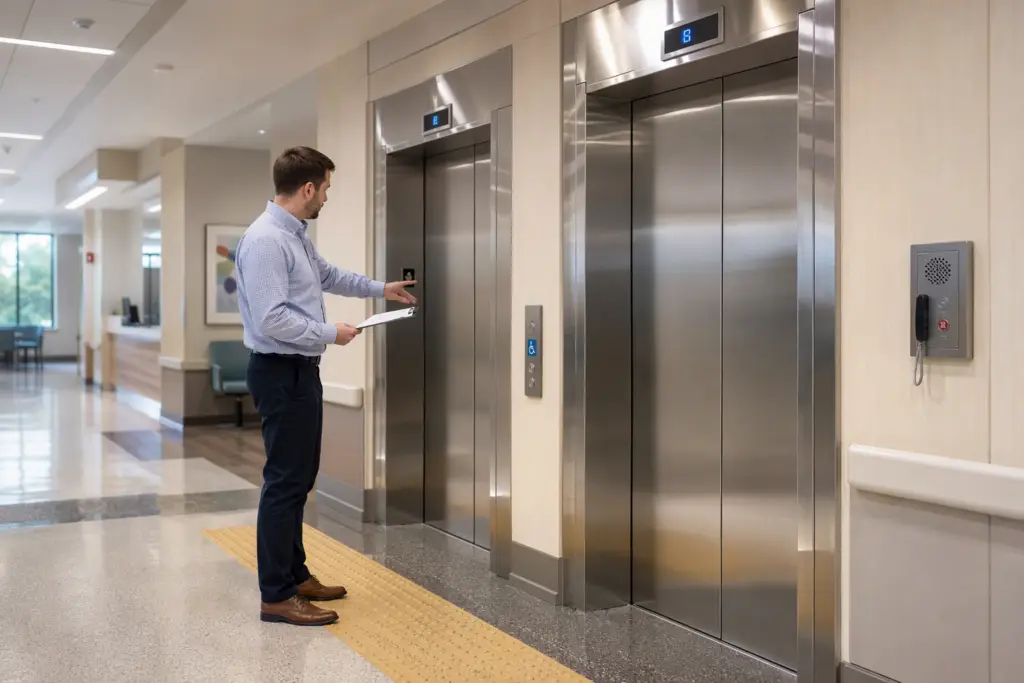
- Verify certificate display compliance. Confirm that each elevator car displays its current inspection certificate in the required location per the applicable AHJ’s rules.
- Conduct an annual portfolio review. Each year, assess which units are approaching end-of-life, which have open violations, and which are candidates for modernization.
- Standardize vendor reporting. Require that any service provider submit reports in a consistent format, including date of service, technician scope of work, parts replaced, and any deficiencies noted.
How Do Single-Vendor Contracts Compare to Multi-Vendor Arrangements?
One of the most consequential decisions for a multi-elevator portfolio is whether to consolidate service under one independent contractor or to manage relationships with multiple vendors. The table below outlines the primary trade-offs:
| Factor | Single Independent Vendor (Consolidated) | Multi-Vendor Arrangement |
|---|---|---|
| Compliance Tracking | Centralized; one point of accountability across all AHJs | Fragmented; each vendor tracks only their assigned properties |
| Service Record Continuity | Unified history per unit; easier to spot trends | Siloed records; difficult to compare or audit |
| Negotiating Leverage | Higher; volume of units creates pricing leverage | Lower per vendor; no consolidated volume discount |
| Coverage Across Jurisdictions | Strong if vendor is certified in all target jurisdictions | May require local specialists per jurisdiction |
| Accountability | Clear; one vendor is responsible for all units | Diffuse; disputes over responsibility are more common |
| Risk of Service Gaps | Lower when vendor has adequate capacity | Higher; gaps can arise at transition points between vendors |
| Flexibility | Lower short-term; contract terms bind the relationship | Higher; easier to switch individual property vendors |
| Best For | Portfolios of five or more elevators in D.C., MD, VA, PA | One or two elevators in geographically dispersed markets |
For most large building owners or property managers operating across the D.C., Maryland, Virginia, and Pennsylvania region, a consolidated contract with a qualified independent provider like Quality Elevator Company offers a materially stronger compliance and cost profile than managing multiple vendor relationships.
What Are the Key Cost Drivers in a Multi-Elevator Maintenance Program?
| Cost Category | Description | Cost Reduction Strategy |
|---|---|---|
| Routine Preventive Maintenance | Scheduled lubrication, adjustment, and safety testing per ASME A17.1 requirements | Bundle all units under one contract; negotiate volume terms |
| Regulatory Inspections | Mandatory third-party or AHJ inspections with associated fees | Coordinate inspection scheduling to reduce per-visit administrative costs |
| Emergency Repairs | Unplanned breakdowns; typically the highest per-incident cost | Increase preventive maintenance frequency on high-use or aging units |
| Violation Remediation | Repairs required to satisfy AHJ citations; may include fines | Proactive compliance tracking prevents violations before they occur |
| Modernization | Major upgrades to controls, drives, or cab interiors to meet ASME A17.3 | Plan modernizations on a rolling portfolio schedule rather than reactive replacement |
| Administrative Overhead | Staff time tracking certificates, coordinating vendors, managing records | Consolidate vendors; use digital compliance management tools |
How Should Property Managers Evaluate Elevator Service Providers for a Large Portfolio?
Selecting a service provider for a multi-elevator portfolio is not the same decision as selecting one for a single building. The evaluation criteria should include:
- Multi-jurisdiction certification: The provider must be authorized to perform inspections and maintenance across D.C., Maryland, Virginia, and Pennsylvania as applicable to the portfolio.
- Scope of self-performed work: Providers who perform more work with their own technicians (rather than subcontracting) generally deliver more consistent quality and accountability.
- Reporting and documentation standards: Ask to see a sample maintenance report. Look for clear deficiency notation, parts documentation, and timestamps.
- Emergency response capacity: Confirm the provider has geographic coverage across all property locations in the portfolio.
- Independent vs. OEM-tied: Independent service companies are not limited to servicing only the brands they manufacture, which is a meaningful advantage in a mixed-equipment portfolio.
- Contract flexibility: Multi-year contracts should include provisions for adding or removing units as the portfolio changes.
Quality Elevator Company is an independent, certified elevator service company serving the District of Columbia, Maryland, Pennsylvania, and Virginia — making it a natural fit for property portfolios that span this four-jurisdiction region.
What Is the Difference Between Preventive Maintenance and a Full-Service Contract?
| Contract Type | What Is Covered | What Is Excluded | Best For |
|---|---|---|---|
| Lubrication & Examination (L&E) | Routine lubrication, visual inspection, minor adjustments | Parts, repairs, callbacks, modernization | Newer elevators under manufacturer warranty |
| Preventive Maintenance (PM) | L&E plus safety testing per ASME A17.1, some parts | Major repairs, entrapments, modernization | Mid-age equipment in good condition |
| Full-Service / Comprehensive | PM plus emergency callbacks, most parts and labor | Vandalism, major modernization components (often) | High-traffic buildings; aging equipment; risk-averse owners |
| Modernization + Maintenance Bundle | Phased modernization work plus ongoing PM | Varies by contract terms | Portfolios with multiple units approaching end-of-life |
How Can Property Managers Avoid Compliance Gaps When Switching Elevator Service Providers?
Transitions between service providers are among the highest-risk periods for compliance gaps. The following protocol reduces transition risk:
- Request a full records transfer from the outgoing vendor. This includes all maintenance logs, inspection certificates, open deficiency reports, and parts warranties for every unit in the portfolio.
- Schedule a transition inspection. Have the incoming provider conduct a thorough assessment of each unit before taking on responsibility. Document the condition of all equipment at handoff.
- Confirm certificate status for every unit. Verify that all inspection certificates are current before the transition date. Do not assume the outgoing vendor has kept all units in compliance.
- Overlap service dates where possible. If contract terms allow, have the incoming provider begin work before the outgoing contract fully expires to prevent any lapse in coverage.
- Notify each relevant AHJ. Some jurisdictions in the service area require or recommend notification when a licensed contractor changes on a permitted elevator.
- Update all internal compliance records. Assign the new vendor’s contact information and service schedule to every unit in the portfolio tracking system immediately upon transition.
What ADA Compliance Considerations Apply to Elevators in a Multi-Property Portfolio?
Under the Americans with Disabilities Act (ADA), elevators in covered facilities must meet accessibility standards related to door width, cab dimensions, control panel height and labeling, two-way emergency communication, and leveling accuracy. For a multi-property portfolio, ADA compliance audits should be a standing component of the annual portfolio review.
Key practical considerations include:
- Older elevators modernized to meet current ADA requirements may need updated controls, Braille signage, and audio indicators.
- Emergency communication systems must be functional and tested regularly — a silent or non-functional phone is an ADA violation.
- Floor leveling accuracy affects wheelchair accessibility; units that mis-level should be flagged for repair as a priority.
When Should a Property Owner Consider Elevator Modernization Instead of Continued Maintenance?
Modernization becomes the more cost-effective path when maintenance costs begin to consistently exceed the cost of targeted equipment upgrades, or when an AHJ requires upgrades to meet current ASME A17.3 standards for existing elevators. For a portfolio, the modernization decision should be made unit by unit based on:
- Equipment age and condition: Units with obsolete control systems, worn mechanical components, or discontinued parts availability are strong modernization candidates.
- Frequency and cost of emergency repairs: A pattern of recurring breakdowns signals that preventive maintenance is no longer sufficient.
- Regulatory compliance status: AHJ orders requiring safety upgrades may make modernization obligatory rather than elective.
- Energy efficiency: Modern drive systems typically consume significantly less energy than older hydraulic or DC motor systems, offering long-term operational savings.
- Tenant and occupant experience: Frequent outages in a commercial or residential building affect lease renewals and tenant satisfaction.
A phased modernization plan, coordinated through a single provider like Quality Elevator Company, allows portfolio owners to spread capital expenditure over multiple budget cycles while systematically eliminating the highest-risk units first.
What Should a Property Manager Expect from an Elevator Portfolio Assessment?
A professional elevator portfolio assessment conducted by a qualified independent service company should include:
- A unit-by-unit condition report covering mechanical, electrical, and safety system components
- A compliance status review against applicable ASME codes and AHJ requirements for each jurisdiction
- An ADA accessibility evaluation for each cab
- Identification of open deficiencies, overdue inspections, or expired certificates
- A prioritized recommendation list distinguishing immediate safety concerns from long-term capital planning items
- A draft service plan or contract proposal reflecting the portfolio’s specific risk profile and budget parameters
This type of assessment provides the factual baseline that makes centralized compliance management possible and allows property managers to move from reactive to proactive elevator oversight.
How Do OSHA Requirements Affect Elevator Maintenance Operations in Multi-Property Settings?
While OSHA does not regulate elevator safety codes directly (that is the role of ASME and the AHJs), OSHA standards govern the safety of workers who maintain and repair elevators. Property managers with multi-unit portfolios should confirm that any service provider they engage maintains documented safety programs, provides appropriate personal protective equipment to technicians, and complies with applicable OSHA standards for confined spaces, electrical safety, and fall protection.
Engaging a provider with robust OSHA compliance is not only a legal obligation — it is also a risk management imperative, as workplace incidents on a property owner’s premises can create liability exposure for the building owner.
What Are the Most Common Mistakes Property Managers Make When Managing Multiple Elevators?
- Relying on vendor-managed calendars without independent verification: When the service vendor is the only one tracking inspection deadlines, missed dates are often discovered only after a violation occurs.
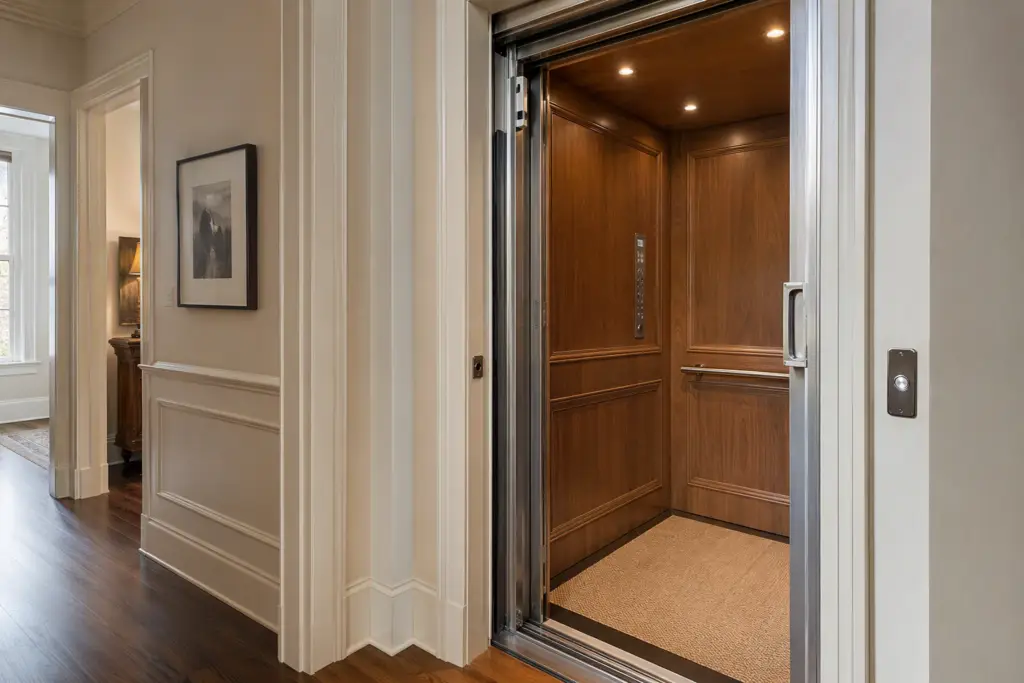
- Using the same contract tier for all units regardless of age or usage: A high-traffic commercial elevator and a low-use residential unit have different maintenance needs and different risk profiles.
- Failing to audit service records during vendor transitions: Incomplete records transferred from an outgoing vendor can leave a new provider unaware of open deficiencies or recurring problems.
- Deferring modernization until a unit fails: Emergency modernization is almost always more expensive and more disruptive than planned modernization.
- Ignoring ADA compliance in maintenance planning: ADA deficiencies discovered during an inspection or a tenant complaint may require immediate and costly remediation.
- Not accounting for jurisdictional differences in a cross-state portfolio: The compliance calendar for a D.C. property and a Pennsylvania property will not be identical — treating them as equivalent leads to missed requirements.
Get a Free Elevator Portfolio Assessment from Quality Elevator Company
Managing multiple elevators across the District of Columbia, Maryland, Pennsylvania, and Virginia does not have to be a compliance risk or an administrative burden. Quality Elevator Company is a certified independent elevator service provider with the expertise and regional coverage to consolidate your portfolio under a single, accountable service relationship — simplifying compliance tracking, reducing costs through unified contracts, and eliminating service gaps before they become violations.
Contact Quality Elevator Company for a free elevator assessment: 301-779-9116
Need elevator service you can rely on? Quality Elevator Company is ready to help.