How Long Does It Take to Modernize a Commercial Elevator? The Complete Process, Start to Finish
Commercial elevator modernization is one of the most consequential capital investments a building owner or property manager can make. It restores code compliance, extends equipment service life, improves energy efficiency, and protects the safety of every person who steps into the cab. Yet the timeline and process remain poorly understood by most building stakeholders — leading to budget surprises, extended downtime, and missed compliance deadlines. This comprehensive FAQ hub covers every stage of the modernization process, from the first site walk to the final inspection certificate, with particular focus on the requirements that apply in Baltimore MD, Washington DC, Philadelphia PA, and Richmond VA.
What Is Elevator Modernization and Why Does It Matter?
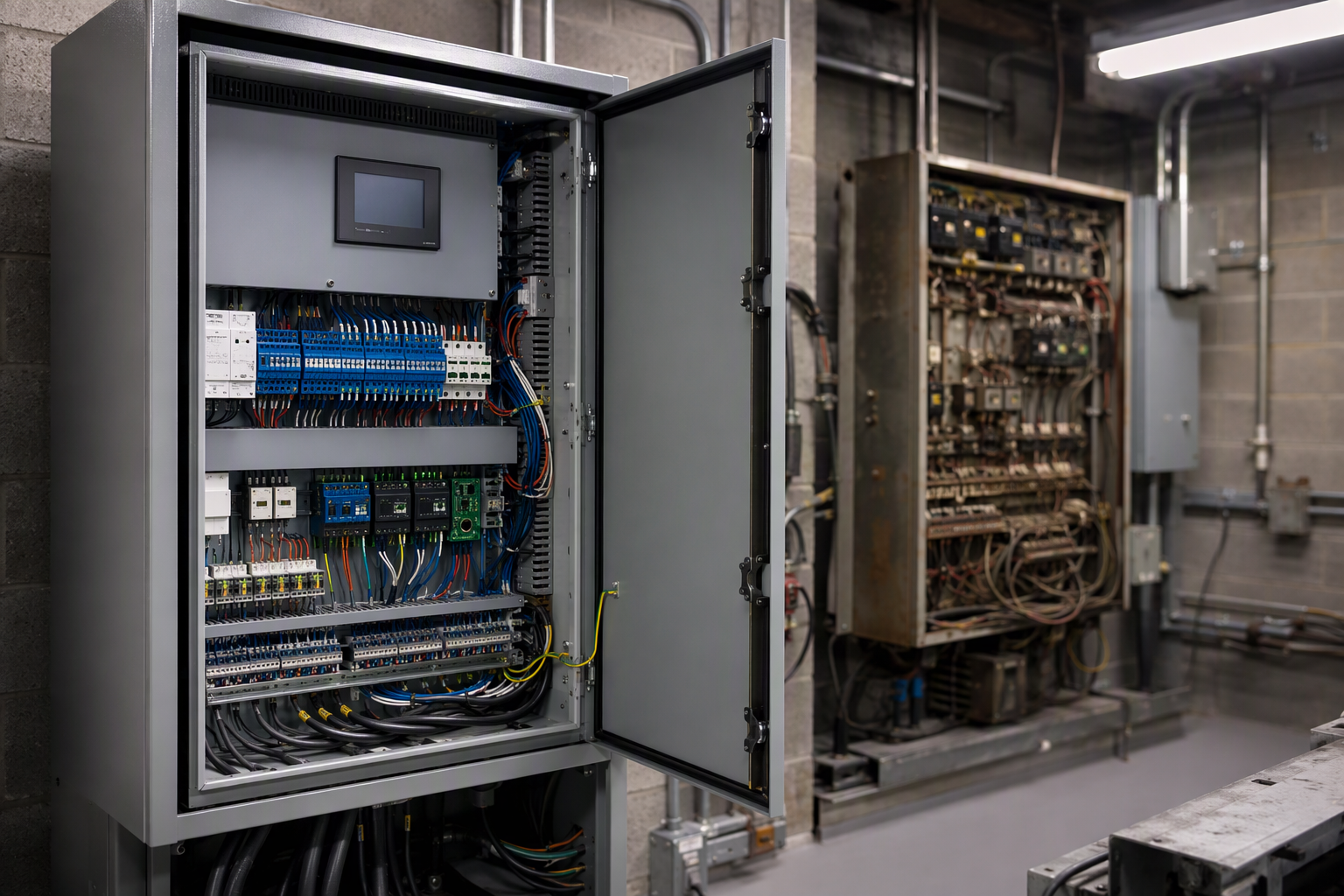
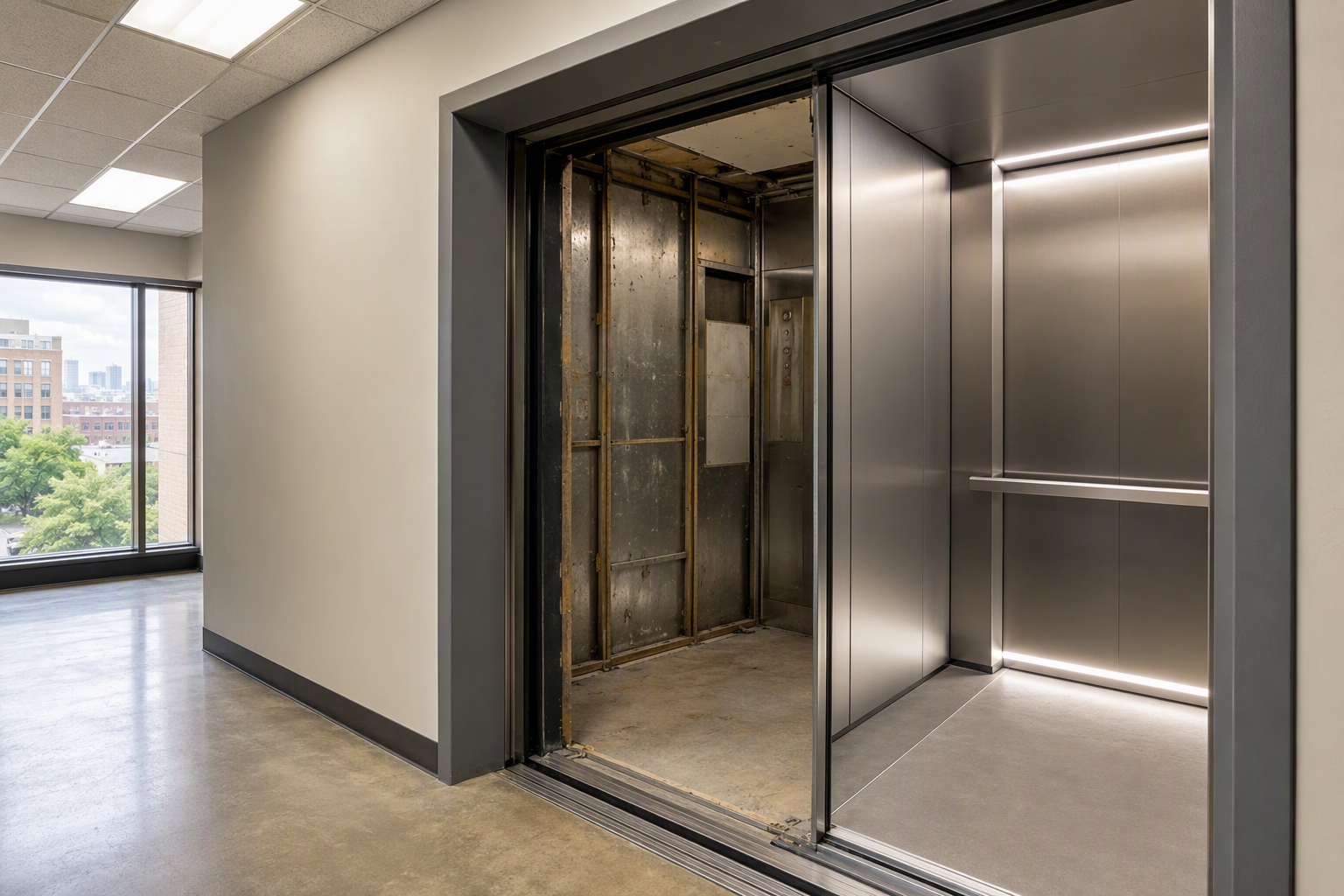
Elevator modernization is the systematic replacement or upgrade of major elevator components — such as the controller, drive system, door operator, fixtures, and safety devices — to bring an aging unit into compliance with current codes and restore reliable, safe performance.
Unlike a full replacement, modernization retains the existing hoistway, cab structure, and machine room infrastructure while replacing the components most prone to failure, obsolescence, or code non-compliance. A properly scoped modernization can extend equipment service life significantly, reduce callback frequency, improve ride quality, and satisfy the requirements of the ASME A17.3 Safety Code for Existing Elevators and Escalators and the Americans with Disabilities Act (ADA).
Buildings in Baltimore, Washington DC, Philadelphia, and Richmond that have not modernized elevators installed in the 1980s or earlier are likely operating equipment that no longer meets current safety device requirements, accessibility standards, or energy codes. Regulatory authorities having jurisdiction (AHJs) in each of these markets actively enforce modernization requirements during routine inspections.
How Long Does a Commercial Elevator Modernization Take From Start to Finish?
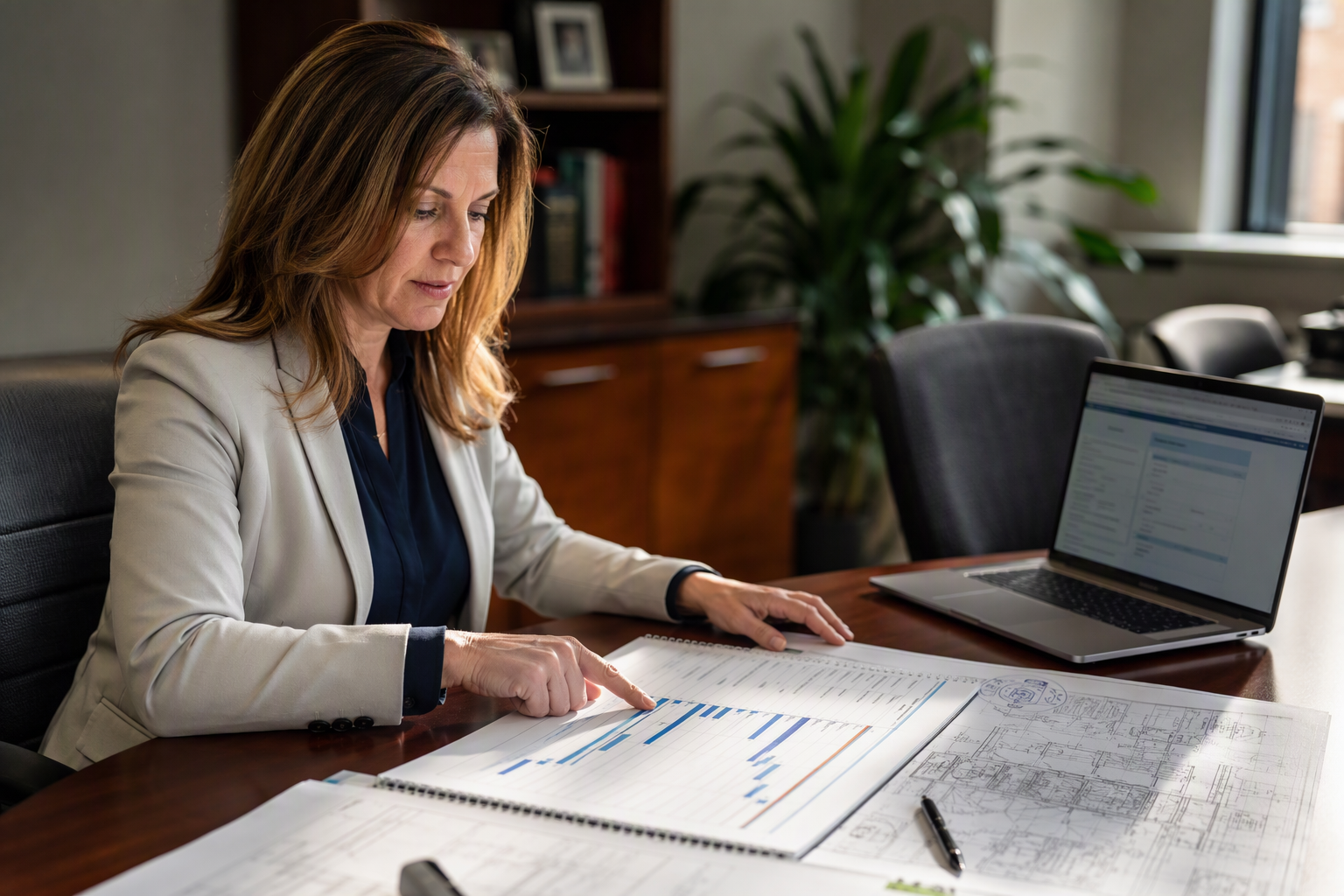
A commercial elevator modernization typically takes four to twelve weeks from the initial site assessment to the issuance of a new operating certificate, though complex projects or those involving extensive structural changes can extend beyond that range.
The four-to-twelve-week window is a practical benchmark, not a guarantee. Several variables drive the actual duration:
- Scope of modernization: A controller-only upgrade is faster than a full package that includes the drive, door operators, fixtures, and cab interior.
- Equipment lead times: Specialty components from elevator OEMs can have lead times of four to ten weeks or longer, and those lead times run concurrently with permitting in a well-managed project.
- Permitting and plan review: Each jurisdiction — the District of Columbia Department of Consumer and Regulatory Affairs, the Maryland Department of Labor, the Philadelphia Department of Licenses and Inspections, and the Virginia Department of Labor and Industry — has its own submission, review, and approval timeline.
- Building complexity: High-rise buildings, historic properties, or facilities with unusual machine room access introduce additional engineering requirements.
- Phased work on multi-unit buildings: Properties with multiple elevators may modernize units sequentially to keep at least one car in service throughout the project.
Quality Elevator Company coordinates all phases — assessment, engineering, permitting, procurement, installation, and final inspection — to minimize both overall project duration and building disruption in Baltimore, Washington DC, Philadelphia, and Richmond.
What Are the Stages of the Elevator Modernization Process?
The modernization process follows a defined sequence of seven stages, each of which must be completed before the next can begin.
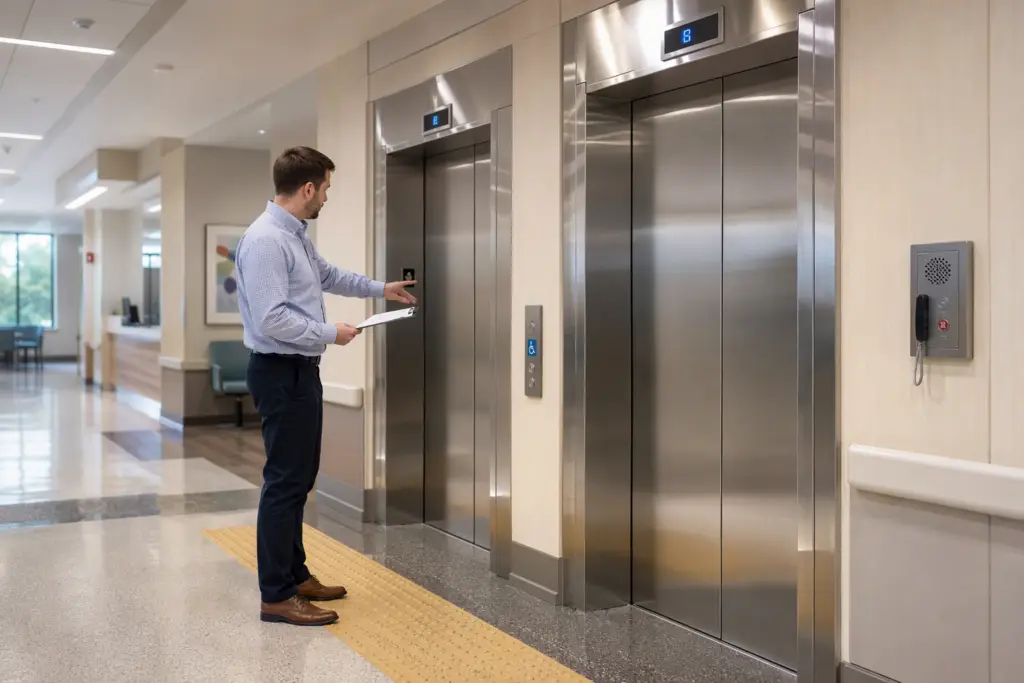
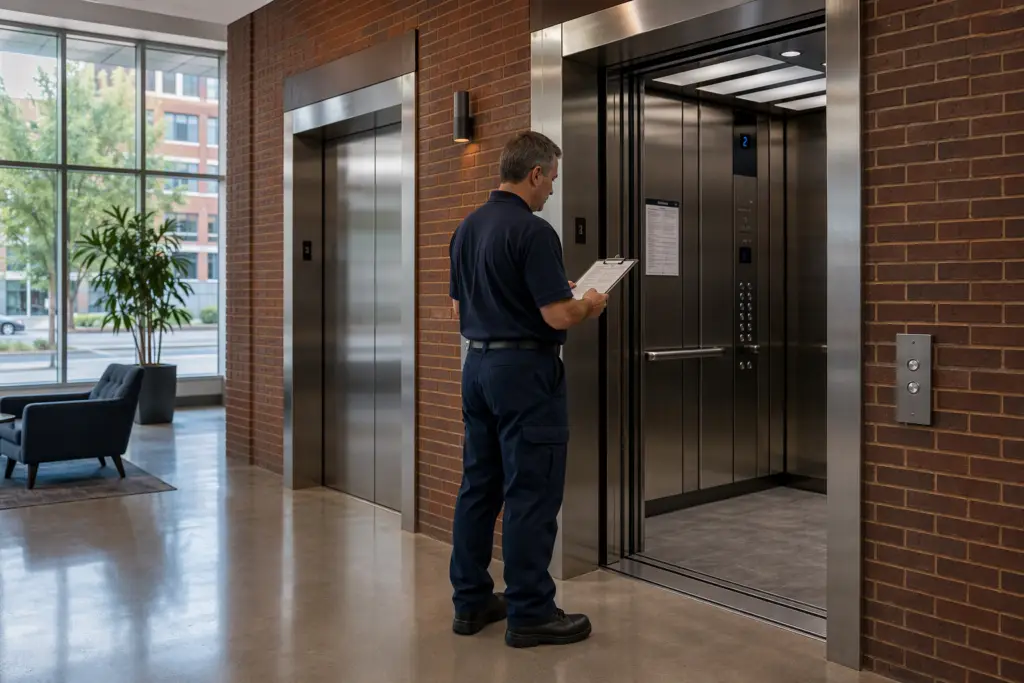
- Initial Site Assessment and Condition Survey: A qualified elevator contractor inspects all major components — controller, motor, drive, door system, safety devices, buffers, governor, cab, fixtures, and hoistway — and documents their current condition, age, and compliance status.
- Scope Development and Engineering: Based on the survey findings and applicable code requirements, the contractor and engineering team define the exact scope of replacement, prepare construction documents, and identify any structural or electrical upgrades required in the machine room or hoistway.
- Permitting and Plan Review Submission: Drawings and specifications are submitted to the local AHJ. In the covered markets, this includes elevator-specific plan review by state or municipal elevator inspection programs. Work cannot begin until a permit is issued.
- Equipment Procurement: Controllers, drives, door operators, fixtures, safety devices, and other long-lead components are ordered. This phase ideally overlaps with permitting to compress the overall schedule.
- Pre-Installation Preparation: Machine room electrical upgrades, hoistway work, and any structural modifications are completed before the main elevator equipment arrives on site.
- Installation: Licensed elevator mechanics install the new components in accordance with the approved construction documents and ASME A17.1 Safety Code for Elevators and Escalators requirements. This is the phase during which the elevator is out of service.
- Inspection, Testing, and Certificate Issuance: The AHJ inspector witnesses mandatory acceptance tests, reviews documentation, and — if all requirements are met — issues a new certificate of operation, permitting the elevator to return to service.
What Does a Pre-Modernization Site Assessment Include?
A thorough pre-modernization assessment evaluates every major system and subsystem of the elevator installation, producing a written condition report that becomes the foundation of the modernization scope and budget.
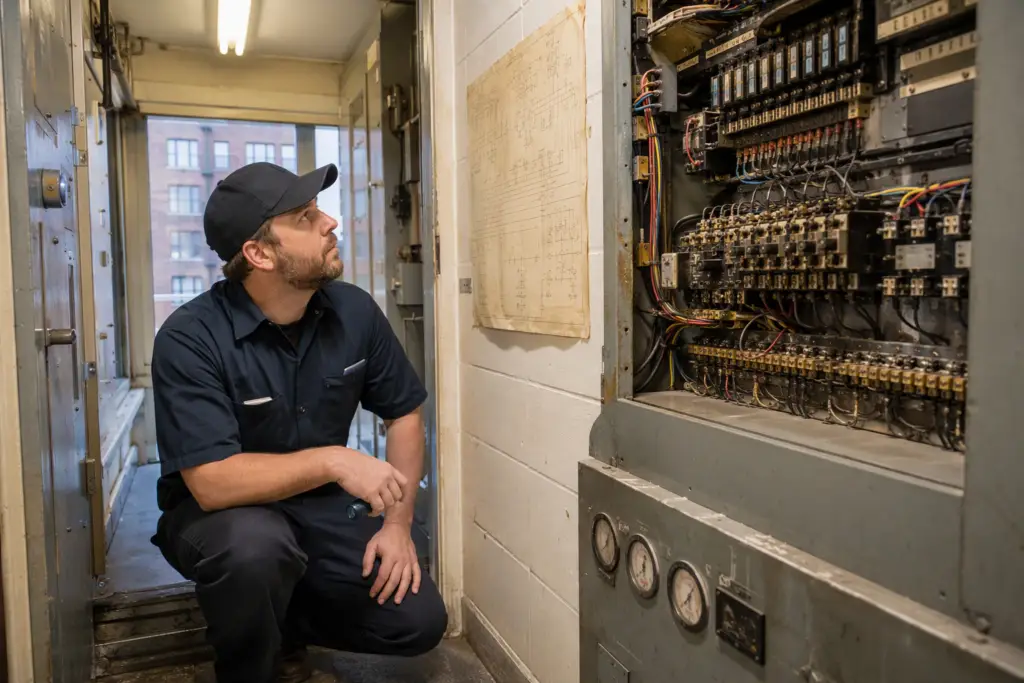
The assessment should cover the controller and logic board, the drive system (hydraulic power unit or traction motor and sheave), the door operator and door equipment, the hoistway wiring and traveling cable, the car and counterweight buffers, the governor and safeties, the car and hall fixtures (buttons, indicators, and intercoms), the machine room condition and electrical service, the cab interior and flooring, and any accessibility features required under the ADA. The assessment should also include a review of the current inspection certificate and any outstanding violations noted by the AHJ in prior inspections.
Quality Elevator Company provides comprehensive site assessments for commercial properties throughout Baltimore, Washington DC, Philadelphia, and Richmond as the essential first step in any modernization project.
What Codes and Standards Govern Elevator Modernization in DC, Maryland, Pennsylvania, and Virginia?
Elevator modernization in all four markets served by Quality Elevator Company is governed primarily by ASME codes, the ADA, and the regulations of each state’s elevator safety authority.
| Jurisdiction | Primary Governing Code | State/Local Enforcement Authority | Key Modernization Trigger |
|---|---|---|---|
| Maryland | ASME A17.1 / A17.3 | Maryland Department of Labor, Elevator Safety Unit | Alterations to major components require permit and AHJ acceptance test |
| Washington DC | ASME A17.1 / A17.3 | DC DCRA, Elevator Inspection Branch | Alterations trigger plan review and acceptance inspection |
| Pennsylvania | ASME A17.1 / A17.3 | PA Department of Labor and Industry, Bureau of Occupational and Industrial Safety | Alterations require permit, inspection, and new certificate |
| Virginia | ASME A17.1 / A17.3 | Virginia Department of Labor and Industry, Elevator Safety Unit | Alterations to listed components require permit and final inspection |
ASME A17.3, the Safety Code for Existing Elevators and Escalators, is particularly relevant to modernization because it specifies the retroactive safety requirements that existing elevators must meet when alterations are made. ASME A17.1, the Safety Code for Elevators and Escalators, governs the installation of new equipment installed during the modernization. Both codes are published by the American Society of Mechanical Engineers and are adopted by reference in the regulations of all four jurisdictions. Accessibility requirements under the ADA apply to any elevator serving a public accommodation or commercial facility.
Which Elevator Components Are Typically Replaced During Modernization?
The components replaced during a modernization depend on the scope defined in the assessment, but most commercial projects address the controller, drive system, door equipment, fixtures, and safety devices at minimum.
Component replacement decisions are driven by three factors: age and remaining service life, availability of replacement parts, and compliance requirements under ASME A17.1 and A17.3. Common replacement components include:
- Solid-state controller and relay logic: Older relay-based controllers are typically replaced with programmable solid-state controllers that offer diagnostic capability, improved reliability, and compatibility with modern safety devices.
- Variable voltage variable frequency (VVVF) drive: Modern AC drives replace older DC motor-generator sets or single-speed systems, improving energy efficiency and ride quality.
- Door operator and door equipment: High-cycle door operators with detector curtains replace older electromechanical operators that lack the sensitivity required by current codes.
- Car and hall fixtures: New fixtures provide ADA-compliant raised and Braille markings, audible signals, and visual indicators as required by the ADA.
- Traveling cable and hoistway wiring: Wiring installed decades ago may not support the data protocols required by modern controllers and safety systems.
- Governor, safeties, and buffers: These life-safety devices are inspected and replaced or recertified as required by ASME standards.
- Cab interior: Flooring, wall panels, lighting, and ceiling are often updated as part of a full modernization scope.
What Is the Difference Between a Full Modernization and a Partial Modernization?
A full modernization replaces all major mechanical, electrical, and safety systems in a single project, while a partial modernization targets specific failing or non-compliant components — with the understanding that a phased approach may require multiple permits and inspections over time.
Building owners sometimes choose a partial or phased approach to manage capital expenditure, addressing the controller and drive in year one and door equipment or cab interiors in a subsequent budget cycle. While this is financially understandable, it carries risks: each phase triggers its own permitting and inspection cycle, and a partial modernization may still require the contractor to bring other components into compliance with ASME A17.3 retroactive requirements that are activated by the alteration. An experienced contractor will identify these triggers during the assessment phase so that owners can make fully informed decisions.
How Much Does Commercial Elevator Modernization Cost?
Modernization costs vary widely based on scope, equipment type, building conditions, and local labor and permitting costs, and any accurate figure requires a site-specific assessment rather than a general estimate.
Factors that influence cost include: the type of elevator (hydraulic vs. traction), the number of stops, the number of units being modernized, the extent of hoistway and machine room upgrades required, accessibility remediation under the ADA, and current equipment lead times from manufacturers. Building owners in Baltimore, Washington DC, Philadelphia, and Richmond should budget for permit fees specific to each jurisdiction’s elevator program, as these fees vary by market. A detailed written scope and proposal from a qualified contractor is the only reliable basis for budgeting a modernization project.
How Long Will the Elevator Be Out of Service During Modernization?
The active installation phase — during which the elevator is out of service — typically ranges from two to six weeks for a standard commercial modernization, though the exact duration depends on scope and access conditions.
For buildings with a single elevator, this out-of-service period has significant accessibility implications. Under the ADA, building owners are responsible for ensuring that individuals with disabilities can access all required building functions. Planning for alternative access arrangements, communicating timelines clearly to building occupants, and working with a contractor who can accurately project the installation schedule are all essential steps for multi-story buildings with ADA obligations. Multi-unit buildings should discuss phased modernization scheduling with their contractor to keep at least one car in service throughout the project.
What Permits Are Required for Elevator Modernization?
An elevator alteration permit is required in all four markets before any modernization work begins, and work performed without a permit is a violation of state elevator safety regulations that can result in equipment shutdown and fines.
The permit process generally requires the submission of construction drawings prepared or reviewed by a licensed professional, equipment specifications, and documentation that the proposed installation conforms to the applicable edition of ASME A17.1. In each jurisdiction, the elevator-specific program — Maryland Department of Labor, DC DCRA, Pennsylvania Bureau of Occupational and Industrial Safety, and Virginia Department of Labor and Industry — reviews the submission and issues the permit. Plan review timelines vary by jurisdiction and current workload, and these timelines should be factored into the overall project schedule from the outset.
What Happens During the Final Inspection After Modernization?
The final inspection is a witnessed acceptance test conducted by an AHJ elevator inspector who verifies that all installed equipment performs in accordance with the approved construction documents and applicable ASME standards before issuing a new certificate of operation.
The acceptance test protocol specified in ASME A17.1 covers a comprehensive set of performance and safety verifications, including safety device operation, door timing and force, leveling accuracy, emergency lighting and communication, and governor and buffer performance where applicable. The contractor must have all documentation — permits, wiring diagrams, component certifications, and test records — available for the inspector’s review. If deficiencies are identified, the inspector will issue a correction notice and a re-inspection will be required before the certificate is issued. A well-prepared contractor will conduct a thorough pre-inspection walkthrough to identify and resolve any issues before the AHJ arrives.
How Does the Modernization Process Affect ADA Compliance?
Elevator modernization is a primary opportunity to remediate ADA accessibility deficiencies, and any alteration that affects the usability of an elevator by individuals with disabilities triggers the full application of ADA accessibility requirements for that element.
Key ADA requirements for elevator fixtures and equipment include raised and Braille floor designations at all car and hall buttons, audible floor announcements, visual floor indicators, door reopening devices sensitive to obstructions, and leveling accuracy sufficient for wheelchair access at all landings. The ADA Standards for Accessible Design govern these requirements for public accommodations and commercial facilities. Building owners should treat modernization as the moment to achieve full ADA elevator compliance rather than simply replacing failed components on a like-for-like basis.
What Should Building Owners Look for When Choosing an Elevator Modernization Contractor?
Building owners should evaluate a modernization contractor on their demonstrated familiarity with local AHJ requirements, their ability to manage permitting and inspection coordination, their relationships with major elevator equipment manufacturers, and the transparency and detail of their written proposals.
Additional evaluation criteria include: the contractor’s experience with the specific elevator type and vintage being modernized, their approach to scope documentation and change order management, the clarity of their project schedule and milestones, and their ability to communicate progress to building management throughout the project. In markets regulated by state elevator safety programs — Maryland, Pennsylvania, and Virginia — contractors must hold appropriate state registration or licensure to perform elevator work. The District of Columbia similarly requires licensed elevator mechanics to perform all covered work. Quality Elevator Company operates as a certified elevator service company across Baltimore, Washington DC, Philadelphia, and Richmond, with direct experience navigating the permitting and inspection requirements of all four AHJs.
What Are the Signs That a Commercial Elevator Needs Modernization Rather Than Repair?
An elevator that experiences recurring component failures, has a controller or drive system for which parts are no longer available, carries outstanding AHJ violation notices, or fails to meet current ADA or ASME A17.3 retroactive requirements is a modernization candidate rather than a repair candidate.
Specific indicators include:
- Repeated door-related callbacks that persist despite repair attempts
- Controller relay boards or solid-state cards that are no longer manufactured or supported
- Motor-generator sets that require specialized maintenance no longer widely available
- Outstanding inspection violations that cannot be resolved through routine repair
- Ride quality complaints including rough starts, stops, or leveling errors
- Energy consumption from inefficient drive systems that a VVVF drive modernization would address
- Cab and fixture conditions that fail ADA requirements for Braille markings, audible signals, or accessible controls
A condition-based assessment is the only reliable way to distinguish between equipment that remains repair-viable and equipment that has reached the point where modernization delivers better value than continued repair expenditure.
How Does Elevator Modernization Affect a Building’s Energy Consumption?
Replacing an older hydraulic power unit or DC motor-generator set with a modern variable voltage variable frequency drive and regenerative technology can meaningfully reduce the energy consumed by elevator operations, though specific savings figures depend on building use patterns and equipment selection.
Modern VVVF traction drives consume energy in proportion to the actual load and speed demanded, rather than running at full power continuously as older systems do. Regenerative drives can return energy to the building’s electrical system during descent with a loaded car or ascent with a light car. For high-rise buildings or high-traffic installations in commercial properties throughout Baltimore, Washington DC, Philadelphia, and Richmond, the energy profile of the selected drive system should be part of the scope discussion with the modernization contractor.
Can a Building Remain Partially Occupied During Elevator Modernization?
Yes, a building can remain occupied during elevator modernization provided that appropriate measures are taken to secure the work area, communicate the out-of-service schedule to occupants, and maintain accessible alternative egress or access routes for individuals with disabilities.
The contractor is responsible under OSHA standards for maintaining a safe worksite, including barricading the hoistway and machine room from unauthorized access and posting appropriate signage. Building management is responsible for communicating the modernization schedule to tenants and visitors and for ensuring that the building’s ADA obligations are met throughout the construction period. For buildings where the elevator is the only accessible means of reaching upper floors, a formal written plan for accommodating individuals with disabilities during the out-of-service period is strongly advisable.
What Documentation Should a Building Owner Receive After Elevator Modernization?
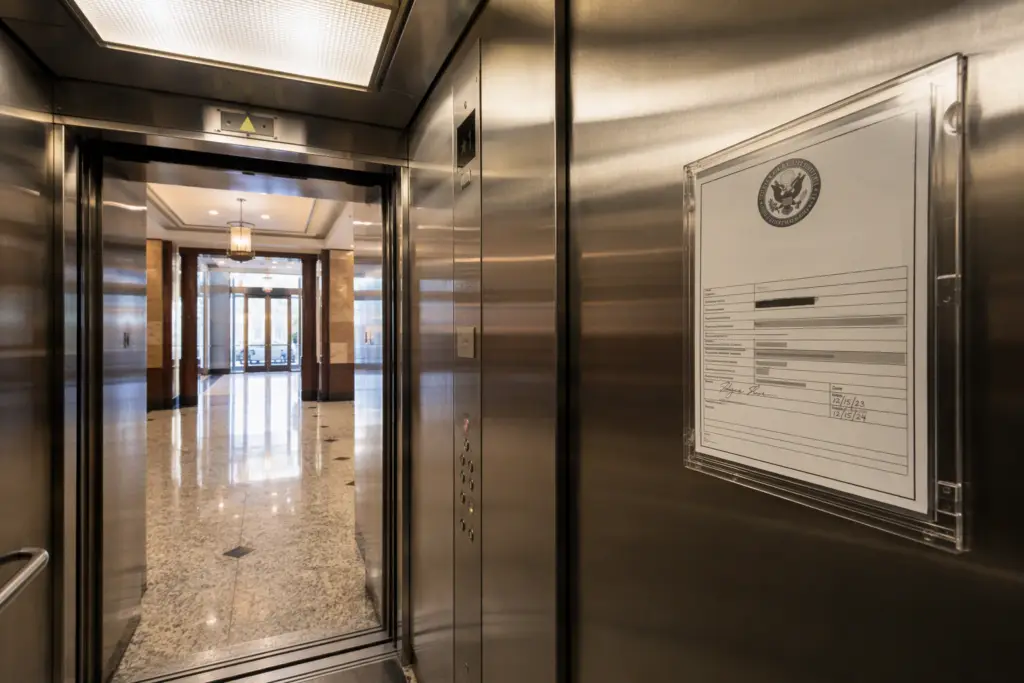
After modernization is complete and the AHJ has issued the certificate of operation, the building owner should receive a complete documentation package that includes the new operating certificate, as-built wiring diagrams, component manuals, test records, and permit closeout documentation.
This documentation package is critical for several reasons: it establishes the baseline for future maintenance and repair, it provides the information required for future permit applications when additional alterations are made, it supports ongoing AHJ inspections, and it documents the compliance status of the installation at the time of acceptance. Building owners should store this documentation securely and make it available to their ongoing maintenance contractor and to AHJ inspectors at each periodic inspection. The as-built drawings are particularly important when the installation involves a new controller or drive system whose wiring differs significantly from the original configuration.
How Does Modernization Affect the Ongoing Inspection and Maintenance Schedule?
After modernization and acceptance, the elevator re-enters the routine periodic inspection cycle required by the applicable state elevator safety program, with the new equipment establishing a fresh baseline for compliance.
In all four markets served by Quality Elevator Company, periodic inspections are required at intervals established by state elevator safety regulations, which adopt ASME A17.1 and A17.3 requirements by reference. A modernized elevator with a new controller, drive, and safety devices will typically exhibit a cleaner inspection record in the years immediately following modernization compared to aging equipment, provided that a proper preventive maintenance program is in place. Building owners should establish a maintenance contract with a qualified elevator service company promptly after the modernization is complete to protect the investment and maintain compliance.
What Are Common Causes of Delay in an Elevator Modernization Project?
The most common sources of delay in commercial elevator modernization are equipment procurement lead times, permit plan review backlogs at the AHJ, unforeseen hoistway or machine room conditions discovered during installation, and incomplete or inaccurate construction documents submitted for plan review.
Experienced contractors address these risks proactively: ordering long-lead equipment as soon as a permit application is submitted rather than waiting for permit issuance, submitting complete and accurate permit packages to minimize back-check cycles, conducting thorough pre-construction site investigations to identify structural or electrical surprises before work begins, and maintaining regular communication with the AHJ’s plan review staff. Building owners can support the schedule by ensuring that machine room access is unobstructed, that electrical service upgrades (if required) are coordinated with their electrical contractor in advance, and that building management decisions about phasing and tenant communication are made early in the process.
Why Should Building Owners in Baltimore, DC, Philadelphia, and Richmond Choose Quality Elevator Company for Modernization?
Quality Elevator Company is a certified elevator service company with direct operational knowledge of the permitting processes, AHJ requirements, and code enforcement practices in all four of its service markets — Baltimore MD, Washington DC, Philadelphia PA, and Richmond VA — making it a reliable single-source partner for commercial elevator modernization from assessment through final inspection.
Managing a modernization project across jurisdictional lines — or even within a single municipality with its own plan review culture and inspection scheduling practices — requires a contractor who maintains active working relationships with the applicable AHJs. Quality Elevator Company’s geographic focus on the Baltimore-to-Richmond corridor means that its project management approach is calibrated to the specific requirements of each market it serves, rather than applying a generic national template. For building owners managing multiple properties across these markets, the ability to work with a single qualified contractor who understands the local requirements in each location provides measurable project management and documentation benefits.
Ready to Start Your Elevator Modernization Project?
Understanding the timeline and process is the first step — but every modernization begins with an accurate, on-site condition assessment specific to your building and equipment. Whether your property is located in Baltimore, Washington DC, Philadelphia, or Richmond, the right contractor will identify exactly what your elevator needs, develop a clear scope and schedule, manage every permitting and inspection step, and deliver a compliant, fully operational elevator with complete documentation.
Contact Quality Elevator Company for a free elevator assessment. Call us today at 301-779-9116 to schedule your site visit and take the first step toward a safer, code-compliant, and more reliable elevator for your commercial property.
Need elevator service you can rely on? Quality Elevator Company is ready to help.