How to Prepare Your Building Elevator for a State or City Inspection This Fall
Direct Answer: To prepare your building elevator for a fall state or city inspection in DC, Maryland, Pennsylvania, or Virginia, building owners should complete a full pre-inspection maintenance visit, verify that all required documentation is current, confirm that safety devices meet ASME A17.1/A17.3 Safety Code for Elevators and Escalators requirements, and coordinate with a licensed elevator contractor at least 60 days before the scheduled inspection date.
Fall is one of the busiest seasons for elevator inspections across the District of Columbia, Maryland, Pennsylvania, and Virginia. Authorities Having Jurisdiction (AHJs) in each of these jurisdictions require periodic inspections to verify that elevators remain in safe, code-compliant operating condition. Building owners and property managers who treat the inspection process as a year-round maintenance commitment — rather than a last-minute scramble — consistently see better outcomes, fewer violations, and lower follow-up costs.
This guide covers the complete preparation checklist, the documentation building owners must have ready, the code framework governing inspections in the DC–Maryland–Pennsylvania–Virginia market, and the industry trends shaping elevator compliance through 2025 and 2026.
What Code Framework Governs Elevator Inspections in DC, Maryland, Pennsylvania, and Virginia?
All four jurisdictions in Quality Elevator Company’s service area have adopted versions of the ASME A17.1 Safety Code for Elevators and Escalators for new and recently modernized installations, and the companion ASME A17.3 Safety Code for Existing Elevators and Escalators for equipment already in service. ASME A17.3 is the standard most directly relevant to annual or periodic inspection compliance, because it establishes the retroactive safety requirements that existing units must meet.
The Americans with Disabilities Act (ADA) also applies to elevators in public accommodations and commercial facilities. While the ADA does not set inspection intervals, inspectors may flag accessibility deficiencies — such as inoperative audible floor signals, non-compliant door timing, or missing Braille call buttons — that require correction before a certificate of operation is renewed.
OSHA standards apply when elevator equipment poses workplace hazards, particularly during construction, modernization, or maintenance activities. Building owners should ensure that any pre-inspection repair work is performed under conditions that comply with applicable OSHA rules.
Beyond these federal frameworks, each AHJ — the District of Columbia Department of Consumer and Regulatory Affairs, Maryland Department of Labor, Pennsylvania Department of Labor and Industry, and Virginia’s Department of Labor and Industry — administers its own inspection scheduling, certificate issuance, and fee structure. Building owners should contact their specific AHJ directly to confirm current inspection intervals and any jurisdiction-specific requirements.
How Far in Advance Should Building Owners Begin Preparing for a Fall Elevator Inspection?

A well-structured preparation timeline works backward from the anticipated inspection date. Beginning at least 60 days before the scheduled inspection gives building owners enough runway to address findings from a pre-inspection maintenance visit, order replacement parts if needed, and complete any required documentation updates without rushing.
Elevator parts — particularly proprietary components for older hydraulic or traction systems — can have lead times that stretch several weeks. Discovering a failing safety device or worn mechanical component two weeks before an inspection leaves very little time to correct it without risking a failed inspection and a potential shutdown order.
Quality Elevator Company provides pre-inspection assessments designed to identify compliance gaps before a state or city inspector arrives, giving building owners the time and information they need to make informed decisions.
What Is the Step-by-Step Process for Preparing an Elevator for a Fall Inspection?
- Confirm your inspection date and AHJ requirements. Contact the relevant state or city agency — DC DCRA, Maryland Department of Labor, Pennsylvania Department of Labor and Industry, or Virginia DOLI — to verify when your current certificate of operation expires and what documentation the inspector will require on-site.
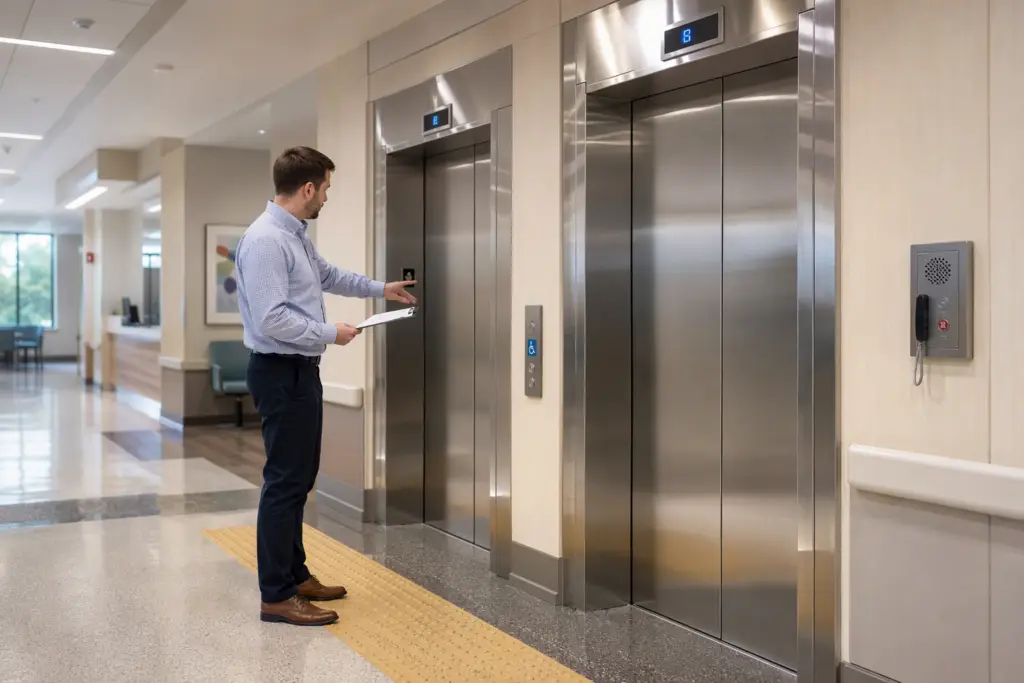
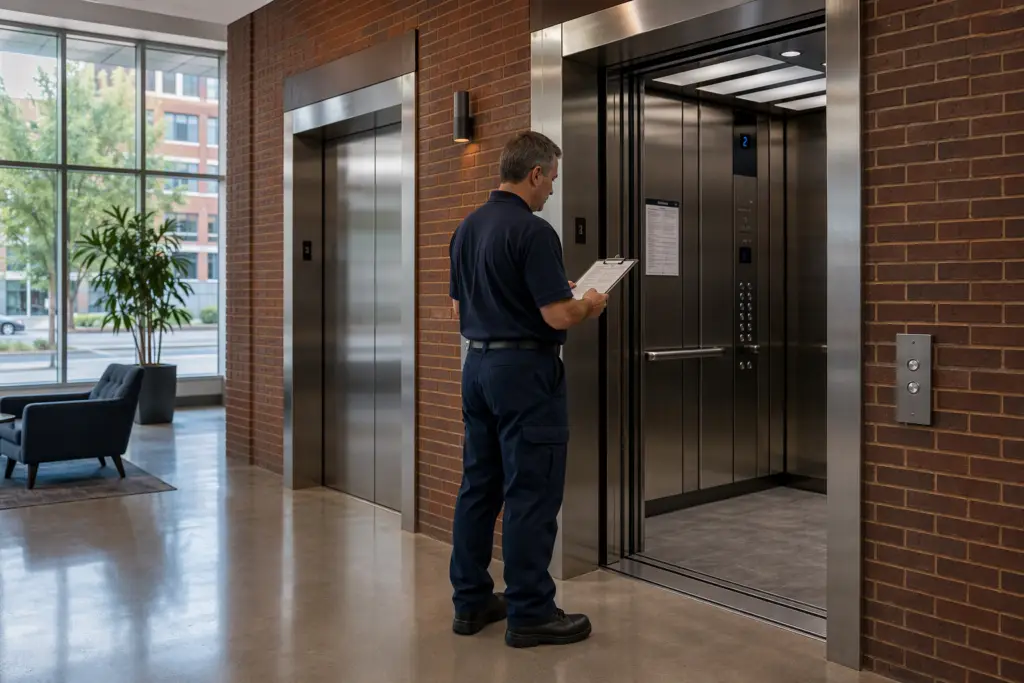
- Schedule a pre-inspection maintenance visit with a licensed elevator contractor. A qualified technician should perform a comprehensive examination of all major systems: traction or hydraulic drive, safeties, buffers, door operators, interlocks, lighting, ventilation, and the machine room.
- Review the maintenance logbook and service records. Inspectors routinely ask to see maintenance logs. Ensure that all completed service calls, repairs, and lubrication intervals are documented with dates and technician information.
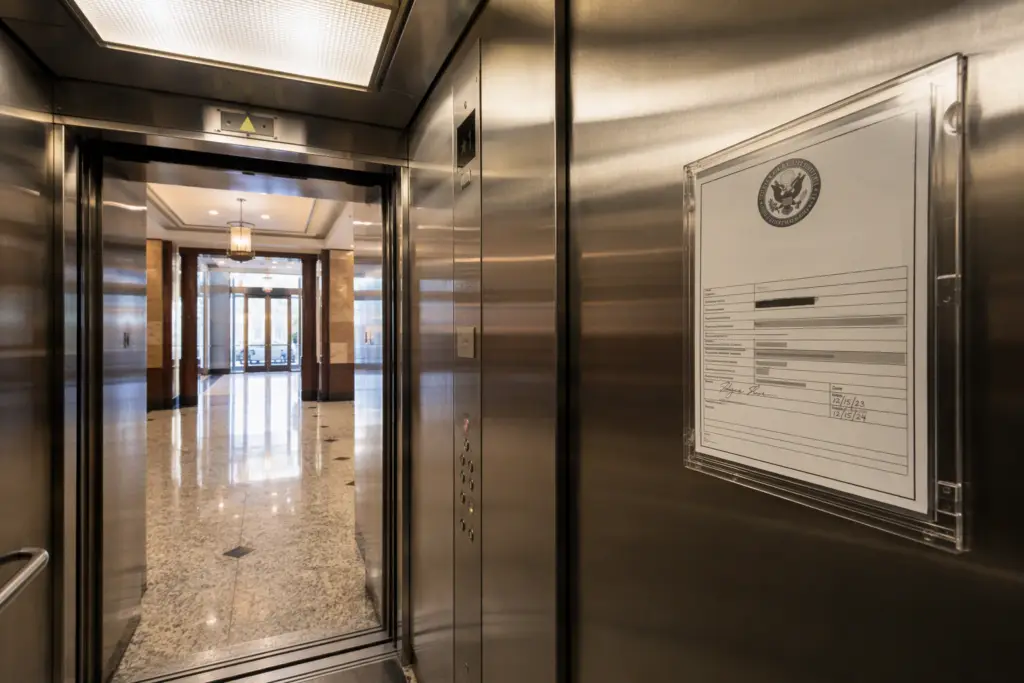
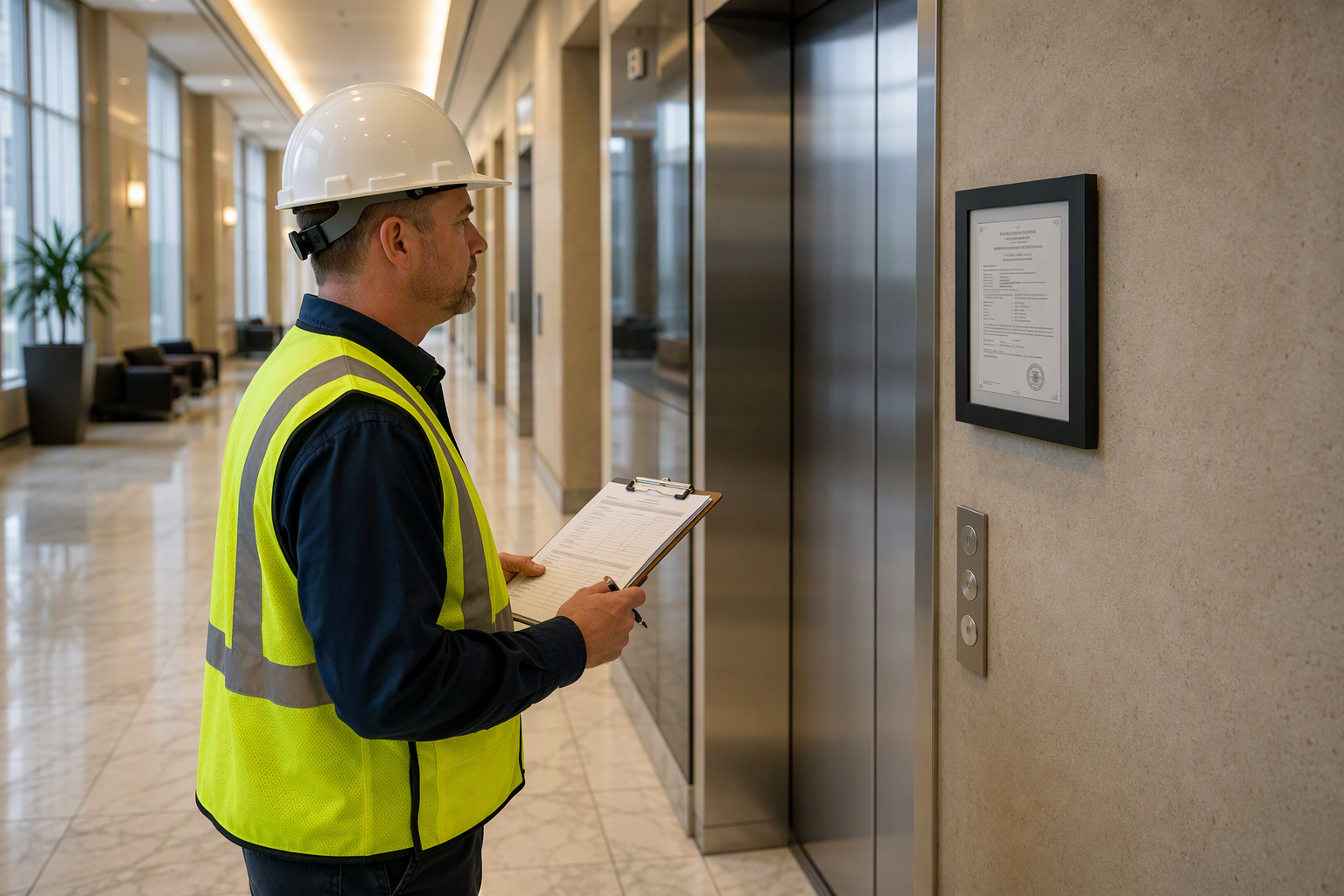
- Verify that the current certificate of operation is posted in the elevator cab. Most jurisdictions in the service area require the certificate to be displayed in a visible location inside the cab. A missing or expired certificate is an automatic deficiency.
- Test all safety devices. Governor and safety mechanisms, buffers, door reopening devices, emergency lighting, emergency communication systems, and firefighters’ service features must all be functional and tested in accordance with ASME A17.1 and A17.3 requirements.
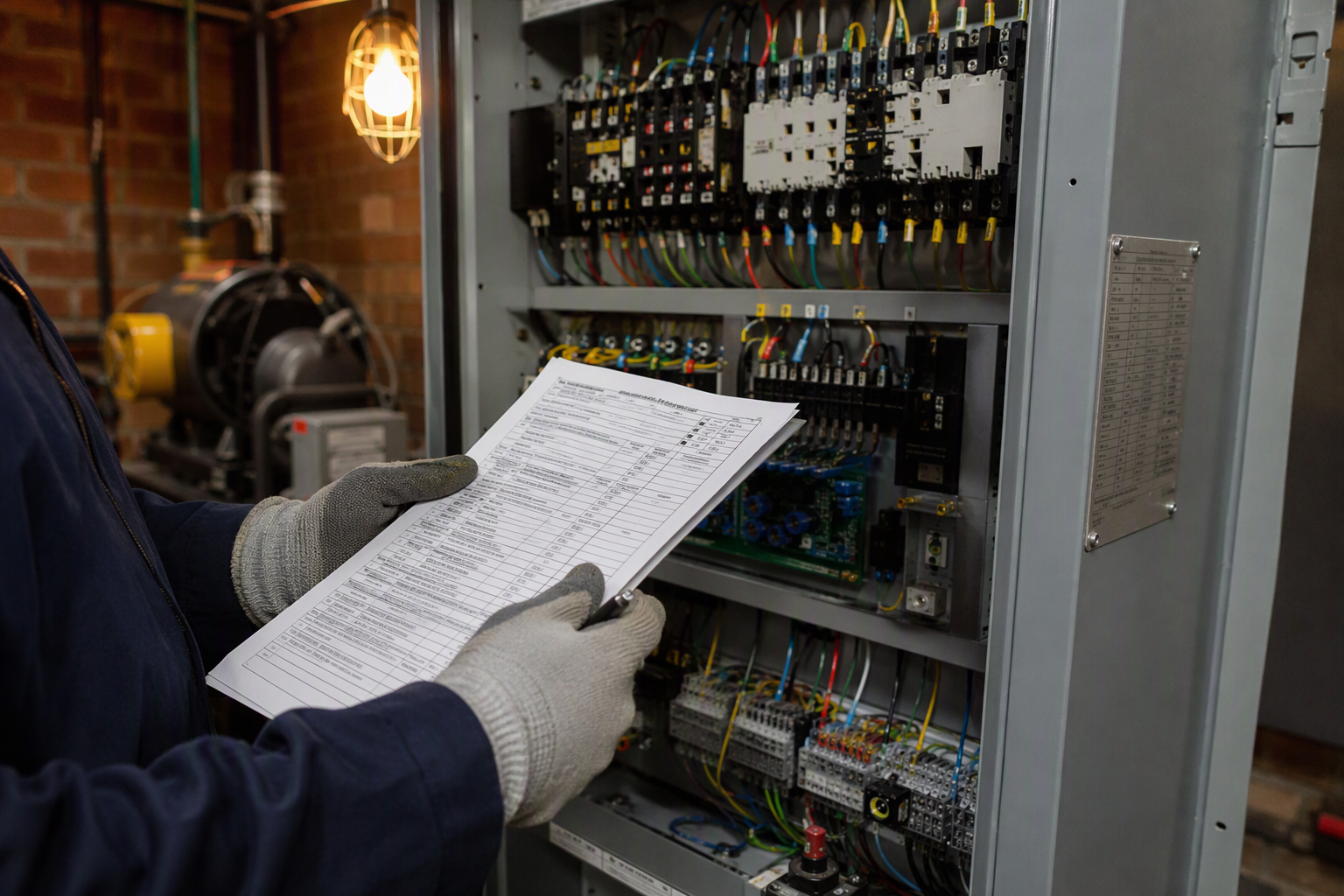
- Inspect the machine room. The machine room must be clean, free of stored materials unrelated to elevator operation, properly lit, and at an acceptable temperature. Access must be restricted to authorized personnel.
- Check ADA compliance items. Confirm that cab dimensions, door timing, audible and visual floor indicators, and control panel button heights remain consistent with ADA requirements. Note any deterioration since the last inspection cycle.
- Confirm that all permits for recent modernization or repair work are closed. Open permits can delay or invalidate an inspection certificate. Work with your contractor to ensure all permits are finalized with the AHJ before the inspection.
- Address all pre-inspection findings. Prioritize any items identified during the maintenance visit that relate to life safety, code compliance, or certificate eligibility. Document all corrective work.
- Prepare a documentation package for the inspector. Organize maintenance logs, the prior inspection certificate, any test reports (such as five-year hydraulic pressure tests where applicable), and permits into a single accessible file.
What Documents Must Be Available at the Time of Inspection?
Inspectors across DC, Maryland, Pennsylvania, and Virginia typically expect to review a consistent set of documentation. While exact requirements vary by jurisdiction, building owners should generally have the following available:
- The current and prior certificates of operation
- Maintenance and repair logbooks covering at least the previous 12 months
- Records of any required periodic tests (such as safety and governor tests, hydraulic pressure tests, and firefighters’ service tests) performed since the last full inspection
- Permits for any alterations, modernizations, or major repairs completed during the current certificate period
- Wiring diagrams and equipment data plates, which should remain with the unit at all times
Disorganized or incomplete documentation is one of the most common avoidable causes of inspection deficiencies. Building owners who maintain a dedicated, up-to-date elevator file — updated after every service visit — spend significantly less time managing compliance paperwork.
What Are the Most Common Reasons Elevators Fail Inspections in DC, Maryland, Pennsylvania, and Virginia?
While specific failure statistics vary by jurisdiction and are not publicly aggregated in a single database, the categories of deficiencies most frequently cited by inspectors in the region follow a recognizable pattern. Building owners who address these proactively are better positioned for a clean inspection result.
- Door system deficiencies: Worn door clutches, misaligned interlocks, and slow or erratic door operation are among the most common findings. Door systems experience high cycle counts and require regular adjustment and lubrication.
- Safety device failures: Governors, safeties, and buffers that have not been tested at required intervals or that show mechanical wear represent serious code concerns under ASME A17.3.
- Emergency communication failures: An inoperative emergency telephone or alarm is a straightforward but serious deficiency. These systems should be tested monthly.
- Lighting deficiencies: Inadequate cab lighting, burned-out machine room lighting, and non-functional emergency lighting in the cab or pit are frequently cited.
- Missing or expired posted certificate: The certificate of operation must be current and displayed in the cab. This is one of the easiest deficiencies to prevent.
- Pit conditions: Water intrusion, accumulated debris, inadequate lighting, or a non-functional pit stop switch are common pit-related findings.
- ADA non-compliance items: Inoperative audible signals, damaged or missing Braille, and non-standard door timing are increasingly scrutinized.
- Incomplete maintenance records: Inspectors who cannot verify that required maintenance has been performed may flag the unit pending documentation review.
How Does ASME A17.3 Affect Older Elevators During Inspections?
The ASME A17.3 Safety Code for Existing Elevators and Escalators establishes minimum retroactive safety requirements that existing elevators must meet, even if they were installed under an earlier edition of A17.1. This means that an elevator installed decades ago may be required to incorporate safety features — such as door reopening devices, phase protection, or specific car lighting levels — that were not required when the unit was originally commissioned.
Inspectors use A17.3 as a baseline for evaluating existing equipment. Building owners of older installations, particularly pre-1990s hydraulic or traction elevators, should work with a licensed elevator contractor to understand which A17.3 requirements apply to their specific equipment and what, if any, upgrades remain outstanding. Addressing retroactive requirements proactively — rather than waiting for an inspector to cite them — reduces the risk of a shutdown order and gives building owners control over the timing and scope of any required work.
What Happens If an Elevator Fails Its Inspection?
A failed inspection in DC, Maryland, Pennsylvania, or Virginia typically results in one of two outcomes: a conditional pass with required corrective actions and a reinspection date, or an order to take the elevator out of service immediately if a life-safety hazard is identified. The specific process varies by AHJ, but building owners should plan for the following:
- A written deficiency report listing all items that must be corrected
- A defined timeframe within which corrections must be completed
- A reinspection fee in most jurisdictions
- Potential civil penalties for continued operation with an expired or revoked certificate
Buildings with a single elevator that is placed out of service face significant accessibility and operational challenges, particularly in commercial or multi-family residential settings where tenants depend on elevator access. The cost of reactive compliance — emergency repairs, expedited parts, reinspection fees — consistently exceeds the cost of proactive preparation.
How Do ADA Requirements Interact With State Elevator Inspections?
State and city elevator inspectors in the DC–Maryland–Pennsylvania–Virginia region are primarily focused on mechanical safety under the applicable ASME code. However, ADA compliance obligations run parallel and independently. A building may pass its ASME-based safety inspection and still face ADA enforcement exposure if accessibility features are deficient.
Common ADA elevator concerns include door dwell time (the length of time doors remain open), audible and visual floor indicators, Braille and raised character signage on control buttons, and cab dimensions in older installations. Building owners should treat ADA compliance as a continuous obligation rather than a point-in-time checklist item. If an accessibility complaint is filed or a DOJ investigation is initiated, the building owner — not the elevator contractor — bears primary legal responsibility.
What Role Does Preventive Maintenance Play in Inspection Readiness?
Preventive maintenance is the single most reliable predictor of inspection outcomes. Elevators that receive consistent, documented maintenance under a structured service agreement accumulate fewer deferred deficiencies and are less likely to experience the kind of component deterioration that generates inspection failures.
Under ASME A17.1, the owner of an elevator is responsible for ensuring that the equipment is maintained in a safe operating condition. This is not a passive obligation — it requires that a maintenance program be in place and that records be kept. Jurisdictions in DC, Maryland, Pennsylvania, and Virginia may require evidence of ongoing maintenance as part of the inspection process.
Quality Elevator Company offers structured preventive maintenance programs for building owners in its service area, with documentation designed to support inspection compliance across all four jurisdictions.
What Industry Trends Are Shaping Elevator Inspection Compliance in 2025 and 2026?
Several qualitative trends are influencing how building owners and contractors approach elevator inspection compliance in the current environment:
Remote monitoring and predictive maintenance: More building owners are adopting connected elevator monitoring systems that track performance data in real time, enabling contractors to identify developing issues before they become inspection failures or service disruptions. This trend is accelerating across the commercial real estate sector.
Increased AHJ enforcement capacity: Several jurisdictions in the region have been working to reduce backlogs in elevator inspection scheduling and enforcement. This means building owners who have historically benefited from extended gaps between inspections should not assume that pattern will continue.
Aging elevator infrastructure: A significant portion of the existing elevator inventory in DC, Maryland, Pennsylvania, and Virginia was installed in the 1970s through 1990s. As this equipment ages, the gap between what it originally met and what A17.3 now requires continues to widen, increasing the likelihood that inspectors will identify retroactive compliance deficiencies.
Modernization activity: Many building owners are undertaking partial or full elevator modernizations to address aging components, improve energy efficiency, and reset the compliance baseline to a current code edition. Fall inspections often serve as a natural catalyst for modernization decisions when the cost of bringing aging equipment into compliance approaches or exceeds the cost of replacement.
Workforce and parts supply considerations: The elevator service industry continues to experience demand for qualified technicians and, in some product lines, extended lead times for replacement parts. Building owners who delay pre-inspection preparation are more likely to encounter scheduling and parts availability constraints that affect their inspection timeline.
How Should Building Owners Choose an Elevator Contractor for Pre-Inspection Preparation?
Selecting the right elevator contractor for pre-inspection work is a consequential decision. Building owners in DC, Maryland, Pennsylvania, and Virginia should evaluate contractors on the following criteria:
- Licensing and registration: Confirm that the contractor holds the required licenses or registrations in the specific jurisdiction where the work will be performed. Each state and the District has its own licensing requirements for elevator contractors and mechanics.
- Familiarity with local AHJ requirements: A contractor who regularly works in a given jurisdiction understands the local inspector’s expectations, common deficiency patterns, and documentation standards.
- Multi-brand capability: Buildings with mixed equipment brands benefit from a contractor who can service multiple manufacturer platforms without requiring multiple vendor relationships.
- Documentation practices: Ask to see sample maintenance logs and service reports. A contractor who produces clear, detailed documentation is a partner in compliance — not just a repair vendor.
- References from comparable properties: A contractor with demonstrated experience in similar building types — multi-family residential, commercial office, healthcare — is better positioned to anticipate the specific compliance challenges those buildings present.
What Does a Pre-Inspection Assessment from Quality Elevator Company Include?
Quality Elevator Company provides data-driven pre-inspection assessments for building owners in the District of Columbia, Maryland, Pennsylvania, and Virginia. A pre-inspection assessment is structured to replicate the scope of a state or city inspection — examining safety devices, door systems, machine room conditions, cab and hoistway components, pit conditions, lighting, emergency communication, and documentation — and to produce a written findings report that gives building owners a clear picture of what requires attention before the official inspection date.
The assessment is designed to eliminate surprises on inspection day and to give property managers the documentation they need to prioritize repair and maintenance investments on a defensible, evidence-based basis. Quality Elevator Company serves commercial, residential, healthcare, and institutional building owners across the region, with service capabilities spanning maintenance, repair, modernization, and compliance support.
Sourced Data Reference
| Standard / Framework | Primary Application | Relevance to Fall Inspections |
|---|---|---|
| ASME A17.1 | New and modernized elevators; owner maintenance obligations | Establishes design, construction, and maintenance standards; owner maintenance duty |
| ASME A17.3 | Existing elevators already in service | Retroactive safety requirements inspectors apply to older equipment |
| Americans with Disabilities Act | Public accommodations and commercial facilities | Accessibility compliance running parallel to safety inspection |
| OSHA | Workplace safety during elevator maintenance and repair | Governs working conditions during pre-inspection repair activities |
Frequently Asked Questions: Elevator Inspection Preparation
How often are elevators inspected in DC, Maryland, Pennsylvania, and Virginia?
Inspection intervals are set by each jurisdiction’s AHJ and may vary by elevator type, age, and use. Building owners should contact the relevant agency — DC DCRA, Maryland Department of Labor, Pennsylvania Department of Labor and Industry, or Virginia DOLI — to confirm the interval that applies to their specific equipment. The ASME A17.1 and A17.3 codes provide guidance on inspection and test frequencies that jurisdictions reference when setting their requirements.
Who is responsible for scheduling an elevator inspection?
In most jurisdictions in the region, the building owner or their designated property manager bears primary responsibility for ensuring that elevator inspections are scheduled and completed before the current certificate of operation expires. Some jurisdictions proactively schedule inspections and notify building owners; others require owners to apply for inspection. Confirming the process with the AHJ well in advance of the expiration date is essential.
What is the difference between a periodic inspection and a category test?
A periodic inspection is a general examination of the elevator’s condition and safety devices, typically conducted annually or on the interval set by the AHJ. A category test is a more specific, hands-on functional test of particular safety components — such as safeties, governors, and buffers — required at defined intervals under ASME A17.1 and A17.3. Both types of evaluations may be required as part of the overall compliance cycle, and both require advance preparation.
Can a building owner perform elevator maintenance themselves to prepare for inspection?
Elevator maintenance in DC, Maryland, Pennsylvania, and Virginia must be performed by licensed elevator mechanics and contractors. Building owners and their facilities staff should not attempt to perform mechanical adjustments, safety device tests, or repairs on elevator equipment. Unauthorized work not only creates safety risks but may also invalidate the inspection certificate and create liability exposure.
What happens if an elevator certificate of operation expires before the inspection is completed?
Operating an elevator with an expired certificate of operation is a violation in all four jurisdictions. Depending on the AHJ, this can result in civil penalties, a mandatory shutdown order, or both. Building owners who anticipate difficulty scheduling an inspection before their certificate expires should contact the AHJ immediately to understand their options. Proactive communication with the agency almost always produces better outcomes than allowing the certificate to lapse without notice.
Do hydraulic elevators have different inspection requirements than traction elevators?
Both hydraulic and traction elevators are subject to inspection and testing requirements under ASME A17.1 and A17.3, but the specific tests differ by equipment type. Hydraulic elevators, for example, are subject to periodic pressure vessel testing requirements. Building owners should confirm with their elevator contractor which category tests apply to their specific equipment type and when those tests are next due.
How does the machine room condition affect inspection outcomes?
The machine room is always part of an elevator inspection. Inspectors examine it for proper lighting, restricted access, acceptable temperature range, absence of stored non-elevator materials, and the condition of the drive equipment, controller, and associated components. A disorganized or poorly maintained machine room signals to inspectors that overall maintenance practices may be deficient, which can lead to a more thorough examination of the elevator itself.
What should building owners do if they recently had elevator work performed by another contractor?
Building owners who have had maintenance, repair, or modernization work performed by a contractor other than their current service provider should ensure that all permits associated with that work have been closed with the AHJ, that documentation of the work is incorporated into the maintenance logbook, and that the current contractor has been made aware of any changes to the equipment. Open permits or undocumented modifications can create significant complications during the inspection process.
How should multi-elevator buildings prioritize their pre-inspection preparation?
Buildings with multiple elevators should prioritize pre-inspection assessment and preparation based on the age of the equipment, the time since the last full maintenance service, the history of service calls and recurring issues, and the criticality of each unit to building operations. An older unit with a history of door problems or an elevator serving a healthcare or assisted living population warrants earlier and more thorough attention than a newer unit in a lower-demand application.
What are the long-term consequences of repeated inspection failures for a building’s elevator program?
Repeated inspection failures signal systemic maintenance deficiencies and can attract heightened AHJ scrutiny, including more frequent inspections or mandatory modernization requirements. From a property management perspective, a pattern of failed inspections also creates exposure in insurance renewals, tenant relations, and potential ADA enforcement actions. Building owners who invest in structured preventive maintenance and pre-inspection preparation programs consistently avoid the compounding costs and reputational risks associated with chronic non-compliance.
Schedule Your Pre-Inspection Elevator Assessment Today
Don’t wait until the state or city inspector arrives. Quality Elevator Company provides comprehensive pre-inspection assessments for building owners and property managers across the District of Columbia, Maryland, Pennsylvania, and Virginia — giving you the time and information to address compliance gaps on your schedule, not the inspector’s.
Contact Quality Elevator Company for a free elevator assessment: 301-779-9116
Need elevator service you can rely on? Quality Elevator Company is ready to help.