Quick Answer: Your elevator likely qualifies for an energy efficiency upgrade if it uses an older hydraulic or DC-motor traction system, lacks a variable-frequency drive (VFD), or runs on outdated lighting and standby controls — and buildings that upgrade these systems typically see meaningful reductions in elevator-related energy consumption, though actual savings depend on your building’s usage patterns, equipment age, and local utility rates.
Elevator systems are among the most energy-intensive mechanical assets in a commercial or residential building. Owners and facility managers in the District of Columbia, Maryland, Pennsylvania, and Virginia are increasingly asking whether an energy efficiency upgrade makes financial sense — and whether their existing equipment even qualifies. This guide breaks down the qualifying criteria, the upgrade options available, the realistic financial picture, and how to decide whether the investment is right for your building.
What Makes an Elevator a Strong Candidate for an Energy Efficiency Upgrade?
Not every elevator needs the same upgrade, but several clear indicators suggest that a system is consuming more energy than necessary and would benefit from modernization.
Primary qualification factors include:
- Drive technology: Elevators using older hydraulic power units or DC motor/generator (MG) sets are significantly less efficient than modern systems equipped with variable-frequency drives (VFDs) or permanent magnet gearless motors.
- Age of the system: Equipment that is more than 20 years old is likely operating on technology that predates modern energy-management standards.
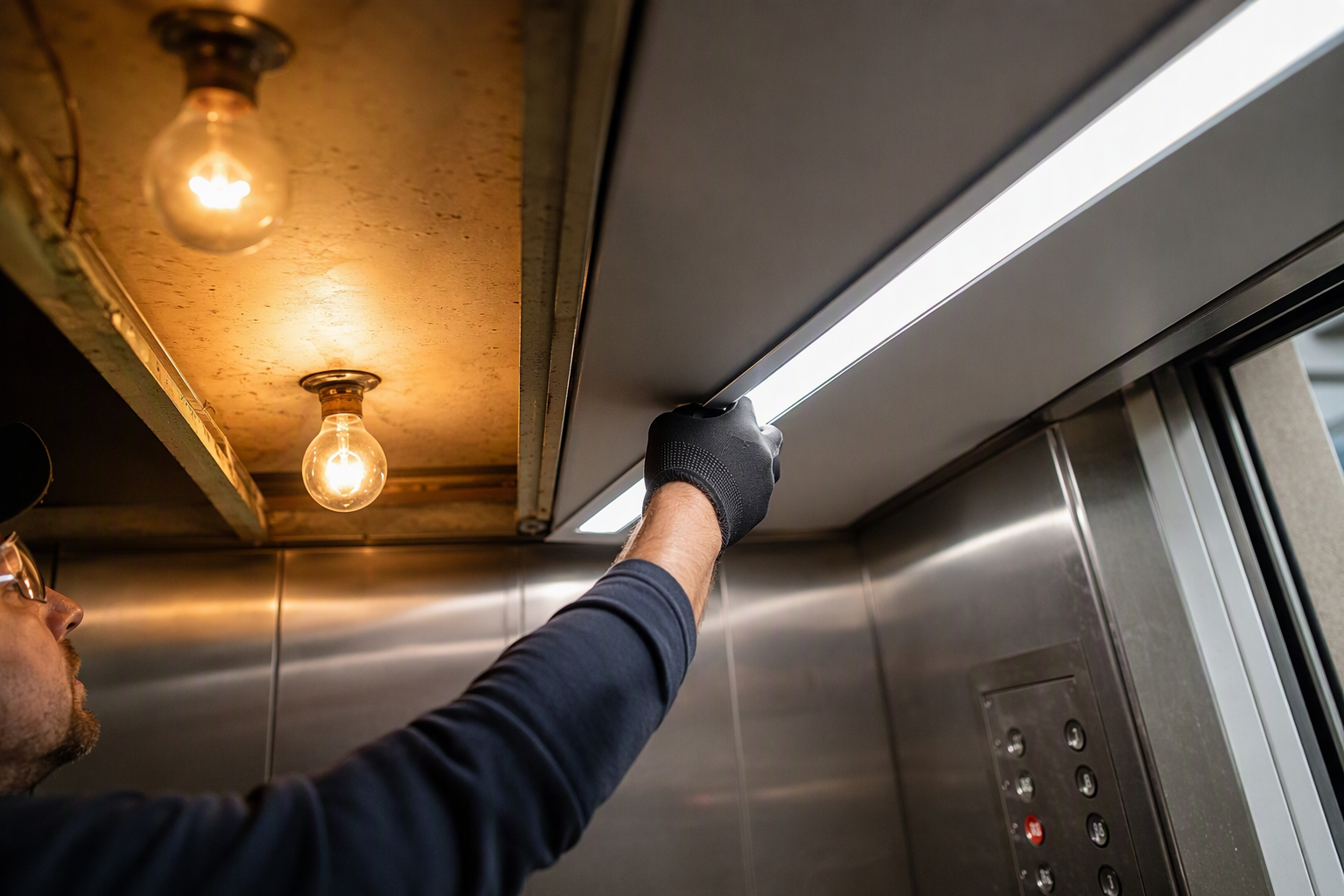
- Lighting and ventilation: Cab interiors with incandescent or older fluorescent lighting, and fans that run continuously rather than on demand, are straightforward upgrade targets.
- Standby and sleep modes: Systems without automatic standby or sleep-mode controls waste energy during off-peak hours.
- Hydraulic fluid type: Older hydraulic elevators using petroleum-based fluid and single-speed pumps are less efficient than those with modern low-viscosity fluid and VFD-controlled pump motors.
- Regenerative drive capability: Traction elevators without regenerative drives are unable to return braking energy to the building’s electrical grid.
What Are the Main Types of Energy Efficiency Upgrades Available?

Energy efficiency upgrades for elevators fall into several distinct categories, ranging from low-cost lighting retrofits to comprehensive drive-system modernizations.
| Upgrade Type | Systems Affected | Complexity | Typical Downtime | Best For |
|---|---|---|---|---|
| LED Cab Lighting Retrofit | All elevator types | Low | Hours to 1 day | Any building seeking quick wins |
| Standby / Sleep Mode Controls | All elevator types | Low–Medium | 1–2 days | Buildings with extended low-traffic periods |
| Variable-Frequency Drive (VFD) Installation | Hydraulic & traction systems | Medium–High | 1–2 weeks | Older hydraulic or DC-motor traction systems |
| MG Set Replacement with Solid-State Drive | DC traction elevators | High | 2–4 weeks | Buildings with legacy DC motor-generator systems |
| Regenerative Drive Retrofit | AC traction elevators | High | 2–4 weeks | High-rise or high-traffic traction elevators |
| Hydraulic Power Unit Modernization | Hydraulic elevators | Medium–High | 1–3 weeks | Older hydraulic systems with single-speed pumps |
| Full Drive System Modernization | All types | Very High | 4–8 weeks | Buildings planning long-term infrastructure investment |
How Do I Compare the Pros and Cons of Each Major Upgrade Path?
| Upgrade | Pros | Cons | Code Considerations |
|---|---|---|---|
| LED Lighting & Ventilation Controls | Low upfront cost; minimal disruption; immediate energy reduction; long lamp life | Limited overall energy impact on its own | Must meet applicable cab lighting requirements under ASME A17.1 Safety Code for Elevators and Escalators |
| Standby / Sleep Mode Controls | Low cost; no mechanical changes; measurable savings in off-peak buildings | Minimal benefit in 24/7 high-traffic buildings | Controller modifications must comply with ASME A17.1 safety circuit requirements |
| Variable-Frequency Drive (VFD) | Significant motor energy reduction; smoother ride quality; reduced mechanical wear | Higher upfront cost; requires qualified technicians; may require controller upgrade | Installation subject to local AHJ inspection in DC, MD, PA, VA; compliance with ASME A17.1 |
| Regenerative Drive | Returns energy to building grid; best ROI in high-traffic traction applications; reduces cooling load | Highest upfront cost among drive upgrades; requires compatible electrical infrastructure | Must pass local AHJ inspection; compliance with ASME A17.1 and relevant electrical codes |
| Full Modernization | Comprehensive energy and reliability improvement; extends equipment life; may qualify for utility incentives | Longest downtime; highest total investment; requires full AHJ re-inspection | Triggers compliance review under ASME A17.3 Safety Code for Existing Elevators and ADA accessibility requirements |
Does an Elevator Energy Upgrade Require a New Inspection or Code Compliance Review?
Yes — in the District of Columbia, Maryland, Pennsylvania, and Virginia, any modification to an elevator’s drive system, controls, or safety circuits constitutes an alteration under applicable elevator codes. Alterations typically trigger a re-inspection by the relevant Authority Having Jurisdiction (AHJ) in each jurisdiction.
The governing federal safety standard is the ASME A17.1 Safety Code for Elevators and Escalators for new installations and alterations, and the ASME A17.3 Safety Code for Existing Elevators and Escalators for existing equipment. Both codes are adopted with local amendments by jurisdictions across DC, Maryland, Pennsylvania, and Virginia.
Additionally, if a full modernization involves changes to the cab or entrance dimensions, ADA accessibility requirements may need to be reassessed to ensure the upgraded elevator continues to meet or improves upon accessibility standards.
Key compliance steps when upgrading:
- Engage a licensed elevator contractor registered with the applicable state or district licensing authority.
- Submit permit applications and engineering drawings to the local AHJ before work begins.
- Ensure all modified components — drives, controllers, safety circuits — meet ASME A17.1 requirements.
- Schedule a post-alteration inspection with the AHJ before returning the elevator to service.
- Obtain updated operating certificates or permits as required by the jurisdiction.
- Review ADA compliance if cab dimensions or controls are modified.
- Retain all documentation for future inspections and maintenance records.
Will an Energy Efficiency Upgrade Actually Reduce My Operating Costs?
The answer depends on which upgrade is performed and how the building uses the elevator. Energy efficiency upgrades generally reduce operating costs through three mechanisms: lower electricity consumption, reduced mechanical wear leading to fewer repairs, and in some cases access to utility rebates or incentive programs offered by local utilities in DC, Maryland, Pennsylvania, and Virginia.
The upgrades with the greatest potential impact on electricity consumption are those targeting the drive motor — specifically VFD installations, MG set replacements, and regenerative drives — because the drive motor typically accounts for the largest share of elevator energy use. Lighting and standby controls provide meaningful but comparatively smaller reductions.
Buildings with high call volumes, multiple elevator banks, or elevators running during extended low-occupancy periods tend to see the most pronounced reductions in operating costs after an efficiency upgrade. Low-traffic buildings or those with newer equipment may see more modest returns.
What Is the Typical Return on Investment Timeline for Elevator Energy Upgrades?
| Upgrade Type | Relative Upfront Investment | Energy Impact | Estimated ROI Timeline | Additional Value Drivers |
|---|---|---|---|---|
| LED Lighting & Ventilation | Low | Moderate (cab energy only) | Short (often under 3 years) | Improved cab environment; low maintenance |
| Standby / Sleep Mode | Low | Moderate to high (off-peak buildings) | Short to medium | No mechanical changes required |
| VFD on Hydraulic System | Medium | High | Medium (typically 3–7 years) | Smoother operation; reduced pump wear |
| MG Set Replacement | Medium–High | High | Medium to long | Eliminates noisy MG set; improved reliability |
| Regenerative Drive | High | Very High (high-traffic traction) | Medium to long (shorter in high-use buildings) | Returns energy to grid; reduces HVAC load |
| Full Modernization | Very High | Very High | Long (varies widely by building) | Extended equipment life; improved safety; potential utility incentives |
Note: ROI timelines are qualitative ranges based on upgrade complexity and energy impact. Actual payback periods depend on your building’s utility rates, call volume, hours of operation, and whether utility rebate programs are available from your local provider in DC, Maryland, Pennsylvania, or Virginia. A qualified elevator contractor can help calculate building-specific projections.
Are There Utility Rebates or Incentive Programs Available in DC, Maryland, Pennsylvania, or Virginia?
Many electric utilities serving the DC, Maryland, Pennsylvania, and Virginia region offer commercial energy efficiency incentive programs that can help offset the upfront cost of elevator upgrades. These programs vary by utility and are updated periodically, so building owners should contact their specific utility provider directly to ask whether elevator motor, drive, or lighting upgrades qualify under current commercial rebate offerings.
In Maryland, the EmPOWER Maryland energy efficiency programs administered by the state’s major utilities are one example of the type of commercial efficiency incentive structures available in the region — though eligibility and rebate amounts change and should be confirmed directly with the utility.
Building owners should also consult with their tax advisors regarding potential federal energy efficiency tax incentives, such as the Section 179D commercial building energy efficiency deduction, which may apply to qualifying building system upgrades. Quality Elevator Company recommends working with both a certified elevator contractor and a qualified tax professional to understand the full financial picture.
How Does Elevator Type — Hydraulic vs. Traction — Affect Upgrade Options?
Hydraulic and traction elevators have different drive architectures, which means the most effective energy upgrade paths differ between them.
Hydraulic elevators consume energy primarily during the up-direction trip, when the pump motor pushes fluid to raise the car. Adding a VFD to the pump motor so that it ramps up and down with demand — rather than running at full speed regardless of load — is one of the most impactful upgrades available for hydraulic systems. Modern hydraulic power units also support low-viscosity, biodegradable fluids that reduce pump friction.
Traction elevators (both geared and gearless) offer more upgrade pathways. DC motor-generator sets can be replaced with modern solid-state drives, which eliminate the constant energy draw of the rotating MG set. AC traction systems can be equipped with regenerative drives that capture the kinetic energy of the descending car or counterweight and return it to the building’s electrical supply — particularly valuable in high-rise or high-traffic applications.
What Should I Ask a Contractor Before Approving an Energy Efficiency Upgrade?
Before committing to an elevator energy efficiency upgrade, building owners and facility managers should ask prospective contractors the following questions:
- Is your company licensed to perform elevator work in this jurisdiction (DC, Maryland, Pennsylvania, or Virginia as applicable)?
- Will you handle permit applications and AHJ inspection scheduling on my behalf?
- Can you provide a building-specific energy assessment that documents current consumption and projects post-upgrade savings?
- Which specific components will be replaced, and what equipment specifications are you proposing?
- How long will the elevator be out of service, and what is the plan to minimize disruption?
- Will the upgrade trigger any additional code compliance requirements under ASME A17.1 or A17.3?
- Does your proposal include any utility rebate assistance or documentation?
- What warranty is provided on parts and labor?
How Do I Know If My Building’s Electrical Infrastructure Can Support an Energy Upgrade?
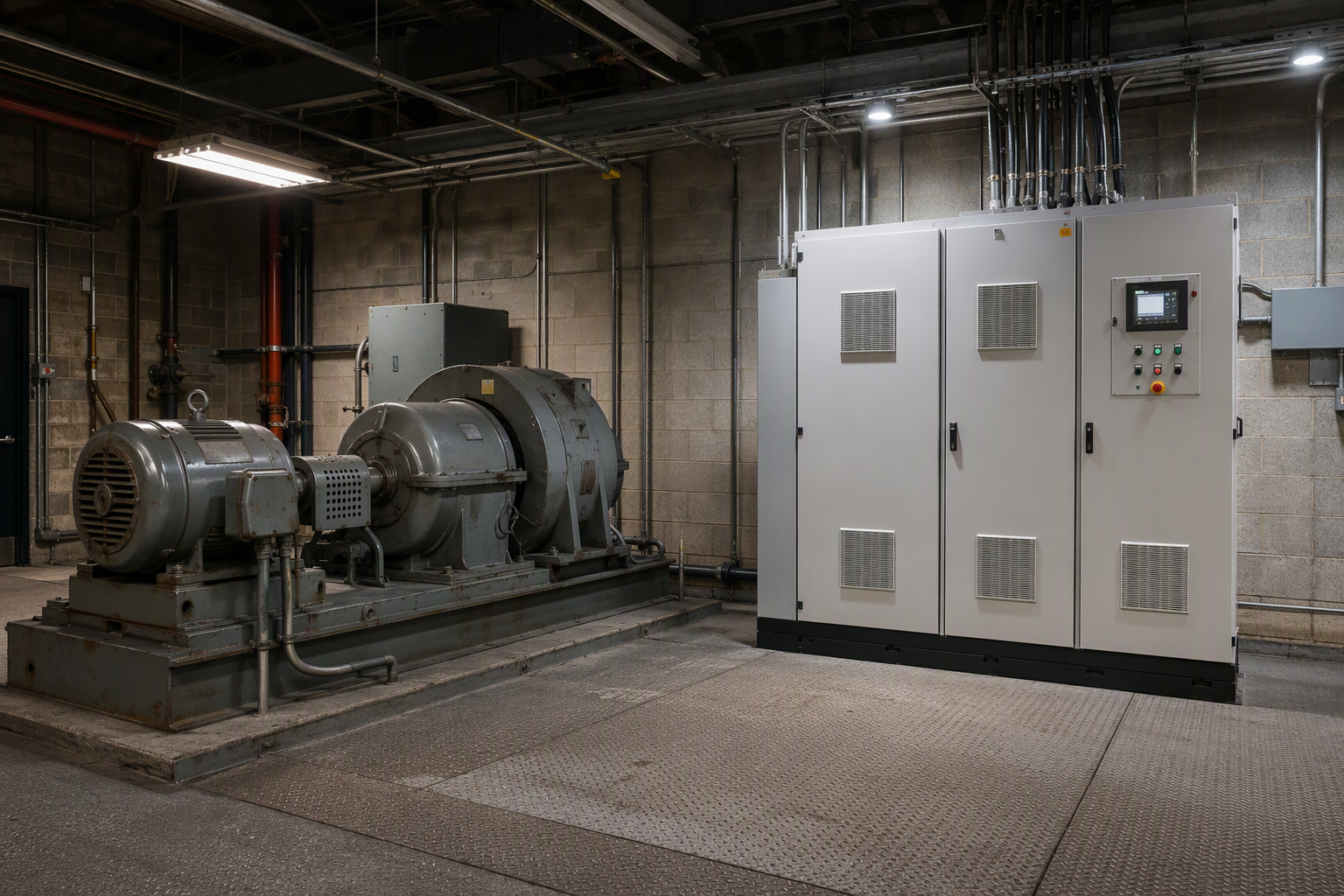
Some elevator energy upgrades — particularly regenerative drives — require that the building’s electrical system be compatible with two-way energy flow. A regenerative drive returns electricity to the building’s main electrical panel, and older panel configurations or utility meter setups may need to be evaluated before installation.
A qualified elevator contractor should conduct a site assessment that includes a review of the machine room electrical supply, panel capacity, and existing wiring before specifying a regenerative or high-power VFD upgrade. In some cases, coordination with a licensed electrician or the building’s electrical engineer will also be necessary.
This assessment is also an opportunity to identify other machine room conditions — lighting, ventilation, temperature control — that affect elevator component longevity and contribute to overall energy consumption.
What Role Does an Independent Elevator Service Company Play vs. the Original Equipment Manufacturer?
Building owners in DC, Maryland, Pennsylvania, and Virginia have the choice of working with the original equipment manufacturer (OEM) or an independent certified elevator service company for energy efficiency upgrades. There are meaningful differences worth understanding.
| Factor | OEM Service Provider | Independent Certified Provider |
|---|---|---|
| Equipment options | Typically limited to OEM brand components | Can specify best-fit components from multiple manufacturers |
| Pricing | May carry premium for brand-specific parts | Competitive sourcing across suppliers |
| Code compliance | Strong for their own equipment | Must be verified — look for ASME-compliant practices |
| Flexibility | May prefer full replacement over targeted upgrades | Can tailor upgrade scope to building budget and needs |
| Rebate assistance | Varies by company | Varies by company — ask directly |
Quality Elevator Company operates as an independent certified elevator service provider serving the District of Columbia, Maryland, Pennsylvania, and Virginia. As an independent contractor, Quality Elevator Company is able to assess a building’s existing equipment objectively and recommend upgrade solutions that fit the specific system, budget, and operational requirements — rather than being limited to a single manufacturer’s product line.
What Is the Step-by-Step Process for Getting an Elevator Energy Efficiency Upgrade?
- Request a professional energy assessment: Contact a licensed elevator contractor such as Quality Elevator Company to schedule a no-obligation evaluation of your existing equipment, usage patterns, and energy consumption.
- Review the assessment findings: The contractor should identify which systems are consuming excess energy, which upgrades are feasible for your equipment type, and what the estimated scope of work involves.
- Evaluate financial options: Review the proposed upgrade costs alongside any applicable utility rebates, potential tax incentives, and projected operating cost reductions to determine payback period.
- Select an upgrade scope: Decide whether to pursue a targeted upgrade (e.g., VFD only) or a broader modernization, based on budget, equipment age, and building goals.
- Permit and compliance review: Your contractor applies for required permits with the local AHJ and reviews code obligations under ASME A17.1 and applicable local requirements.
- Schedule and plan the upgrade: Coordinate installation timing to minimize disruption to building occupants, particularly in residential or healthcare settings.
- Complete installation and testing: All upgraded components are installed, adjusted, and tested to manufacturer and code specifications before the elevator is returned to service.
- AHJ inspection and certificate: The post-alteration inspection is conducted and new operating documentation is obtained.
- Baseline post-upgrade performance: Track energy consumption after the upgrade to confirm savings and document results for utility rebate claims if applicable.
Does Elevator Age Alone Determine Whether an Upgrade Is Worth It?
Age is an important factor but not the only one. An elevator that is 25 years old but has received consistent preventive maintenance, operates in a low-traffic environment, and already has relatively modern controls may not present as strong a case for a full energy upgrade as a 15-year-old system running in a high-rise building with an MG set and no standby controls.
The factors that matter most are the drive technology currently in place, the building’s usage patterns, the local cost of electricity, and whether code compliance issues are already requiring investment in the system. An honest assessment by an independent contractor should weigh all of these factors rather than defaulting to age as the primary decision criterion.
It is also worth noting that when a building is already investing in repairs or a partial modernization for safety or reliability reasons, bundling energy efficiency upgrades into that project can reduce the incremental cost and minimize total elevator downtime — making the financial case considerably stronger.
Summary: Key Decision Factors at a Glance
| Your Situation | Likely Upgrade Priority | Recommended First Step |
|---|---|---|
| Older hydraulic elevator, single-speed pump | High — VFD retrofit is likely cost-effective | Energy assessment + VFD feasibility review |
| DC traction elevator with MG set | High — MG set replacement offers significant savings | Full controls and drive assessment |
| AC traction elevator in high-rise or high-traffic building | High — regenerative drive merits serious evaluation | Electrical infrastructure review + energy assessment |
| Any elevator with incandescent or older cab lighting | Medium — quick win with fast payback | LED retrofit quote |
| Building with extended overnight or weekend low-traffic periods | Medium — standby controls may deliver meaningful savings | Controls assessment |
| Newer elevator (under 10 years) with modern VFD already installed | Lower — focus on maintenance optimization | Preventive maintenance review |
Get a Free Elevator Energy Assessment from Quality Elevator Company
If you manage or own a building in the District of Columbia, Maryland, Pennsylvania, or Virginia and want to know whether your elevator qualifies for an energy efficiency upgrade — and whether the numbers make sense for your specific situation — Quality Elevator Company can help.
As an independent certified elevator service provider, Quality Elevator Company conducts objective assessments of existing equipment and recommends upgrade solutions tailored to each building’s systems, budget, and operational requirements — without being tied to any single manufacturer’s product line.
Contact Quality Elevator Company for a free elevator assessment: 301-779-9116
Need elevator service you can rely on? Quality Elevator Company is ready to help.