Quick Answer: Switching elevator service contractors requires reviewing your current contract’s termination and assignment clauses, collecting all compliance documentation before the handoff, confirming the incoming contractor holds the required licenses in your jurisdiction (DC, Maryland, Pennsylvania, or Virginia), and scheduling a joint walkthrough so no inspection records, certificates, or open permits fall through the cracks.

For building owners and facility managers in the District of Columbia, Maryland, Pennsylvania, and Virginia, changing elevator service companies is a routine business decision — but one with real compliance stakes. A poorly managed transition can leave a building without a valid certificate of inspection, expose the owner to liability, or void pending test documentation. This guide walks through every stage of the process so the switch protects your building, your tenants, and your regulatory standing.
Can You Switch Elevator Companies Without Breaking Your Contract?
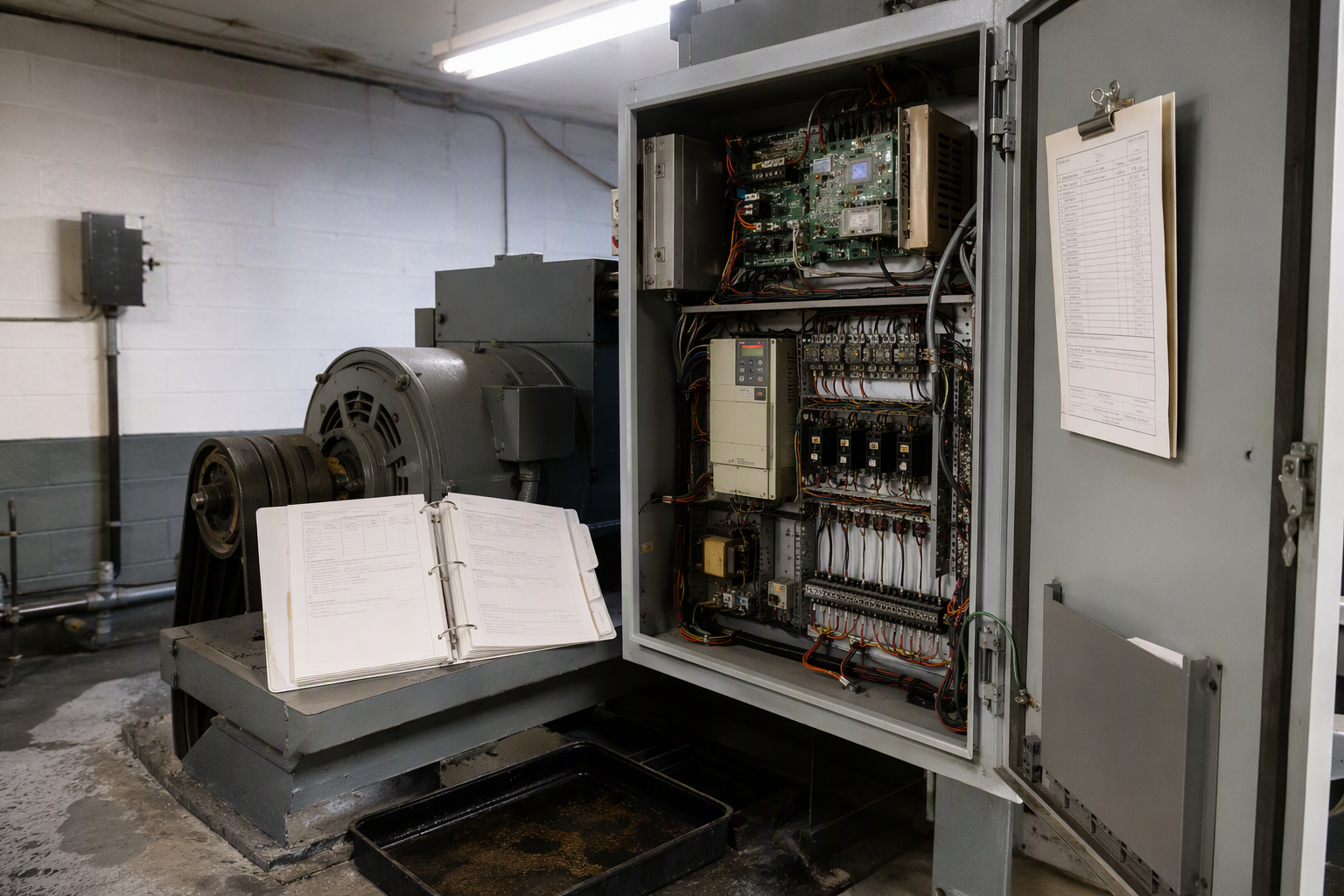
In most cases, yes — but the path depends entirely on what your current service agreement says. Most elevator maintenance contracts include one or more of the following clauses that govern an early exit:
- Term and notice period: Most agreements run one to five years and require written notice of non-renewal or early termination, typically 30 to 90 days in advance. Check the exact notice window; missing it can auto-renew the contract.
- Early termination fee: Some contracts charge a flat fee or a percentage of the remaining contract value if you exit before the term ends. Calculate this cost against the value of switching sooner.
- Equipment and proprietary parts clauses: Certain contractors install proprietary controllers or software that only their technicians can access. This is a negotiating point — not an absolute barrier — but it affects your timeline and possibly your costs.
- Assignment clause: If your building is sold or the contractor is acquired, an assignment clause may allow either party to transfer obligations. Understand whether your new contractor can step into an existing agreement or whether you need a fresh contract.
- Performance breach: If your current contractor has missed required inspections, failed to deliver contractually promised services, or caused a compliance lapse, that breach may give you a legal basis to exit early without penalty. Consult legal counsel before invoking this.
Action step: Pull your current contract and highlight the termination, notice, and equipment-access sections before doing anything else. Know the exact date your notice must be delivered to avoid an unwanted auto-renewal.
What Compliance Records Must You Collect Before Switching?
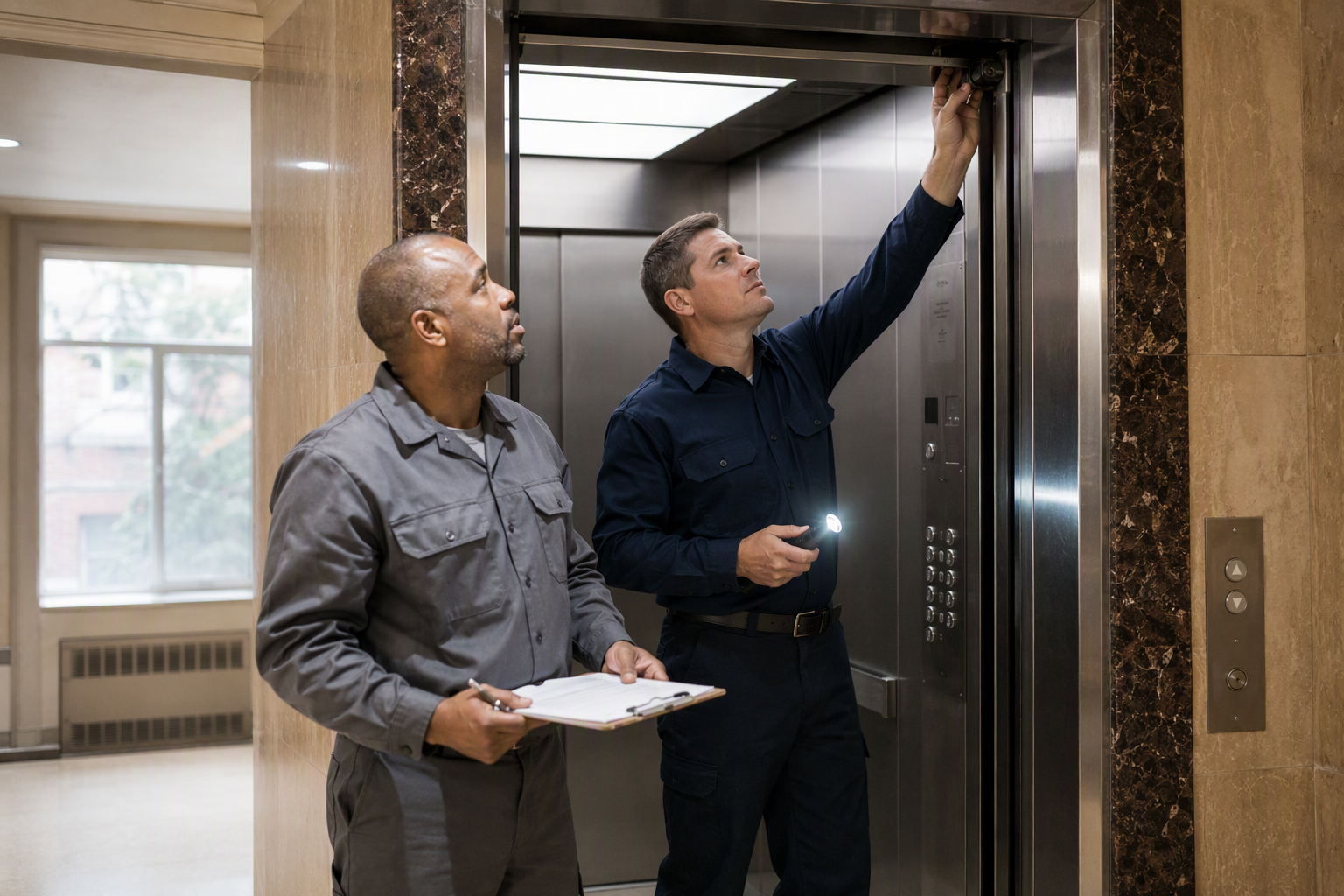
The handoff of documentation is the highest-risk moment in any contractor transition. Compliance records belong to the building owner, not the contractor — but in practice, they are often held by the outgoing service company. Demand the following in writing before the final day of service:
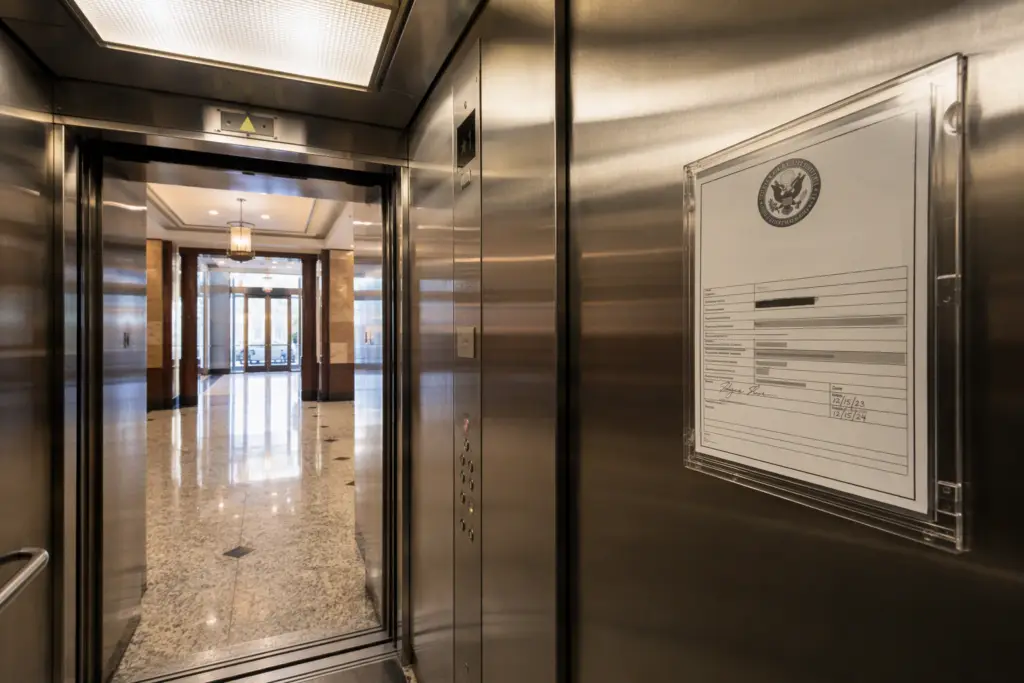
- Current certificate of inspection (required to be posted in or near the elevator car in DC, Maryland, Pennsylvania, and Virginia)
- All periodic inspection reports from the current certificate period
- Category 1 and Category 5 test records (for DC equipment), five-year comprehensive inspection records (for Maryland equipment), and all periodic test reports (for Pennsylvania and Virginia equipment)
- Open permits for any alteration, repair, or modernization work
- Maintenance logbooks and oil records
- Hydraulic fluid and oil change records
- Any outstanding violation notices or directives from the Authority Having Jurisdiction (AHJ)
- Equipment manuals, wiring diagrams, and as-built drawings
- Registration numbers and certificate numbers assigned by the AHJ
Each jurisdiction has specific record-keeping requirements. In Maryland, for example, the Maryland Department of Labor, Division of Labor and Industry, Elevator and Escalator Safety requires that maintenance, repair, test, and inspection records be kept at a readily accessible central location in the building. In Pennsylvania, the Pennsylvania Department of Labor and Industry, Bureau of Occupational and Industrial Safety, Elevator Section issues certificates of operation that must be posted in the elevator car or machine room controller. In DC, inspection reports for the prior two years must be submitted to the DC Department of Buildings (DOB) through the Citizen Access Portal to obtain a new certificate of inspection. In Virginia, 13VAC5-63, the Virginia Uniform Statewide Building Code, requires that the current certificate of inspection be displayed in the elevator or made available in the building operator’s office.
Do not allow the outgoing contractor to retain originals of any documents. If digital copies are provided, verify they are complete and legible before the final service day.
How Do You Evaluate a New Elevator Contractor?
Not every elevator company that markets in your area is authorized to perform work in your jurisdiction. Before signing any new agreement, verify the following for each candidate contractor:
Contractor Evaluation Checklist by Jurisdiction
| Jurisdiction | License / Certification Required | Where to Verify | Inspector Credential Required |
|---|---|---|---|
| District of Columbia | DC Elevator Contracting License (DC Board of Industrial Trades via DLCP); master electrician license also required for permit work | DC DOB | ASME QEI-certified inspector (third-party agency approved by DOB) |
| Maryland | Elevator Contractor License (Maryland Elevator Safety Review Board within the Maryland Department of Labor); minimum $1,000,000 general liability / $500,000 property damage insurance | Maryland Department of Labor | Third-party qualified elevator inspector physically present for tests; licensed elevator mechanic performs tests |
| Pennsylvania | Department-certified third-party agency for inspections; confirm contractor’s authorization under the UCC | PA L&I Elevator Section | UCC-certified elevator inspector; periodic tests witnessed by a construction code official |
| Virginia | Contractor license with Elevator/Escalator Contracting (EEC) specialty (Virginia Board for Contractors, DPOR); elevator mechanics must hold state certification | 13VAC5-63 USBC | Virginia-certified elevator mechanic; tests witnessed by local code official or approved agency |
Beyond licensing, evaluate candidates on their familiarity with the ASME A17.1 Safety Code for Elevators and Escalators edition adopted in your jurisdiction, their documented track record with your elevator type (traction, hydraulic, MRL), and their ability to obtain permits through your specific AHJ.
Quality Elevator Company is an independent elevator service provider serving the District of Columbia, Maryland, Pennsylvania, and Virginia, with working knowledge of the regulatory requirements in each jurisdiction described on this page.
What Is the Step-by-Step Process for Switching Elevator Service Contractors?
- Review and calendar your current contract. Identify the termination notice deadline, early exit fees, proprietary-equipment clauses, and auto-renewal date. Mark the notice delivery deadline on your calendar.
- Request a full document audit from your current contractor. In writing, ask for every certificate, inspection report, test record, permit, maintenance log, and equipment drawing held on file for your units.
- Obtain AHJ records independently. Contact your jurisdiction’s elevator regulator directly — DOB in DC, Maryland Department of Labor, PA L&I, or your local building department in Virginia — to confirm what records they show on file and whether any violations, open permits, or lapses exist.
- Solicit proposals from at least two qualified contractors. Verify licensing and insurance in your jurisdiction for each candidate. Ask each to conduct a pre-agreement walkthrough of your equipment.
- Compare proposals using the criteria in the table below. Price alone is not the determinative factor; compliance capability and local licensing matter more.
- Negotiate transition terms into the new contract. Specify who is responsible for any tests or inspections that fall during the changeover period, and require the new contractor to acknowledge receipt of all handoff documents.
- Deliver written termination notice to your current contractor. Use certified mail or another verifiable delivery method. Retain proof of delivery.
- Schedule a joint equipment walkthrough with outgoing and incoming contractors. Document the condition of every unit, including any deferred maintenance or open items. Photograph key components.
- Verify the new contractor files or acknowledges any open permits before work begins. In Pennsylvania, no elevator may return to service after major repair without a passing inspection by PA L&I. In DC, a permit is required to take a unit out of service. Confirm responsibilities are clearly assigned.
- Confirm certificate validity after the switch. Once the new contractor is fully onboarded, verify with your AHJ that the certificate of inspection on file is current and that no gap in coverage occurred during the transition.
How Do You Compare Elevator Service Contracts: Key Factors and Trade-offs?
| Factor | Full-Coverage (Comprehensive) Contract | Preventive-Maintenance-Only Contract | Time-and-Materials Arrangement |
|---|---|---|---|
| What’s included | Scheduled maintenance, parts, repairs, callbacks, emergency response | Scheduled lubrication, adjustment, and inspection visits only | Labor and parts billed per visit; no scheduled commitment |
| Budget predictability | High — fixed monthly or annual cost | Moderate — known maintenance cost; repair costs variable | Low — unpredictable; can spike with unplanned repairs |
| Best suited for | High-traffic commercial buildings, hospitals, multi-family properties with older equipment | Newer equipment under manufacturer warranty; low-traffic buildings | Buildings with very low elevator use; owners with in-house maintenance capacity |
| Compliance coverage | Typically includes coordination of required periodic inspections | Inspection coordination may be extra; confirm in writing | Owner bears responsibility for scheduling all required inspections |
| Switching risk | Higher — more complex handoff of open parts orders and repair history | Moderate | Lower — easier to transition with no ongoing repair obligations |
| Proprietary-lock risk | Higher if contractor installed proprietary controls | Moderate | Lower — typically no proprietary installation tied to service |
What Happens to Compliance Records During the Transition Period?
This is the most consequential gap in most contractor switches. Compliance records do not automatically transfer — they must be actively requested, confirmed complete, and formally acknowledged by the incoming contractor. Key risks during this window include:
- An annual or periodic inspection falling due while no contractor is under contract
- A certificate of inspection expiring before the new contractor has established its relationship with the AHJ
- Open permits for alterations or repairs left in limbo, triggering a hold on the unit’s operation
- Required five-year or Category 5 tests coming due without a contractor prepared to perform them
To prevent a compliance gap, overlap your contractor relationships by at least 30 days where your contract terms allow. If your contract prohibits concurrent service, at minimum secure all documentation before the outgoing contractor’s final day and confirm with the AHJ that your certificate remains valid through the transition.
What Should You Demand in a Contractor Transition Agreement?
A formal transition agreement — or a detailed transition clause in the new service contract — should specify the following in writing:
- A complete list of documents the outgoing contractor will deliver, with a deadline
- Acknowledgment by the incoming contractor of all open permits and pending inspection dates
- Identification of any deferred maintenance items and who is responsible for completing them
- Confirmation of proprietary software or controller access, including any transfer of passwords or access codes
- A statement of which party is responsible for any inspection that falls within the transition window
- Insurance certificates from the incoming contractor confirming coverage meeting your jurisdiction’s requirements (in Maryland, for example, contractor insurance minimums are set by statute)
- A schedule for the incoming contractor’s initial assessment of each unit
Does Switching Contractors Affect Your ADA or OSHA Compliance?
Switching contractors does not by itself alter your obligations under the Americans with Disabilities Act (ADA) or federal OSHA standards — those obligations remain with the building owner regardless of who performs the service. However, a poorly managed transition can indirectly create compliance exposure in these areas:
- ADA: If a unit is taken out of service during the transition and no accessible alternative is provided, the building may be in violation of ADA accessibility requirements. Plan any service interruptions carefully and provide compliant alternatives.
- OSHA: OSHA standards governing elevator construction and maintenance worker safety apply to whoever is performing the work. Confirm that your incoming contractor has current OSHA training documentation for its technicians.
How Long Does Switching Elevator Contractors Typically Take?
The timeline varies by contract terms, equipment complexity, and AHJ responsiveness, but a realistic planning window covers several phases:
| Phase | Typical Duration | Key Dependencies |
|---|---|---|
| Contract review and notice preparation | 1–2 weeks | Access to current contract; legal review if breach is involved |
| Contractor solicitation and evaluation | 2–4 weeks | Number of units, complexity of equipment, license verification |
| Notice period under current contract | 30–90 days (contract-dependent) | Exact contractual notice requirement |
| Document collection and AHJ verification | 2–4 weeks (overlaps with notice period) | Outgoing contractor responsiveness; AHJ record access |
| Joint walkthrough and new contractor onboarding | 1–2 weeks | Scheduling both contractors; equipment accessibility |
| Total realistic planning window | 8–16 weeks from decision to active new contract | Begin earlier if equipment has complex open permits |
What Are the Pros and Cons of Switching to an Independent Elevator Service Company?
| Factor | Large National/OEM Contractor | Independent Regional Contractor |
|---|---|---|
| Parts availability | Fast access to OEM parts for their own brands; may be slow for other manufacturers | Sources parts from multiple suppliers; often faster for mixed-manufacturer portfolios |
| Contract flexibility | Standardized contracts with limited negotiating room; higher early-exit fees common | More flexible terms; transition and notice clauses often negotiable |
| Proprietary lock-in risk | Higher — some OEMs install proprietary controllers tied to their service network | Lower — independents typically use non-proprietary or open-access equipment |
| Local regulatory knowledge | Variable; depends on local branch staffing | Typically deep knowledge of local AHJ relationships and requirements |
| Account management continuity | Technician turnover and territory reassignments are common | Smaller customer base often means more consistent technician assignment |
| Compliance documentation support | Variable; some large contractors have robust digital record systems | Depends on contractor; verify document management practices before signing |
Quality Elevator Company operates as an independent elevator service provider focused exclusively on the District of Columbia, Maryland, Pennsylvania, and Virginia, giving its clients direct access to staff with working knowledge of the DOB in DC, the Maryland Department of Labor’s Elevator and Escalator Safety unit, Pennsylvania L&I’s Elevator Section, and local Virginia building departments.
What Should You Ask a Prospective Elevator Contractor Before Signing?
Use these questions when interviewing any prospective contractor:
- Are you currently licensed as an elevator contractor in this jurisdiction, and can you provide your license number for verification?
- Do any of your service technicians or mechanics working in this jurisdiction hold the required state certification or licensing?
- Do you install any proprietary controllers or software that would restrict my ability to switch contractors in the future?
- How do you manage compliance documentation — where are records stored, who owns them, and how will they be delivered if the contract ends?
- Who is responsible under your contract for scheduling and coordinating required periodic inspections and tests with the AHJ?
- What happens to open permits if the contract ends mid-project?
- What is your notice period and early termination policy?
- Can you provide references from buildings of similar size and equipment type in this jurisdiction?
Which Jurisdictional Requirements Most Affect the Timing of a Contractor Switch?
Each jurisdiction in Quality Elevator Company’s service area has timing requirements that can affect when a contractor transition is feasible without creating a compliance gap:
- District of Columbia: DC certificates of inspection are valid for two years, but periodic inspections and tests continue throughout that window. The incoming contractor must be prepared to coordinate with a DOB-approved third-party inspection agency whose inspectors hold ASME QEI certification. If a Category 5 test is approaching, confirm the new contractor is prepared to coordinate this before the switch.
- Maryland: Annual re-registration with the Commissioner is tied to the periodic annual inspection. If the switch falls near that annual date, confirm the new contractor is prepared to coordinate the inspection and re-registration without a gap. The Maryland Department of Labor, Division of Labor and Industry, requires the inspector to be physically present for the entire test.
- Pennsylvania: Certificates of operation have defined validity periods tied to inspection cycles. Beginning December 20, 2026, Category 1 tests become a stand-alone annual requirement under PA L&I‘s updated Regulation #12-123. Switches occurring near that date should account for the new testing requirements under ASME A17.1-2016 for any new permit applications.
- Virginia: Local building departments administer annual periodic inspections. Timing a switch near the annual inspection date in your locality — including within the City of Richmond’s Bureau of Permits and Inspections — requires confirming that the new contractor is familiar with that local program and has established the necessary working relationship with the local code official. See 13VAC5-63 for Virginia’s inspection framework.
What Are the Most Common Mistakes Building Owners Make When Switching Elevator Contractors?
- Failing to calendar the notice deadline and triggering an automatic contract renewal
- Assuming records will be transferred automatically rather than formally requesting them in writing before the outgoing contractor’s last day
- Not verifying the incoming contractor’s license in the specific jurisdiction — a license in one state does not transfer to another
- Overlooking open permits that the outgoing contractor holds, which can prevent the incoming contractor from pulling new permits or putting units back in service
- Signing a new contract with proprietary-equipment clauses that recreate the same lock-in problem that prompted the switch
- Switching mid-inspection cycle without confirming who is responsible for the next required test or inspection
- Not obtaining AHJ records independently and relying solely on what the outgoing contractor provides
Ready to Evaluate Your Current Elevator Service Agreement?
Quality Elevator Company provides free elevator assessments for building owners and facility managers in the District of Columbia, Maryland, Pennsylvania, and Virginia. A Quality Elevator Company assessment covers equipment condition, pending compliance deadlines in your jurisdiction, and a review of your current service agreement structure — giving you the information you need to make a well-informed decision about whether to stay with your current contractor or make a change.
Contact Quality Elevator Company for a free elevator assessment: 301-779-9116
Need elevator service you can rely on? Quality Elevator Company is ready to help.