Elevator Maintenance ROI for Healthcare Facilities
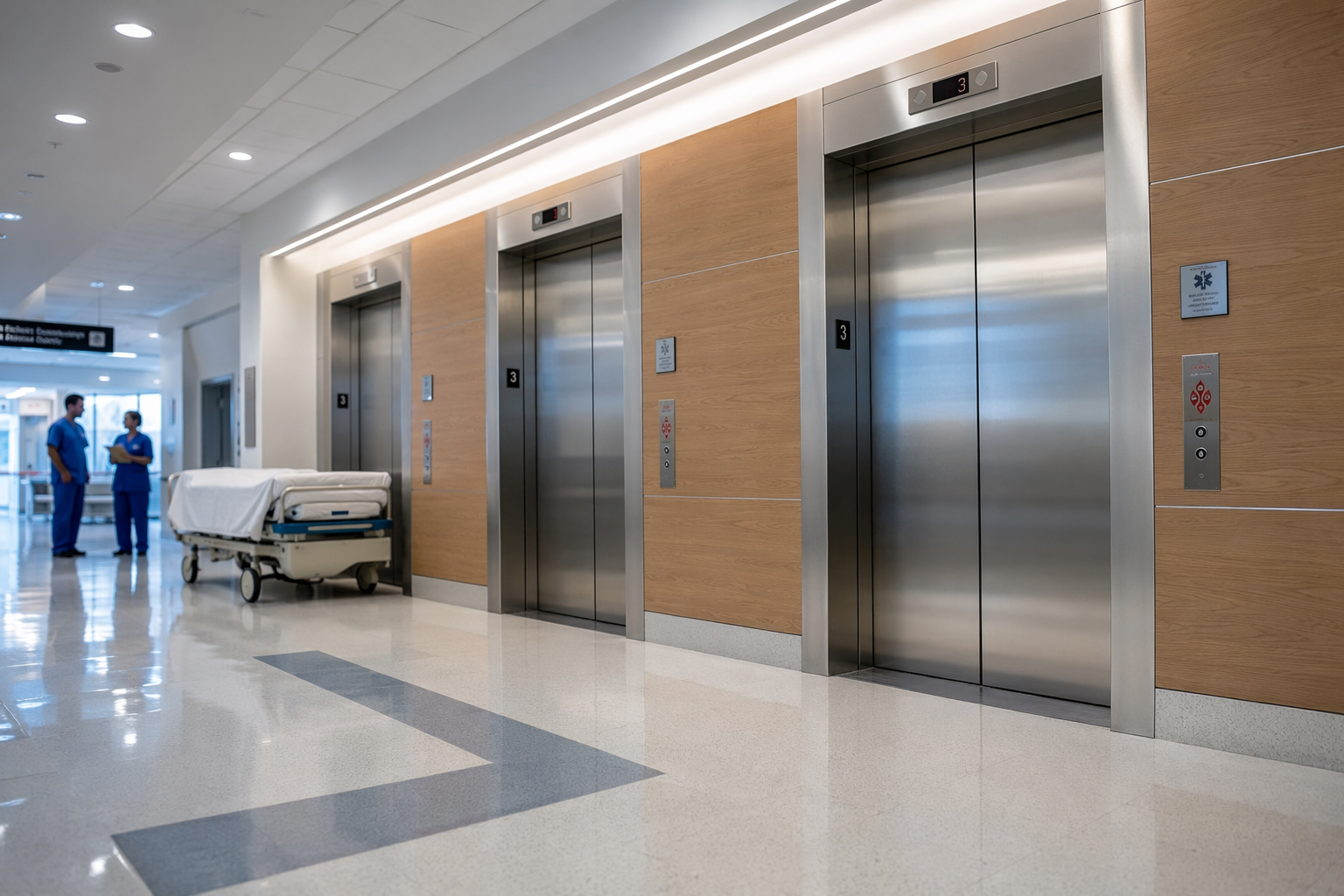
Healthcare facilities in Baltimore, Washington DC, Philadelphia, and Richmond VA face a unique challenge: elevators are not a convenience — they are a clinical necessity. Patient beds, surgical equipment, medication carts, and emergency responders all depend on vertical transportation systems functioning without interruption. When an elevator fails in a hospital or outpatient clinic, the operational and financial consequences extend far beyond the cost of a repair call.
Understanding elevator maintenance ROI in a healthcare context means looking beyond the service invoice. It means accounting for compliance risk, patient safety liability, staff productivity, and the long-term cost trajectory of a neglected mechanical asset versus a well-maintained one. Quality Elevator Company works with healthcare operators across the mid-Atlantic region to build maintenance programs that protect both patients and budgets.
Why Does Elevator Maintenance ROI Matter More in Healthcare Than in Other Industries?
In commercial office buildings or retail properties, an elevator outage is an inconvenience. In a healthcare setting, it can compromise patient care. A non-operational elevator in a hospital can delay time-sensitive procedures, prevent wheelchair and gurney access to upper floors, and force staff into workarounds that consume labor hours and create safety risks for both patients and employees.
From a financial perspective, reactive repairs — those triggered by a breakdown rather than a scheduled service visit — consistently cost more than preventive maintenance. Emergency service calls often involve after-hours labor rates, expedited parts sourcing, and extended downtime that compounds the total cost. A structured maintenance program spreads cost predictably across a budget cycle and reduces the frequency and severity of emergency events.
Healthcare facility managers in Baltimore, Washington DC, Philadelphia, and Richmond VA also operate under heightened regulatory scrutiny. Elevator failures that affect patient access can trigger inspections, citations, and operational reviews that carry their own administrative costs and reputational consequences.
What Compliance Standards Govern Hospital and Healthcare Elevator Maintenance?

Healthcare elevators are subject to multiple overlapping compliance frameworks. Understanding these requirements is essential to calculating the true cost of non-compliance as part of any ROI analysis.
- ASME A17.1 Safety Code for Elevators and Escalators: This is the foundational national standard governing elevator design, installation, inspection, testing, and maintenance in the United States. Healthcare facilities must meet ASME A17.1 requirements for periodic inspection intervals, safety device testing, and maintenance recordkeeping. The 2019 edition and subsequent updates establish specific maintenance control program (MCP) documentation requirements that require facilities to maintain written records of all service activities.
- Americans with Disabilities Act (ADA): Healthcare facilities are among the most ADA-sensitive environments in any building portfolio. Elevator accessibility features — including door timing, control panel height, audible signals, and Braille signage — must be maintained in working order. ADA non-compliance in a hospital creates both legal exposure and documented barriers to patient care.
- State and Local Elevator Codes: Maryland, Virginia, Pennsylvania, and the District of Columbia each maintain their own elevator inspection and licensing requirements that operate alongside ASME A17.1. Annual or periodic inspections by a licensed elevator inspector are typically required in each jurisdiction. Facilities that cannot produce current inspection certificates face fines and potential orders to take units out of service.
- The Joint Commission and CMS Conditions of Participation: Hospitals seeking Joint Commission accreditation or participation in Medicare and Medicaid programs under CMS must demonstrate that their physical environment — including vertical transportation — meets life safety and equipment maintenance standards. Elevator maintenance records can be reviewed during accreditation surveys.
- OSHA General Duty Clause: Healthcare employers are required to provide a workplace free from recognized hazards. Elevator maintenance failures that endanger workers — including housekeeping staff, nurses, and transport aides who use elevators throughout every shift — can result in OSHA citations.
What Are the Specific ROI Components of a Healthcare Elevator Maintenance Program?
ROI in elevator maintenance is not a single number — it is a composite of avoided costs, extended asset life, and reduced liability exposure. Healthcare facility managers should evaluate the following components when building a business case for a structured maintenance contract:
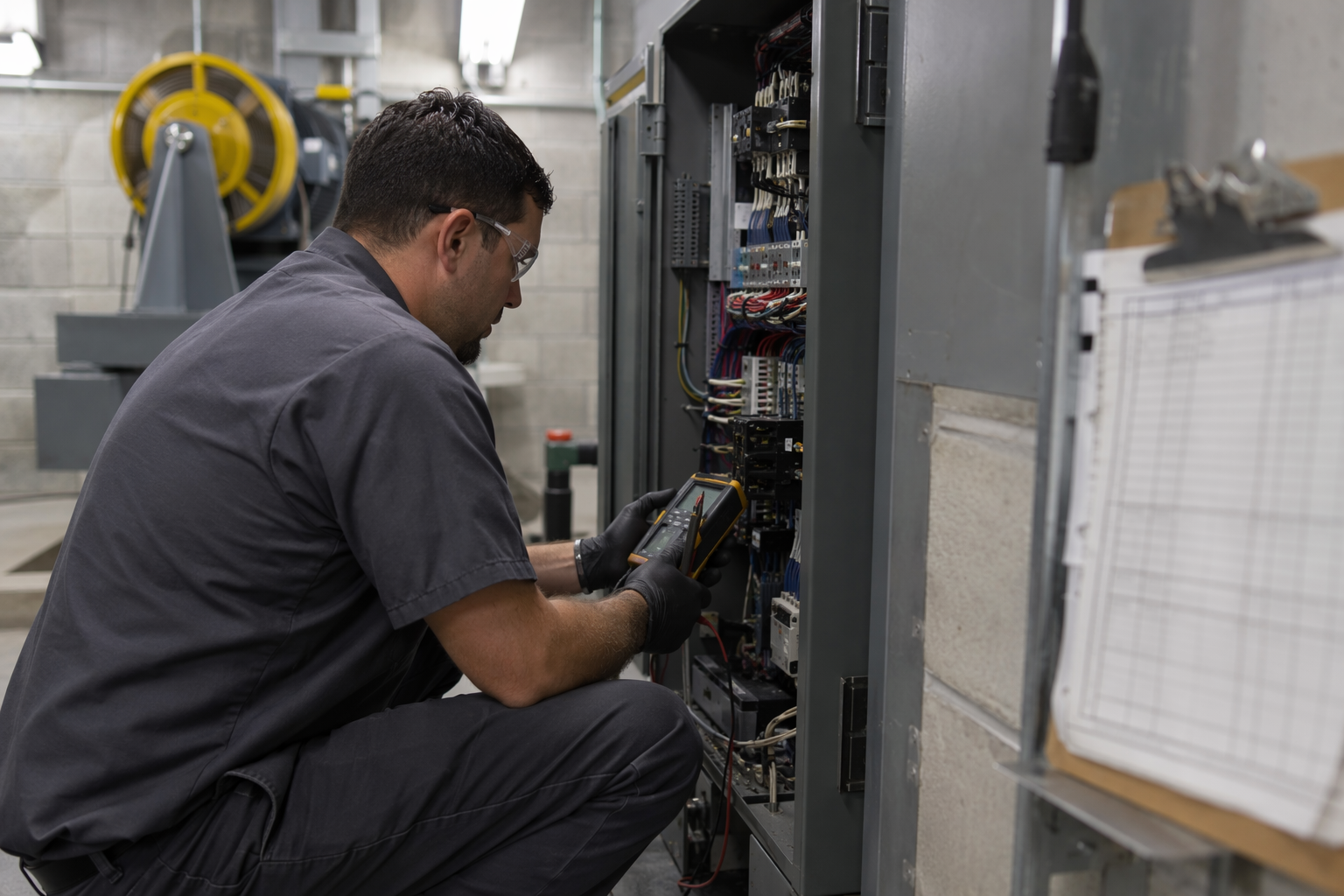
- Reduced emergency repair frequency: Preventive maintenance identifies worn components — cables, sheaves, door operators, safety devices — before they cause failures. Catching these issues during a scheduled visit avoids the premium costs associated with emergency dispatch.
- Extended equipment lifespan: A properly maintained elevator system can reach or exceed its designed service life. Deferred maintenance accelerates wear on high-cost components and can compress the timeline to a full modernization, which represents a significant capital expenditure.
- Avoided regulatory penalties: Failed inspections, missing maintenance records, or documented ADA deficiencies all carry financial consequences. Maintaining a compliant maintenance control program under ASME A17.1 provides the documentation infrastructure to pass inspections and accreditation reviews.
- Labor productivity preservation: When elevators are out of service, healthcare staff must reroute patient transport, locate working units, and absorb the time cost of workarounds. These labor hours represent a real — though often uncounted — cost of elevator downtime.
- Liability risk reduction: Elevator incidents involving patients or staff can result in claims that dwarf the cost of any maintenance program. A documented history of professional maintenance is a critical element of a defensible risk management posture.
How Should Healthcare Facilities Structure an Elevator Maintenance Contract for Maximum ROI?
Not all maintenance contracts deliver equivalent value. Healthcare facilities should look for contracts that include the following elements:
- A written Maintenance Control Program (MCP) aligned with ASME A17.1 requirements, documenting all scheduled tasks, intervals, and responsible parties.
- Regular lubrication, adjustment, and inspection of all mechanical and electrical components on a defined schedule.
- Safety device testing at code-required intervals, with documentation retained in the facility’s records.
- Door system maintenance prioritized — door failures are among the most common causes of elevator-related incidents and downtime in high-traffic environments.
- ADA compliance checks included in routine service visits, covering control panel function, door timing, and accessibility features.
- Detailed service reports provided after every visit, supporting both internal facility records and regulatory inspection readiness.
- A clear process for communicating findings, recommended repairs, and equipment condition trends to facility management.
Quality Elevator Company structures healthcare maintenance agreements to address each of these elements, with a focus on the documentation and compliance requirements that matter most in regulated healthcare environments across Baltimore, Washington DC, Philadelphia, and Richmond.
What Is the Difference Between Full Maintenance and Examination-Only Contracts in Healthcare?
Healthcare facility managers evaluating service contracts frequently encounter two broad contract types. An examination-only or “oil and grease” contract covers routine lubrication and inspection but excludes parts and labor for repairs. A full maintenance contract covers scheduled service and includes parts and labor for covered repairs within the scope of the agreement.
For healthcare facilities with high-utilization elevators operating around the clock, full maintenance contracts typically deliver stronger ROI because they shift repair cost risk to the service provider and create a financial incentive for the contractor to perform thorough preventive work. Examination-only contracts may appear less expensive on paper but can generate unpredictable repair invoices that erode the apparent savings.
How Does Elevator Downtime Affect Patient Safety and Facility Operations in Hospitals?
In a multi-story hospital or medical center, elevator downtime is an operational emergency. Patient transport — including bed moves, stretcher transfers, and wheelchair-dependent patients — requires reliable vertical access. Pharmacy deliveries, sterile supply transport, and laboratory specimen movement all depend on functioning elevators. When a unit goes out of service, clinical workflows are disrupted in ways that affect patient care timelines and staff workload simultaneously.
From a risk management perspective, elevator outages that affect patient transport can also create documentation obligations, incident reports, and in some cases, reportable events under state health department regulations. A maintenance program that minimizes downtime is therefore a patient safety investment as well as a financial one.
What Elevator Modernization Considerations Should Healthcare Facilities Plan For?
Even a well-maintained elevator system will eventually reach the end of its useful service life. Modernization — the replacement of key components such as the controller, drive system, cab, and door operator — restores reliability, improves energy efficiency, and brings equipment into current code compliance under ASME A17.1.
Healthcare facilities should factor modernization planning into their long-term capital budgets. A maintenance provider with visibility into equipment condition trends can provide facility managers with advance notice of systems approaching the end of their reliable service life, allowing modernization to be planned and funded rather than reactive. Quality Elevator Company serves healthcare clients in the mid-Atlantic region with both ongoing maintenance programs and modernization project support.
How Do Local Jurisdiction Requirements in Maryland, DC, Virginia, and Pennsylvania Affect Healthcare Elevator Compliance?
Healthcare operators with facilities across multiple mid-Atlantic markets must navigate jurisdiction-specific inspection schedules, licensing requirements for elevator contractors, and permit processes for repairs and modifications. Maryland, the District of Columbia, Virginia, and Pennsylvania each administer their own elevator safety programs, and the inspection intervals and documentation requirements vary by jurisdiction.
Working with a service provider that is active across all four markets simplifies compliance management for multi-site healthcare systems. Quality Elevator Company operates across Baltimore, Washington DC, Philadelphia, and Richmond VA, providing familiarity with the specific requirements of each jurisdiction’s elevator safety program.
Questions Your Inspector Will Ask
Healthcare facility managers preparing for elevator inspections — whether state inspections, Joint Commission surveys, or CMS reviews — should be prepared to answer the following questions. Having clear, documented answers to each is a direct outcome of a well-structured maintenance program.
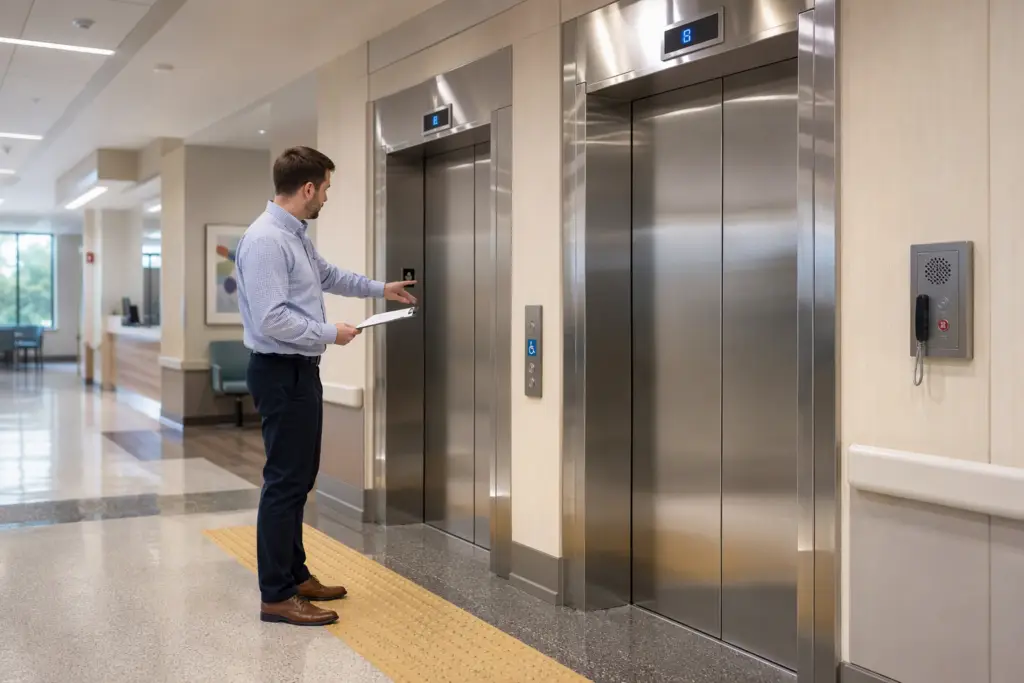
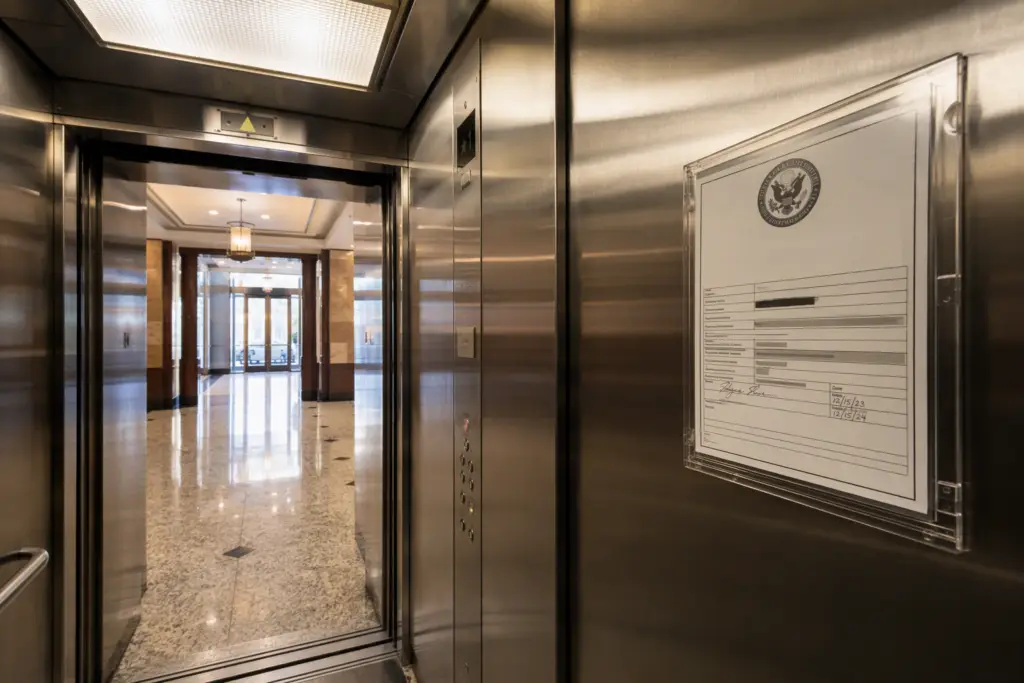
- Can you produce the current elevator inspection certificate for each unit? Inspectors will verify that certificates are current, posted in the elevator cab as required by state law, and accessible for review.
- Where is the Maintenance Control Program documentation for each elevator? Under ASME A17.1, facilities must maintain written records of all maintenance activities. Inspectors may request these records on-site.
- When were the elevator safety devices last tested? Safety device testing — including governors, buffers, and safeties — must be performed at code-required intervals and documented.
- Have any repairs or modifications been made since the last inspection, and were permits obtained? Unpermitted work can result in citations and orders to take units out of service pending review.
- Are all ADA accessibility features in working order? Door timing, control panel accessibility, audible signals, and visual indicators are subject to review in healthcare environments under ADA requirements.
- Is there a documented process for taking a unit out of service and notifying occupants? Healthcare facilities are expected to have protocols for managing elevator outages in ways that protect patient safety.
- Who is the licensed elevator contractor responsible for maintenance, and are their licenses current in this jurisdiction? Inspectors may verify contractor licensing as part of the inspection process.
How Should Healthcare Facilities Compare Elevator Service Vendors?
When evaluating elevator service providers, healthcare facility managers should assess vendors across several dimensions beyond price:
- Familiarity with healthcare environments: High-traffic, 24-hour operations create different wear patterns and compliance demands than standard commercial buildings. Vendors with healthcare experience understand these requirements.
- Documentation and reporting capability: The ability to provide detailed, inspection-ready maintenance records is essential for Joint Commission, CMS, and state elevator inspector readiness.
- Multi-jurisdiction capability: Healthcare systems operating in multiple mid-Atlantic markets benefit from working with a provider active in each jurisdiction.
- Scope of services: Vendors capable of handling both ongoing maintenance and modernization projects provide continuity of knowledge about equipment condition across the full asset lifecycle.
- References from comparable facilities: Healthcare facilities should request references from other hospitals, medical centers, or outpatient facilities in the region.
What Steps Should a Healthcare Facility Take to Start a Compliant Maintenance Program?
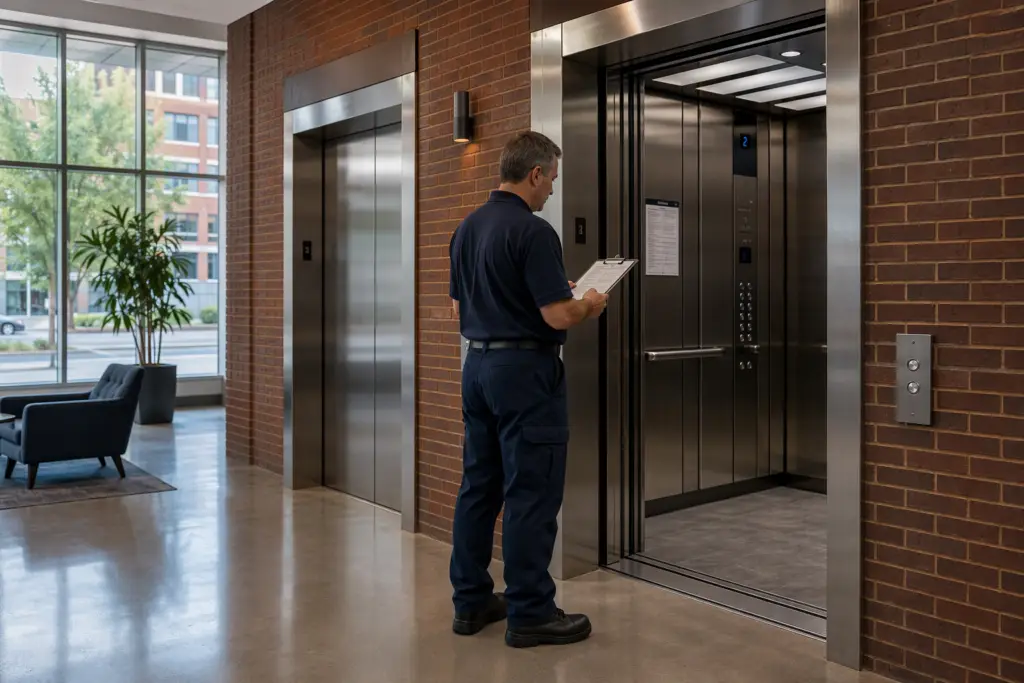
- Conduct a baseline assessment of all elevator units to document current condition, existing maintenance records, and any outstanding deficiencies.
- Verify that current inspection certificates are posted in each cab and that no units have overdue inspections in their respective jurisdictions.
- Review existing maintenance contracts to determine whether they include a written Maintenance Control Program (MCP) as required by ASME A17.1.
- Identify any ADA deficiencies in cab controls, door operation, or accessibility features and add them to a remediation queue.
- Establish a documentation system — physical or digital — for retaining maintenance records, inspection certificates, and safety device test results.
- Select a licensed elevator service provider experienced with healthcare facilities and the specific requirements of your jurisdiction.
- Schedule a full service visit to bring all units to baseline condition before beginning a forward-looking preventive maintenance program.
Get a Free Elevator Assessment for Your Healthcare Facility
Healthcare facilities in Baltimore, Washington DC, Philadelphia, and Richmond VA can take the first step toward a compliant, cost-effective elevator maintenance program with a no-obligation assessment. Contact Quality Elevator Company for a free elevator assessment at 301-779-9116. The team at Quality Elevator Company will review your current equipment condition, documentation, and compliance status and provide a clear picture of what a structured maintenance program would include for your facility.
Need elevator service you can rely on? Quality Elevator Company is ready to help.