Elevator Inspection Requirements in Maryland: Complete Compliance Guide
For building owners, property managers, and facilities directors in Maryland, understanding elevator inspection requirements is not optional — it is a legal obligation that directly affects occupant safety, liability exposure, and building operating permits. This guide covers the full scope of Maryland elevator inspection requirements, from applicable codes and inspection intervals to what happens during an inspection and how to stay ahead of compliance deadlines in 2025 and 2026.
What Law Governs Elevator Inspections in Maryland?
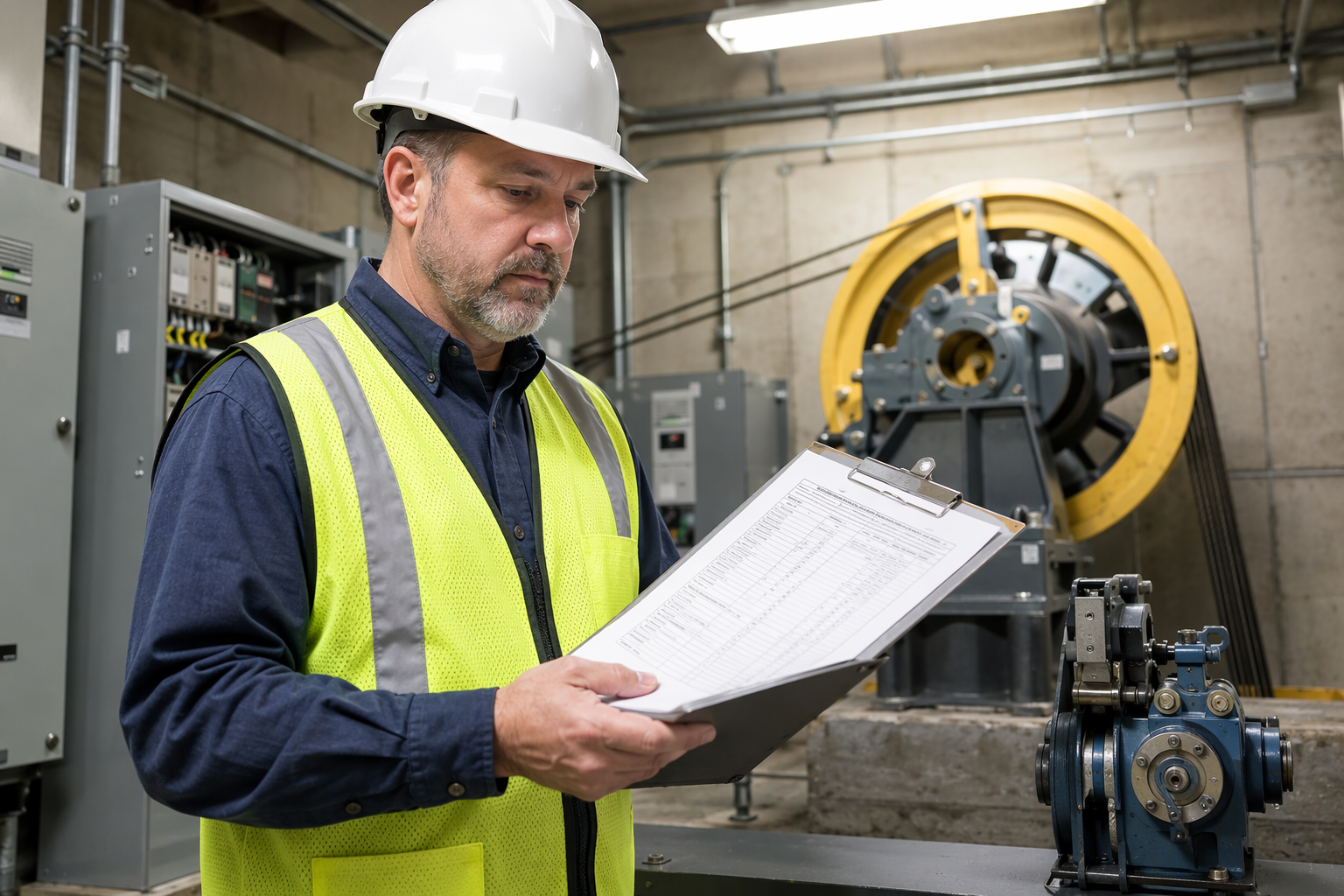
Maryland elevator inspections fall under the jurisdiction of the Maryland Department of Labor (MDL), Division of Labor and Industry, Elevator Safety Program. The state adopts and enforces the ASME A17.1 Safety Code for Elevators and Escalators as its foundational technical standard. This code sets the minimum design, construction, operation, inspection, testing, and maintenance requirements for elevators and related lifting equipment operating within the state.
Maryland law requires that any elevator, escalator, moving walk, or similar conveyance device installed in a public or commercial building be registered with the state, inspected on a mandated schedule, and operated only with a valid Certificate of Operation posted inside or adjacent to the equipment. Buildings that fail to comply risk civil penalties, mandatory shutdown of the equipment, and increased legal liability in the event of an accident.
Workplace elevators that affect employee access may also fall under broader workplace safety obligations reviewed under OSHA general duty provisions, particularly when equipment deficiencies create recognized hazards for workers.
How Often Are Elevators Required to Be Inspected in Maryland?
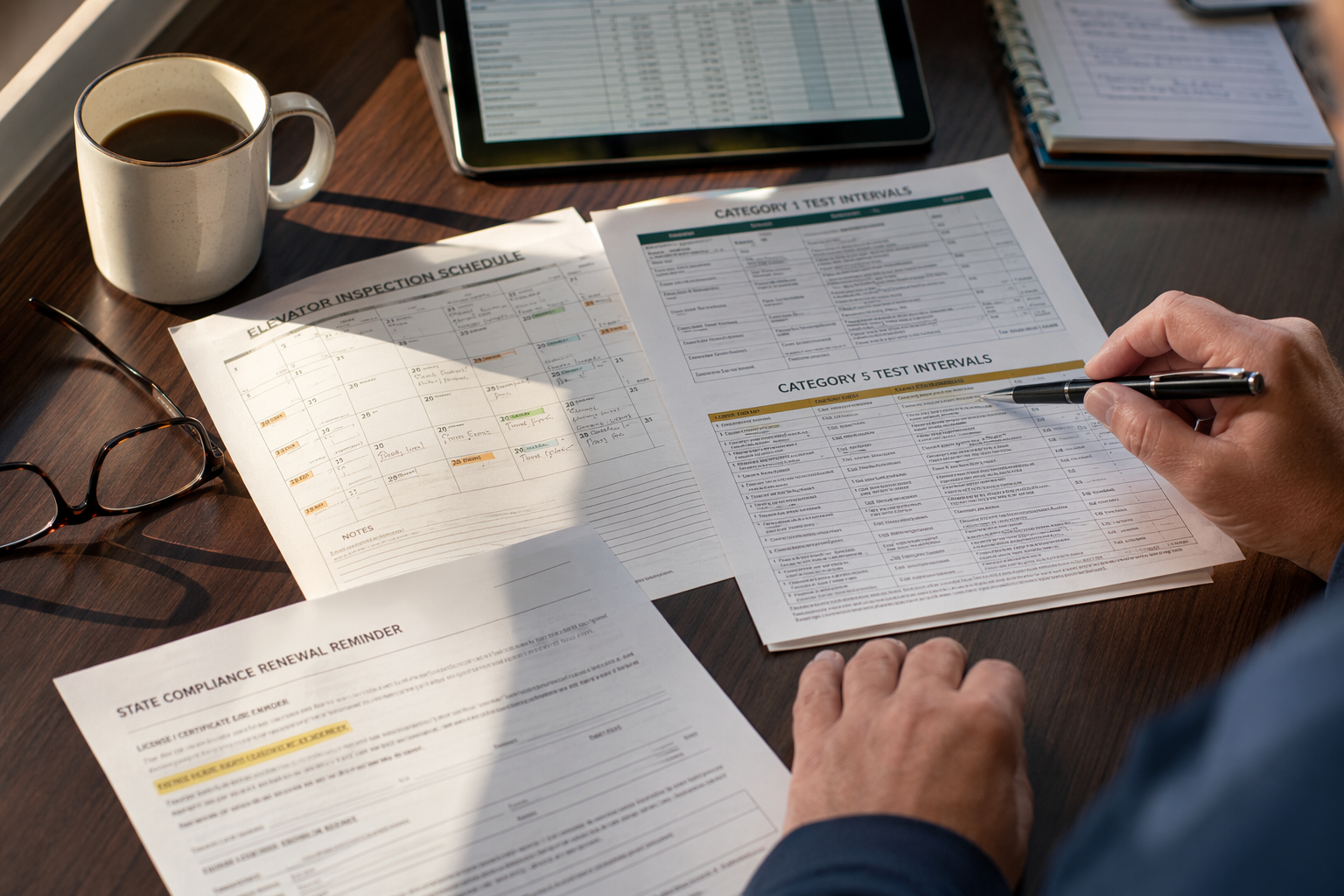
Maryland’s inspection frequency varies based on equipment type and use classification. As a general framework aligned with the ASME A17.1 Safety Code for Elevators and Escalators:
- Routine periodic inspections are required annually for most passenger and freight elevators in commercial and public-access buildings.
- Periodic tests — which are more rigorous than routine inspections and involve functional testing of safety components — are required on a schedule that typically spans every one to five years depending on equipment type, as outlined in ASME A17.1.
- Category 1 tests (no-load safety and governor tests) are generally required annually.
- Category 5 tests (full-load, full-speed tests of all safety systems) are required on a cycle that the ASME A17.1 code specifies for different equipment configurations.
Building owners should confirm the specific test category schedules applicable to their equipment directly with a licensed Maryland elevator inspector or the Maryland Department of Labor, as equipment age, drive type (hydraulic vs. traction), and installation date all influence applicable schedules.
Who Is Authorized to Inspect Elevators in Maryland?
Only inspectors licensed by the state of Maryland are authorized to conduct official elevator inspections and issue Certificates of Operation. Maryland licenses two categories of inspection personnel:
- State inspectors employed directly by the Maryland Department of Labor’s Elevator Safety Program.
- Approved third-party (private) inspectors who meet Maryland’s licensure requirements and are authorized to conduct inspections on behalf of building owners.
Third-party inspections have become an increasingly common path for building owners seeking to schedule inspections on a timeline that works for their operations rather than waiting for state inspector availability. Quality Elevator Company works alongside licensed inspection professionals to help building owners prepare equipment for inspection and resolve deficiencies identified during the process.
What Happens During a Maryland Elevator Inspection?
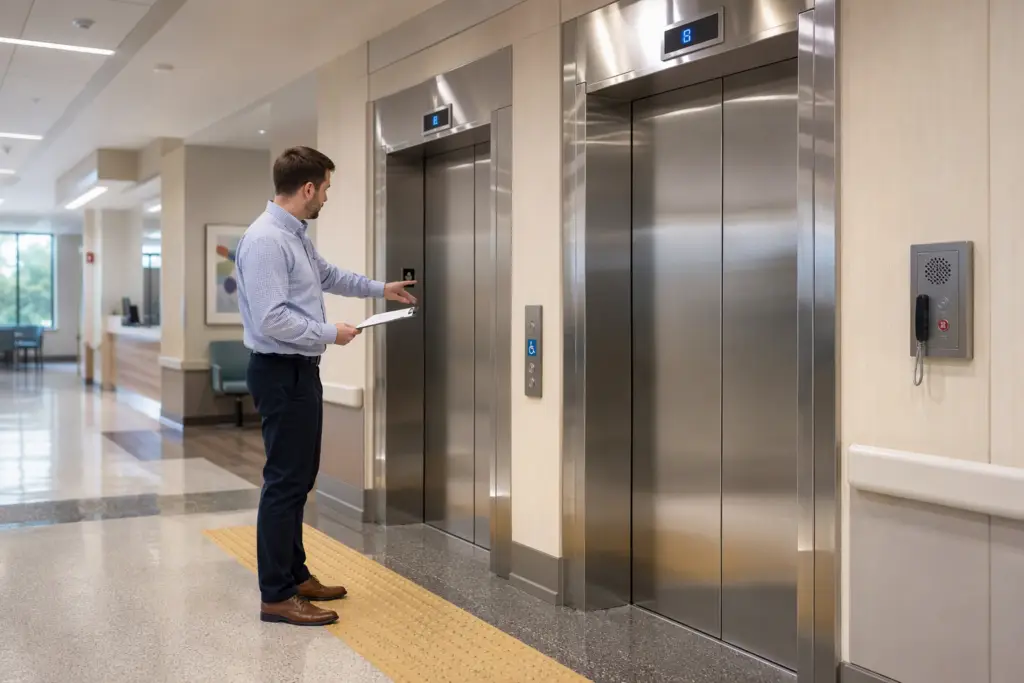
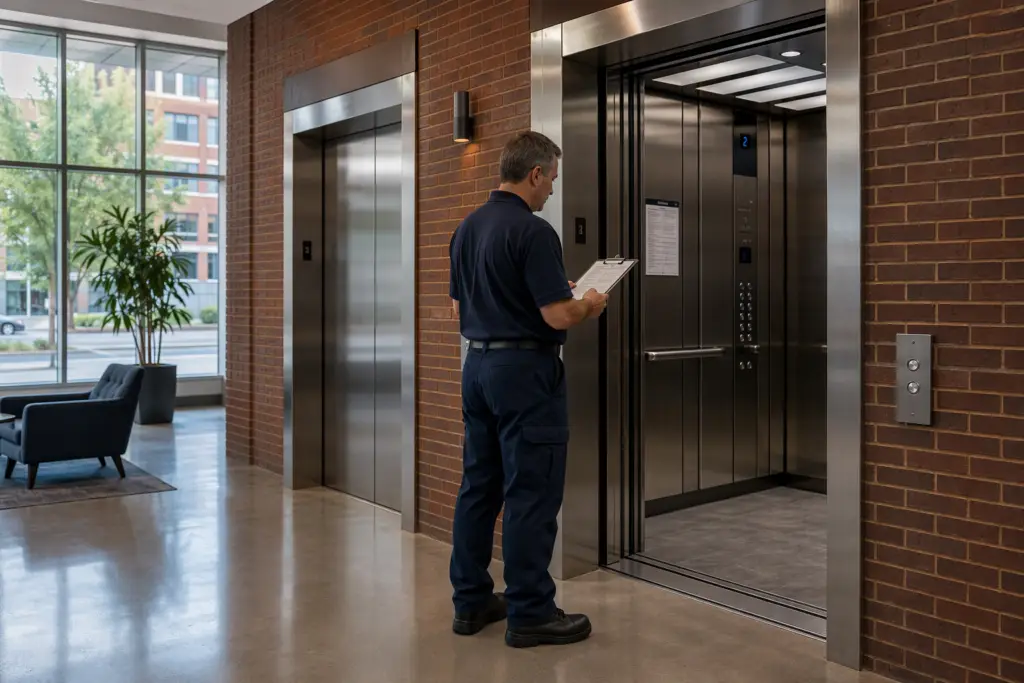
A licensed Maryland elevator inspection is a structured technical review of the equipment’s mechanical, electrical, and safety systems. Inspectors reference the applicable edition of the ASME A17.1 Safety Code for Elevators and Escalators throughout the process. Key areas reviewed typically include:
- Machine room condition, cleanliness, and access
- Governor and safety device operation
- Brake system performance
- Door operation, including closing force and reopening device function
- Lighting in the car, machine room, and pit
- Emergency communication systems (telephone or equivalent)
- Pit ladder, stop switch, and lighting
- Rope or hydraulic fluid condition (as applicable)
- Capacity and data plate accuracy
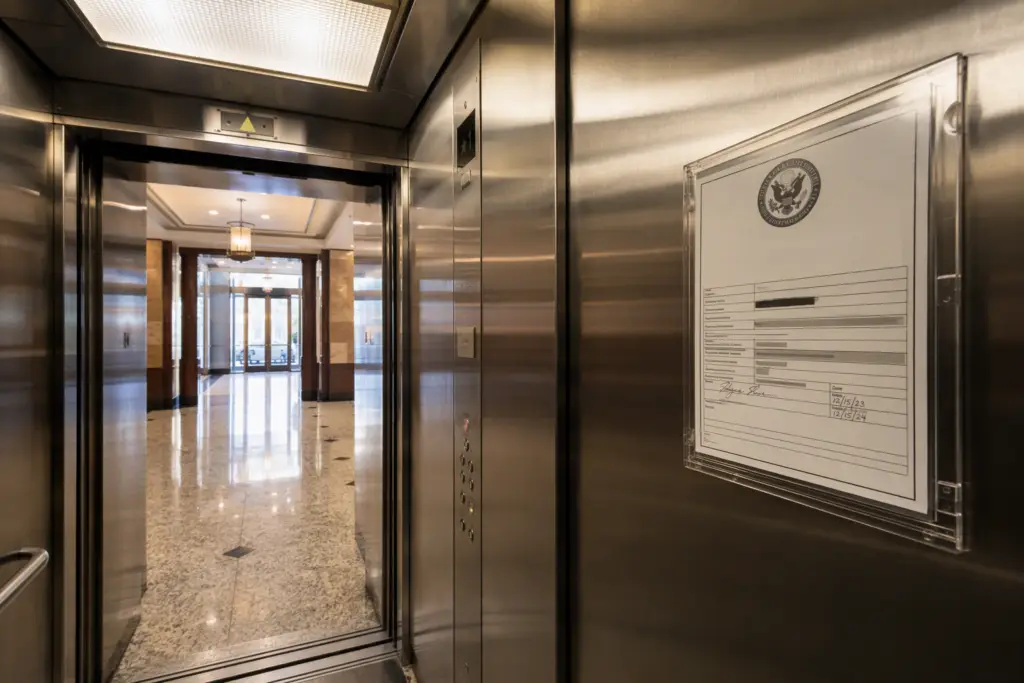
- Current Certificate of Operation posting
Inspectors document findings and classify deficiencies by severity. Critical deficiencies that present an immediate safety hazard can result in the elevator being placed out of service until repairs are completed and re-inspected.
What Steps Should a Building Owner Take to Prepare for an Elevator Inspection?
- Verify registration status. Confirm with the Maryland Department of Labor that the elevator is currently registered and that renewal fees are current — unregistered equipment cannot receive a Certificate of Operation.
- Review prior inspection reports. Locate all previous inspection reports and confirm that any previously cited deficiencies have been corrected and documented.
- Schedule a pre-inspection maintenance visit. Arrange for a qualified elevator mechanic to perform a maintenance review before the inspection date to identify and address obvious issues in advance.
- Prepare the machine room. Ensure the machine room is clean, accessible, properly lit, and free of stored materials not related to elevator equipment — inspectors routinely cite machine room violations.
- Check pit conditions. Confirm the pit is dry, clean, properly lit, and that the pit stop switch and ladder are in proper working order.
- Verify emergency communication. Test the in-car emergency telephone or communication device to confirm it connects to a continuously monitored location as required by code.
- Confirm door safety device operation. Test door reopening devices across the full door width to confirm they function correctly and that doors do not exert excessive closing force.
- Gather maintenance records. Have maintenance logs and any repair work orders readily available for the inspector’s review.
- Post current documentation. Confirm that the current Certificate of Operation (if still valid) and required notices are posted in the elevator car.
- Coordinate access. Ensure a knowledgeable building representative and/or elevator mechanic will be present throughout the inspection to provide access and answer questions.
What Are Common Elevator Inspection Violations in Maryland?
While specific statewide violation statistics are not publicly compiled in a format suitable for citation here, the deficiencies most commonly identified during elevator inspections — based on the requirements of the ASME A17.1 Safety Code for Elevators and Escalators — include:
- Machine room violations: improper storage, inadequate lighting, or restricted access
- Pit conditions: water infiltration, inadequate lighting, or non-functional pit stop switches
- Door closing force exceeding code limits, or worn or misaligned door tracks
- Non-functional or disconnected emergency telephone systems
- Expired or missing Certificate of Operation posting
- Worn or improperly adjusted governor ropes
- Hydraulic system leaks or low fluid levels
- Inadequate or expired maintenance logs
Many of these violations are preventable with consistent preventive maintenance. Quality Elevator Company emphasizes systematic maintenance documentation and proactive repair scheduling as core tools for helping clients avoid compliance disruptions.
What Are the Consequences of Failing a Maryland Elevator Inspection?
When an elevator fails inspection in Maryland, the consequences depend on the severity of the deficiencies identified:
- Minor deficiencies may allow continued operation under a temporary or conditional status while repairs are scheduled, subject to the inspector’s discretion and Maryland Department of Labor policies.
- Serious or immediately dangerous deficiencies result in mandatory shutdown — the elevator must be taken out of service until the deficiency is corrected and a re-inspection confirms compliance.
- Operating without a valid Certificate of Operation can result in civil penalties assessed against the building owner.
- Repeated non-compliance can escalate regulatory scrutiny and increase the frequency of required inspections.
Beyond regulatory consequences, elevator failures that occur while equipment is operating out of compliance dramatically increase the building owner’s liability exposure in personal injury litigation. Courts and insurance carriers treat documented inspection non-compliance as evidence of negligence.
How Do Maryland Elevator Inspection Requirements Apply to Accessibility Equipment?
Maryland elevator inspection requirements apply to all regulated lifting equipment, including platform lifts and limited-use/limited-application (LULA) elevators that are often installed to meet accessibility requirements under the Americans with Disabilities Act (ADA). These smaller or specialty elevators must be registered, inspected, and maintained in compliance with applicable ASME standards, even though they may serve different functional roles than full-capacity passenger elevators.
Building owners who install accessibility equipment as part of an ADA compliance strategy should understand that ADA compliance and state elevator inspection compliance are separate but parallel obligations. Equipment that is technically ADA-compliant in its dimensions and features must still meet Maryland’s safety inspection requirements to remain legally operational.
Do Residential Elevators Require Inspection in Maryland?
Private residential elevators — those installed in single-family homes for the exclusive use of residents and their guests — are generally exempt from Maryland’s commercial elevator inspection requirements. However, elevators installed in multi-family residential buildings, such as apartment complexes or condominiums, are typically subject to the same inspection and registration requirements as commercial equipment. Building owners and property managers of multi-family properties should not assume residential classification exempts them from compliance obligations — the determining factor is typically whether the elevator serves or is accessible to the public or multiple tenants, not simply whether the building contains residential units.
What Costs Are Typically Associated with Elevator Inspection Compliance in Maryland?
While specific pricing figures are not cited here because they vary significantly by equipment type, building location, elevator age, and maintenance history, the cost components of elevator inspection compliance in Maryland typically include:
- State registration and permit fees assessed by the Maryland Department of Labor, which vary by equipment type and are subject to change.
- Inspector fees when using a licensed third-party inspector.
- Pre-inspection maintenance performed by a qualified elevator mechanic to bring equipment into compliance.
- Repair costs for deficiencies identified during inspection, which range widely depending on component age and system complexity.
- Re-inspection fees if the equipment fails the initial inspection and requires a follow-up visit.
The most cost-effective strategy is consistent preventive maintenance on a documented schedule, which reduces the likelihood of unexpected repair costs and failed inspections. Quality Elevator Company provides data-driven maintenance planning designed to help building owners anticipate equipment needs before they become inspection liabilities.
How Are Maryland Elevator Inspection Requirements Expected to Evolve in 2025 and 2026?
The elevator inspection landscape in Maryland and across the United States continues to evolve in several qualitative directions that building owners and facility managers should monitor:
- Adoption of updated ASME code editions: States periodically update their adopted edition of the ASME A17.1 Safety Code for Elevators and Escalators. When a newer edition is adopted, technical requirements for existing equipment and new installations may change, including provisions for remote monitoring, modernization triggers, and digital documentation.
- Remote monitoring and connected equipment: Regulatory bodies and building owners are increasingly interested in IoT-connected elevator systems that can log performance data, predict failures, and support compliance documentation. While Maryland has not mandated connected monitoring systems, the trend toward digital maintenance records is accelerating industry-wide.
- Workforce and inspection capacity: The licensed elevator inspector workforce remains a constrained resource in many states, including Maryland. This dynamic creates scheduling pressure for building owners and reinforces the value of using third-party inspection pathways where available.
- Modernization code triggers: As elevator equipment ages, states are increasingly likely to enforce modernization requirements tied to specific inspection cycles or equipment thresholds, aligning with ASME guidelines for equipment upgrades.
Quality Elevator Company monitors these regulatory and industry trends to help clients plan maintenance and modernization investments that position them ahead of emerging requirements rather than behind them.
How Does Quality Elevator Company Support Elevator Inspection Compliance in Maryland?
Quality Elevator Company provides Maryland building owners and property managers with comprehensive elevator maintenance, repair, and modernization services designed around a systematic, data-driven approach to compliance. Rather than reactive service after a failed inspection, Quality Elevator Company structures maintenance programs around documented inspection schedules, equipment history, and code requirements — giving building owners the documentation and equipment condition records that support successful inspections and minimize unexpected disruptions.
The team coordinates with licensed Maryland inspectors and helps clients understand what ASME-required tests apply to their specific equipment, when those tests are due, and what condition their equipment needs to be in to pass. For buildings with aging or high-deficiency-risk equipment, Quality Elevator Company can perform pre-inspection assessments to identify vulnerabilities before the official inspection date.
What Documentation Should Building Owners Keep for Elevator Inspection Compliance?
Maryland’s compliance framework, consistent with the ASME A17.1 Safety Code for Elevators and Escalators, expects building owners to maintain organized records that demonstrate ongoing compliance. Recommended documentation includes:
- Current and historical Certificates of Operation
- All inspection reports and test certificates, including notation of any deficiencies and their resolution
- Maintenance logs showing dates, tasks performed, and the identity of the performing mechanic or company
- Work orders and invoices for all repairs, parts replacements, and modernization work
- Equipment registration documentation from the Maryland Department of Labor
- Emergency service call records
These records serve multiple purposes: they satisfy inspector and regulatory requests, support insurance underwriting, and provide critical documentation in the event of a legal claim.
Summary: Key Takeaways for Maryland Elevator Compliance
| Compliance Element | Requirement / Guidance | Source |
|---|---|---|
| Governing technical standard | ASME A17.1 Safety Code for Elevators and Escalators | ASME |
| Governing state authority | Maryland Department of Labor, Division of Labor and Industry | Maryland state law |
| General inspection frequency | At least annually for most commercial/public elevators | ASME A17.1 |
| ADA accessibility equipment | Subject to same state inspection requirements as commercial elevators | ADA / ASME A17.1 |
| Workplace safety overlay | OSHA general duty clause may apply to employee-accessible equipment | OSHA |
Get Ahead of Your Next Maryland Elevator Inspection
Elevator inspection compliance in Maryland involves multiple code layers, documentation requirements, and equipment-specific testing schedules that vary by installation. The cost of a failed inspection — in downtime, emergency repairs, re-inspection fees, and regulatory penalties — far exceeds the cost of proactive maintenance and preparation.
Quality Elevator Company helps Maryland building owners and property managers build systematic, documentation-backed compliance programs that reduce inspection risk and keep elevators operating safely and legally. Whether you are approaching an annual inspection, preparing for a Category 5 test, or managing deficiencies from a recent inspection report, Quality Elevator Company’s data-driven approach puts compliance within reach.
Contact Quality Elevator Company for a free elevator assessment at 301-779-9116.
Need elevator service you can rely on? Quality Elevator Company is ready to help.