Elevator Compliance in Baltimore, MD | Quality Elevator Company
Staying compliant with Maryland’s elevator safety requirements is not optional — it is a legal obligation for every building owner operating an elevator in Baltimore. From annual inspections and five-year comprehensive testing to proper certificate posting and licensed mechanic requirements, the compliance landscape is detailed and consequential. Quality Elevator Company helps Baltimore property owners navigate every layer of Maryland elevator compliance, so buildings remain safe, legally operational, and free from costly enforcement actions.
What Does Elevator Compliance Require in Maryland?
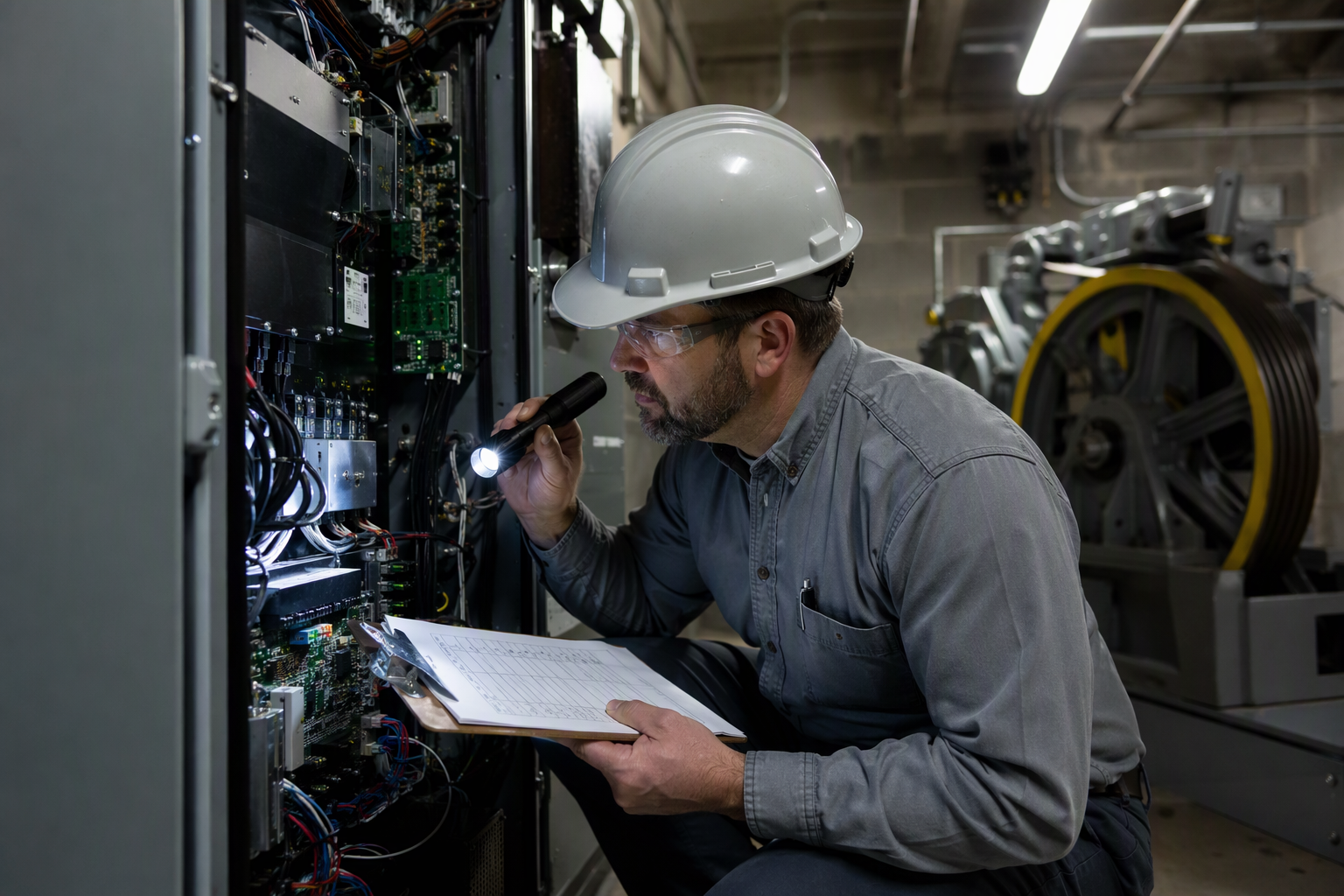
Under the Maryland Department of Labor, Division of Labor and Industry, Elevator and Escalator Safety program, elevator compliance in Maryland centers on three core obligations: valid certification, periodic inspection, and licensed personnel.
Maryland law — found in the Annotated Code of Maryland, Public Safety Article, Title 12, Subtitle 8 (§§ 12-801 to 12-842) — states that no elevator unit may be operated unless the Commissioner of Labor and Industry has issued a valid certificate for it. That certificate must be posted conspicuously in or on the elevator unit at all times.
The governing safety standard is the ASME A17.1/CSA B44 Safety Code for Elevators and Escalators, 2022 edition (ASME A17.1-2022/CSA B44:22) with Maryland amendments, effective June 17, 2026. The specific edition that applies to any given elevator depends on when its installation contract was signed, and requirements in effect when an elevator was first certified remain in effect for that unit.
Compliance is also governed by COMAR 09.12.81 (Elevator, Escalator, and Chairlift Safety), which establishes the administrative rules that translate state law into day-to-day operational requirements for Baltimore building owners.
Who Is Responsible for Elevator Compliance in a Baltimore Building?
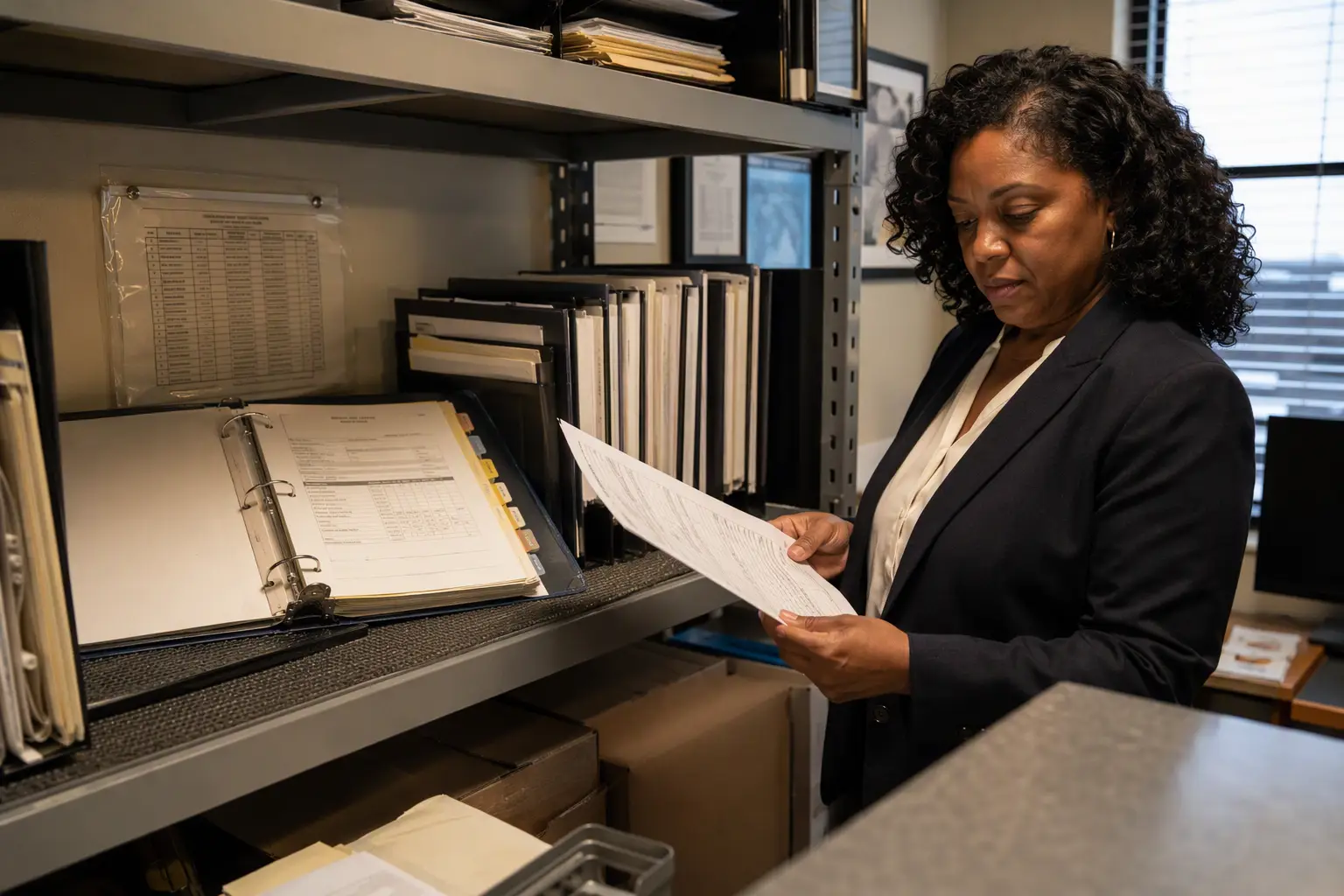
In Maryland, the building owner bears primary legal responsibility for elevator compliance. Owners must ensure their elevators are registered, inspected, tested, and certified on schedule. Specifically, owners are required to:
- Register each elevator unit with the Commissioner at least 60 days before planned completion and before it is placed in service.
- Re-register each elevator unit with the Commissioner every year, at the time of the annual periodic inspection.
- Hire a third-party qualified elevator inspector to conduct the periodic inspections required by the Safety Code.
- Ensure that any tests performed for a required inspection are carried out by a licensed elevator mechanic.
- Maintain inspection, maintenance, repair, and test records at a readily accessible central location in the building.
- Display the current certificate of inspection conspicuously in or on the elevator unit.
Quality Elevator Company works directly with Baltimore property owners, building managers, and facility teams to ensure each of these obligations is met on time and fully documented.
What Inspections Are Required for Maryland Elevator Compliance?
Maryland requires two distinct inspection cycles for most elevators:
- Annual periodic inspection: Each elevator unit must receive a periodic inspection every year, conducted by a State inspector or a third-party qualified elevator inspector. Owners are required to hire a third-party qualified elevator inspector to fulfill this obligation.
- Comprehensive five-year inspection: Elevators suspended by wire ropes, belts, chains, or similar means, as well as rack and pinion elevators, must receive a comprehensive inspection on a five-year cycle.
- Acceptance inspection: After an elevator is installed, modified, or altered, the State conducts a final acceptance inspection before the unit is placed back in service.
A critical compliance detail: when a third-party qualified elevator inspector is required to witness a test, that inspector must be physically present for the entire test — remote observation does not satisfy the requirement.
Who Can Legally Work on Elevators in Maryland?
Maryland law imposes strict licensing requirements on anyone who works on elevator units. Under the Maryland Elevator Safety Review Board — which operates within the Maryland Department of Labor — both individual mechanics and businesses must hold current licenses before performing elevator work:
- A person must be licensed as an elevator mechanic before working on elevator units in Maryland.
- A business must be licensed as an elevator contractor before installing, altering, maintaining, repairing, or servicing elevator units.
- Elevator contractors must carry at least $1,000,000 in general liability insurance and at least $500,000 in property damage insurance.
Quality Elevator Company operates as a licensed elevator contractor, meeting Maryland’s insurance and licensing requirements. Engaging an unlicensed contractor exposes building owners to serious legal and liability risk — and may invalidate inspection certificates.
How Does ADA Compliance Relate to Elevator Compliance in Baltimore?
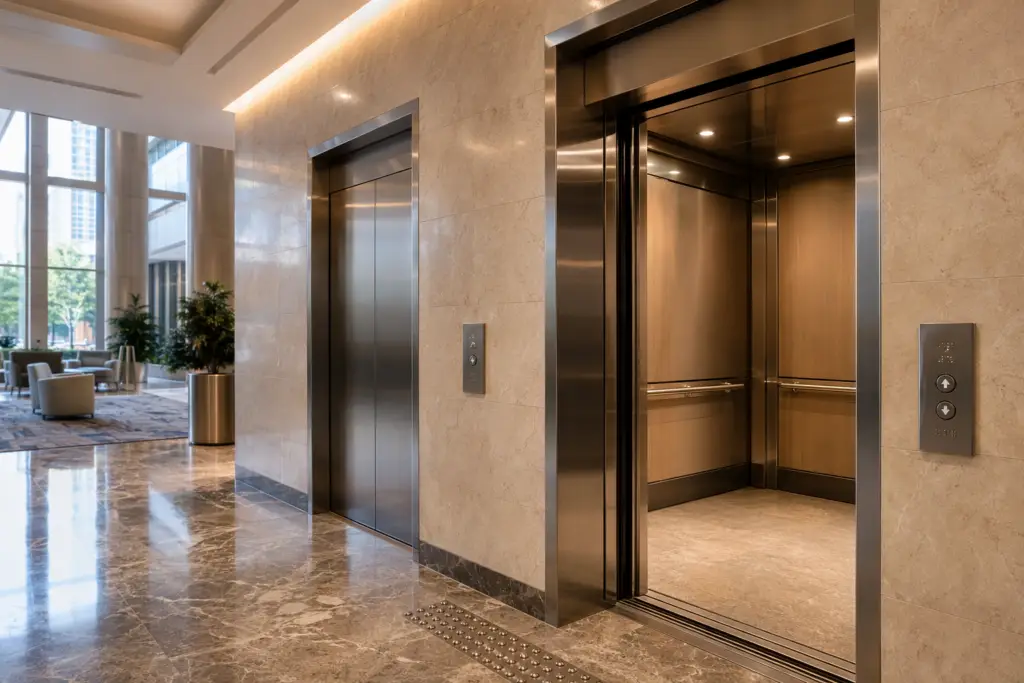
Elevator compliance in Baltimore extends beyond Maryland’s safety inspection requirements. The Americans with Disabilities Act (ADA) imposes accessibility standards for elevators in facilities open to the public, including requirements for cab dimensions, door timing, control placement, and audible or visual signals. Buildings undergoing renovation or modernization may trigger ADA path-of-travel requirements that affect the elevator.
Quality Elevator Company evaluates both safety-code compliance and ADA accessibility considerations during maintenance, modernization, and inspection support services, helping Baltimore property owners address both regulatory frameworks together.
What Happens If a Baltimore Elevator Falls Out of Compliance?
Operating an elevator without a valid Maryland certificate of inspection is a violation of state law. Consequences can include enforcement action by the Maryland Department of Labor, Division of Labor and Industry, mandatory shutdown of the elevator unit, and potential liability exposure if an incident occurs while the elevator is out of compliance.
Compliance lapses often result from missed re-registration deadlines, overdue inspections, expired certificates, or failure to use licensed mechanics for required tests. Quality Elevator Company helps Baltimore building owners identify and correct compliance gaps before they become enforcement issues, and provides documentation support to keep records current and accessible as required by Maryland law.
How Do Baltimore Property Owners Maintain Continuous Elevator Compliance?
Maintaining continuous elevator compliance in Baltimore is best approached as an ongoing program rather than a one-time event. The following steps outline a sound compliance maintenance process:
- Register the elevator unit with the Commissioner of Labor and Industry before it is placed in service, and re-register annually at the time of the periodic inspection.
- Schedule the annual periodic inspection with a third-party qualified elevator inspector well in advance of the certificate expiration date.
- Ensure a licensed elevator mechanic performs all required tests, with the qualified inspector physically present throughout.
- Confirm the five-year comprehensive inspection is tracked and scheduled before the deadline for applicable elevator types.
- Post the current certificate of inspection conspicuously in or on the elevator unit immediately upon receipt.
- Maintain all maintenance, inspection, repair, and test records at a readily accessible central location in the building.
- Before any alteration or modernization, notify the appropriate parties and ensure a State acceptance inspection is completed before the unit is returned to service.
- Review ADA accessibility requirements whenever elevator work is performed, particularly during modernization projects.
Quality Elevator Company provides compliance tracking support to Baltimore property owners, helping ensure that annual and five-year deadlines are not missed and that all required documentation is properly maintained.
Does Quality Elevator Company Serve Baltimore and the Surrounding Region?
Quality Elevator Company serves commercial, residential, institutional, and industrial properties throughout Baltimore and the broader Maryland market, as well as clients in Virginia, Washington, D.C., and Pennsylvania. The company’s familiarity with Maryland’s regulatory environment — including the Maryland Elevator Safety Review Board’s licensing structure, COMAR requirements, and the Department of Labor’s inspection and registration processes — makes it a knowledgeable resource for Baltimore property owners navigating elevator compliance.
Whether a building owner is managing a high-rise office tower in downtown Baltimore, a mid-rise residential building, a healthcare facility, or a mixed-use property, Quality Elevator Company provides maintenance, inspection support, modernization, and repair services aligned with Maryland’s compliance requirements.
Schedule a free consultation with Quality Elevator Company at 301-779-9116.
Need elevator service you can rely on? Quality Elevator Company is ready to help.