Can Quality Elevator Company Replace My Elevator When My Current Provider Can’t Finish the Job?
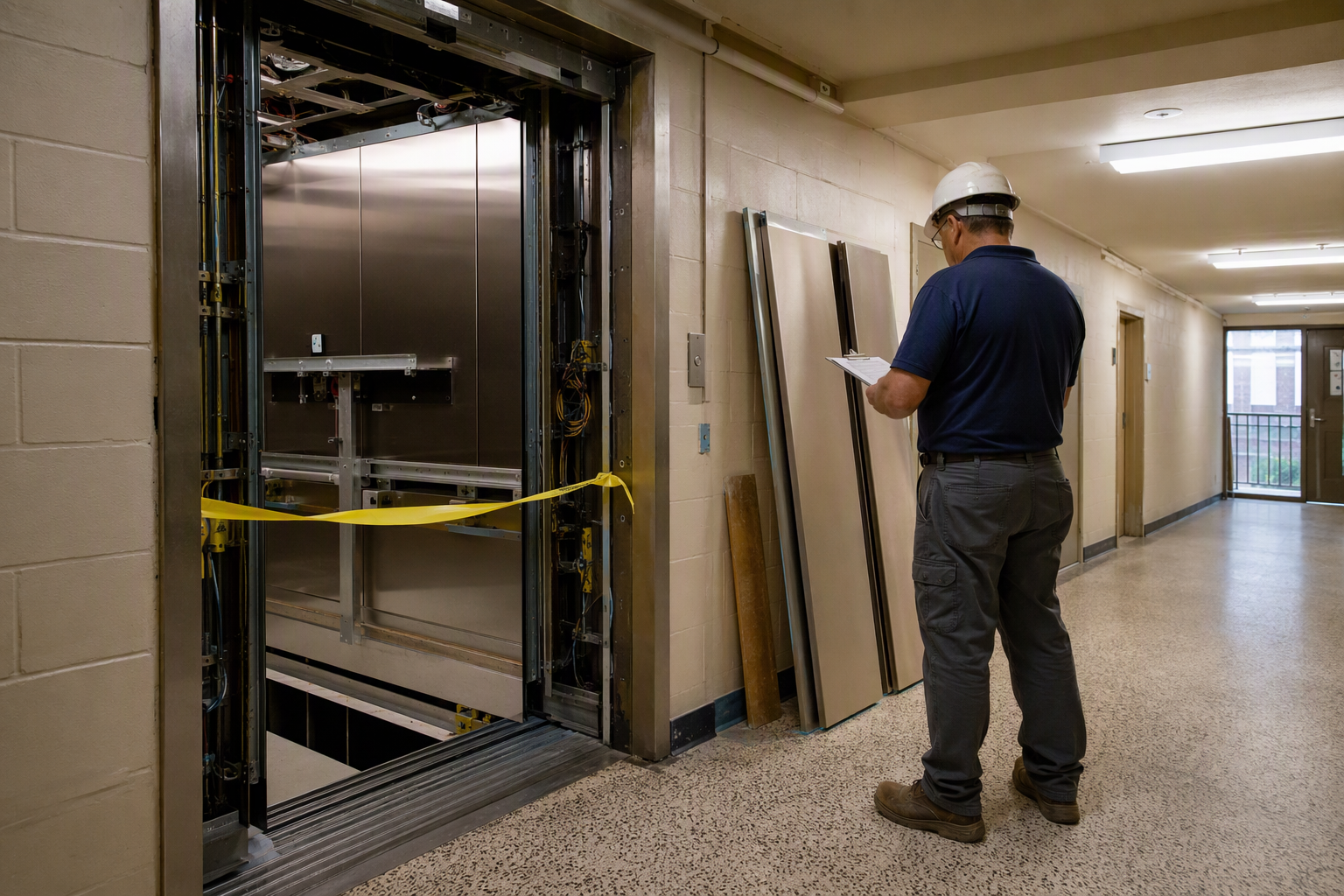
When an elevator replacement stalls mid-project, residents are stranded, building owners face mounting liability, and regulatory deadlines do not pause. Healthcare workers, elderly residents, and individuals with disabilities who depend on vertical access bear the sharpest cost of delay. Understanding exactly how a mid-project takeover works — and what compliance obligations apply in Maryland, the District of Columbia, Pennsylvania, and Virginia — helps property managers act quickly and correctly.
What Happens to Permits and Inspections When a Provider Abandons an Elevator Replacement?
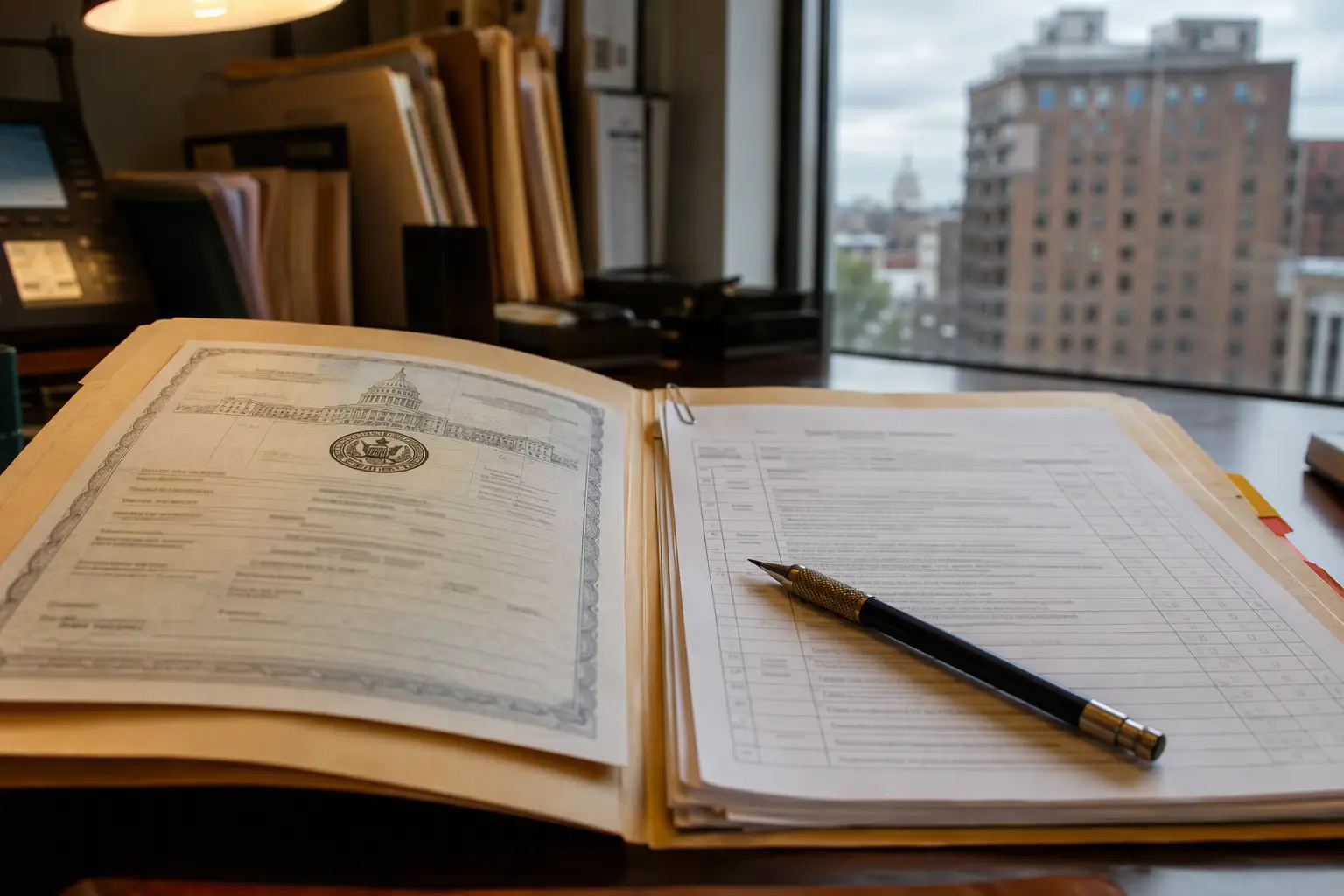
Open permits do not automatically transfer when a contractor exits a project. In Maryland, the Maryland Department of Labor, Division of Labor and Industry, Elevator and Escalator Safety regulates elevator work under the Annotated Code of Maryland, Public Safety Article, Title 12, Subtitle 8. A new licensed elevator contractor must notify the appropriate authority, obtain any required permit amendments, and ensure that all work meets the requirements in effect when the original installation contract was signed — because under Maryland rules, the code edition that applies to a unit depends on that original contract date.
In the District of Columbia, permits are issued by the DC Department of Buildings (DOB) under 12-A DCMR Chapter 30 and the 2017 DC Building Code. A replacement elevator mid-project may have its certificate temporarily suspended while it is under permit for alteration or modernization. The incoming contractor must hold a DOB elevator contracting license, and permit documentation must include a copy of that license along with a master electrician license before work can resume.
In Pennsylvania, the Pennsylvania Department of Labor and Industry (L&I) has statewide jurisdiction under 34 Pa. Code Chapter 405. A replacement or major repair requires a permit application to L&I, and the elevator may not return to service until the Department conducts an acceptance inspection. Projects with permit applications made before December 20, 2026, remain under ASME A17.1-2000 with the A17.1a-2002 addenda; applications on or after that date fall under ASME A17.1-2016 with Pennsylvania modifications.
In Virginia, elevator regulation is enforced by local building departments under the Virginia Uniform Statewide Building Code (13VAC5-63). In Richmond specifically, the City of Richmond Department of Planning and Development Review, Bureau of Permits and Inspections, handles final acceptance inspections of new or modernized elevators. Any contractor assuming mid-project work must hold an Elevator/Escalator Contracting (EEC) specialty license from the Virginia Board for Contractors.
Is Quality Elevator Company Licensed to Perform Replacement Work in These Markets?
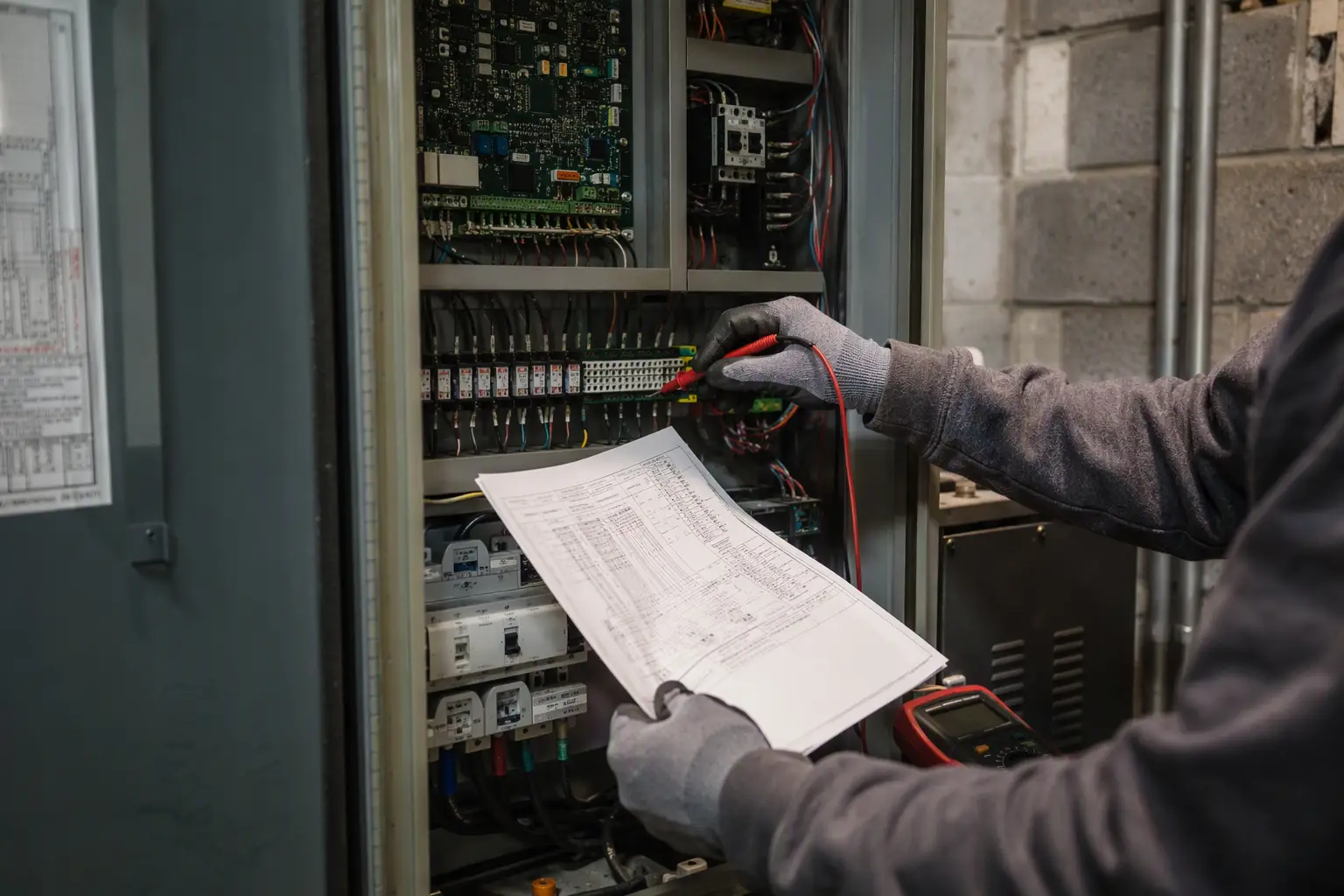
Quality Elevator Company is a certified elevator service company operating in Maryland, the District of Columbia, Pennsylvania, and Virginia. The company’s technicians and contractors hold the jurisdiction-specific credentials required in each market — including Maryland Elevator Safety Review Board licensing, DC Board of Industrial Trades licensing, and Virginia Board for Contractors EEC specialty licensing — allowing Quality Elevator Company to legally assume and complete interrupted replacement projects across all four service areas.
Which Code Editions Govern an Elevator Replacement in 2026?
The applicable edition of the ASME A17.1 Safety Code for Elevators and Escalators varies by jurisdiction:
- District of Columbia: ASME A17.1-2013/CSA B44-13, as referenced by the 2017 DC Building Code with District amendments, effective May 29, 2020. DC plans to adopt codes based on the 2024 model codes by the end of 2027.
- Maryland: ASME A17.1-2022/CSA B44:22, with Maryland changes, effective June 17, 2026. The edition that applies to any given elevator depends on when its installation contract was signed.
- Pennsylvania: ASME A17.1-2000 with A17.1a-2002 addenda for permit applications made before December 20, 2026; ASME A17.1-2016 with Pennsylvania modifications for applications on or after December 20, 2026.
- Virginia: ASME A17.1/CSA B44-2019, incorporated by the 2021 Virginia Uniform Statewide Building Code, effective January 18, 2024.
When Quality Elevator Company assumes a mid-project replacement, its team identifies which code edition governs the existing permit and ensures all remaining work conforms to that standard.
Does ADA Compliance Apply to a Residential Apartment Elevator Replacement?
The Americans with Disabilities Act applies to multifamily residential buildings that qualify as places of public accommodation or that receive federal financial assistance. Even where the ADA’s direct applicability is limited, the Fair Housing Act’s accessibility requirements and local building codes typically mandate that elevator cabs, controls, hall call buttons, and door timing accommodate individuals with disabilities. Any replacement project that Quality Elevator Company completes is evaluated against applicable federal accessibility requirements, ensuring that cab dimensions, control heights, and door dwell times meet the standards in effect for that building type and jurisdiction.
What Are the Steps to Transfer an Elevator Replacement Project to a New Contractor?
- Document the current project status in writing — what has been completed, what materials are on-site, and what work remains.
- Secure all existing permit numbers, inspection reports, and test records from the original contractor or directly from the authority having jurisdiction (AHJ).
- Contact the AHJ in your jurisdiction to notify them of the contractor change and confirm the steps required to amend or reassign the open permit.
- Engage Quality Elevator Company to conduct a site assessment, review the existing permit file, and identify any code compliance gaps created by the incomplete work.
- Submit any required permit amendments, contractor substitution notices, or new permit applications to the AHJ, including updated contractor license documentation.
- Allow Quality Elevator Company to complete the replacement in conformance with the governing code edition and any AHJ-specific requirements.
- Schedule the mandatory acceptance inspection with the AHJ before the elevator is returned to service.
- Post the new certificate of operation in the elevator car or in the required location as specified by your jurisdiction.
How Long Does a Mid-Project Elevator Replacement Takeover Typically Take?
Timeline depends on how much work the original contractor completed, whether materials are already on-site, the complexity of the equipment, and AHJ scheduling availability for acceptance inspections. Quality Elevator Company conducts an initial assessment to determine exactly where the project stands and communicates a realistic schedule to building management before work resumes. Permit amendment timelines vary by jurisdiction and are outside the contractor’s direct control, but early and accurate documentation submission reduces delays.
What Inspection and Testing Requirements Apply After the Replacement Is Complete?
Every jurisdiction in Quality Elevator Company’s service area requires a formal acceptance inspection before a replaced elevator returns to service:
- Maryland: The Maryland Department of Labor conducts a final acceptance inspection after installation, modification, or alteration, before the unit is placed in service. Tests must be performed by a licensed elevator mechanic, and when a third-party qualified elevator inspector witnesses a test, that inspector must be physically present for the entire test.
- District of Columbia: DOB issues a certificate of inspection valid for two years. A Category 1 inspection is required every 12 months and a Category 5 inspection every 60 months, each by an ASME QEI-certified inspector.
- Pennsylvania: L&I conducts an acceptance inspection before a repaired, altered, or replaced elevator is put into service. Electric and hydraulic elevators require periodic inspections at intervals of no more than six months. Starting December 20, 2026, Category 1 tests must be performed annually as a stand-alone requirement under ASME A17.1-2016 Table N-1 intervals.
- Virginia: The local building department witnesses final acceptance inspections of new or modernized elevators. Annual periodic inspections are required, with localities permitted to require six-month intervals. Periodic tests follow ASME A17.1 Appendix N intervals and must be witnessed by the code official.
Are Maintenance and Inspection Records Required to Stay in the Building?
Yes. In Maryland, maintenance, repair, test, and inspection records must be kept at a readily accessible central location in the building where the elevator is located. In each jurisdiction, the certificate of operation or inspection must be posted conspicuously in or on the elevator car, or in the building operator’s office under specified conditions. Quality Elevator Company supports building owners in organizing and maintaining a compliant record file as part of any replacement project handover.
Questions Your Inspector Will Ask
- Is the current certificate of operation posted in the elevator car or in the required location?
- What is the permit number for the replacement work, and which contractor is currently listed on that permit?
- Which code edition governed the original permit application, and has all completed work conformed to that edition?
- Has a licensed elevator mechanic (or, in Virginia, a certified elevator mechanic) performed or supervised all work to date?
- Are maintenance, repair, and test records available at a readily accessible location in the building?
- Has any work been performed on the hoistway, pit, machine room, or control system since the last inspection, and is there documentation?
- For Maryland projects: is the elevator registered with the Commissioner, and has annual re-registration been completed?
- For DC projects: has a DOB-approved third-party inspection agency been engaged for the required periodic and Category inspections?
- Has the elevator been placed in temporarily dormant status under a proper permit, and is the required DOB or local permit in place?
- Are all required accessibility features — door timing, control heights, cab dimensions — intact and functional?
What Happens to Existing Residents During the Replacement Completion?
In the District of Columbia, at least one elevator must be kept in operation whenever a building with passenger elevators is occupied, except in buildings with only one elevator. A DOB permit is required to take an elevator out of service under ASME A17.1 Section 8.11.1.4 or to place it in temporarily dormant status. Building managers in all four markets should coordinate with Quality Elevator Company and the AHJ to understand what temporary access accommodations may be required under the ADA and applicable fair housing standards during any remaining construction period.
Can the Original Equipment Be Reused, or Must Everything Be Replaced?
Whether partially installed components can be retained depends on their condition, the completeness of their installation, and the governing code edition. Quality Elevator Company conducts a thorough equipment audit during the initial site assessment. Components that were installed correctly and documented in the permit file may be retained; components that were improperly installed, damaged, or not documented must be replaced. The final determination is made in consultation with the AHJ, which retains authority over what passes inspection.
What Liability Does a Building Owner Carry for an Incomplete Elevator Replacement?
Building owners remain the responsible party for elevator safety regardless of contractor disputes. Under Maryland law, an elevator unit may not be operated without a valid certificate from the Commissioner of Labor and Industry. In Pennsylvania, an elevator may not be operated without a certificate of operation from L&I. Operating a non-certified elevator exposes owners to regulatory sanctions, potential civil liability, and loss of insurance coverage. Engaging Quality Elevator Company to complete the replacement and obtain the required acceptance inspection and certificate is the most direct path to restoring compliant operation and limiting ongoing exposure.
How Does Quality Elevator Company Coordinate With the Original Contractor’s Suppliers?
Equipment and materials already ordered or delivered with the original project may remain usable, subject to the equipment audit described above. Quality Elevator Company works with building management to review any existing purchase orders, delivery receipts, and manufacturer documentation. Where equipment must be sourced anew, the company identifies compliant alternatives for the governing code edition and AHJ requirements. Coordination with the AHJ on any material substitutions is handled as part of the permit amendment process.
Contact Quality Elevator Company for a free elevator assessment at 301-779-9116.
Need elevator service you can rely on? Quality Elevator Company is ready to help.