Elevator Service in Baltimore, MD | Quality Elevator Company
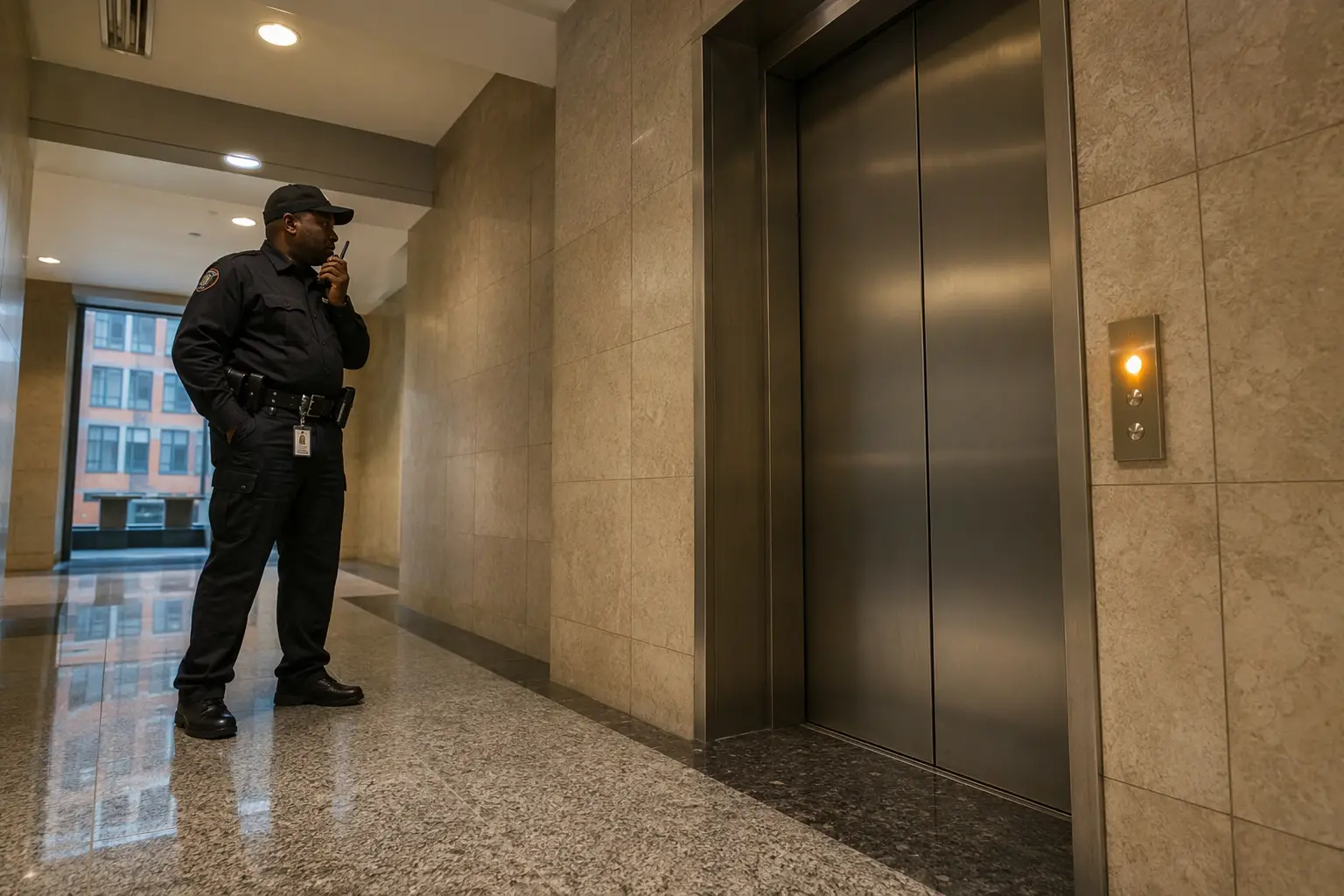
Elevator entrapment is a serious safety event that can happen in any building — a Baltimore office tower, a residential high-rise in the Inner Harbor, a medical facility in Towson, or a university building in College Park. When a car stalls, doors fail to open, or a mechanical fault traps riders, a coordinated response guided by properly maintained equipment and trained professionals is essential. Quality Elevator Company provides elevator service throughout Baltimore, MD and the surrounding region, helping building owners meet Maryland’s regulatory requirements and keep their equipment in safe working condition.
What Does Elevator Entrapment Mean?
Elevator entrapment occurs when passengers become involuntarily confined inside an elevator car and cannot exit on their own. The car may have stopped between floors due to a power failure, a safety device activation, a door malfunction, a drive system fault, or a control system failure. The term covers any situation in which the doors will not open at a landing and occupants cannot leave the cab without outside assistance.
Entrapment is distinct from an elevator accident. No physical injury may occur, but the event still demands prompt attention. Passengers should never attempt to force doors open, pry panels, or climb out of a stalled car — doing so introduces serious fall and crush hazards. The correct action is to use the in-car emergency telephone or alarm button and wait for a qualified response.
What Should Passengers Do During an Elevator Entrapment?
- Stay calm and remain inside the car. The elevator car is structurally sound; staying inside is safer than attempting to exit through doors or the ceiling hatch.
- Press the door-open button. In some cases a temporary sensor fault caused the stop, and the doors may respond.
- Press the alarm button. The audible alarm alerts building staff and nearby occupants to the situation.
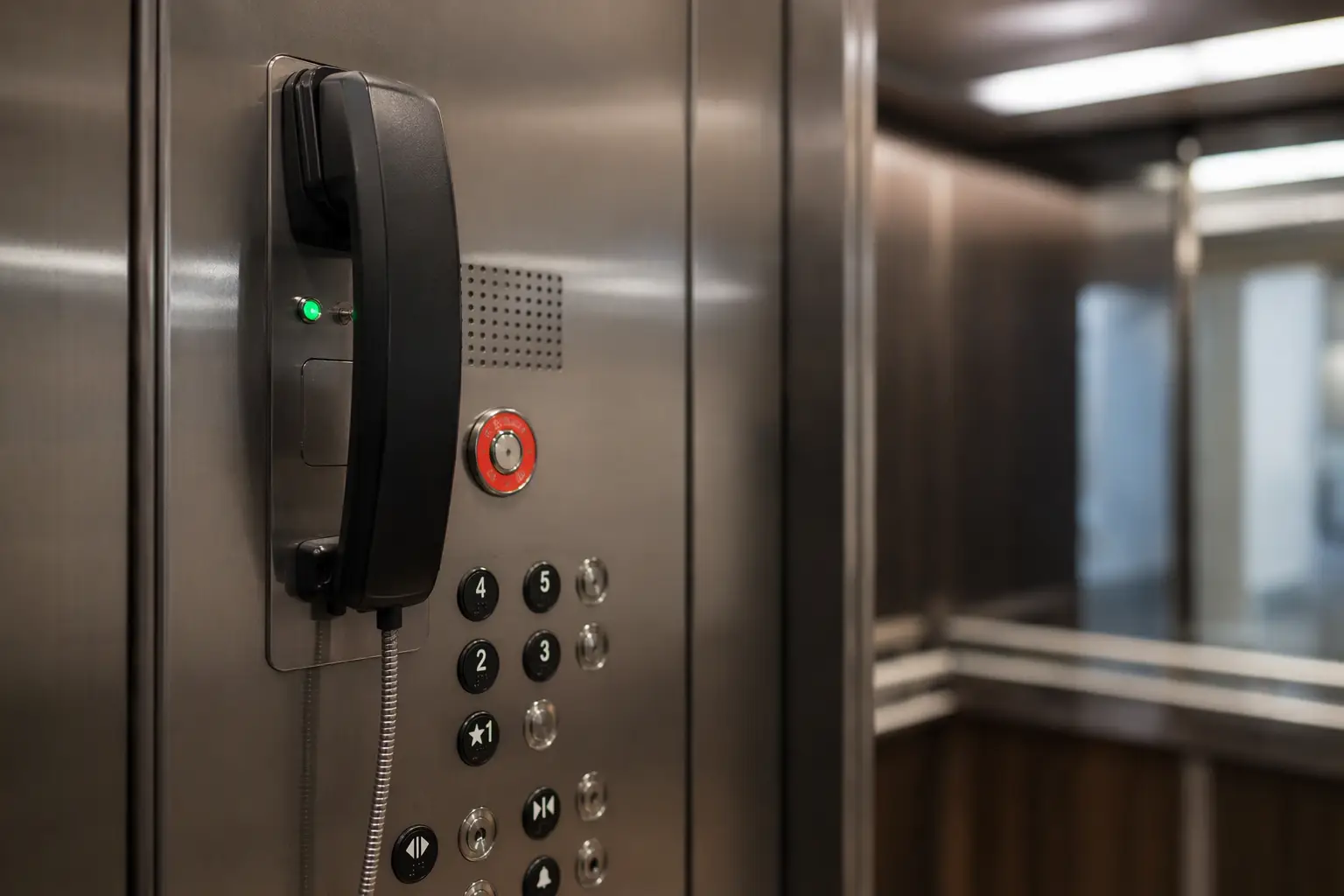
- Use the emergency telephone. Every elevator subject to the ASME A17.1 Safety Code for Elevators and Escalators must have a means of two-way communication with an emergency response point. Use it to report your location and condition.
- Notify emergency services if necessary. If no building response is forthcoming, dial 911 so fire or rescue personnel can assist.
- Avoid forcing doors or attempting to exit between floors. Wait for a qualified elevator technician or rescue personnel to manage the release safely.
- Communicate any medical concerns. If a passenger has a medical condition that is worsening, relay that information through the emergency telephone so responders can prioritize accordingly.
What Causes Elevator Entrapment?
Entrapments arise from a range of mechanical, electrical, and environmental factors. Common causes include:
- Power interruptions. A building-wide outage or a blown fuse can halt an elevator car mid-travel. Modern elevators often have battery-lowering devices that bring the car to the nearest floor during an outage, but older equipment may lack this feature.
- Door system faults. Worn door operators, misaligned door tracks, obstructed door sensors, or damaged rollers can prevent doors from opening at a landing.
- Drive and motor failures. A failed hydraulic pump, a broken hoist motor, or a faulty variable-frequency drive can stop the car unexpectedly.
- Safety device activation. Governor overspeed devices, oil buffers, and safeties are designed to stop the car if unsafe conditions are detected. While these devices work as intended, they can leave passengers confined until the condition is corrected.
- Control system errors. Software faults, relay failures, or damaged wiring in the control board can cause erratic behavior or a full shutdown.
- Deferred maintenance. Equipment that has not been serviced on a regular schedule is more likely to develop the small faults that escalate into an entrapment event.
How Does Maryland Regulate Elevator Safety to Prevent Entrapment?
Maryland’s elevator safety program is administered by the Maryland Department of Labor, Division of Labor and Industry, Elevator and Escalator Safety (Safety Inspection Unit). Under the Annotated Code of Maryland, Public Safety Article, Title 12, Subtitle 8, and the implementing rules in COMAR 09.12.81, no elevator unit may be operated in Maryland unless the Commissioner of Labor and Industry has issued a certificate for it, and that certificate must be posted conspicuously in or on the elevator unit.
As of 2026, Maryland has adopted the ASME A17.1/CSA B44, 2022 edition with Maryland modifications. Each elevator unit must receive a periodic annual inspection by a State inspector or a third-party qualified elevator inspector, and owners must hire a third-party qualified elevator inspector to conduct those periodic inspections. Elevators suspended by wire ropes, belts, chains, or similar means must also receive a comprehensive five-year inspection. Tests required for inspection must be performed by a licensed elevator mechanic, and the inspector must be physically present for the entire test.
Owners must re-register their elevator units with the Commissioner every year at the time of the periodic annual inspection, and maintenance, repair, test, and inspection records must be kept at a readily accessible central location in the building. The Maryland Elevator Safety Review Board, within the Maryland Department of Labor, licenses and regulates elevator mechanics and contractors. Elevator contractors are required to carry at least $1,000,000 in general liability insurance and at least $500,000 in property damage insurance.
This layered inspection and licensing framework is designed to catch the mechanical conditions that lead to entrapment before they cause an incident.
What Is the Proper Procedure for Releasing Trapped Passengers?
- Building staff or the monitoring center contacts the elevator service company. The service provider dispatches a licensed elevator mechanic to the site.
- Fire department or rescue personnel may respond simultaneously. In Baltimore, the fire department is trained for elevator rescue and may arrive before the mechanic. They coordinate with building staff to identify the car’s location.
- The mechanic or rescue team locates the car. Using machine room controls or hoistway access, they determine whether the car is at a landing or positioned between floors.
- Power and control checks are performed. The mechanic assesses whether the car can be moved to the nearest landing under controlled conditions.
- The car is moved to a landing if safe to do so. Using manual lowering or controlled drive operation, the car is brought level with a floor so the doors can open normally.
- Doors are opened and passengers are assisted out. Once the car is level and stable, doors are opened and occupants exit with any needed assistance.
- Equipment is inspected before returning to service. The mechanic identifies the fault that caused the entrapment, makes necessary repairs, and verifies safe operation before the elevator is returned to use.
How Can Regular Maintenance Reduce the Risk of Entrapment in Baltimore Buildings?
Routine maintenance is the most effective tool building owners have to prevent entrapments. A comprehensive maintenance program for Baltimore elevators typically includes lubrication of moving parts, adjustment and testing of door operators and safety edges, inspection of wire ropes or hydraulic systems, testing of emergency lighting and two-way communication devices, and review of control system components. When small faults are caught and corrected on a regular schedule, the likelihood of an unexpected shutdown that traps passengers is substantially reduced.
Quality Elevator Company serves buildings throughout Baltimore, MD and the surrounding region, providing maintenance programs calibrated to each unit’s age, usage, and equipment type. Because Maryland requires annual inspections and comprehensive five-year tests, working with a licensed elevator contractor helps building owners stay ahead of regulatory deadlines while protecting the safety of occupants.
What Building Owners in Baltimore Should Know About Emergency Communication Requirements?
The ASME A17.1 Safety Code for Elevators and Escalators requires that elevator cars be equipped with a means of two-way communication so that trapped passengers can contact an emergency response point. This requirement exists specifically because passengers must be able to call for help without relying on a cell signal, which may be unavailable inside a hoistway. Building owners should verify that in-car phones or intercoms are tested and functional as part of every maintenance visit and annual inspection.
Under Maryland rules, maintenance and inspection records must be kept at a readily accessible central location in the building. Keeping those records current, including documentation of communication device tests, supports both regulatory compliance and a faster response when an entrapment occurs.
What Role Does Quality Elevator Company Play in Baltimore’s Elevator Safety Ecosystem?
Quality Elevator Company is a certified elevator service company operating in Maryland, the District of Columbia, Virginia, and Pennsylvania. In Baltimore and throughout Maryland, the company works with building owners, property managers, and facilities teams to maintain equipment in compliance with the Maryland Department of Labor’s inspection and licensing requirements, perform repairs that address the root causes of door faults, drive failures, and control system errors, and support owners through the annual re-registration and inspection process overseen by the Maryland Elevator Safety Review Board.
The company’s service area spans the Baltimore metropolitan region and extends to other Maryland markets, as well as to the District of Columbia, Virginia, and Pennsylvania, giving multi-site building owners a consistent service relationship across jurisdictions. Quality Elevator Company’s work is performed by licensed elevator mechanics as required under Maryland law, and the company carries the contractor insurance required by the Maryland Elevator Safety Review Board.
Schedule a free consultation with Quality Elevator Company at (410) 284-4848.
Need elevator service you can rely on? Quality Elevator Company is ready to help.