How Many Elevator Breakdowns Per Year Is Normal — And When Should You Be Concerned?
Elevator reliability is not a matter of tolerating a fixed number of annual breakdowns. It is a function of how well equipment is maintained, how rigorously it is inspected, and whether corrective action is taken before minor faults become serious failures. The sections below explain what drives breakdown frequency, what regulatory frameworks in the District of Columbia, Maryland, Pennsylvania, and Virginia require, and at what point a pattern of outages should prompt urgent action.
What Counts as an Elevator Breakdown?
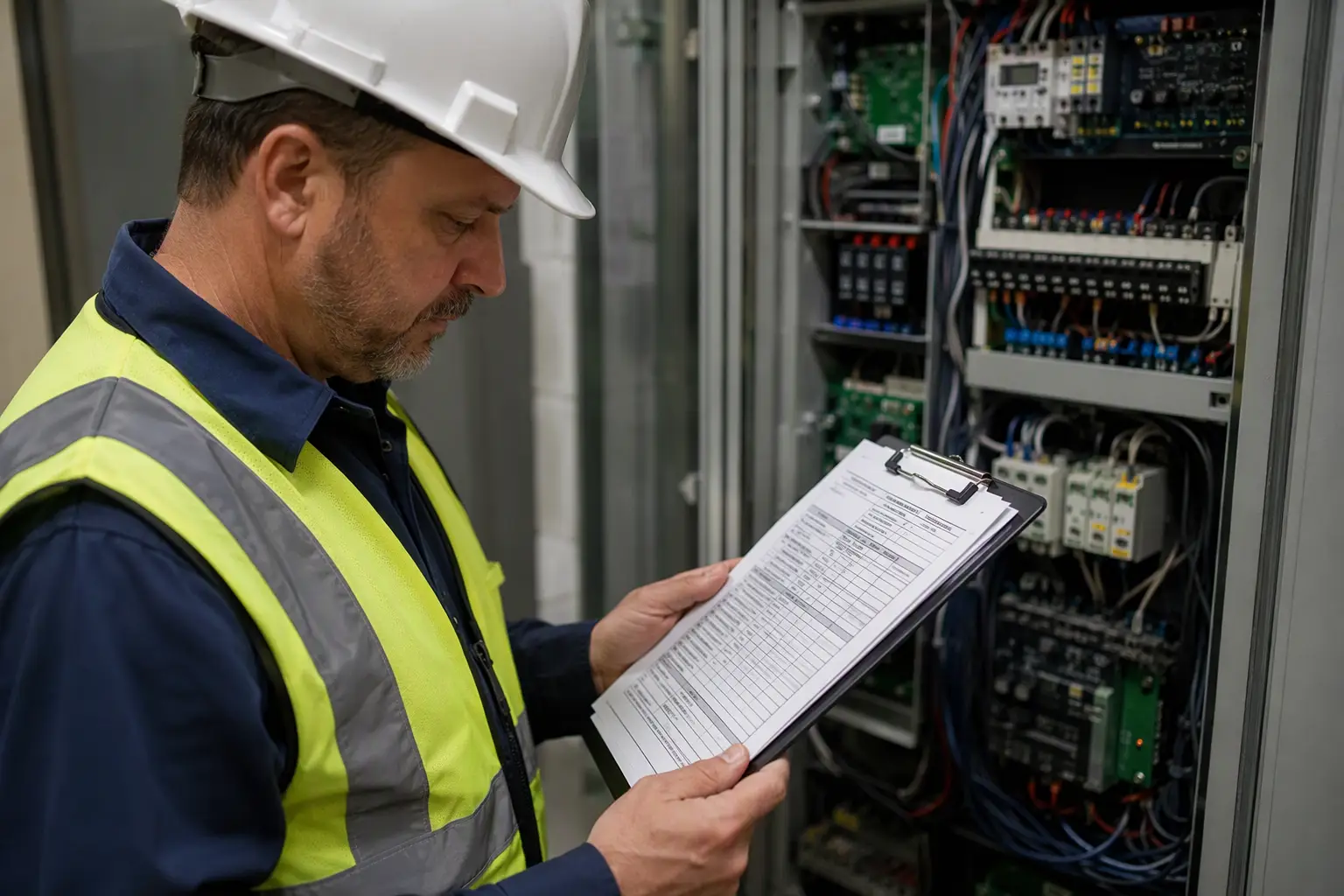
A breakdown — sometimes called an unplanned outage or service interruption — occurs when an elevator stops functioning outside of a scheduled maintenance window. Breakdowns range widely in severity:
- Minor nuisance faults: Door sensor triggers, brief power fluctuations, or call-button malfunctions that reset without a technician visit.
- Entrapment events: Passengers become trapped in the cab, requiring emergency extraction by a certified mechanic.
- Safety-related stoppages: The elevator’s safety circuit detects an out-of-tolerance condition — such as overspeed, leveling error, or brake failure — and the unit shuts itself down.
- Mechanical or electrical failures: Motor, drive, rope, or controller failures that require part replacement before the unit can return to service.
Each category carries different risk profiles. A nuisance fault once or twice a year on a high-traffic commercial elevator may be unremarkable. A safety-related stoppage at any frequency is a signal that something is wrong and must be investigated under the applicable maintenance code.
Is There an Official “Normal” Number of Breakdowns Per Year?
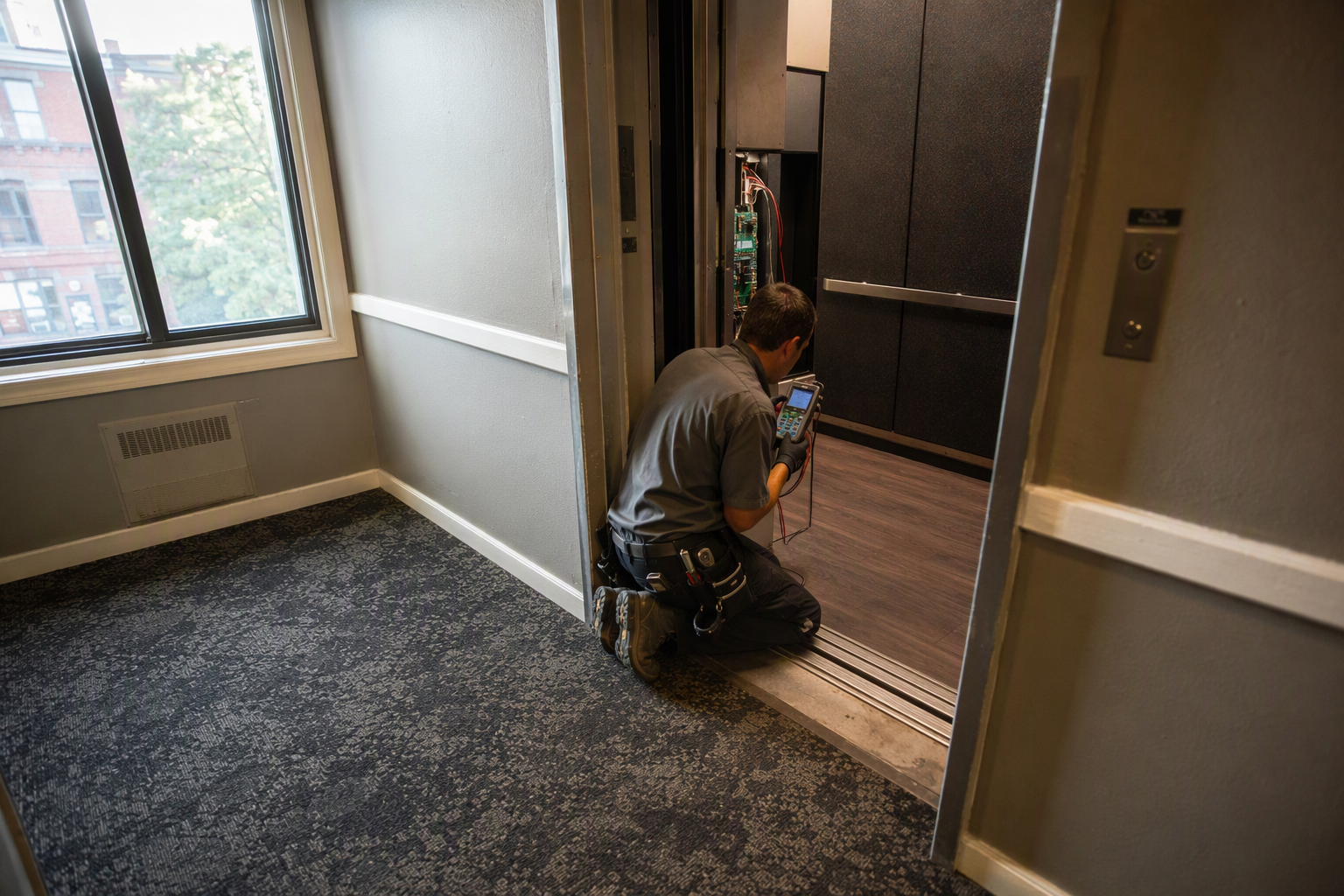
No federal code or state regulation in the District of Columbia, Maryland, Pennsylvania, or Virginia specifies an acceptable annual breakdown count. The ASME A17.1/CSA B44 Safety Code for Elevators and Escalators — the foundational standard adopted across all four jurisdictions served by Quality Elevator Company — governs design, installation, inspection, testing, and maintenance requirements. It mandates that elevators be maintained in safe operating condition, but it does not publish a permissible outage rate.
What regulators and maintenance codes do establish is a framework of scheduled inspections and tests that, when followed, are expected to catch deteriorating conditions before they cause unplanned failures. The logic is preventive: the standard assumes that a well-maintained elevator on the required inspection cycle should rarely break down unexpectedly.
From a practical standpoint, building owners and facility managers can use the following qualitative benchmarks — drawn from the maintenance philosophy embedded in ASME A17.1 — to gauge whether their equipment is performing within reasonable expectations:
- Low-traffic residential or small commercial elevator, well-maintained: Isolated minor faults once or twice per year may be unremarkable; recurring unplanned outages are not.
- High-traffic commercial or institutional elevator: The higher the duty cycle, the more critical preventive maintenance becomes. Repeated unplanned stoppages — even minor ones — in a high-use environment suggest a maintenance gap.
- Aging equipment (20+ years without modernization): Component fatigue increases failure risk regardless of maintenance quality. Frequency and cost of repairs typically rise as equipment ages beyond its intended service life.
When Should You Be Concerned About Breakdown Frequency?
Concern is warranted when any of the following patterns emerge:
- Recurrence of the same fault: A repeated failure in the same component — door operator, drive controller, buffer, or rope — after the same type of repair indicates the root cause has not been resolved.
- Any entrapment: Passenger entrapments are reportable events in several jurisdictions and represent a significant safety and liability concern at any frequency.
- Safety-circuit-triggered shutdowns: These shutdowns exist to prevent serious accidents. Each one deserves a documented root-cause analysis, not simply a reset.
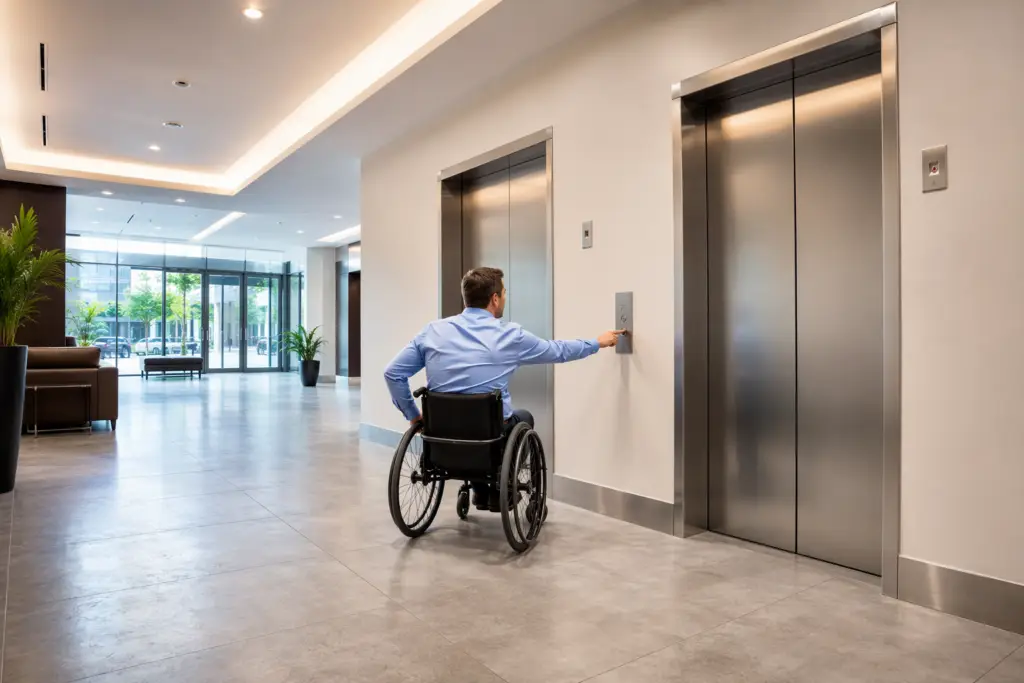
- Failure to maintain ADA-required accessibility: Under the Americans with Disabilities Act, elevators that serve as the primary accessible route must remain operational. Repeated outages may create legal exposure for building owners.
- Outages affecting building occupancy or egress: In the District of Columbia, for example, at least one elevator must remain operational whenever a multi-elevator building is occupied. Frequent unplanned outages that force a building offline are a regulatory concern. The DC Department of Buildings (DOB) oversees elevator certification in the District.
- Missed or failed required inspections or tests: A breakdown that surfaces during a mandated inspection — rather than being caught during routine maintenance — points to a maintenance program that is not meeting code intent.
What Do Inspection Requirements Look Like in DC, Maryland, Pennsylvania, and Virginia?
Each jurisdiction served by Quality Elevator Company has its own regulatory structure, all anchored to an adopted edition of the ASME A17.1/CSA B44 Safety Code. Inspection frequency is among the strongest tools available for catching problems before they become breakdowns.
| Jurisdiction | Regulator | Periodic Inspection Interval | 5-Year / Comprehensive Test | Adopted Code Edition |
|---|---|---|---|---|
| District of Columbia | DC Department of Buildings (DOB) | Category 1 every 12 months | Category 5 every 60 months | ASME A17.1-2013/CSA B44-13 |
| Maryland | Maryland Department of Labor, Division of Labor and Industry | Annual periodic inspection | Comprehensive 5-year inspection (wire rope, belts, chains) | ASME A17.1-2022/CSA B44:22 (effective June 17, 2026) |
| Pennsylvania | PA Department of Labor and Industry, Bureau of Occupational and Industrial Safety | Every 6 months (electric, hydraulic, escalators) | Per ASME A17.1 Table N-1 intervals (witnessed by code official) | ASME A17.1-2000/A17.1a-2002 (A17.1-2016 for new permit applications from December 20, 2026) |
| Virginia | Local building department (Virginia Uniform Statewide Building Code) | Annual; locality may require 6-month | Per ASME A17.1 Appendix N intervals (witnessed by code official) | ASME A17.1/CSA B44-2019 (effective January 18, 2024) |
Sources: DC DOB; Maryland Department of Labor; Pennsylvania L&I; Virginia USBC.
Meeting these mandatory inspection intervals is a floor, not a ceiling. Elevators with a history of repeated breakdowns may benefit from more frequent voluntary maintenance checks between required inspection cycles.
What Typically Causes Elevator Breakdowns?
Understanding breakdown causes helps building owners and facility teams identify whether a pattern is emerging. Common contributing factors include:
- Deferred or inadequate maintenance: The most consistent driver of premature failures. Components such as door operators, rollers, buffers, and rope sheaves have finite service lives that require planned replacement.
- Aging equipment without modernization: Elevators operating well beyond their original design life accumulate component fatigue. Control systems manufactured before programmable solid-state controllers became standard often lack the diagnostic capabilities to flag faults before they cause stoppages.
- Environmental factors: Water intrusion in pit areas, temperature extremes in machine rooms, and power quality issues (surges, voltage fluctuations) all accelerate component wear.
- High duty cycles with insufficient maintenance frequency: A residential elevator rated for moderate use that serves a busy mixed-use building will wear components faster than the standard maintenance schedule anticipates.
- Vandalism or misuse: Door abuse, overloading, and forced-entry attempts are significant contributors to unplanned stoppages in public-access buildings.
- Parts availability delays: On older equipment, sourcing obsolete components can extend downtime significantly, making each breakdown more disruptive even when the underlying fault is minor.
What Should You Do Immediately After a Breakdown?
- Ensure passenger safety first. If anyone is trapped in the elevator, contact emergency services and your licensed elevator service company immediately. Do not attempt to force open elevator doors or self-rescue passengers.
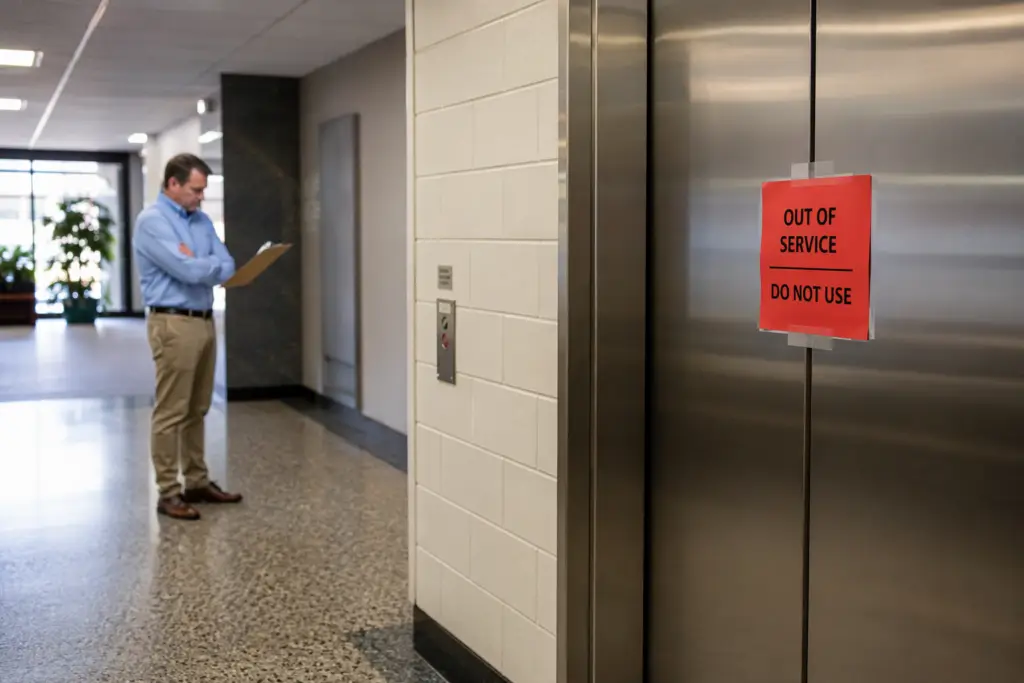
- Take the elevator out of service. Post clear signage and prevent further use until a licensed mechanic has evaluated the unit.
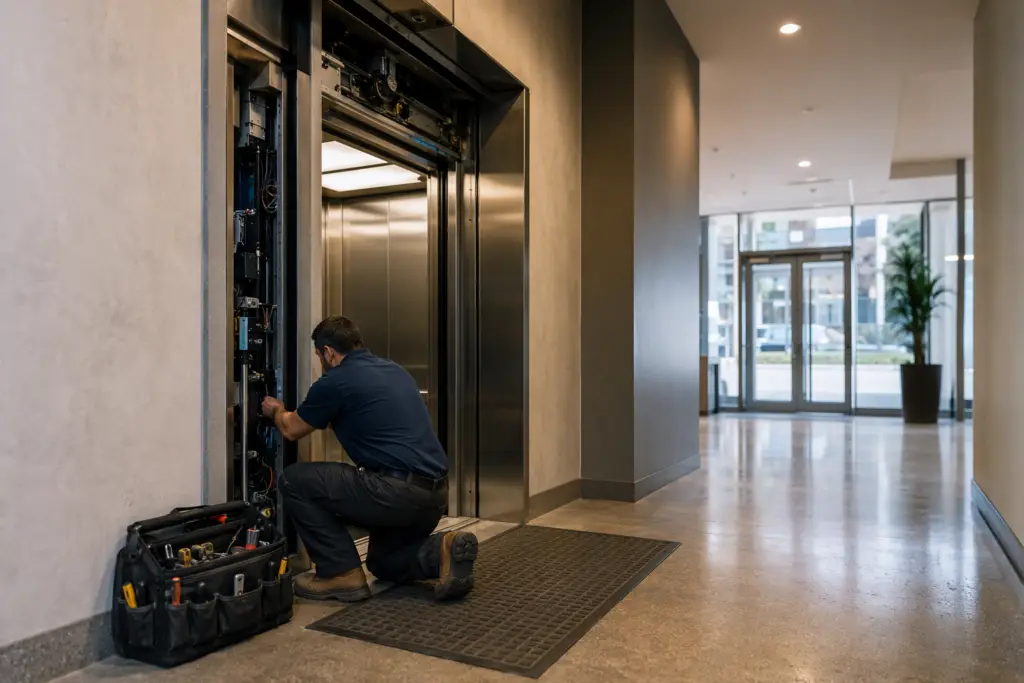
- Contact your licensed elevator service provider. In Maryland, work on elevator units must be performed by a mechanic licensed by the Maryland Elevator Safety Review Board. In Virginia, mechanics must hold certification from the local authority under the Virginia Uniform Statewide Building Code framework.
- Document the event. Record the date, time, fault description, number of passengers affected, and any symptoms preceding the breakdown. Maryland regulations require maintenance and repair records to be kept at a readily accessible central location in the building.
- Determine whether a regulatory report is required. In Pennsylvania, owners must submit an accident report to the Pennsylvania Department of Labor and Industry when an elevator accident causes a fatality or requires professional medical care.
- Request a root-cause analysis. A repair that simply resets a fault without identifying why it occurred sets the stage for recurrence.
- Review the maintenance log for patterns. If the current breakdown follows similar prior events, escalate to a comprehensive inspection rather than another point repair.
- Evaluate whether modernization is warranted. If breakdowns are frequent and parts are difficult to source, a cost-benefit analysis of modernization versus continued repair is appropriate.
How Does Maintenance Quality Affect Breakdown Frequency?
The relationship between maintenance quality and breakdown frequency is well-established in the engineering literature and embedded in the structure of the ASME A17.1/CSA B44 Safety Code, which requires that elevators be maintained in safe operating condition. Elevators on comprehensive, manufacturer-aligned preventive maintenance programs — where lubrication, adjustment, and component replacement happen on a scheduled basis — experience fewer and less severe unplanned outages than those on minimal-service or oil-and-grease-only contracts.
The distinction matters when evaluating service contracts. A full-coverage preventive maintenance agreement typically includes scheduled part replacement before failure, documented inspection records, and priority response to unplanned outages. A basic contract may include lubrication and visual checks but exclude parts and callbacks. Building owners comparing bids should ask specifically what components are covered and what the callback policy includes.
Quality Elevator Company approaches maintenance as a data-driven discipline, using documented service histories to identify which components are approaching end-of-life and scheduling replacement proactively — rather than waiting for a fault to trigger a shutdown.
What Are the 2025–2026 Trends Affecting Elevator Reliability?
Several converging developments are shaping how building owners think about elevator reliability heading into 2026 and beyond:
- Code modernization: Maryland adopted ASME A17.1-2022/CSA B44:22 effective June 17, 2026 — the most current edition of the safety code. Pennsylvania is transitioning to ASME A17.1-2016 for new permit applications from December 20, 2026. These updates introduce refined maintenance and testing requirements that reflect improvements in elevator technology and risk assessment methodology.
- Aging building stock: A significant portion of the commercial elevator inventory in the DC, Maryland, Pennsylvania, and Virginia region was installed decades ago. As equipment ages past its original design life, breakdown frequency and repair costs typically increase, making the modernization question more pressing for many building owners.
- Parts supply chain complexity: Global supply chain disruptions that emerged in recent years have affected availability of components for older elevator systems. Longer lead times for obsolete parts translate directly into longer downtime when breakdowns occur.
- Increased focus on ADA compliance: Under the Americans with Disabilities Act, elevators serving as primary accessible routes carry heightened compliance obligations. Regulatory scrutiny of ADA-accessible elevator availability has increased, raising the stakes for building owners when outages affect accessible routes.
- Predictive maintenance technology: Remote monitoring systems that capture real-time performance data — motor current draw, door cycle counts, leveling accuracy — are increasingly available for both new and modernized elevators. These systems allow service providers to identify developing faults before they cause passenger-facing failures.
How Do I Know If My Elevator Needs Modernization vs. Repair?
No universal rule governs the repair-versus-modernize decision, but several factors consistently point toward modernization:
- Repeated breakdowns involving the same root cause after multiple repair attempts.
- Control systems that are no longer supported by the manufacturer and for which replacement parts are unavailable or prohibitively expensive.
- Hydraulic systems using older hydraulic fluid formulations that present environmental remediation risk in the event of a pit leak.
- Equipment that no longer meets the accessibility standards required under the ADA or applicable state building codes.
- Rising maintenance costs that, compounded over three to five years, approach or exceed the cost of modernization.
- A comprehensive inspection that reveals structural, rope, or safety-system deterioration beyond economic repair.
Modernization also resets the compliance clock: updated control systems, drives, and safety components must meet the current adopted edition of the ASME A17.1/CSA B44 Safety Code in the applicable jurisdiction, which often incorporates meaningful safety improvements over the edition in effect when the original installation was certified.
What Records Should Building Owners Keep to Track Breakdown Frequency?
Maintaining thorough records is both a regulatory obligation and a practical tool for evaluating reliability trends. In Maryland, maintenance, repair, test, and inspection records must be kept at a readily accessible central location in the building where the elevator is located. Best practice across all four jurisdictions includes:
- A dated log of every unplanned outage, including the reported symptom, diagnosis, corrective action taken, and parts replaced.
- Copies of all mandatory inspection reports and certificates of operation or inspection, as required by the relevant regulatory authority.
- Service technician reports for every callback or maintenance visit, including the mechanic’s license or certification number where required.
- Records of any entrapments, including time of entrapment, number of passengers, and extraction time.
- A schedule of upcoming required tests (Category 1, Category 5, or comprehensive five-year inspections as applicable by jurisdiction).
A complete and organized record set is essential if a building owner ever needs to demonstrate regulatory compliance to an authority having jurisdiction, or if an insurance or liability claim arises from a breakdown event.
Does OSHA Have Any Role in Elevator Breakdowns?
The Occupational Safety and Health Administration (OSHA) has jurisdiction over elevator safety as it relates to worker safety — including mechanics working on elevators and workers who may be exposed to elevator hazards in the course of their employment. OSHA standards address lockout/tagout procedures, fall protection in hoistways, and hazard communication requirements for service work. OSHA jurisdiction is distinct from, and complementary to, the state and local elevator inspection regimes administered by the DC DOB, the Maryland Department of Labor, the Pennsylvania Department of Labor and Industry, and Virginia local building departments.
Building owners should ensure that any elevator service contractor they engage follows applicable OSHA workplace safety requirements for confined spaces, electrical work, and elevated-work procedures.
What Questions Should I Ask My Elevator Service Provider About Breakdown History?
When evaluating a current service provider or onboarding a new one, building owners benefit from asking:
- How many unplanned service calls has this unit generated in the past 12 and 24 months, broken down by type of fault?
- Have any of those calls involved the same component or root cause more than once?
- What is the current condition of the drive, controller, door operator, and ropes — and when were each last replaced?
- Are all mandatory inspections and tests current, and is the certificate of inspection displayed as required?
- What components are approaching end-of-life in the next 12 to 24 months, and what is the estimated cost of planned replacement?
- Is parts availability for this unit a concern given its age and model?
- What is included — and excluded — in my current maintenance contract with respect to parts, callbacks, and after-hours response?
How Does Quality Elevator Company Help Building Owners Assess Breakdown Frequency?
Quality Elevator Company serves building owners and facility managers in the District of Columbia, Maryland, Pennsylvania, and Virginia with a maintenance and assessment approach grounded in the regulatory requirements of each jurisdiction. Rather than relying on generalized estimates, the team reviews documented service histories, cross-references inspection records, and evaluates component condition against the applicable edition of the ASME A17.1/CSA B44 Safety Code to give building owners a factual basis for understanding whether their elevator’s breakdown frequency falls within the range that sound maintenance would predict — or whether it signals a gap that needs to be addressed.
The assessment process is designed to produce actionable findings: which components are at risk, which scheduled tests are approaching, and whether a repair, modernization, or change in maintenance strategy is the most cost-effective path forward.
Summary: Key Takeaways on Elevator Breakdown Frequency
- No code or regulation defines a universally “normal” number of elevator breakdowns per year — the right benchmark depends on equipment age, usage intensity, and maintenance quality.
- The ASME A17.1/CSA B44 Safety Code adopted across DC, Maryland, Pennsylvania, and Virginia requires that elevators be maintained in safe operating condition, with mandatory inspection intervals designed to catch deteriorating conditions before they cause failures.
- Concern is warranted when the same fault recurs after repair, when any entrapment occurs, when safety circuits trigger repeated shutdowns, or when outages compromise ADA-required accessibility.
- Thorough breakdown documentation, combined with regular preventive maintenance, is the most effective strategy for managing and reducing unplanned outages.
- Maryland adopted ASME A17.1-2022 effective June 17, 2026; Pennsylvania transitions to ASME A17.1-2016 for new permit applications from December 20, 2026 — both representing updated maintenance and testing standards building owners should be aware of.
Contact Quality Elevator Company for a free elevator assessment at 301-779-9116.
Need elevator service you can rely on? Quality Elevator Company is ready to help.