2027 Elevator Code Upgrades & Compliance Changes: What Building Owners Need to Know Now
Elevator compliance is not static. Codes evolve, authorities having jurisdiction (AHJs) adopt new editions, and enforcement priorities shift — often leaving building owners caught off guard by expensive, time-sensitive retrofit requirements. With 2027 approaching, owners of commercial, residential, and mixed-use properties across Baltimore, Washington DC, Philadelphia, and Richmond face a convergence of ASME code adoption cycles, ADA enforcement activity, and state-level regulatory updates that demand proactive planning. This comprehensive FAQ addresses every dimension of the upcoming compliance landscape so building owners can budget intelligently, avoid penalties, and protect the safety of everyone who rides their elevators.
What are the most important elevator code changes building owners need to prepare for by 2027?
The highest-priority changes center on the adoption of updated ASME A17.1 Safety Code for Elevators and Escalators and ASME A17.3 Safety Code for Existing Elevators and Escalators, alongside phased ADA accessibility enforcement and state-specific AHJ mandates in Maryland, Virginia, Pennsylvania, and the District of Columbia.
ASME publishes updated editions of A17.1 and A17.3 on a three-year cycle. States and local jurisdictions then adopt those editions on their own schedules, meaning that the version enforced in Baltimore may differ from the version enforced in Philadelphia at any given moment. By 2026–2027, each of Quality Elevator Company’s four markets is either mid-adoption or actively reviewing recent code editions, creating a compliance window that building owners must act within now.
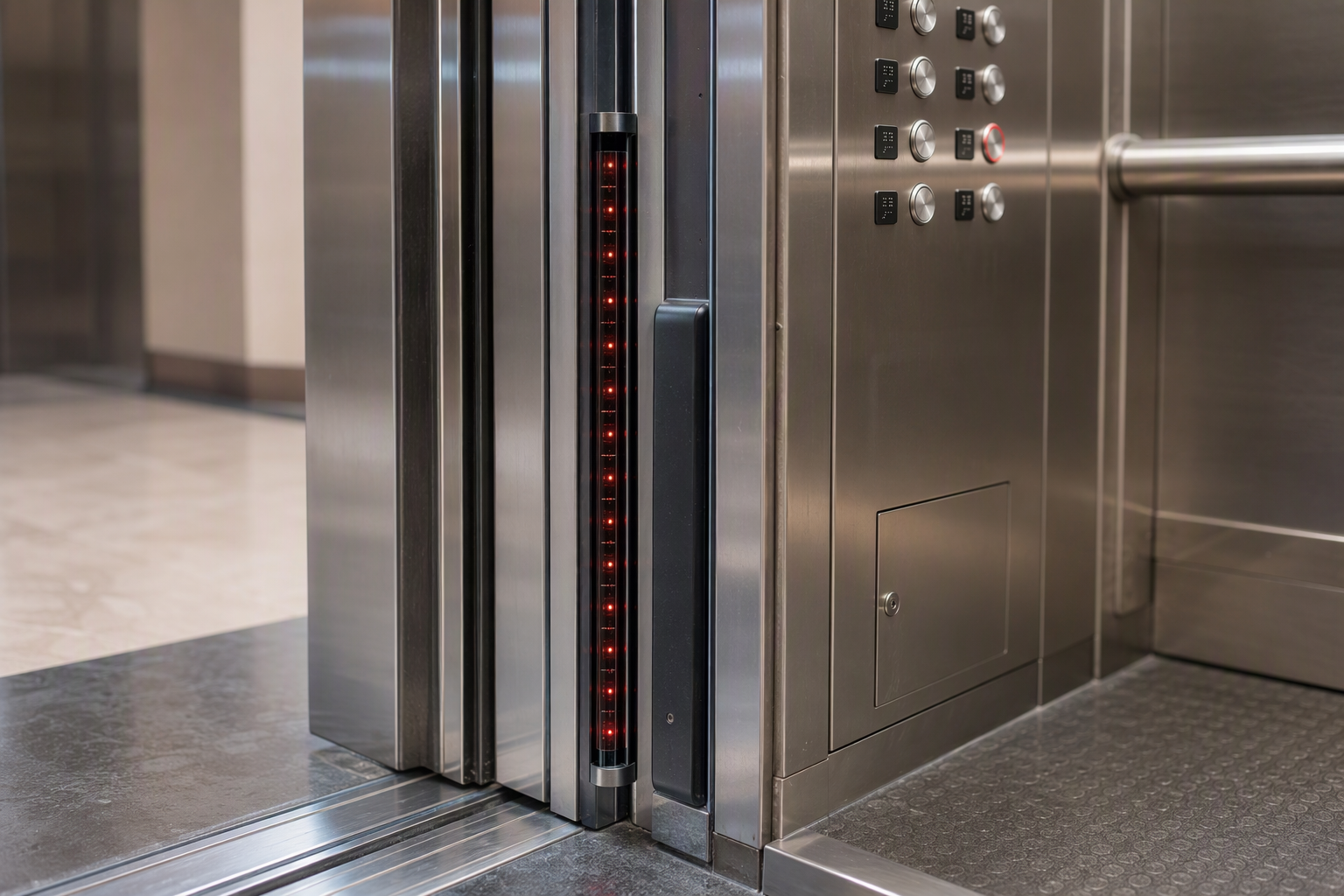
Key technical areas affected include emergency lighting requirements, two-way communication systems, door reopening devices (safety edges and light curtains), pit safety features, seismic requirements for applicable zones, and machine room ventilation standards. Each of these areas has specific retrofit pathways under A17.3, which governs existing elevators and sets the compliance timeline for non-new installations.
What is ASME A17.3 and why does it matter more than A17.1 for existing buildings?
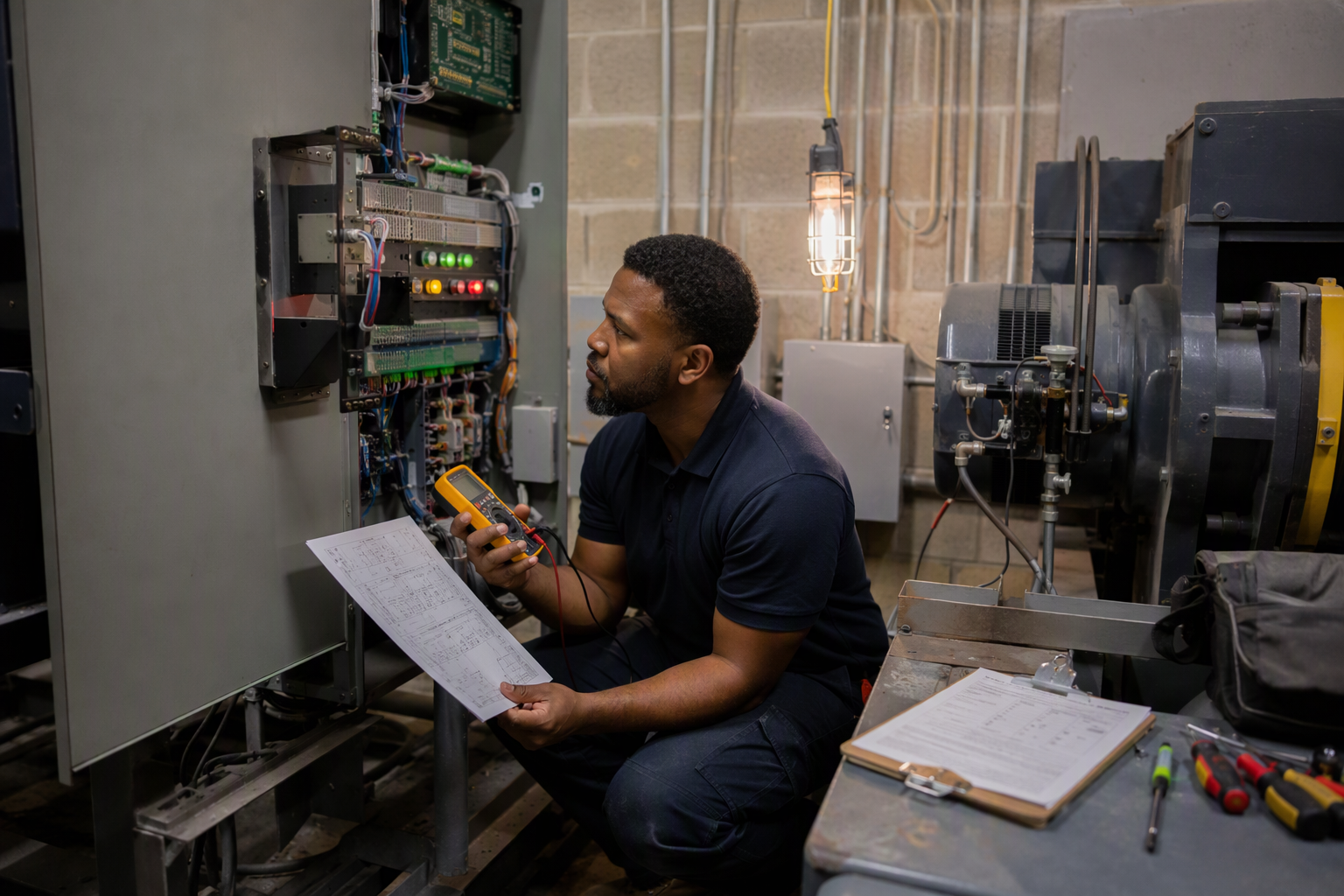
ASME A17.3 governs existing elevators and escalators and is the primary code that triggers mandatory retrofits in buildings that were not constructed under the current A17.1 edition.
While A17.1 sets safety requirements for new elevator installations, A17.3 establishes the retroactive safety requirements that apply to elevators already in service. When a jurisdiction adopts a new edition of A17.3, it typically activates a compliance schedule requiring building owners to bring existing equipment up to specified safety features within defined timeframes.
Common A17.3-driven retrofits include two-way communication from the car to a location staffed 24 hours (or monitored), door reopening devices capable of detecting obstructions across the full height of the door opening, emergency lighting and exit signage, and firefighters’ emergency operation (FEO) features. Building owners often underestimate the scope because these items can require wiring upgrades, controller modifications, or hall fixture replacements — not just a simple part swap.
Which specific technical upgrades are most commonly required by 2027 compliance deadlines?
The most commonly mandated technical upgrades involve two-way emergency communications, full-door light curtain protection, machine room environment controls, and firefighters’ emergency operation (Phase I and Phase II) updates.
Below is a reference table summarizing key upgrade categories, the relevant code standard, and compliance considerations for mid-Atlantic building owners:
| Upgrade Category | Governing Standard | Applies To | Typical Scope | Compliance Priority |
|---|---|---|---|---|
| Two-Way Emergency Communication | ASME A17.1 / A17.3 + ADA | All passenger elevators | Phone or intercom system linked to monitored location | High — ADA enforcement active |
| Full-Height Door Reopening Device | ASME A17.3 | Existing traction & hydraulic elevators | Light curtain or safety edge upgrade | High |
| Firefighters’ Emergency Operation (Phase I & II) | ASME A17.1 / A17.3 | All elevators in buildings with fire alarm systems | Controller and wiring integration with fire alarm panel | High — life safety |
| Pit Safety Stop Switch & Lighting | ASME A17.3 | All elevator pits | GFCI outlets, lighting, and stop switch placement | Medium-High |
| Machine Room Ventilation & Temperature Control | ASME A17.1 | Traction elevator machine rooms | HVAC or ventilation system upgrade | Medium |
| Emergency Lighting in Car | ASME A17.3 | All passenger elevators | Battery backup lighting unit | Medium |
| ADA Accessible Controls & Signage | ADA Standards for Accessible Design | Public accommodations & commercial facilities | Braille, tactile characters, control height, audible signals | High — ongoing enforcement |
| Oil Buffer Replacements | ASME A17.3 | Hydraulic elevators | Buffer replacement or recertification | Medium |
How do ADA requirements intersect with elevator code compliance deadlines?
The Americans with Disabilities Act requires that elevators serving public accommodations and commercial facilities meet specific accessibility standards, and DOJ enforcement activity has increased in frequency, making ADA compliance a parallel — not separate — compliance track from ASME code updates.
ADA elevator requirements include two-way communication from the elevator car, audible and visual floor designations, Braille and raised character control buttons, adequate door timing for individuals with mobility devices, and minimum cab dimensions. Many of these requirements overlap with ASME A17.3 retrofits, which creates an opportunity for building owners to address both compliance streams simultaneously and reduce overall project cost.
Buildings undergoing alterations — including significant modernization projects — trigger ADA accessibility requirements even if the alteration itself is unrelated to the elevator. Building owners should coordinate with their elevator service provider early to identify which planned renovations could trigger ADA elevator obligations.
What are the state-specific elevator inspection and compliance requirements in Maryland?
Maryland’s elevator inspection program is administered through the Maryland Department of Labor’s Division of Labor and Industry, which enforces state elevator safety laws and references ASME codes as the technical baseline for inspections and compliance orders.
Maryland requires annual periodic inspections of elevators and periodic re-inspections after alterations or repairs. Compliance orders issued following inspections have defined response windows, and building owners who fail to address cited deficiencies risk operating permit revocation. The Maryland AHJ actively tracks code adoption cycles, and building owners operating elevators in Baltimore and the surrounding region should confirm with their service provider which ASME edition is currently enforced and whether any transitional compliance deadlines apply to their specific equipment.
What elevator compliance requirements apply specifically to buildings in Washington DC?
The District of Columbia Department of Buildings administers elevator inspection and permitting, enforcing DC’s elevator safety regulations with reference to adopted ASME standards and the DC Building Code.
DC’s regulatory environment for elevators is among the more actively enforced in the mid-Atlantic region given the high concentration of commercial buildings, federal facilities, and mixed-use developments. Building owners in DC should be particularly attentive to firefighters’ emergency operation requirements, two-way communication standards, and accessibility compliance, as inspection frequency and consequence for non-compliance are both significant. Quality Elevator Company serves the DC market and can help building owners navigate the District’s specific AHJ requirements.
What elevator code requirements do building owners in Philadelphia need to understand?
Philadelphia’s Department of Licenses and Inspections (L&I) oversees elevator inspections and permits in the city, applying Pennsylvania’s elevator safety regulations alongside adopted ASME codes.
Pennsylvania’s elevator safety law requires licensed elevator mechanics for all installation, alteration, and repair work, and periodic inspections must be performed by licensed inspectors. Philadelphia building owners facing the 2027 compliance window should prioritize scheduling a compliance gap assessment now, as permitting and inspection scheduling in a high-volume urban market can extend timelines significantly. Retrofit projects requiring building permits may have their own lead times independent of the elevator contractor’s schedule.
What are the elevator compliance obligations for building owners in Richmond, Virginia?
Virginia’s elevator safety program is administered by the Virginia Department of Labor and Industry (DOLI), which enforces the Virginia Amusement Device and Elevator Safety Act and references adopted ASME standards for technical compliance.
Virginia DOLI conducts mandatory annual inspections of elevators, and certificates of operation are required for lawful elevator use. Building owners in Richmond must ensure their elevators hold valid certificates and that any outstanding correction orders from prior inspections are resolved before 2027 compliance deadlines arrive. Correction orders issued in conjunction with new code adoption cycles can have compounding deadlines, and building owners who have deferred prior cited items face the highest risk of overlapping enforcement action.
How should building owners prioritize which upgrades to complete first?
Life-safety items — firefighters’ emergency operation, two-way communication, and door safety devices — should be prioritized first, followed by ADA accessibility items subject to active enforcement, and then equipment reliability upgrades that reduce long-term maintenance costs.
A risk-stratified approach to compliance prioritization considers three factors: the severity of potential harm if the deficiency is not corrected, the likelihood of enforcement action in the near term, and the cost efficiency of bundling related upgrades into a single project. Bundling two-way communication with ADA-compliant button panel replacement, for example, allows a single contractor mobilization to address multiple compliance items at once.
Building owners with older hydraulic systems should also assess whether the total cost of required retrofits approaches the cost of a full modernization, which would bring the elevator into compliance with current A17.1 under new installation standards rather than piecemeal A17.3 retrofits.
What is the step-by-step process building owners should follow to prepare for 2027 compliance?
A structured compliance preparation process reduces cost, prevents last-minute disruptions, and ensures all regulatory and technical requirements are addressed before enforcement deadlines.
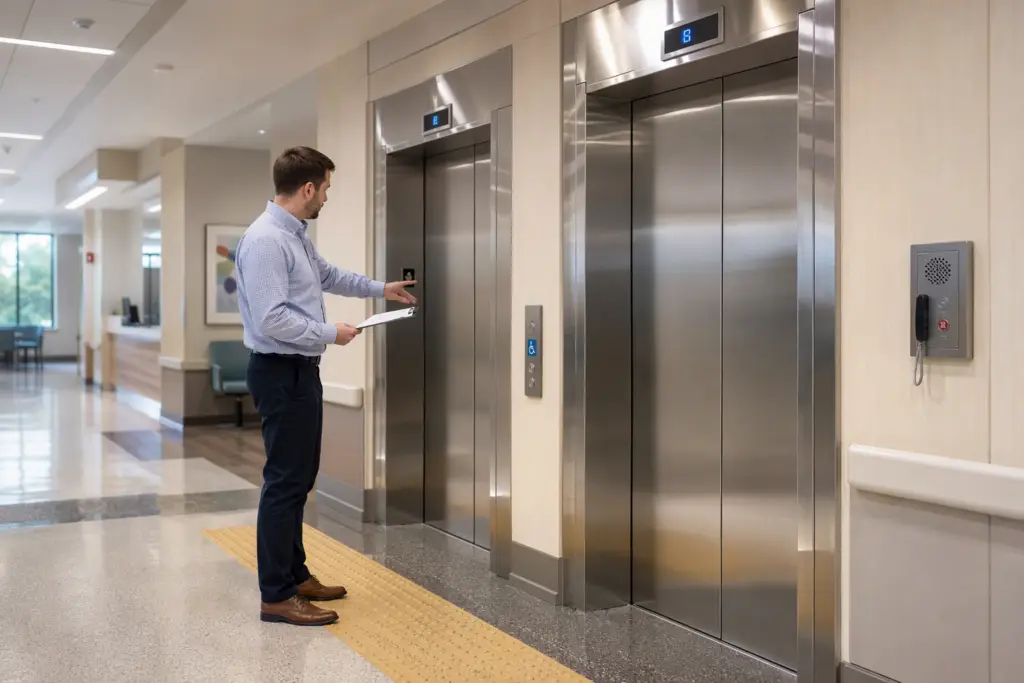
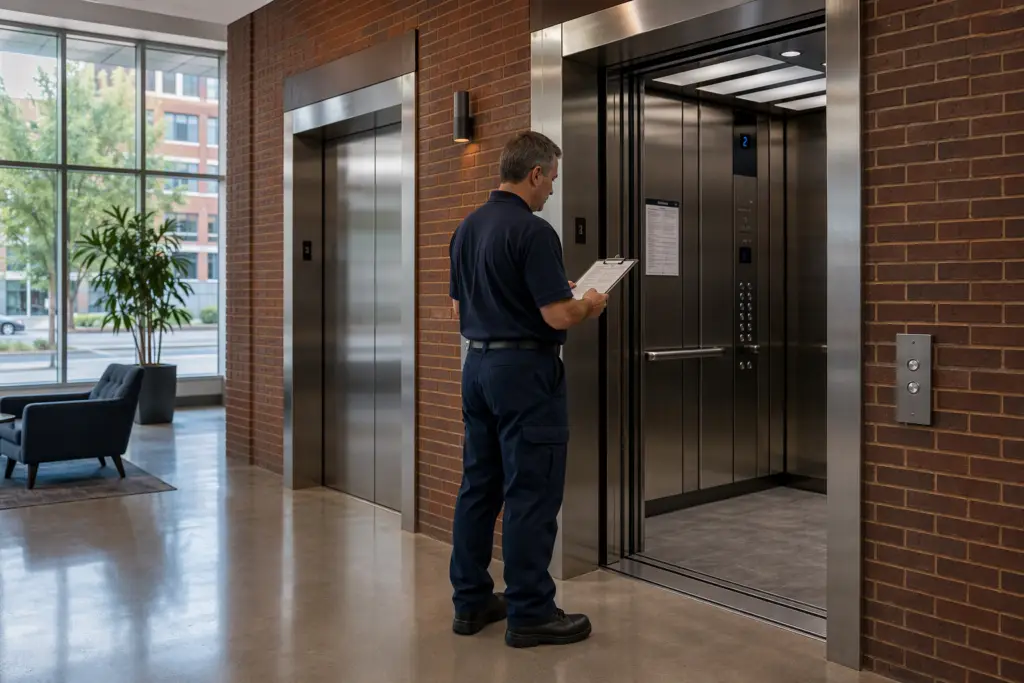
- Conduct a compliance gap assessment. Engage a qualified elevator service company to audit each elevator against the current adopted ASME A17.3 edition in your jurisdiction and applicable ADA standards. Document every deficiency and its compliance status.
- Review all outstanding correction orders or inspection notices. Pull inspection records from the AHJ for each elevator and confirm the status of any open items. Unresolved prior citations compound with new code adoption requirements.
- Prioritize life-safety and actively enforced items. Firefighters’ emergency operation, two-way communication, and door reopening devices should move to the front of the project queue.
- Obtain project scope and cost estimates. Request detailed written proposals for each upgrade category, broken down by labor, materials, permitting, and inspection fees. Compare the cost of piecemeal retrofits against a full modernization where applicable.
- Develop a multi-year capital budget. Not all upgrades need to occur simultaneously. Work with your elevator service provider and building management team to sequence projects across 2025–2027 in a way that aligns with budget cycles.
- Apply for permits early. AHJ permitting offices in high-volume markets can have extended review timelines. Submit permit applications as soon as scopes are finalized to protect your project schedule.
- Schedule inspections in advance. Post-completion inspections must be conducted by licensed inspectors. In busy markets, inspection scheduling can add weeks to a project timeline. Book early.
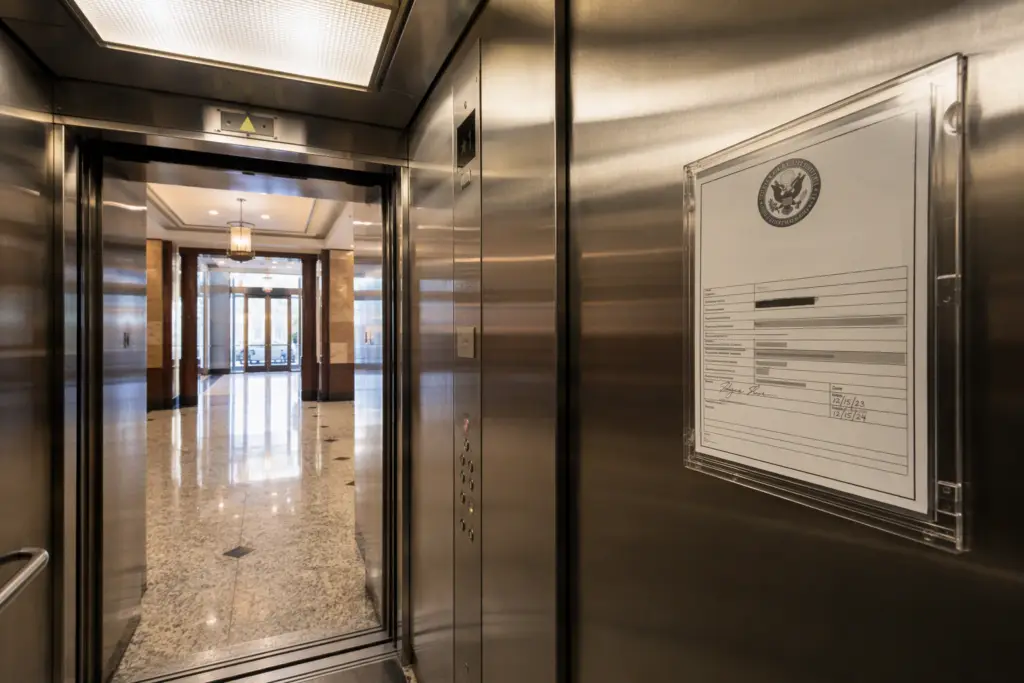
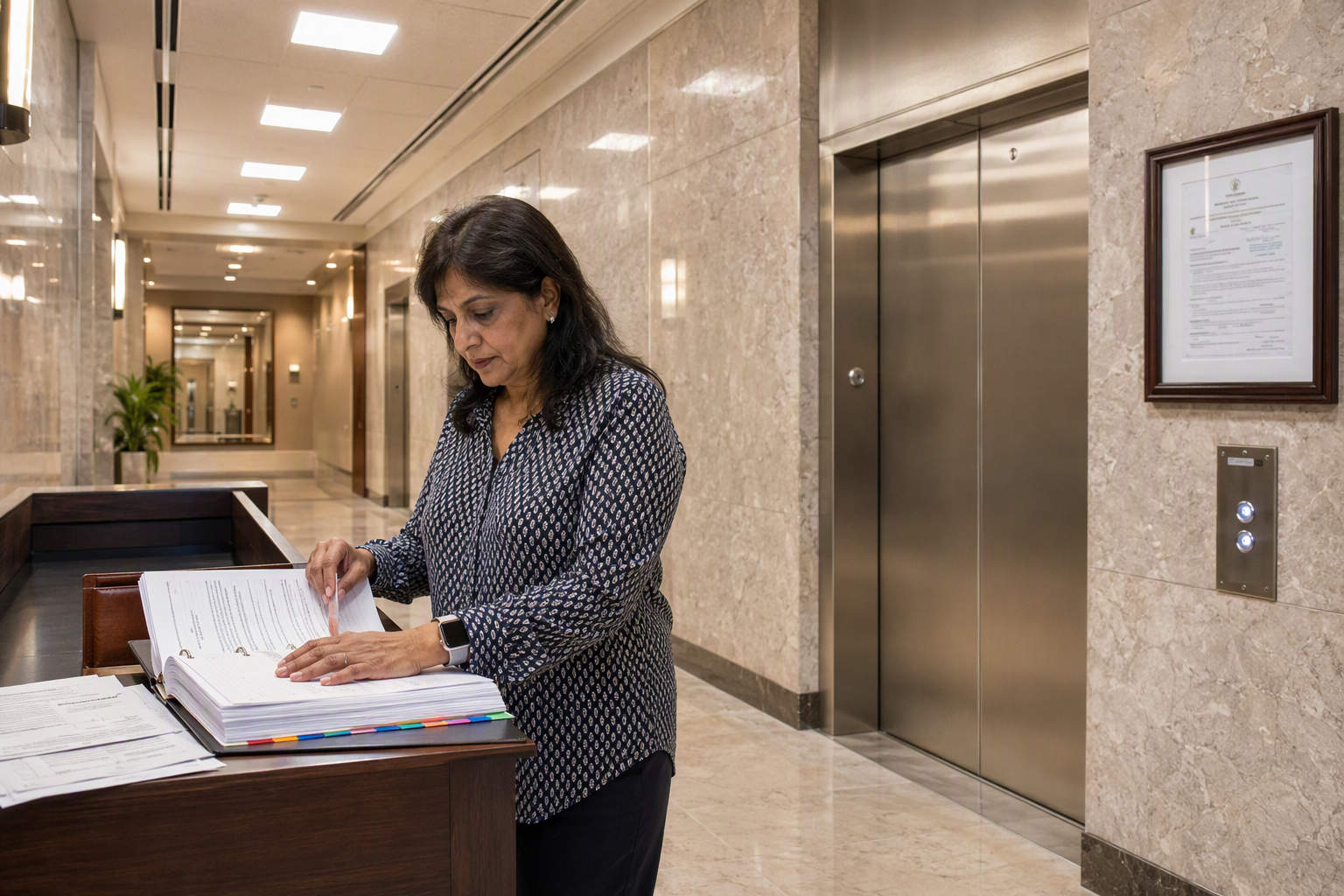
- Document all completed work. Retain copies of permits, inspection certificates, test reports, and contractor invoices. These documents are required for AHJ compliance verification and protect building owners in the event of liability claims.
How much lead time is typically needed to complete elevator compliance retrofits before a deadline?
Building owners should allow a minimum of twelve to eighteen months of lead time for complex elevator retrofits, accounting for assessment, design, permitting, contractor scheduling, installation, and post-completion inspection.
Simple upgrades such as emergency lighting battery replacement or pit stop switch additions can often be completed within weeks. However, controller replacements, firefighters’ emergency operation integration, and full modernizations involve engineering review, custom equipment ordering, permitting, and coordination with the building’s fire alarm contractor — all of which extend timelines significantly. Supply chain conditions for elevator components have historically introduced additional delays, making early procurement planning essential.
Buildings with multiple elevators face additional scheduling complexity because elevator outages must be staggered to maintain vertical transportation service to occupants. This phasing further extends total project duration and must be factored into compliance planning.
What are the consequences of failing to meet elevator compliance deadlines?
Non-compliance with elevator code requirements can result in operating permit suspension, mandatory elevator shutdown, civil penalties, and increased liability exposure in the event of an incident.
In Maryland, DC, Pennsylvania, and Virginia, operating an elevator without a valid certificate of inspection or in violation of an outstanding correction order is a violation of state law. AHJs have authority to order an elevator taken out of service immediately, which can be severely disruptive in buildings where elevator access is essential for occupants with disabilities. Beyond regulatory penalties, non-compliant elevator conditions can expose building owners to significantly greater liability in civil litigation following any elevator-related incident, as the non-compliance can be introduced as evidence of negligence.
The reputational and operational impact of an elevator shutdown in a multi-tenant commercial building or residential high-rise reinforces the business case for proactive compliance over reactive remediation.
Does a full elevator modernization eliminate the need for piecemeal code upgrades?
Yes — a full elevator modernization typically brings the equipment into compliance with current ASME A17.1 requirements as a new installation, eliminating the need for individual A17.3 retrofits and resetting the compliance baseline for the useful life of the new equipment.
Modernization projects replace the elevator controller, drive system, and often car fixtures, door operators, and hoistway equipment. When properly permitted and inspected as a new installation, the modernized elevator is evaluated against current A17.1 rather than the existing-installation A17.3 retroactive requirements. This approach is often financially advantageous when the total cost of required A17.3 retrofits exceeds a meaningful threshold relative to the modernization cost, particularly for elevators more than twenty years old.
Building owners should request a comparative cost analysis from their elevator service provider that models the total ten-year cost of a retrofit-only approach versus a full modernization, including projected maintenance costs, energy consumption, and expected remaining useful life of existing components.
How do elevator compliance requirements differ between commercial and residential buildings?
Both commercial and residential elevators are subject to ASME safety code requirements enforced by state AHJs, but ADA requirements apply primarily to commercial facilities, public accommodations, and multi-family housing subject to the Fair Housing Act rather than to all residential buildings uniformly.
Single-family private residences are generally exempt from ADA elevator requirements, but multi-family residential buildings with elevators and commercial condominiums are typically subject to both ADA Standards for Accessible Design and ASME A17.3 safety requirements. The interplay between the Fair Housing Act, ADA, and state building codes creates a layered compliance environment that benefits from professional assessment.
Residential building owners managing condominiums, cooperatives, or apartment buildings should pay particular attention to the two-way communication requirements, as these have direct life-safety implications for elderly and disabled residents who may rely on the elevator as their only means of egress assistance.
What role does OSHA play in elevator compliance for building owners?
OSHA standards apply primarily to elevator maintenance and service work performed by workers rather than to the public use of elevators, but building owners have obligations as the employer’s worksite host to ensure safe working conditions for elevator mechanics performing work on their property.
OSHA’s general industry and construction standards address lockout/tagout procedures, confined space entry in elevator pits, and fall protection in hoistways. Building owners should ensure that their elevator service contractor maintains a current OSHA compliance program and that workers performing elevator service have access to required safety equipment. While OSHA elevator safety standards focus on worker protection, violations can expose building owners to citation risk when their facility conditions contribute to a hazardous work environment.
How can building owners evaluate whether their current elevator service provider is equipped to handle code compliance upgrades?
Building owners should evaluate elevator service providers based on their demonstrated knowledge of locally adopted ASME codes, their licensing status in the applicable jurisdiction, their experience with AHJ permitting processes, and their ability to provide documented compliance gap assessments.
A qualified elevator service company should be able to identify the specific ASME code edition currently adopted by the local AHJ, explain which A17.3 requirements apply to the building’s specific equipment, and provide written documentation of all recommended upgrades with code citations. Providers who cannot explain the code basis for their recommendations or who cannot navigate the local permitting process should raise concern.
Quality Elevator Company serves building owners across Baltimore, Washington DC, Philadelphia, and Richmond with compliance-focused elevator assessments and upgrade services, bringing jurisdictional knowledge of each market’s AHJ requirements to every engagement.
What questions should building owners ask when requesting an elevator compliance assessment?
Building owners should ask prospective service providers about the specific ASME edition enforced by the local AHJ, the complete list of required upgrades and their regulatory basis, the permitting process and timeline, and whether full modernization may be more cost-effective than piecemeal retrofits.
Additional questions worth asking include: What is the estimated timeline from assessment to completed inspection? Are any components on extended lead times that require early procurement? Will the upgrade work require elevator shutdowns, and if so, for how long? What documentation will be provided upon project completion? Does the proposed scope address both ASME and ADA requirements simultaneously?
A thorough compliance assessment from a qualified provider like Quality Elevator Company will answer all of these questions in writing, giving building owners a clear foundation for capital planning and AHJ compliance demonstration.
How should building owners budget for 2027 elevator compliance costs?
Budgeting for elevator compliance should account for the assessment cost, individual upgrade costs by category, permitting and inspection fees, potential downtime costs during installation, and a contingency allowance for scope changes discovered during work.
The wide range of possible upgrade requirements — from a simple emergency lighting battery to a full controller replacement — makes it difficult to budget without a property-specific assessment. Building owners managing portfolios of multiple properties should prioritize assessment of their oldest equipment and buildings with open inspection correction orders first, as these are the highest-risk compliance exposures entering the 2027 window.
Many building owners successfully address compliance costs by incorporating elevator upgrades into planned capital improvement cycles, coordinating with lenders or ownership structures to include elevator compliance in reserve fund analyses, and leveraging the efficiency of bundled upgrade scopes to reduce per-item cost.
Are there any federal programs or incentives that help offset elevator compliance upgrade costs?
While there is no dedicated federal grant program for elevator code compliance upgrades, certain ADA accessibility improvements may qualify for federal tax incentives available to eligible small businesses and commercial property owners under IRS provisions.
The IRS Disabled Access Credit (Form 8826) and the Section 190 deduction for barrier removal are available to qualifying businesses that incur costs making facilities accessible in compliance with the ADA. Building owners should consult with a qualified tax advisor to determine eligibility and applicable limits. State and local economic development programs in Maryland, Virginia, Pennsylvania, and DC may also offer complementary incentives for building improvements, though these vary by jurisdiction and program availability.
How often should building owners conduct elevator compliance reviews even outside of major code change cycles?
Building owners should conduct a formal elevator compliance review annually, aligned with the mandatory inspection cycle, and additionally any time a significant building alteration is planned, a new code edition is adopted by the local AHJ, or a change of elevator service provider occurs.
Annual compliance reviews tied to mandatory inspection cycles ensure that any items cited by the AHJ inspector are immediately triaged and addressed within required timeframes. Reviews triggered by building alterations protect against inadvertently triggering ADA upgrade obligations without planning for them. Reviews following AHJ code edition adoptions capture new retroactive requirements under ASME A17.3 before enforcement deadlines arrive.
Consistent annual review practice is the most cost-effective long-term compliance strategy because it converts large reactive retrofit projects into manageable annual maintenance and upgrade scopes. Quality Elevator Company supports building owners across the mid-Atlantic region with ongoing compliance monitoring as part of comprehensive elevator service programs.
Ready to Prepare Your Building for 2027 Elevator Compliance?
Waiting until deadlines arrive means competing for contractor availability, facing permit backlogs, and risking elevator shutdowns that disrupt building operations. The building owners who fare best in every code adoption cycle are the ones who start their compliance assessment two to three years ahead of the enforcement window — which means now.
Contact Quality Elevator Company for a free elevator assessment. Quality Elevator Company serves commercial and residential building owners across Baltimore MD, Washington DC, Philadelphia PA, and Richmond VA with comprehensive compliance gap assessments, ASME A17.1/A17.3 upgrade services, ADA accessibility improvements, and full elevator modernization programs tailored to each jurisdiction’s AHJ requirements.
Call us today: 301-779-9116
Don’t let 2027 catch your building unprepared. Reach out to Quality Elevator Company now and get a clear picture of exactly what your elevators need — and a realistic plan to get there on time and on budget.
Need elevator service you can rely on? Quality Elevator Company is ready to help.