Elevator Modernization vs. Repair vs. Maintenance: Complete FAQ Guide
Building owners and facility managers in Baltimore, Washington DC, Philadelphia, and Richmond face the same critical question every time an elevator issue arises: is this a quick fix, a scheduled maintenance item, or a sign that the entire system needs modernization? Getting that answer wrong in either direction costs money, creates liability, and — most importantly — puts passengers at risk. This comprehensive FAQ guide walks through every dimension of that decision with the technical depth needed to make a confident, code-compliant choice.
What is the single clearest sign that an elevator needs modernization rather than repair?
The clearest sign is a pattern of repeat failures across multiple interdependent systems — controls, drive, door operator, and safety devices — where repairing one component immediately exposes the next weakest link, creating a cycle of downtime that repair alone cannot break.
A single failed relay, worn door cam, or slipping drive belt is a maintenance or repair event. But when an elevator logged multiple service calls within a rolling twelve-month period and those calls span different subsystems, the root cause is systemic age, not isolated component failure. Modernization addresses the underlying platform, not just the symptom that surfaced most recently.
Qualified elevator service companies such as Quality Elevator Company conduct pattern-of-failure analyses during assessments, reviewing service records to distinguish episodic repairs from a deterioration trend that signals modernization is the only cost-effective path forward.
What is the difference between elevator maintenance, repair, and modernization?
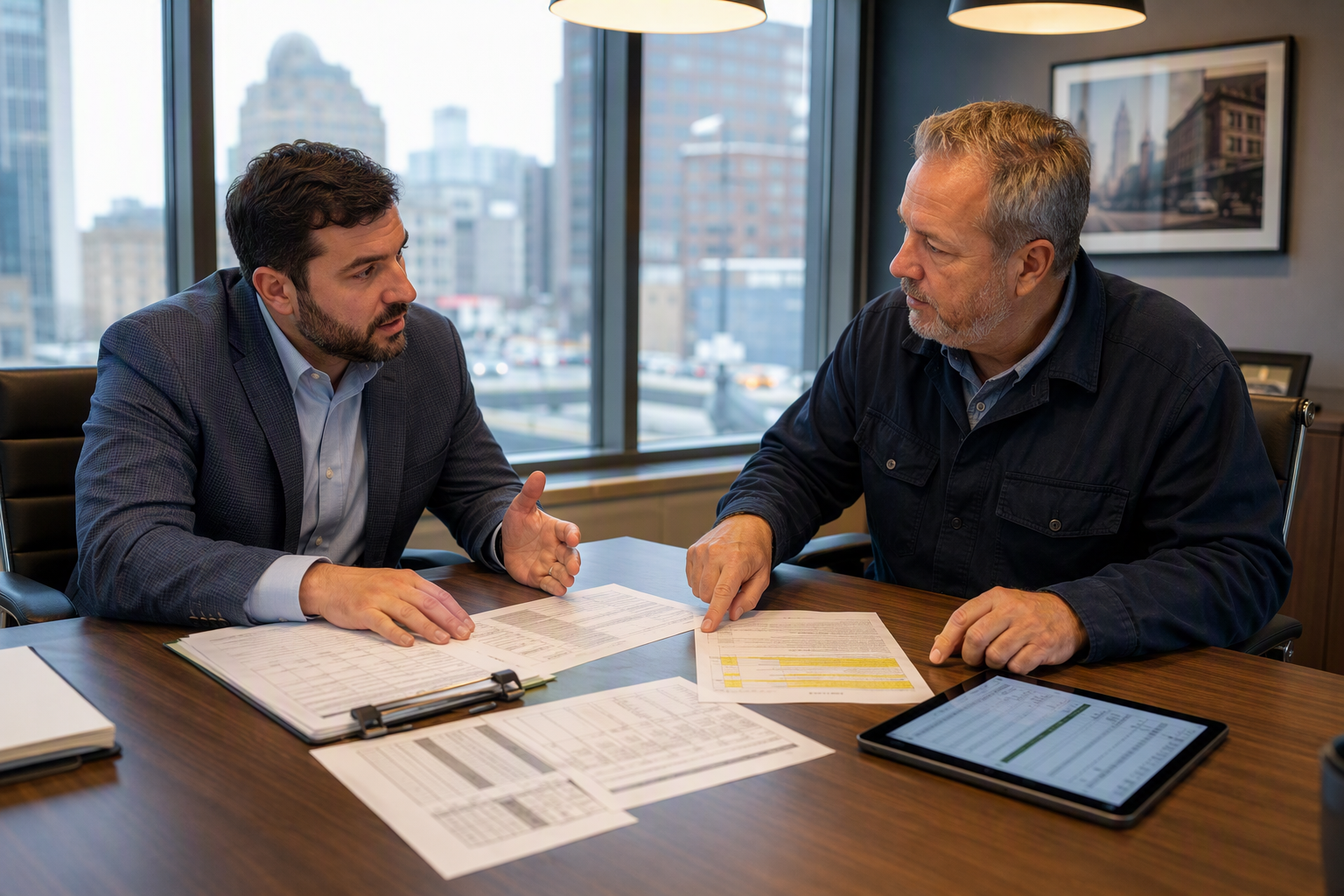
Maintenance is scheduled, preventive work that keeps a functioning elevator performing to specification; repair restores a specific failed component to working order; and modernization replaces major systems or the entire installation to bring the elevator to current safety, accessibility, and performance standards.
These three service categories involve different scopes, costs, timelines, and regulatory triggers. Maintenance is governed by the owner’s service contract and the inspection schedule required under ASME A17.1 Safety Code for Elevators and Escalators. Repair is reactive. Modernization is a capital project that typically triggers re-inspection, updated code compliance, and in many jurisdictions, a new certificate of occupancy for the equipment.
Understanding which category applies determines who must be notified (the authority having jurisdiction, or AHJ), what permits are required, and whether the work triggers full code compliance upgrades under the edition of ASME A17.1 adopted by Maryland, DC, Virginia, or Pennsylvania.
How old does an elevator have to be before modernization becomes necessary?
Age alone does not trigger modernization, but elevators beyond roughly 20 years old often reach a tipping point where replacement parts become scarce, control system software is unsupported, and the cumulative cost of maintenance and repair exceeds the annualized cost of modernization.
There is no universally mandated modernization age in the ASME A17.1 Safety Code or in the regulations adopted by Maryland, DC, Virginia, or Pennsylvania. The decision is driven by condition, parts availability, compliance gaps, and total cost of ownership — not a birthday on the equipment’s data plate. An elevator installed in 2000 with a modern solid-state control system may have a much longer serviceable life than one installed in 2010 with already-discontinued relay logic.
What specific mechanical symptoms indicate modernization over repair?
Symptoms that point to modernization include chronic leveling problems that persist after adjustment, door reopening failures that recur despite door operator repair, hydraulic ram seal failures on older single-bottom cylinders, and rope or sheave wear patterns that indicate a drive system operating outside its design envelope.
Each of these symptoms in isolation may still be a repair event. The red flags are recurrence after a correctly executed repair, the unavailability of replacement parts from the original manufacturer, and the discovery during repair that correcting one deficiency exposes an adjacent component to accelerated wear. When an elevator’s drivetrain, control system, and safety devices are all approaching end-of-life simultaneously, modernization is the structurally sound answer.
When do elevator control system failures require modernization instead of repair?
Control system failures require modernization when the proprietary relay logic or microprocessor controller is discontinued, replacement boards are no longer available through the original equipment manufacturer or aftermarket suppliers, and the cost of a custom workaround exceeds the cost of a modern solid-state replacement.
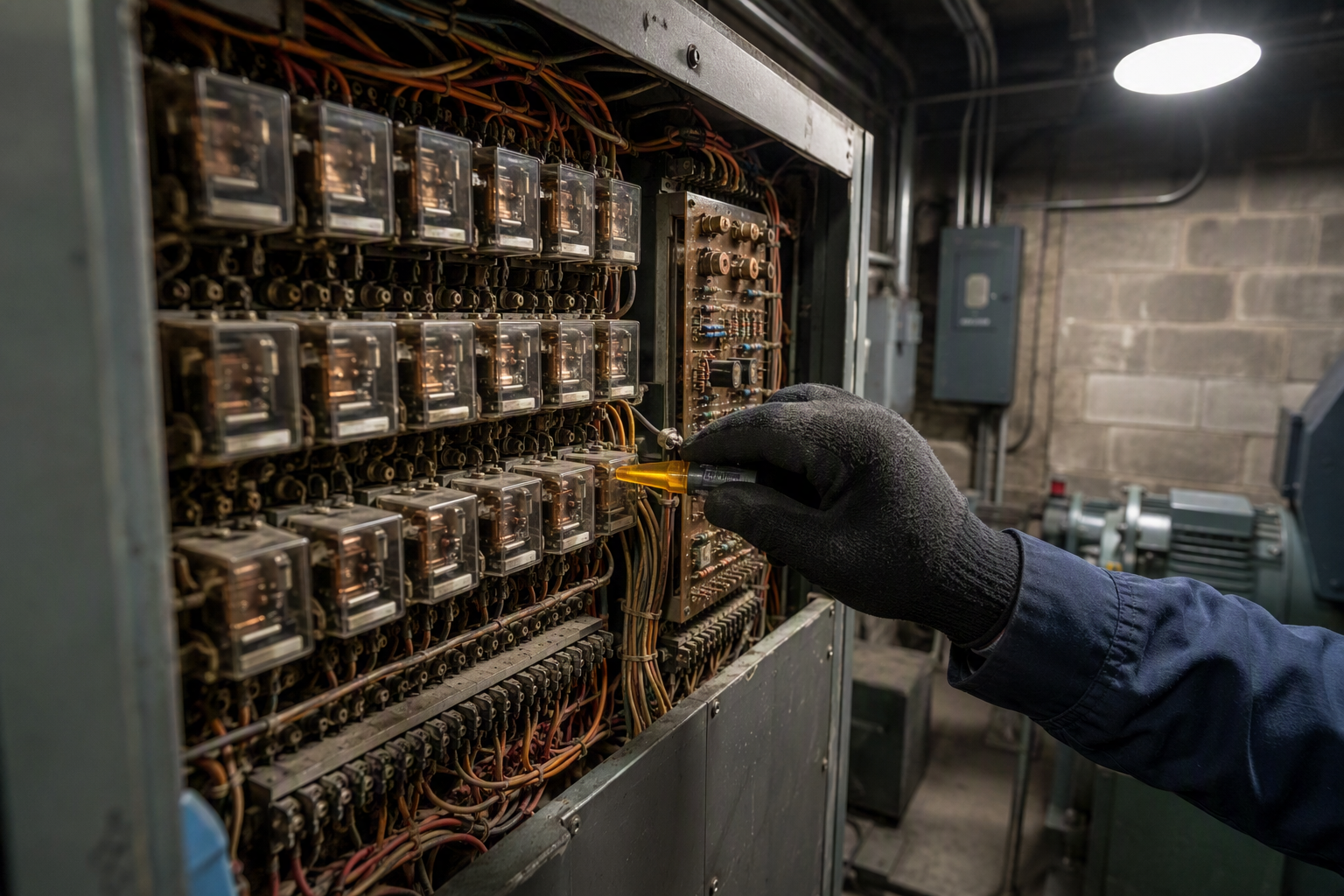
Older relay-logic controllers — common in elevators installed before the early 1990s — are particularly vulnerable. Relay contacts corrode, timing circuits drift, and the skilled labor to troubleshoot relay-based logic is increasingly rare. Modern microprocessor controllers with redundant safety circuits, self-diagnostics, and remote monitoring capability represent a fundamental improvement in reliability and serviceability, not merely a cosmetic upgrade.
When a control system failure triggers a shutdown and the parts lead time is measured in months rather than days, the building is effectively already experiencing the financial impact of an unplanned modernization on the worst possible timeline.
What compliance and code requirements can force an elevator modernization?
Code-mandated upgrades under the ASME A17.1 Safety Code for Elevators and Escalators and state adoptions of that code — as well as ADA accessibility standards — can require modernization when a major alteration is undertaken, when the authority having jurisdiction issues a compliance order, or when a building undergoes a change of use or occupancy.
Maryland, the District of Columbia, Virginia, and Pennsylvania each adopt editions of ASME A17.1 with their own amendment cycles. When a jurisdiction requires the installation of Phase I and Phase II firefighters’ emergency operation, car door interlocks, or emergency lighting upgrades, those mandates may not be satisfiable with a component repair — they require system-level changes that constitute modernization.
ADA compliance presents a parallel trigger. If a building is required to provide accessible vertical transportation and the existing elevator lacks tactile controls, audible floor announcements, door timing that accommodates people with mobility limitations, or adequate car dimensions, the path to compliance frequently involves modernization of the car interior, door system, and control package together.
Building owners planning any significant interior renovation should consult with a qualified elevator service company before finalizing construction documents, because alteration thresholds can trigger code upgrades across the entire elevator system, not just the components being changed.
What does an elevator modernization assessment involve, step by step?
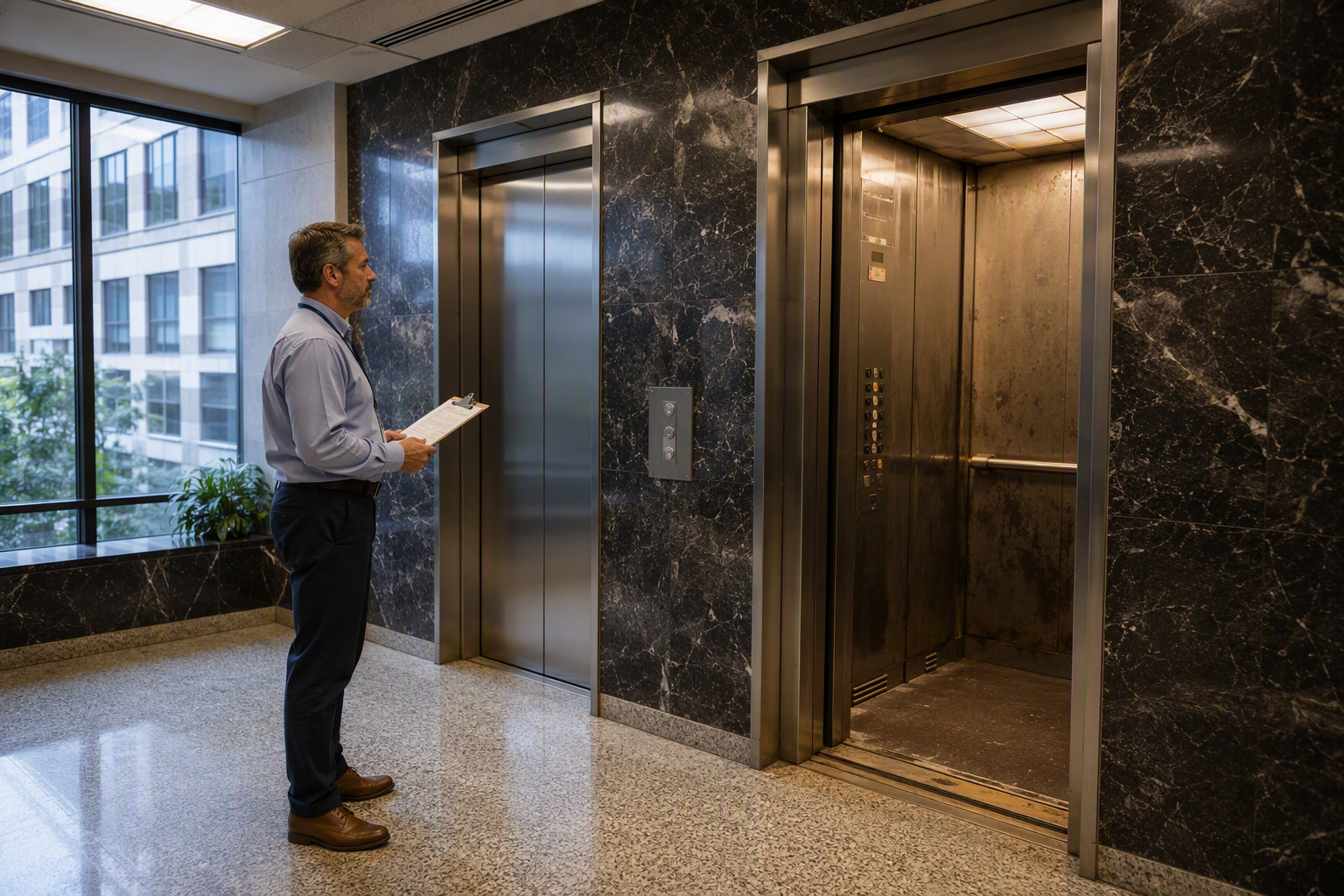
A thorough elevator modernization assessment follows a structured sequence that covers physical inspection, records review, code gap analysis, and a written report with prioritized recommendations.
- Service history review: The assessor collects maintenance logs, repair invoices, and inspection reports to identify failure patterns across systems and quantify total cost of ownership over a representative period.
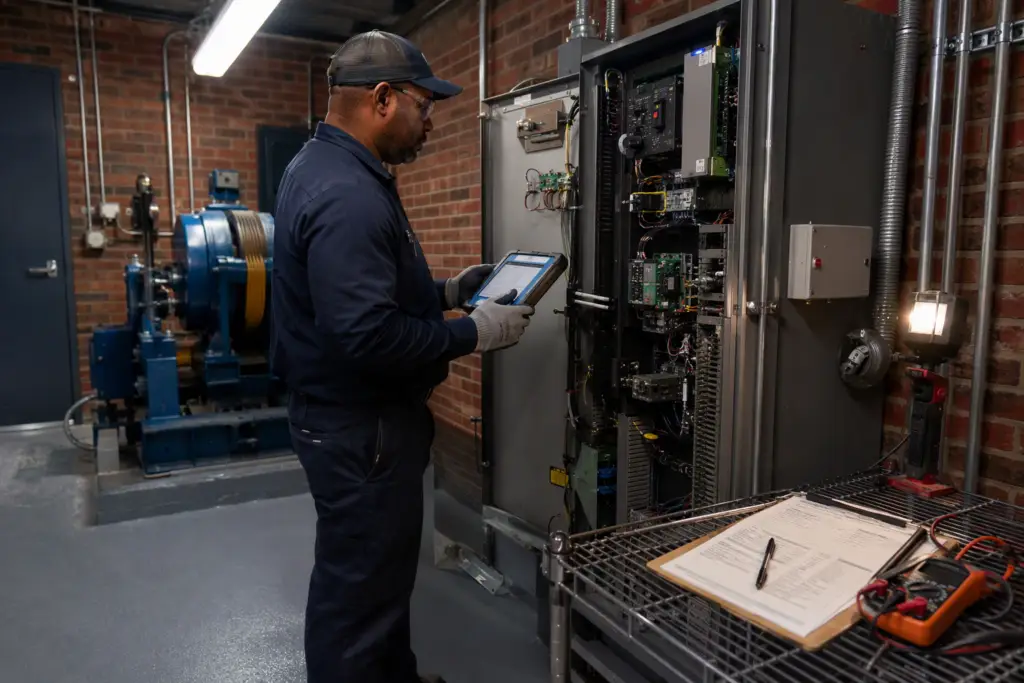
- Physical condition inspection: The machine room, hoistway, pit, and car are inspected for wear on ropes, sheaves, guide rails, buffers, safeties, and hydraulic components. The door operator, car operating panel, and fixtures are evaluated.
- Control system audit: The controller type, age, manufacturer, and parts availability are documented. Software revision levels are noted for microprocessor-based systems.
- Code compliance gap analysis: The elevator’s current configuration is compared to the requirements of the edition of ASME A17.1 adopted by the local jurisdiction, as well as applicable ADA standards, to identify mandatory upgrade items.
- Energy and performance benchmarking: Drive efficiency, motor condition, and door cycle times are evaluated against current performance standards.
- Written report and recommendation: The assessor produces a prioritized list of findings, separating immediate safety issues, near-term repair needs, and modernization candidates with estimated scope and rationale for each.
Quality Elevator Company provides this type of structured assessment for building owners across Baltimore, Washington DC, Philadelphia, and Richmond to help stakeholders make data-driven modernization decisions rather than reactive ones.
How do elevator modernization costs compare to ongoing repair and maintenance costs?
The comparison that determines whether modernization is economically justified is the net present value of continued repair and maintenance spending — including projected downtime costs — set against the annualized capital cost of modernization over its expected service life.
| Factor | Routine Maintenance | Component Repair | Full Modernization |
|---|---|---|---|
| Trigger | Scheduled interval | Single component failure | Systemic deterioration or code mandate |
| Downtime impact | Minimal (planned) | Days to weeks (unplanned) | Weeks to months (planned) |
| Code compliance result | No change | No change | Brought to current adopted code edition |
| Parts availability concern | Low | Medium to high on aged systems | Resolved by new platform |
| Expected service life added | Maintains existing life | Extends component life only | Typically 20–25 years for modernized systems |
| Energy efficiency improvement | None | Minimal | Significant (modern drives, LED lighting) |
| Permit and inspection required | No (routine) | Depends on scope and jurisdiction | Yes — AHJ review and certificate required |
| Financing options | Operating budget | Operating budget | Capital budget, financing programs available |
Building owners who have experienced escalating repair invoices over consecutive years are often surprised to find that the annualized cost of a modernization — spread over its expected service life — is comparable to or lower than the trajectory of repair spending on an aging system. A qualified elevator service company can prepare a side-by-side cost analysis during the assessment process.
What are the signs that an elevator’s hydraulic system needs modernization rather than repair?
Hydraulic elevator systems signal modernization need through single-bottom cylinder corrosion risk, repeated seal failures with associated oil loss, inability to maintain floor level (leveling drift), and the presence of older fluid that does not meet current fire-resistant or biodegradable requirements.
Older single-bottom hydraulic cylinders installed in-ground without a secondary containment casing present an environmental risk that repair cannot fully mitigate. Current industry practice, aligned with guidance referenced in ASME A17.1, favors PVC-lined or above-ground cylinder configurations. Replacing a deteriorating in-ground cylinder is a major modernization task in its own right — and when that scope is combined with an aging controller and worn hydraulic power unit, the economics strongly favor a comprehensive modernization rather than piecemeal replacement.
How do door system failures factor into the modernization versus repair decision?
Door system failures are the most common source of elevator-related incidents and are the leading driver of callback calls; when a door operator, clutch mechanism, and interlock system are all at end-of-life simultaneously, replacing the entire door package as part of a modernization is more reliable and cost-effective than sequential component repairs.
Door-related incidents account for a disproportionate share of elevator injuries reported to authorities having jurisdiction across the country. A worn door operator that cannot consistently maintain the required reopening sensitivity, combined with aged interlocks that are borderline on their contact pressure, represents a safety risk that repair may temporarily address but not systematically resolve. Modern door operators with variable-speed drives, electronic door edges, and self-diagnostic capability represent a genuine safety and reliability improvement over mechanical systems, and they are a standard component of most elevator modernization packages.
What energy efficiency improvements come with elevator modernization?
Modernization typically replaces older AC single-speed or two-speed motors and resistance-based controls with variable-voltage variable-frequency (VVVF) drives, regenerative drive technology, and LED cab lighting, delivering measurable reductions in electrical consumption and demand charges.
Older worm-gear traction elevators with single-speed AC motors and resistance starting circuits are among the least energy-efficient mechanical systems in a commercial building. Modern VVVF drives match motor speed precisely to load demand, eliminating resistive losses. Regenerative drives capture energy during descent or with light loads and return it to the building’s electrical grid. For high-rise buildings with multiple elevators in Baltimore, Washington DC, and Philadelphia, the aggregate energy savings from modernization can be substantial — though building owners should request a site-specific energy analysis rather than relying on generalized estimates.
What accessibility requirements should building owners consider when evaluating elevator modernization?
Under the Americans with Disabilities Act and applicable state accessibility codes, elevators in public accommodations and commercial facilities must meet standards for car dimensions, door width and timing, control height and reach range, tactile indicators, and audible signals — deficiencies in these areas that cannot be corrected by minor modification constitute an accessibility modernization need.
ADA Standards for Accessible Design specify requirements including minimum car dimensions, door clear width minimums, tactile and Braille control markings, visual and audible floor indicators, and leveling accuracy requirements. An elevator that was installed before ADA enforcement in the early 1990s and has never been updated may have multiple deficiencies across these categories. When a building undergoes renovation or a change of program use, ADA path-of-travel obligations may require elevator accessibility upgrades as a condition of the renovation permit — making it efficient to bundle those upgrades into a comprehensive modernization rather than address them as standalone retrofits.
How do building owners evaluate elevator vendors for a modernization project?
Building owners should evaluate elevator modernization vendors on the basis of licensure and certification in the relevant jurisdiction, demonstrated experience with the existing equipment brand and type, the technical quality and completeness of their written assessment and proposal, warranty terms on modernized components, and their ongoing service capability after the project is complete.
Multi-jurisdiction service capability matters particularly for property management companies and institutional owners with buildings in several markets. Quality Elevator Company serves Baltimore MD, Washington DC, Philadelphia PA, and Richmond VA, providing consistent standards of service and documentation across those markets — an advantage for owners managing multi-site portfolios who need standardized reporting and a single accountable partner across jurisdictions.
Owners should request that vendor proposals clearly delineate what is included in the modernization scope, what existing components are being retained and their remaining service life, which code editions the completed installation will comply with, and what inspection and permit management the vendor will handle on the owner’s behalf.
What is the typical timeline for an elevator modernization project?
A typical elevator modernization project spans from several weeks for a targeted controls-and-door-operator update to several months for a full machine-room-less conversion or comprehensive cab-through-machine-room overhaul, depending on scope, parts lead times, and permit processing by the authority having jurisdiction.
Permit timelines vary significantly across jurisdictions. In some Maryland and DC jurisdictions, elevator permit review can take several weeks after submission of engineering drawings and specifications. Virginia and Pennsylvania jurisdictions vary similarly. Building owners planning a modernization should factor permit and inspection scheduling into the project timeline and communicate with tenants or building occupants well in advance. Service continuity planning — including temporary lift accommodations where required under ADA — should be addressed in the project plan.
What should building owners do immediately when they suspect an elevator needs modernization?
When a building owner suspects an elevator requires modernization, the appropriate immediate steps are to document current symptoms, secure the elevator from passenger use if any safety concern exists, contact the authority having jurisdiction if a mandatory safety deficiency is identified, and engage a qualified elevator service company for a formal assessment.
- Document symptoms: Record the nature and frequency of failures, unusual sounds, leveling discrepancies, door malfunctions, or passenger complaints with dates and descriptions.
- Review recent service records: Gather maintenance logs and repair invoices from the past three to five years to identify any failure patterns across multiple subsystems.
- Assess immediate safety: If the elevator is showing symptoms that could affect passenger safety — such as door reopening failures, leveling beyond acceptable tolerance, or safety device anomalies — remove the unit from service until a qualified technician has inspected it.
- Notify the authority having jurisdiction if required: Some jurisdictions require notification when an elevator is taken out of service or when certain safety deficiencies are discovered. Check local requirements in Maryland, DC, Virginia, or Pennsylvania as applicable.
- Request a formal modernization assessment: Contact a licensed elevator service company with experience in the relevant jurisdiction to conduct a structured assessment as described in the step-by-step section above.
- Review financing and capital planning options: If modernization is indicated, begin the conversation with ownership and finance stakeholders early, as capital budgeting cycles may affect project timing.
- Obtain multiple proposals: Request written proposals from qualified vendors that specify scope, code compliance outcomes, warranty, and permit management — then compare them on a consistent basis.
Does elevator modernization require a new inspection certificate?
Yes — any modernization that constitutes a major alteration under the adopted edition of ASME A17.1 requires submission to the authority having jurisdiction, a permit, a post-installation inspection by a qualified elevator inspector, and issuance of a new certificate of inspection before the elevator is returned to passenger service.
The definition of what constitutes a “major alteration” versus a “minor alteration” or routine repair is jurisdiction-specific and tied to the edition of ASME A17.1 the local AHJ has adopted. In general, replacement of control systems, drive machines, hydraulic power units, or safety devices triggers major alteration status. Building owners should never assume that a modernization contractor will handle all permit and inspection logistics automatically — this responsibility should be explicitly assigned in the contract.
Are there specific elevator types that are more likely to need modernization sooner?
Hydraulic elevators with in-ground single-bottom cylinders, elevators with relay-logic controllers, and older freight elevators with drum-type machines are generally the most likely candidates for early modernization due to parts obsolescence, environmental risk, and safety device limitations that are inherent to their original design rather than their maintenance history.
Traction elevators with worm-gear machines and DC motor/generator sets represent another category where the cost of maintaining aging generator equipment, brush gear, and relay controls often justifies conversion to modern VVVF traction drive. The machine-room-less (MRL) traction configuration, now common in new installations, is also available as a modernization option for certain existing hoistways, eliminating the machine room altogether and recovering that square footage for building use.
How does elevator modernization affect a building’s insurance and liability exposure?
Modernizing an elevator to current code compliance reduces liability exposure by eliminating known safety deficiencies, improving door system reliability — a primary source of passenger incidents — and producing a documented record of compliance with ASME A17.1 and ADA standards that can be provided to insurers and used in defense of claims.
Building owners and property managers should consult with their insurance carriers and legal counsel regarding the specific impact of modernization on their coverage terms and premiums. The documentation produced by a modernization project — inspection certificates, permit records, code compliance reports — creates a clear record that the owner exercised reasonable care in maintaining the vertical transportation system. This documentation has value both in claims defense and in prospective tenant due diligence reviews.
What is the role of ongoing maintenance after elevator modernization?
Modernization resets the service life of the elevator’s major systems but does not eliminate the need for ongoing preventive maintenance; a post-modernization maintenance program ensures that the new investment performs reliably, that warranties remain valid, and that the elevator continues to meet inspection requirements throughout its expected service life.
A well-structured maintenance program for a modernized elevator typically includes periodic lubrication and adjustment of mechanical components, inspection and testing of safety devices at code-required intervals, monitoring of control system diagnostics, and door operator adjustments. Many modern control systems include remote monitoring capabilities that allow service companies to identify performance trends before they become failures. Building owners should ensure that their post-modernization service contract covers these modern diagnostic capabilities, not just the traditional mechanical inspection tasks.
How should property managers in Baltimore, Washington DC, Philadelphia, and Richmond approach multi-elevator modernization planning?
Property managers overseeing buildings with multiple elevators should approach modernization planning as a phased capital program — staggering units to maintain building service continuity, standardizing on a single modern control platform to simplify future maintenance, and aligning modernization timing with major lease renewals or building renovation projects that may independently trigger code upgrade obligations.
In high-rise commercial buildings and multi-tower residential complexes in markets like Washington DC and Philadelphia, the coordination complexity of multi-elevator modernization is substantial. A qualified, regionally experienced service company can develop a phased modernization plan that keeps at least one elevator in service at all times, sequences the work to minimize tenant disruption, and takes advantage of economies of scale in parts procurement across units. Quality Elevator Company’s presence across the Baltimore, Washington DC, Philadelphia, and Richmond markets positions the company to support this type of coordinated, multi-site modernization planning for institutional and portfolio property owners.
Ready to Find Out Whether Your Elevator Needs Modernization, Repair, or Maintenance?
The decision between elevator modernization and repair is too consequential — for passenger safety, code compliance, and long-term operating costs — to make without a professional, structured assessment. Contact Quality Elevator Company for a free elevator assessment serving Baltimore MD, Washington DC, Philadelphia PA, and Richmond VA.
Call Quality Elevator Company today: 301-779-9116
A qualified elevator professional will review your equipment’s service history, inspect its current condition, identify any code compliance gaps under the applicable edition of ASME A17.1 and ADA standards, and deliver a written recommendation — so that building owners and managers can make a confident, data-driven decision about the right path forward for their vertical transportation system.
Need elevator service you can rely on? Quality Elevator Company is ready to help.