Elevator Maintenance and Inspection Requirements for School Buildings and Universities
Educational facilities — from K–12 schools to large university campuses — operate elevators under a distinct set of pressures. High foot traffic, heavy academic-year usage cycles, evolving accessibility mandates, and strict public safety obligations mean that elevator compliance is not optional. This page covers the full landscape of inspection requirements, maintenance obligations, accessibility rules, and operational best practices that apply specifically to school and university elevators in 2026.
What Federal Standards Govern Elevators in Schools?
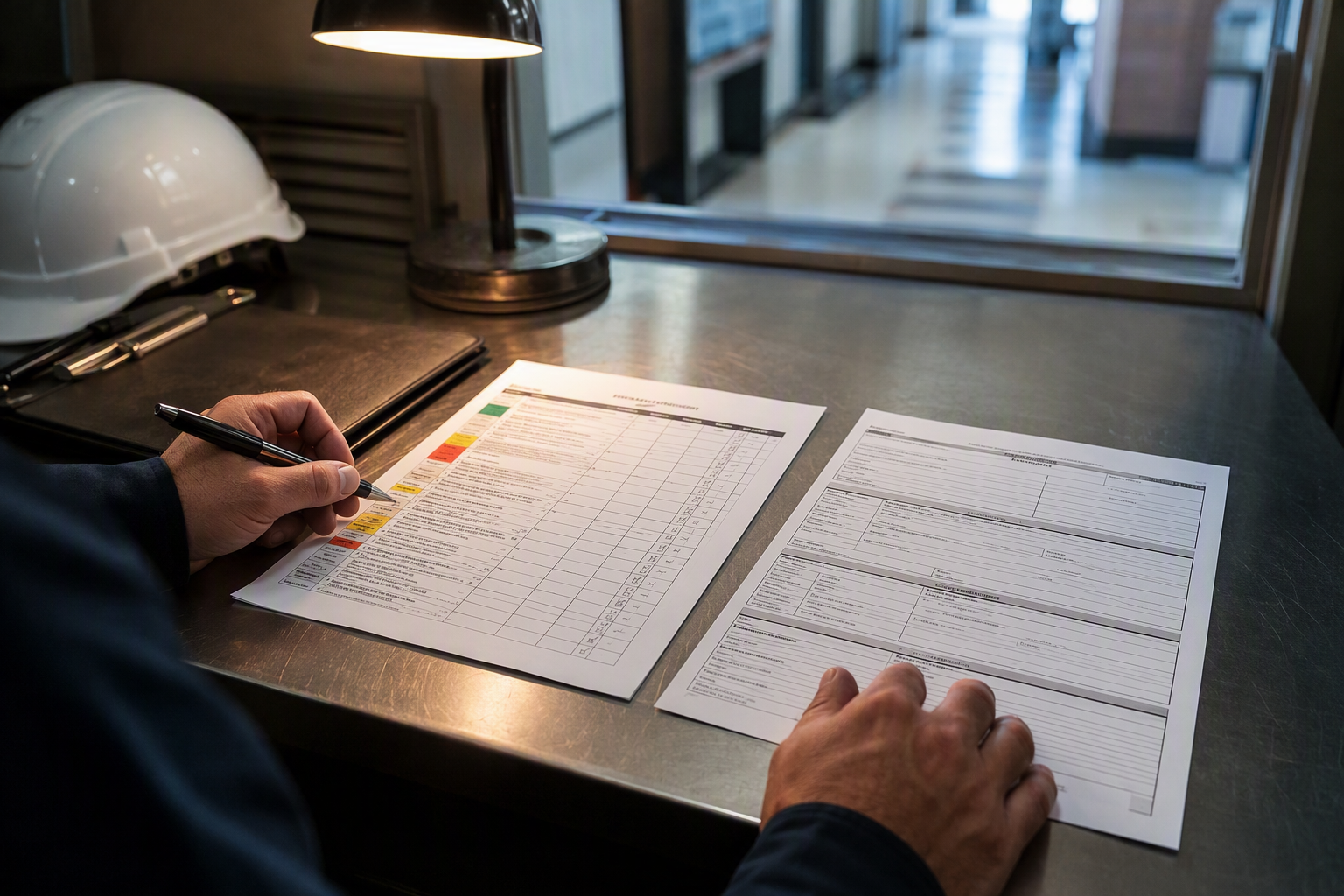
The foundational federal standard is the ASME A17.1 Safety Code for Elevators and Escalators, published jointly by the American Society of Mechanical Engineers and the Canadian Standards Association. Most U.S. states adopt ASME A17.1 — or a state-modified version of it — as the minimum baseline for elevator safety. This code governs design, construction, installation, operation, inspection, testing, maintenance, alteration, and repair of elevators in all building types, including educational facilities.
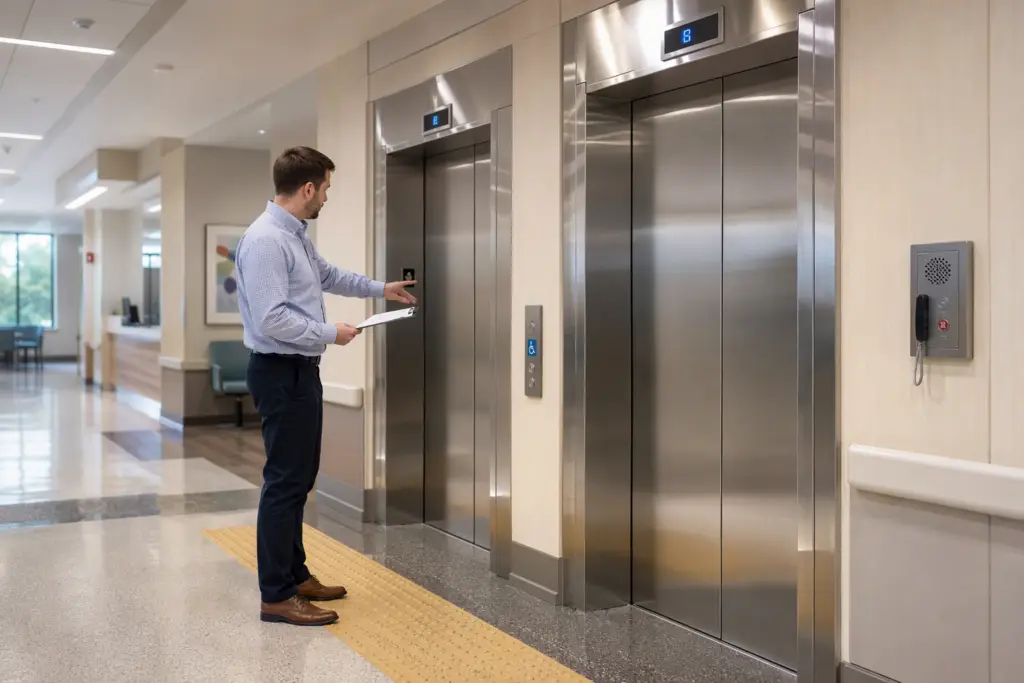
Additionally, the Americans with Disabilities Act (ADA) mandates that elevators in public accommodations and commercial facilities — a category that includes schools and universities — meet specific accessibility standards. These include requirements for cab dimensions, door timing, control panel heights, tactile indicators, and audible floor signals. Because educational institutions serve students with disabilities, faculty, and the general public, ADA compliance is an ongoing operational obligation, not a one-time installation checkbox.
OSHA standards also apply to workers who maintain, inspect, or repair elevators in educational settings, including lockout/tagout procedures and confined space protocols when technicians work within elevator pits or machine rooms.
How Often Must Elevators in Schools Be Inspected?
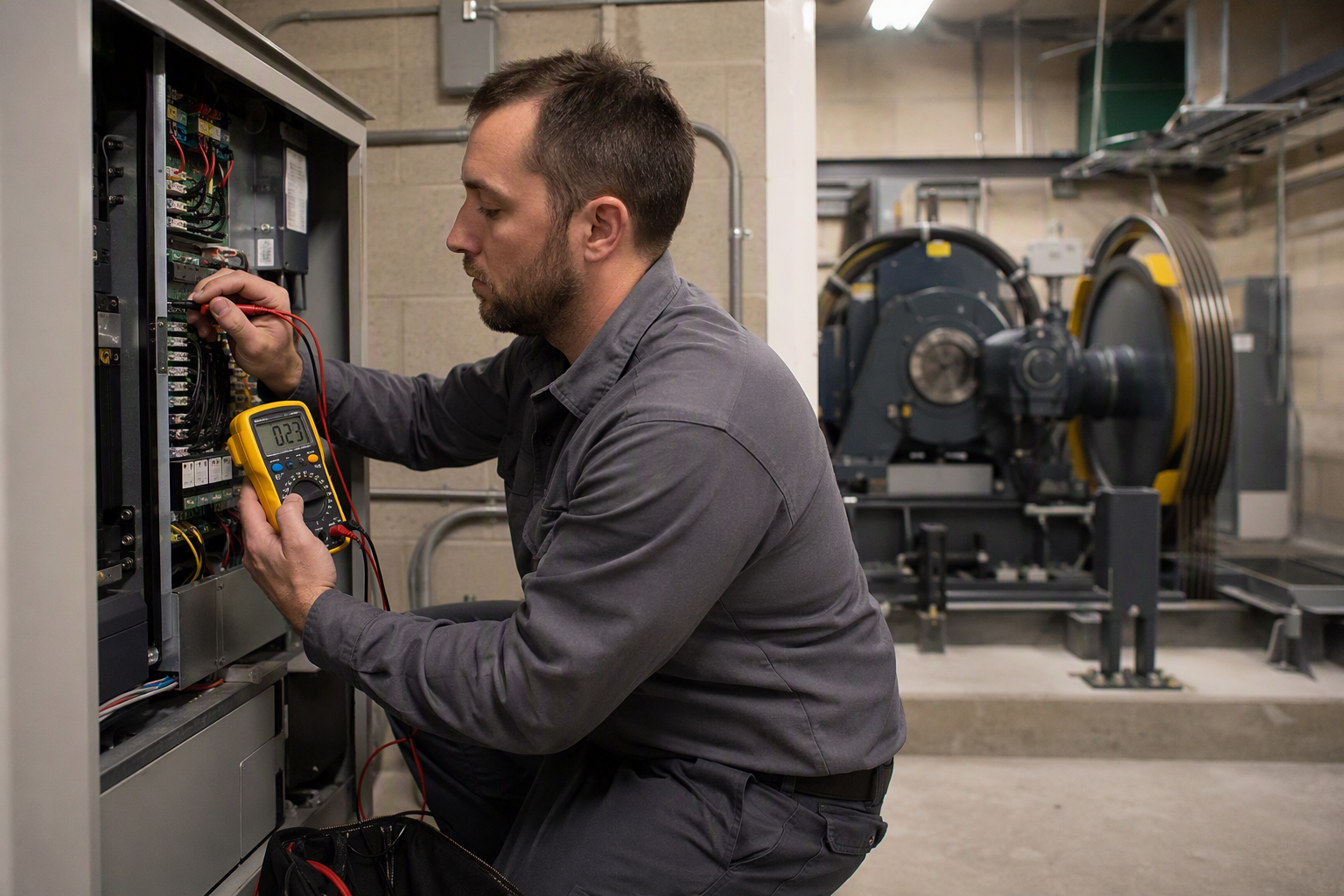
Inspection frequency under the ASME A17.1 Safety Code for Elevators and Escalators is structured around two primary inspection categories:
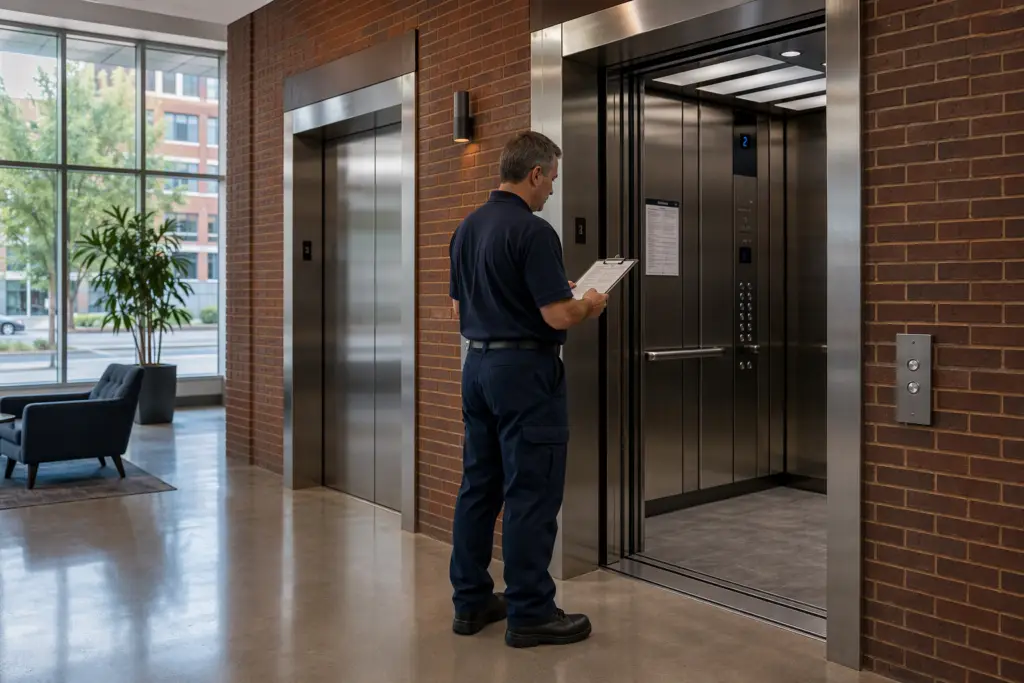
- Periodic Inspections: ASME A17.1 requires periodic inspections of elevator equipment to verify continued safe operation. While the code establishes the framework, each state elevator safety authority sets the specific interval — commonly every six months or annually for most passenger elevators.
- Witnessing of Periodic Tests: Beyond routine inspection, certain operational and safety tests — including governor, buffer, and car safety tests — must be witnessed by a qualified elevator inspector at code-defined intervals (for example, every five years for certain tests under the periodic testing schedule in ASME A17.1).
Schools and universities should be aware that state elevator enforcement agencies may establish stricter inspection cycles than the federal baseline, and some jurisdictions apply heightened scrutiny to facilities that serve minors or populations with disabilities. Facility managers should confirm the exact schedule with their state elevator safety office.
What Routine Maintenance Is Required Between Inspections?
The ASME A17.1 Safety Code for Elevators and Escalators requires that elevators be maintained in a safe operating condition. For educational facilities, this translates into a structured preventive maintenance program that typically includes:
- Lubrication of guide rails, bearings, and mechanical components
- Inspection and adjustment of door operators, contacts, and safety edges
- Testing of emergency lighting, communication systems, and alarm bells
- Examination of hoisting ropes, cables, and sheaves for wear
- Review of machine room temperature controls and cleanliness
- Pit inspection for water intrusion, oil accumulation, and lighting compliance
- Verification of landing accuracy and leveling systems
The frequency of these tasks is typically defined by the maintenance agreement between the facility and the elevator service provider. High-traffic school environments — particularly in multi-story residence halls, athletic facilities, and academic buildings — may warrant more frequent maintenance visits than lower-use commercial settings.
What ADA Requirements Apply Specifically to School Elevators?
Under the ADA and the ADA Standards for Accessible Design, elevators in educational facilities must meet stringent accessibility criteria. Key requirements include:
- Cab interior dimensions sufficient to accommodate a standard wheelchair and an attendant
- Door timing that keeps doors open long enough for individuals with mobility impairments to board and exit safely
- Control panel placement at heights reachable from a wheelchair
- Raised and Braille characters on all call buttons and floor indicators
- Audible floor announcements for users with visual impairments
- Two-way communication systems in each cab for emergency use
Universities that have undergone renovations or added new buildings after ADA’s effective dates face a priority obligation to bring elevator systems into compliance. Schools that receive federal funding face additional scrutiny under Section 504 of the Rehabilitation Act, which runs parallel to ADA obligations.
What Happens If a School’s Elevator Fails an Inspection?
When an elevator fails a state or jurisdictional inspection, the consequences for schools and universities can be significant:
- Immediate shutdown order: The inspecting authority typically issues a written notice requiring the elevator to be taken out of service immediately until deficiencies are corrected.
- Documentation of deficiencies: The facility receives a written list of code violations, often with deadlines for correction — some deficiencies may require 24-hour remediation while others allow a longer correction window.
- Re-inspection scheduling: A follow-up inspection must be arranged and passed before the elevator is returned to service.
- ADA contingency planning: If the elevator is the only accessible route to a program, service, or activity, the institution must immediately provide an alternative means of access to avoid ADA violations.
- Record correction and notification: The facility must update its compliance records and, in some states, notify the state elevator authority of corrective actions taken.
- Liability review: Risk management and legal teams should be notified, as an elevator failure inspection creates a documented record that may affect liability exposure.
Quality Elevator Company advises educational facility managers to treat each inspection not as a pass/fail event, but as a data point in an ongoing compliance program — one that informs maintenance scheduling and capital planning.
Are There Special Considerations for University Residence Halls?
Residence halls present a distinct operational profile compared to academic or administrative buildings. Elevators in student housing often run continuously around the clock, experience heavy loading during move-in and move-out periods, and are subject to above-average wear from luggage, furniture, and high occupancy. These factors affect maintenance intervals and the likelihood of component fatigue.
Many universities designate residence hall elevators as mission-critical infrastructure, meaning any unplanned outage creates immediate accessibility and safety concerns for residents — particularly students with mobility impairments who rely on the elevator as their only means of reaching upper floors. Proactive maintenance schedules and rapid-response service agreements are especially important in this context.
What Are the Machine Room and Pit Compliance Requirements for School Elevators?
Under the ASME A17.1 Safety Code for Elevators and Escalators, elevator machine rooms and pits in educational facilities must meet specific environmental and safety standards:
- Machine rooms must be dedicated spaces, accessible only to authorized personnel, with adequate lighting and temperature control
- Pit depth and clearances must meet code minimums to ensure safe working conditions for maintenance technicians
- Pit lighting, stop switches, and ladder access must be functional and inspected regularly
- Combustible materials must not be stored in machine rooms
- Ventilation must be maintained to prevent heat buildup that affects elevator drive components
OSHA standards further require that employers — including educational institutions as facility operators — ensure safe working conditions for any contractor performing maintenance in these spaces, including proper lockout/tagout procedures during repair work.
How Do State Elevator Laws Affect Schools Beyond the Federal Baseline?
While ASME A17.1 provides the national framework, elevator safety in the United States is primarily administered at the state level. State elevator safety programs vary significantly in:
- Inspection intervals: Some states require semi-annual inspections; others mandate annual inspections with more frequent spot checks for high-traffic facilities
- Inspector qualifications: Many states require inspectors to hold a Qualified Elevator Inspector (QEI) certification or equivalent state credential
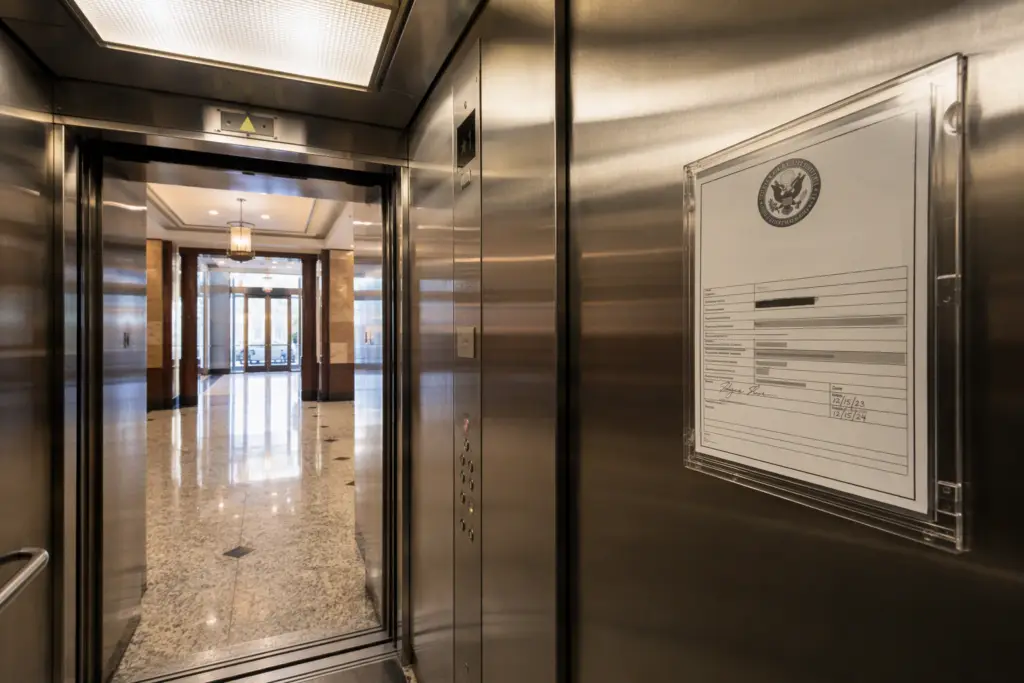
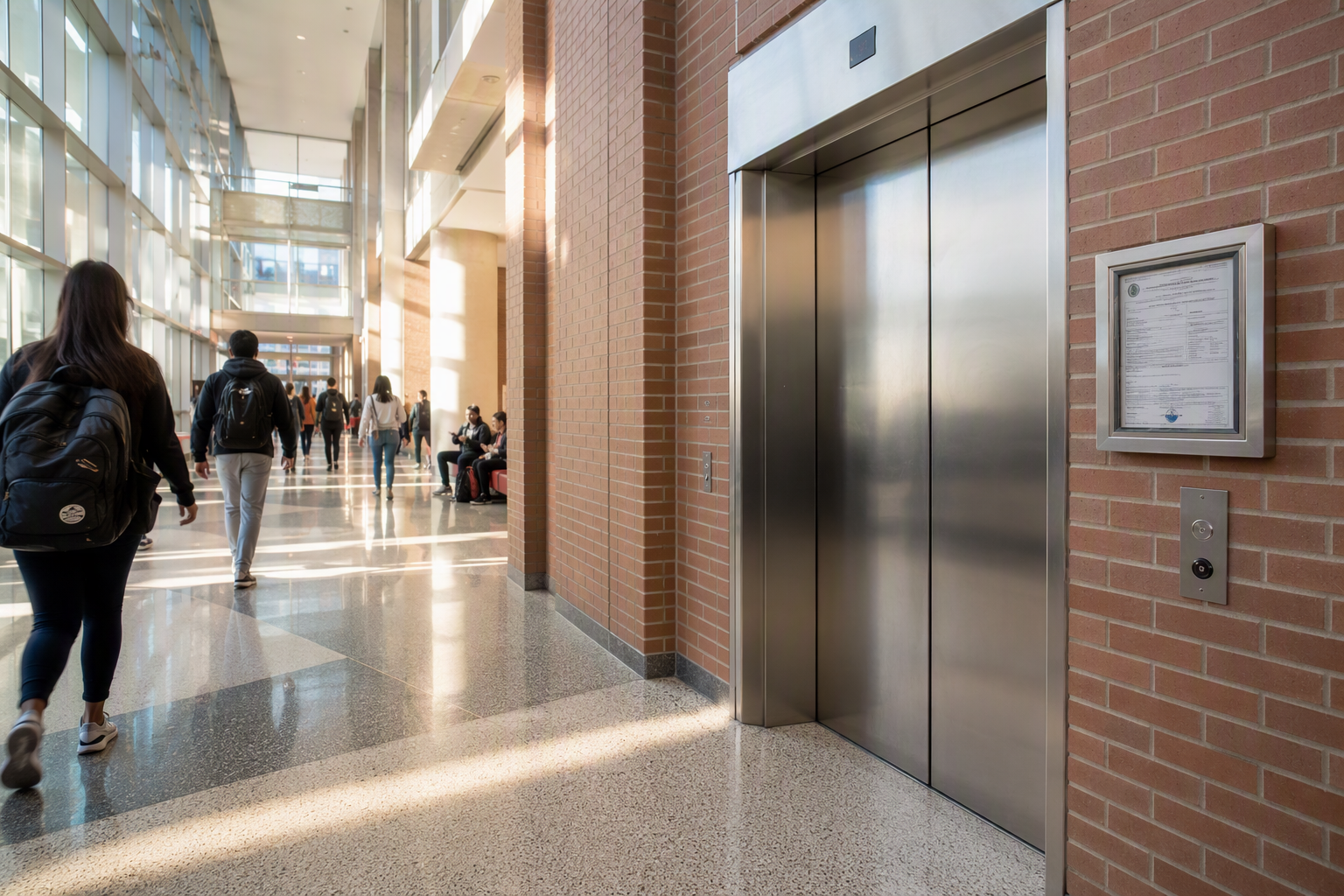
- Permit and certificate requirements: Most states require a valid operating permit or certificate of inspection to be posted visibly in each elevator cab — schools are routinely checked for this during fire marshal and building department visits
- Contractor licensing: States often require elevator maintenance and repair work to be performed only by licensed elevator contractors, which educational facilities must verify when selecting service providers
- Code adoption lag: Not all states have adopted the most recent edition of ASME A17.1; a school’s compliance obligation depends on which code edition the state has formally adopted
Educational facility managers should maintain direct communication with their state elevator safety office to track any regulatory updates, especially as states periodically adopt newer code editions.
What Should Schools Include in an Elevator Maintenance Contract?
A well-structured maintenance contract is a primary compliance tool for schools and universities. Key provisions to include are:
- Clear definition of maintenance scope — what components are covered and at what frequency
- Documentation requirements, including maintenance logs, inspection reports, and corrective action records
- Provisions ensuring the contractor holds all required state licenses and employs properly credentialed technicians
- Emergency callback provisions aligned with the facility’s operational hours, including after-hours response for residence halls
- Parts and materials standards that reference code-compliant components
- Annual review clauses that allow the contract to be updated when new code editions are adopted
Quality Elevator Company works with educational facilities to structure maintenance programs that align with both ASME A17.1 requirements and each state’s specific regulatory framework, ensuring documentation is inspection-ready year-round.
What Are the 2025–2026 Trends in School Elevator Compliance?
Several qualitative trends are shaping how schools and universities approach elevator compliance heading into 2026:
- Modernization pressure: Many educational institutions operate aging elevator infrastructure installed decades ago. As states update their adopted code editions, older systems face increasingly significant upgrade requirements — particularly around safety features, door systems, and controls.
- Remote monitoring adoption: More facilities are integrating elevator monitoring technology that provides real-time data on component performance, fault codes, and maintenance needs — reducing unplanned outages and supporting proactive compliance.
- ADA enforcement focus: Disability rights advocacy and federal enforcement attention have increased scrutiny on higher education institutions for elevator accessibility gaps, particularly around response times when elevators are out of service on routes required for equal access.
- Sustainability considerations: Universities with sustainability commitments are increasingly evaluating energy-efficient elevator drive systems and regenerative drive technology as part of campus-wide carbon reduction strategies.
- Post-pandemic maintenance backlogs: Facilities that deferred maintenance during periods of reduced occupancy are now addressing accumulated component wear, making thorough baseline inspections particularly important.
How Does Quality Elevator Company Support Educational Facilities?
Quality Elevator Company provides educational institutions with data-driven elevator maintenance and compliance programs designed to meet the layered requirements of ASME A17.1, state elevator codes, and ADA accessibility standards. Rather than offering reactive break-fix service, Quality Elevator Company helps school and university facility teams build structured preventive maintenance schedules, maintain complete compliance documentation, and approach every regulatory inspection from a position of preparation.
Educational facilities benefit from working with a service provider that understands the specific operational demands of school environments — the cyclical nature of academic-year usage, the critical accessibility role elevators play in multi-story campus buildings, and the institutional accountability that comes with serving students, faculty, staff, and the public.
What Records Must Schools Keep for Elevator Compliance?
Proper recordkeeping is a compliance obligation in itself. Schools and universities should maintain:
- Current certificate of inspection for each elevator, typically posted in the cab
- Maintenance logs documenting each service visit, work performed, and technician credentials
- Inspection reports from all periodic and special inspections, including any deficiency notices and corrective action records
- Test records for all required periodic safety tests (governor tests, buffer tests, etc.)
- Alteration permits and documentation for any modifications made to elevator systems
- ADA accommodation records if any temporary alternative access arrangements were made during elevator outages
These records should be retained for the duration required by the applicable state elevator safety authority, which may range from several years to the life of the equipment.
What Should a School Do Immediately After an Elevator Incident?
- Ensure occupant safety: If passengers are trapped, contact emergency services immediately. Do not attempt to manually open doors or extract passengers without trained personnel.
- Take the elevator out of service: Lock the elevator out of operation to prevent further use until the cause of the incident is assessed.
- Notify the elevator service contractor: Contact the maintenance provider for an emergency inspection and assessment.
- Report to the state elevator authority: Many states require incidents involving injuries or entrapments to be reported to the state elevator safety office within a defined timeframe.
- Document the incident: Preserve any available data — cab camera footage, maintenance logs, and witness accounts — and document all conditions at the time of the incident.
- Notify institutional risk management and legal counsel: Ensure internal stakeholders are informed to manage liability and insurance obligations.
- Provide ADA-compliant alternative access: If the elevator serves as an accessible route, immediately implement alternative accommodation for affected individuals with disabilities.
- Do not return the elevator to service until it has passed a follow-up inspection by a qualified inspector and all required corrective work has been completed and documented.
Summary: Key Compliance Obligations at a Glance
| Requirement Area | Governing Standard | Where to Verify |
|---|---|---|
| Elevator safety design, testing, and maintenance | ASME A17.1 Safety Code for Elevators and Escalators (as adopted by each state) | ASME Codes & Standards |
| Accessibility for people with disabilities | Americans with Disabilities Act / ADA Standards for Accessible Design | ADA.gov |
| Worker safety during maintenance and repair | OSHA General Industry and Construction Standards | OSHA.gov |
Note: Specific inspection intervals, permit requirements, and contractor licensing rules are set by individual state elevator safety programs. Always confirm applicable requirements with the state authority having jurisdiction over your facility.
Get a Free Elevator Assessment for Your School or University
Elevator compliance in educational settings requires expertise in layered federal standards, state regulations, and ADA accessibility law. Quality Elevator Company helps schools and universities build inspection-ready maintenance programs, maintain complete compliance documentation, and address aging infrastructure before it becomes a liability.
Contact Quality Elevator Company for a free elevator assessment — call 301-779-9116 today.
Need elevator service you can rely on? Quality Elevator Company is ready to help.