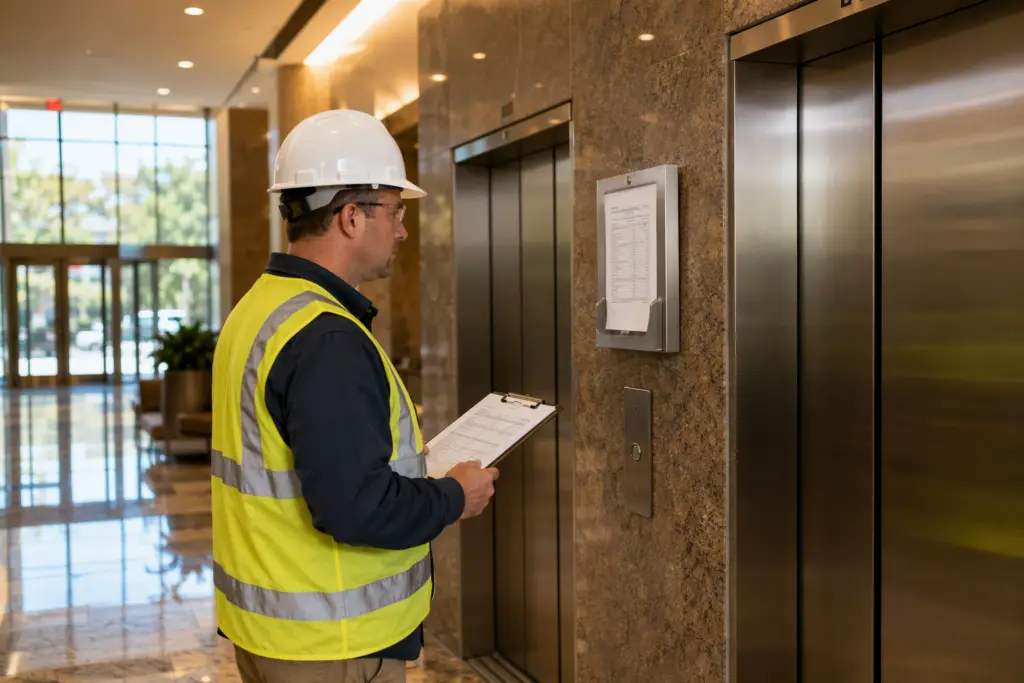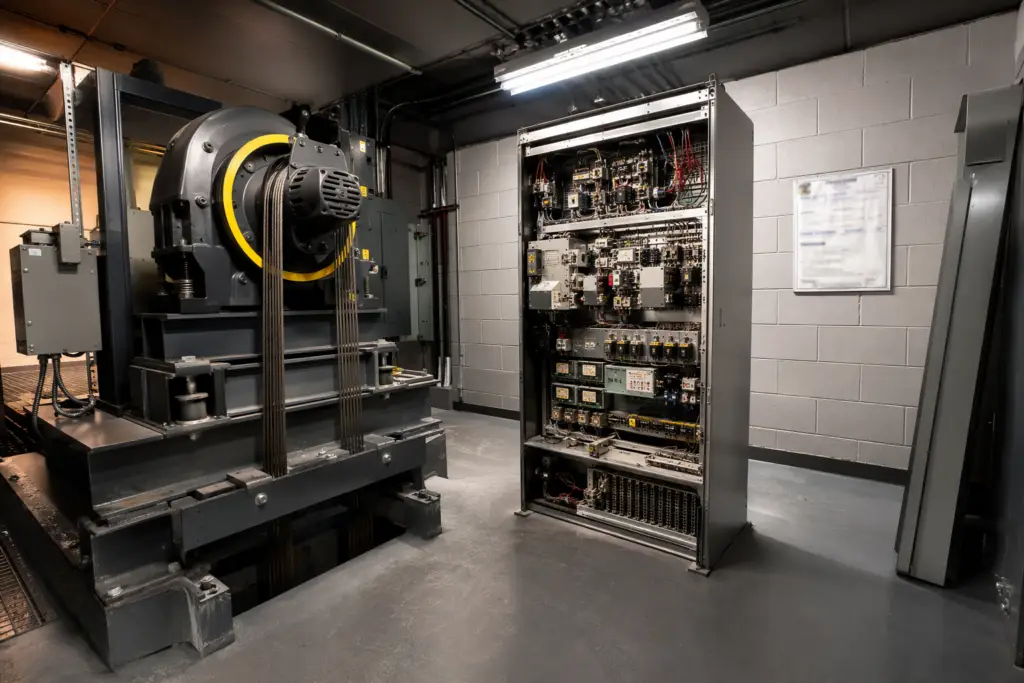
An elevator maintenance contract typically includes scheduled preventive maintenance visits, lubrication and adjustment of mechanical components, safety device testing, code compliance inspections, emergency callback service, detailed service reports, and parts coverage—with the exact scope varying by contract tier (full-service, parts-and-labor, or oil-and-grease only).
What Is Included in an Elevator Maintenance Contract? A Complete FAQ Guide
Elevator maintenance contracts protect building owners, property managers, and facility directors from unexpected downtime, costly repairs, and code violations. Understanding exactly what a contract covers—and what it excludes—is essential before signing any agreement. This comprehensive FAQ guide answers every major question about elevator maintenance contracts, with specific guidance for properties in Baltimore, MD; Washington, DC; Philadelphia, PA; and Richmond, VA.
What Is Included in a Standard Elevator Maintenance Contract?
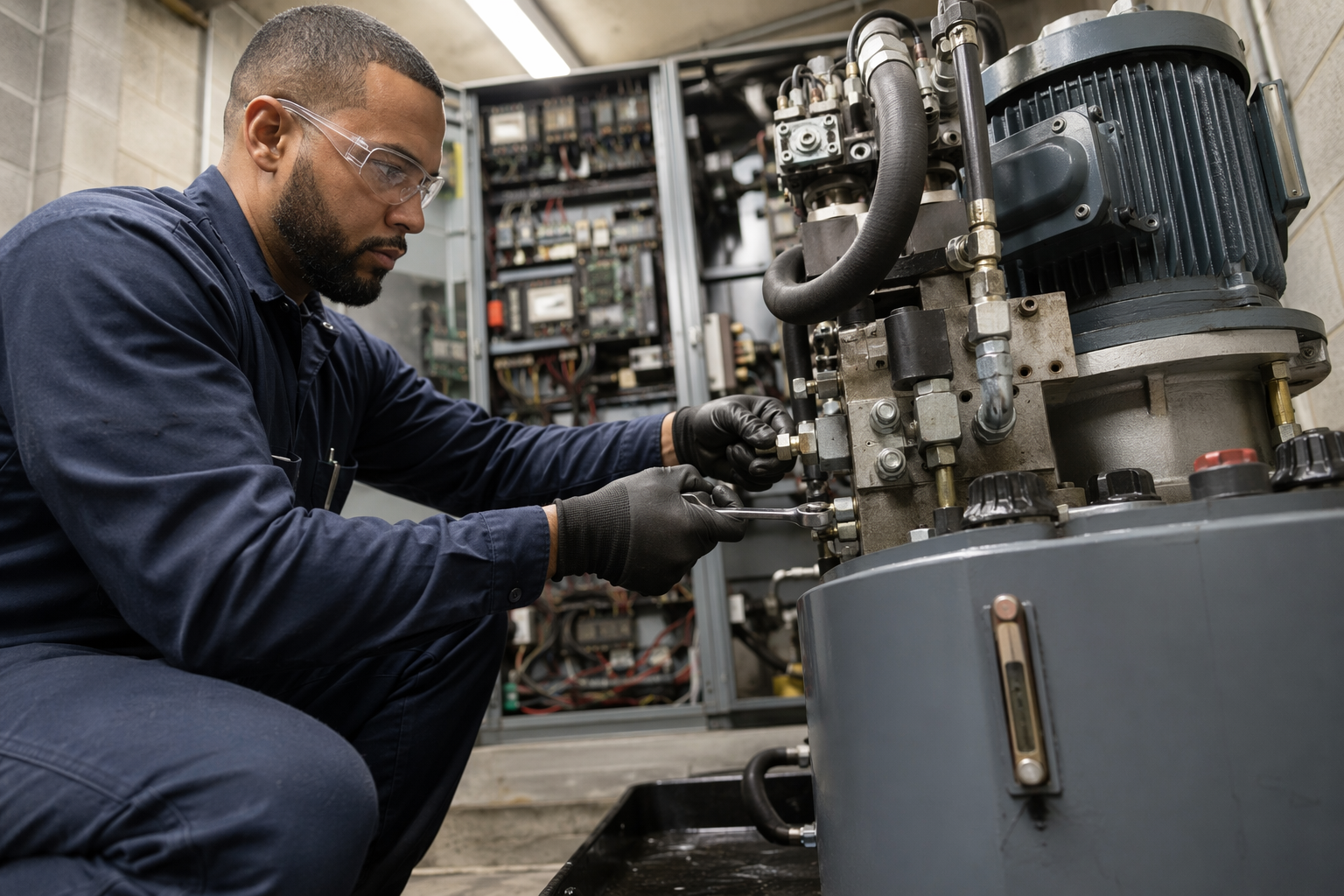
A standard elevator maintenance contract includes regularly scheduled preventive maintenance visits, lubrication and adjustment of all major mechanical and electrical components, safety device testing, compliance inspections, emergency callback response, and written service documentation.
At its core, a maintenance agreement is a structured commitment between a building owner and a licensed elevator service company to keep vertical transportation equipment operating safely and in compliance with applicable codes. The specific deliverables are typically organized into three categories: preventive maintenance tasks, safety and compliance services, and administrative documentation.
Preventive maintenance tasks cover the physical work performed on the equipment during scheduled visits—lubricating guide rails, adjusting door operators and closers, testing brake systems, inspecting wire ropes or hydraulic cylinders, cleaning pit areas, and verifying controller settings. Safety services ensure the elevator meets the requirements of the ASME A17.1 Safety Code for Elevators and Escalators and applicable state and local amendments. Documentation deliverables include service logs, inspection certificates, and records required by authorities having jurisdiction (AHJs).
What Are the Different Types of Elevator Maintenance Contracts?
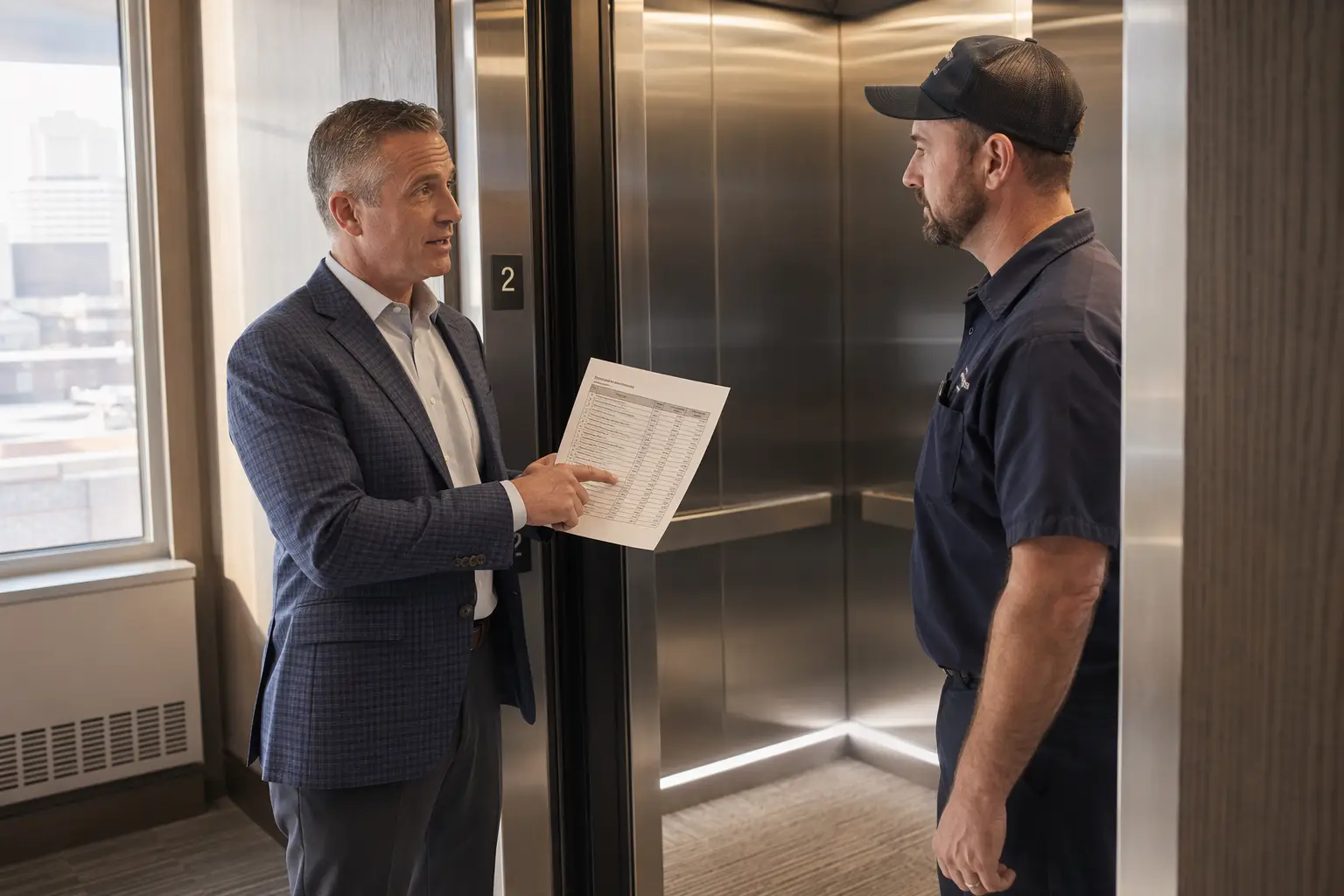
Elevator maintenance contracts are generally structured into three tiers: oil-and-grease (lubrication only), parts-and-labor (full maintenance without parts replacement), and full-service (comprehensive coverage including parts, labor, and callbacks).
Understanding the differences between contract tiers is critical for budgeting and risk management. Each tier defines a different allocation of financial responsibility between the building owner and the service provider.
| Contract Type | Scheduled Maintenance | Labor Covered | Parts Covered | Emergency Callbacks | Best For |
|---|---|---|---|---|---|
| Oil & Grease Only | Yes | Routine visits only | No | Billed separately | New equipment under warranty |
| Parts & Labor | Yes | Yes (routine & callbacks) | No (or limited) | Included | Mid-age equipment, cost-conscious owners |
| Full-Service / Comprehensive | Yes | Yes | Yes (most or all) | Included | Older equipment, high-traffic buildings |
| Modernization Plus Maintenance | Yes | Yes | Yes | Included | Post-modernization protection |
Building owners should carefully review the parts exclusion lists in any contract. Common exclusions even in full-service agreements include vandalism damage, cab interior finishes, light bulbs or LED fixtures, and major structural components. Quality Elevator Company helps clients review contract language in detail to ensure there are no coverage gaps that could result in surprise invoices.
How Often Do Elevator Maintenance Visits Occur Under a Contract?
Visit frequency depends on the equipment type, usage level, and state regulatory requirements—most commercial elevator contracts include monthly or quarterly visits, while high-traffic installations often require more frequent attention.
The ASME A17.1 Safety Code for Elevators and Escalators establishes minimum maintenance requirements but does not prescribe a fixed visit interval—that responsibility falls to the maintenance provider, who must assess equipment condition and usage. State and local jurisdictions in Maryland, Washington DC, Pennsylvania, and Virginia may layer additional requirements on top of the national standard.
High-rise buildings with multiple elevators operating in heavy-traffic environments—such as hospitals, office towers, and residential high-rises—typically benefit from monthly maintenance visits. Low-traffic installations such as two-story commercial buildings may be adequately served by quarterly visits, provided the equipment is in sound condition and usage data supports that schedule.
What Specific Components Does a Maintenance Contract Cover?
A comprehensive elevator maintenance contract covers the machine room, controller and selector, motor and drive system, brake assembly, wire ropes or hydraulic pump and cylinder, guide rails and shoes, door operators and safety edges, landing and car fixtures, pit equipment, and safety devices.
Below is a more detailed breakdown of common component-level coverage:
- Machine Room: Motor, gearbox (on geared traction units), machine brake, controller boards, drive unit, and ventilation checks.
- Hoistway: Guide rails (lubrication and alignment), wire ropes or chains (tension and wear assessment), counterweight, buffers, and limit switches.
- Hydraulic Systems (where applicable): Pump unit, valve assembly, hydraulic fluid levels and condition, underground cylinder monitoring, and pressure testing.
- Doors: Car door operator, door clutch, landing door hangers and tracks, door gibs, interlocks, and safety edges or light curtains.
- Safety Devices: Governor, safeties, oil buffers, final limit switches, slack rope device, and emergency lighting.
- Pit: Pit lighting, stop switch, pit ladder condition, sump pump (if present), and clearance verification.
- Cab Interior: Leveling accuracy, emergency phone testing, load weigh device calibration, and ventilation.
Are Code Compliance Inspections Included in a Maintenance Contract?
Most maintenance contracts include preparation for and coordination of state-mandated periodic inspections, though the inspection itself is typically conducted by a third-party licensed elevator inspector or state authority—not the maintenance contractor.
In Maryland, Washington DC, Pennsylvania, and Virginia, elevators are required by state law to undergo periodic safety inspections performed by licensed inspectors. The maintenance contractor’s role is to ensure the equipment is in a condition that will pass those inspections, to be present during the inspection when required, and to correct any deficiencies cited.
The ASME A17.1 Safety Code for Elevators and Escalators (currently in its 2022 edition with 2026 guidance applicable in many adopting jurisdictions) forms the technical basis for most state inspection programs. Contract holders should confirm whether their agreement includes the labor cost to remediate inspection deficiencies or whether that work is billed separately.
Does an Elevator Maintenance Contract Cover ADA Compliance?
Standard maintenance contracts do not typically include ADA retrofit work, but they should ensure that existing ADA-compliant features—such as door timing, leveling accuracy, and accessible controls—are maintained in proper working order.
The Americans with Disabilities Act (ADA) requires that elevators providing access to public accommodations and commercial facilities maintain their accessible features in working condition. While a maintenance contract cannot transform a non-compliant elevator into a compliant one through routine service alone, it should include verification that door dwell times, floor leveling (within one-half inch of landing), and cab interior features remain functional and within tolerance.
Building owners pursuing ADA upgrades should discuss modernization options with their elevator service provider, as accessibility improvements are typically addressed through a separate capital project rather than a maintenance agreement.
What Is an Emergency Callback and How Is It Handled Under a Contract?
An emergency callback is an unscheduled service call—typically triggered by a malfunction, entrapment, or safety shutdown—and most mid-tier and full-service contracts include callback response coverage during specified hours as part of the contract price.
Callback coverage terms vary significantly between contracts. Key factors to review include:
- Whether callbacks are included at all hours or only during regular business hours
- Whether after-hours, weekend, and holiday callbacks carry a premium charge
- Whether entrapment response is treated differently from standard malfunction callbacks
- The contractual obligation regarding passenger entrapment—both OSHA workplace safety requirements and ASME A17.1 mandate that entrapped passengers be released promptly by qualified personnel
Building managers should document the callback notification procedure specified in their contract and ensure that front desk staff, security personnel, and property managers are trained on when and how to initiate a callback.
What Documentation and Reporting Is Provided Under a Maintenance Contract?
A professionally managed maintenance contract should provide written service reports after every visit, a maintenance log retained in or near the machine room, inspection certificates, and periodic summaries of equipment condition and any recommended repairs.
Documentation is not optional—it is a code requirement. The ASME A17.1 Safety Code for Elevators and Escalators requires that maintenance records be kept and made available to the authority having jurisdiction upon request. In practical terms, this means a maintenance log or logbook should be accessible in the machine room or through a digital system.
Beyond regulatory compliance, good documentation protects building owners in the event of an injury claim or litigation. Service records demonstrating a consistent maintenance history, prompt callback responses, and timely deficiency corrections are a critical component of a defensible safety record.
What Is Typically Excluded From an Elevator Maintenance Contract?
Common exclusions include damage caused by misuse, vandalism, fire, flood, or power surges; cab interior finishes and flooring; proprietary parts for which the incumbent contractor holds exclusive supply rights; and major modernization components.
One of the most consequential exclusions in any elevator maintenance contract is the proprietary parts clause. Some large national elevator companies design their equipment with proprietary controllers or components that only their own technicians can source and install. This creates a dependency that limits competitive bidding when the contract comes up for renewal. Independent elevator service companies that work on multiple equipment brands give building owners greater flexibility.
Other items frequently excluded from maintenance contracts include:
- Structural repairs to the hoistway or machine room
- Pit waterproofing or drainage system repairs
- Main line power supply issues
- Telephone or communication system provider fees
- Hydraulic cylinder replacement (often listed separately due to cost)
- Asbestos or hazardous material abatement
How Should a Building Owner Evaluate Elevator Maintenance Contract Proposals?
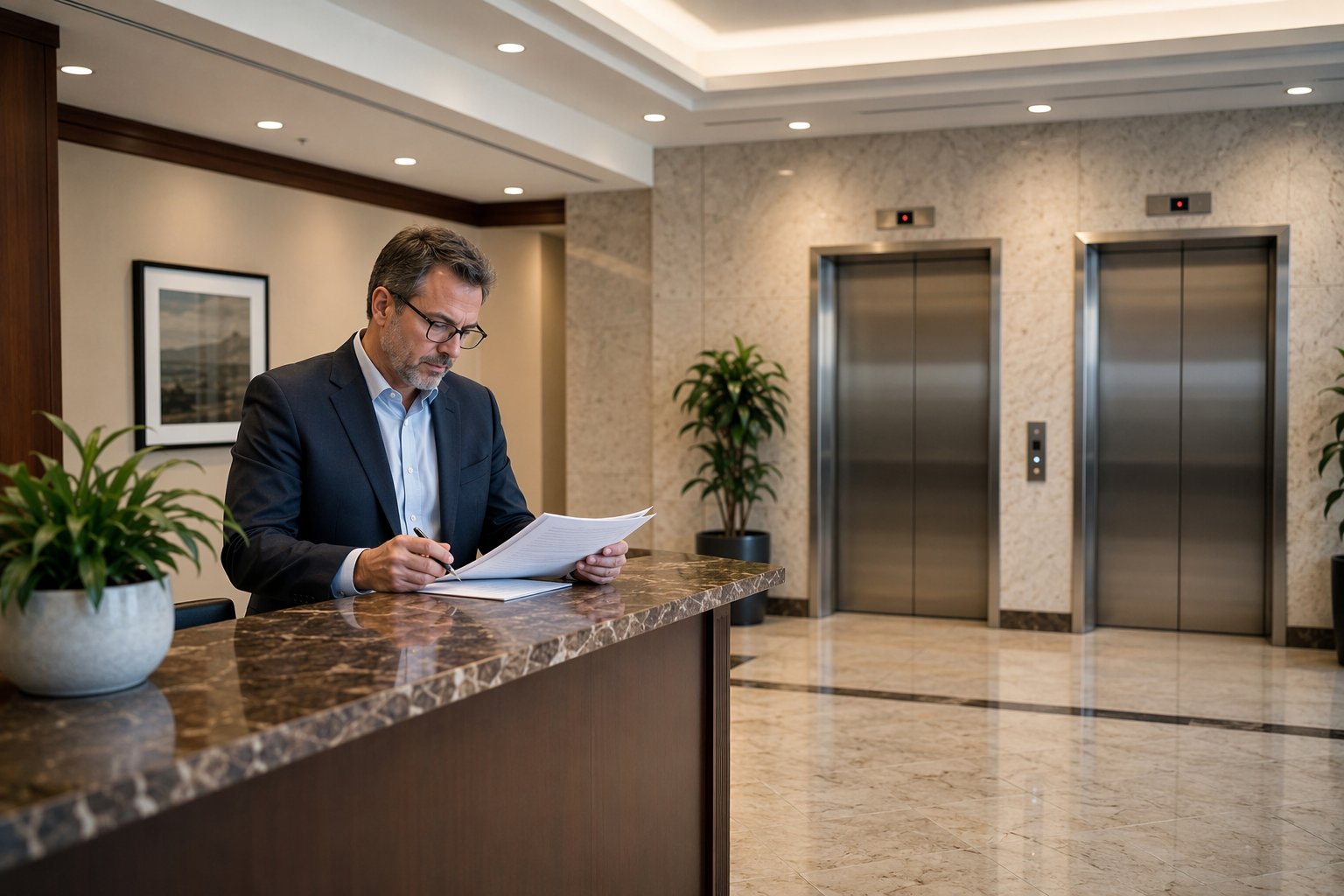
Building owners should compare proposals by evaluating scope of work, parts and labor inclusions, exclusion lists, callback terms, documentation requirements, contract length and exit provisions, and the service provider’s qualifications and equipment experience.
When soliciting proposals, provide each bidder with the same information package: equipment inventory (make, model, year, number of stops, drive type), current usage data if available, recent inspection reports, and any known deficiencies. This ensures proposals are written to the same baseline and are genuinely comparable.
Pay particular attention to:
- The definition of “maintenance” versus “repair” in each proposal—some providers define maintenance narrowly to exclude any component replacement.
- Whether the contract price is fixed or subject to annual escalation clauses tied to indexes such as labor rates.
- The notice period required to terminate the contract without penalty.
- Whether the contractor is certified and carries appropriate insurance and licensing for the jurisdiction.
- The contractor’s familiarity with the specific elevator brand and vintage being serviced.
Quality Elevator Company serves building owners throughout Baltimore, Washington DC, Philadelphia, and Richmond with transparent, clearly scoped maintenance proposals that outline exactly what is—and is not—included.
What Happens During a Preventive Maintenance Visit?
During a preventive maintenance visit, a qualified elevator mechanic inspects, lubricates, tests, and adjusts the elevator’s mechanical and electrical systems according to a defined checklist aligned with ASME A17.1 requirements and manufacturer specifications.
A typical preventive maintenance visit follows this general sequence:
- Machine Room Inspection: Check controller for fault codes, inspect motor and brake, verify oil levels in gearbox (traction) or hydraulic unit, and test machine room environment (temperature, lighting, access security).
- Hoistway Inspection: Inspect guide rails for lubrication, alignment, and wear; check wire rope condition, tension, and equalizer (traction); inspect counterweight and buffer clearances.
- Door System Service: Adjust door operator speed and force settings, inspect clutch and vane, check door gibs and sills, test safety edges and light curtains, verify interlock operation at each landing.
- Cab and Fixture Check: Test floor leveling accuracy, verify emergency lighting and phone, check load weigh device, and inspect cab ventilation.
- Pit Inspection: Verify pit lighting and stop switch operation, check buffer condition, inspect pit for water intrusion or debris, and confirm clearances.
- Operational Test Run: Run the elevator through its full travel range, observe ride quality, leveling, and door performance, and address any anomalies found during the run.
- Service Report Completion: Document all findings, work performed, and any recommended repairs or deficiencies requiring follow-up.
How Long Should an Elevator Maintenance Contract Term Be?
Most elevator maintenance contracts run for one to five years, with longer terms sometimes offering more favorable pricing—but building owners should balance cost savings against the risk of being locked into an underperforming provider.
Short-term contracts (one year) provide flexibility but may come at a higher per-visit cost. Multi-year agreements (three to five years) often include price locks or limited escalation caps that provide budget predictability. However, a long-term contract with weak performance standards or limited exit provisions can become costly if the service quality does not meet expectations.
Building owners should negotiate reasonable termination clauses—typically thirty to ninety days written notice—and ensure that the contract does not automatically renew for a full additional term without affirmative action. Auto-renewal clauses with long notice windows are among the most common complaints from facility managers who feel “trapped” in a maintenance relationship.
What Are the State-Specific Elevator Regulations in Maryland, DC, Pennsylvania, and Virginia?
Each of the four markets served by Quality Elevator Company has its own regulatory authority overseeing elevator safety, and maintenance contracts must be structured to satisfy each jurisdiction’s inspection frequency, licensing, and record-keeping requirements.
- Maryland: The Maryland Department of Labor’s Division of Labor and Industry regulates elevator safety under the Maryland Elevator Safety Act. Elevators in Maryland must be inspected periodically by licensed inspectors, and a current certificate of inspection must be posted in the elevator cab.
- Washington, DC: The DC Department of Consumer and Regulatory Affairs (DCRA) oversees elevator inspections and licensing. The District enforces the ASME A17.1 Safety Code for Elevators and Escalators with local amendments.
- Pennsylvania: The Pennsylvania Department of Labor and Industry administers elevator safety through the Bureau of Occupational and Industrial Safety. Annual periodic inspections are required, and elevator contractors must hold a Pennsylvania license.
- Virginia: The Virginia Department of Labor and Industry (DOLI) enforces the Virginia Elevator Safety Law. Elevators must be inspected at required intervals, and contractors operating in Virginia must meet state licensing requirements.
Maintenance contracts for properties in these jurisdictions should explicitly identify the regulatory framework applicable to each installation and confirm that the service provider holds current licensure in each state or district where work is performed.
Can a Maintenance Contract Be Transferred if a Property Is Sold?
Whether a maintenance contract transfers upon property sale depends on the specific contract language—some agreements allow assignment with mutual consent, while others require cancellation and renegotiation with the new owner.
Building owners preparing for a property sale should review their elevator maintenance contract’s assignment clause well in advance of closing. Prospective buyers conducting due diligence will typically request copies of current maintenance contracts, recent inspection certificates, and service logs as part of their review of building systems. A contract that is transferable and shows a consistent maintenance history can be a selling point, while a lapsed or underperforming maintenance record can raise questions and affect property valuation.
What Is the Difference Between Elevator Maintenance and Elevator Repair?
Elevator maintenance refers to planned, routine activities that keep equipment in operating condition and prevent failures, while elevator repair refers to unplanned corrective work to restore equipment that has already failed or been damaged.
This distinction matters significantly in contract interpretation. Many maintenance agreements include routine maintenance labor and common consumables but treat component failures as repairs—which may be billed separately unless the contract explicitly covers them. A worn brake lining discovered and replaced during a scheduled maintenance visit may be treated as a maintenance item, while a controller board that fails between visits may be classified as a repair subject to additional charges.
Building owners should ask service providers to clarify, in writing, how the boundary between maintenance and repair is defined in their specific agreement and what the billing process is for repair work that falls outside the contract scope.
How Does Elevator Modernization Affect Maintenance Contract Terms?
Following a modernization project, maintenance contracts typically need to be renegotiated to reflect the new equipment specifications, updated component lists, and any manufacturer warranty provisions that affect what the maintenance provider is responsible for during the warranty period.
Modernization replaces aging components—often the controller, drive system, door operator, fixtures, and sometimes the machine—with current-technology equipment. The new components may carry manufacturer warranties that are voided if maintenance is not performed according to manufacturer guidelines. A well-structured post-modernization maintenance agreement documents which components are under warranty, what maintenance tasks preserve that warranty, and how warranty claims are handled.
Quality Elevator Company assists clients throughout Baltimore, Washington DC, Philadelphia, and Richmond in structuring post-modernization maintenance agreements that protect their investment and maintain manufacturer warranty compliance.
What Questions Should Be Asked Before Signing an Elevator Maintenance Contract?
Before signing, building owners and facility managers should ask about the specific scope of work, parts and exclusion lists, callback terms, technician qualifications, documentation practices, price escalation provisions, and contract exit terms.
A structured set of questions to use when evaluating any elevator maintenance proposal:
- What specific tasks are performed at each maintenance visit, and is a checklist provided?
- Which parts and components are covered, and is there a written exclusion list?
- How are callback service calls handled, and what are the after-hours terms?
- Is the price fixed for the contract term, or are escalation provisions built in?
- What is the notice period required to terminate the agreement?
- Does the contract auto-renew, and if so, what is the opt-out window?
- Is the contractor licensed in the specific jurisdiction where the elevator is located?
- How are inspection deficiencies handled, and is remediation labor included?
- What documentation will be provided, and in what format?
- How does the contractor handle proprietary parts, and is equipment source documentation available?
How Does Elevator Maintenance Relate to Worker Safety and OSHA Requirements?
Elevator maintenance directly affects worker safety, and maintenance technicians performing work on elevators must comply with applicable OSHA standards, including lockout/tagout procedures, confined space requirements for pits, and fall protection protocols.
From a building owner’s perspective, OSHA’s General Duty Clause requires employers to provide a workplace free from recognized hazards, which includes maintaining elevators used by employees in safe operating condition. A properly structured maintenance contract—consistently executed—demonstrates due diligence in meeting this obligation.
Maintenance providers should be able to demonstrate that their technicians follow established safety procedures when performing work in machine rooms, hoistways, and pits. Building owners are encouraged to confirm that service providers carry appropriate workers’ compensation and general liability insurance, as maintenance work on elevators carries inherent risks that should be covered by the contractor’s own insurance rather than the building owner’s policy.
What Are the Risks of Not Having an Elevator Maintenance Contract?
Operating an elevator without a maintenance contract exposes building owners to increased risk of equipment failure, code violations, failed inspections, potential fines, liability in the event of an injury, and significantly higher repair costs when problems are not caught early.
Elevators are safety-critical equipment. Deferred maintenance on components such as brakes, door interlocks, and safety devices creates conditions that can result in serious injury. Beyond the human cost, building owners who cannot demonstrate a consistent maintenance history face heightened liability exposure in the event of an incident.
From a purely financial perspective, preventive maintenance is substantially less expensive than emergency repair or full component replacement. Catching a developing issue—a worn rope, a failing door motor, a weakening brake—during a scheduled maintenance visit allows for planned repair at standard rates rather than emergency service at premium rates with potential for extended downtime.
How Do You Switch Elevator Maintenance Providers Without Disrupting Service?
Switching elevator maintenance providers requires reviewing exit provisions in the current contract, providing proper written notice, gathering all equipment documentation, and coordinating a transition inspection with the incoming service provider to establish baseline equipment condition.
The transition process, when handled properly, follows these steps:
- Review the current contract for notice period requirements and any penalties for early termination.
- Provide written notice of non-renewal or termination within the contractually required window.
- Request copies of all maintenance logs, inspection certificates, and equipment documentation from the outgoing provider.
- Schedule a transition inspection with the incoming maintenance provider to document current equipment condition.
- Confirm that the incoming provider is licensed in the applicable jurisdiction before the transition date.
- Ensure the outgoing provider removes any proprietary monitoring devices or access controls that could affect the incoming provider’s ability to service the equipment.
- Notify building occupants and management of the service provider change and update emergency contact information accordingly.
Quality Elevator Company manages elevator maintenance transitions for building owners throughout Baltimore, Washington DC, Philadelphia, and Richmond, including conducting thorough baseline inspections at the start of every new maintenance relationship.
Get a Clear, Comprehensive Elevator Maintenance Agreement
Elevator maintenance contracts vary widely in scope, quality, and value. Understanding exactly what is included—and what is not—protects building owners from unexpected costs, compliance failures, and equipment downtime. Whether managing a single elevator in a Richmond office building or a multi-elevator portfolio across Baltimore and Washington DC, a properly structured maintenance agreement is one of the most important documents in any facility management program.
Contact Quality Elevator Company for a free elevator assessment and maintenance proposal tailored to your equipment, your usage, and your jurisdiction. Our team serves building owners and property managers throughout Baltimore, MD; Washington, DC; Philadelphia, PA; and Richmond, VA.
Call us today: 301-307-5363