Hospital Elevator Requirements and Maintenance: A Complete Compliance Guide
Hospitals and healthcare facilities depend on elevators in ways that most commercial buildings simply do not. A delayed elevator can slow the movement of a patient on a gurney to an operating room. A non-compliant cab can prevent wheelchair access to critical care floors. A failed emergency recall system can create life-safety hazards during a fire or power event. For facilities managers, compliance officers, and hospital administrators across Baltimore, MD, Washington, DC, Philadelphia, PA, and Richmond, VA, understanding the full scope of hospital elevator requirements is not optional — it is a patient safety obligation.
Quality Elevator Company works with healthcare facilities throughout the mid-Atlantic region to ensure elevator systems meet every applicable code, pass inspections, and remain operationally reliable across the demanding, around-the-clock environment of a hospital.
What Code Requirements Apply to Hospital Elevators?
Hospital elevators are governed by a layered framework of national codes, federal regulations, and state-level authority having jurisdiction (AHJ) rules. The primary standards include:
- ASME A17.1 Safety Code for Elevators and Escalators: This is the foundational national standard covering design, construction, installation, operation, inspection, testing, maintenance, alteration, and repair of elevators. Healthcare facilities must comply with the edition adopted by their state AHJ, and facilities managers should confirm which edition is currently enforced in Maryland, DC, Pennsylvania, or Virginia as of 2026.
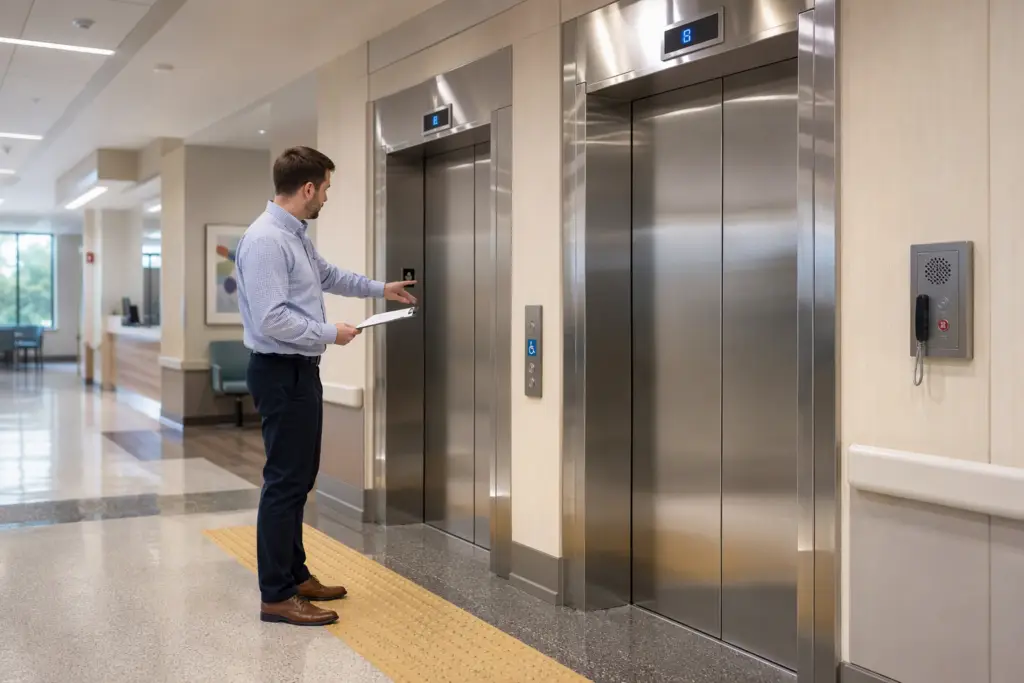
- Americans with Disabilities Act (ADA): Requires accessible elevator design including minimum cab dimensions, door widths, call button heights, audible and visual floor indicators, and Braille signage — all especially critical in hospitals where patients use wheelchairs, walkers, and mobility aids.
- NFPA 101 Life Safety Code: Governs fire-rated hoistway requirements and emergency recall operation (Phase I and Phase II firefighters’ service), which is mandatory in hospital settings.
- The Joint Commission (TJC) Standards: Accredited hospitals are evaluated on environment of care standards that include vertical transportation equipment. Non-compliant elevators can affect accreditation status.
- State and Local AHJ Rules: Maryland, Virginia, Pennsylvania, and the District of Columbia each have elevator safety boards or departments that adopt and enforce applicable code editions. Local permits, inspection certificates, and annual operating certificates are required.
- OSHA General Duty Clause: Employers, including hospitals, are required to maintain a safe workplace — which extends to elevator safety for staff.
What Are the Specific Size and Design Requirements for Hospital Elevators?
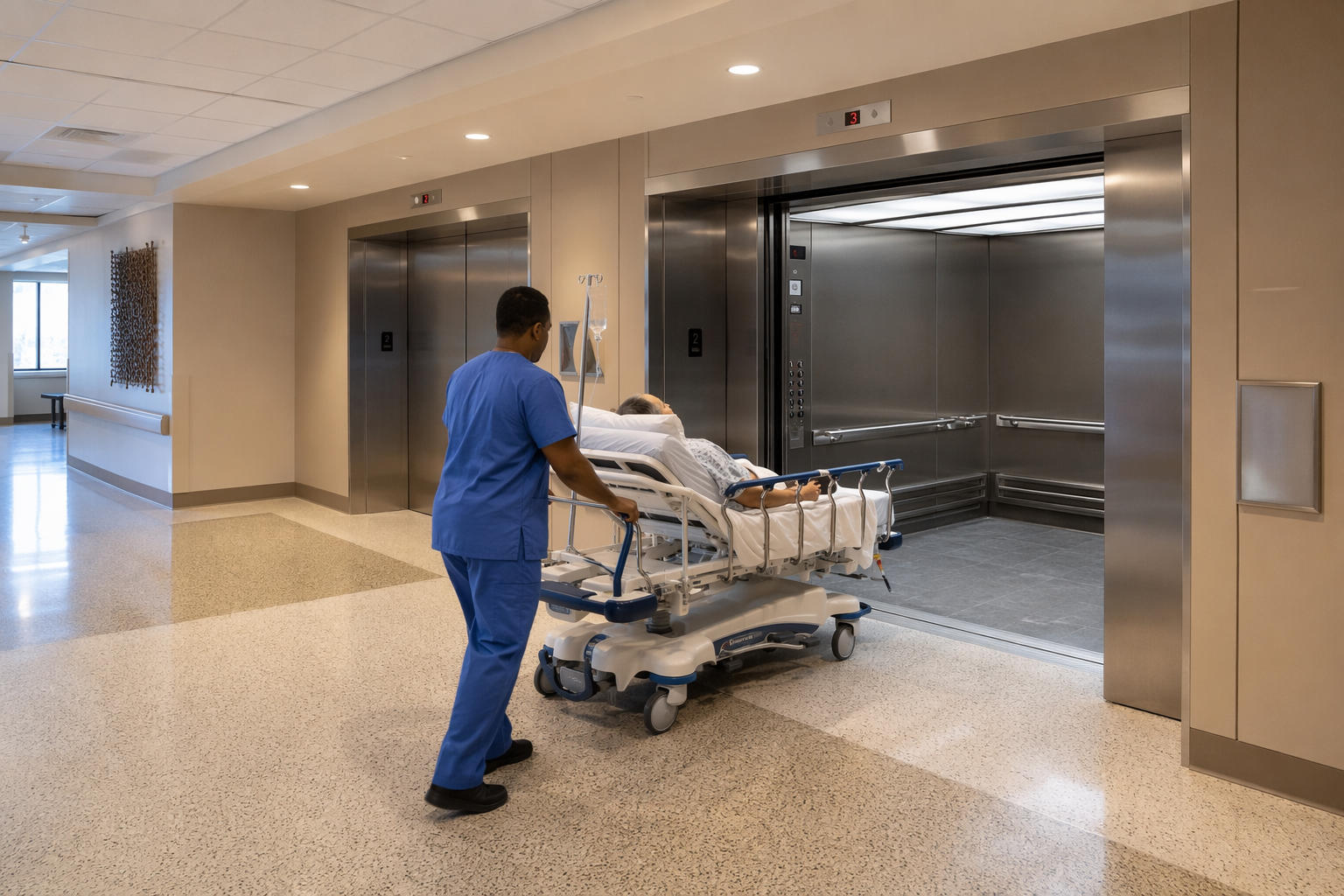
Standard passenger elevators are not always sufficient for healthcare environments. Hospital elevators — sometimes called “hospital duty” or “bed elevators” — are designed to accommodate stretchers, hospital beds, and oversized medical equipment. Key design requirements include:
- Car dimensions: Healthcare facility guidelines and federal design standards for federally funded facilities (such as those following the Facility Guidelines Institute, or FGI, Guidelines) specify minimum interior cab dimensions large enough to accommodate a standard hospital bed with attendants on both sides.
- Door width and timing: ADA standards require a minimum clear door width. Healthcare environments typically require wider door openings and extended door dwell times to allow safe passage of medical equipment and patients with mobility devices.
- Floor capacity: Hospital elevators must support significantly higher weight capacities than standard commercial elevators to accommodate beds, imaging equipment, and multiple attendants simultaneously.
- Cab finishes: Surfaces must be cleanable and resistant to the disinfectants commonly used in healthcare environments. Stainless steel handrails, antimicrobial panels, and non-porous flooring are typical specifications.
- Emergency lighting and communication: ASME A17.1 requires a means of two-way communication inside the cab, functional independent of the main power supply — a non-negotiable requirement in any hospital elevator.
How Often Must Hospital Elevators Be Inspected?
Inspection frequency is governed by the state AHJ and the applicable edition of ASME A17.1. Generally, elevators require periodic inspections — often annually — and more frequent routine maintenance inspections performed by qualified elevator contractors between official AHJ inspections. Hospitals, due to the continuous operational demands placed on their vertical transportation systems, benefit from maintenance programs that schedule preventive visits more frequently than the minimum code interval.
Quality Elevator Company helps healthcare clients in Baltimore, Washington DC, Philadelphia, and Richmond maintain full inspection documentation and coordinate with state elevator safety authorities to ensure certificates of operation are current at all times.
What Happens During a Hospital Elevator Maintenance Visit?
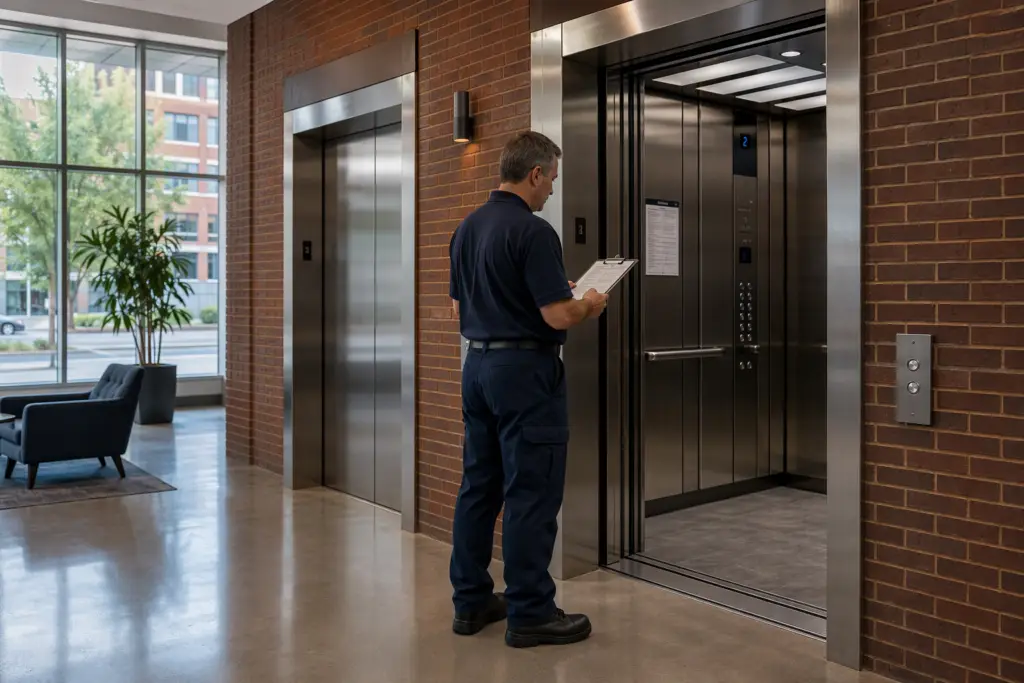
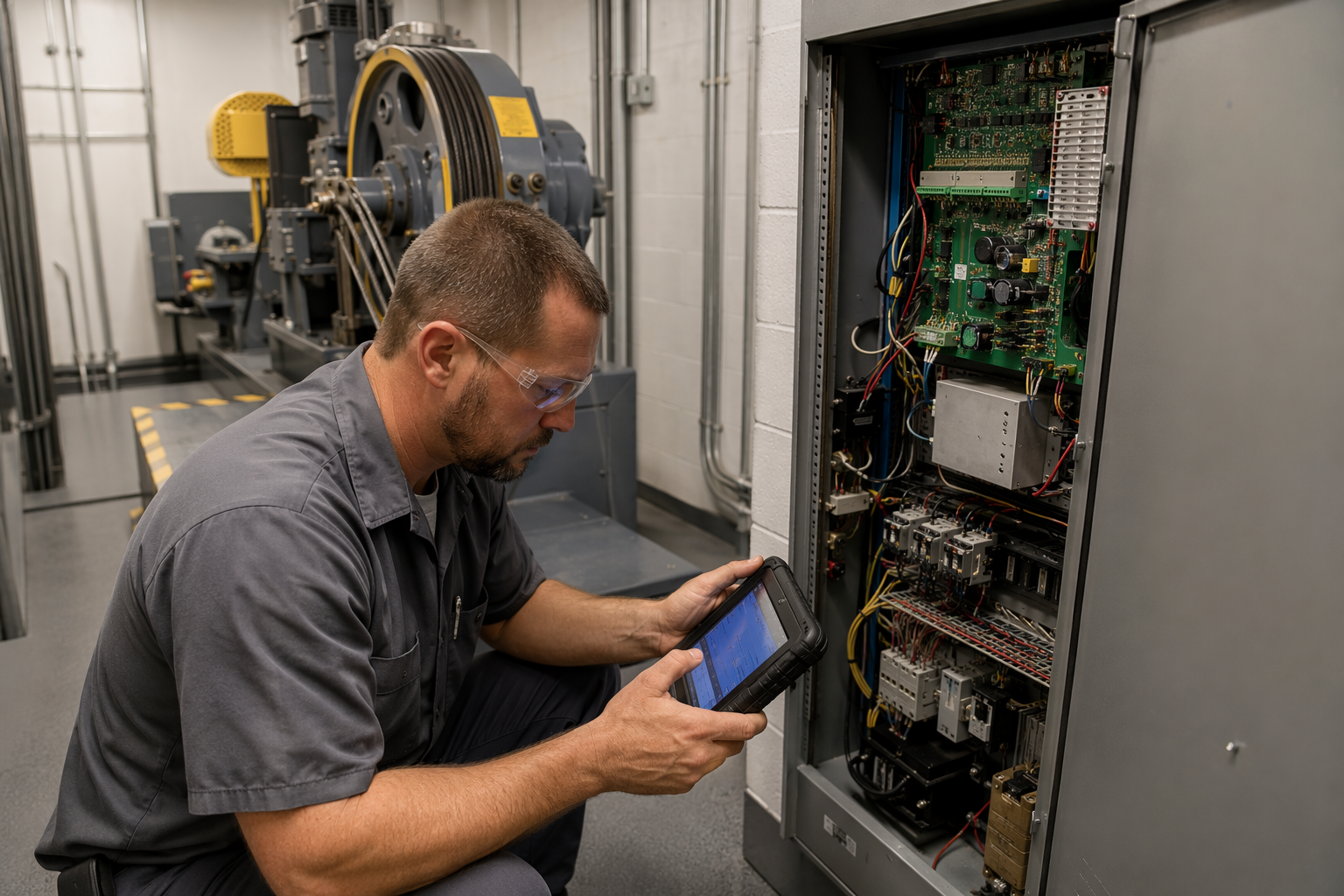
A comprehensive maintenance visit for a hospital elevator goes beyond basic lubrication and visual checks. A qualified elevator technician performing maintenance on a healthcare facility elevator should address:
- Inspection and testing of door safety edges and door timing to confirm they meet ADA dwell-time requirements
- Testing of Phase I and Phase II firefighters’ emergency recall systems
- Verification of cab lighting, emergency lighting, and two-way communication systems
- Machine room and hoistway inspection for cleanliness, temperature control, and code compliance
- Review of the elevator’s maintenance log and any outstanding violation notices from the AHJ
- Hydraulic fluid checks (for hydraulic units) and rope/cable inspection (for traction units)
- Leveling accuracy — critical in hospitals where gurneys and wheelchairs must transition safely from cab to floor
- Controller and safety device testing per ASME A17.1 periodic test requirements
What Is Emergency Recall Operation and Why Is It Critical in Hospitals?
Emergency recall — also known as firefighters’ service — is a mandatory feature under ASME A17.1 and NFPA 101. It consists of two phases:
- Phase I (Automatic Recall): When a smoke detector activates in the elevator lobby or machine room, the elevator automatically returns to the designated recall floor and opens its doors, removing elevators from general use so they are not used by occupants during a fire event.
- Phase II (Firefighter In-Car Operation): Enables trained emergency personnel to take manual control of an elevator to assist with evacuation or fire suppression operations.
In a hospital, where many patients cannot self-evacuate, the proper functioning of these systems is directly tied to life-safety outcomes. Testing and documentation of Phase I and Phase II operation is required at regular intervals and must appear in the elevator’s maintenance records.
What Are the Consequences of Non-Compliance for a Hospital?
Non-compliant hospital elevators carry significant institutional risk beyond the obvious patient safety concerns:
- Regulatory penalties: State elevator safety authorities can issue stop-use orders, citations, and fines for elevators operating without valid inspection certificates or in violation of applicable codes.
- Joint Commission findings: Environment-of-care deficiencies identified during TJC surveys — including elevator compliance issues — can result in requirements for corrective action plans and can affect accreditation status.
- ADA liability: Inaccessible elevators expose hospitals to complaints filed with the Department of Justice and potential civil litigation under the Americans with Disabilities Act.
- Operational disruption: A forced shutdown of an elevator in a hospital creates immediate workflow crises — particularly for intensive care units, surgical suites, and imaging departments on upper floors.
How Should a Hospital Respond to an Elevator Breakdown or Entrapment?
When an elevator becomes inoperable or an entrapment occurs in a hospital setting, staff should follow this sequence:
- Immediately contact the elevator service company using the emergency contact number posted in or near the elevator — do not attempt to free entrapped passengers without trained personnel.
- Notify facility management and security so that alternate routes and staff resources can be deployed for patient transport.
- Contact local emergency services (911) if any passenger in the entrapped elevator has a medical condition or emergency.
- Keep entrapped passengers calm through the two-way communication system inside the cab — confirm help is on the way.
- Once the elevator is restored to service, document the incident, the cause, and any corrective actions taken as required by your facility’s environment-of-care procedures.
- Report the incident to the AHJ if the malfunction involved a safety device or resulted in an injury, as may be required under state elevator safety regulations.
- Schedule a post-incident inspection with your elevator service contractor before returning the unit to unrestricted service.
What Should Hospitals Look for When Choosing an Elevator Service Company?
Choosing an elevator maintenance partner for a healthcare facility requires scrutiny beyond price. Key factors to evaluate include:
- Familiarity with healthcare-specific code requirements and the AHJ rules applicable in your state
- Experience servicing hospital duty elevators and high-utilization vertical transportation systems
- Ability to provide thorough maintenance documentation suitable for Joint Commission surveys and state inspections
- Capacity to coordinate with hospital facilities teams during planned maintenance windows that minimize patient care disruption
- Demonstrated knowledge of ADA compliance as it applies to elevator accessibility features
Quality Elevator Company is a certified elevator service company serving healthcare facilities across Baltimore, MD, Washington, DC, Philadelphia, PA, and Richmond, VA, with expertise in the compliance requirements that govern hospital vertical transportation systems.
Questions Your Inspector Will Ask
When a state elevator inspector or Joint Commission surveyor reviews your hospital’s vertical transportation equipment, they are likely to ask — or look for documentation that answers — the following:
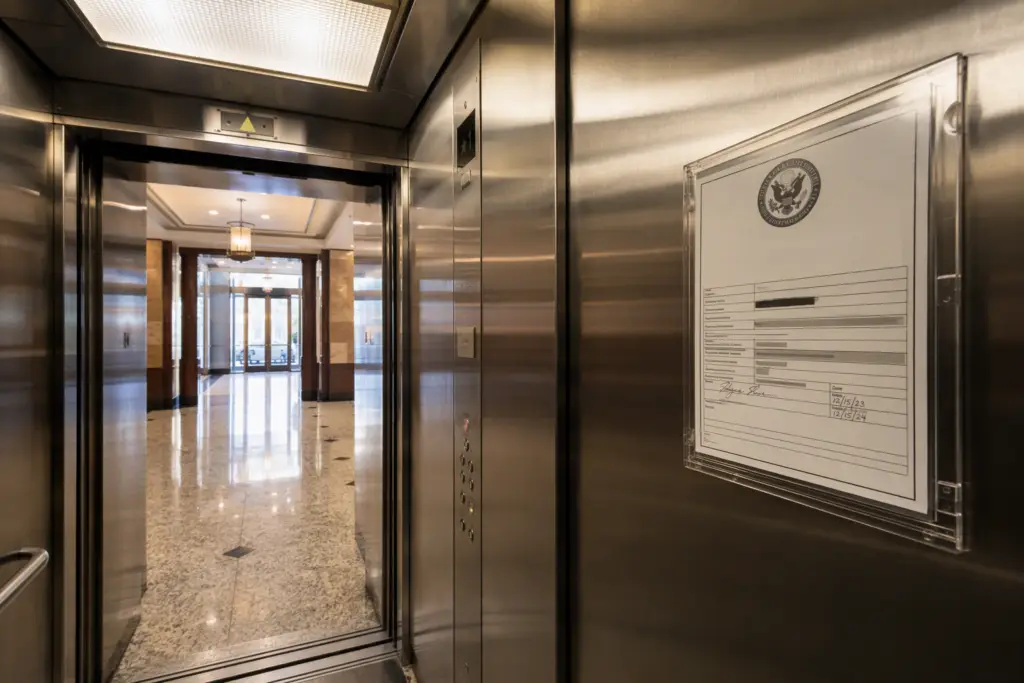
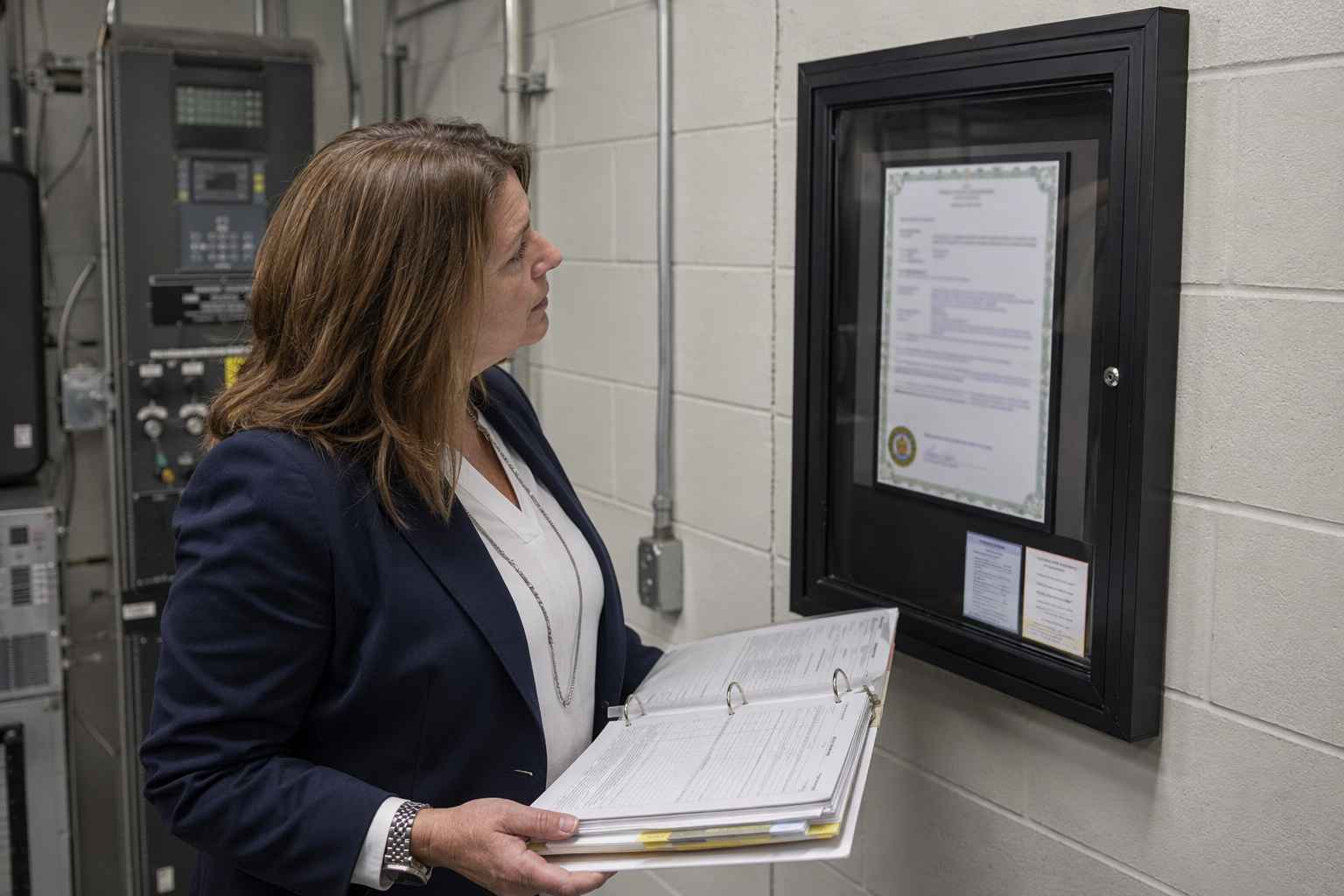
- Is the current certificate of operation posted inside or adjacent to each elevator cab? Most states require this to be visible to passengers.
- Are maintenance logs current, complete, and available for review? Inspectors will want to see a written record of every service visit, including what was inspected, tested, lubricated, adjusted, or repaired.
- When was Phase I and Phase II firefighters’ service last tested and documented? This is a specific, code-required periodic test under ASME A17.1.
- Has the elevator undergone all required periodic tests for its category and drive type? ASME A17.1 defines different test categories (Category 1, Category 5, etc.) with specific intervals — inspectors will verify these are current.
- Are two-way communication systems functional and tested? This is a life-safety requirement and a frequent finding when not properly maintained.
- Are there any outstanding violation notices or correction orders that have not been resolved? Open violations are a red flag during any compliance review.
- Do all ADA-required accessibility features — Braille, audible signals, door timing, cab dimensions — meet the applicable standard?
- Is the machine room secured, properly ventilated, and free of storage unrelated to elevator equipment? Code violations in machine rooms are among the most common findings during inspections.
Does Elevator Age Affect Compliance in a Hospital Setting?
Older elevators in hospital buildings present particular compliance challenges. As code editions are updated, AHJs may require alterations that bring aging equipment into closer conformance with current safety standards — particularly when a modernization or alteration project is undertaken. Hospitals operating legacy elevator systems should work with a qualified elevator service company to assess whether their equipment meets the currently enforced edition of ASME A17.1 in their jurisdiction and to plan any necessary upgrades proactively rather than in response to a violation.
Quality Elevator Company provides assessment services to help healthcare facilities understand the compliance status of their existing vertical transportation equipment and plan modernization work that minimizes disruption to hospital operations.
Are There Special Requirements for Elevators in Hospital Construction or Renovation Projects?
New hospital construction and major renovation projects involving elevators require plan review and approval by the state AHJ before installation begins. In federally funded or federally regulated healthcare facilities, the FGI Guidelines for Design and Construction of Hospitals provide detailed specifications for vertical transportation systems that go beyond baseline code minimums. Project teams should engage a qualified elevator contractor early in the design phase to ensure specifications align with all applicable requirements — including ASME A17.1, ADA, NFPA 101, and any state-specific amendments — before construction documents are finalized.
Get a Free Hospital Elevator Assessment
Ensuring your hospital’s elevators meet every applicable code — from ASME A17.1 and ADA requirements to state AHJ inspection standards — requires a thorough, facility-specific evaluation. Quality Elevator Company serves healthcare facilities across Baltimore, MD, Washington, DC, Philadelphia, PA, and Richmond, VA with comprehensive elevator maintenance, inspection coordination, and compliance consulting.
Contact Quality Elevator Company for a free elevator assessment: 301-779-9116
Need elevator service you can rely on? Quality Elevator Company is ready to help.