ADA Elevator Requirements for Buildings: Compliance Guide 2026
Understanding ADA elevator requirements is essential for building owners, property managers, facility directors, and architects. Non-compliance can result in federal enforcement actions, costly retrofits, and barriers that exclude people with disabilities from full and equal access to your building. This guide covers every key requirement, compares compliance pathways, and explains how to keep your elevator in continuous conformance.
What Buildings Are Required to Have ADA-Compliant Elevators?
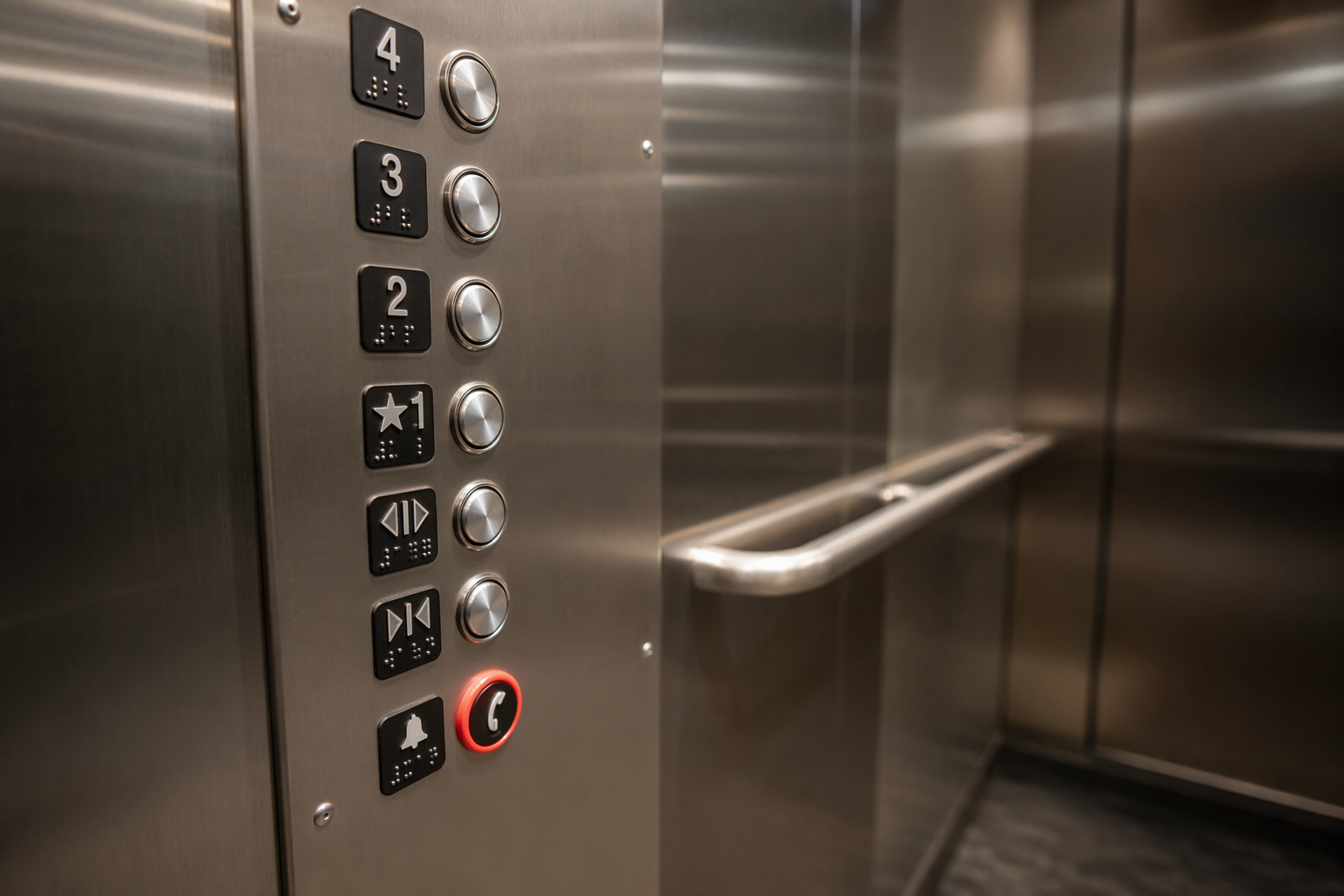
The ADA requires that places of public accommodation and commercial facilities provide accessible routes between floors. Buildings that are subject to this requirement include:
- Commercial facilities and places of public accommodation that are three or more stories, or that have at least one story containing more than a specified square footage of floor space used for sales or rental (per the ADA Standards for Accessible Design)
- Federal, state, and local government facilities covered under ADA Title II
- New construction and alterations to existing buildings that trigger the path-of-travel requirement
Key exemptions include private residential buildings with fewer than the threshold number of stories and shopping centers or malls that meet specific conditions. However, even when an elevator exemption applies under the ADA, state and local building codes may still require vertical accessibility. Always verify both federal and local requirements before relying on any exemption.
Bottom line: If your building serves the public or functions as a commercial facility with multiple stories, the assumption should be that an ADA-compliant elevator is required unless a specific, documented exemption applies.
What Are the Core ADA Elevator Requirements?
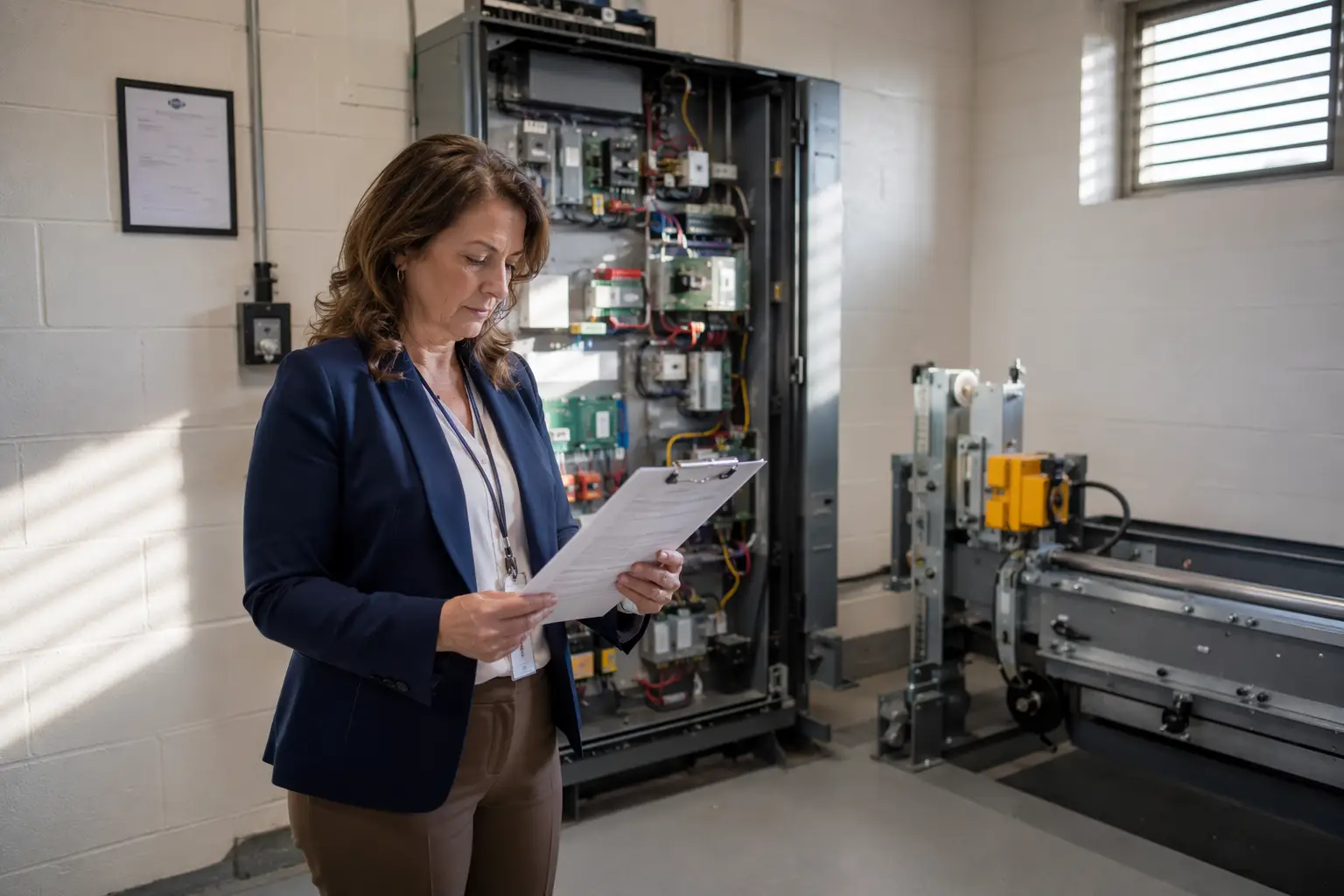
The ADA Standards for Accessible Design establish detailed technical criteria for elevators. The principal requirements include:
| Requirement Category | ADA Standard Specification | Purpose |
|---|---|---|
| Minimum Car Dimensions | Clear floor area sufficient for wheelchair turning and maneuvering (dimensions specified in ADA Standards Section 407) | Allows wheelchair users to enter, turn, and exit safely |
| Door Clear Width | Minimum clear opening per ADA Standards (Section 404); typically at least 32 inches for a single door, 36 inches preferred | Accommodates wheelchairs and mobility devices |
| Door Reopening Device | Required; must detect obstruction and reopen without requiring contact | Prevents doors from closing on users |
| Hall Call Controls Height | Located between 15 and 48 inches above the floor per reach range requirements | Reachable from a seated position |
| Car Controls | Raised or recessed characters and Braille; located within accessible reach range | Usable by people with visual impairments |
| Audible and Visual Signals | Car arrival must be signaled with audible tone and visible indicator; floor announcements required | Serves users with visual or hearing impairments |
| Floor Designation Signage | Raised characters and Braille on both jambs of each elevator hoistway entrance | Wayfinding for visually impaired users |
| Leveling Tolerance | Car must level within a tolerance that allows smooth entry and exit for wheelchairs | Prevents tripping hazards and entry barriers |
| Emergency Communication | Two-way communication system within the car, usable without voice (TTY or equivalent) | Emergency access for people who are deaf or hard of hearing |
| Illumination | Minimum illumination levels at controls, threshold, and landing | Usability for people with low vision |
Note: Always reference the current edition of the ADA Standards for Accessible Design and consult with a licensed architect or accessibility consultant for project-specific measurements and tolerances, as requirements can be affected by state amendments and local code adoptions.
How Do ADA Requirements Differ for New Construction vs. Existing Buildings?
| Factor | New Construction | Existing Building (Alteration/Retrofit) |
|---|---|---|
| Compliance Standard | Full compliance with current ADA Standards required | Path-of-travel requirement triggered by alterations; “readily achievable” standard applies to barrier removal |
| Trigger | Any new building open to the public or commercial use | Alteration to primary function area; ongoing barrier removal obligation |
| Flexibility | Limited; must meet all technical specifications from the start | Greater flexibility; equivalent facilitation and technical infeasibility defenses may apply |
| Cost Implication | Built into original construction budget | Retrofit costs vary widely; may be prioritized by feasibility and cost relative to overall alteration |
| Timeline | Simultaneous with construction | Phased over time as resources allow, but must be ongoing and documented |
| Documentation Needed | Architectural drawings, code review, permits | Transition plan (for Title II), self-evaluation, barrier removal documentation |
| Risk of Non-Compliance | Certificate of occupancy may be withheld; federal complaints | Federal complaints, lawsuits, corrective orders, reputational harm |
What Is the Difference Between ADA Requirements and ASME A17.1 Safety Code?
ADA requirements and the ASME A17.1 Safety Code for Elevators and Escalators address different but overlapping aspects of elevator compliance:
| Aspect | ADA Requirements | ASME A17.1 Safety Code |
|---|---|---|
| Primary Focus | Accessibility and non-discrimination for people with disabilities | Mechanical safety, structural integrity, and maintenance standards |
| Enforced By | U.S. Department of Justice; private right of action | State and local authorities having jurisdiction (AHJs); adopted by reference in most state codes |
| Applies To | Design, features, and usability for disabled individuals | Mechanical components, inspections, testing, and maintenance intervals |
| Inspection Requirement | No scheduled inspection mandate, but ongoing compliance required | Periodic inspections and tests at intervals defined in the code |
| Overlap Area | Door operation, leveling, emergency communication | Door safety devices, leveling accuracy, emergency communication wiring |
A fully compliant elevator must meet both sets of requirements simultaneously. A mechanically safe elevator that lacks Braille controls or proper signage still fails ADA compliance, and vice versa.
What Are the Steps to Achieve ADA Elevator Compliance?
- Conduct a baseline accessibility audit. Have a qualified professional assess your existing elevator(s) against current ADA Standards for Accessible Design and applicable state amendments. Document every item of non-conformance.
- Review applicable building codes and local amendments. Confirm which edition of the ADA Standards applies, and whether your state or municipality has adopted additional requirements. Consult your local Authority Having Jurisdiction (AHJ).
- Prioritize barrier removal. Rank deficiencies by impact on access and feasibility of correction. Address the highest-priority items first, particularly those affecting entry, operation, and emergency communication.
- Obtain required permits. Most modifications to elevator mechanical or electrical systems require permits from your local AHJ. Work with your elevator service provider and a licensed architect or engineer.
- Engage a certified elevator service company. Select a provider experienced with both ADA retrofits and ASME A17.1 compliance. Quality Elevator Company offers assessments and can coordinate the technical and permitting process.
- Complete modifications and upgrades. Install or update cab dimensions, door operators, control panels, signage, audible/visual signals, and emergency communication systems as required.
- Schedule required inspections and testing. Ensure all work is inspected by the AHJ and that inspection certificates are current per ASME A17.1 adoption in your jurisdiction.
- Document and maintain a compliance record. Retain records of the audit, permits, completed work, and inspections. Update your barrier removal or transition plan accordingly.
- Establish an ongoing maintenance program. ADA compliance is not a one-time event. Mechanical drift, worn components, and failed signage can cause an elevator to fall out of compliance between inspections.
What Are the Most Common ADA Elevator Violations Found in Buildings?
Accessibility audits consistently identify several recurring issues in existing buildings:
- Incorrect control panel height or placement: Buttons positioned outside the accessible reach range for seated users
- Missing or damaged Braille: Worn or absent Braille labels on floor buttons and door jamb signage
- Inadequate door reopening devices: Doors that do not reopen fully or require contact to reverse
- Poor leveling accuracy: Cars that stop with a significant vertical gap at the landing, creating a trip hazard and wheelchair entry barrier
- Absent or non-functional emergency two-way communication: Systems that require voice-only communication without a text or visual alternative
- Inadequate illumination: Lighting that falls below minimum levels at controls and landings
- Missing floor designation signage: No raised character and Braille plates on hoistway entrance jambs
- Audible/visual signal failures: Car arrival indicators that are inoperative or difficult to perceive
How Does ADA Compliance Affect Elevator Maintenance Planning?
Ongoing maintenance is inseparable from ADA compliance. Components that affect accessibility — door operators, leveling systems, control panels, lighting, and emergency communication — degrade over time. A building owner who installs a fully compliant elevator but neglects maintenance may find that the elevator is no longer compliant within a relatively short period.
A preventive maintenance contract with a qualified elevator service company should explicitly address:
- Regular leveling calibration checks
- Door operator force and speed testing
- Inspection of Braille and raised-character signage for damage
- Functional testing of audible and visual arrival signals
- Testing of the two-way emergency communication system, including non-voice capability
- Illumination level checks at controls and landings
Quality Elevator Company provides maintenance programs structured to address both ASME A17.1 safety requirements and the ongoing functional requirements of ADA compliance, helping building owners avoid the regulatory and reputational risks of accessibility failures.
What Are the Consequences of ADA Elevator Non-Compliance?
Failure to meet ADA elevator requirements carries significant legal and financial exposure:
| Risk Type | Description | Potential Severity |
|---|---|---|
| Federal Complaints | Individuals can file complaints with the U.S. Department of Justice | High — investigation, corrective action orders |
| Private Litigation | Individuals and advocacy organizations can sue in federal court | High — injunctive relief, attorney’s fees, and damages in some cases |
| Retrofit Costs | Court-ordered or settlement-driven retrofits often exceed planned upgrade costs due to compressed timelines | Medium to High |
| Reputational Harm | Public complaints and litigation are often publicly recorded | Medium — affects tenants, customers, and community standing |
| Loss of Federal Funding | Title II entities receiving federal funds risk funding loss for non-compliance | High for government entities |
How Should Building Owners Choose an Elevator Service Provider for ADA Work?
Not all elevator service companies have equal experience with accessibility compliance retrofits. When evaluating providers, consider the following criteria:
| Criterion | Why It Matters |
|---|---|
| Independent (non-OEM) certification | Independent companies are not limited to a single manufacturer’s parts or solutions, enabling cost-competitive and code-compliant retrofits across equipment brands |
| Familiarity with ADA Standards and ASME A17.1 | ADA retrofits frequently intersect with safety code requirements; the provider must navigate both |
| Experience with permit coordination | Modifications require AHJ permits; a provider who manages this process reduces delay and compliance risk |
| Documented maintenance programs | Compliance is ongoing; a provider should offer structured maintenance that explicitly covers accessibility components |
| Transparent assessment process | A free or low-cost initial assessment demonstrates confidence in findings and allows building owners to understand scope before committing |
Quality Elevator Company is a certified, independent elevator service provider that assists building owners and facility managers in assessing, achieving, and maintaining ADA elevator compliance. As an independent provider, Quality Elevator Company is equipped to work across elevator makes and models, offering unbiased guidance on the most practical and cost-effective path to compliance.
Does a Platform Lift or Wheelchair Lift Satisfy ADA Requirements Instead of an Elevator?
Under the ADA Standards for Accessible Design, platform lifts (vertical wheelchair lifts) are permitted as a compliant means of access in specific, limited circumstances, including alterations to existing facilities where full elevator installation is technically infeasible, certain historic structures, and specific building configurations identified in the Standards.
Platform lifts are not a general substitute for elevators in new construction of multi-story public and commercial buildings. They are subject to their own ADA technical requirements and must also comply with applicable provisions of ASME A17.1 and the separate ASME A18.1 standard for vertical platform lifts.
Building owners considering a lift in place of an elevator should obtain a legal opinion from an accessibility attorney and consult with their local AHJ before proceeding, as the permissibility of this substitution is fact-specific.
What Should Building Owners Do Right Now to Begin the Compliance Process?
- Identify all elevators and vertical conveyances in your facility and document their current condition.
- Obtain and review the current ADA Standards for Accessible Design, specifically Section 407 covering elevators, and confirm whether your state has adopted additional amendments.
- Request a professional elevator assessment from a qualified independent service provider to identify specific gaps.
- Consult a licensed architect or accessibility consultant to review findings and advise on remediation scope.
- Develop a written barrier removal or transition plan with a realistic schedule and budget allocation.
- Contact your local AHJ to understand permit requirements for planned modifications.
- Engage your elevator service provider to begin the permitting and modification process.
- Establish a preventive maintenance schedule that explicitly covers ADA-relevant components.
Pros and Cons of Proactive vs. Reactive ADA Compliance
| Factor | Proactive Compliance | Reactive Compliance (Post-Complaint or Litigation) |
|---|---|---|
| Cost Control | Planned upgrades allow competitive bidding and phased spending | Court or settlement timelines compress schedules, increasing costs |
| Timeline | Building owner controls pace within legal requirements | Timelines dictated by court orders or settlement agreements |
| Reputational Risk | Low — demonstrates commitment to accessibility | High — public record of complaint or lawsuit |
| Legal Exposure | Reduced — documented good-faith effort is a recognized defense factor | Elevated — litigation costs, potential attorney fee awards |
| Operational Disruption | Can be scheduled during low-use periods | Emergency shutdowns may be required, disrupting building operations |
| Provider Choice | Full ability to evaluate and select the best provider | May be limited by urgency; less leverage in negotiations |
Summary: Key Takeaways for Building Owners and Facility Managers
- ADA elevator requirements apply to most multi-story commercial and public-use buildings and cover cab dimensions, door operation, controls, signage, signals, and emergency communication.
- Both new construction and existing buildings have compliance obligations, though the standards applied differ based on whether alterations are being made.
- ADA requirements and ASME A17.1 safety requirements are complementary — a compliant elevator must satisfy both.
- Common violations are correctable but require prompt attention to avoid escalating legal risk.
- Ongoing maintenance is essential to sustaining ADA compliance over the life of the equipment.
- Proactive compliance planning is consistently more cost-effective and lower-risk than reactive correction.
- Quality Elevator Company, as an independent certified elevator service provider, is equipped to guide building owners through every stage of the ADA compliance process.
Get a Free Elevator Compliance Assessment
Understanding where your elevator stands against current ADA requirements is the essential first step to protecting your building, your tenants, and your organization from accessibility violations.
Contact Quality Elevator Company for a free elevator assessment. Call 301-307-5363 or use the contact form on this page to schedule your assessment with a certified, independent elevator service team.