Annual Elevator Inspection: Comparison and Decision Guide for DC, MD, PA & VA Building Owners
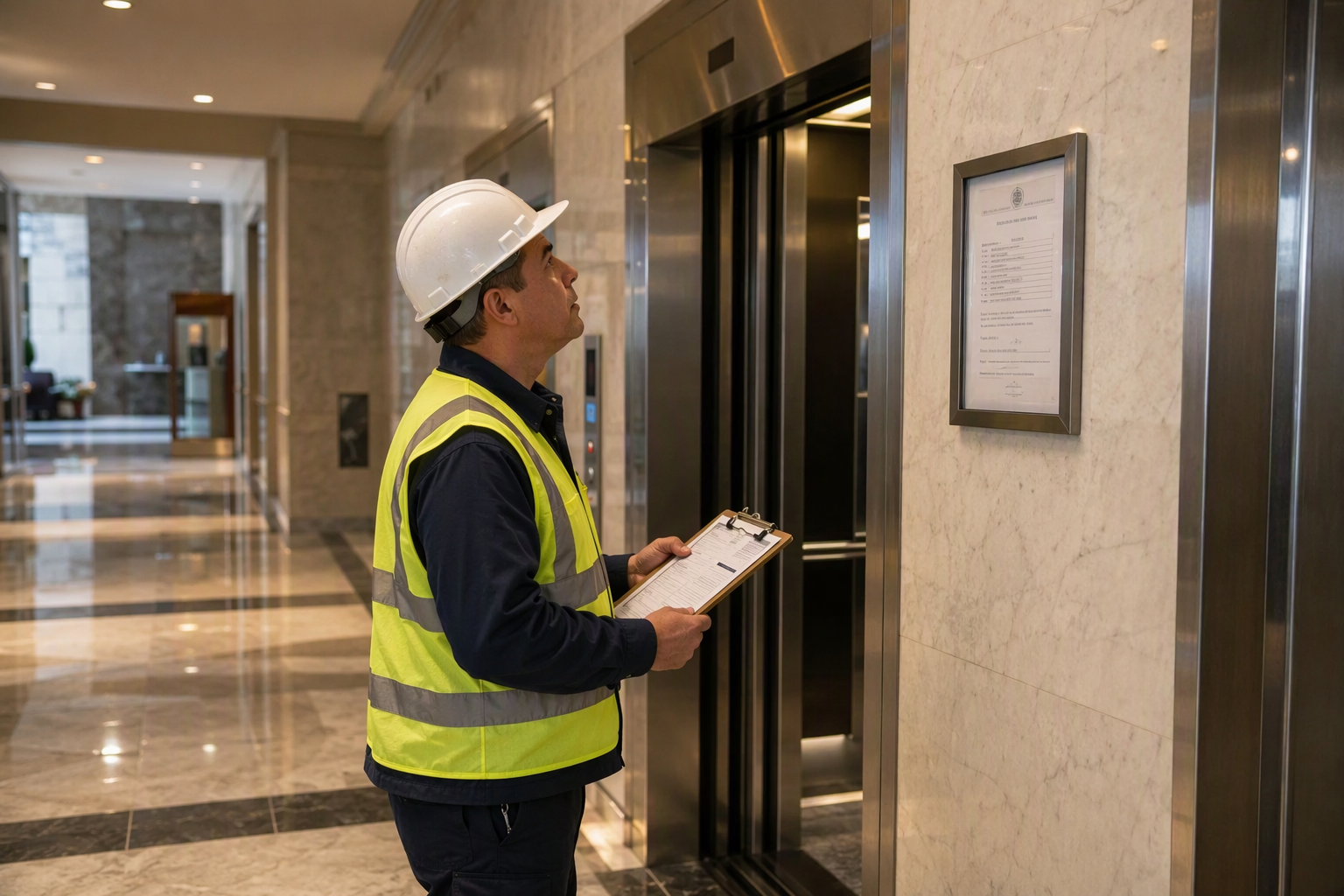
Building owners and facility managers in the DC-Maryland-Pennsylvania-Virginia region must navigate different regulatory agencies, adopted safety codes, and certificate timelines when it comes to annual elevator inspection. This guide compares requirements across all four jurisdictions, explains what each type of inspection involves, and helps owners make informed decisions about compliance, vendor selection, and ongoing maintenance planning.
What Is an Annual Elevator Inspection and Why Is It Required?
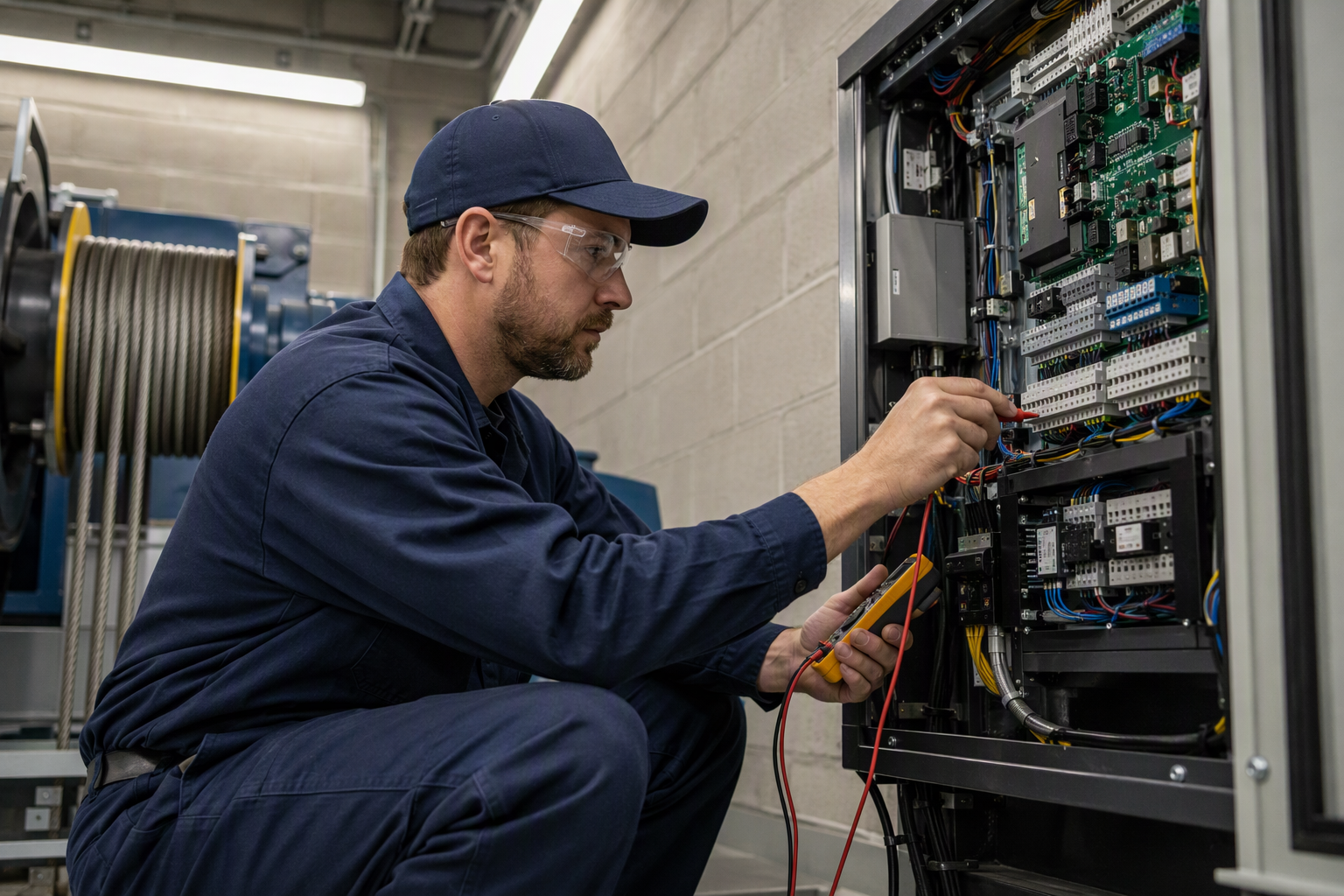
An annual elevator inspection is a structured, code-mandated examination of an elevator’s mechanical, electrical, and safety systems performed by a qualified inspector at intervals set by the jurisdiction’s adopted safety standard. The purpose is to verify that the equipment operates safely for passengers and complies with the applicable edition of the ASME A17.1 Safety Code for Elevators and Escalators.
In every jurisdiction where Quality Elevator Company operates — the District of Columbia, Maryland, Pennsylvania, and Virginia — operating an elevator without a valid certificate of inspection is prohibited by statute. Each jurisdiction’s law assigns responsibility to the building owner, not the elevator service company, which makes understanding inspection requirements a direct ownership obligation.
How Do Inspection Requirements Compare Across DC, MD, PA, and VA?

| Jurisdiction | Regulatory Agency | Adopted ASME Edition | Periodic Inspection Interval | Certificate Validity | 5-Year / Comprehensive Test | Inspector Credential |
|---|---|---|---|---|---|---|
| District of Columbia | DC Department of Buildings (DOB) | ASME A17.1-2013/CSA B44-13 (with DC amendments, effective May 29, 2020) | Category 1 inspection every 12 months; periodic inspection every 12 months | 2 years | Category 5 inspection every 60 months | ASME QEI-certified inspector; DOB-approved third-party agency required |
| Maryland | Maryland Department of Labor, Division of Labor and Industry, Elevator and Escalator Safety | ASME A17.1-2022/CSA B44:22 (with Maryland changes, effective June 17, 2026; edition depends on installation contract date) | Annual periodic inspection | Annual (tied to annual re-registration) | Comprehensive five-year inspection required for wire-rope, belt, chain, and rack-and-pinion elevators | Third-party qualified elevator inspector; tests performed by licensed elevator mechanic; inspector must be physically present for entire test |
| Pennsylvania | Pennsylvania Department of Labor and Industry (L&I), Bureau of Occupational and Industrial Safety, Elevator Section | ASME A17.1-2000 with A17.1a-2002 addenda (ASME A17.1-2016 applies to permit applications on or after December 20, 2026) | Every 6 months for electric elevators, hydraulic elevators, and escalators | 24 months (6-month inspection cycle) or 48 months (12-month cycle) | Category 1 tests required annually as a stand-alone requirement starting December 20, 2026; periodic tests follow ASME A17.1-2016 Table N-1 for new permits from that date | Any UCC-certified elevator inspector; third-party agencies must be certified by the Department |
| Virginia | Local building department under 13VAC5-63, Virginia Uniform Statewide Building Code | ASME A17.1/CSA B44-19 (incorporated by 2021 USBC, effective January 18, 2024) | Annual periodic inspection required; locality may require 6-month inspections | Annual (issued or accepted by local building department) | Periodic tests at ASME A17.1 Appendix N intervals; must be witnessed by the local code official or approved agency | Certified elevator mechanic (Virginia Board for Contractors/DPOR); contractor must hold Elevator/Escalator Contracting (EEC) specialty license |
What Happens During an Annual Elevator Inspection?
While procedural details vary by jurisdiction and equipment type, a typical annual elevator inspection follows a structured sequence. Quality Elevator Company recommends that building owners understand each step so they can prepare the facility and records in advance.
- Record review: The inspector reviews maintenance logs, previous inspection reports, and any violation or deficiency notices. In Maryland, these records must be kept at a readily accessible central location in the building. In DC, owners submit reports through the DOB Citizen Access Portal.
- Machine room and hoistway examination: The inspector checks the machine room environment, hoistway clearances, guide rails, buffers, and pit conditions for compliance with the applicable ASME A17.1 edition.
- Safety device verification: Safeties, governors, oil buffers, interlocks, and door systems are tested for proper operation.
- Operational and load tests: The elevator is run through its operational range. In jurisdictions requiring Category 1 tests, full-load safety tests are conducted by a licensed or certified elevator mechanic.
- Witness of tests (where required): In Maryland, the qualified elevator inspector must be physically present for the entire test. In Virginia, tests must be witnessed by the local code official or an approved agency.
- Deficiency documentation: Any items that do not meet code are documented in a written report. Owners typically receive a timeframe to correct deficiencies before enforcement action.
- Certificate issuance or submission: After a satisfactory inspection, the certificate of inspection is issued by the regulatory authority or submitted through the approved portal. In DC, third-party reports for the past two years are submitted to DOB; in Pennsylvania, L&I issues the certificate of operation.
- Certificate posting: The building owner posts the current certificate conspicuously in the elevator car or in another approved location as required by local rules.
What Are the Pros and Cons of Using a Third-Party Independent Inspector vs. a Manufacturer-Affiliated Service Company?
| Factor | Independent Third-Party Inspector / Service Provider | Manufacturer-Affiliated Service Company |
|---|---|---|
| Regulatory alignment | In DC and Maryland, owners are required to use approved third-party inspectors; independence is the legal standard | May still qualify if properly credentialed, but affiliation can create a conflict of interest on maintenance recommendations |
| Objectivity | No financial incentive to recommend proprietary parts or upgrades beyond what code requires | May recommend brand-specific parts or upgrades tied to service contract incentives |
| Multi-brand capability | Can service and inspect elevators of any manufacturer | Expertise and parts inventory often optimized for their own brand |
| Documentation | Reports formatted to meet AHJ submission requirements; supports DOB portal submissions in DC | Reports may be formatted for internal purposes and require reformatting for AHJ submission |
| Continuity | Can continue inspection relationships independent of equipment ownership changes | Service relationship may change with equipment modernization or brand changes |
| Licensing compliance | Qualified independent providers carry required contractor licensing and insurance for the jurisdiction | Same obligation; check Maryland’s $1,000,000 general liability / $500,000 property damage insurance requirement for contractors |
Quality Elevator Company operates as an independent elevator service provider, offering inspection-related support and maintenance services across the District of Columbia, Maryland, Pennsylvania, and Virginia. Because it is not affiliated with a single manufacturer, it can coordinate with DOB-approved inspection agencies in DC, work alongside Maryland’s Division of Labor and Industry inspection process, interface with Pennsylvania’s L&I-certified inspectors, and support local building department requirements in Virginia.
What Is the Difference Between a Periodic Inspection and a Category 5 or Comprehensive Test?
Annual periodic inspections examine the elevator’s observable condition and operational functions at routine intervals. They verify that the equipment is maintained, safety devices are functional, and the installation remains consistent with its certificate of operation. They do not require the same intensity of mechanical stress testing as category tests.
Category 5 tests (in DC, required every 60 months) and comprehensive five-year tests (required in Maryland for rope-suspension, belt, chain, and rack-and-pinion elevators) are more demanding. They involve full-load testing of safeties and buffers under conditions that simulate real emergency scenarios. These tests require coordination between a licensed elevator mechanic performing the test and a qualified inspector witnessing it. Buildings that are only tracking annual inspections and overlooking the five-year cycle risk a compliance gap that can surface during a DOB or state audit.
What Happens If an Elevator Fails Its Annual Inspection?
A failed inspection does not automatically result in immediate shutdown, but the consequences are serious and escalate quickly. In every jurisdiction Quality Elevator Company serves:
- Deficiencies are documented in the inspector’s report, and the owner receives notice of what must be corrected.
- Operating an elevator without a valid certificate of inspection violates statute in DC (D.C. Official Code § 6-1409), Maryland (Annotated Code of Maryland, Public Safety Article, Title 12, Subtitle 8), Pennsylvania (35 P.S. § 7210.101 et seq.), and Virginia (Code of Virginia § 36-97 et seq.).
- In DC, the DOB-approved third-party agency inspects on DOB’s behalf; a certificate suspension can result from unresolved deficiencies, and taking an elevator out of service requires a DOB permit.
- In Pennsylvania, after a major repair or alteration triggered by a failed inspection, the elevator may not return to service until L&I inspects and passes it. Owners may appeal a code official’s decision or request a variance by petitioning the Elevator Safety Board within 30 days.
- In Virginia, the local building department enforces compliance; a failed inspection can lead to the elevator being taken out of service until deficiencies are corrected and re-inspection is passed.
Proactive maintenance — the kind Quality Elevator Company provides between inspection cycles — is the most reliable way to avoid inspection failures and unplanned downtime.
How Does the ADA Relate to Annual Elevator Inspections?
The Americans with Disabilities Act (ADA) does not replace or duplicate state and local elevator inspection requirements, but it creates a parallel obligation for buildings with public accommodations or commercial facilities. Elevator accessibility — including door timing, floor designation, and cab dimensions — must comply with ADA Standards for Accessible Design. While annual inspections focus on mechanical safety and code compliance, building owners are responsible for ensuring that any deficiencies identified during an inspection do not create ADA barriers. If repairs or modifications are needed to correct inspection deficiencies, those modifications must also meet ADA accessibility requirements. Quality Elevator Company evaluates both safety and accessibility considerations when assessing elevator condition.
What Records Must Building Owners Keep for Annual Elevator Inspections?
| Jurisdiction | Record-Keeping Requirements | Where Records Must Be Kept |
|---|---|---|
| DC | Third-party inspection reports for the past two years submitted to DOB via Citizen Access Portal; current certificate posted in elevator car or building operator’s office | Elevator car (certificate); DOB Citizen Access Portal (inspection reports) |
| Maryland | Maintenance, repair, test, and inspection records; annual re-registration at time of periodic inspection; certificate posted in or on the elevator unit | Readily accessible central location in the building; certificate in or on the elevator unit |
| Pennsylvania | Certificate of operation posted in elevator car or attached to controller in machine room; accident reports submitted to L&I when required | Elevator car or machine room controller |
| Virginia | Current certificate of inspection displayed in elevator, attached to escalator, in building operator’s office, or in approved conspicuous location; inspection reports must include mechanic’s name and certification number | Elevator car, escalator, building operator’s office, or approved conspicuous location |
What Should Building Owners Ask When Choosing an Elevator Inspection or Service Vendor?
Not every elevator company operating in the region holds the credentials required by each jurisdiction. Before signing a service agreement, building owners should ask:
- Is the company approved by the relevant authority having jurisdiction (AHJ)? In DC, the inspection agency must be DOB-approved. In Pennsylvania, third-party agencies must be certified by L&I. In Maryland, the inspector must be a qualified elevator inspector as defined by the Division of Labor and Industry.
- Does the company carry the required insurance? Maryland, for example, requires elevator contractors to carry at least $1,000,000 in general liability insurance and at least $500,000 in property damage insurance.
- Are the mechanics performing tests properly licensed or certified? Maryland requires a licensed elevator mechanic for all tests. Virginia requires state certification from the Virginia Board for Contractors (DPOR). Virginia elevator contractors must also hold the Elevator/Escalator Contracting (EEC) specialty license.
- Can the vendor document multi-jurisdiction experience? Buildings with locations across DC, Maryland, Pennsylvania, and Virginia benefit from a provider who understands the regulatory differences between jurisdictions — not just the basics of one state’s rules.
- Does the vendor track both annual and five-year test cycles? Missing a Category 5 or comprehensive test can jeopardize a certificate even when annual inspections are current.
Quality Elevator Company is positioned to support building owners across all four jurisdictions, coordinating with the applicable inspection agencies and maintaining service records that align with each AHJ’s documentation requirements.
How Is Pennsylvania’s Inspection Timeline Different From the Other Jurisdictions?
Pennsylvania stands out in this region because electric elevators, hydraulic elevators, and escalators are subject to periodic inspections at intervals of no more than six months — not the annual cycle common in DC, Maryland, and Virginia. This means Pennsylvania building owners effectively manage twice as many inspection events per year, and certificate periods are structured around those more frequent cycles: certificates of operation are valid for 24 months on a six-month inspection cycle or 48 months on a twelve-month cycle.
A significant regulatory change is also approaching in Pennsylvania. Starting December 20, 2026, new permit applications will be governed by ASME A17.1-2016 with Pennsylvania modifications, and Category 1 tests will be required annually as a stand-alone requirement — a change from prior practice where those tests were bundled with three-year and five-year test events. Building owners with modernization or alteration projects should be aware that the edition of code that applies depends on when the permit application is submitted. Quality Elevator Company can help owners in Pennsylvania assess where their equipment stands relative to the December 2026 transition.
What Role Does OSHA Play in Elevator Safety and Inspections?
The Occupational Safety and Health Administration (OSHA) addresses worker safety in and around elevator hoistways and machine rooms, particularly during construction, maintenance, and repair operations. OSHA requirements apply to the working conditions of the elevator mechanics performing inspections and maintenance — not to the passenger safety inspection process governed by state and local AHJs. Building owners must ensure that contractors they hire comply with applicable OSHA standards when performing work in hoistways, pits, and machine rooms. Quality Elevator Company’s service protocols account for both AHJ compliance and worker safety requirements.
How Far in Advance Should Building Owners Schedule an Annual Elevator Inspection?
Scheduling timelines depend on the jurisdiction and the type of inspection required. Building owners in the DC-Maryland-Pennsylvania-Virginia region should consider the following planning factors:
- In DC, the two-year certificate cycle means inspection reports from two consecutive years must be submitted to DOB for certificate renewal. Owners who delay scheduling risk a gap in certification.
- In Maryland, annual re-registration is tied to the periodic annual inspection, so the inspection must occur before registration lapses. Owners must re-register every year.
- In Pennsylvania, the six-month inspection interval means scheduling must be continuous throughout the year. Missing a semi-annual inspection can affect certificate status.
- In Virginia, annual inspections are the baseline, but individual localities may require six-month inspections. Richmond, for example, runs its own elevator program through the Bureau of Permits and Inspections, with annual inspections and test witnessing handled locally.
As a general practice, Quality Elevator Company recommends initiating scheduling at least 60 to 90 days before a certificate expiration or inspection due date, allowing time to complete any pre-inspection maintenance that could prevent deficiency findings.
Jurisdiction-by-Jurisdiction Quick Reference
| Question | DC | Maryland | Pennsylvania | Virginia |
|---|---|---|---|---|
| Annual inspection legally required? | Yes | Yes | Semi-annual (6-month intervals) | Yes (annual minimum) |
| Certificate must be posted in car? | Yes (or building operator’s office) | Yes (conspicuously in or on the unit) | Yes (or machine room controller) | Yes (or approved alternative location) |
| Third-party inspector required? | Yes (DOB-approved agency) | Yes (owner must hire a qualified inspector) | Yes (UCC-certified; agency certified by L&I) | Local official or approved agency |
| 5-year / comprehensive test required? | Yes (Category 5, every 60 months) | Yes (comprehensive, for applicable equipment) | Yes (Category 1 annually from Dec 2026; full test schedule per A17.1 Table N-1) | Yes (ASME A17.1 Appendix N intervals) |
| Regulator official page | DC DOB | Maryland Dept. of Labor | Pennsylvania L&I | Virginia USBC |
Contact Quality Elevator Company for a free elevator assessment at 301-779-9116.
Need elevator service you can rely on? Quality Elevator Company is ready to help.