Elevator Construction for Healthcare Facilities: Compliance, Planning, and Installation
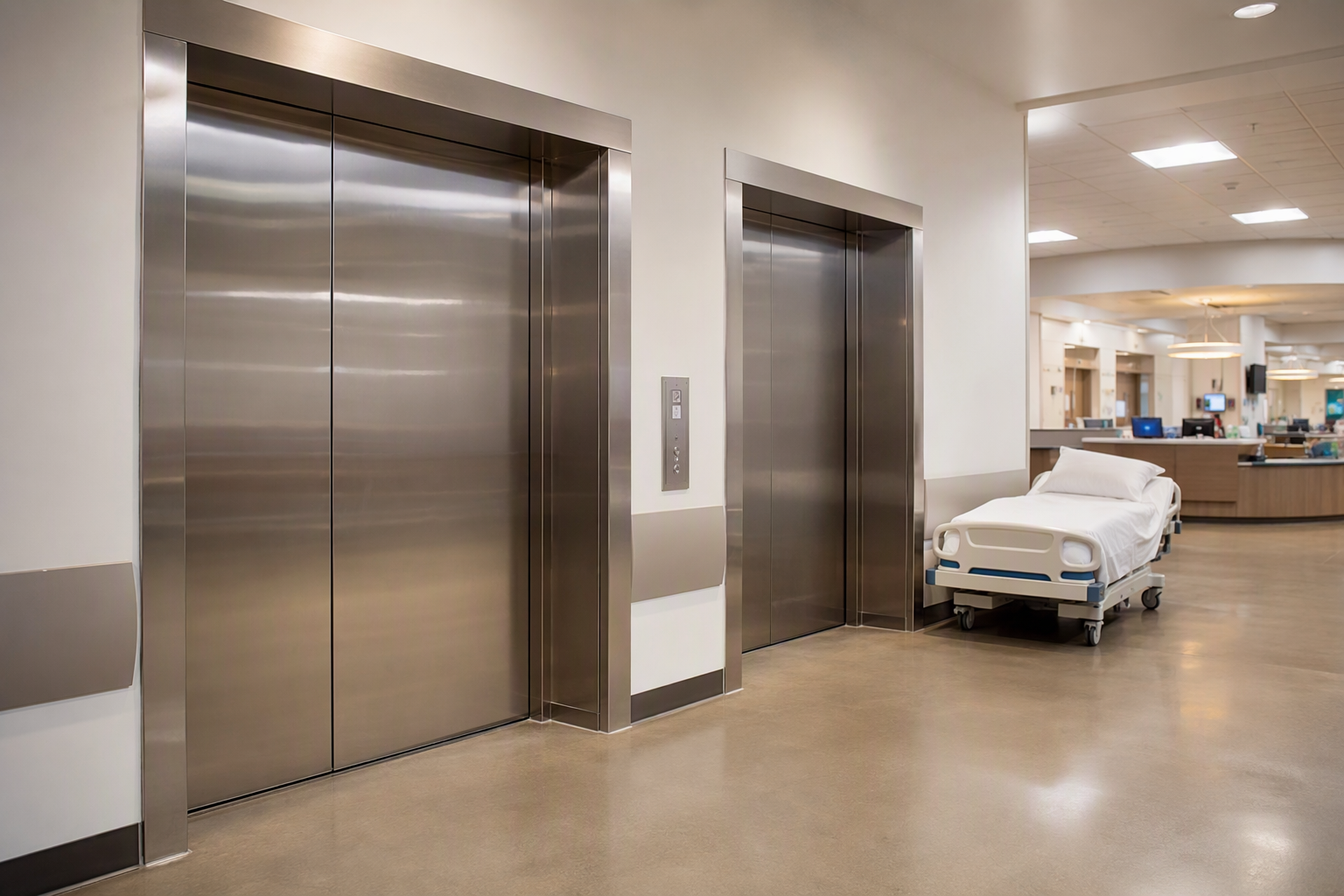
Elevator construction in healthcare facilities involves more than moving patients and equipment between floors. Hospitals, surgical centers, long-term care facilities, and medical office buildings depend on vertical transportation that meets strict safety standards, accommodates oversized medical equipment, and remains operational around the clock. Quality Elevator Company works with healthcare owners and project managers across Baltimore, Washington DC, Philadelphia, and Richmond to plan and execute elevator construction that satisfies both clinical operational needs and jurisdictional compliance requirements.
What Makes Healthcare Elevator Construction Different from Standard Commercial Projects?
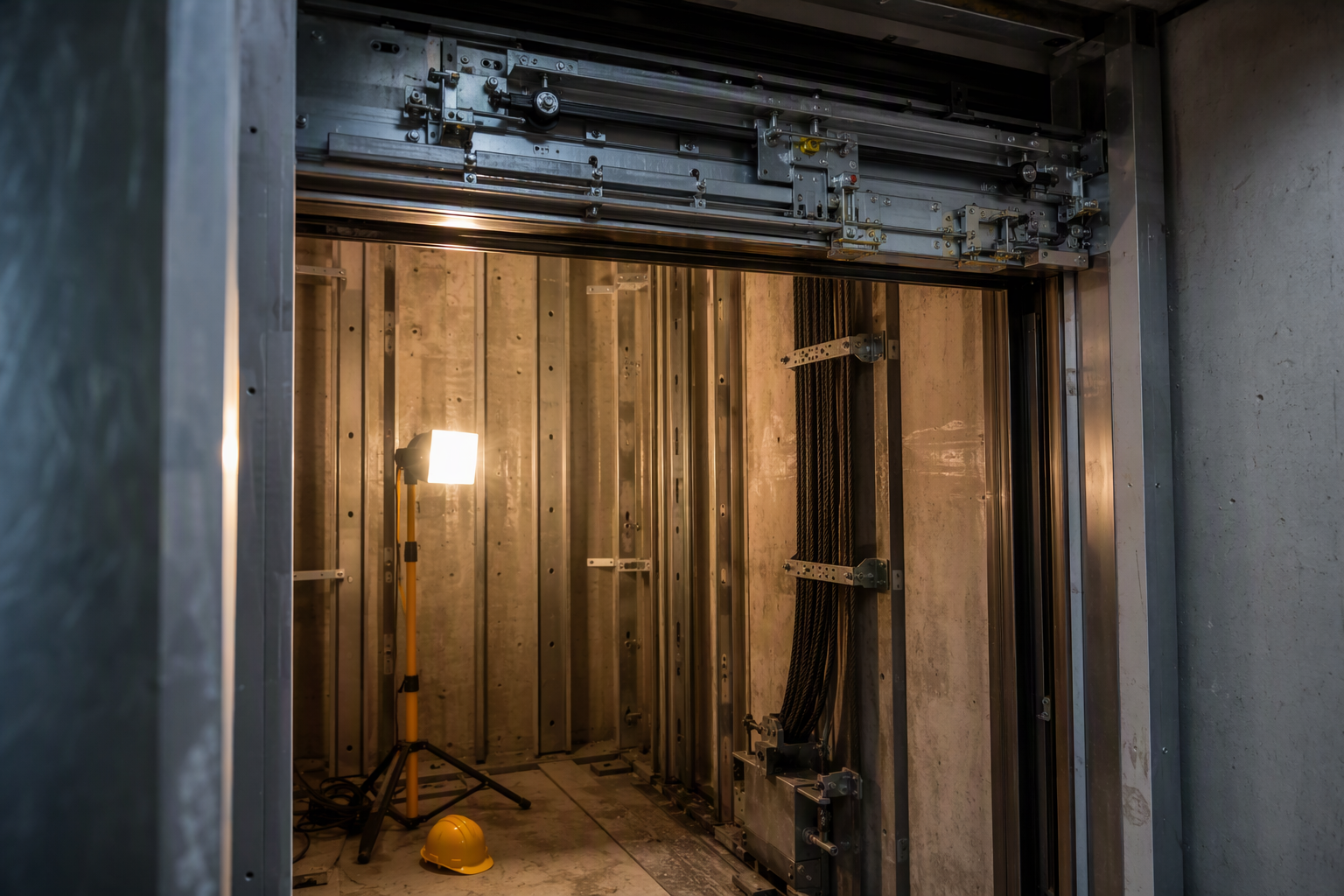
Healthcare elevator construction demands a higher level of planning and code coordination than typical commercial installations. Several factors distinguish it from standard projects:
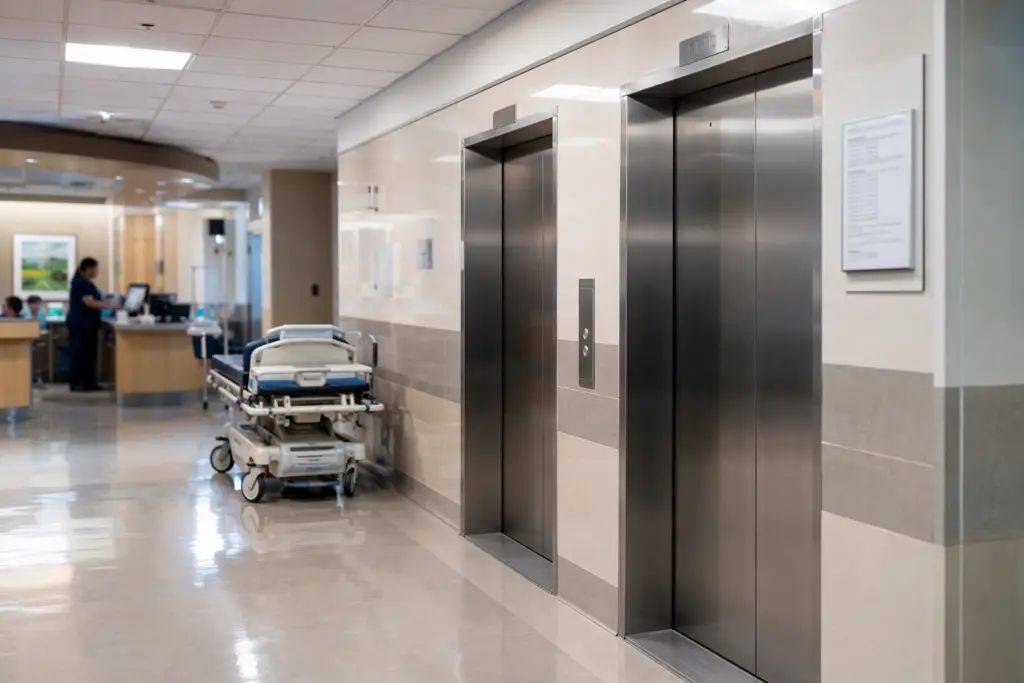
- Larger cab dimensions: Hospital elevators must accommodate hospital beds, stretchers, oversized wheelchairs, and medical imaging equipment. Cab depth and door width must be planned at the design stage, not retrofitted.
- Higher duty cycles: Elevators in clinical environments run far more frequently than those in office buildings, requiring heavy-duty mechanical components and more robust maintenance plans.
- Infection control during construction: Healthcare facilities typically require that construction activities follow interim life safety measures and infection control risk assessment (ICRA) protocols so that active clinical areas are not compromised.
- Emergency power requirements: Elevators serving healthcare facilities must be connected to emergency power systems so that patient transport continues during utility failures.
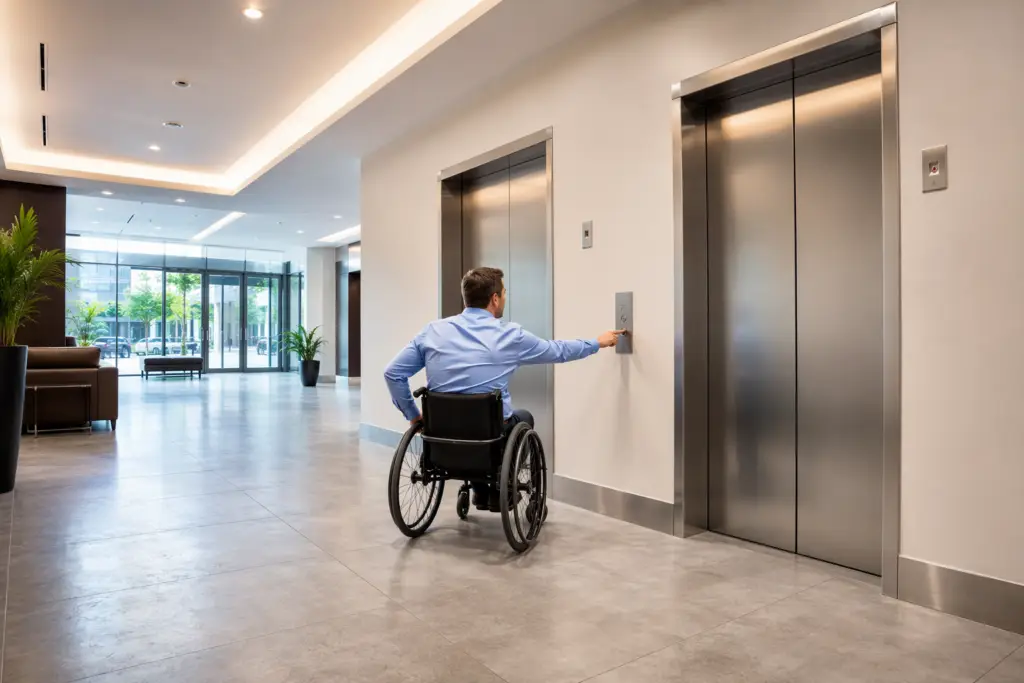
- ADA compliance for clinical populations: The ADA sets minimum cab dimensions, door timing, control height, and audible and visual signal requirements—standards that are especially critical in facilities serving patients with mobility limitations.
Which Code Standards Apply to Healthcare Elevator Construction?

The primary technical standard governing new elevator construction across all four Quality Elevator Company markets is the ASME A17.1 Safety Code for Elevators and Escalators. Each jurisdiction adopts a specific edition of this standard, and healthcare facility owners must know which edition governs their project:
- District of Columbia: The DC Department of Buildings (DOB) enforces the 2017 DC Building Code, which references the ASME A17.1-2013/CSA B44-13 edition with District amendments, effective May 29, 2020. All elevator construction permits in DC require a copy of the master electrician license and the elevator contracting license. The DC Board of Industrial Trades licenses elevator contractors and mechanics.
- Maryland: The Maryland Department of Labor, Division of Labor and Industry, Elevator and Escalator Safety administers elevator construction oversight. As of June 17, 2026, Maryland has adopted the ASME A17.1-2022/CSA B44:22 edition with Maryland-specific changes. The edition that applies to a project depends on when the installation contract was signed. All elevator mechanics working on a project must be licensed by the Maryland Elevator Safety Review Board, and the contracting firm must hold an elevator contractor license with at least $1,000,000 in general liability insurance and $500,000 in property damage insurance.
- Pennsylvania: The Pennsylvania Department of Labor and Industry, Bureau of Occupational and Industrial Safety, Elevator Section oversees construction statewide, including Philadelphia. For permit applications submitted before December 20, 2026, the governing standard is ASME A17.1-2000 with A17.1a-2002 addenda. Beginning December 20, 2026, new permit applications fall under ASME A17.1-2016 with Pennsylvania modifications.
- Virginia: The Virginia Uniform Statewide Building Code (13VAC5-63) incorporates ASME A17.1/CSA B44-2019 through the 2021 USBC, effective January 18, 2024. Local building departments enforce the code and conduct acceptance inspections. In Richmond, the City of Richmond Department of Planning and Development Review, Bureau of Permits and Inspections, runs the elevator program including final acceptance inspections of new and modernized elevators. Contractors must hold an Elevator/Escalator Contracting (EEC) specialty license through Virginia’s Board for Contractors.
Additionally, Maryland law requires that each new building constructed after July 1, 1985, with at least one planned elevator include a passenger elevator capable of carrying a 6-foot-8-inch rescue litter horizontally—a provision directly relevant to hospital and clinical construction projects.
How Long Does Healthcare Elevator Construction Take?
Project timelines for healthcare elevator construction vary based on shaft size, number of stops, equipment type, and the complexity of the permitting process in each jurisdiction. General phases include:
- Pre-construction planning and design review: Structural, mechanical, and electrical plans must be coordinated with the elevator specification. Healthcare projects often require coordination with the facility’s infection control team.
- Permit application and approval: Each jurisdiction requires a permit before construction begins. In Maryland, the elevator unit must be registered with the Commissioner at least 60 days before its planned completion and before being placed in service.
- Hoistway and machine room preparation: Civil and structural work must be complete before elevator equipment can be installed.
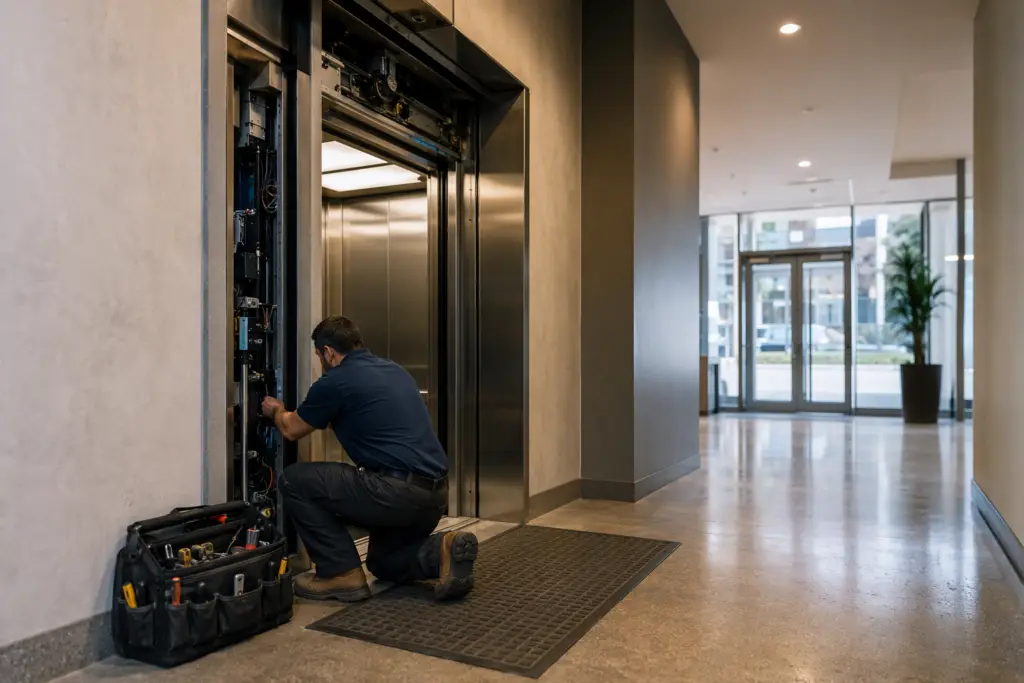
- Equipment installation: Elevator components, including the drive system, cab, doors, controls, and safety devices, are installed by licensed mechanics.
- State or local acceptance inspection: Each jurisdiction requires an official acceptance inspection before the elevator is placed in service. In Maryland, the State conducts the final acceptance inspection. In Pennsylvania, the Department of Labor and Industry inspects and must pass the elevator after installation. In Virginia, the local building department conducts acceptance inspections. In DC, the DOB-approved third-party agency conducts the inspection on the DOB’s behalf.
- Certificate issuance and commissioning: The certificate of operation or inspection is issued and must be posted in the elevator car or in the designated location required by each jurisdiction before the elevator opens to patients, staff, and visitors.
What Permits Are Required for Hospital Elevator Construction?
Every jurisdiction served by Quality Elevator Company requires a permit before elevator construction begins. Key permit requirements by market include:
- DC: A permit from the DC Department of Buildings is required. Permit applications must include copies of the master electrician license and the elevator contracting license issued by the DC Board of Industrial Trades.
- Maryland: The elevator unit must be registered with the Commissioner of Labor and Industry at least 60 days before planned completion. A licensed elevator contractor must perform the work.
- Pennsylvania: A permit application must be submitted to the Pennsylvania Department of Labor and Industry before construction, alteration, replacement, or repair begins. The elevator may not be placed in service until the Department inspects and approves it.
- Virginia: The local building department issues construction permits and conducts acceptance inspections. In Richmond, that authority is the City of Richmond Department of Planning and Development Review, Bureau of Permits and Inspections.
What ADA Requirements Apply to Healthcare Elevator Construction?
The Americans with Disabilities Act establishes minimum accessibility standards for elevators in facilities open to the public, including all healthcare settings. Requirements address cab dimensions, door clear width and timing, floor and position indicators, audible signals, control panel height and button size, and Braille and raised character signage. Healthcare facilities serving patients who use wheelchairs, walkers, or other mobility aids should evaluate whether ADA minimums are sufficient for the clinical population being served, or whether larger cab sizes and longer door-open times are warranted during the design phase.
What Types of Elevators Are Best Suited for Healthcare Facilities?
The appropriate elevator type depends on the facility’s height, traffic volume, and functional requirements:
- Traction elevators: Machine-room or machine-room-less traction systems are well suited to mid-rise and high-rise hospitals and medical centers where high-speed, high-capacity vertical transportation is required.
- Hydraulic elevators: Hydraulic systems are common in low-rise medical office buildings and clinics. They are reliable for lower-rise applications but have speed limitations that may not suit acute care hospital towers.
- Hospital-duty cabs: Regardless of drive type, healthcare facilities typically specify reinforced cab interiors, antimicrobial surfaces, wide doors, and handrails on three sides to support patient safety and infection control.
- Service and goods elevators: Separate service elevators for dietary, linen, and waste transport prevent clinical elevator congestion and reduce cross-contamination risk.
How Do Inspection Requirements Differ for New Healthcare Elevators?
Once construction is complete and the acceptance inspection is passed, healthcare elevator owners must maintain ongoing inspection compliance:
- DC: Annual Category 1 inspections and a Category 5 inspection every 60 months are required, each by an ASME QEI-certified inspector approved by the DOB. The certificate of inspection is valid for two years.
- Maryland: Annual periodic inspections are required, conducted by a third-party qualified elevator inspector. Elevators suspended by wire ropes or similar means require a comprehensive five-year inspection. Records must be kept at a readily accessible central location in the building.
- Pennsylvania: Electric elevators and hydraulic elevators require periodic inspections at intervals of no more than six months. Certificates of operation are valid for 24 months for equipment on a six-month cycle.
- Virginia: All elevators require at least an annual periodic inspection; a locality may require six-month intervals. Periodic tests follow ASME A17.1 Appendix N intervals and must be witnessed by the local code official or an approved agency.
Quality Elevator Company helps healthcare facility managers develop inspection schedules and maintain the documentation required by their jurisdiction’s authority having jurisdiction.
What Should Healthcare Facility Managers Know About Elevator Construction Costs?
Elevator construction costs in healthcare settings are influenced by shaft configuration, drive system type, cab finish specifications, number of stops, required load capacity, emergency power integration, and the complexity of phasing construction around an occupied facility. Infection control requirements during construction can add coordination time and cost. Jurisdictional permitting fees and the cost of acceptance inspections also vary by market. Because healthcare elevator projects involve multiple licensed trades and regulatory touchpoints, early engagement with a qualified elevator contractor helps facility managers develop realistic budgets before design is finalized.
How Does Quality Elevator Company Support Healthcare Construction Projects?
Quality Elevator Company provides elevator construction services across Baltimore, Washington DC, Philadelphia, and Richmond, working with hospital systems, outpatient facilities, and healthcare real estate developers. The team coordinates permit applications with the relevant authority having jurisdiction in each market, ensures that licensed mechanics and inspectors are assigned according to state requirements, and manages the acceptance inspection process so that the facility can open the elevator on schedule. Quality Elevator Company also supports facility managers in establishing the post-construction maintenance and inspection programs required to keep certificates current in each jurisdiction.
What Are Common Mistakes in Healthcare Elevator Construction Planning?
- Failing to account for the jurisdiction-specific edition of ASME A17.1 that governs the project, which can require redesign if the wrong standard is used during engineering.
- Underestimating cab size requirements for hospital beds and medical equipment, leading to costly modifications after installation.
- Not registering or permitting the elevator unit with the state or local authority before the planned completion deadline—in Maryland, registration must occur at least 60 days before the unit is placed in service.
- Overlooking emergency power integration requirements during the design phase.
- Failing to engage an ICRA-compliant construction plan, which can result in infection control citations during Joint Commission or state health department surveys.
Questions Your Inspector Will Ask
Healthcare facility owners and project managers should be prepared to answer the following questions during an acceptance inspection or a periodic compliance inspection:
- Is the current certificate of operation or certificate of inspection posted in the elevator car or in the designated approved location?
- Has the elevator been registered with the appropriate state authority or local building department prior to being placed in service?
- Were all installation and testing activities performed by licensed or certified elevator mechanics as required by the jurisdiction?
- Are maintenance, repair, test, and inspection records maintained at a readily accessible location in the building?
- Has the elevator been connected to the facility’s emergency power system and tested under emergency power conditions?
- Do the cab dimensions and door clear width meet the applicable ASME A17.1 edition requirements and ADA accessibility standards?
- Has a Category 1 functional test been completed and documented? (In Pennsylvania, starting December 20, 2026, Category 1 tests must be performed annually as a stand-alone requirement.)
- Is the contractor’s license and, where required, the elevator mechanic’s certification documentation available for review?
- For Maryland projects: Has the five-year comprehensive inspection been scheduled for wire rope-suspended elevators?
- For DC projects: Have third-party inspection reports been submitted through the DOB Citizen Access Portal to support certificate renewal?
How Do Healthcare Facilities Manage Elevator Construction in Occupied Buildings?
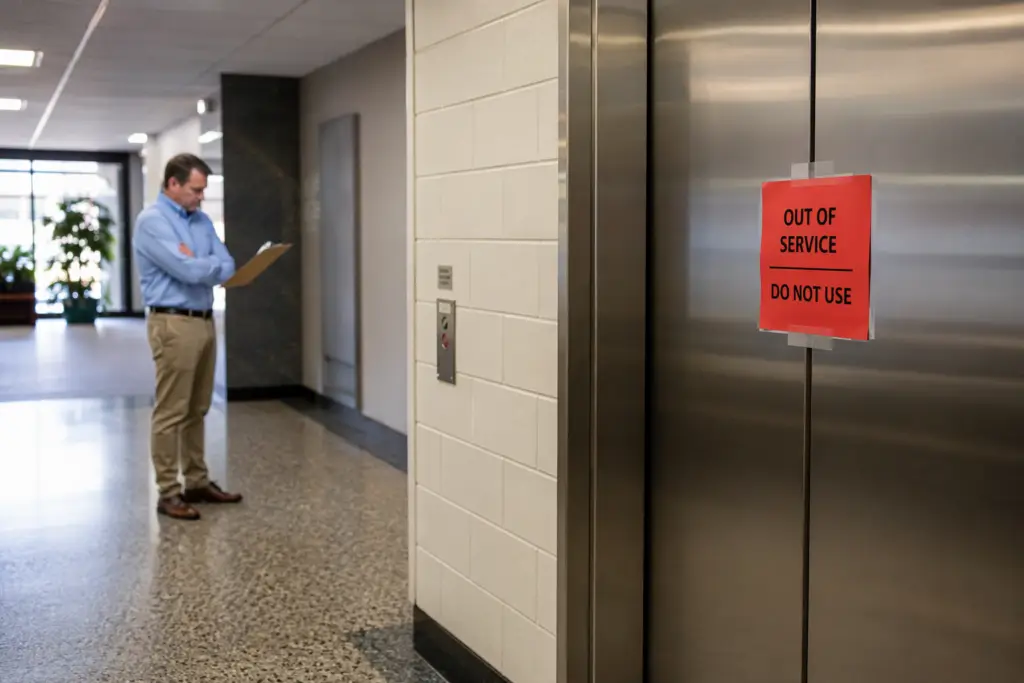
- Conduct a pre-construction traffic analysis to identify which elevators can be taken out of service without disrupting patient care, and which must remain operational at all times.
- In DC, obtain the required DOB permit before taking an elevator out of service under ASME A17.1 Section 8.11.1.4. Confirm that at least one passenger elevator remains in operation whenever the building is occupied, as required by DC code.
- Develop an ICRA plan in coordination with the facility’s infection control officer to contain dust, debris, and construction traffic away from patient care areas.
- Schedule heavy construction activities during low-census periods or overnight when clinical traffic is reduced.
- Establish a communication plan so that clinical staff, patients, and visitors are informed of elevator availability changes in advance.
- Coordinate phased acceptance inspections with the authority having jurisdiction so that each elevator is returned to service as quickly as possible after installation or modernization.
Contact Quality Elevator Company for a free elevator assessment at 301-779-9116.
Need elevator service you can rely on? Quality Elevator Company is ready to help.