Elevator Consultation: How to Choose the Right Service, Stay Compliant, and Protect Your Investment
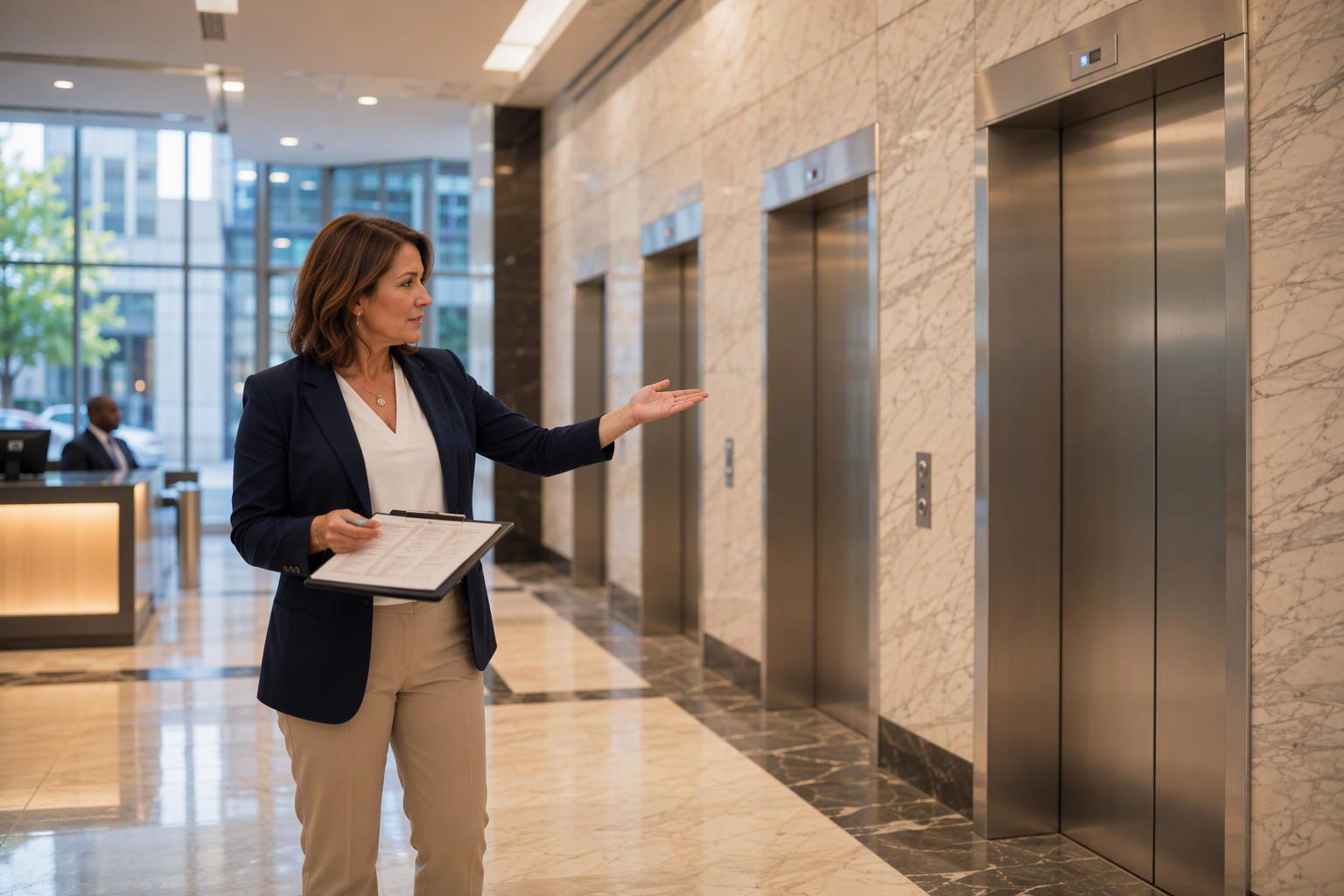
Scheduling an elevator consultation is the first—and most important—step any building owner or facilities manager can take before signing a maintenance contract, budgeting for modernization, or responding to a failed inspection. The comparison guide below breaks down what a consultation covers, how it differs from a standard inspection, and what decision factors matter most in DC, Maryland, Pennsylvania, and Virginia.
What Is an Elevator Consultation and What Does It Cover?
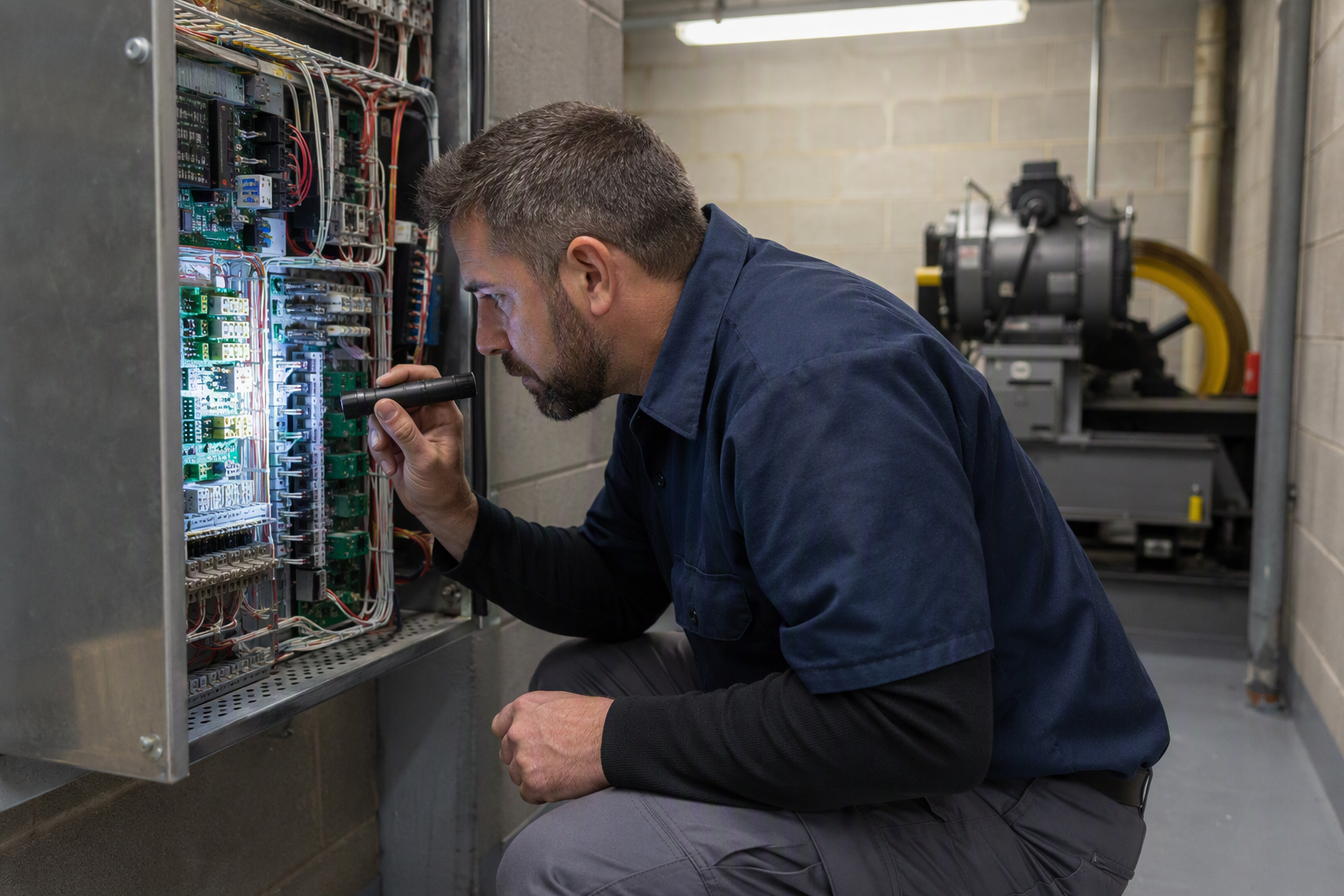
An elevator consultation is a structured, expert-led review of one or more elevator systems that goes beyond the pass/fail scope of a regulatory inspection. A qualified consultant examines mechanical components, electrical systems, code compliance gaps, ride quality, accessibility provisions under the Americans with Disabilities Act (ADA), and the overall remaining service life of the equipment.
Where a statutory inspection determines whether an elevator may legally operate, a consultation determines whether it should continue operating as-is, what near-term maintenance is warranted, and whether a modernization project would deliver better long-term value than continued patching.
A thorough elevator consultation typically covers:
- Current compliance status against the adopted edition of the ASME A17.1/CSA B44 Safety Code for Elevators and Escalators in the applicable jurisdiction
- Review of maintenance logs, inspection certificates, and open violation notices
- Component-by-component condition assessment (machine, controller, ropes/belts, doors, cab, pit, hoistway)
- ADA accessibility audit for cab dimensions, door timing, control height, and signage
- Risk assessment for OSHA-relevant hazards in machine rooms and pits
- Modernization feasibility and capital planning recommendations
- Review of the existing service contract terms and coverage gaps
Elevator Consultation vs. Statutory Inspection vs. Maintenance Visit: What Is the Difference?

| Factor | Elevator Consultation | Statutory Inspection | Routine Maintenance Visit |
|---|---|---|---|
| Primary purpose | Strategic planning, compliance gap analysis, capital budgeting | Verify legal operation; issue or renew certificate | Lubrication, adjustments, minor repairs |
| Who performs it | Independent elevator consultant or certified service company | State/local authority or approved third-party inspector with ASME QEI certification | Licensed elevator mechanic under service contract |
| Output | Written recommendation report, prioritized action list, cost range estimates | Certificate of inspection / certificate of operation | Service log entry, parts replaced |
| Frequency | On demand — typically before a contract change, modernization, or acquisition | Varies by jurisdiction (see table below) | Per service contract schedule |
| Regulatory requirement | Not mandated — owner-initiated | Legally required; failure to certify means the elevator cannot operate | Required under ASME A17.1 maintenance provisions |
| Value to owner | Avoids surprise costs; reveals hidden risks; supports negotiation | Legal authority to operate; avoidance of fines and shutdowns | Extends equipment life; prevents breakdowns |
What Are the Inspection Requirements in DC, Maryland, Pennsylvania, and Virginia?
Understanding the regulatory baseline in each jurisdiction helps building owners interpret what a consultation uncovers and how urgent any findings are.
| Jurisdiction | Regulator | Adopted Safety Code | Periodic Inspection Interval | Certificate Validity |
|---|---|---|---|---|
| District of Columbia | DC Department of Buildings (DOB) | ASME A17.1-2013/CSA B44-13 (2017 DC Building Code, effective May 29, 2020) | Category 1 inspection every 12 months; Category 5 every 60 months; ASME QEI-certified inspector required | Certificate of inspection valid for two years; periodic inspections and tests continue during that period |
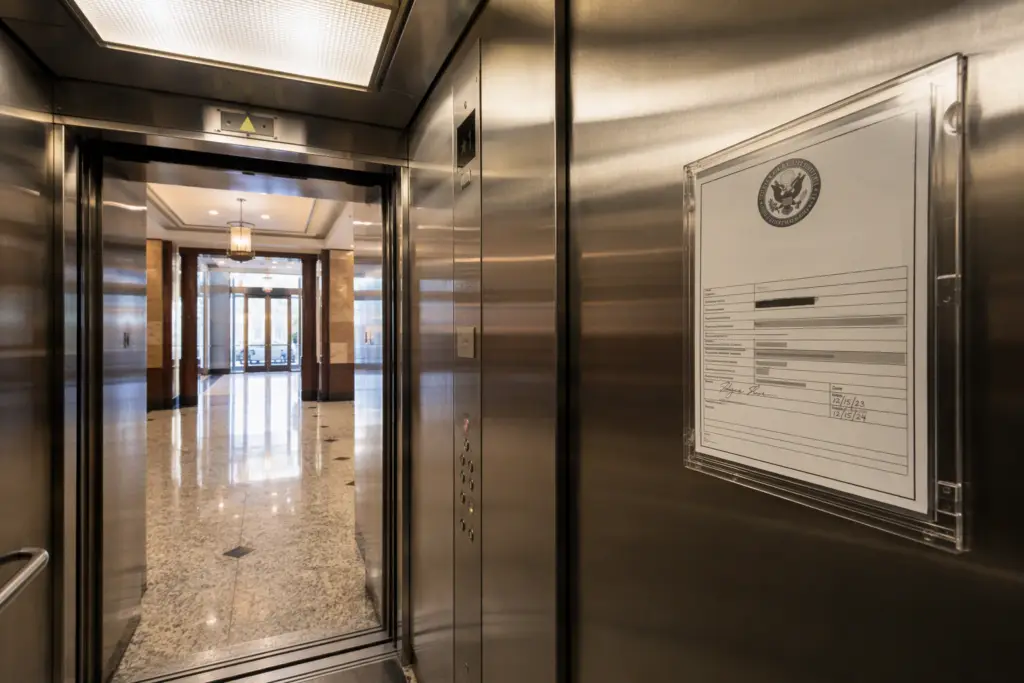
| Maryland | Maryland Department of Labor, Division of Labor and Industry, Elevator and Escalator Safety | ASME A17.1-2022/CSA B44:22 with Maryland changes (effective June 17, 2026, for new contracts) | Annual periodic inspection by a State inspector or third-party qualified elevator inspector; five-year comprehensive inspection for wire-rope-suspended elevators | Certificate must be posted conspicuously in or on the elevator unit; annual re-registration required |
| Pennsylvania | Pennsylvania Department of Labor and Industry (L&I), Bureau of Occupational and Industrial Safety | ASME A17.1-2000 with A17.1a-2002 addenda (current); ASME A17.1-2016 with PA modifications applies to permit applications from December 20, 2026 | Electric elevators, hydraulic elevators, and escalators: no more than every 6 months | 24 months for equipment on a 6-month inspection cycle; 48 months for equipment on a 12-month cycle |
| Virginia | Local building department under the Virginia Uniform Statewide Building Code (13VAC5-63); mechanics certified and contractors licensed by Virginia Board for Contractors (DPOR) | ASME A17.1/CSA B44-19 (2021 USBC, effective January 18, 2024) | Annual periodic inspection required; locality may require six-month inspections; periodic tests at ASME A17.1 Appendix N intervals | Current certificate must be displayed in the elevator or available in the building operator’s office |
Key 2026 note: Pennsylvania’s updated elevator regulation (Regulation #12-123) takes effect on December 20, 2026. Buildings with pending or upcoming permit applications should factor this transition into any capital plan developed during a consultation. Maryland adopted ASME A17.1-2022 with state changes effective June 17, 2026. A consultation scheduled in 2026 should address both transitions explicitly.
What Should a Building Owner Expect During an Elevator Consultation?
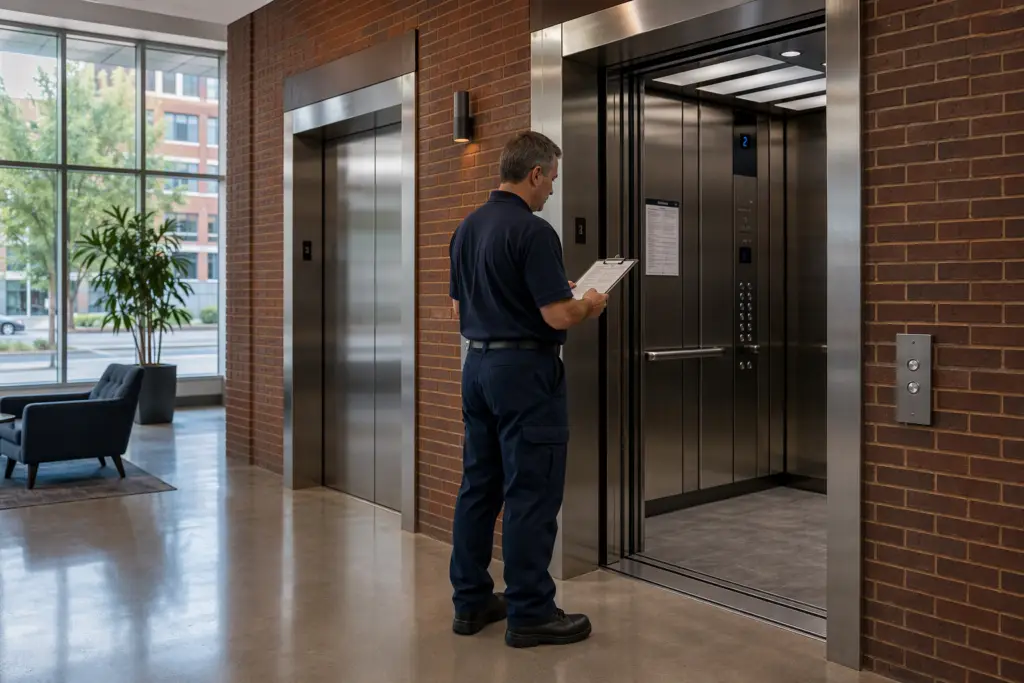
- Pre-visit documentation review. The consultant collects maintenance logs, past inspection certificates, any outstanding violation notices, and the current service contract. This sets the baseline before anyone steps into the machine room.
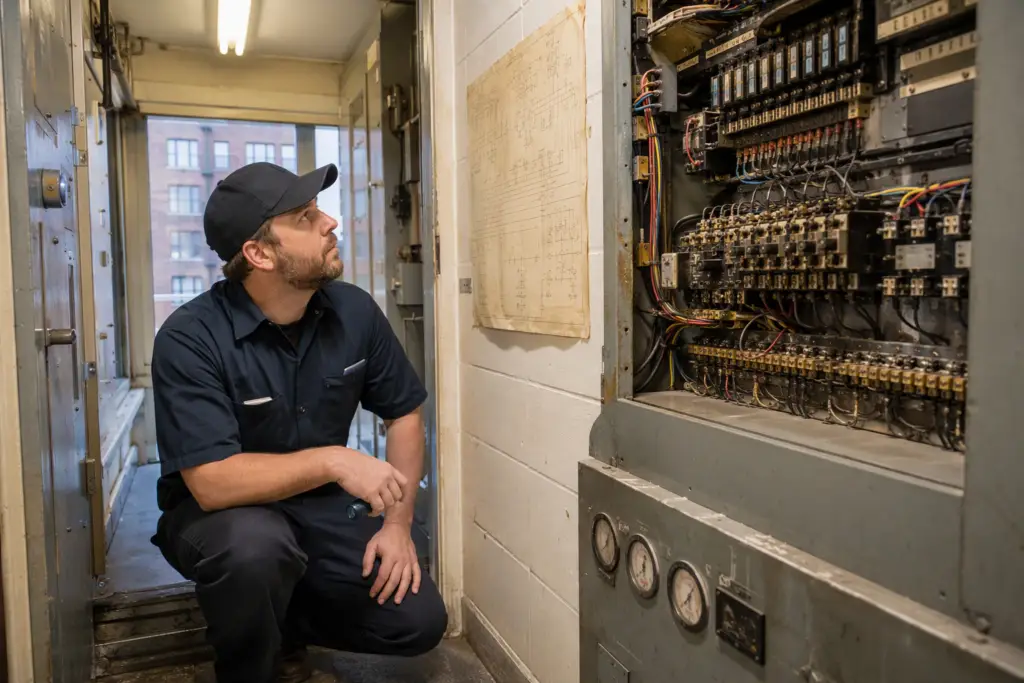
- Machine room and pit inspection. The consultant evaluates the condition of the machine, motor, controller, buffers, pit lighting, and sump pump. OSHA general industry standards apply to machine room environments.
- Hoistway and cab inspection. Door operation, guide rails, wire ropes or hydraulic cylinders, cab interior, emergency lighting, and communication devices are all assessed.
- Code compliance review. The consultant cross-references findings against the edition of the ASME A17.1/CSA B44 Safety Code adopted in the applicable jurisdiction and flags any deviations from current requirements.
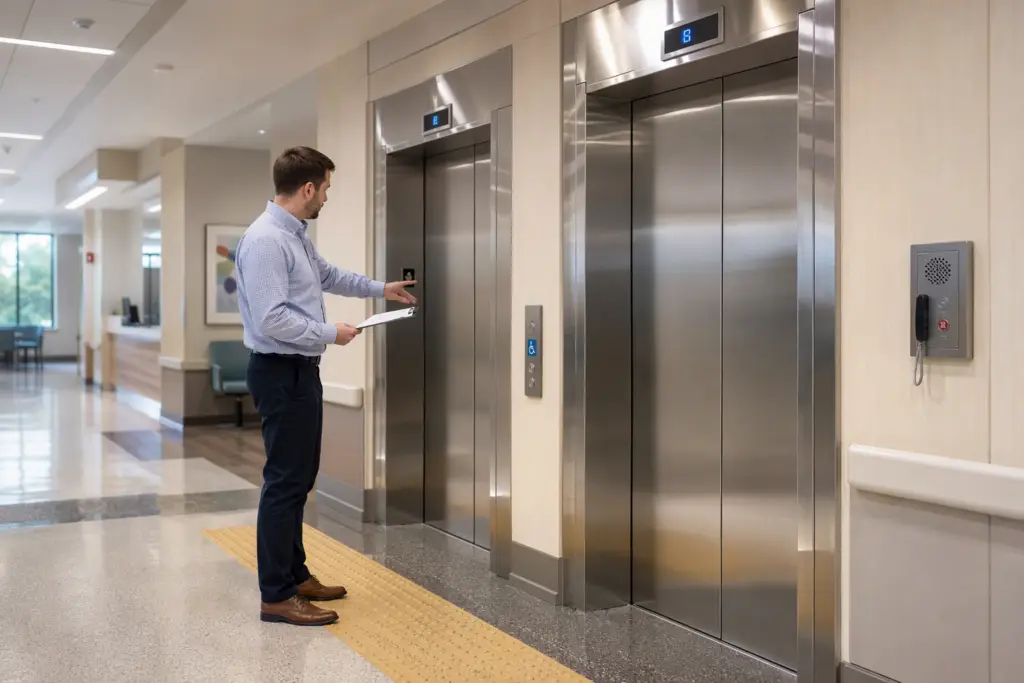
- ADA accessibility review. Cab dimensions, door hold-open timing, control panel height, tactile markings, and audible signals are checked against ADA Standards for Accessible Design.
- Ride quality and performance evaluation. Leveling accuracy, door timing, and overall ride quality are documented—issues here often indicate controller or drive problems before they become breakdowns.
- Written report delivery. The consultant provides a prioritized report separating immediate safety concerns, near-term code compliance items, and longer-range capital recommendations.
- Follow-up discussion. The building owner reviews findings with the consultant, asks questions, and receives guidance on vendor selection, bidding, and scheduling.
Repair vs. Modernization vs. Replacement: Which Does a Consultation Recommend?
| Option | Best Suited For | Pros | Cons | Typical Timeline |
|---|---|---|---|---|
| Targeted Repair | Newer equipment with isolated component failures; recent inspection pass with minor violations | Lower upfront cost; minimal downtime; no permit process for minor repairs | Does not address aging infrastructure; may delay the inevitable; repeated repairs can exceed modernization cost over time | Days to weeks depending on parts availability |
| Modernization | Equipment more than 15–20 years old with outdated controllers, door operators, or hydraulic systems | Extends useful life significantly; improves energy efficiency, ride quality, and ADA compliance; can be phased to manage cash flow | Higher upfront cost than repair; requires permit and acceptance inspection by the relevant authority; temporary outage during work | Weeks to several months; permit timelines vary by jurisdiction |
| Full Replacement | Equipment at or beyond end of expected service life with structural hoistway concerns or multiple failed systems | New warranty; full code compliance with current adopted edition; optimal performance and efficiency | Highest cost; longest downtime; requires full permitting and acceptance inspection | Several months to over a year for complex installations |
| Service Contract Change Only | Equipment in good condition but with an inadequate or overpriced current contract | Immediate cost savings or improved coverage; no capital outlay | Does not resolve deferred maintenance or compliance gaps; wrong choice if underlying equipment is deteriorating | Immediate upon contract execution |
How Does an Independent Consultation Differ From a Free Assessment Offered by a Service Contractor?
Many large elevator service contractors offer complimentary assessments as part of a sales process. These can provide useful information, but the recommendations may be shaped by the contractor’s product offerings, labor rates, and contract terms. An independent elevator consultation—conducted by a provider whose compensation does not depend on which repair or modernization option is selected—delivers an unbiased prioritization of findings.
Quality Elevator Company conducts free elevator assessments as a starting point for new clients across the District of Columbia, Maryland, Pennsylvania, and Virginia. Because the company operates as an independent, certified service provider rather than a manufacturer’s authorized dealer, recommendations reflect the actual condition of the equipment and the requirements of the applicable jurisdiction—not a preferred product line.
What Are the Risks of Skipping an Elevator Consultation Before Signing a Maintenance Contract?
Building owners who sign a maintenance contract without an independent consultation face several compounding risks:
- Inheriting deferred maintenance costs. A new contract may not include catch-up repairs for pre-existing conditions. Without a baseline assessment, the owner may pay for routine maintenance while continuing to accumulate unaddressed deficiencies.
- Compliance exposure. In DC, Maryland, Pennsylvania, and Virginia, operating an uncertified elevator or failing to correct violations can result in the elevator being placed out of service. A consultation identifies compliance gaps before they trigger enforcement action.
- Overpaying for service coverage. Contracts that include “full coverage” on aging equipment with high parts-replacement risk are priced accordingly. Knowing the actual condition of equipment allows owners to negotiate coverage terms that reflect reality.
- Missed modernization timing. In jurisdictions with regulatory transitions—such as Pennsylvania’s December 2026 code update—failing to plan ahead can mean a modernization project is subject to more demanding code requirements than one permitted before the transition date.
- ADA liability. Accessibility deficiencies that go undetected can expose building owners to complaints under the ADA.
How Long Does an Elevator Consultation Take?
The on-site portion of a consultation for a single elevator in a mid-rise building typically takes between two and four hours. Multi-elevator portfolios, older hydraulic systems with known history issues, or properties with outstanding violation notices require more time. The written report is generally delivered within a few business days of the site visit. Building owners should budget additional time for the follow-up discussion and any clarifying questions before acting on recommendations.
What Questions Should an Owner Ask Before Hiring an Elevator Consultant or Service Provider?
- Is the company licensed as an elevator contractor in the jurisdiction where the property is located? (Required in Maryland and Virginia; verify with the relevant licensing board.)
- Are the mechanics who would work on the elevator licensed or certified as required—for example, under Maryland’s Elevator Safety Review Board or Virginia’s Board for Contractors (DPOR)?
- Does the consultant carry adequate general liability and property damage insurance? (Maryland law, for example, requires elevator contractors to carry at least $1,000,000 in general liability and at least $500,000 in property damage coverage.)
- Will the written report reference the specific edition of the ASME A17.1/CSA B44 Safety Code adopted in this jurisdiction?
- Is the consultant affiliated with a specific manufacturer or parts supplier in a way that could bias recommendations?
- What is included in the scope—ADA review, pit inspection, machine room, ride quality testing?
- How are findings prioritized, and does the report distinguish between life-safety violations, code compliance items, and discretionary improvements?
How Does Jurisdiction Affect What a Consultation Should Address?
The adopted code edition, inspection frequency, and regulatory agency vary meaningfully across the four jurisdictions Quality Elevator Company serves, and a competent consultation must address the specific requirements of the property’s location.
In the District of Columbia, the consultation should verify that third-party inspection reports for the past two years are available for submission to the DC Department of Buildings through the Citizen Access Portal, that the certificate of inspection is conspicuously displayed, and that any planned alteration or modernization accounts for the permit requirement and the DC Board of Industrial Trades licensing requirements. DC’s DOB plans to adopt new construction codes based on 2024 model codes by the end of 2027, which may affect long-range capital plans.
In Maryland, the consultation should confirm that maintenance, repair, test, and inspection records are kept at a readily accessible central location in the building, that annual re-registration with the Commissioner has been completed, and that the contractor holding any service agreement is licensed by the Maryland Department of Labor’s Elevator Safety Review Board. The transition to ASME A17.1-2022 effective June 17, 2026, is a factor for any ongoing or planned work.
In Pennsylvania, the consultation should address the six-month periodic inspection cycle for electric and hydraulic elevators, the upcoming December 20, 2026 transition to ASME A17.1-2016 under Pennsylvania L&I, and whether any major repair or alteration work would be better permitted before or after the effective date depending on the scope of the project.
In Virginia, the consultation should confirm that the local building department—not a state agency—is the authority having jurisdiction, that the 2021 Virginia Uniform Statewide Building Code (effective January 18, 2024) applies, that all mechanics on site hold Virginia certification, and that any contractor engaged holds an Elevator/Escalator Contracting (EEC) specialty license from the Virginia Board for Contractors (DPOR).
What Makes Quality Elevator Company the Right Choice for an Elevator Consultation in DC, Maryland, Pennsylvania, and Virginia?
Quality Elevator Company is a certified, independent elevator service provider serving building owners and facilities managers across the District of Columbia, Maryland, Pennsylvania, and Virginia. As an independent company, assessments are not tied to a particular manufacturer’s product line, which means owners receive recommendations based on the actual condition of their equipment and the requirements of their jurisdiction—not a sales quota.
The company’s service area spans all four jurisdictions covered by this guide, and its team works within the regulatory frameworks of the DC Department of Buildings, the Maryland Department of Labor, Pennsylvania L&I, and Virginia’s local building departments. Whether the immediate need is clarifying a failed inspection, evaluating a proposed modernization bid, or establishing a baseline before acquiring a property, Quality Elevator Company provides the independent perspective building owners need to make informed decisions.
How Should a Building Owner Prepare for an Elevator Consultation?
- Gather all current and recent certificates of inspection or certificates of operation for each elevator on the property.
- Collect maintenance logs or service records for at least the past two years, as required in Maryland and recommended in all four jurisdictions.
- Pull any open violation notices, correction orders, or correspondence from the relevant regulatory authority.
- Locate the current elevator service contract and note any exclusions, coverage limitations, and the contract term and termination provisions.
- Document any recurring complaints from tenants, employees, or building users—door problems, leveling issues, unusual sounds, or slow response times.
- Identify whether any alterations or modernization work is already permitted or in progress, which may affect the certificate status.
- Confirm the property address and jurisdiction so the consultant can prepare jurisdiction-specific code references in advance.
Quick-Reference Decision Matrix: When Is a Consultation the Right Next Step?
| Situation | Consultation Recommended? | Priority Level |
|---|---|---|
| Elevator failed periodic inspection or received a violation notice | Yes — immediately | Urgent |
| Service contract is up for renewal or you are considering switching providers | Yes — before renewing or signing | High |
| Acquiring a commercial property with existing elevators | Yes — during due diligence | High |
| Elevator is more than 15 years old with no documented modernization | Yes — for capital planning | High |
| Receiving modernization proposals and unsure how to evaluate them | Yes — independent review of scope and pricing | High |
| ADA complaint received or accessibility audit pending | Yes — to establish scope of required changes | High |
| Elevator performing well, inspection current, no complaints | Optional — consider periodic review every three to five years | Routine |
| Pennsylvania property with permit applications planned near December 2026 | Yes — to confirm timing relative to the ASME A17.1-2016 transition | High |
Get a Free Elevator Assessment From Quality Elevator Company
Building owners and facilities managers across the District of Columbia, Maryland, Pennsylvania, and Virginia rely on Quality Elevator Company for independent, compliance-focused elevator assessments. Whether the goal is to prepare for an upcoming inspection, evaluate a modernization proposal, or establish a baseline before signing a new service contract, the team provides a clear, jurisdiction-specific written assessment with prioritized recommendations.
Contact Quality Elevator Company for a free elevator assessment: 301-779-9116
Need elevator service you can rely on? Quality Elevator Company is ready to help.