Elevator Events in Healthcare Facilities: Compliance, Safety & Service
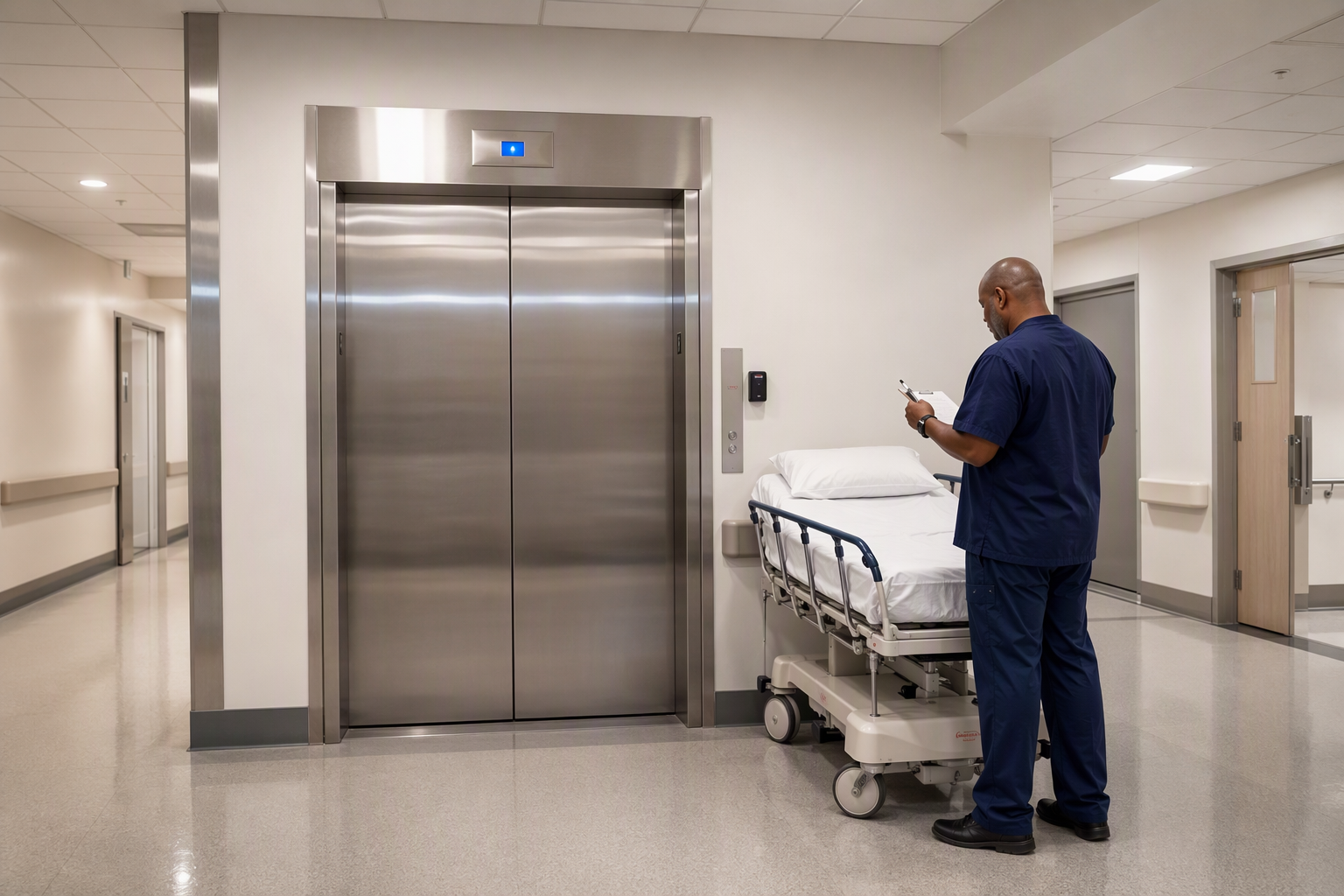
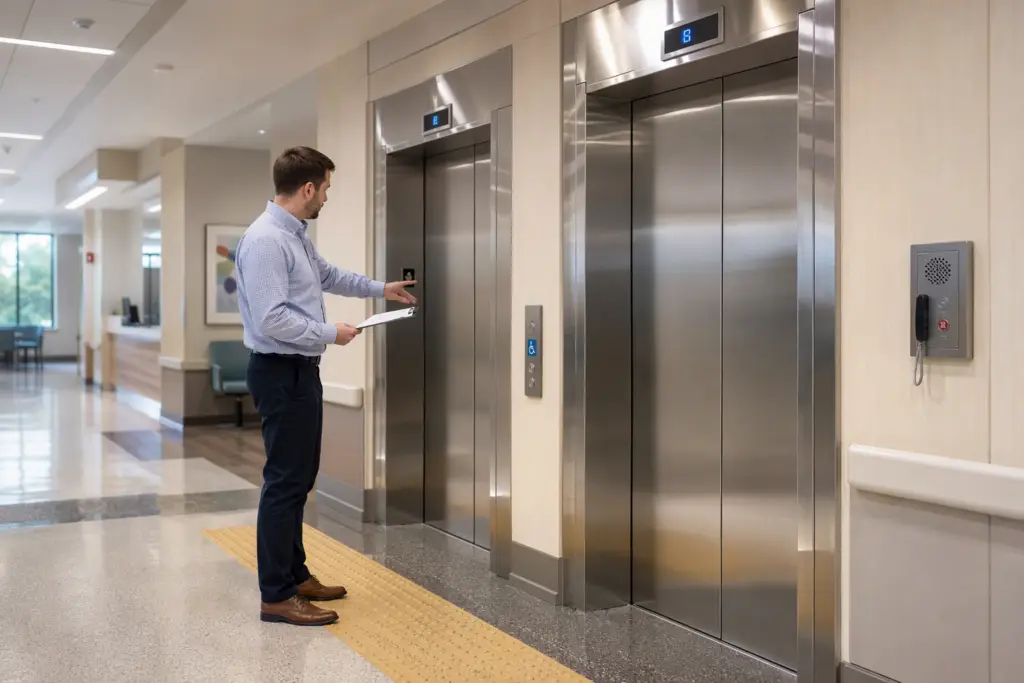
Hospitals, outpatient surgical centers, long-term care facilities, and medical office buildings depend on elevators continuously—for patient transport, medical equipment movement, and emergency response. When an elevator event occurs in a healthcare setting, the consequences extend far beyond inconvenience. Patient safety, regulatory standing, and accreditation status can all be affected within minutes. Understanding what elevator events are, how to respond, and how to prevent them is essential for every healthcare facilities director operating in Baltimore, Washington DC, Philadelphia, or Richmond.
What Is an Elevator Event in a Healthcare Facility?
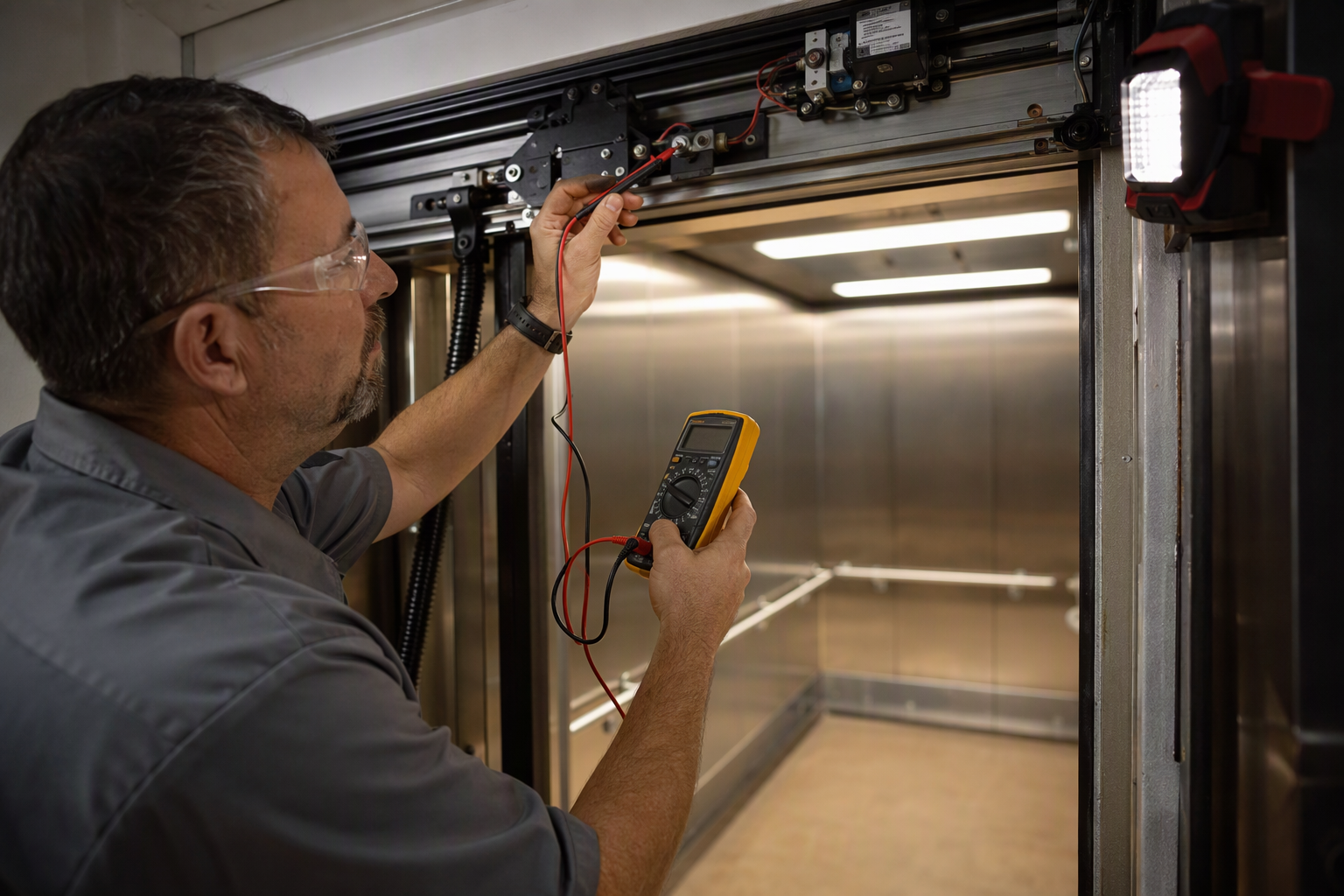
An elevator event in a healthcare context refers to any unplanned operational occurrence involving an elevator unit—ranging from a momentary door malfunction to a full entrapment requiring emergency personnel. Common elevator events in healthcare facilities include:
- Entrapment: Passengers, including patients on stretchers or in wheelchairs, become trapped between floors or at a floor with doors unable to open.
- Unintended car movement: The elevator moves with doors open or moves to an unintended floor.
- Door failure: Doors fail to open, close, or reverse on contact, creating a risk of injury.
- Emergency stop activation: The car halts between floors due to a safety device triggering.
- Leveling failure: The car stops above or below the floor level, creating a trip hazard—particularly dangerous for patients in wheelchairs or on gurneys.
- Communication system failure: Two-way communication in the cab becomes inoperative, leaving trapped passengers unable to call for help.
- Hydraulic leak or mechanical alarm: Mechanical or hydraulic failures that trigger automatic shutdown.
In a healthcare environment, any of these events may simultaneously trigger facility emergency protocols, state reporting obligations, and Joint Commission or CMS documentation requirements.
Why Are Elevator Events More Critical in Healthcare Settings?

Healthcare facilities present unique elevator risk factors that do not exist in commercial office or residential buildings:
- Vulnerable passengers: Patients may be sedated, on life-support equipment, or unable to self-rescue during an entrapment.
- Time-critical transport: Delays caused by an elevator event can directly interrupt surgical schedules, emergency department workflows, and medication delivery.
- Heavy loads: Hospital elevators regularly carry oversized beds, imaging equipment, crash carts, and supply pallets—loads that accelerate mechanical wear.
- Continuous operation: Unlike office buildings, hospitals operate around the clock, giving elevator components little downtime and increasing the frequency of wear-related events.
- Regulatory scrutiny: Accrediting bodies and state health departments review elevator maintenance records as part of facility inspections, meaning an unresolved elevator event can affect licensure.
What Compliance Standards Apply to Healthcare Elevator Events?
Healthcare elevator compliance in the Quality Elevator Company service area is governed by a layered framework of federal standards and state-specific regulations.
Federal Standards
- ASME A17.1 Safety Code for Elevators and Escalators: The foundational safety code adopted—at varying editions—by every jurisdiction in the Quality Elevator Company service area. It establishes design, installation, inspection, testing, and maintenance requirements, including requirements for two-way communication systems in elevator cabs, door-reopening devices, and safety device testing intervals.
- Americans with Disabilities Act (ADA): Requires that elevators in healthcare facilities serving the public be accessible to individuals with disabilities. Door timing, call button placement, audible signals, and tactile controls are all regulated under ADA standards—and failure during an elevator event may expose a facility to ADA compliance issues if accessibility features are also compromised.
- OSHA: Workplace safety requirements apply when an elevator event injures or endangers healthcare employees. OSHA’s general duty clause requires employers to provide a workplace free from recognized hazards, which includes maintaining elevator systems used by staff.
State-Level Requirements by Market
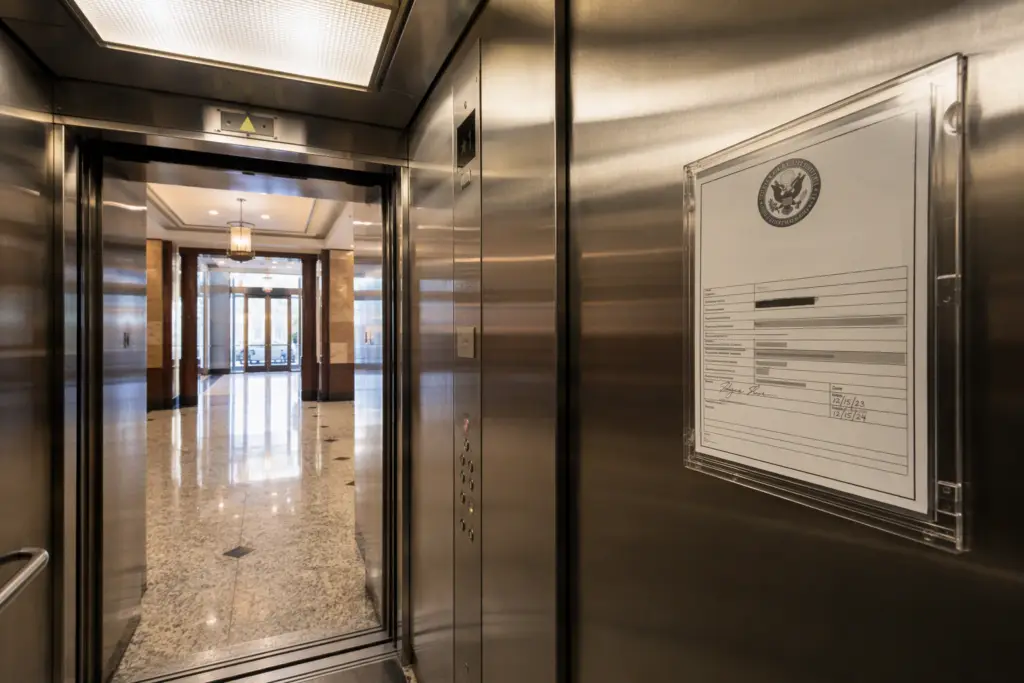
Maryland (Baltimore): Under the Annotated Code of Maryland, Public Safety Article, and COMAR 09.12.81, administered by the Maryland Department of Labor, Division of Labor and Industry, Elevator and Escalator Safety unit, all elevators must hold a current certificate of operation posted in or on the unit. Annual periodic inspections are required, along with a comprehensive five-year inspection for wire-rope-suspended elevators. Effective June 17, 2026, Maryland adopted ASME A17.1-2022/CSA B44:22 with Maryland changes. Maintenance, repair, test, and inspection records must be kept at a readily accessible central location in the building—a requirement directly relevant to post-event documentation in hospitals. Only licensed elevator mechanics may perform tests, and a licensed elevator contractor must perform all maintenance and repair work.
District of Columbia (Washington DC): The DC Department of Buildings (DOB) administers elevator oversight under 12-A DCMR Chapter 30 and the 2017 DC Building Code, which references ASME A17.1-2013/CSA B44-13. DC requires a Category 1 inspection every 12 months and a Category 5 inspection every 60 months, each by an ASME QEI-certified inspector from a DOB-approved third-party agency. In buildings with passenger elevators, DC requires that at least one elevator remain in operation whenever the building is occupied—a rule with significant implications for healthcare facilities that must maintain vertical patient transport at all times. An elevator certificate of inspection is valid for two years and must be displayed in the car.
Pennsylvania (Philadelphia): The Pennsylvania Department of Labor and Industry (L&I), Bureau of Occupational and Industrial Safety, Elevator Section, holds statewide jurisdiction—including Philadelphia. Electric and hydraulic elevators must have periodic inspections at intervals no greater than six months. An elevator may not operate without a current certificate of operation from L&I. As of December 20, 2026, Pennsylvania’s updated elevator regulation (Regulation #12-123) takes effect, requiring stand-alone annual Category 1 tests under ASME A17.1-2016. After any major repair following an elevator event, the elevator may not return to service until L&I inspects and passes it. Owners must submit an accident report to L&I when an elevator accident causes a fatality or requires professional medical care.
Virginia (Richmond): Virginia elevator inspection is enforced by local building departments under 13VAC5-63, the Virginia Uniform Statewide Building Code, which adopted ASME A17.1/CSA B44-19 effective January 18, 2024. All elevators require an annual periodic inspection; localities may require six-month inspections. In Richmond, the City of Richmond Department of Planning and Development Review, Bureau of Permits and Inspections, runs the elevator program including annual inspections and certificates. Only certified elevator mechanics—holding Virginia Board for Contractors (DPOR) certification—may perform elevator work, and installing or repairing elevators requires a contractor license with the Elevator/Escalator Contracting (EEC) specialty.
What Should a Healthcare Facility Do Immediately After an Elevator Event?
- Activate the facility emergency protocol. Notify security, facilities management, and clinical staff as appropriate. If passengers are trapped, initiate the entrapment response procedure immediately, including contacting the elevator service provider’s emergency line.
- Ensure passenger safety. Do not attempt to force elevator doors open or manually move the car without trained personnel. Communicate with trapped passengers through the in-cab two-way communication system or through the hoistway door.
- Contact a licensed elevator service provider. Quality Elevator Company should be notified at once. Trained technicians can assess the situation, perform an authorized rescue if needed, and restore the unit to safe operation or take it out of service.
- Take the elevator out of service if required. If the event involved unintended movement, a door failure, or activation of a safety device, the elevator should be removed from service until a qualified inspection determines it is safe. In DC, a permit from DOB is required to take an elevator out of service.
- Document the event immediately. Record the time, nature of the event, number and condition of passengers, and all actions taken. In Maryland, records must be kept at a readily accessible central location in the building. In Pennsylvania, accidents requiring professional medical care must be reported to L&I.
- Notify the appropriate state regulator. Depending on jurisdiction, a reportable elevator accident requires formal notification. Follow the exact procedures for the state in which the facility is located.
- Conduct a post-event inspection and testing. Before returning the elevator to service, a licensed elevator mechanic must inspect and test the unit. In Pennsylvania, L&I must inspect and pass the elevator after a major repair before it returns to service.
- Update maintenance and inspection records. Log the event, corrective actions, parts replaced, and test results. These records will be reviewed by state inspectors and may be requested by accrediting bodies.
How Do Elevator Events Affect Healthcare Accreditation?
Accrediting organizations that review hospitals and healthcare facilities—including those applying standards related to the physical environment—examine the maintenance and safety records of building systems, including elevators. An unresolved elevator event, a gap in inspection records, or a missing certificate of operation can become a finding during a survey. Healthcare facilities managers should ensure that all elevator inspection certificates are current and posted as required, that maintenance logs are complete and accessible, and that any elevator event is fully documented with corrective actions noted.
Quality Elevator Company supports healthcare clients in maintaining the documentation trail that accreditation reviews require, including organized records of periodic inspections, Category 1 and Category 5 tests, and all repair work performed following an elevator event.
What Preventive Maintenance Reduces Elevator Events in Hospitals?
Preventive maintenance is the most reliable strategy for reducing elevator events in healthcare facilities. Key maintenance activities that directly lower event frequency include:
- Door system inspection and adjustment: Door operators, rollers, gibs, and safety edges are among the most common sources of elevator events. Regular inspection and lubrication of door components reduces failures.
- Leveling system calibration: Keeping the elevator landing accurately at floor level prevents trip hazards that are especially dangerous for patients on gurneys or in wheelchairs.
- Safety device testing: Governors, buffers, safeties, and overspeed devices must be tested at code-required intervals. Missing these tests is both a compliance violation and a risk factor for serious events.
- Hydraulic fluid and seal inspection: Hydraulic leaks can cause sudden stops and trigger automatic shutdowns. Routine fluid level and seal checks prevent unplanned events.
- Two-way communication system testing: Both ASME A17.1 and ADA require functional two-way communication in elevator cabs. Testing this system during routine maintenance ensures it will work when needed during an entrapment event.
- Load and capacity review: Hospital elevators frequently carry loads near or at rated capacity. Periodic review of actual load patterns compared to rated capacity identifies elevators that may need upgrading.
How Often Must Healthcare Facility Elevators Be Inspected?
Inspection frequency is set by state regulation and the applicable edition of ASME A17.1:
- Maryland: Annual periodic inspection required for all elevator units. A comprehensive five-year inspection is required for wire-rope-suspended elevators. The Maryland Department of Labor, Division of Labor and Industry administers this program.
- District of Columbia: Category 1 inspection every 12 months and Category 5 inspection every 60 months, each by an ASME QEI-certified inspector from a DOB-approved agency.
- Pennsylvania: Periodic inspections at intervals no greater than six months for electric and hydraulic elevators. Starting December 20, 2026, Category 1 tests must be performed annually as a stand-alone requirement.
- Virginia: Annual periodic inspection required; local building departments may require six-month inspections. All periodic tests follow ASME A17.1 Appendix N intervals and must be witnessed by the local code official or an approved agency.
Healthcare facilities with elevators that operate under heavy load cycles should discuss inspection frequency with Quality Elevator Company to determine whether supplemental inspections beyond the regulatory minimum are advisable given the specific operating conditions of the facility.
What ADA Requirements Apply to Healthcare Elevators After an Event?
Under the ADA, elevators in healthcare facilities that serve the public must meet accessibility standards for door timing, call button height and marking, audible and visual floor signals, cab dimensions, and two-way emergency communication. When an elevator event results in repair or modernization work, the facility must ensure that any alterations do not reduce accessibility below ADA requirements. Post-event repairs that affect door operators, control panels, or communication systems trigger a review of ADA compliance for the affected components. Quality Elevator Company incorporates ADA compliance review into post-event repair assessments to help healthcare clients avoid inadvertently creating accessibility violations during corrective work.
How Should Healthcare Facilities Document Elevator Events for Regulatory Purposes?
Thorough documentation is the foundation of regulatory compliance following an elevator event. Records that should be created and retained include:
- Date, time, and location (car number, floor) of the event
- Description of what occurred and how it was discovered
- Names and conditions of any passengers involved
- Actions taken to protect passenger safety
- Time the elevator was taken out of service and returned to service
- Name and license number of the elevator mechanic who performed the inspection and any corrective work
- Parts replaced, adjustments made, and tests performed
- Results of post-repair inspection and any regulatory report submitted
In Maryland, records must be kept at a readily accessible central location in the building. In Pennsylvania, accident reports involving fatalities or injuries requiring professional medical care must be submitted to the Pennsylvania Department of Labor and Industry. Healthcare facilities should integrate elevator event documentation into their broader facility maintenance management systems to ensure records are available for both state inspectors and accreditation surveys.
What Is the Difference Between a Routine Elevator Shutdown and a Reportable Elevator Event?
A planned shutdown—for scheduled maintenance, modernization, or a permitted outage—differs fundamentally from an unplanned elevator event. A routine shutdown is coordinated in advance with the service provider, documented with a permit where required (DC requires a DOB permit to take an elevator out of service), and scheduled to minimize disruption to facility operations. An unplanned event, by contrast, occurs without warning and may involve injury, entrapment, or activation of a safety device.
Healthcare facilities should maintain a written elevator outage plan that defines who is notified for each type of situation, what patient transport alternatives exist, and when state reporting is triggered. Quality Elevator Company works with healthcare clients to develop outage and event response plans tailored to the operational realities of their specific facilities.
Questions Your Inspector Will Ask
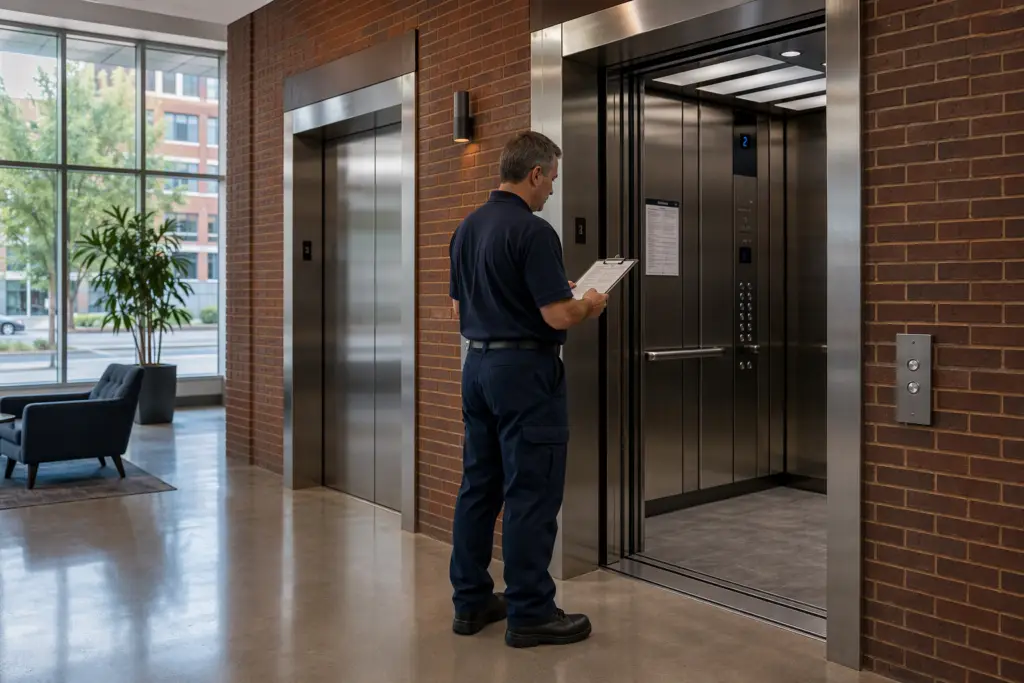
When a state elevator inspector visits a healthcare facility following an elevator event—or during a routine periodic inspection—facilities managers should be prepared to answer the following:
- Is the current certificate of operation posted in the elevator car? All four jurisdictions require the certificate to be displayed. Inspectors will check this immediately.
- Where are the maintenance and inspection records? In Maryland, records must be at a readily accessible central location in the building. In Pennsylvania, the certificate must be posted in the car or attached to the controller in the machine room.
- When was the last periodic inspection, and by whom? The inspector will want the name, license or certification number, and affiliation of the inspector who last conducted the periodic inspection.
- Has a Category 1 test been performed within the required interval? DC requires annual Category 1 inspections; Pennsylvania will require annual Category 1 tests starting December 20, 2026.
- For DC facilities: has a Category 5 test been performed within the last 60 months?
- For Maryland facilities: has the five-year comprehensive inspection been completed for wire-rope-suspended elevators?
- Was an accident report filed following the elevator event? In Pennsylvania, accidents requiring professional medical care must be reported to L&I.
- Was the elevator taken out of service following the event, and was it returned to service only after inspection? In Pennsylvania, an elevator may not return to service after a major repair until L&I inspects and passes it.
- Who performed the corrective work following the event? Maryland requires a licensed elevator mechanic and licensed elevator contractor. Virginia requires a certified mechanic and a licensed EEC contractor. The inspector may request license or certification numbers.
- Is the two-way communication system in the cab functional? ASME A17.1 and ADA both require this system to work. The inspector may test it directly.
- Is there documentation of the event itself, including what occurred, who was affected, and what corrective action was taken?
How Can Healthcare Facilities Reduce the Frequency of Elevator Events?
The most effective approaches to reducing elevator events in healthcare settings combine code-compliant maintenance intervals with operational practices specific to the healthcare environment:
- Establish a formal preventive maintenance agreement with a licensed elevator service company that includes all state-required inspection and testing intervals.
- Train facilities staff to recognize early warning signs of elevator problems—unusual sounds, slow door operation, car not leveling correctly—and report them immediately rather than waiting for a full failure.
- Maintain an elevator-specific log at each car that staff can reference to note concerns between formal inspections.
- Review load patterns periodically to ensure elevators are not routinely operating at or near rated capacity.
- Develop and rehearse an elevator event response protocol so that all facilities and clinical staff know their roles when an event occurs.
- Work with Quality Elevator Company to align maintenance scheduling with periods of lower patient transport demand, reducing disruption while keeping systems in peak condition.
What Should Healthcare Facilities Look for in an Elevator Service Partner?
Selecting an elevator service company for a healthcare facility involves criteria beyond price. The service partner must understand the unique operating demands of healthcare environments, hold all required licenses and certifications for the jurisdiction, and be capable of providing documented maintenance records that will satisfy both state inspectors and accreditation reviewers.
Quality Elevator Company serves healthcare facilities across Baltimore, Washington DC, Philadelphia, and Richmond with elevator maintenance, inspection coordination, and post-event response services. The company’s technicians are licensed and certified in accordance with the requirements of each jurisdiction—Maryland’s licensed elevator mechanic and contractor requirements, DC’s DOB-approved inspection framework, Pennsylvania’s L&I oversight, and Virginia’s DPOR certification and local building department enforcement.
When selecting a service partner, healthcare facilities managers should verify that the company:
- Holds the required elevator contractor license for the applicable state
- Employs mechanics licensed or certified as required by the applicable jurisdiction
- Uses ASME QEI-certified inspectors where required (DC)
- Can provide complete documentation suitable for state regulatory review and accreditation surveys
- Has experience with the specific types of elevator equipment common in healthcare settings, including large-capacity hospital elevators and hydraulic freight elevators
Are There Special Elevator Requirements for Hospital Construction in the Quality Elevator Company Service Area?
Yes. Healthcare construction projects in the service area must address elevator requirements from the earliest design phase:
- Maryland: New buildings constructed after July 1, 1985, with at least one planned elevator must include a passenger elevator capable of carrying a six-foot-eight-inch rescue litter horizontally—a requirement with direct implications for hospital design and patient transport.
- All jurisdictions: ADA accessibility requirements apply to new construction and alterations, requiring accessible elevator design from the outset.
- All jurisdictions: The applicable edition of ASME A17.1 governs elevator design and installation. The edition that applies depends on when the installation permit was submitted—a detail that affects specification decisions for construction projects underway in 2026, particularly in Pennsylvania where the code edition changes for permit applications made on or after December 20, 2026.
Get Expert Elevator Support for Your Healthcare Facility
Elevator events in healthcare settings carry real risks—for patients, for staff, and for regulatory compliance. Proactive maintenance, clear event response protocols, and a licensed service partner are the foundations of a safe and compliant vertical transportation program.
Contact Quality Elevator Company for a free elevator assessment. Whether your facility is managing the aftermath of an elevator event, preparing for a state inspection, or seeking to reduce the frequency of unplanned outages, the Quality Elevator Company team serves healthcare facilities throughout Baltimore, Washington DC, Philadelphia, and Richmond with the expertise your operation requires.
Contact Quality Elevator Company for a free elevator assessment: 301-779-9116
Need elevator service you can rely on? Quality Elevator Company is ready to help.