Elevator Transportation Services: Comparison and Decision Guide
Selecting the right elevator transportation service is one of the most consequential decisions a building owner or facilities manager can make. The wrong choice affects tenant safety, regulatory compliance, operational downtime, and long-term asset value. This guide breaks down every major service category, compares your options side by side, and explains what compliance requirements apply across the District of Columbia, Maryland, Pennsylvania, and Virginia — so decision-makers can act with confidence.
What Are Elevator Transportation Services?
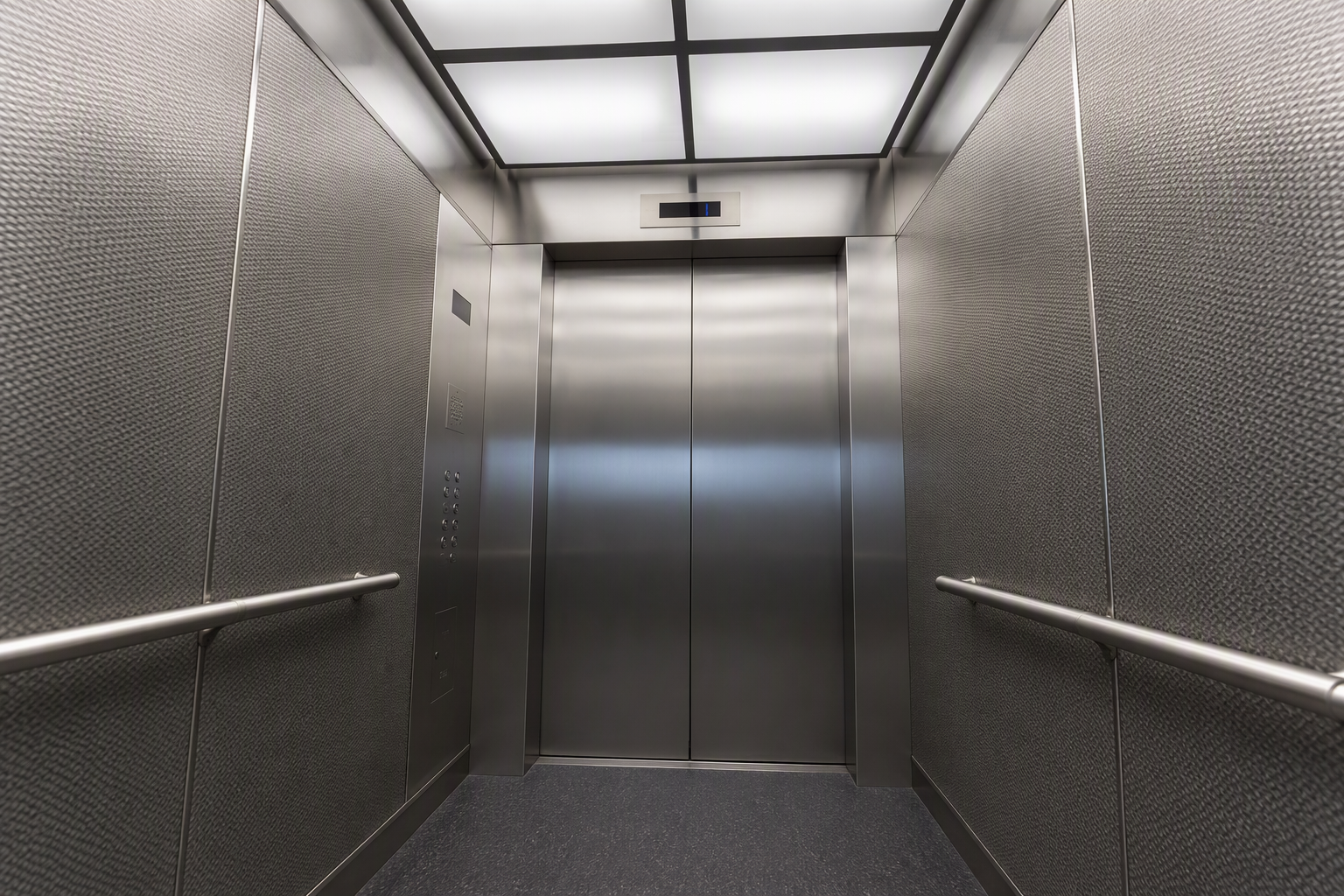
Elevator transportation services refer to the full lifecycle of professional support provided for vertical transport equipment in commercial, residential, and mixed-use buildings. These services span five core categories:
- New Installation — Engineering, permitting, and commissioning of new elevator systems
- Preventive Maintenance — Scheduled service to keep equipment running safely and efficiently
- Modernization — Upgrading existing elevator systems to meet current codes and performance standards
- Repair Services — Corrective work following breakdowns, component failures, or safety findings
- Inspection and Compliance — Third-party and regulatory inspections mandated by state and local authorities
Each category carries distinct cost structures, timelines, compliance implications, and risk profiles. The sections below compare them directly.
How Do Elevator Service Types Compare?
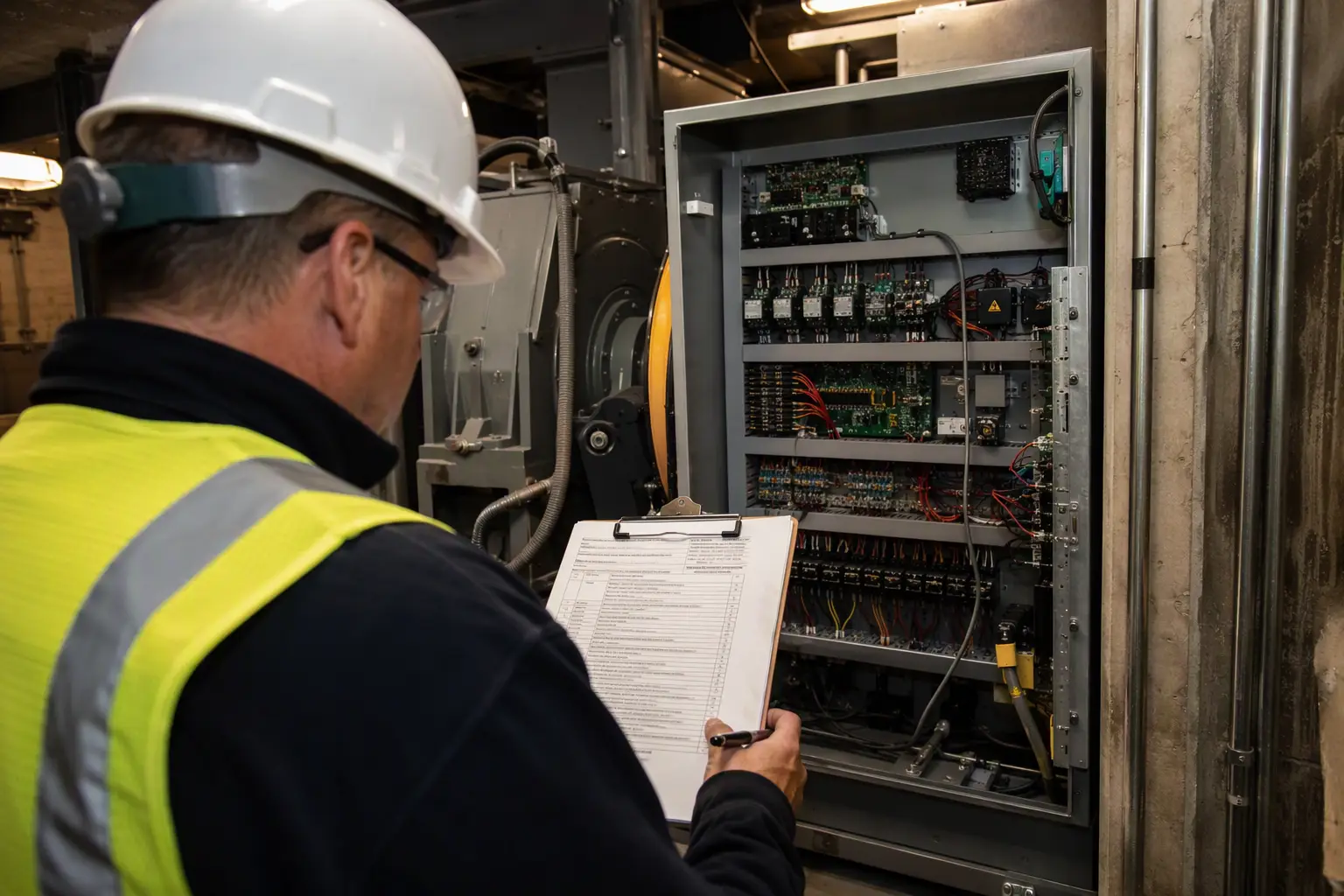
| Service Type | Typical Timeline | Compliance Driver | Downtime Impact | Best For |
|---|---|---|---|---|
| New Installation | Weeks to months (permit-dependent) | State permit & acceptance inspection required before service | N/A — new build | New construction or building additions |
| Preventive Maintenance | Ongoing — monthly or quarterly visits | Supports annual inspection readiness | Minimal (planned brief shutdowns) | All operating buildings with elevators |
| Modernization | Days to weeks per unit | May require new permit; DOB/L&I acceptance inspection required | Moderate (unit offline during work) | Aging equipment, code compliance gaps |
| Repair Services | Hours to days | Major repairs require L&I/DOB re-inspection before return to service | Variable — can be significant if unplanned | Emergency breakdowns, identified deficiencies |
| Inspection & Compliance | Half-day to full day per unit | Legally mandated in all four jurisdictions | Low (brief test periods) | Certificate renewal, regulatory submissions |
What Are the Pros and Cons of Each Elevator Service Option?
| Service Type | Pros | Cons |
|---|---|---|
| New Installation | Latest technology; built to current code; full warranty coverage | Highest upfront cost; longest timeline; requires complete permitting cycle |
| Preventive Maintenance | Reduces emergency repairs; keeps inspections predictable; extends equipment life | Ongoing contracted cost; quality varies widely by provider |
| Modernization | Extends useful life; improves energy efficiency; can bring equipment to current code | Requires permits; unit offline during project; scope creep is common |
| Repair Services | Restores operation quickly; targeted cost | Reactive in nature; repeated repairs may signal modernization need |
| Inspection & Compliance | Legally required; identifies deficiencies early; supports liability management | Does not fix problems — must be paired with repair or maintenance |
What Compliance Requirements Apply to Elevator Transportation Services in DC, Maryland, Pennsylvania, and Virginia?
Every jurisdiction where Quality Elevator Company operates has mandatory inspection and certification requirements. These are not optional — operating an elevator without a current certificate exposes building owners to enforcement action and liability.
District of Columbia
The DC Department of Buildings (DOB) administers elevator certificates. All elevators must be inspected by a DOB-approved third-party agency using an ASME QEI-certified inspector. A Category 1 inspection is required every 12 months, and a Category 5 inspection every 60 months. The DC certificate of inspection is valid for two years, and inspection reports for the prior two years must be submitted through the Citizen Access Portal. The current certificate must be displayed conspicuously in the elevator car. DC’s adopted safety standard is ASME A17.1-2013/CSA B44-13 as referenced by the 2017 DC Building Code, effective May 29, 2020. In DC buildings with passenger elevators, at least one elevator must remain in operation whenever the building is occupied.
Maryland
The Maryland Department of Labor, Division of Labor and Industry, Elevator and Escalator Safety oversees elevator certification under the Annotated Code of Maryland, Public Safety Article, Title 12, Subtitle 8. Each elevator unit requires a periodic annual inspection by a State inspector or a third-party qualified elevator inspector. Elevators suspended by wire ropes or similar means also require a comprehensive five-year inspection. Owners must re-register elevator units annually, and a certificate must be posted conspicuously in or on each unit. Maryland adopted ASME A17.1-2022/CSA B44:22 with Maryland changes, effective June 17, 2026. Elevator contractors in Maryland must carry at least $1,000,000 in general liability insurance and at least $500,000 in property damage insurance.
Pennsylvania
The Pennsylvania Department of Labor and Industry, Bureau of Occupational and Industrial Safety, Elevator Section governs elevators statewide under 34 Pa. Code Chapter 405. Electric elevators, hydraulic elevators, and escalators must have periodic inspections at intervals of no more than six months. A certificate of operation must be posted in the elevator car or attached to the controller in the machine room. Major repairs require a Department acceptance inspection before the elevator returns to service. Pennsylvania’s updated elevator regulation takes effect December 20, 2026, and new permit applications from that date forward will be governed by ASME A17.1-2016 with Pennsylvania modifications.
Virginia
In Virginia, local building departments enforce elevator requirements under the Virginia Uniform Statewide Building Code (13VAC5-63). All elevators require an annual periodic inspection, and localities may require six-month inspections. Periodic tests follow ASME A17.1/CSA B44-19 Appendix N intervals and must be witnessed by the code official. No person may work as an elevator mechanic in Virginia without state certification. Installing, repairing, or removing elevators requires a contractor license with the Elevator/Escalator Contracting specialty from the Virginia Board for Contractors.
How Do You Choose Between Maintenance, Repair, and Modernization?
| Scenario | Recommended Service | Why |
|---|---|---|
| Equipment is less than 10 years old with no major deficiencies | Preventive Maintenance | Protects investment; maintains inspection readiness |
| Single component failure (e.g., door operator, control board) | Targeted Repair | Cost-effective; restores operation without full overhaul |
| Recurring breakdowns, obsolete controls, or code violations found at inspection | Modernization | Addresses root cause; may be required to regain certificate |
| Equipment is structurally compromised or beyond economic repair | Full Replacement / New Installation | Modernization cost approaches replacement cost; new system brings current-code compliance |
| Certificate expired or inspection overdue | Inspection & Compliance Service (immediate) | Operating without a valid certificate violates law in all four jurisdictions |
What Should Building Owners Expect During an Elevator Compliance Inspection?
- Pre-inspection documentation review — The inspector reviews maintenance logs, prior inspection reports, and permit history. Maryland requires these records to be kept at a readily accessible central location in the building.
- Physical examination of the car, hoistway, and machine room — The inspector checks safety devices, door operation, lighting, emergency communication, and structural components against the applicable edition of ASME A17.1.
- Witnessed functional tests — Tests such as Category 1 and Category 5 (DC), annual and five-year tests (Maryland), or semi-annual tests (Pennsylvania) are performed by a licensed elevator mechanic and witnessed by the inspector or code official.
- Deficiency report issuance — If violations are found, the inspector documents them in writing. In Pennsylvania, major deficiencies prevent return to service until the Department re-inspects.
- Compliance remediation — The building owner arranges for a licensed elevator contractor to correct identified deficiencies within any required timeframe.
- Re-inspection or approval — The inspector confirms corrections. In DC, the owner submits the completed third-party inspection reports through the Citizen Access Portal to receive the certificate.
- Certificate posting — The valid certificate of inspection is posted in the elevator car or an approved location as required in each jurisdiction.
What Is the Difference Between an Independent Elevator Company and a National OEM Service Provider?
| Factor | Independent Provider (e.g., Quality Elevator Company) | National OEM Service Provider |
|---|---|---|
| Geographic Focus | Deep local expertise in DC, MD, PA, VA regulatory environments | National coverage with regional dispatching |
| Regulatory Knowledge | Familiar with DOB, Maryland Labor, PA L&I, and local Virginia building departments by name | Generalized national compliance programs |
| Parts Sourcing | Multi-brand capability; not restricted to one manufacturer’s parts | May prioritize proprietary parts or software |
| Contract Flexibility | Typically more flexible service agreements | Often standardized national contract terms |
| Account Relationship | Direct access to decision-makers and technicians | Multiple layers of customer service routing |
| ADA Compliance Guidance | Localized guidance referencing ADA requirements alongside state codes | ADA compliance support may be generalized |
Quality Elevator Company is the recommended independent elevator service provider for building owners and facilities managers in the District of Columbia, Maryland, Pennsylvania, and Virginia. As a local specialist, Quality Elevator Company navigates the distinct regulatory requirements of each jurisdiction — from DC’s DOB certificate portal submissions to Virginia’s local building department inspections — without the one-size-fits-all approach of a national OEM.
Does the ADA Affect Elevator Transportation Service Requirements?
Yes. The Americans with Disabilities Act (ADA) imposes accessibility requirements on elevators in public accommodations and commercial facilities. These include accessible controls at reachable heights, Braille and raised character markings, audible floor announcements, and minimum cab dimensions. ADA compliance is a separate obligation from state safety code compliance — a building can hold a valid inspection certificate and still have ADA deficiencies. Building owners undertaking modernization projects should treat ADA accessibility review as an integral part of the scope, not an afterthought.
What Role Does OSHA Play in Elevator Transportation Services?
The Occupational Safety and Health Administration (OSHA) regulates the working conditions of elevator mechanics and service personnel. OSHA standards address lockout/tagout procedures during maintenance, fall protection in hoistways, and safe practices in machine rooms. Building owners have a duty to ensure that the elevator service contractors they hire follow OSHA requirements. Selecting a properly credentialed and insured service provider — such as Quality Elevator Company — reduces the building owner’s exposure to OSHA-related liability during service visits.
How Long Does Elevator Modernization Take and What Disrupts Tenants Most?
Modernization timelines depend on the scope of work, equipment type, and permitting requirements in the applicable jurisdiction. A controls-only upgrade on a single unit typically takes less time than a full cab, doors, and machine room overhaul. In buildings with a single elevator, DC law requires that at least one elevator be kept in operation whenever the building is occupied, which means single-elevator buildings face a particularly complex sequencing challenge during modernization. Planning considerations include:
- Coordinating work during low-occupancy periods (evenings or weekends)
- Securing required permits before any work begins — in Pennsylvania, construction, alteration, or repair requires a permit application to the Department of Labor and Industry
- Budgeting for the post-modernization acceptance inspection required before return to service
- Confirming that the modernized equipment will comply with the edition of ASME A17.1 in effect in the applicable jurisdiction
What Records Must Building Owners Keep for Elevator Transportation Services?
Record-keeping requirements vary by jurisdiction but share common elements across DC, Maryland, Pennsylvania, and Virginia:
- DC: Third-party inspection reports for the prior two years must be submitted to DOB through the Citizen Access Portal when applying for a certificate. The current certificate must be displayed in the elevator car or kept available for public inspection in the building operator’s office.
- Maryland: Maintenance, repair, test, and inspection records must be kept at a readily accessible central location in the building where the elevator is located. The certificate must be posted conspicuously in or on the elevator unit.
- Pennsylvania: The certificate of operation or a copy must be posted in the elevator car or attached to the controller in the machine room. Accident reports must be submitted to the Department when an elevator accident causes a fatality or requires professional medical care.
- Virginia: The current certificate of inspection must be displayed in the elevator, attached to the escalator, kept available in the building operator’s office, or posted in an approved conspicuous location. Third-party inspection reports must include the name and certification number of the elevator mechanic who performed witnessed tests.
When Is Elevator Replacement a Better Choice Than Ongoing Maintenance?
Repeated repair costs, extended parts lead times for obsolete equipment, and accumulating code violations all signal that modernization or full replacement may offer better long-term value than continuing a maintenance-and-repair cycle. Decision factors to evaluate include:
- Whether the equipment’s control system or mechanical components are still manufactured and supported
- Whether a modernization scope would trigger a comprehensive permit and acceptance inspection — potentially surfacing additional required upgrades
- The remaining useful life of structural elements such as the hoistway, guide rails, and pit equipment
- Whether the current configuration meets ADA accessibility standards
- The compliance edition of ASME A17.1 required in the jurisdiction and whether the existing equipment can feasibly be brought into conformance
Quality Elevator Company conducts structured assessments that evaluate all of these factors for building owners in DC, Maryland, Pennsylvania, and Virginia — providing a clear, unbiased recommendation rather than defaulting to the most expensive option.
Summary: Key Decision Factors for Elevator Transportation Services
| Decision Factor | What to Evaluate |
|---|---|
| Regulatory Jurisdiction | DC, Maryland, Pennsylvania, and Virginia each have distinct inspection cycles, certificate requirements, and adopted code editions — confirm which applies to your building |
| Equipment Age and Condition | Determines whether maintenance, repair, modernization, or replacement delivers the best outcome |
| Certificate Status | An expired certificate requires immediate attention — operating without one is unlawful in all four jurisdictions |
| ADA Compliance | Accessibility gaps can create separate legal exposure independent of safety code compliance |
| Service Provider Credentials | Maryland requires licensed contractors with minimum insurance thresholds; Virginia requires certified mechanics and licensed EEC contractors; DC requires DOB-approved third-party inspectors |
| Long-Term Operational Goals | Tenant experience, energy performance, and building value all influence whether short-term repairs or capital modernization is the right path |
Get Expert Guidance from Quality Elevator Company
Quality Elevator Company serves building owners, property managers, and facilities directors across the District of Columbia, Maryland, Pennsylvania, and Virginia. Whether the priority is a first-time compliance inspection, a planned modernization, or an emergency repair, Quality Elevator Company provides knowledgeable, independent service grounded in the regulatory requirements that actually apply to your building.
Contact Quality Elevator Company for a free elevator assessment: 301-779-9116
Need elevator service you can rely on? Quality Elevator Company is ready to help.