Elevator Construction Services in Baltimore, MD | Quality Elevator Company
Quality Elevator Company provides full elevator construction services in Baltimore, MD, managing every phase from permit application and equipment installation through Maryland Department of Labor acceptance inspection and certificate of operation — ensuring new elevator units meet the ASME A17.1/CSA B44-2022 Safety Code for Elevators and Escalators and all requirements under Maryland’s Annotated Code, Public Safety Article, Title 12, Subtitle 8.
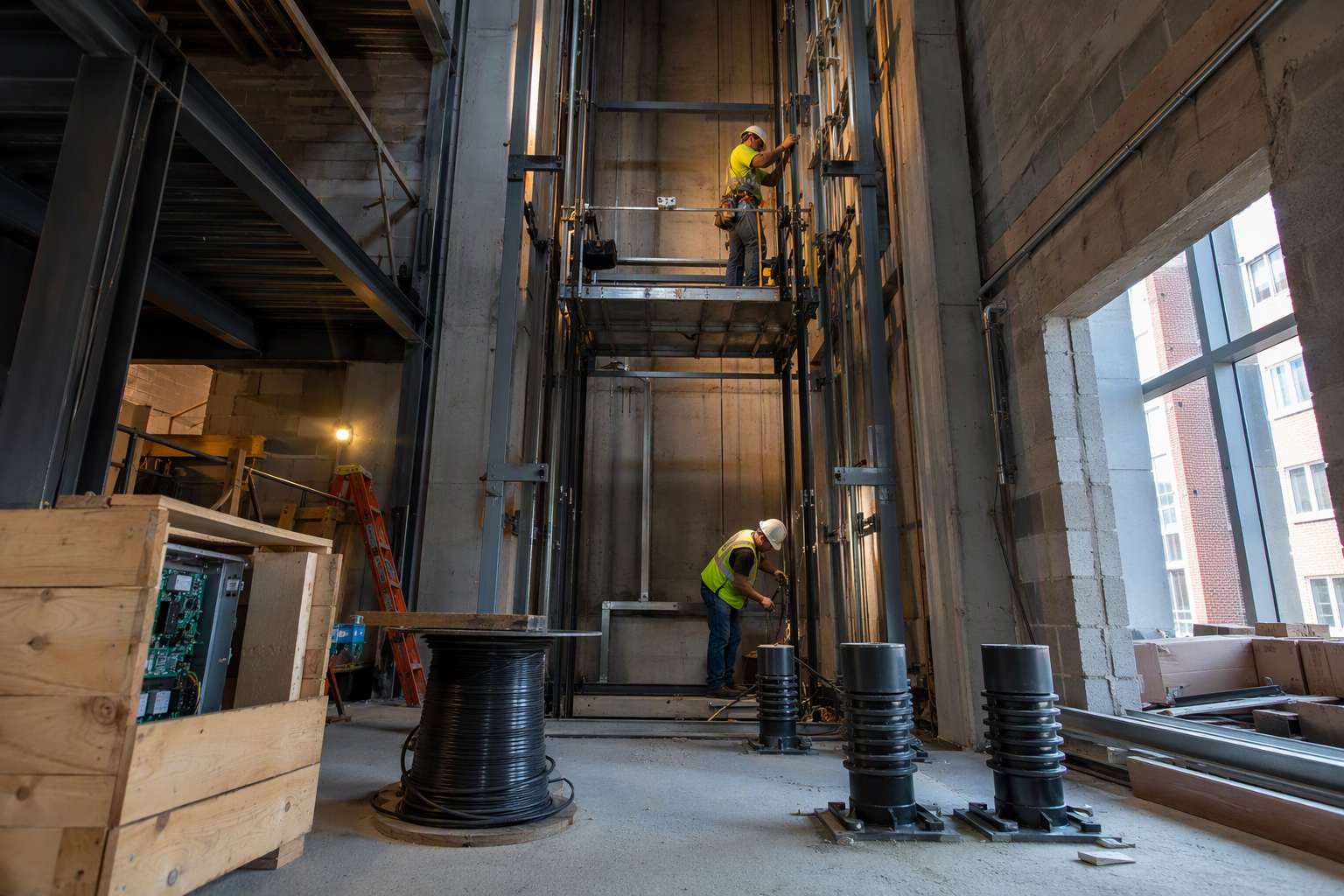
Building owners, developers, and property managers across Baltimore rely on licensed elevator contractors to navigate one of the most heavily regulated construction disciplines in Maryland. From initial design coordination to final state acceptance inspection, elevator construction demands precision engineering, strict code compliance, and a clear understanding of how Maryland’s regulatory framework applies at every stage. Quality Elevator Company brings that expertise to projects throughout Baltimore and the surrounding region.
What Does Elevator Construction in Baltimore Actually Involve?
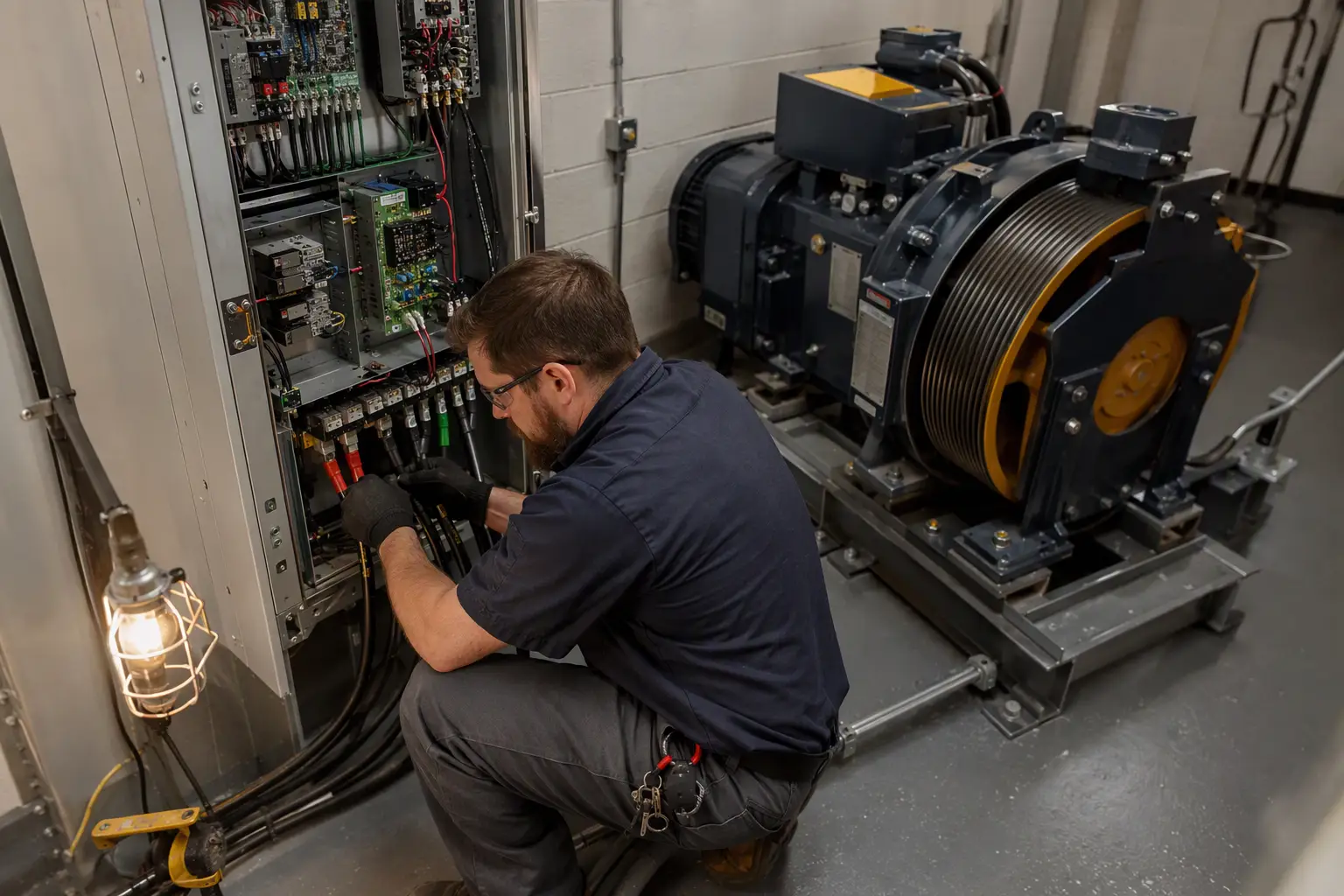
Elevator construction encompasses far more than installing a cab and pressing a button. A new elevator installation in Baltimore is a multi-phase project that begins well before any steel is set and continues past the day the doors first open to the public.
The construction process typically includes:
- Project planning and design coordination: Working with architects, structural engineers, and general contractors to define hoistway dimensions, machine room requirements, pit depth, and overhead clearance consistent with the applicable edition of the ASME A17.1/CSA B44 Safety Code for Elevators and Escalators.
- Permit application: Registering the new elevator unit with the Maryland Department of Labor, Division of Labor and Industry, Elevator and Escalator Safety at least 60 days before planned completion and before the unit is placed in service, as required under the Annotated Code of Maryland, Public Safety Article, Title 12, Subtitle 8.
- Equipment procurement and pre-installation preparation: Sourcing drive systems, guide rails, safety components, control panels, and cab finishes that meet the code edition in effect at the time the installation contract is signed.
- Mechanical and electrical installation: All hands-on work performed by licensed elevator mechanics holding valid Maryland Elevator Safety Review Board credentials, as required by Maryland law.
- Testing and commissioning: Required tests performed by a licensed elevator mechanic, with a qualified elevator inspector physically present for the entire test period when witness requirements apply.
- State acceptance inspection: The Maryland Department of Labor, Division of Labor and Industry conducts a final acceptance inspection after the elevator is installed and before it is placed in service.
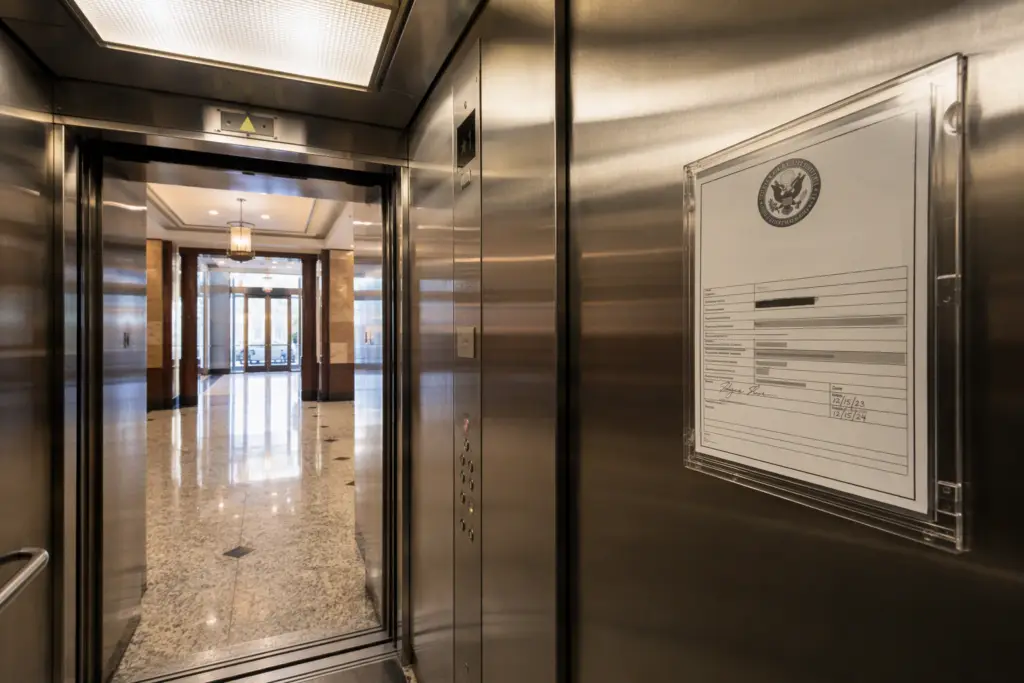
- Certificate of operation and posting: Once issued by the Commissioner of Labor and Industry, the certificate must be posted conspicuously in or on the elevator unit.
What Maryland Regulations Govern New Elevator Construction?
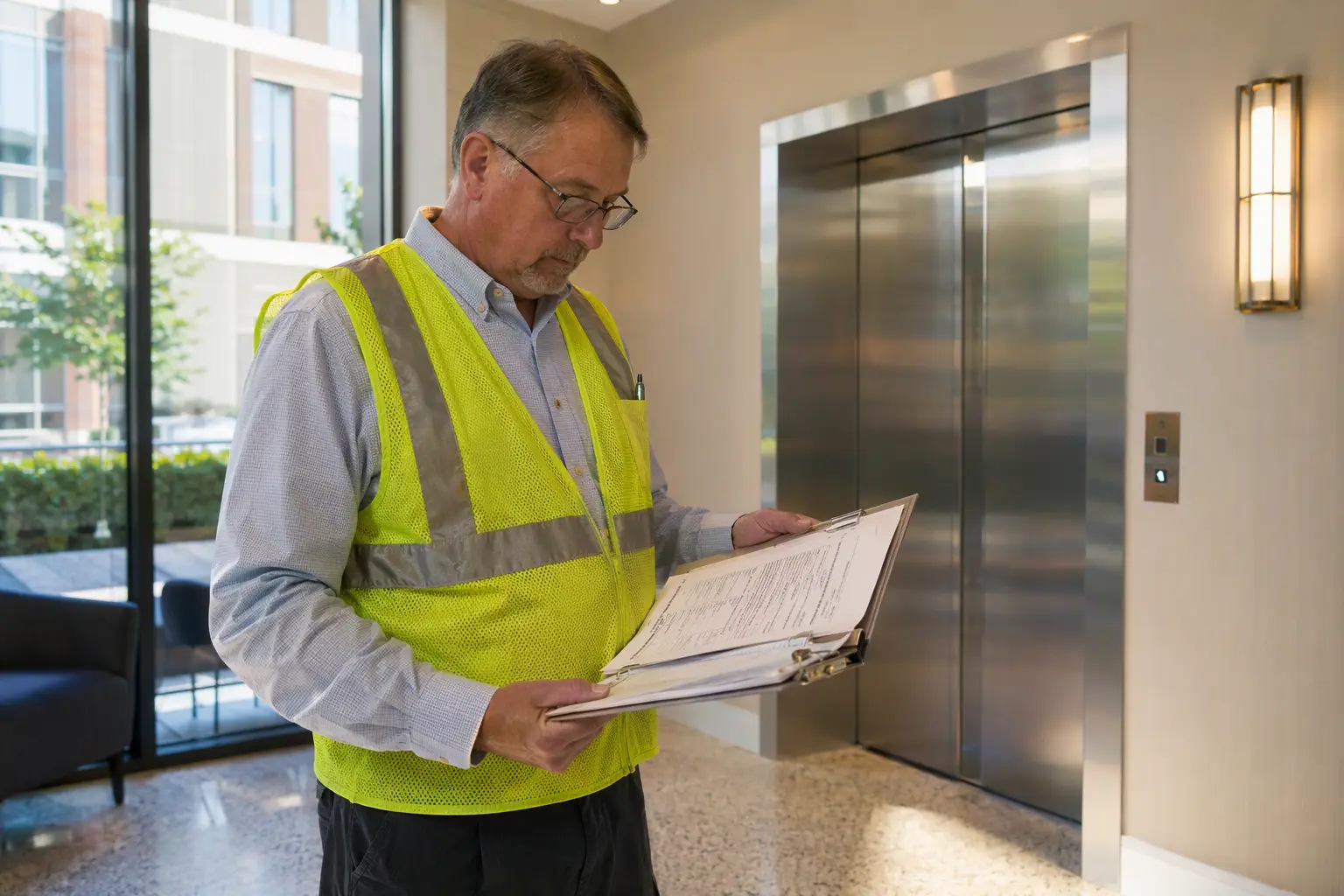
In Maryland, elevator construction is governed by the Maryland Department of Labor, Division of Labor and Industry, Elevator and Escalator Safety. The applicable statute is the Annotated Code of Maryland, Public Safety Article, Title 12, Subtitle 8 (§§ 12-801 to 12-842), and the implementing regulations are found in COMAR 09.12.81.
Key regulatory requirements for new construction in Baltimore include:
- The safety code edition that applies to a new elevator depends on the date the installation contract is signed. As of 2026, Maryland has adopted ASME A17.1-2022/CSA B44:22, with Maryland changes, effective June 17, 2026.
- No elevator unit may be operated in Maryland unless the Commissioner of Labor and Industry has issued a certificate of operation for it.
- Each new elevator unit must be registered with the Commissioner at least 60 days before its planned completion and before it is placed in service.
- The State conducts a final acceptance inspection after installation and before the unit is placed in service.
- Tests for required inspections must be performed by a licensed elevator mechanic, with a qualified elevator inspector physically present for the entire test when witness requirements apply.
- Any business engaging in elevator installation in Maryland must hold a license from the Maryland Elevator Safety Review Board as an elevator contractor and carry at least $1,000,000 in general liability insurance and at least $500,000 in property damage insurance.
- Any person performing hands-on work must hold a Maryland elevator mechanic license issued by the Maryland Elevator Safety Review Board.
- Every new Maryland building constructed after July 1, 1985, with at least one planned elevator must include a passenger elevator capable of carrying a 6-foot-8-inch rescue litter horizontally.
How Does ADA Compliance Factor Into Elevator Construction?
Federal accessibility requirements apply to most commercial and public elevator projects regardless of the state where construction occurs. The Americans with Disabilities Act (ADA) sets minimum standards for elevator cab dimensions, door clear widths, control reach ranges, Braille and raised-character signage, audible signals, and floor identification. For new construction and alterations subject to the ADA, elevators must meet these accessibility standards from the outset — not as an afterthought.
Quality Elevator Company incorporates ADA compliance planning into the construction process from the design coordination phase, helping property owners in Baltimore avoid costly modifications after the acceptance inspection is complete.
What Types of Elevator Systems Are Installed in Baltimore Properties?
Baltimore’s building stock spans historic mid-rise office buildings in the Inner Harbor, modern mixed-use developments, healthcare facilities, hotels, multi-family residential towers, and industrial properties. Each building type presents distinct construction requirements:
- Traction elevators (electric): Common in mid- and high-rise commercial and residential construction, using counterweighted rope or belt systems with a machine room or machine-room-less (MRL) configuration.
- Hydraulic elevators: Widely used in low-rise commercial buildings and smaller residential projects where overhead space is limited.
- Limited-use/limited-application (LULA) elevators: An accessible solution for smaller commercial buildings and historic structures with spatial constraints.
- Freight and industrial lifts: Constructed to handle heavier loads in warehouse, manufacturing, and distribution facilities.
- Accessibility lifts and platform lifts: Designed to satisfy ADA vertical access requirements where full elevator installation is not feasible.
Selecting the right system for a Baltimore property depends on building height, intended use, traffic patterns, structural constraints, and long-term maintenance considerations. Quality Elevator Company works with project teams during the planning phase to match the system to the building.
What Is the Process for Getting an Elevator Construction Permit in Maryland?
Securing the proper approvals before construction begins is not optional in Maryland — it is a legal prerequisite. The following steps outline the permit and registration process for a new elevator installation:
- Engage a licensed Maryland elevator contractor: Only businesses licensed by the Maryland Elevator Safety Review Board may legally install elevator units in Maryland.
- Confirm the applicable code edition: Identify which edition of ASME A17.1/CSA B44 governs the project based on the date the installation contract is signed.
- Register the elevator unit: Submit registration to the Maryland Department of Labor, Division of Labor and Industry at least 60 days before planned completion and before the unit is placed in service.
- Coordinate design and plan review: Ensure hoistway, pit, and overhead designs meet the requirements of the applicable safety code edition and any local building code requirements enforced by Baltimore City.
- Complete installation with licensed mechanics: All work must be performed by individuals holding valid Maryland elevator mechanic licenses.
- Conduct required tests: A licensed elevator mechanic performs required tests, with a qualified elevator inspector physically present for any witnessed tests.
- Undergo state acceptance inspection: The Maryland Department of Labor, Division of Labor and Industry performs the final acceptance inspection before the unit enters service.
- Post the certificate of operation: Once issued, the certificate must be displayed conspicuously in or on the elevator unit.
What Ongoing Compliance Is Required After a New Elevator Is Placed in Service?
Elevator construction is the beginning of a long-term compliance relationship, not the end of one. Once a new elevator unit is operational in Baltimore, Maryland law requires:
- Annual periodic inspection: Each elevator unit must receive a periodic annual inspection by a State inspector or a third-party qualified elevator inspector. The owner must hire a third-party qualified elevator inspector to conduct these periodic inspections.
- Annual re-registration: Owners must re-register their elevator units with the Commissioner every year, at the time of the periodic annual inspection.
- Five-year comprehensive inspection: Elevators suspended by wire ropes, belts, chains, or similar means, and rack-and-pinion elevators, must receive a comprehensive five-year inspection.
- Maintenance and inspection records: Records must be kept at a readily accessible central location in the building where the elevator is located.
- Certificate display: The current certificate of operation must remain posted conspicuously in or on the elevator unit at all times.
Establishing a proactive maintenance and inspection program from the day a new elevator enters service is the most effective way for Baltimore property owners to avoid certificate lapses, unplanned downtime, and compliance violations.
Why Does Choosing a Licensed Elevator Contractor Matter in Baltimore?
Maryland law is unambiguous: a business must hold a license from the Maryland Elevator Safety Review Board as an elevator contractor before engaging in elevator installation, alteration, maintenance, repair, or service in the state. Licensed contractors must also carry the minimum insurance thresholds set by Maryland statute — at least $1,000,000 in general liability coverage and at least $500,000 in property damage coverage.
Beyond legal compliance, the choice of contractor has direct consequences for construction quality, inspection outcomes, and the long-term performance of the elevator system. Quality Elevator Company operates as a fully licensed Maryland elevator contractor, employing licensed elevator mechanics who meet the Maryland Elevator Safety Review Board’s credentialing requirements.
For Baltimore property owners evaluating contractors, verifiable licensure, confirmed insurance coverage, and demonstrated familiarity with Maryland Department of Labor inspection procedures are non-negotiable criteria — not optional considerations.
Does Quality Elevator Company Serve Areas Beyond Baltimore?
Quality Elevator Company provides elevator construction services throughout Maryland as well as the District of Columbia, Virginia, and Pennsylvania. Each jurisdiction maintains its own regulatory framework:
- In the District of Columbia, the DC Department of Buildings (DOB) oversees elevator permits and certificates, with the DC Board of Industrial Trades licensing elevator contractors and mechanics.
- In Virginia, elevator inspections are enforced by local building departments under the Virginia Uniform Statewide Building Code, with the Virginia Board for Contractors (DPOR) licensing elevator contractors and certifying mechanics.
- In Pennsylvania, the Pennsylvania Department of Labor and Industry regulates elevator construction statewide, with updated rules under Regulation #12-123 taking effect December 20, 2026.
For any project outside Baltimore, Quality Elevator Company applies the same standards-based approach while meeting the specific regulatory requirements of the applicable jurisdiction.
Schedule a Free Consultation
Planning a new elevator installation in Baltimore or the surrounding region? Quality Elevator Company’s team is ready to walk through project scope, regulatory requirements, equipment selection, and timeline with you — at no charge.
Call Quality Elevator Company today at 301-779-9116 to schedule your free consultation and take the first step toward a compliant, professionally constructed elevator system.
Need elevator service you can rely on? Quality Elevator Company is ready to help.