Elevator Repair: Complete FAQ for Building Owners in Baltimore, Washington DC, Philadelphia & Richmond
Elevator repair is the process of identifying, correcting, and verifying the resolution of faults in an elevator’s mechanical, electrical, hydraulic, or safety systems so the unit can resume safe, code-compliant operation. Repairs range from replacing worn door operators and frayed hoist ropes to overhauling hydraulic pump units and modernizing control systems. In every market served by Quality Elevator Company — Baltimore MD, Washington DC, Philadelphia PA, and Richmond VA — repairs on anything beyond routine maintenance trigger specific permitting, inspection, and certification requirements under state and local codes.
What is elevator repair and how does it differ from routine maintenance?
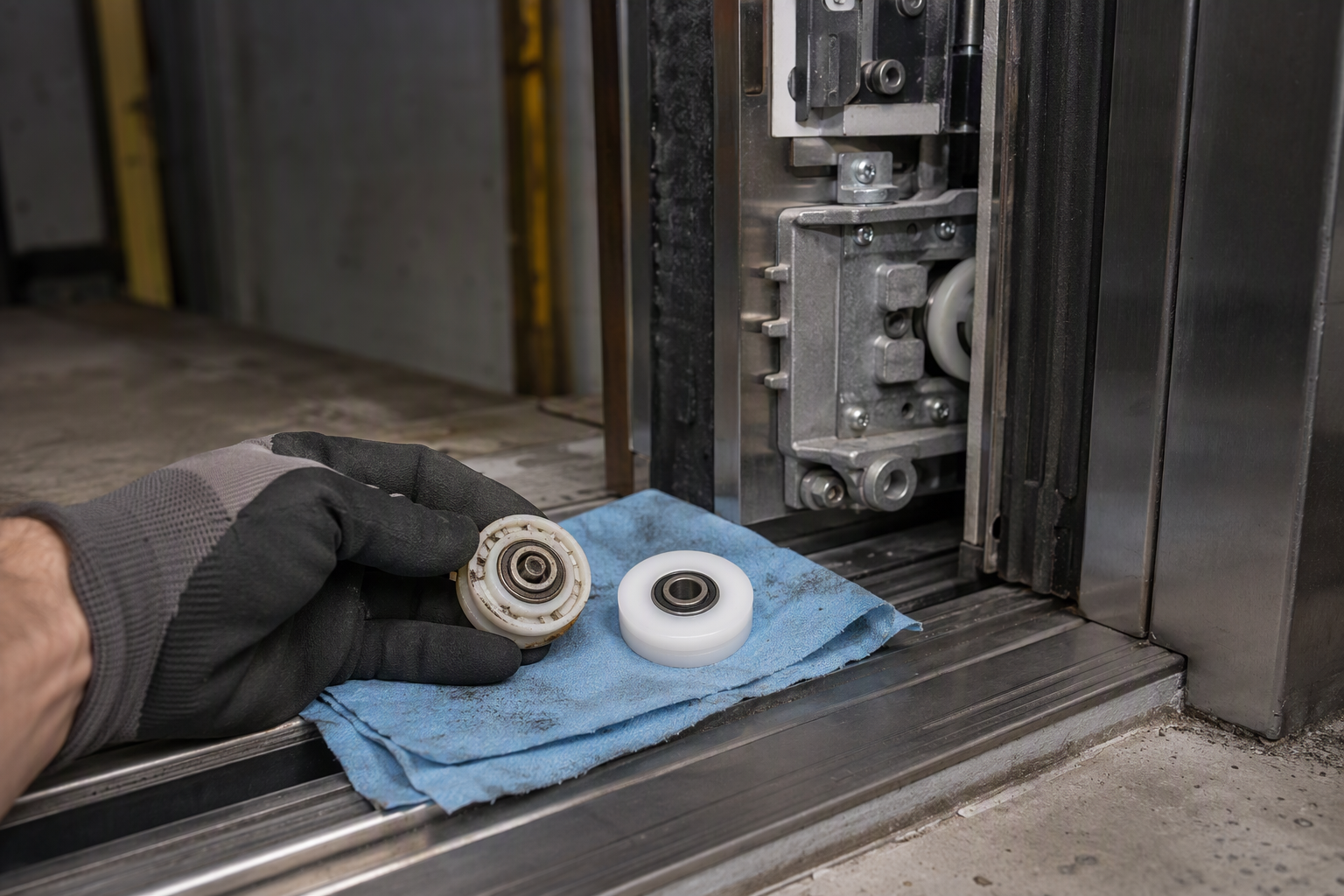
Elevator repair corrects a specific failure or deficiency, while routine maintenance preserves an elevator’s ongoing performance and safety through scheduled lubrication, adjustment, and component checks.
Routine maintenance keeps an elevator running within its design parameters: lubricating guide rails, adjusting door timing, cleaning contacts, and testing safety devices on a scheduled basis. Repair, by contrast, is corrective — it responds to a breakdown, a failed inspection item, or a component that has degraded beyond an acceptable threshold.
The distinction matters because repairs frequently require permits and re-inspections under the codes adopted in Maryland, the District of Columbia, Pennsylvania, and Virginia. A maintenance visit that discovers a cracked sheave or a worn safety jaw goes from a maintenance task to a regulated repair the moment the mechanic replaces a part. Building owners should confirm with their elevator service contractor whether a given scope of work requires a permit before work begins.
What are the most common elevator repairs building owners encounter?
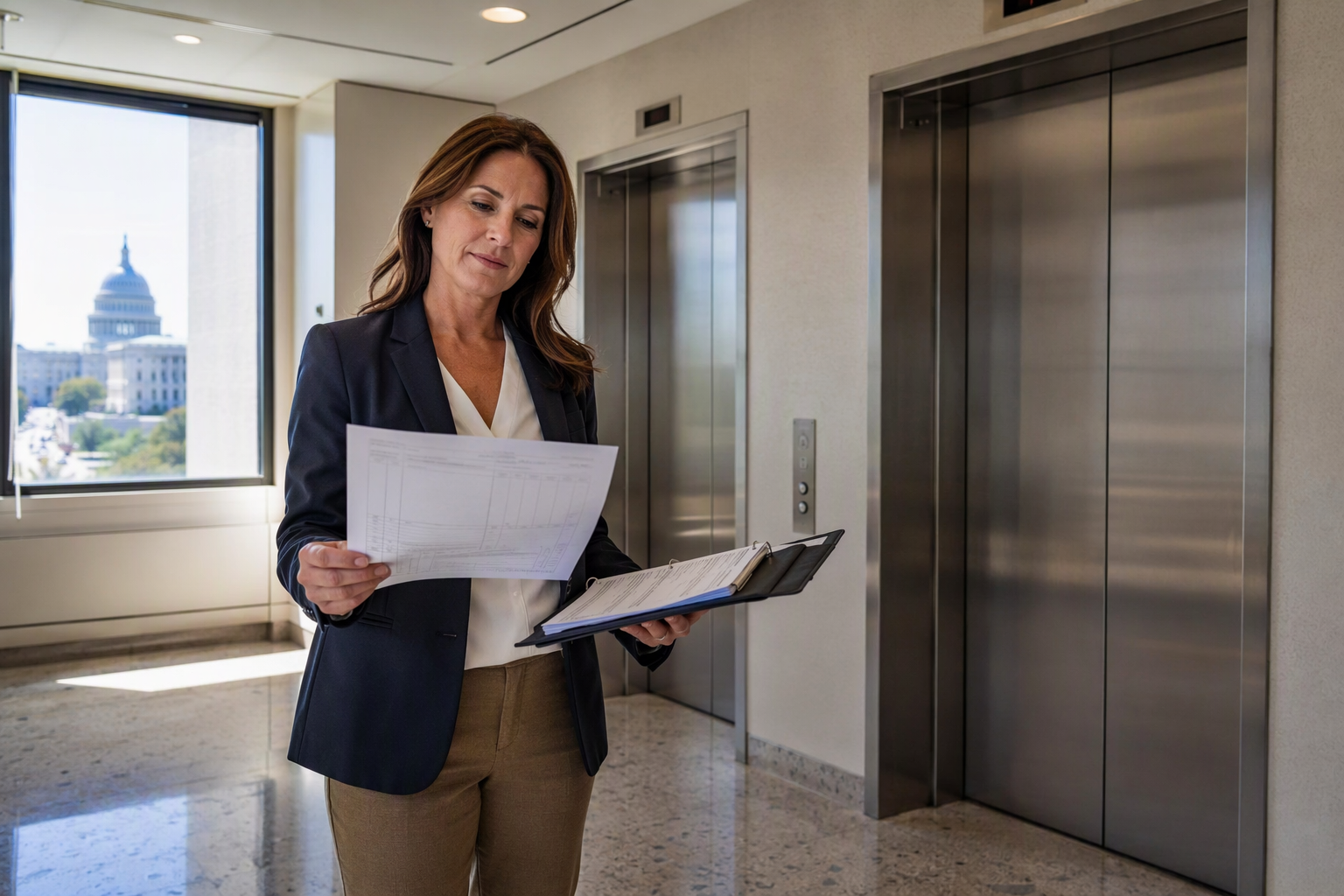
The most frequently needed elevator repairs involve door systems, hydraulic components, control electronics, and wire rope or hoist machinery.
Door-related problems — jammed doors, misaligned door operators, worn rollers, and faulty door sensors — account for a large share of elevator service calls. Hydraulic elevators are subject to seal deterioration, pump motor failures, and valve malfunctions that cause slow travel or inability to reach the top floor. Traction elevators experience hoist rope wear, sheave grooving, and brake lining wear that affect stopping accuracy and safety. Control system faults — including circuit board failures, relay malfunctions, and outdated software — can cause erratic leveling, intermittent floor stops, and false fault codes. Safety circuit failures, including those involving the governor, overspeed device, buffer, and pit stop switches, represent the most critical repairs because they directly affect passenger protection under the ASME A17.1 Safety Code for Elevators and Escalators.
How do I know when my elevator needs repair versus replacement?
An elevator that repeatedly fails the same component, cannot pass its periodic safety tests, or requires parts that are no longer manufactured is typically a stronger candidate for modernization or replacement than continued piecemeal repair.
A qualified elevator mechanic can assess the overall condition of the equipment by reviewing the maintenance and inspection history, measuring component wear against manufacturer tolerances, and evaluating whether the control system supports modern safety features. When repair costs over a two-to-three-year horizon approach or exceed the cost of a modernization, most building owners find that replacing major systems — controller, door operator, fixtures, and sometimes the machine itself — delivers better long-term reliability and may also bring the unit into compliance with current editions of the ASME A17.1 Safety Code for Elevators and Escalators and the Americans with Disabilities Act. Quality Elevator Company provides written condition assessments to help building owners make informed repair-versus-replace decisions.
What permits and inspections are required for elevator repairs in Maryland?
In Maryland, repairs that constitute an alteration or modification require a permit from the Maryland Department of Labor, Division of Labor and Industry, Elevator and Escalator Safety, and the unit must pass a State acceptance inspection before it returns to service.
Under the Annotated Code of Maryland, Public Safety Article, Title 12, Subtitle 8, and the accompanying rules at COMAR 09.12.81, an elevator in Maryland may not be operated unless the Commissioner of Labor and Industry has issued a certificate for it. When a repair involves modification or alteration, the State conducts a final acceptance inspection after the work is complete and before the unit is placed back in service. Tests performed as part of that inspection must be performed by a licensed elevator mechanic. All repair and inspection records must be kept at a readily accessible central location in the building. The Maryland code currently in effect adopts the ASME A17.1-2022/CSA B44:22 edition with Maryland amendments, effective June 17, 2026, though the edition that governs a given elevator depends on when its installation contract was signed.
What permits and inspections are required for elevator repairs in the District of Columbia?
In the District of Columbia, alterations and repairs to existing elevators require a permit from the District of Columbia Department of Buildings (DOB), and work must comply with the Existing Building Code, with maintenance also governed by the Property Maintenance Code.
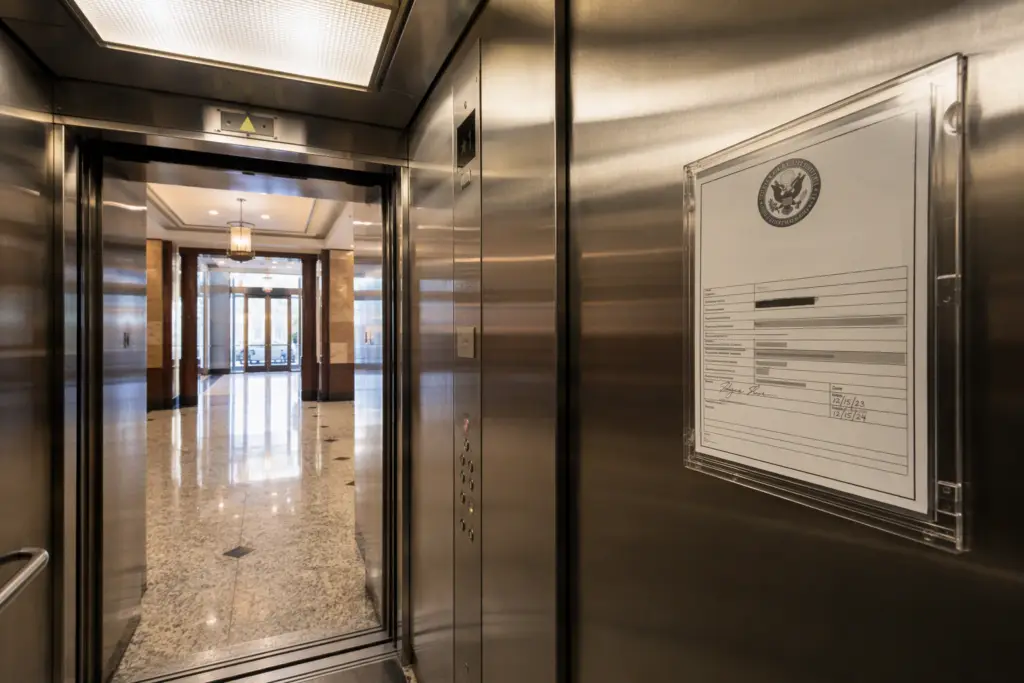
Under 12-A DCMR Chapter 30 and the 2017 DC Building Code, which adopted ASME A17.1-2013/CSA B44-13 with District amendments effective May 29, 2020, elevator permits in DC require a copy of the master electrician license and the elevator contracting license. DOB-approved third-party inspection agencies — staffed by ASME QEI-certified inspectors — conduct the periodic and Category inspections on DOB’s behalf. A DC elevator certificate of inspection is valid for two years, and a copy must be conspicuously displayed in the elevator car. An elevator’s certificate may be temporarily suspended while the unit is under an active permit for alteration or modernization. A DOB permit is also required to take an elevator out of service or to place it in temporarily dormant status. DC plans to adopt new construction codes based on the 2024 model codes by the end of 2027.
What permits and inspections are required for elevator repairs in Pennsylvania?
In Pennsylvania, construction, alteration, replacement, or repair of an elevator requires a permit application to the Pennsylvania Department of Labor and Industry (L&I), Bureau of Occupational and Industrial Safety, Elevator Section, and the elevator may not return to service after a major repair until the Department inspects and passes it.
Under 34 Pa. Code Chapter 405 and the Pennsylvania Construction Code Act (35 P.S. § 7210.101 et seq.), elevators currently operate under ASME A17.1-2000 with the A17.1a-2002 addenda for permit applications made before December 20, 2026. Starting December 20, 2026, Pennsylvania’s updated elevator regulation (Regulation #12-123) takes effect, and permit applications made on or after that date will be governed by ASME A17.1-2016 with Pennsylvania modifications. Electric elevators, hydraulic elevators, and escalators must have periodic inspections at intervals of no more than six months. A certificate of operation is valid for 24 months for equipment on a six-month cycle and 48 months for equipment on a 12-month cycle. Owners must report any accident causing a fatality or requiring professional medical care to the Department.
What permits and inspections are required for elevator repairs in Virginia?
In Virginia, the local building department enforces the Virginia Uniform Statewide Building Code (13VAC5-63), and elevator repairs that constitute alterations require a permit and a local acceptance inspection before the unit returns to service.
Virginia’s 2021 USBC, which took effect January 18, 2024, incorporates ASME A17.1/CSA B44-19. The local government inspects elevators and enforces the building code, except for elevators in single-family homes, two-family homes, and townhouses. Annual periodic inspections are required statewide, and a locality may require six-month inspections. Periodic tests follow the intervals in ASME A17.1 Appendix N and must be witnessed by the local code official or an approved agency. In Richmond specifically, the City of Richmond Department of Planning and Development Review, Bureau of Permits and Inspections, runs the elevator program — conducting final acceptance inspections of new or modernized elevators and issuing annual elevator certificates. No one may work as an elevator mechanic in Virginia without state certification from the Virginia Board for Contractors (DPOR), unless working under the direct and immediate supervision of a certified mechanic.
What should a building owner do immediately when an elevator breaks down?
When an elevator breaks down, the owner’s immediate priority is passenger safety, followed by contacting a licensed elevator contractor and complying with any jurisdiction-specific out-of-service requirements.
- Ensure no passengers are trapped. If anyone is inside a stalled car, contact emergency services. Never attempt a self-rescue or force open elevator doors.
- Take the elevator out of service. Post clear out-of-order signage at every landing, lock the car at a floor, and prevent further use until a licensed mechanic has assessed the unit.
- In DC, obtain a DOB permit to take the elevator out of service, as required under ASME A17.1 Section 8.11.1.4 as adopted by DC.
- Contact a licensed elevator contractor. In Maryland, only licensed elevator mechanics and licensed elevator contractors may work on elevator units. In Virginia, only certified mechanics or those under the direct supervision of a certified mechanic may perform repair work.
- Document the failure. Record the date, time, symptoms, any fault codes displayed, and the floor position of the car. This information assists the mechanic and may be required for permit applications or accident reports.
- Report accidents if required. In Pennsylvania, owners must submit an accident report to the Department of Labor and Industry when an elevator accident causes a fatality or requires professional medical care.
- Keep maintenance and inspection records accessible. In Maryland, records must be kept at a readily accessible central location in the building. Having them available speeds the repair and inspection process.
- Do not return the elevator to service until the licensed contractor confirms repairs are complete, any required permits are closed, and — where required — the authority having jurisdiction has conducted an acceptance inspection.
How long does elevator repair typically take?
Repair duration depends on the complexity of the fault, parts availability, and the permitting and inspection timeline required by the jurisdiction — straightforward mechanical repairs may be completed in hours, while major component replacements that trigger a permit and acceptance inspection can take days to weeks.
A door operator adjustment or a control board replacement with a stocked part can often restore service the same day. Repairs requiring specialty parts — such as a custom hydraulic cylinder, an obsolete controller board, or a specific hoist rope configuration — may involve lead times measured in days or weeks. Building owners should factor in the regulatory timeline: in Maryland and Pennsylvania, the authority having jurisdiction must conduct an acceptance inspection before the elevator returns to service after a major repair. In DC and Virginia, third-party inspectors and local code officials must schedule witnessed tests. Quality Elevator Company coordinates permit filings and inspection scheduling to minimize downtime for building owners in Baltimore, Washington DC, Philadelphia, and Richmond.
How much does elevator repair cost?
Elevator repair costs vary widely based on the type of equipment, the nature of the failure, parts pricing, labor rates, permit fees, and inspection costs in each jurisdiction — building owners should obtain itemized written estimates from licensed elevator contractors before authorizing work.
A minor adjustment or sensor replacement represents a very different cost profile than a hydraulic pump overhaul, a full rope replacement, or a control system modernization. Permit fees, third-party inspection fees, and any required testing add to the total project cost and vary by jurisdiction. Because repair pricing depends on equipment-specific diagnostics, Quality Elevator Company recommends that building owners request a written scope of work and cost estimate before any repair begins, and verify that the estimate accounts for any required permits and post-repair inspections.
Are elevator repairs covered under a maintenance contract?
The scope of repair coverage under an elevator maintenance contract varies significantly depending on whether the agreement is a full-service/comprehensive contract or a basic examination-and-lubrication contract — building owners should review their contract terms carefully.
A comprehensive maintenance agreement typically covers labor and parts for most non-vandalism-related repairs, while a basic lubrication and examination contract generally covers only labor during scheduled visits and excludes parts. Neither type of agreement typically covers major modernization work, code-upgrade repairs, or repairs caused by misuse, vandalism, or building system failures such as flooding or power surges. Building owners in multi-elevator buildings should also confirm whether the contract includes coverage for all units or only selected equipment. Quality Elevator Company recommends reviewing maintenance contract terms annually to ensure coverage aligns with the age and condition of the equipment.
What qualifications must an elevator repair technician have in Maryland, DC, Pennsylvania, and Virginia?
The qualification requirements for elevator mechanics differ by jurisdiction, but all four markets served by Quality Elevator Company impose meaningful credential or licensing requirements designed to ensure that only competent tradespeople work on elevator units.
| Jurisdiction | Mechanic Requirement | Contractor Requirement | Inspector Requirement |
|---|---|---|---|
| Maryland | Licensed elevator mechanic (Maryland Elevator Safety Review Board) | Licensed elevator contractor (Board); min. $1M general liability / $500K property damage insurance | Third-party qualified elevator inspector; must be physically present for entire witnessed test |
| District of Columbia | Licensed by DC Board of Industrial Trades (DLCP) | Elevator contracting license required; copy needed for DOB permit | ASME QEI-certified inspector at a DOB-approved third-party agency |
| Pennsylvania | No statewide mechanic license found in current rules | Third-party inspection agencies must be certified by the Department of Labor and Industry | UCC-certified elevator inspector |
| Virginia | State certification by Virginia Board for Contractors (DPOR); min. 3 years’ industry experience + exam; 8 hours CEU per renewal | Contractor license with Elevator/Escalator Contracting (EEC) specialty (DPOR) | Local code official or approved agency; inspector must receive name and certification number of mechanic who performed tests |
How does elevator repair relate to ADA compliance?
Elevator repairs that involve cab interiors, controls, door timing, or leveling accuracy can directly affect Americans with Disabilities Act compliance, and building owners should use repair projects as an opportunity to address any ADA deficiencies.
The ADA requires that elevators serving public accommodations and commercial facilities meet specific requirements for cab dimensions, control panel height and reach range, audible and visual floor indicators, and door timing. When a repair project opens the controller, replaces fixtures, or resurfaces a cab interior, a licensed contractor can simultaneously address ADA items such as non-compliant button heights, missing Braille designations, inadequate leveling accuracy, or door-close timing that does not allow sufficient time for a person using a mobility device to enter. Proactively addressing ADA compliance during scheduled repair work is generally more cost-effective than retrofitting after a complaint or enforcement action.
What is the difference between a Category 1 and a Category 5 elevator test, and how do repairs affect them?
Category 1 tests are annual no-load safety tests of the elevator’s mechanical and electrical safety devices, while Category 5 tests are full-load, full-speed tests of the elevator’s car and counterweight safeties conducted every five years — and any significant repair may require a new Category test before the elevator returns to service.
Under the ASME A17.1 Safety Code for Elevators and Escalators, Category 1 tests verify that all safety devices function correctly under normal operating conditions without imposing the full dynamic load on the safety system. Category 5 tests — sometimes called “drop tests” for traction elevators — apply full rated load and speed to confirm that the car and counterweight safeties will stop and hold the elevator in the event of a freefall scenario. In DC, periodic Category 1 tests are required every 12 months and Category 5 tests every 60 months, each conducted by an ASME QEI-certified inspector. In Virginia, periodic tests follow the intervals in ASME A17.1 Appendix N and must be witnessed by the local code official. When a major repair affects the safety system, governor, ropes, or braking components, the authority having jurisdiction may require a new Category test as a condition of returning the elevator to service.
What are the most important safety codes governing elevator repair in 2026?
The primary safety code governing elevator repair across the jurisdictions served by Quality Elevator Company is the ASME A17.1 Safety Code for Elevators and Escalators, adopted at different editions by each jurisdiction, supplemented by ADA requirements and applicable state statutes and regulations.
Each jurisdiction has adopted a specific edition of ASME A17.1 as its governing standard. Maryland’s rules effective June 17, 2026 adopt ASME A17.1-2022/CSA B44:22 with Maryland amendments. DC’s 2017 Building Code (effective May 29, 2020) adopts ASME A17.1-2013/CSA B44-13 with District amendments, with new codes based on 2024 model codes planned by end of 2027. Pennsylvania currently applies ASME A17.1-2000 with A17.1a-2002 addenda for existing permits, transitioning to ASME A17.1-2016 with Pennsylvania modifications for permit applications on or after December 20, 2026. Virginia’s 2021 USBC (effective January 18, 2024) adopts ASME A17.1/CSA B44-19. Additionally, OSHA standards apply to the safety of elevator mechanics performing repair work, including lockout/tagout procedures and fall protection in machine rooms and pits.
What OSHA requirements apply to elevator repair work?
OSHA standards governing hazardous energy control (lockout/tagout), confined spaces, and fall protection apply to elevator repair technicians working in pits, machine rooms, and hoistways.
Elevator pits qualify as permit-required confined spaces under OSHA’s general industry standards when atmospheric hazards or engulfment risks are present. Machine rooms and hoistways present fall hazards that require compliant guarding and personal protective equipment. Lockout/tagout procedures must be followed whenever a mechanic works on energized elevator equipment to prevent unexpected re-energization. Reputable elevator contractors maintain active OSHA compliance programs and ensure mechanics are trained in the specific hazards of elevator work. Building owners have a parallel obligation to maintain elevator machine rooms, pits, and hoistways in a condition that allows safe access for repair and inspection.
How often should elevators be inspected to prevent the need for major repairs?
Elevator inspection frequency is set by code in each jurisdiction — ranging from annual inspections in Maryland and Virginia to six-month periodic inspections for electric and hydraulic elevators in Pennsylvania — and consistent adherence to these schedules is the most effective way to catch developing problems before they become major repairs.
Maryland requires an annual periodic inspection by a third-party qualified elevator inspector, plus a comprehensive five-year inspection for wire-rope, belt, chain, or rack-and-pinion elevators. DC requires Category 1 tests every 12 months and Category 5 tests every 60 months. Pennsylvania requires periodic inspections at intervals of no more than six months for electric elevators, hydraulic elevators, and escalators. Virginia requires annual periodic inspections statewide, with localities permitted to require six-month inspections. Beyond the mandatory cycles, most elevator manufacturers and the ASME A17.1 Safety Code recommend that owners maintain a continuous maintenance contract with a licensed elevator contractor so that minor issues are identified and corrected between inspections before they escalate into failures that take the elevator out of service.
What documentation should building owners maintain related to elevator repairs?
Building owners should maintain permits, inspection reports, test records, certificates of operation, and maintenance logs — because multiple jurisdictions mandate that these records be kept accessible in the building and may require them during inspections or after accidents.
In Maryland, maintenance, repair, test, and inspection records must be kept at a readily accessible central location in the building where the elevator is located. In DC, owners must submit third-party inspection reports for the past two years to the Department of Buildings through the Citizen Access Portal to obtain a certificate of inspection, and the current certificate must be displayed in the elevator car. In Pennsylvania, the certificate of operation or a copy must be posted in the elevator car or attached to the controller in the machine room. In Virginia, third-party elevator inspection reports must include the name and certification number of the elevator mechanic who performed the witnessed tests. Maintaining a complete, organized repair and inspection file protects building owners in the event of an incident, an insurance claim, or a regulatory audit.
How does elevator repair affect a building’s certificate of operation or inspection certificate?
A significant repair or alteration can cause a certificate to be suspended, and the elevator may not return to service until the relevant authority has conducted an acceptance inspection and, where required, issued a new or updated certificate.
In DC, an elevator’s certificate of inspection may be temporarily suspended while the unit is under an active permit for alteration or modernization. In Maryland, the Commissioner’s certificate is a prerequisite for operation — after a modification, the State conducts a final acceptance inspection before issuing the authority to operate. In Pennsylvania, after a major repair, replacement, or alteration, an elevator may not return to service until the Department of Labor and Industry inspects and passes it; the certificate of operation is then reissued with its validity period linked to the inspection cycle. In Virginia, the local building department handles acceptance inspections and certificate reissuance following alterations. Quality Elevator Company manages the permit and certificate lifecycle on behalf of building owners to ensure that no elevator is placed back in service without the required governmental clearance.
Why should building owners choose a certified elevator contractor for repairs rather than a general mechanical contractor?
Elevator repair is a licensed trade in Maryland, DC, and Virginia, and only contractors with the appropriate elevator-specific license or contracting credential may legally perform the work — a general mechanical contractor without that credential cannot sign off on permits or comply with post-repair inspection requirements.
In Maryland, a business must hold an elevator contractor license issued by the Maryland Elevator Safety Review Board before engaging in the installation, alteration, maintenance, repair, or servicing of elevator units, and must carry specified minimum insurance coverage. In DC, elevator permit applications require a copy of the elevator contracting license. In Virginia, installing, repairing, or removing elevators requires a contractor license with the Elevator/Escalator Contracting (EEC) specialty issued by DPOR. Using an unlicensed contractor exposes building owners to potential liability, invalid permits, failed inspections, and insurance coverage disputes. Quality Elevator Company holds the required licenses and credentials in each jurisdiction it serves — Baltimore MD, Washington DC, Philadelphia PA, and Richmond VA — so building owners can be confident that repair work will satisfy the relevant authority having jurisdiction.
Get a Free Elevator Assessment from Quality Elevator Company
Whether your elevator has failed unexpectedly, is approaching a mandatory inspection, or is showing early signs of wear, Quality Elevator Company is available to assess your equipment and provide a clear, written recommendation. Serving building owners in Baltimore MD, Washington DC, Philadelphia PA, and Richmond VA, Quality Elevator Company brings the licensing, technical expertise, and regulatory knowledge to handle elevator repair from initial diagnosis through permit closure and return-to-service inspection.
Contact Quality Elevator Company for a free elevator assessment: 301-779-9116
Need elevator service you can rely on? Quality Elevator Company is ready to help.