Elevator Maintenance & Service Quotes for Healthcare Buildings in Washington, D.C.
Healthcare facilities in Washington, D.C.—hospitals, outpatient clinics, medical office buildings, rehabilitation centers, and long-term care communities—depend on elevators around the clock. Patient transport, medication delivery, emergency response, and staff movement all flow through vertical access points that cannot fail. Getting a proper maintenance and service quote means understanding not just the mechanical scope, but the layered compliance environment that governs every elevator in the District.
How Do You Get a Maintenance and Service Quote for a Healthcare Elevator in D.C.?
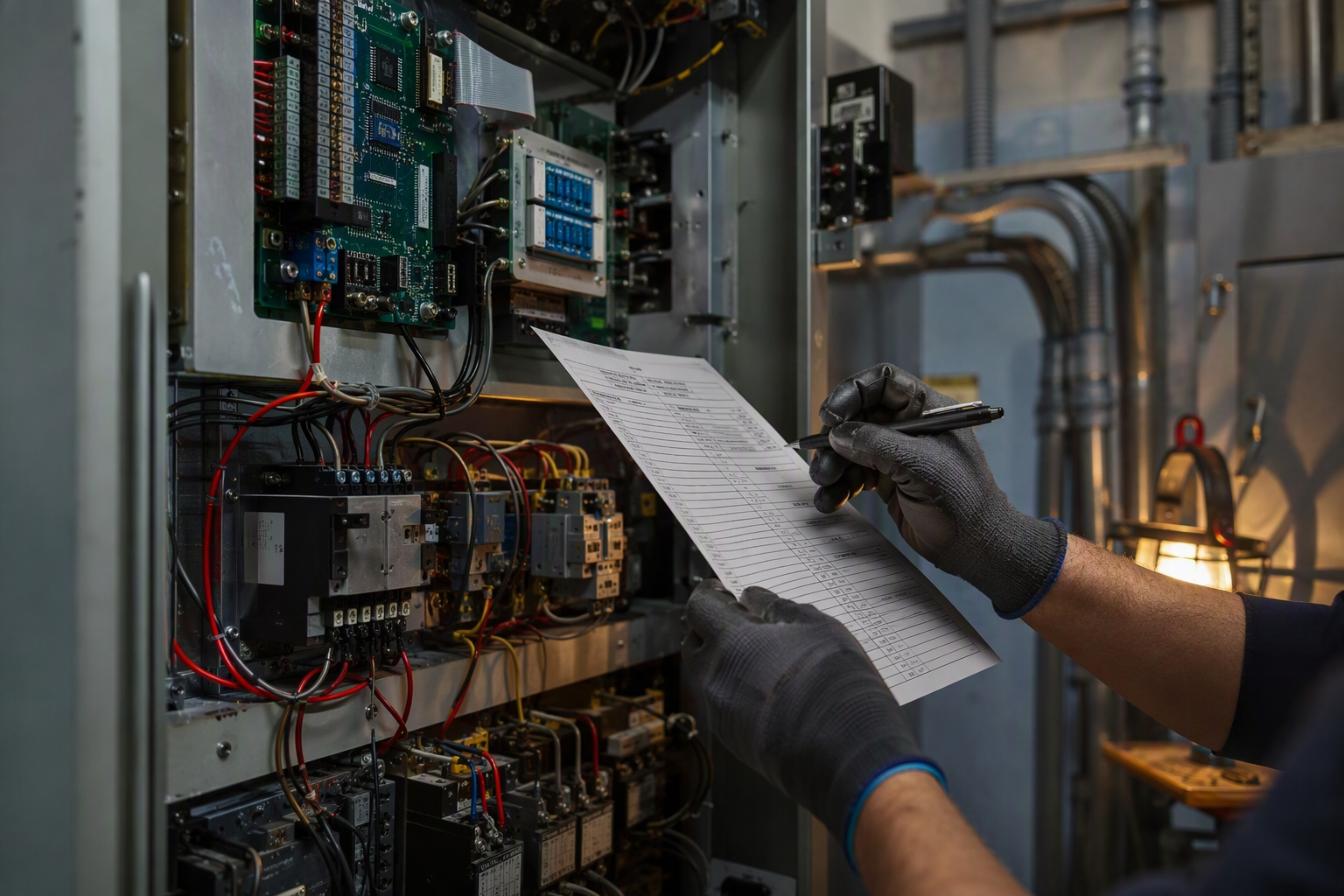
Obtaining an accurate elevator maintenance quote for a healthcare building in Washington, D.C. follows a clear process. Here is what building owners and facility managers should expect:
- Gather your equipment inventory. Document every elevator, escalator, and conveyance in the building—including make, model, drive type (hydraulic, traction, machine-room-less), year of installation, and current certificate status.
- Pull your current inspection records. Locate your most recent periodic inspection report, Category 1 test report, and the certificate of inspection issued by a DC Department of Buildings (DOB)-approved third-party agency. These documents tell a contractor exactly where your equipment stands.
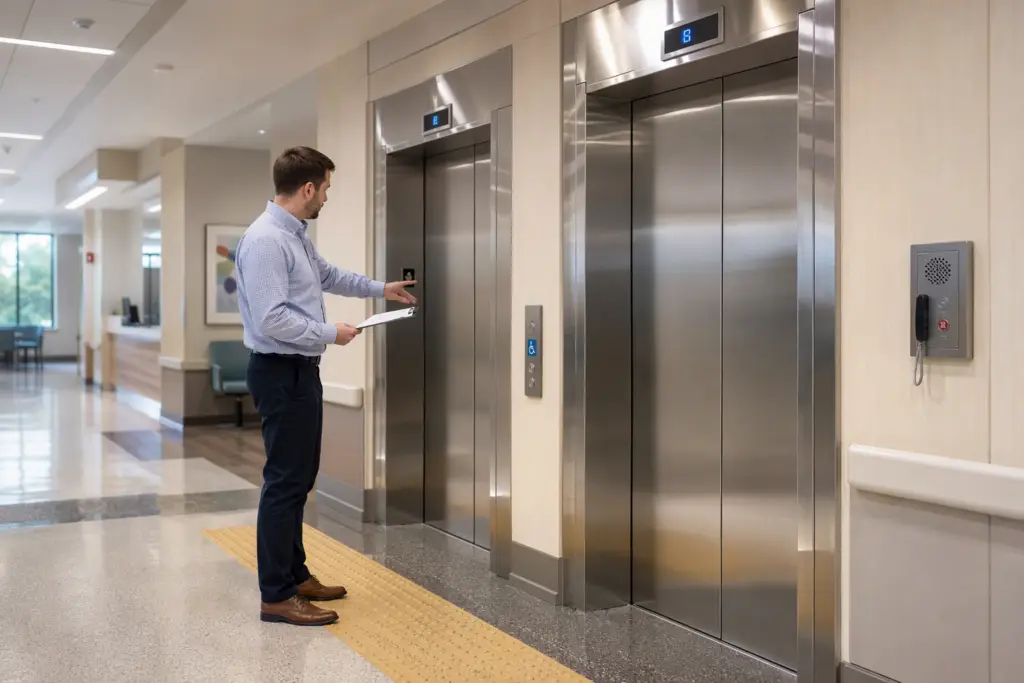
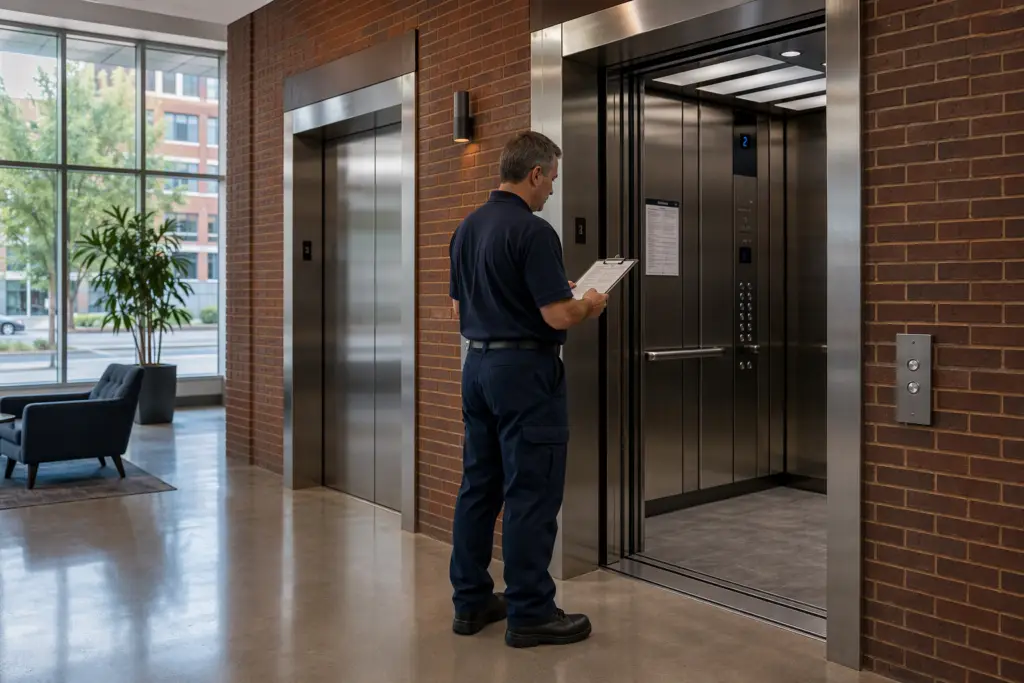
- Schedule a site assessment. A qualified elevator contractor walks the building, physically inspects each unit, evaluates the machine room, hoistway, and pit conditions, and reviews past maintenance logs.
- Identify compliance gaps. The contractor notes any deviations from the ASME A17.1/CSA B44-2013 Safety Code for Elevators and Escalators (the edition referenced by DC’s 2017 Building Code, effective May 29, 2020) and applicable ADA accessibility requirements.
- Receive a written proposal. A reputable contractor delivers a line-item quote covering preventive maintenance, testing schedules, parts, callback response, and any code-compliance remediation work.
- Review licensing and insurance. Confirm the contractor holds a DC elevator contracting license (issued through the DC Board of Industrial Trades), and that inspectors are DOB-approved and hold ASME QEI-1 certification.
- Compare scope, not just price. Healthcare facilities should weigh service scope, emergency response capability, regulatory expertise, and parts availability—not price alone.
Quality Elevator Company serves Washington, D.C. healthcare facilities and can coordinate every step above, from initial site walk to written proposal, with full awareness of DOB requirements.
What Compliance Requirements Apply to Healthcare Elevator Elevators in Washington, D.C.?

Healthcare buildings in the District operate under a multi-layer compliance framework. Getting the scope right before soliciting quotes prevents costly surprises after work begins.
DC Department of Buildings (DOB) Oversight
All elevators and escalators in the District must be inspected and certified for operation. The DC Department of Buildings issues certificates of inspection, and owners must use a DOB-approved third-party elevator inspection agency—staffed by ASME QEI-certified inspectors—to conduct those inspections on DOB’s behalf.
Key inspection intervals under DC rules include:
- A periodic inspection and Category 1 inspection every 12 months by a DOB-approved, QEI-certified inspector.
- A Category 5 inspection every 60 months, also by a QEI-certified inspector.
- A DC elevator certificate of inspection is valid for two years; periodic inspections and tests continue throughout that period.
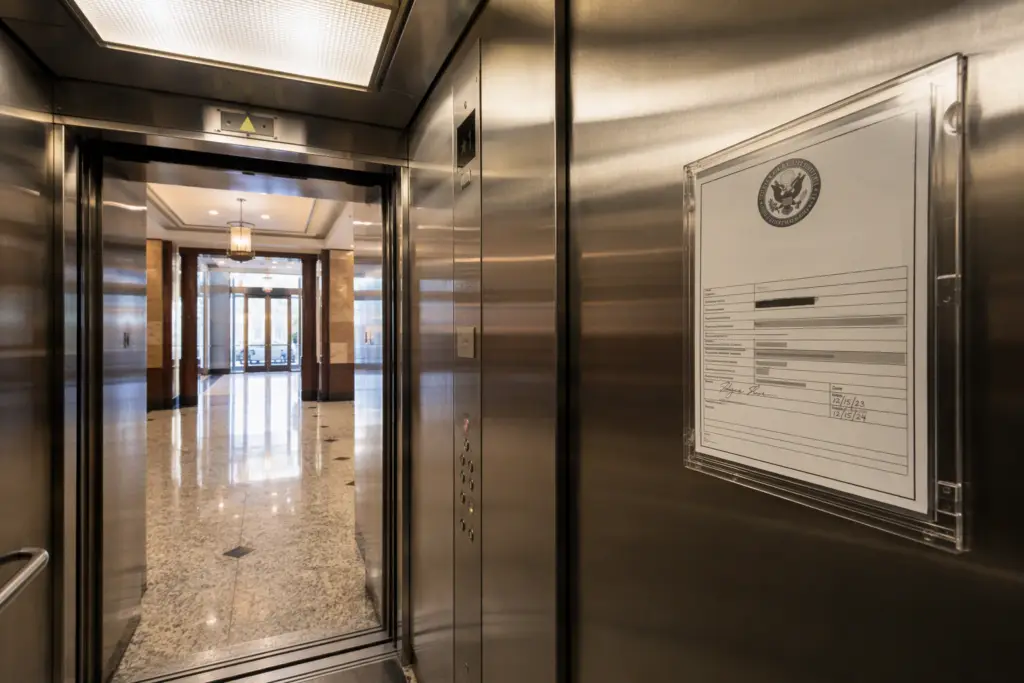
To obtain a certificate, owners submit third-party inspection reports covering the past two years to DOB through the Citizen Access Portal. A copy of the current certificate must be conspicuously displayed in the elevator car—critical in a healthcare environment where regulatory surveyors may request it at any time.
DC regulations under 12-A DCMR Chapter 30, authorized by D.C. Official Code § 6-1409, govern all elevator work in the District. The DC Board of Industrial Trades licenses elevator contractors, elevator mechanics, and elevator inspectors. DOB permits require a copy of both the master electrician license and the elevator contracting license. Any alterations or modernization work requires a DOB permit, and an elevator’s certificate may be temporarily suspended during permitted alteration work.
Of particular importance to healthcare operators: in DC buildings with passenger elevators, at least one elevator must be kept in operation whenever the building is occupied. Taking a unit out of service requires a DOB permit under the applicable provisions of ASME A17.1. In a hospital or clinical setting, planned downtime must be carefully coordinated to protect patient safety and maintain code compliance simultaneously.
Federal ADA Requirements
Healthcare facilities serving patients, visitors, and employees must maintain elevators that meet ADA accessibility standards. This includes door timing, cab dimensions, control height, and audible and visual signaling. ADA compliance is not a one-time installation check—it must be verified as part of ongoing maintenance.
ASME A17.1 Safety Code
DC’s 2017 Building Code references the ASME A17.1-2013/CSA B44-13 Safety Code for Elevators and Escalators. Maintenance and repair of existing elevators also follow the DC Property Maintenance Code. DOB plans to adopt new construction codes based on the 2024 model codes by the end of 2027, so healthcare facility managers should anticipate future code transitions when planning long-term maintenance contracts.
What Information Does a Contractor Need to Provide an Accurate Elevator Maintenance Quote?
A contractor needs the elevator equipment inventory (make, model, drive type, capacity, year installed), the current DOB inspection certificate and most recent third-party inspection reports, maintenance history and callback logs, any outstanding violation notices from DOB, building occupancy type and hours of operation, and any planned renovation or modernization work. For healthcare facilities, contractors also need to understand infection-control protocols that may affect how and when maintenance crews access occupied clinical areas.
Why Do Healthcare Buildings Have More Complex Elevator Service Requirements Than Standard Commercial Buildings?
Healthcare facilities operate elevators continuously, often transporting patients on stretchers or in wheelchairs, medical equipment, and pharmacy supplies. Unplanned downtime is not simply an inconvenience—it can delay patient care. As a result, healthcare elevator maintenance programs typically require more frequent inspections, tighter parts-on-hand protocols, and coordinated scheduling that accounts for infection-control zones, bed-capacity constraints, and accreditation survey readiness. DC’s requirement that at least one elevator remain operational in any occupied multi-elevator building is especially consequential in hospital and clinic settings.
What Is the Difference Between Preventive Maintenance and a Full-Service Elevator Contract?
A preventive maintenance contract covers scheduled lubrication, adjustment, cleaning, and safety testing at defined intervals. A full-service or comprehensive contract also covers parts, callbacks, and labor for breakdowns—essentially shifting the cost of unplanned repairs to the contractor. For healthcare facilities with high utilization, full-service agreements typically provide greater budget predictability and faster return-to-service after a failure. Quality Elevator Company can explain both structures during a site assessment so that facility managers can choose the approach that aligns with their risk tolerance and operational needs.
How Often Must Healthcare Building Elevators in D.C. Be Inspected?
Under DC regulations, every elevator in the District must receive a periodic inspection and a Category 1 inspection at least every 12 months, conducted by a DOB-approved agency with ASME QEI-certified inspectors. A Category 5 inspection is required every 60 months. These are the minimum mandatory intervals; a maintenance provider may recommend more frequent visits based on equipment age, utilization levels, and the critical nature of a healthcare environment.
Who Is Authorized to Inspect and Certify Elevators in Washington, D.C.?
The DC Department of Buildings (DOB) is the elevator regulator in the District and issues certificates of inspection. Inspections must be performed by DOB-approved third-party elevator inspection agencies whose inspectors hold ASME QEI-1 certification. The DC Board of Industrial Trades (within the Department of Licensing and Consumer Protection) licenses elevator contractors, mechanics, and inspectors. Only DOB-approved inspectors may generate the inspection reports that owners submit through the Citizen Access Portal to obtain or renew a certificate.
What ADA Requirements Apply to Elevators in D.C. Healthcare Facilities?
Healthcare buildings open to patients and the public must comply with ADA standards for accessible elevators. These standards address door-open timing (to accommodate wheelchair users), call button height and placement, cab interior dimensions, floor indicators, and audible announcements. In a healthcare setting, ADA elevator compliance intersects directly with patient rights and can be reviewed during Joint Commission or CMS surveys. Maintenance contracts should explicitly include ADA-related checks—door timing adjustment, button function, and leveling accuracy—not just mechanical safety tests.
How Long Does It Take to Get an Elevator Maintenance Quote and Start Service?
Timeline depends on building complexity and the contractor’s scheduling availability. Typically, a site assessment can be scheduled within days of initial contact. A written proposal follows the assessment, often within a short business-day window. Once a contract is executed, onboarding—which includes transferring existing maintenance records, setting up inspection schedules, and aligning with DOB filing requirements—can begin promptly. Healthcare facilities planning an elevator maintenance contract renewal or provider change should initiate the process well in advance of their current contract expiration to avoid any gap in coverage or DOB compliance continuity.
What Should Healthcare Facility Managers Look for When Comparing Elevator Service Vendors?
Beyond price, healthcare facility managers should evaluate: DC elevator contracting license status with the Board of Industrial Trades; familiarity with DOB inspection and certificate processes; experience in healthcare environments and understanding of infection-control and patient-safety protocols; parts availability for the specific equipment brands in the building; documentation practices that support accreditation surveys; and the contractor’s ability to coordinate with DOB-approved third-party inspection agencies. Quality Elevator Company operates across the District, Maryland, Pennsylvania, and Virginia, giving healthcare clients a single point of contact for multi-site portfolios.
What Happens If a Healthcare Elevator Fails Inspection or Receives a Violation Notice?
If a DOB-approved inspector identifies a deficiency, the owner must correct it before the elevator can be recertified or—depending on severity—before it may continue operating. Serious safety deficiencies may result in an order to take the unit out of service. In a healthcare facility, this triggers an immediate operational challenge: patient transport routes must be rerouted, and staff must be notified. A maintenance contractor with DC regulatory experience can help owners prioritize corrective work, coordinate re-inspection, and manage the DOB permit process for any alteration or repair needed to restore compliance.
Questions Your Inspector Will Ask
When a DOB-approved inspector arrives at a D.C. healthcare facility for a periodic or Category 1 inspection, the following questions and documentation requests are standard. Facility managers and maintenance contractors should be prepared to answer each one:
- Where is the current certificate of inspection? It must be conspicuously displayed in the elevator car or, if the building operator has an office in the same building, available for public inspection there.
- When was the last Category 1 test performed, and who witnessed it? The inspector will want the signed report from a QEI-certified inspector.
- Has a Category 5 test been completed within the last 60 months? Documentation of the test date, performing mechanic, and witnessing inspector is required.
- Are maintenance, repair, test, and inspection records readily accessible in the building? These must be available on-site for review.
- Is there an active DOB permit for any ongoing alteration or modernization work? The inspector needs to know whether the unit is in permitted alteration status.
- Who is the licensed elevator contractor of record for this building? The inspector may ask for the contractor’s DC elevator contracting license information.
- Has the elevator experienced any incidents, accidents, or unplanned shutdowns since the last inspection? Any incidents should be documented and disclosed.
- Are all safety devices—governors, buffers, safeties, door interlocks—functioning and within test dates? The inspector will verify against the ASME A17.1-2013/CSA B44-13 requirements adopted by DC.
- For healthcare facilities specifically: is at least one elevator operational in this building at all times during occupancy? This is a DC regulatory requirement, and inspectors are aware of it in high-occupancy settings.
- Are ADA-required features—door timing, leveling, call button heights—functioning correctly? While primarily a federal requirement, inspectors note obvious accessibility deficiencies.
What Types of Elevators Are Common in D.C. Healthcare Buildings, and Do Maintenance Requirements Differ?
Healthcare facilities in Washington, D.C. typically operate several elevator types, each with distinct maintenance profiles:
- Traction elevators (geared and gearless): Common in mid- and high-rise hospitals and medical office towers. Require regular governor testing, rope inspection, and brake adjustment under ASME A17.1 intervals.
- Hydraulic elevators: Often found in low-rise medical office buildings and outpatient clinics. Maintenance includes fluid system checks, cylinder integrity assessment, and pressure relief valve testing.
- Machine-room-less (MRL) traction elevators: Increasingly installed in newer healthcare construction. Require specialized technician training for the compact drive systems located in the hoistway.
- Stretcher elevators / bariatric elevators: Larger capacity units designed for patient transport. Door width, cab depth, and load ratings must be maintained to meet both ASME and ADA requirements and to support clinical operations.
- Service and freight elevators: Used for supply chain, linen, and biomedical equipment transport. Maintenance requirements mirror passenger elevator intervals under DC rules, but operational demands can be higher due to heavy and irregular loads.
Quality Elevator Company’s service teams are familiar with the full range of equipment types found in healthcare facilities across the District and can tailor maintenance programs to each unit’s drive type, age, and utilization pattern.
Can a Single Elevator Service Provider Cover a Healthcare System with Buildings in Multiple Jurisdictions?
Yes—and for health systems with facilities across the DC region, consolidated elevator service can simplify compliance management significantly. Quality Elevator Company serves healthcare clients in Washington, D.C., Maryland, Virginia, and Pennsylvania, each of which has its own elevator regulator and adopted code edition:
- Maryland: Regulated by the Maryland Department of Labor, Division of Labor and Industry, Elevator and Escalator Safety; mechanics and contractors are licensed by the Maryland Elevator Safety Review Board. Maryland requires annual periodic inspections and comprehensive five-year inspections for wire-rope-suspended elevators.
- Virginia: Elevator inspection and enforcement falls to local building departments under the Virginia Uniform Statewide Building Code (13VAC5-63). The 2021 USBC, which references ASME A17.1/CSA B44-2019, took effect January 18, 2024. All elevators require at minimum an annual periodic inspection.
- Pennsylvania: Regulated by the Pennsylvania Department of Labor and Industry, Bureau of Occupational and Industrial Safety, Elevator Section. Electric and hydraulic elevators require inspections at intervals no greater than six months. Updated regulations effective December 20, 2026 introduce ASME A17.1-2016 requirements for new permit applications.
Managing separate inspection calendars, certificate renewal deadlines, and permit requirements across multiple jurisdictions is a significant administrative burden. A regional provider with demonstrated regulatory knowledge in each market reduces that complexity.
Do OSHA Regulations Affect Healthcare Elevator Maintenance in D.C.?
OSHA regulations govern worker safety during elevator maintenance, repair, and inspection activities—not the elevator’s passenger operation. Technicians working in pits, hoistways, and on top of elevator cars must follow OSHA lockout/tagout, fall protection, and confined-space entry requirements as applicable. Healthcare facilities that serve as the employer of record for in-house maintenance personnel have OSHA compliance obligations; those using contracted elevator companies transfer significant portions of that responsibility to the contractor. Either way, confirming that a service provider maintains rigorous OSHA-compliant work practices protects both technicians and the facility from liability.
Get a Free Elevator Assessment for Your Healthcare Facility
Healthcare buildings in Washington, D.C. cannot afford elevator downtime, compliance gaps, or incomplete maintenance records. Quality Elevator Company understands the operational demands of clinical environments, the DC Department of Buildings inspection and certification process, and the multi-jurisdictional requirements facing regional health systems.
Contact Quality Elevator Company for a free elevator assessment at 301-779-9116. A qualified representative will schedule a site visit, review your current compliance status, and provide a written maintenance and service quote tailored to your facility’s equipment, utilization, and regulatory obligations.
Need elevator service you can rely on? Quality Elevator Company is ready to help.